Artwork
金 傳楊邦基 聘金圖 巻|A Diplomatic Mission to the Jin
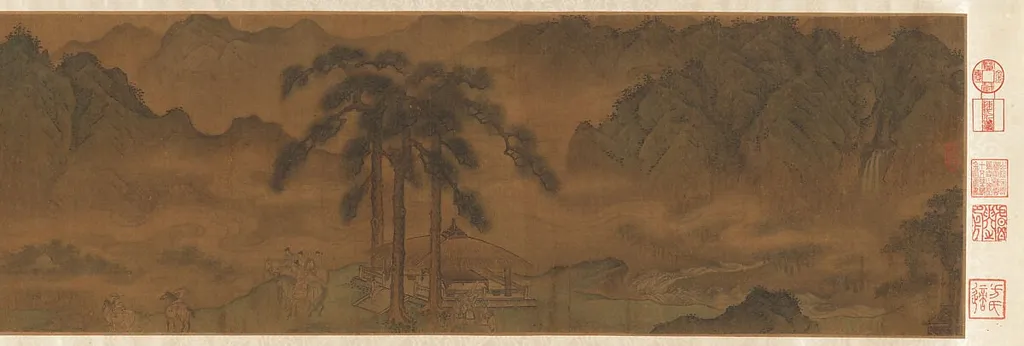
金 傳楊邦基 聘金圖 巻|A Diplomatic Mission to the Jin is an ink painting by the Song dynasty landscape artist Yang Bangji. It dates from 1154 and is held in the collection of the Metropolitan Museum of Art.
About this work
A long silk handscroll unrolls right to left: small envoys on horseback wind through misty mountains, ink peaks rising like waves. Painted around 1150, it records a real journey of Chinese officials traveling north to meet the Jin dynasty. Yang Bangji worked for the court, so every rock and tree doubles as a report to the emperor.
Overview
This handscroll, titled A Diplomatic Mission to the Jin (金 傳楊邦基 聘金圖 巻), is attributed to the artist Yang Bangji and dates to approximately the mid-12th century.
This handscroll, titled A Diplomatic Mission to the Jin (金 傳楊邦基 聘金圖 巻), is attributed to the artist Yang Bangji and dates to approximately the mid-12th century. Rendered in ink and color on silk, the painting unfolds as a panoramic landscape. It visually documents a historical journey, depicting Chinese officials traversing vast, mountainous terrain on a diplomatic mission to the northern Jin dynasty.
Subject & Meaning
The scroll illustrates a significant historical event: a delegation of Chinese envoys making their arduous journey to the Jin court. Tiny figures on horseback navigate through towering, mist-shrouded peaks, emphasizing the scale and challenge of the landscape. This depiction transcends a mere travelogue, serving as a visual record of political interaction between two powerful entities, subtly conveying the importance and gravity of the mission through the grandiosity of nature.
Technique & Style
Executed as a handscroll using ink and subtle color washes on silk, the artwork exemplifies the traditional Chinese landscape format. The composition unfolds horizontally, inviting viewers to experience the journey progressively. The artist employs a distinctive style where ink-rendered mountains rise dramatically, resembling waves, while atmospheric mist softens the transitions. The diminutive scale of the human figures against the monumental landscape underscores nature's dominance.
Context
Created around 1150, this painting likely served as an official record for the imperial court. As a court artist, Yang Bangji's work would have functioned as more than an aesthetic piece; it was a detailed report. Each element, from the geological formations to the winding paths, contributed to a comprehensive visual account for the emperor, providing insight into the challenging northern territories and the diplomatic efforts undertaken.
Artist & collection
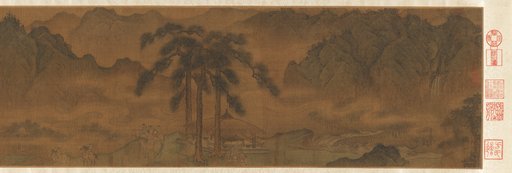

 Cloudy Mountains
 Cloudy Mountains
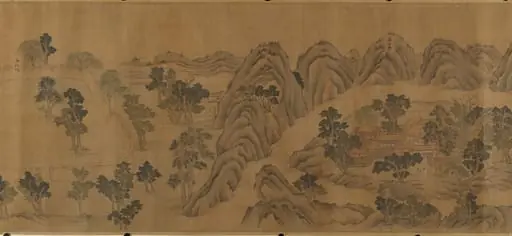 明 佚名 郭忠恕 僞款 輞川圖 卷|Wangchuan Villa
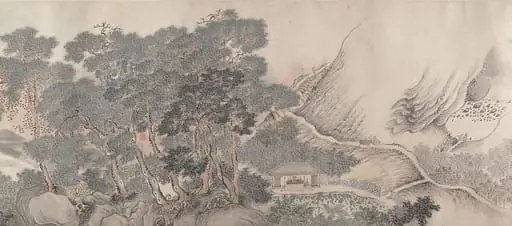 明 魏之克(魏克) 四時倣古山水圖 卷|Landscape of the four seasons in the styles of old masters
 Autumn Mist in the Countryside
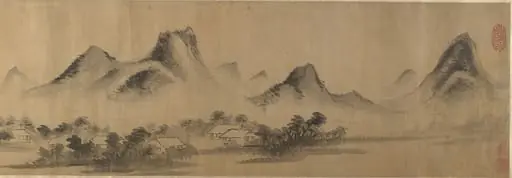 清 佚名 倣董其昌 倣米氏雲山圖 卷|Cloudy Mountain in the Style of Mi Fu (1052–1107)
 Streams and Mountains without End
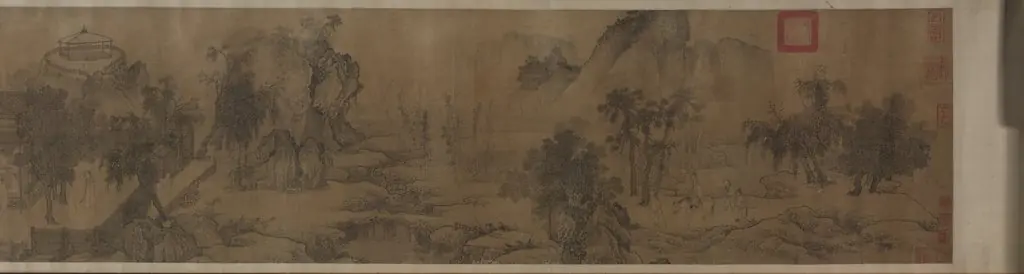 Tao Yuanming's Return Home
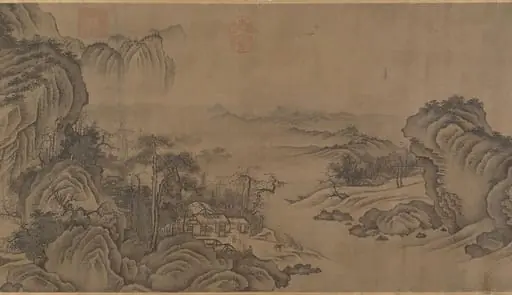 元/明 佚名 舊傳 燕文貴 秋山蕭寺圖 軸|Buddhist Temples amid Autumn Mountains
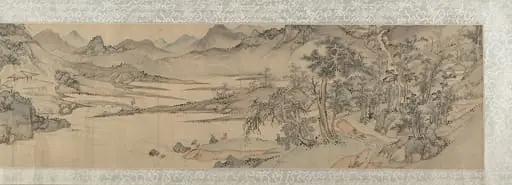 明 佚名 傳文伯仁 山水圖 卷|Landscape
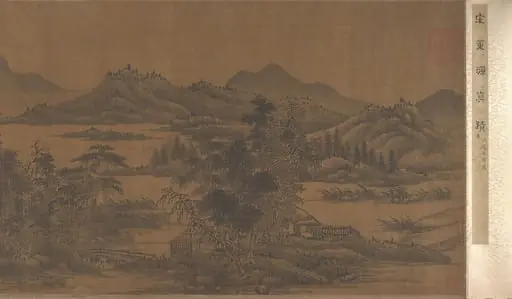 明/清 佚名 舊傳董源 山水圖 卷|Landscape
- 南宋 馬和之 詩經豳風圖 卷|Odes of the State of Bin