Artwork
Landscape Album in Various Styles: Scenery of Mt. Changbai after Huang Gongwang
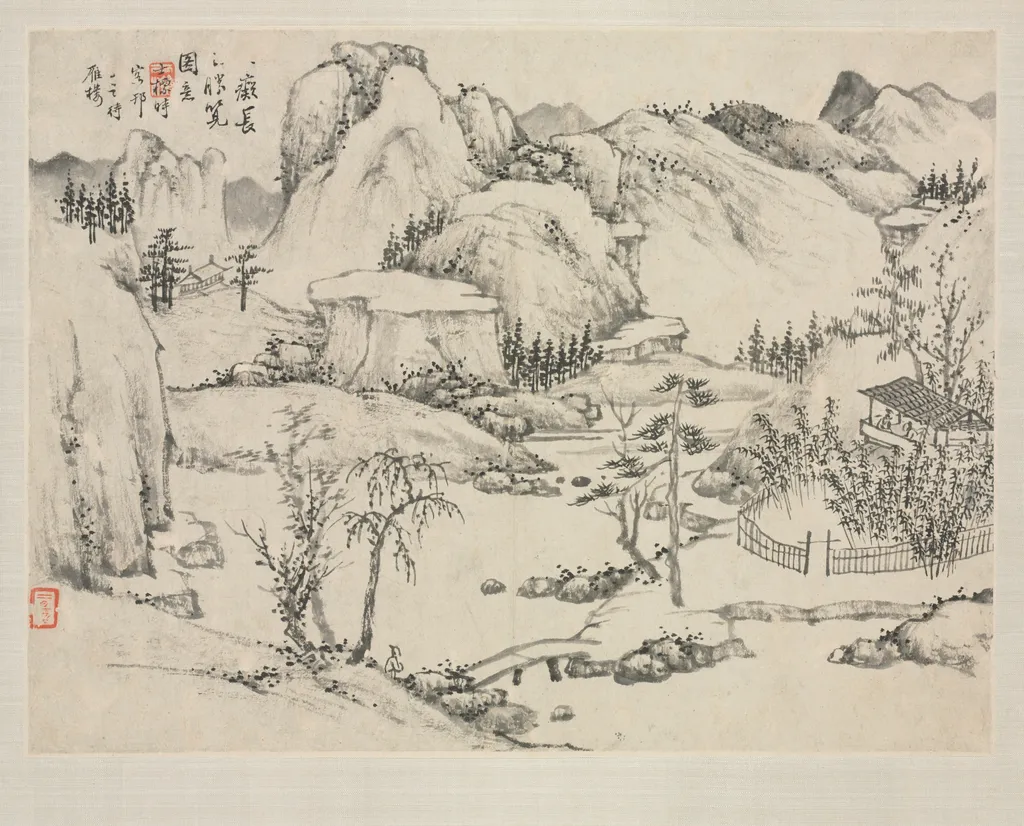
Landscape Album in Various Styles: Scenery of Mt. Changbai after Huang Gongwang is an unspecified painting by the Qing dynasty painting artist Zha Shibiao. It dates from 1692 and is held in the collection of the Cleveland Museum of Art. This painting, titled Landscape Album in Various Styles: Scenery of Mt.
About this work
History & Provenance
Changbai after Huang Gongwang was painted by Zha Shibiao, a Chinese artist known for rendering classic landscape subjects in his own idiom.
Created in 1684 in China, the Landscape Album in Various Styles: Scenery of Mt. Changbai after Huang Gongwang was painted by Zha Shibiao, a Chinese artist known for rendering classic landscape subjects in his own idiom. The work exemplifies the tradition of depicting Mt.
Changbai and was executed in the style of the earlier master Huang Gongwang. Its documented provenance begins with its creation, after which it entered the collection of the Cleveland Museum of Art, where it has been catalogued under accession 1955.37.5 and remains on display. No earlier owners are recorded in the available sources.
The album leaf Landscape Album in Various Styles: Scenery of Mt. Changbai after Huang Gongwang by Zha Shibiao, dated 1684, is held by the Cleveland Museum of Art. Its inventory number is 1955.37.5, as recorded in the Wikidata entry for the work. No exhibition history is documented in the available sources.
Context
Zha Shibiao's Landscape Album in Various Styles: Scenery of Mt. Changbai after Huang Gongwang (1684) is a Qing‑dynasty landscape painting that adapts the compositional language of Ming master Huang Gongwang. The work, classified as a landscape painting and depicting a mountain with a tree, was created in China and later acquired by the Cleveland Museum of Art.
Its subject of Mt. Changbai reflects the period’s fascination with celebrated natural sites and the continuation of literati aesthetic concerns in later Chinese art. As part of an album that surveys various styles, the piece illustrates the stylistic dialogue between earlier and contemporary landscape traditions.
Legacy
Dating to 1684, the painting titled Landscape Album in Various Styles: Scenery of Mt. Changbai after Huang Gongwang was produced by Zha Shibiao in China. It belongs to a series of landscape works and is categorized as a Chinese landscape painting that portrays a mountain and a tree.
The piece is held in the Cleveland Museum of Art, where its inclusion in the museum’s collection signals its acknowledged significance within the tradition of Chinese art. Its composition, drawing on the stylistic model of Huang Gongwang, has been referenced in studies of later landscape developments, ensuring its continued relevance in the historical narrative of the genre.
Overview
This painting, titled Landscape Album in Various Styles: Scenery of Mt. Changbai after Huang Gongwang, was created by Zha Shibiao in 1692. It is a landscape work held in The Cleveland Museum of Art.
The piece reflects the artist's engagement with historical Chinese painting traditions, specifically by reinterpreting an earlier work by the Yuan dynasty master Huang Gongwang, while imbuing it with his distinctive artistic vision.
Subject & Meaning
The painting depicts a serene mountain landscape, featuring jagged peaks and smooth rock formations. A winding path navigates through sparse trees, some depicted as bare, others with clusters of dark foliage. Small structures are subtly integrated behind cliffs, and a fence delineates the right side of the composition.
The title indicates the subject is the scenery of Mt. Changbai, interpreted through the lens of an earlier artistic model.
Technique & Style
Zha Shibiao executed this landscape primarily in varying shades of dark and light gray ink, with a touch of red text at the top. The artist's approach to rendering trees and rocks emphasizes a sense of understated simplicity, yet these elements retain a dynamic and lifelike quality. This work exemplifies Zha Shibiao's method of studying and reinterpreting the styles of past masters, adapting their compositions to his own expressive brushwork.
Own this work as a print
Artist & collection


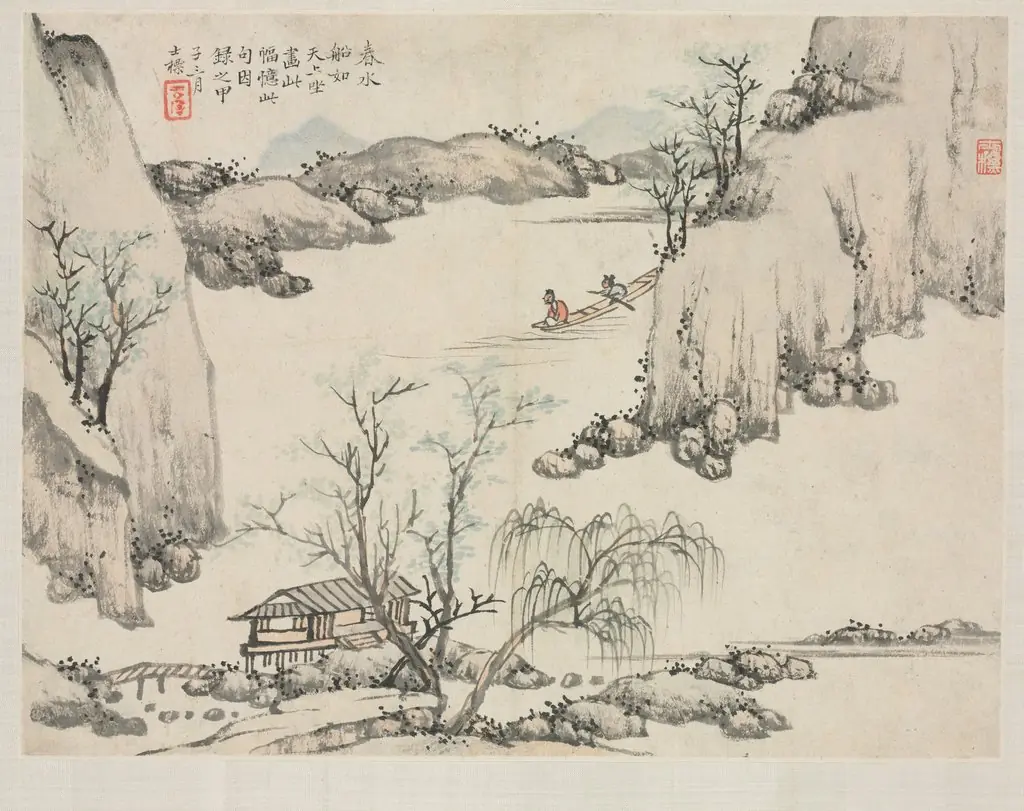 Landscape Album in Various Styles: Boating in Spring Water
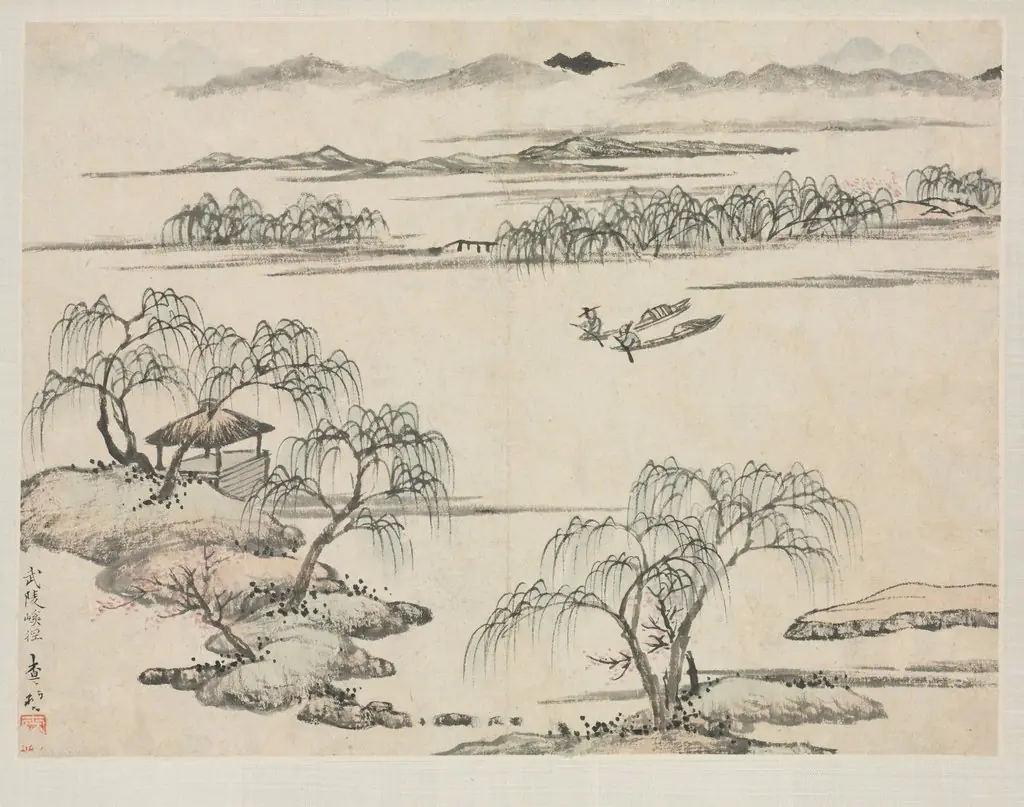 Landscape Album in Various Styles: The Stream of Wuling
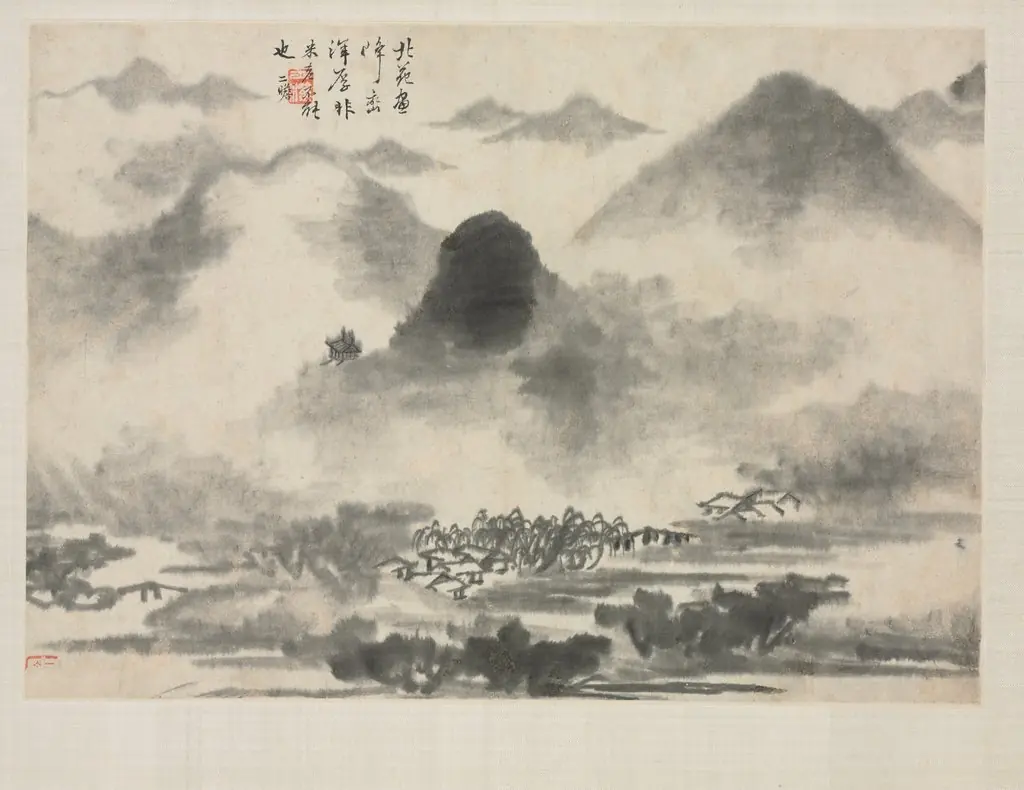 Landscape Album in Various Styles: Landscape after Mi Fei
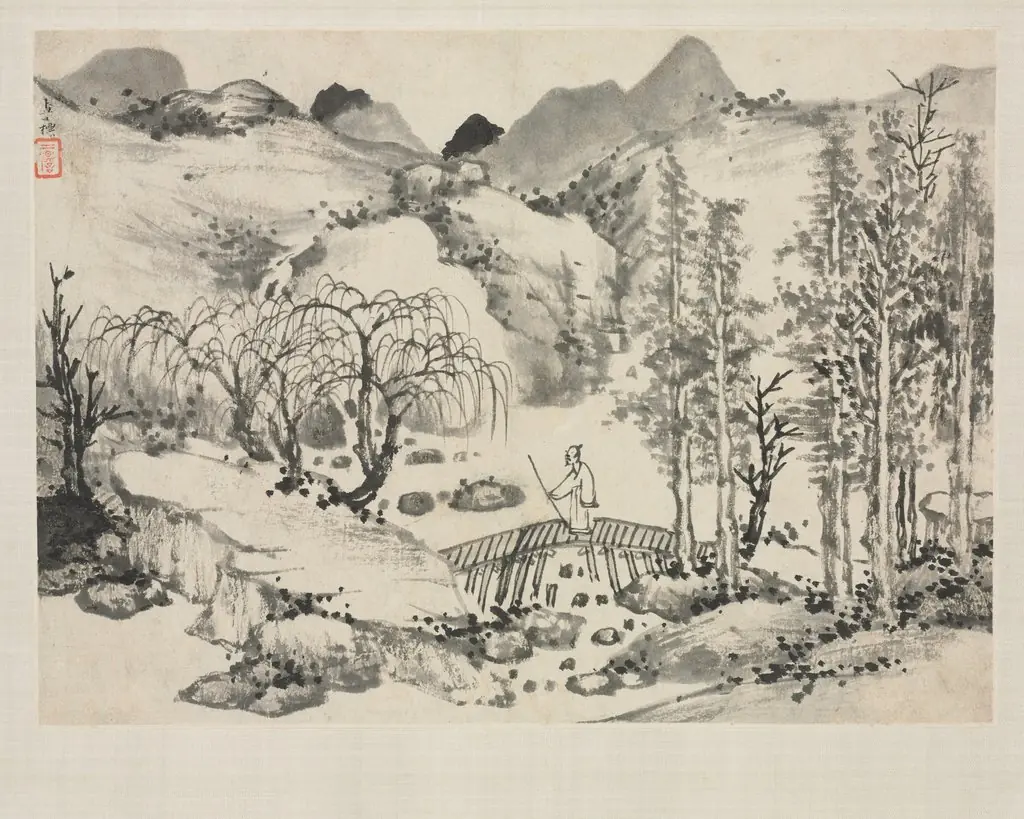 Landscape Album in Various Styles: Landscape with Artist on a Bridge
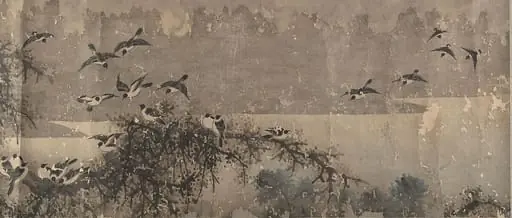 Untitled
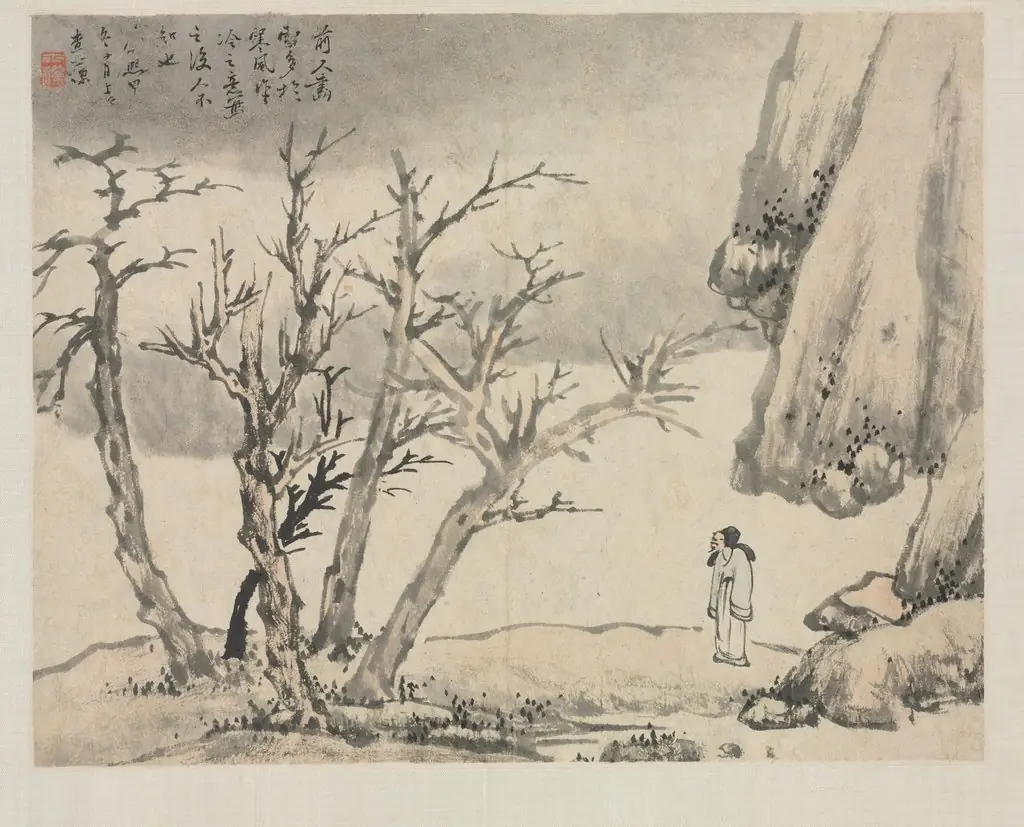 Landscape Album in Various Styles: Snowy Landscape
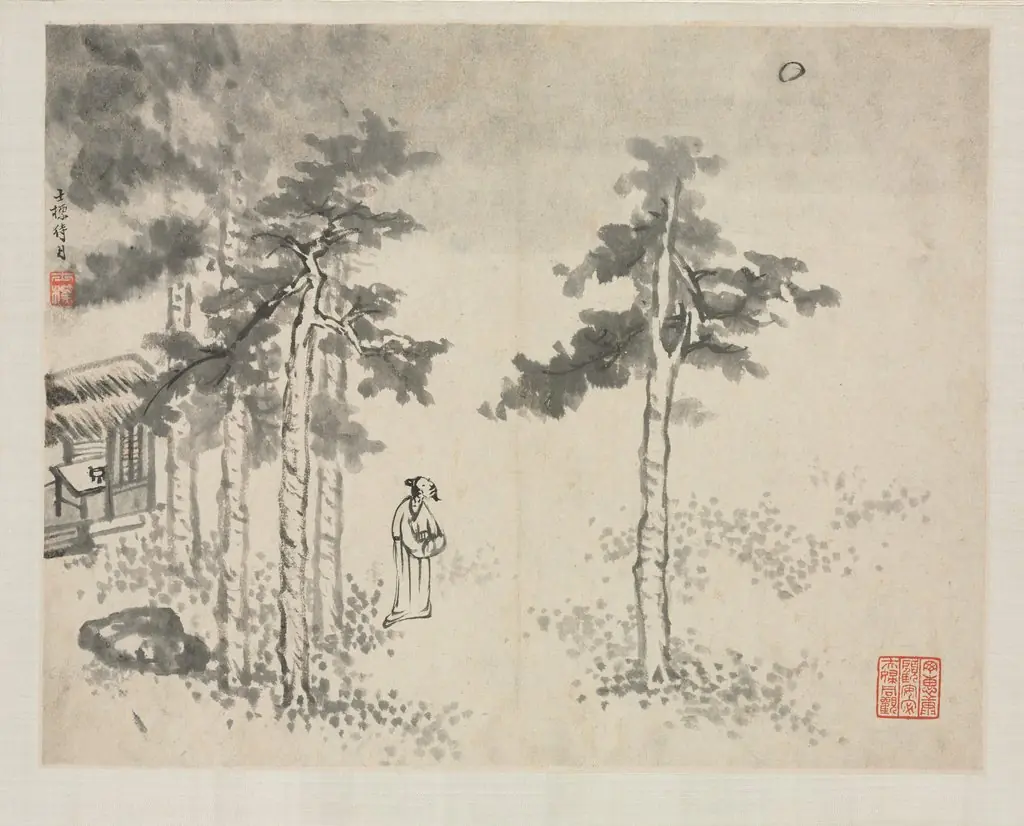 Landscape Album in Various Styles: Shibiao Waiting for the Moon
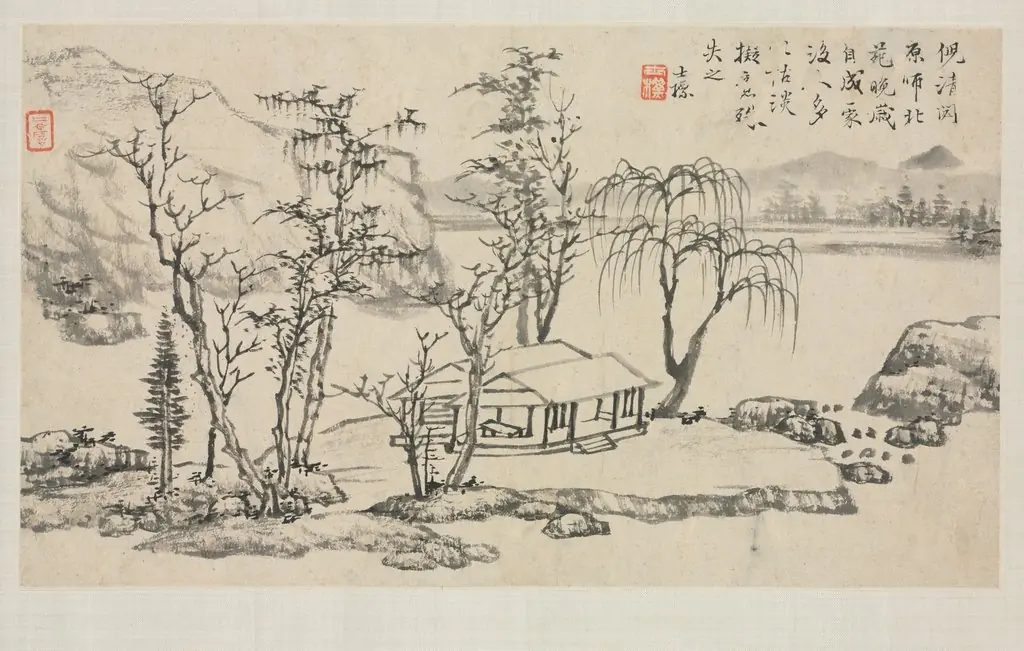 Landscape Album in Various Styles: Landscape after Ni Zan
- Landscape Album in Various Styles: Landscape after Wu Zhen
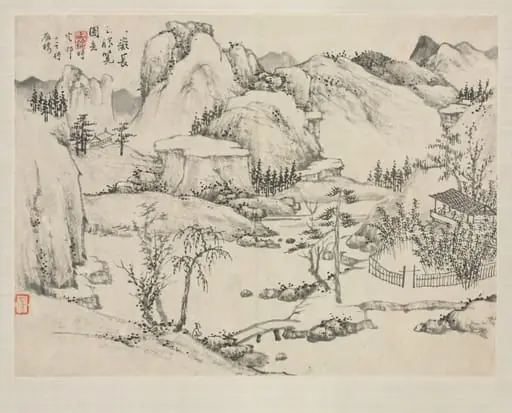 Landscape Album in Various Styles: Scenery of Mt. Changbai after Huang Gongwang
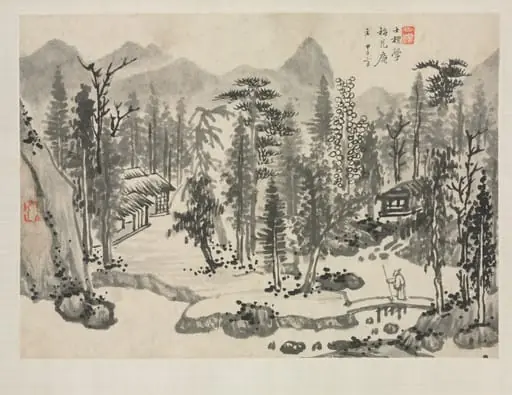 Landscape Album in Various Styles: Landscape after Wu Zhen
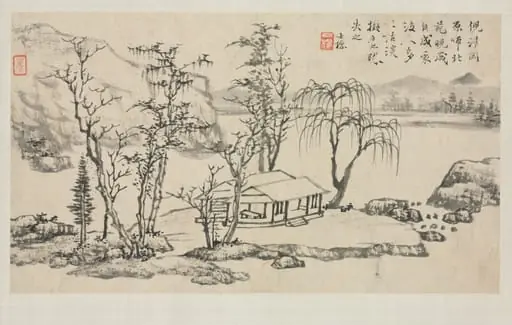 Landscape Album in Various Styles: Landscape after Ni Zan
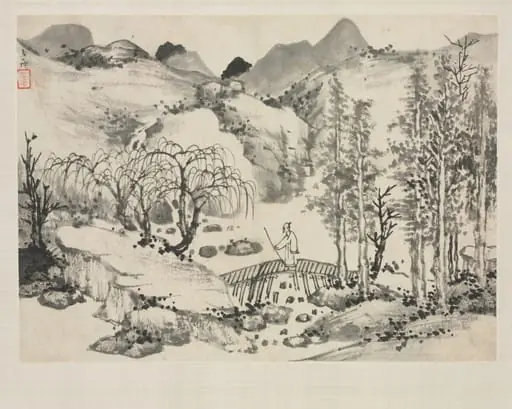 Landscape Album in Various Styles: Landscape with Artist on a Bridge
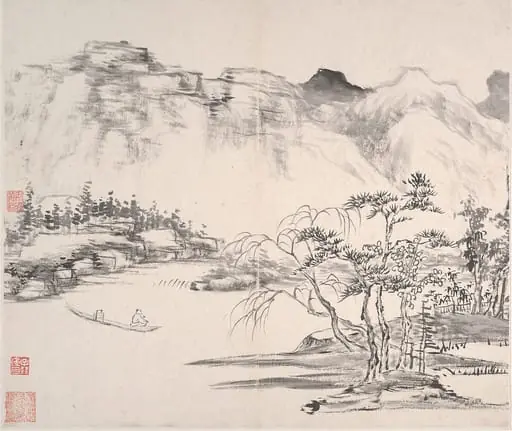 清 伊秉綬 山水 冊|Landscapes