Artwork
明 詹景鳳 草書千字文 卷|Thousand Character Classic
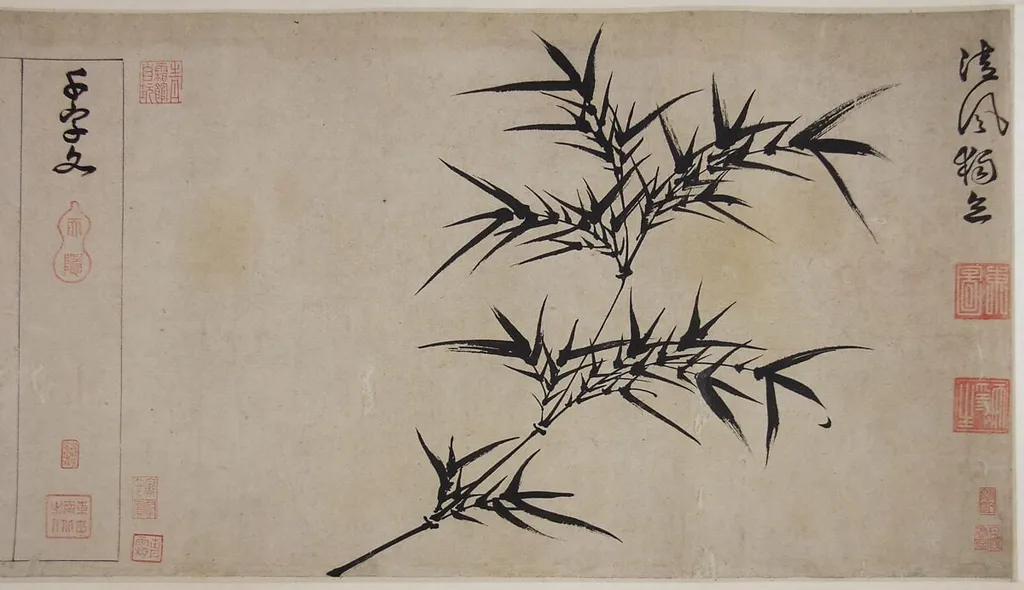
明 詹景鳳 草書千字文 卷|Thousand Character Classic is an ink painting by the Ming dynasty painting artist Zhan Jingfeng. It dates from 1599 and is held in the collection of the Metropolitan Museum of Art.
About this work
Technique & Style
The work’s surface shows minor paper wear along the edges, but the ink remains largely intact, preserving the original calligraphic vigor.
The Thousand Character Classic handscroll by Zhan Jingfeng is executed in ink on paper, forming a hanging scroll format. Its composition features flowing grass script that exemplifies Ming‑dynasty brushwork, with fine, tapered strokes and rhythmic line variation that convey a sense of spontaneity. The ink tones range from deep blacks to subtle grays, creating contrast across the narrow vertical panels.
The work’s surface shows minor paper wear along the edges, but the ink remains largely intact, preserving the original calligraphic vigor. The handscroll’s elongated proportions, approximately 31.1 cm in height and 55.9 cm in width, frame the text in a continuous, unbroken sequence, emphasizing the rhythmic progression of characters.
History & Provenance
The Thousand Character Classic in cursive script by Zhan Jingfeng was created in 1599, as indicated by the dated inscription on the handscroll.
The work later entered the collection of the Metropolitan Museum of Art, where it is presently held. Its dimensions are recorded as 31.1 cm in height and 55.9 cm in width.
The handscroll Thousand Character Classic by Zhan Jingfeng is held in the collection of the Metropolitan Museum of Art in New York. The work dates to 1599 and is classified as a painting executed in ink on paper. The provided sources do not list a specific accession or inventory number for the object, nor do they record any exhibition history or past display locations.
Legacy
The handscroll by Zhan Jingfeng, executed in 1599, contributed to the transmission of late Ming brushwork techniques through its fluid execution of the Thousand Character Classic. Though documentation of direct disciples is sparse, the work's presence in the Metropolitan Museum of Art's collection has allowed continued scholarly study of Zhan's role in the evolution of cursive script painting. Its influence is noted in later adaptations of Ming-era calligraphic abstraction within contemporary ink practice.
Overview
Created in 1599 during the Ming dynasty, this handscroll presents Zhan Jingfeng’s cursive rendition of the Thousand Character Classic. Executed on paper with black ink, the work consists solely of flowing Chinese characters that extend across the length of the scroll, offering a continuous visual experience of calligraphic line.
Subject & Meaning
The text of the scroll is the Thousand Character Classic, a traditional primer used for teaching literacy to children. By rendering the educational passage in an energetic cursive script, Zhan transforms a didactic work into a visual meditation on the rhythm and vitality of Chinese characters.
Context
During the Ming era, the Thousand Character Classic was widely memorized, and calligraphers often used its text to demonstrate mastery of brush technique. Zhan Jingfeng’s version reflects this tradition, situating the work within a broader cultural emphasis on the integration of literary education and visual art.
Artist & collection