Artwork
清 石濤 (朱若極) 山水人物圖 冊頁|Landscape with solitary figure
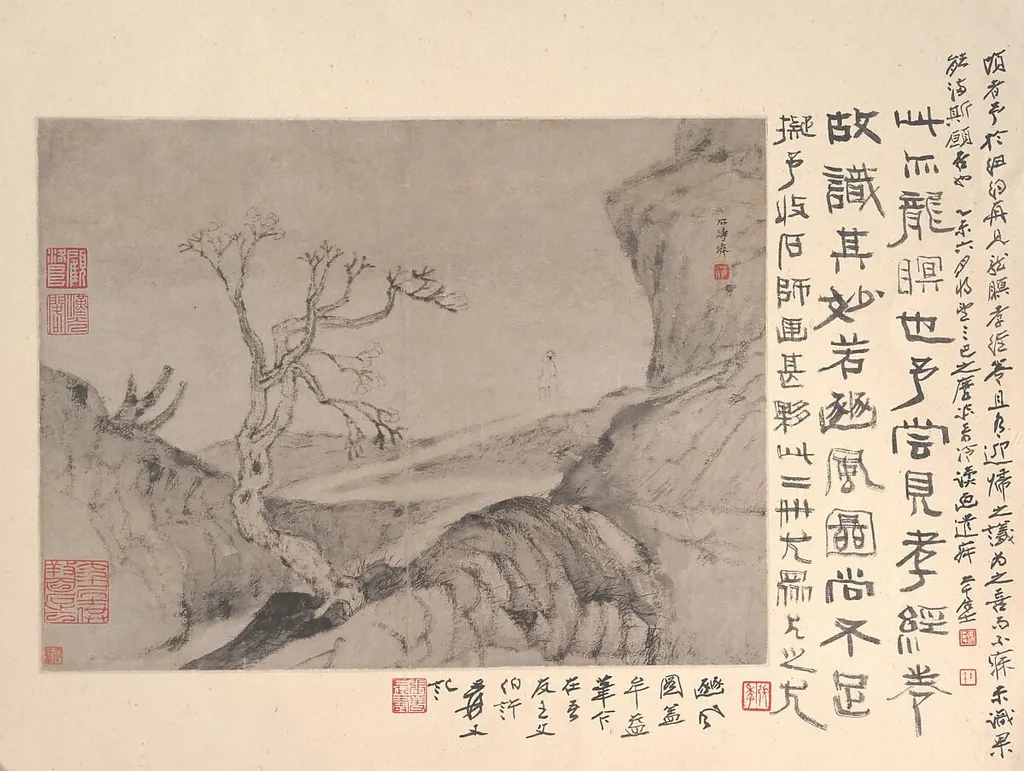
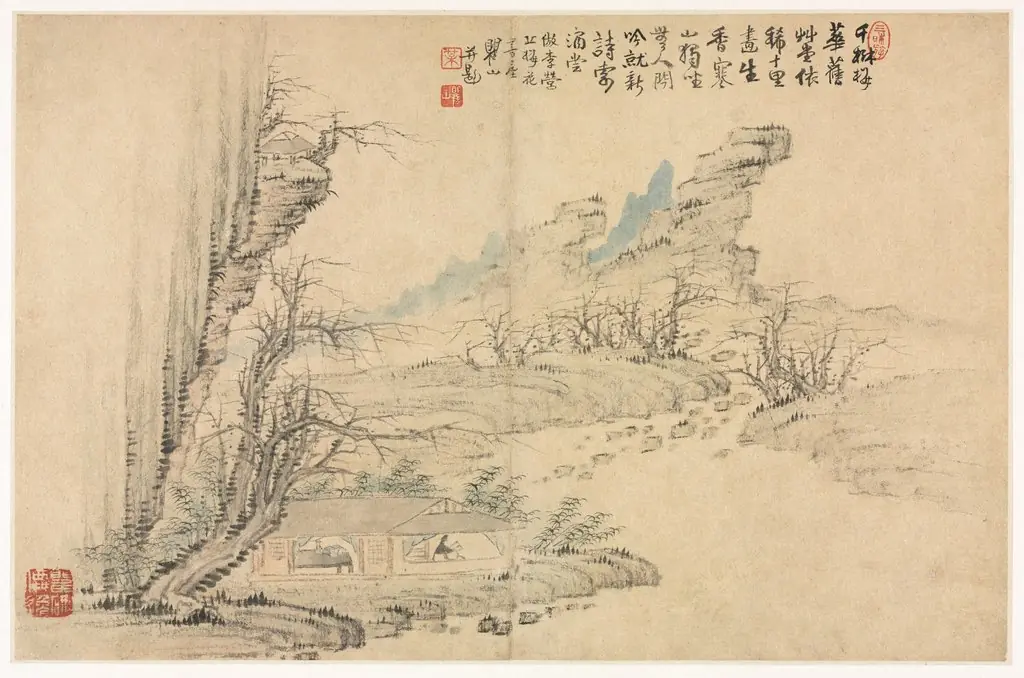
清 石濤 (朱若極) 山水人物圖 冊頁|Landscape with solitary figure is an ink painting by the Baroque artist Shitao. It dates from 1664 and is held in the collection of the Metropolitan Museum of Art.
About this work
Technique & Style
The paper support shows slight planar distortions typical of aged album leaves, yet the ink remains stable without notable fading or abrasions.
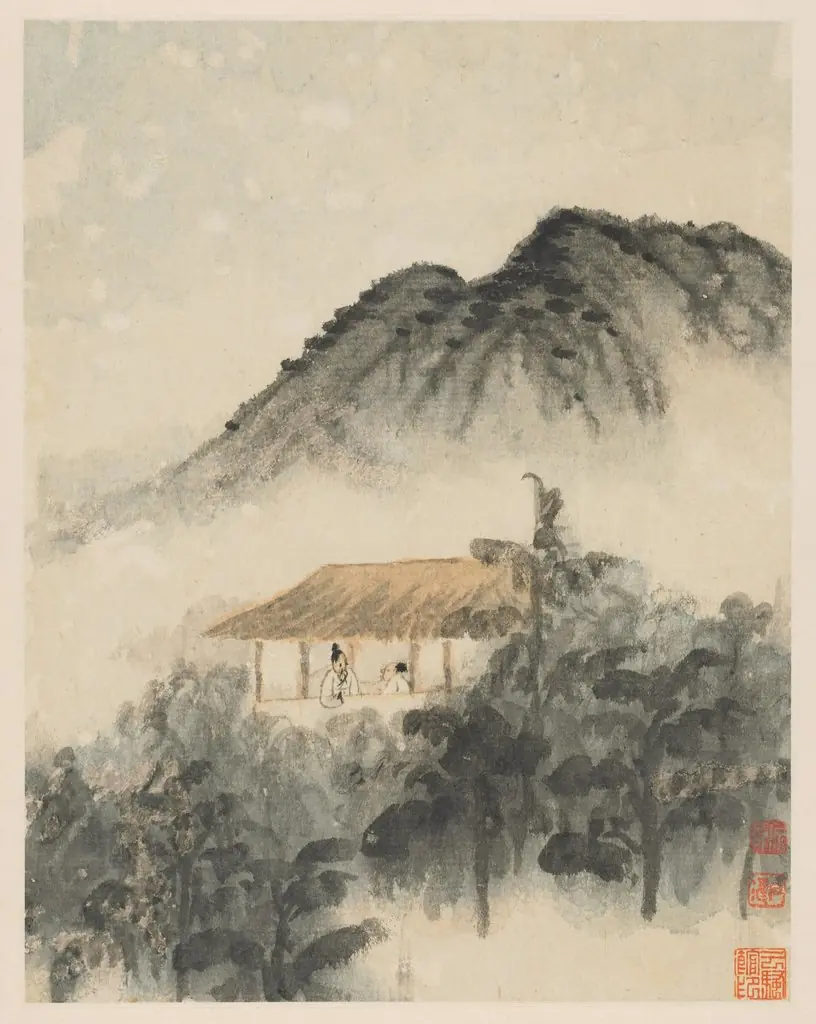
The album leaf employs monochrome ink on paper, characteristic of Shitao’s mature practice. Handling emphasizes fluid, calligraphic brushwork to delineate rugged mountain forms and a solitary wanderer, integrating abbreviated figural outlines with abbreviated landscape motifs. Compositional density contrasts with ample negative space, guiding the viewer’s gaze along rhythmic ink trails and attenuated tree trunks.
The paper support shows slight planar distortions typical of aged album leaves, yet the ink remains stable without notable fading or abrasions.
History & Provenance
Shitao (Zhu Ruoji) painted the album leaf titled Landscape with solitary figure in 1660, employing ink on paper to render a compact Chinese landscape.
The work, classified as a painting and landscape genre, measures 21.6 cm by 28.6 cm and was created in China. Its subject, a lone figure within a natural setting, reflects the artist’s synthesis of earlier traditions and personal expression.
The piece entered the collection of the Metropolitan Museum of Art, where it remains on view, documenting its modern ownership chain from the early twentieth‑century acquisition to present custodianship.
The painting is housed in the Metropolitan Museum of Art in New York. It entered the museum's collection as part of the institution's holdings of Chinese ink paintings from the early Qing period. The work is catalogued as an album leaf measuring 21.6 cm by 28.6 cm, created in 1660 by Shitao (Zhu Ruoji).
Its presence in the museum's galleries reflects the continued interest in Shitao's landscape subjects during the 17th century.
Overview
Shitao's Landscape with solitary figure, an ink on paper album leaf created around 1664, offers a contemplative view of nature. This painting, also known by its Chinese title Shanshui renwu tu, is a representative example of the artist's landscape compositions from the early Qing dynasty. It demonstrates his characteristic approach to rendering serene natural environments, often featuring human elements integrated subtly within a grander scene.
Subject & Meaning
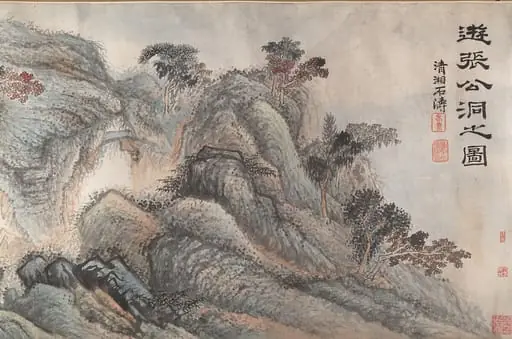
The composition depicts a tranquil landscape, anchored by a substantial rock formation on the left side of the foreground. A few trees rise in the background, while a soft, muted gray sky extends above, enhancing the sense of calm. A small, solitary figure is placed in the distance, subtly drawing the viewer's eye and suggesting a human presence within the expansive natural setting, inviting reflection on scale and solitude.
Artist & collection


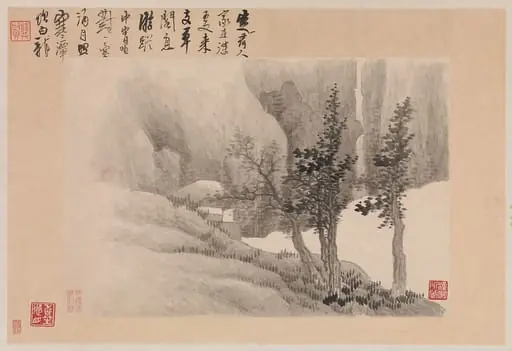 清 龔賢 自題山水十六開 冊|Landscapes with Poems
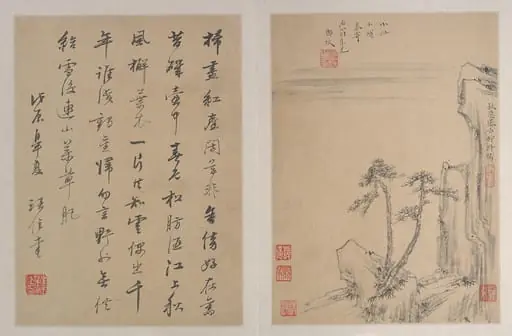 Untitled
 Spring Landscape
 Landscapes in Various Styles after Old Masters
 Landscape with Mountains and Rivers
 Spring Landscape
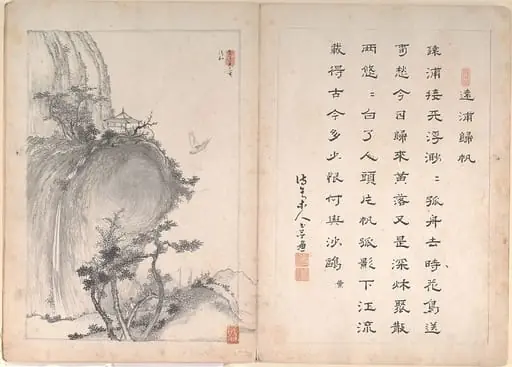 清 詩午閑人 瀟湘八景詩畫 冊|Eight Landscape Scenes and Calligraphy
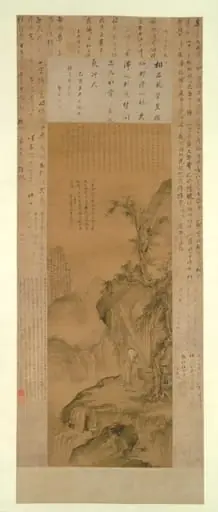 Layered Peaks and Splashing Waterfall: Portrait of Hua Yan as a Young Man
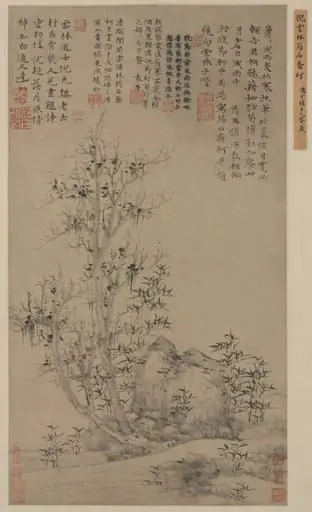 Bamboo, Rock, and Tall Tree