Artwork
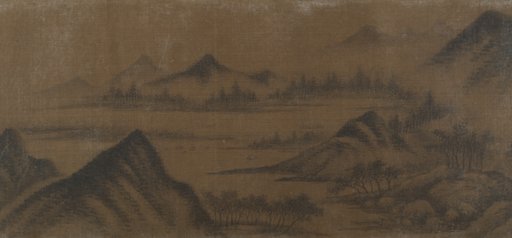
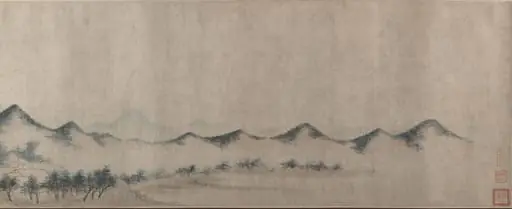
清 佚名 米芾(僞款) 雲山圖 卷|Mountain Landscape
About this work
Subject & Meaning
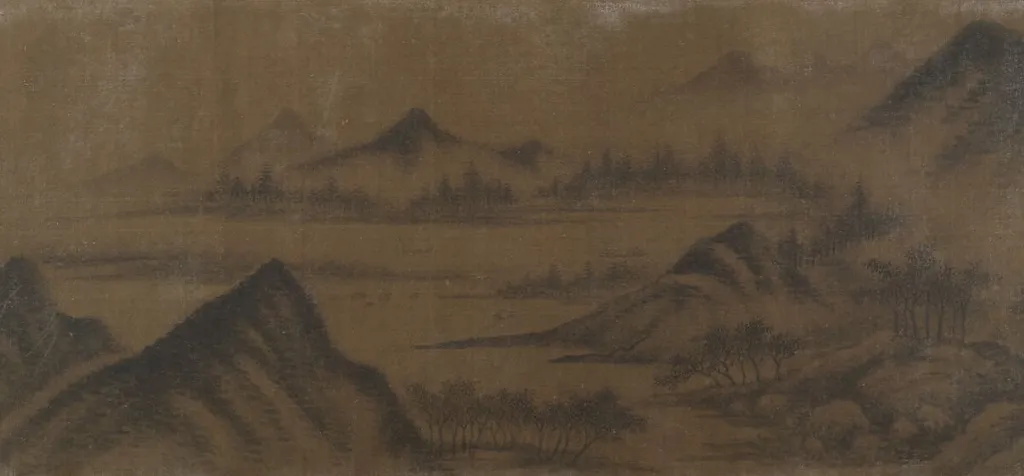
The composition focuses on the depiction of peaks and atmospheric space, utilizing ink on silk to render the natural world.
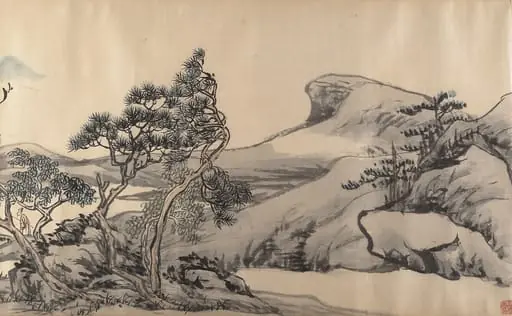
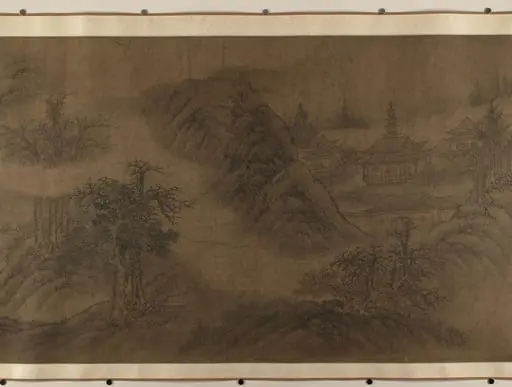
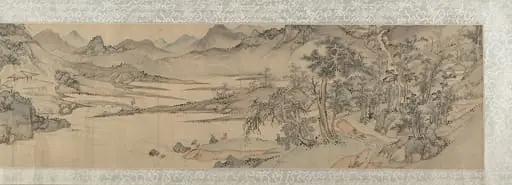
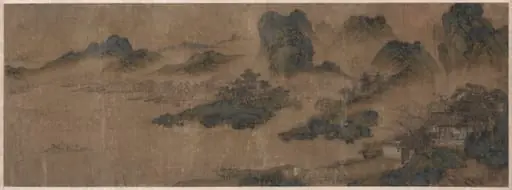
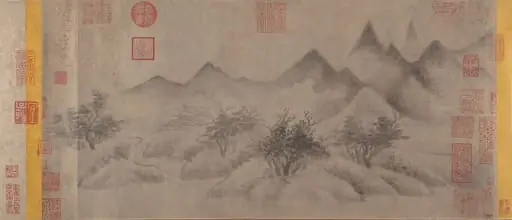
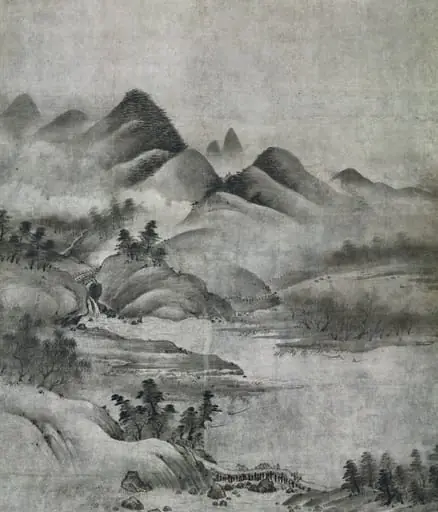
Executed in 1777, this handscroll presents a traditional Chinese landscape dominated by mountainous forms. As a work attributed to the style of Mi Fu but created by an anonymous Qing dynasty artist, the imagery engages with the established iconography of the 'cloud-and-mountain' genre. The composition focuses on the depiction of peaks and atmospheric space, utilizing ink on silk to render the natural world.
While specific symbolic narratives are not detailed in the available records, the work functions as a representation of the idealized landscape, a central subject in East Asian art history that often reflects philosophical contemplation of nature. The painting's classification as a landscape underscores its primary intent to capture the essence of the mountain environment rather than a specific geographic location.
Technique & Style
The work is a handscroll painted in ink on silk, likely produced in China around 1777, depicting a mountainous landscape in the style of Mi Fu, though executed by an anonymous follower. The silk support suggests a delicate handling typical of handscrolls, which are unrolled section by section. The composition features layered ink washes and subtle gradations, characteristic of Qing dynasty landscape painting, emphasizing atmospheric depth.
The piece is part of the Metropolitan Museum of Art collection (MET 47.18.48). Condition appears stable, with no noted damage.
History & Provenance
The handscroll Mountain Landscape was executed in 1777 in China by an anonymous painter working after the style of Mi Fu; it is documented as a silk ink painting in the internal catalogue. The work is classified as a landscape painting and is part of the Metropolitan Museum of Art’s collection, which records its inception on 1 January 1777 and notes its creation location as China. No commissioning patron is recorded, and the ownership chain proceeds directly from the artist to the museum’s holdings, with no intermediate proprietors cited in the available records.
The handscroll titled Mountain Landscape, attributed to an anonymous Qing painter with a spurious signature of Mi Fu and dated 1777, is held in the collection of the Metropolitan Museum of Art in New York. The work, executed in ink on silk, measures 33.7 cm in height and 279.9 cm in width. It is cataloged under the accession number 47.18.48 within the museum's Department of Asian Art.
The scroll depicts a traditional Chinese landscape featuring mountainous terrain. As of the available records, no specific exhibition history or loan details are documented for this piece in the provided sources.
Overview
This handscroll, dated 1777, presents a misty mountain landscape executed in ink on silk. The composition features soft, gray peaks emerging from a dense, atmospheric mist, rendered through quick, wet brushstrokes that emulate the 'cloudy mountain' style associated with the Song dynasty master Mi Fu. Although the work bears a signature attributing it to Mi Fu, art historical analysis identifies this as a later addition; the painting is a Qing dynasty creation that adopts the aesthetic conventions of the earlier master.
The technique relies on the 'muddy' or 'cloudy' ink wash method, where layers of diluted ink create a sense of volume and humidity without distinct outlines. Created in 1777, this piece reflects the enduring reverence for Mi Fu's innovative approach to landscape painting during the Qing period, where artists frequently produced works in his style or appended his name to elevate the object's prestige. The scroll format allows the viewer to unroll the scene gradually, experiencing the shifting mists and peaks as a continuous journey.
As a work by an anonymous artist after Mi Fu, it serves as a testament to the transmission of stylistic traditions and the practice of attribution in Chinese art history.
Artist & collection