Artwork
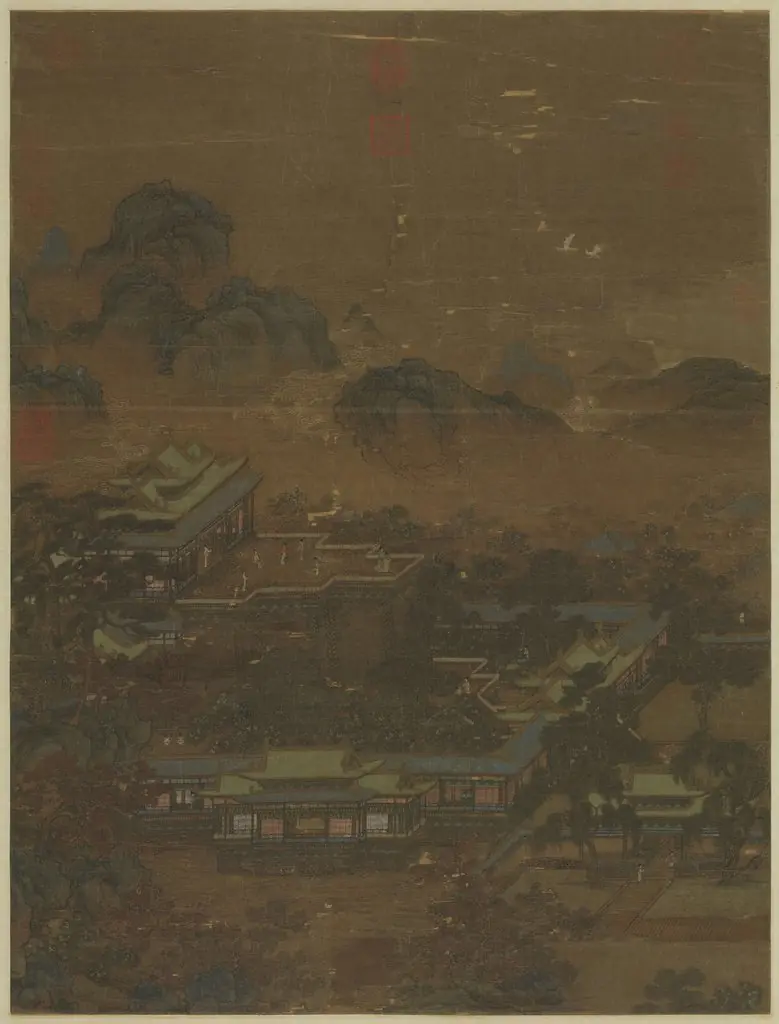
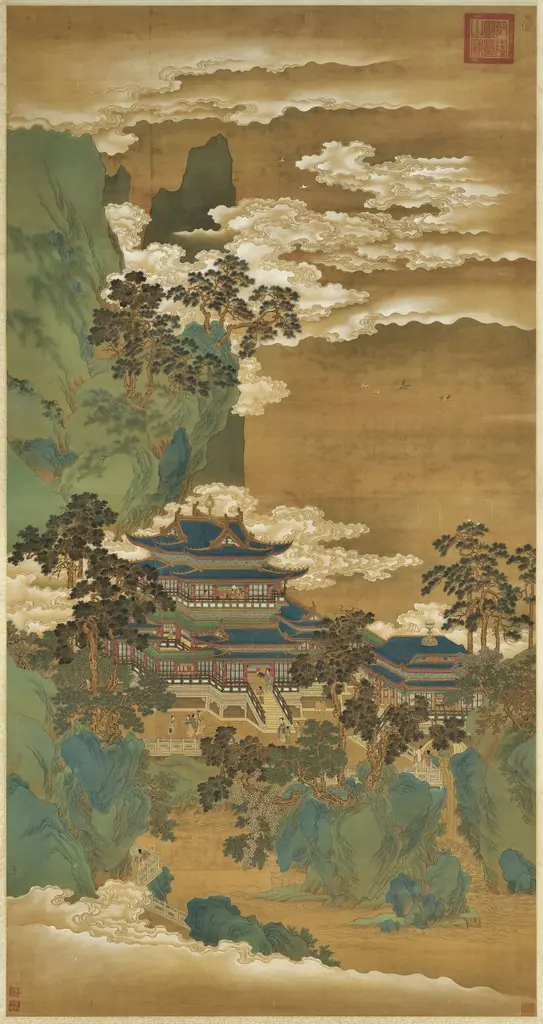
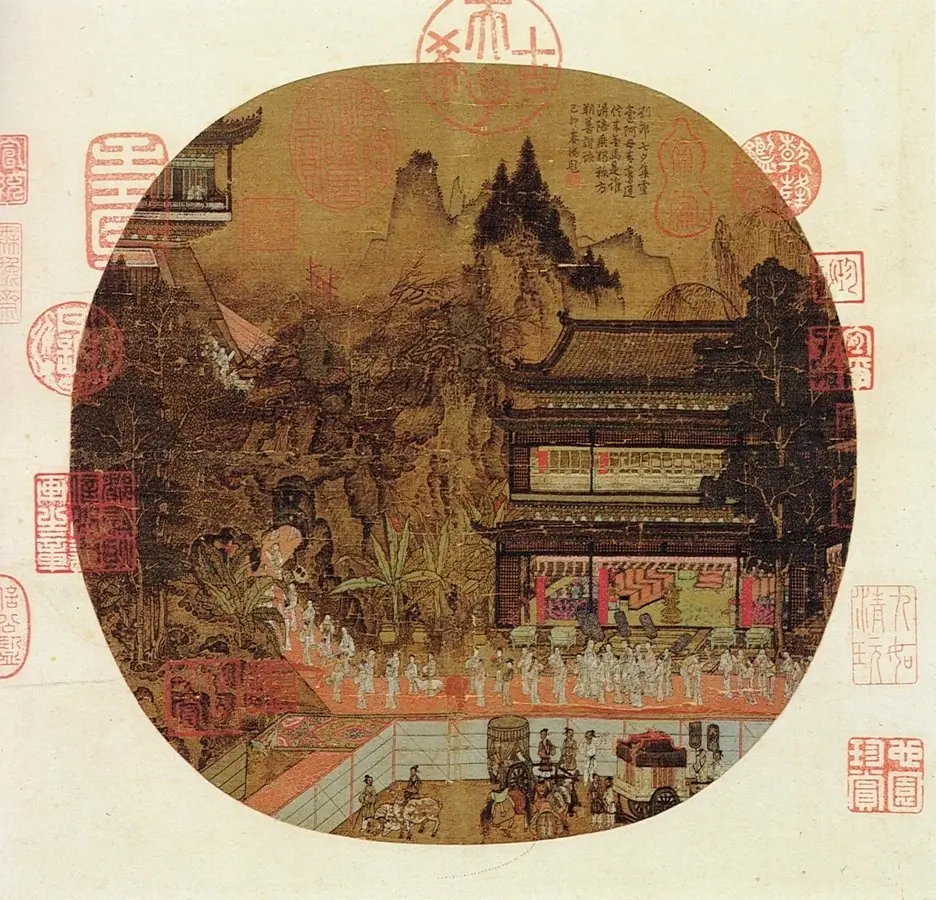
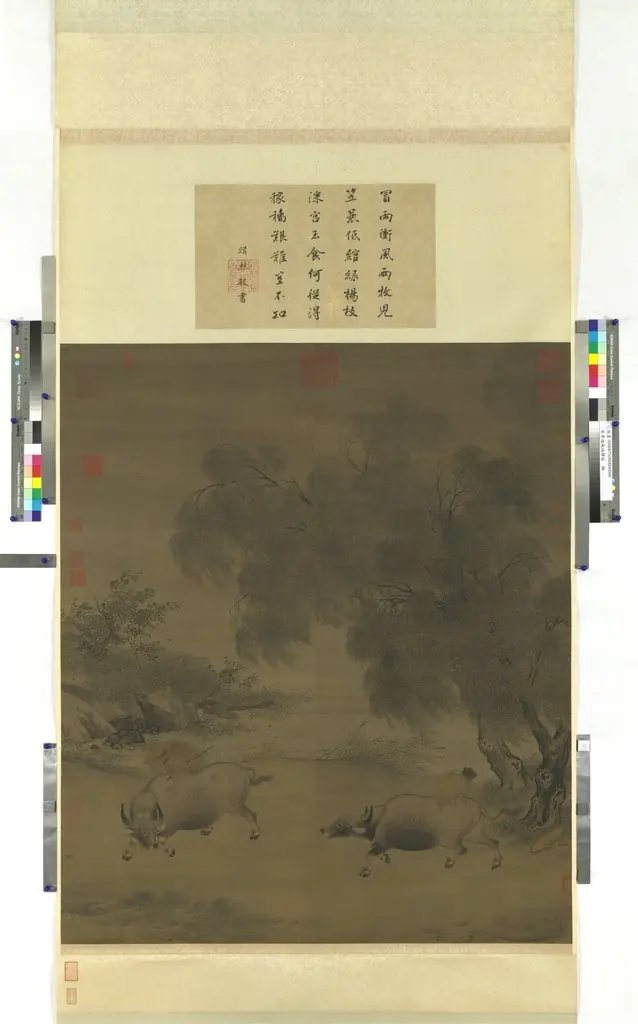
宋趙伯駒漢宮圖 軸
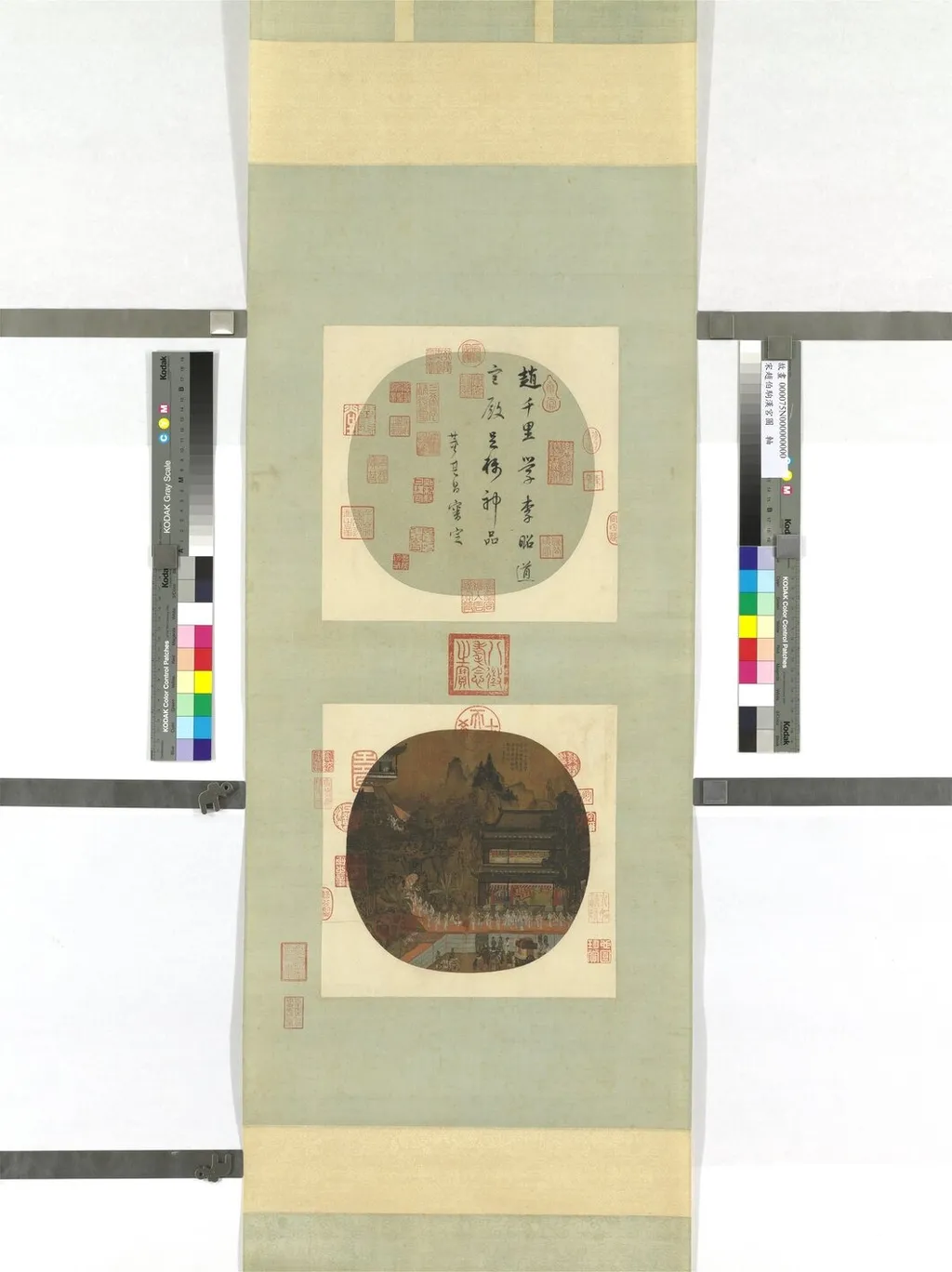
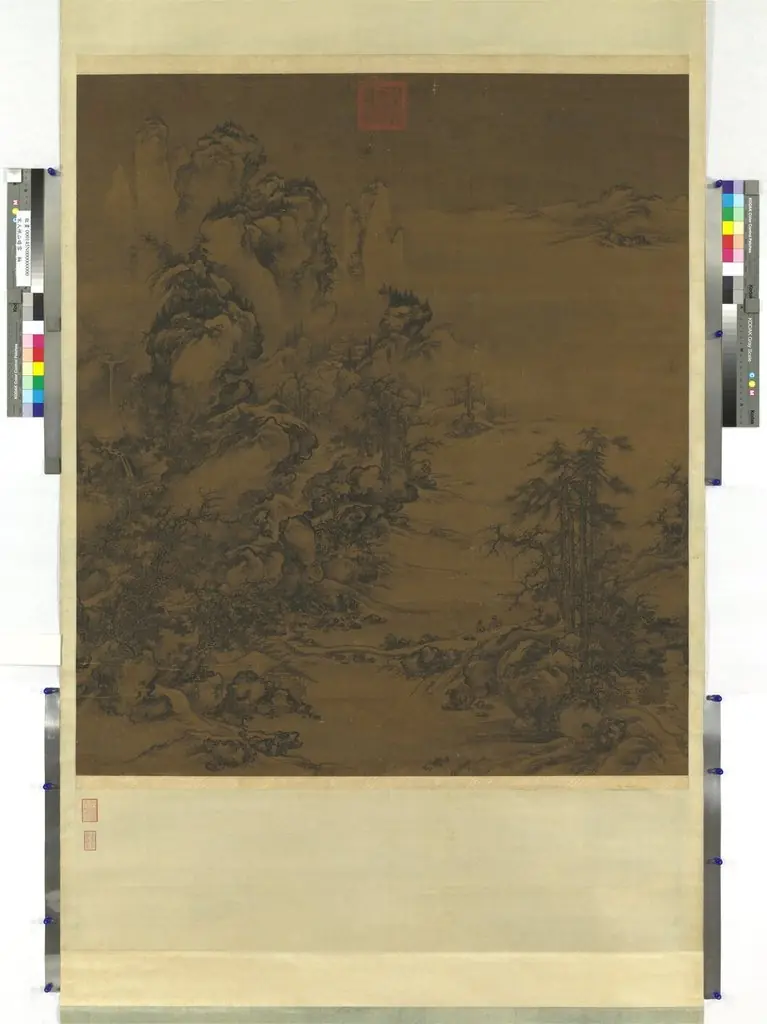
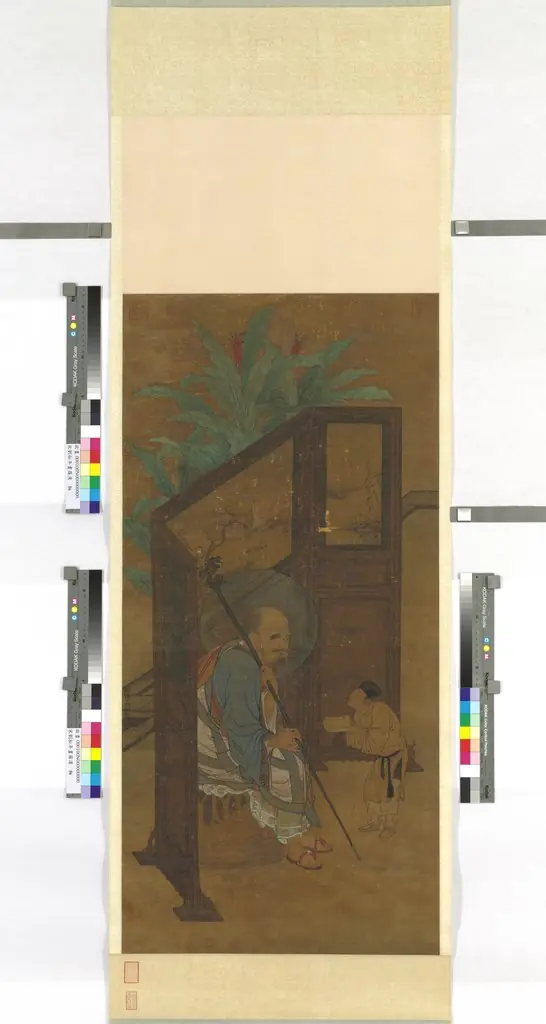
宋趙伯駒漢宮圖 軸 is an unspecified painting by the Song dynasty painting artist Zhao Boju. It dates from 1120 and is held in the collection of the National Palace Museum.
About this work
Overview
This 12th-century silk painting, attributed to Zhao Boju, exemplifies the Southern Song Dynasty's court painting tradition. Created around 1120, it showcases the artist's versatility across genres, despite none of his original works surviving beyond written records.
Subject & Meaning
The painting depicts an imperial palace scene, likely a ceremonial or celebratory event, set against a brown background. This reflects the refined tastes of the Southern Song court, offering a glimpse into the era's aristocratic life.
Technique & Style
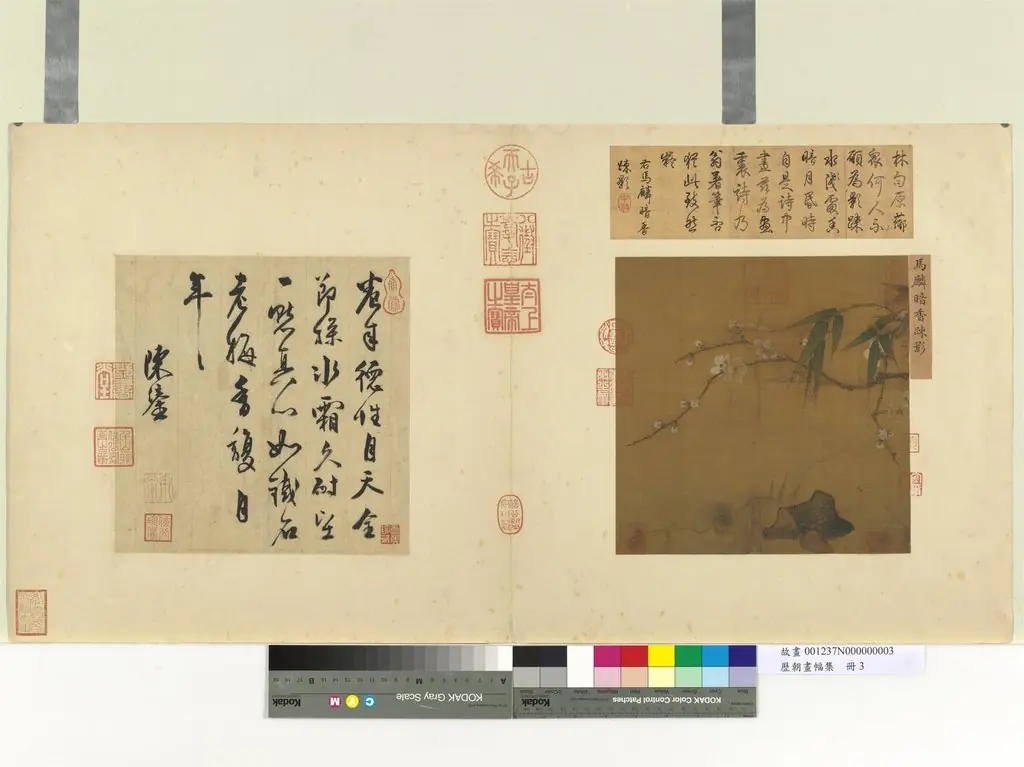
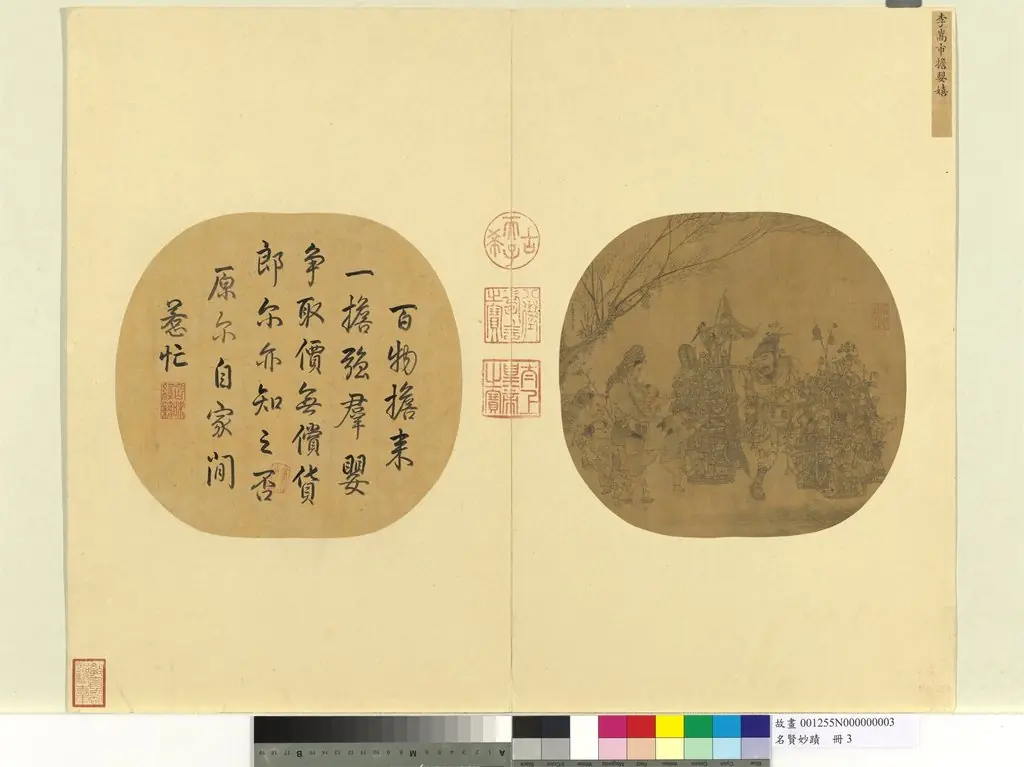
The work features two circular compositions on a narrow silk panel. Notable techniques include the use of black ink for calligraphy in the top circle, contrasted with red stamps surrounding both circular elements. The incorporation of chiaroscuro adds depth to the scene, particularly in the lower circle's figurative depiction.
History & Provenance
Attributed to Zhao Boju, a Hebei-born painter of landscapes, figures, and florals, this work's existence is confirmed through later writings by art critic Zhao Xigu, as no direct originals of Boju's work have survived.
Context
Mounted on a light green background with cream-colored borders and adorned with scattered red stamps, the painting's presentation enhances its ceremonial feel, aligning with the formal aesthetics of the Southern Song Dynasty.
Legacy
As one of the few attributed works from Zhao Boju, this painting provides valuable insight into the artistic practices and courtly life of the early Southern Song Dynasty, despite the lack of direct survivors from the artist's oeuvre.
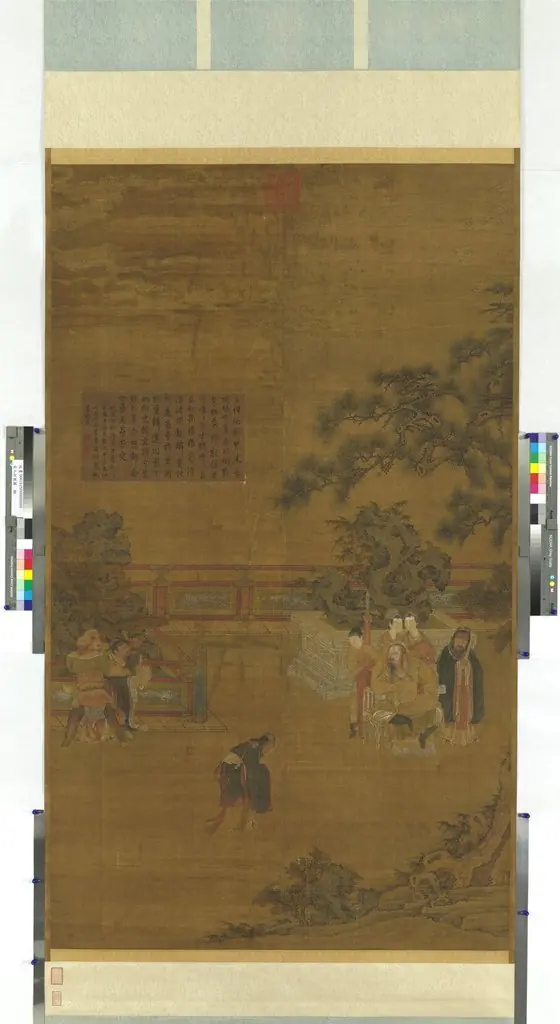
Artist & collection
Artist
Zhao Boju (Chinese: 赵伯驹; pinyin: Zhào Bójū; 1120–1182), was a Chinese painter during the early Southern Song Dynasty (1127–1279).