Movement
Noucentisme
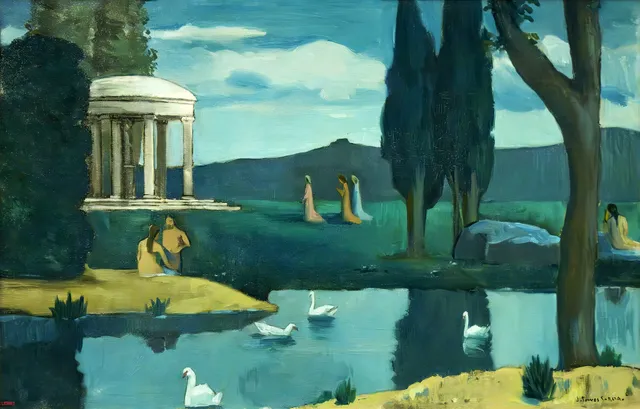
Noucentisme is an art movement of the 1900–1930 period. The gallery holds 1 work in this movement, including works by Joaquín Torres-García and Teresa Condeminas i Soler. Browse Noucentisme paintings, portraits, pictures and artworks from the world's public-domain museum collections.
Noucentisme was a Catalan cultural and artistic movement that crystallized in the first decades of the twentieth century as a deliberate reaction against the curvilinear exuberance and "romantic chaos" of Modernisme. The writer and philosopher Eugeni d'Ors coined the name in 1906, playing on the Italian habit of naming styles by century (Quattrocento, Cinquecento) and on the Catalan homonyms *nou* ("nine," for the new nineteen-hundreds) and *nou* ("new"). More than a style, it was a project of national renovation: where Modernisme had been rural, internationalist and individualist, Noucentisme was urban, civic and self-consciously Catalan, allied to the institution-building politics of Enric Prat de la Riba and the Mancomunitat de Catalunya.
Its aesthetic program was a "return to order" rooted in Mediterranean classicism. Artists sought the clarity, measure, harmony and reason of ancient Greece and Rome and the Italian Renaissance, favouring serene, idealized figures, balanced compositions and an Arcadian iconography of nymphs, muses and a timeless, sun-washed Catalan landscape. D'Ors gave the movement its emblem in *La ben plantada* (1911), the well-rooted woman embodying classical poise.
The painters Joaquim Sunyer (1874–1956) and the Catalan-Uruguayan Joaquín Torres-García (1874–1949) led the way, with Feliu Elias close behind, while sculptors Josep Clarà, Enric Casanovas and Manolo Hugué translated the same ideals into stone—heirs to the nearby example of Aristide Maillol. Torres-García became a chief promoter of the movement; his Arcadian, classicizing paintings of this period—of which our collection's *Temple to the Nymphs* is representative—culminated in the great allegorical frescoes commissioned in 1912 for the Saló de Sant Jordi in Barcelona's Palau de la Generalitat, left unfinished in 1918.
Noucentisme also shaped architecture and design, supplying a sober, ordered, Mediterranean alternative to Gaudí's generation; Rafael Masó (Casa Masramon, 1913–14) and the transitional Josep Puig i Cadafalch are its principal builders. The movement's institutional grip faded under the Primo de Rivera dictatorship of the 1920s, and Torres-García himself moved beyond it toward the geometric abstraction of his later Constructive Universalism. Yet Noucentisme remains a defining chapter of Catalan culture, bridging Modernisme and the avant-garde and leaving an enduring stamp on the visual identity of early-twentieth-century Catalonia.
Key artists
Works
Frequently asked questions
What is Noucentisme?
Noucentisme is an art movement. A Catalan cultural movement of the early 20th century that reacted against the ornamentation of Modernisme with a call for classical Mediterranean clarity.
Who are the key Noucentisme artists?
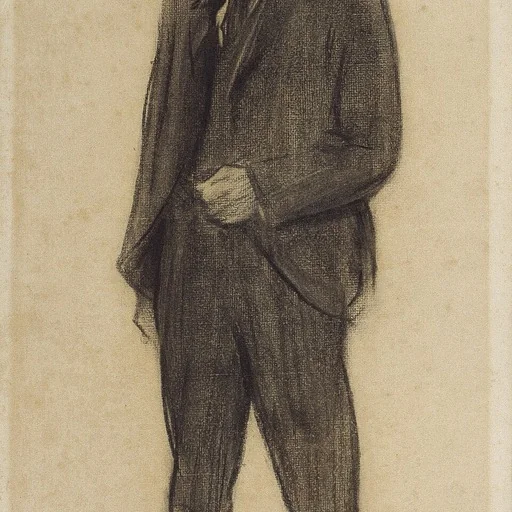
Key Noucentisme artists in the collection include Joaquín Torres-García and Teresa Condeminas i Soler.
When did Noucentisme take place?
Noucentisme dates from 1900–1930.
Where can I see Noucentisme works?
Noucentisme works in the collection are held by Museu Nacional d'Art de Catalunya.