January 9 in Art History
6 real events recorded on January 9, the earliest from 1590. 2 artists were born , 1 died on this date.
Born on this day 2
- 1590 Born
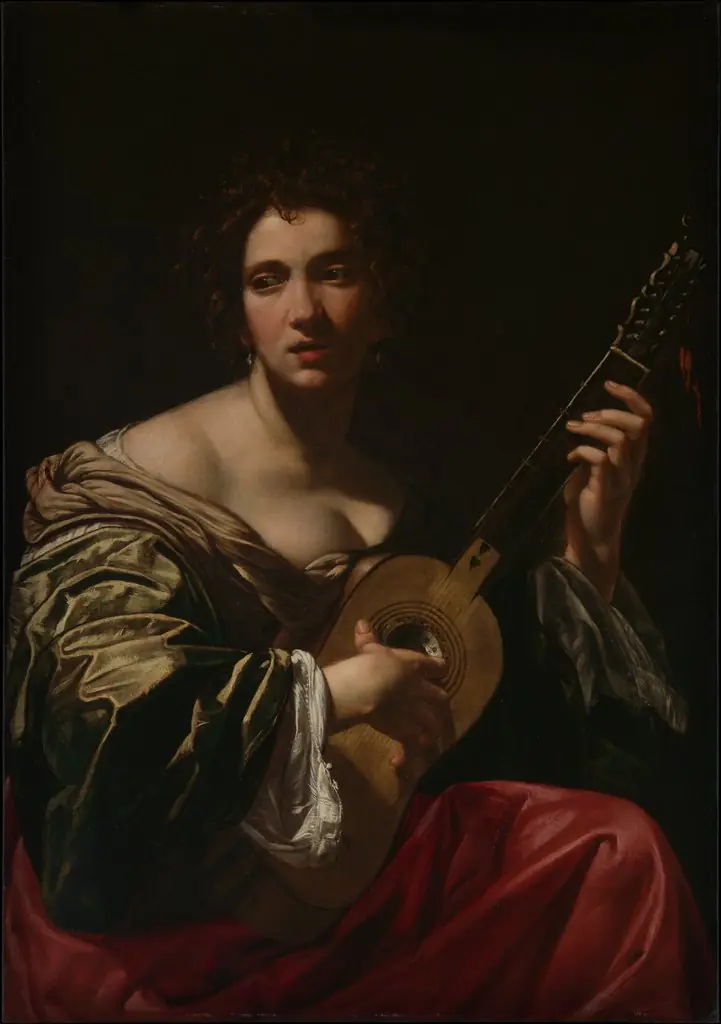
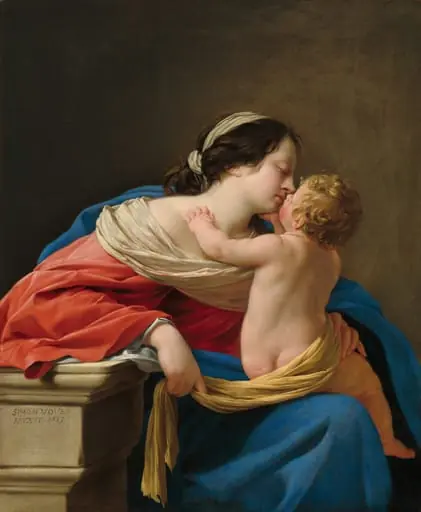
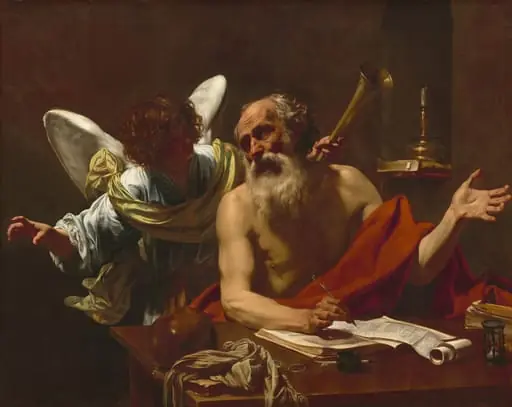
Born this day: Simon Vouet
Simon Vouet, born on January 9, 1590, was a French painter who introduced the Italian Baroque style to France, creating influential works in various mediums, including paintings and frescoes. He rose to prominence in Italy before becoming the Premier peintre du Roi in France, producing notable pieces like Woman Playing a Guitar and Allegorical Portrait of Anna of Austria as Minerva.
Simon Vouet's work remains a cornerstone of French Baroque art, continuing to inspire artists and art lovers alike.
- 1721 Born
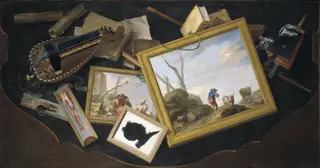
Born this day: Charles Joseph Flipart
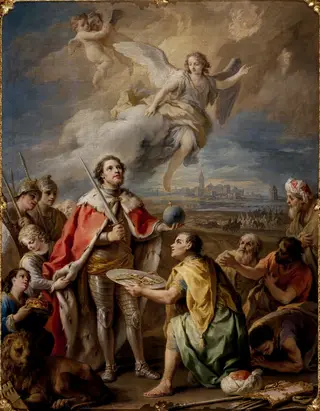
Charles Joseph Flipart, a French artist born on January 9, 1721, is known for his trompe-l'œil paintings that deceive the eye with highly realistic depictions of everyday objects and scenes. His work often incorporated elements of landscape, architecture, and still life, showcasing his skill in blending reality and illusion.
Flipart's innovative use of trompe-l'œil continues to influence the development of illusionistic art.

Died on this day 1
- 1805 Died
Died this day: Matthew Pratt
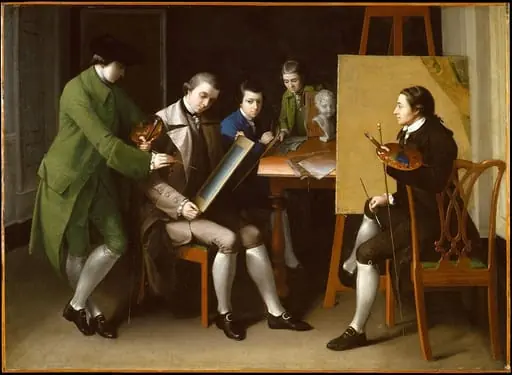
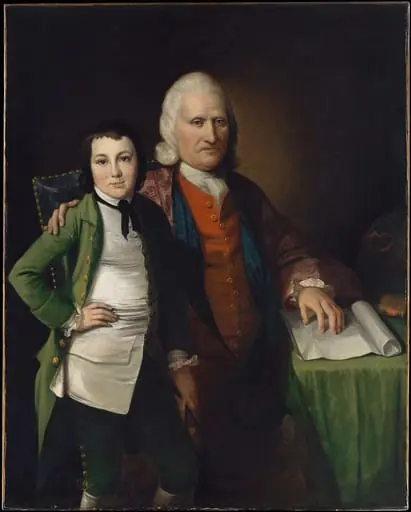
Matthew Pratt, an American artist associated with academic art, is known for his calm and pastel-colored works, often depicting real people in everyday settings. His most famous piece, 'The American School', showcases his unique light touch and ability to capture the essence of a scene.
Matthew Pratt's legacy lies in his contributions to American art, particularly in his ability to bring a sense of realism and tranquility to his paintings.
Exhibitions & salons 2
- 1954 Exhibition
Lehman Collection loan exhibition opens at the Met
The Metropolitan Museum of Art opened the Loan Exhibition of the Lehman Collection, announced by the museum as the most extensive public showing yet of one of the largest private collections in the United States. Robert Lehman, banker, collector, and philanthropist, had built a collection noted for old master paintings, drawings, decorative arts, and Renaissance objects. The January 9 opening made a private collection temporarily public at a major encyclopedic museum, foreshadowing the deeper institutional relationship that culminated after Lehman's death in the Met's Robert Lehman Collection.
The exhibition strengthened the public profile of a collection that later became a major dedicated department at the Met.
- 1976 Exhibition
SFMOMA opens Clyfford Still exhibition
San Francisco Museum of Modern Art opened a Clyfford Still exhibition at a moment when Still's reputation was already tied closely to the Bay Area. SFMOMA's artist history emphasizes his influential 1946-1950 teaching at the California School of Fine Arts, where he helped turn younger artists from social realism toward gestural abstraction. By 1976, Still was known as a pioneer of Abstract Expressionism who resisted the New York School label and guarded the interpretation and circulation of his work. A museum exhibition in San Francisco therefore connected his mature, jagged fields of pigment with a city central to his early postwar influence.
The exhibition reinforced San Francisco's claim as a crucial site in Still's development and reception.
Clyfford Still San Francisco Museum of Modern Art, San Francisco
Unveilings & commissions 1
- 1872 Unveiling
Roger Williams statue unveiled in the U.S. Capitol
Franklin Simmons's marble statue of Roger Williams was unveiled in the United States Capitol as Rhode Island's contribution to the National Statuary Hall Collection. The work presented the founder of Rhode Island and advocate of religious liberty in the neoclassical language expected of federal commemorative sculpture after the Civil War. Simmons had received the commission in 1868 and executed the statue from Rome, where he joined a circle of American expatriate sculptors. Its installation placed Rhode Island's colonial origin story into a national sculptural program that asked each state to define its civic exemplars through art.
The statue helped establish Simmons as a recurring sculptor within the Capitol's national commemorative collection.