Artwork
Madonna and Child
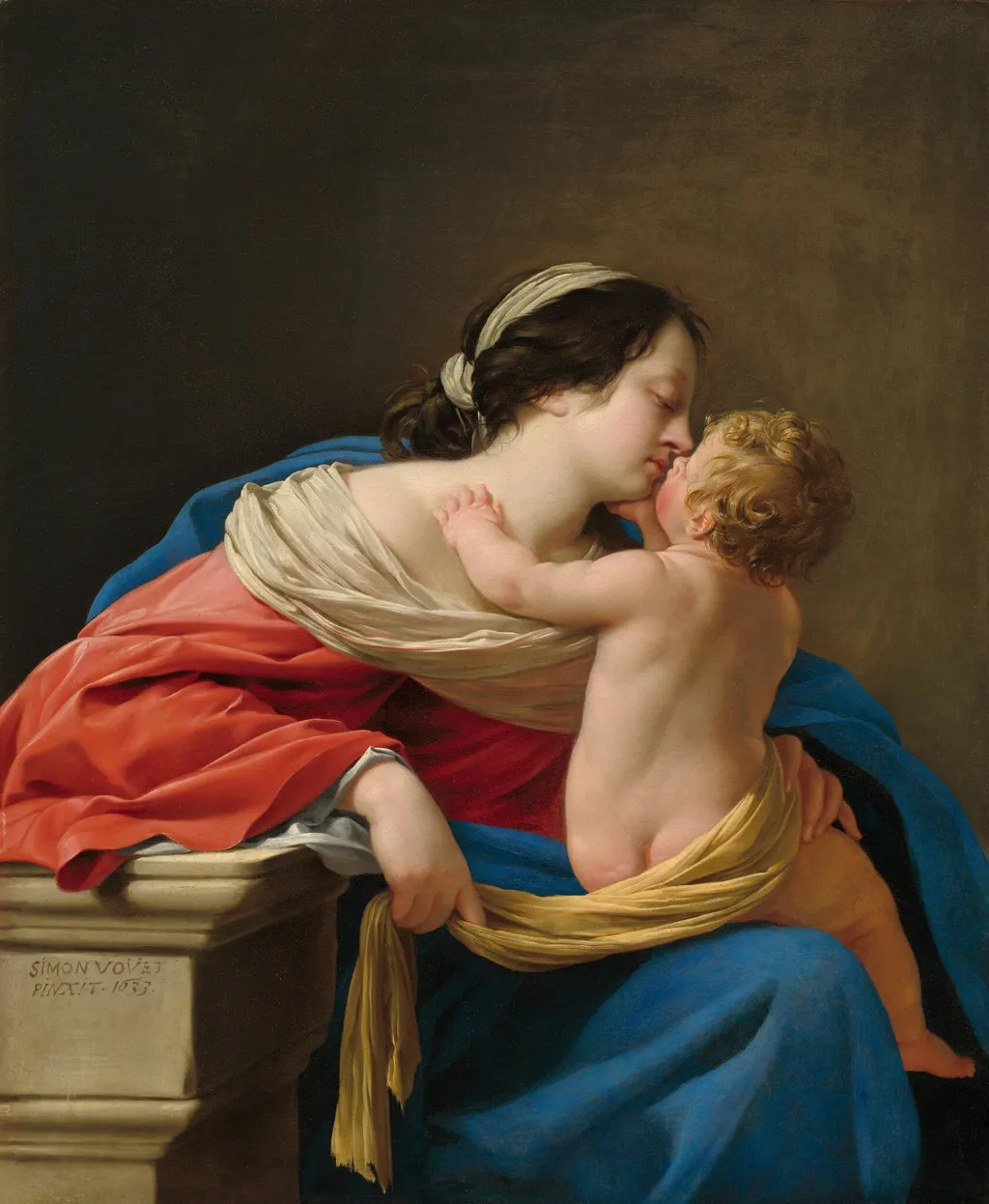
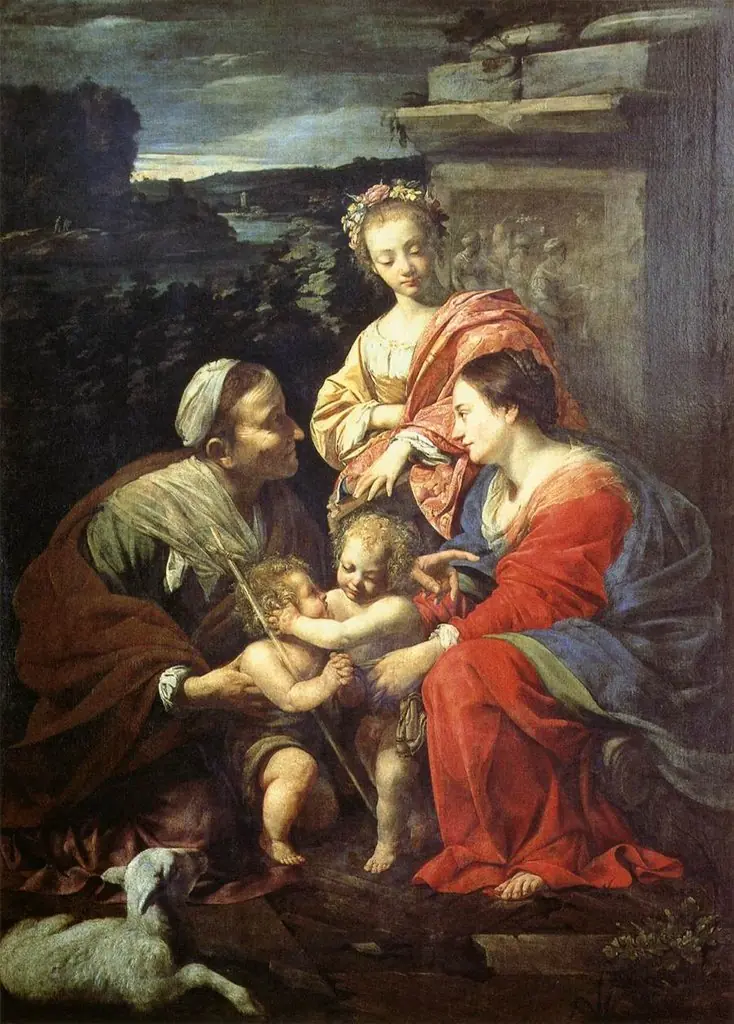
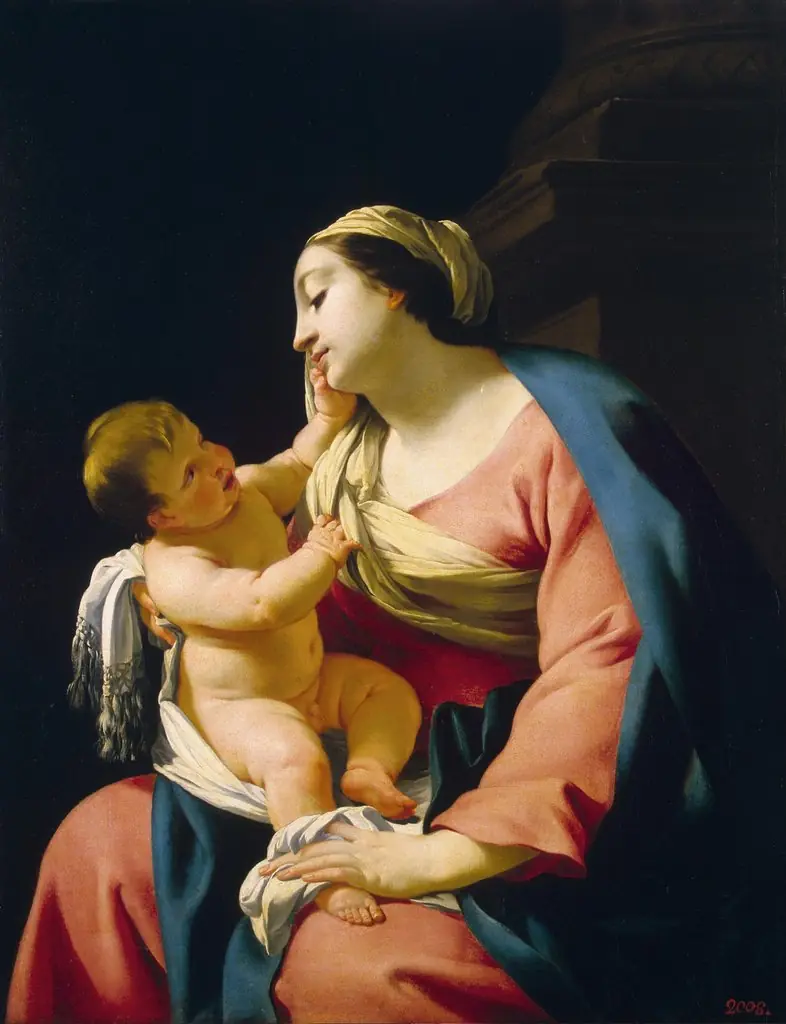
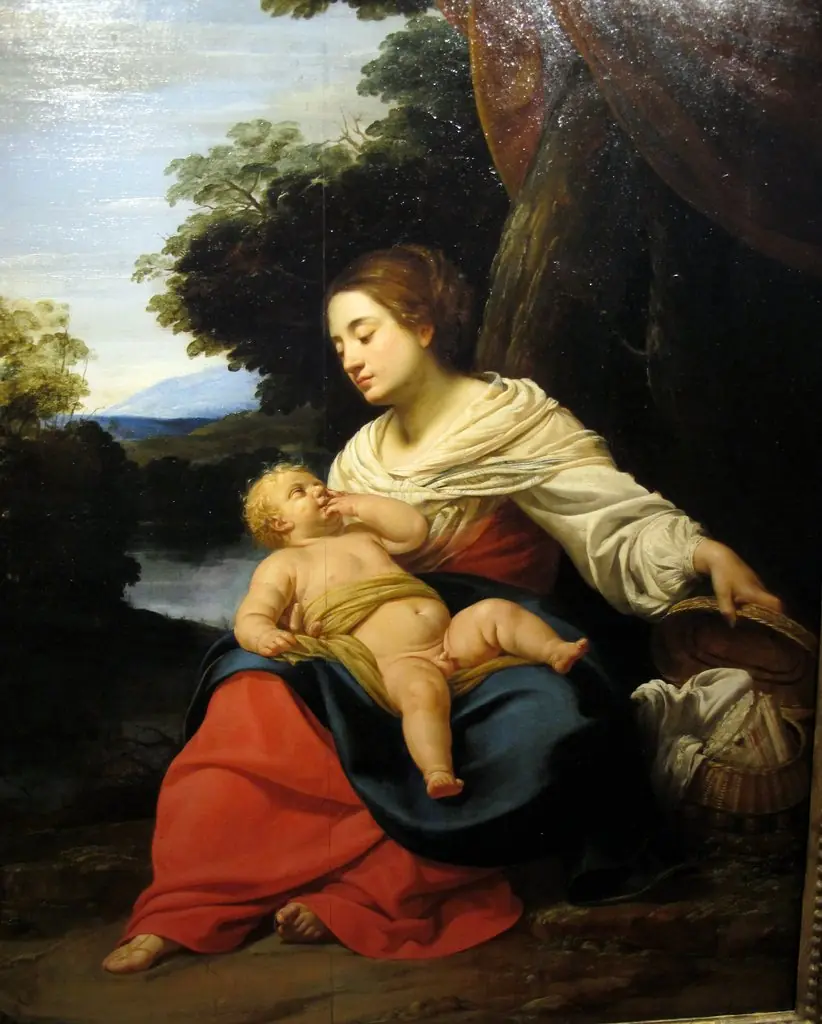
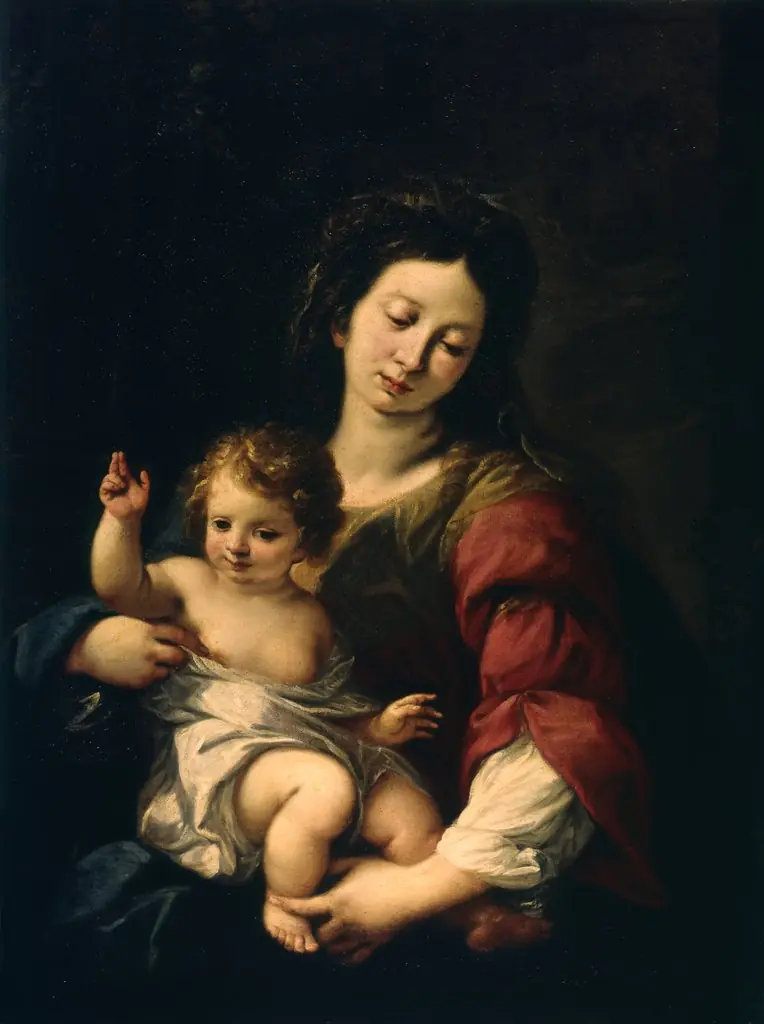
Madonna and Child is an oil painting by the Baroque artist Simon Vouet. It dates from 1633 and is held in the collection of the National Gallery of Art.
- Inscription
- Inscribed:lower left on the stylobate, with an umlaut above the V and a dot above each I: SIMON VOVET / PINXIT.1633.
About this work
Simon Vouet shows Mary in a blue cloak, the Christ Child on her lap. Soft brushwork lights their faces while the dark ground pushes them forward, blue and red playing against each other. Vouet painted it in Rome, where he studied after training in France. Oil on canvas, 1633.
Subject & Meaning
The depiction aligns with traditional iconography where Mary is shown holding or interacting with the infant Christ, emphasizing their spiritual significance.
The painting depicts the Virgin Mary and the Christ Child, a standard representation in religious art known as the Madonna and Child. Created by Simon Vouet in 1633, the work focuses on these two central figures, presenting them as the main subject of the composition. As a piece of religious genre painting, the image serves to illustrate the biblical relationship between the mother of Jesus and her son.
The depiction aligns with traditional iconography where Mary is shown holding or interacting with the infant Christ, emphasizing their spiritual significance. While the specific symbolic gestures or objects held by the figures are not detailed in the available records, the work's classification as religious art confirms its purpose as a devotional image representing the core Christian narrative of the Incarnation.
Technique & Style
Executed in 1633, this religious painting by Simon Vouet utilizes oil paint applied to a canvas support. The work measures 110.3 cm in height and 89.4 cm in width, depicting the Madonna and Child. While the specific handling of the brushwork and the current physical condition of the surface are not detailed in the available records, the medium and support define its material construction.
The composition focuses strictly on the two figures, adhering to traditional iconography for this genre. The piece is classified as a painting and remains extant within the collection of the National Gallery of Art in Washington, D.C.
History & Provenance
The work was painted in 1633 by Simon Vouet, an oil on canvas religious composition depicting the Virgin Mary with the Christ Child. It entered the will of Claude Bordier in 1644, where it was bequeathed to one of her daughters entering a convent, and later surfaced in Genoa in 1840 when Eugène‑Alexandre de Montmorency, 4th duc de Laval, acquired it to adorn the altar of a private church he had commissioned for his villa near Turin. The painting remained in the Laval and subsequently the de Maistre family until its 2014 sale by Didier Aaron, Inc., and its 2016 purchase by the National Gallery of Art.
The painting is held by the National Gallery of Art, Washington, D.C., with accession number 2016.20.1. It entered the Gallery’s collection in 2016 following its purchase from Didier Aaron, Inc. Earlier, it had been in the Borgo Cornalese collection, inherited through the De Maistre family after its acquisition in Genoa by Eugène-Alexandre de Montmorency in 1840. No exhibition history is recorded in the cited sources.
Legacy
The 1633 oil on canvas by Simon Vouet, depicting the Virgin Mary with the Christ Child, entered the National Gallery of Art’s collection in 2016 after a sale through Didier Aaron, Inc., marking a recent scholarly rediscovery of the work. Its provenance records trace from a 1644 French testament through private French families to the museum, underscoring its long‑standing recognition as a significant example of French Baroque religious art. The painting is catalogued in the Gallery’s catalogue and in Wikidata as a key piece of Vouet’s oeuvre, reflecting renewed interest in the artist’s contribution to early French classicism.
Overview
Simon Vouet's Madonna and Child, painted in oil on canvas in 1633, exemplifies the early Italian Baroque style. This work depicts the Virgin Mary cradling the Christ Child, showcasing the artist's mastery of the period's expressive qualities. Vouet, a French artist who achieved renown in Rome, was instrumental in transmitting these dynamic artistic principles back to France.
Context
Created during Vouet's significant period in Rome, where he refined his skills after initial training in France, this painting embodies the artistic environment of early 17th-century Italy. Vouet gained considerable recognition in the city before King Louis XIII summoned him to return to France. His time in Italy was crucial for his development, enabling him to later introduce Italian Baroque aesthetics to French art.
Own this work as a print
Artist & collection
Artist
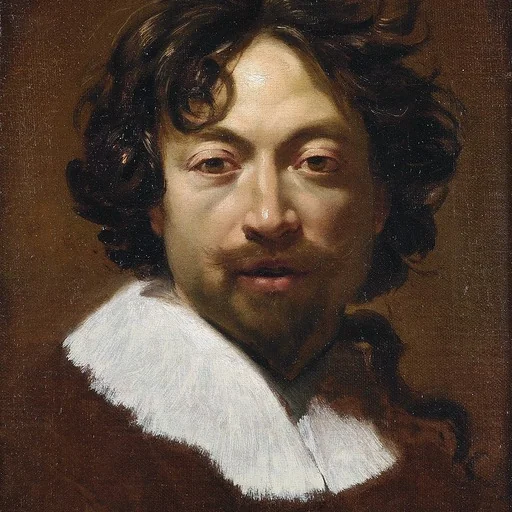
Simon Vouet (French pronunciation:; 9 January 1590 – 30 June 1649) was a French painter who studied and rose to prominence in Italy before being summoned by Louis XIII to serve as Premier peintre du Roi in France.