Artwork
Saint Jerome and the Angel
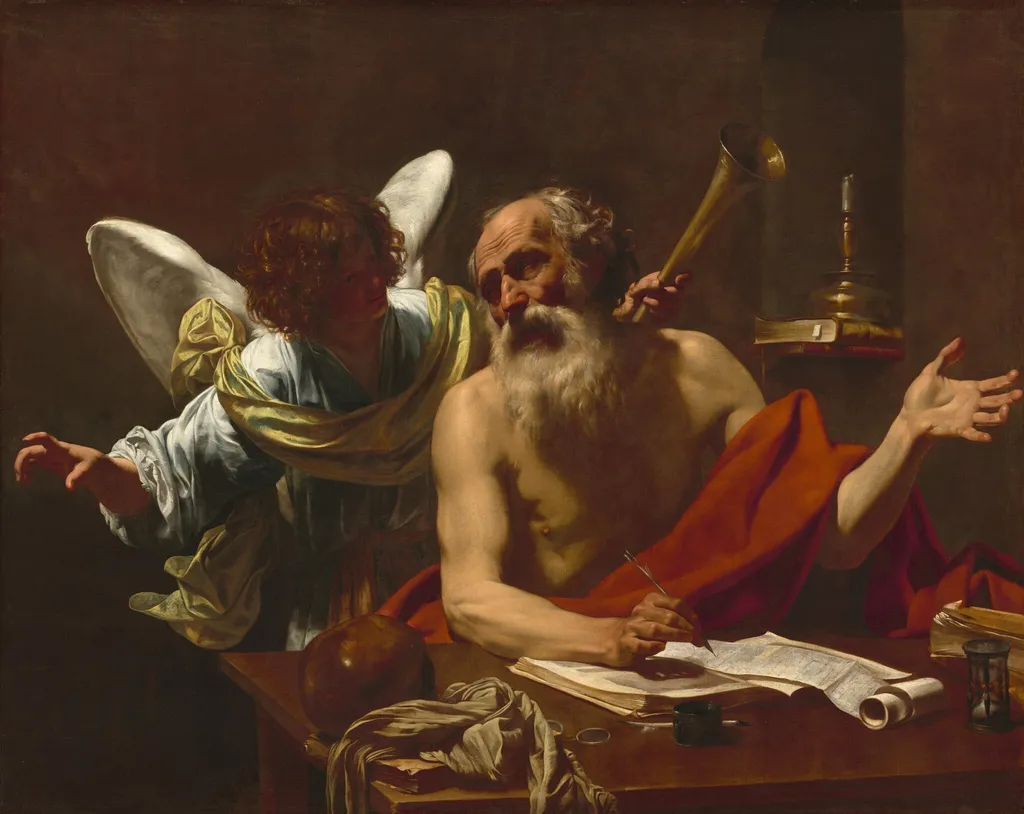
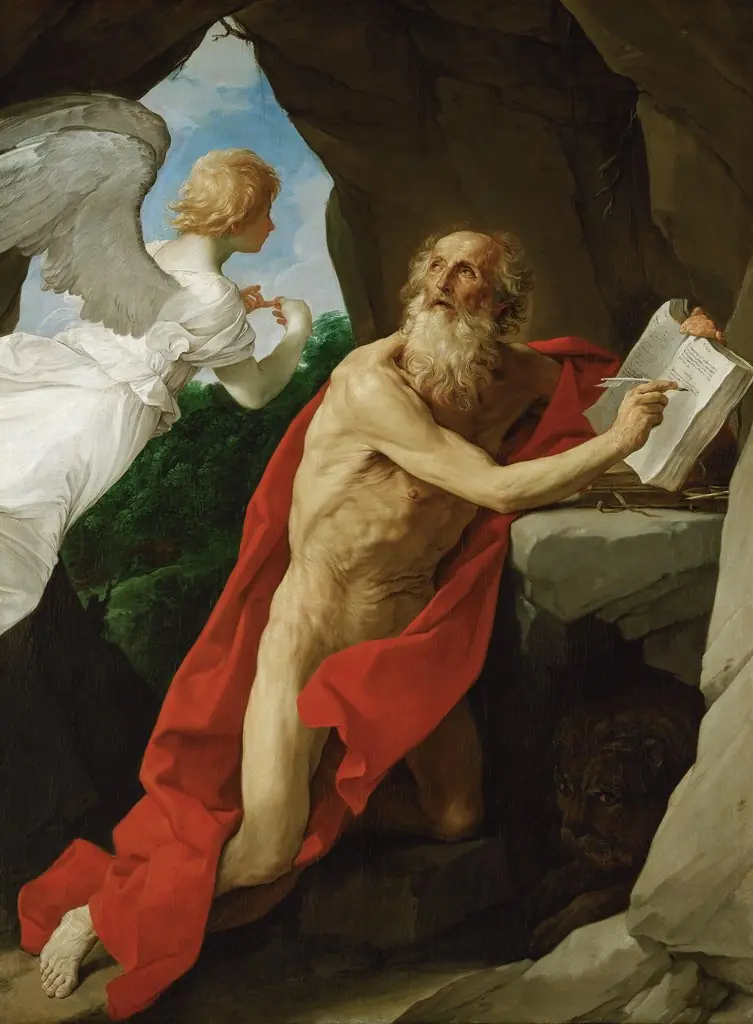
Saint Jerome and the Angel is an oil painting by the Baroque artist Simon Vouet. It dates from 1624 and is held in the collection of the National Gallery of Art.
- Inscription
- Inscribed:lower left, possibly an inventory number: F 23 [or possibly 25]
About this work
Subject & Meaning
The trumpet further suggests an annunciatory or proclamatory role, linking Jerome's role as interpreter of sacred scripture to the angel's heraldic function.
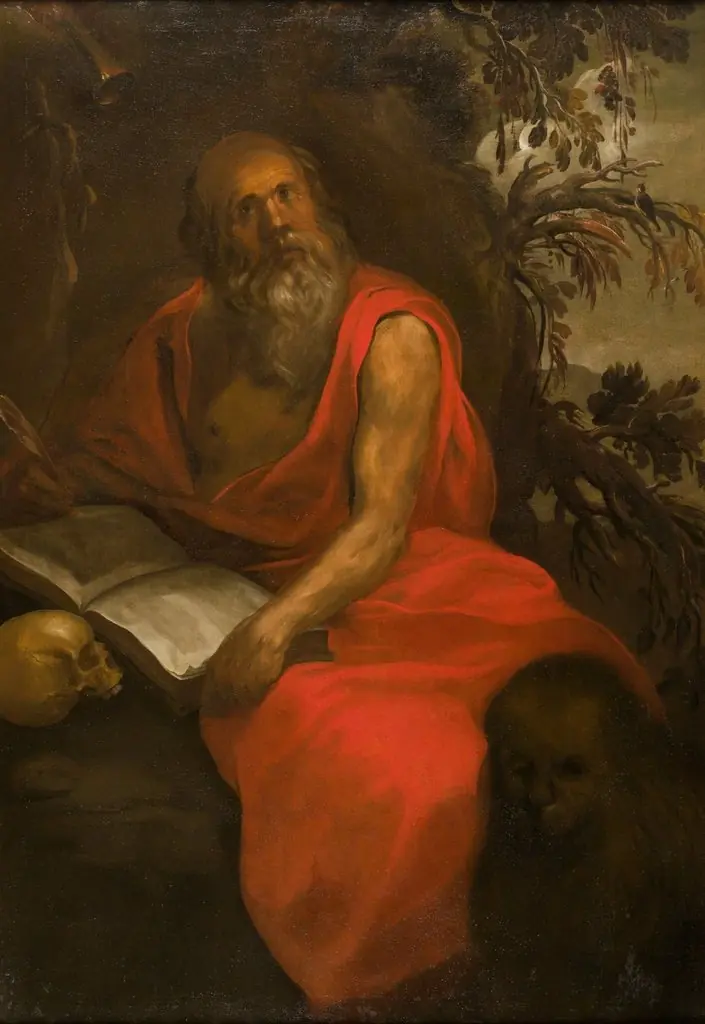
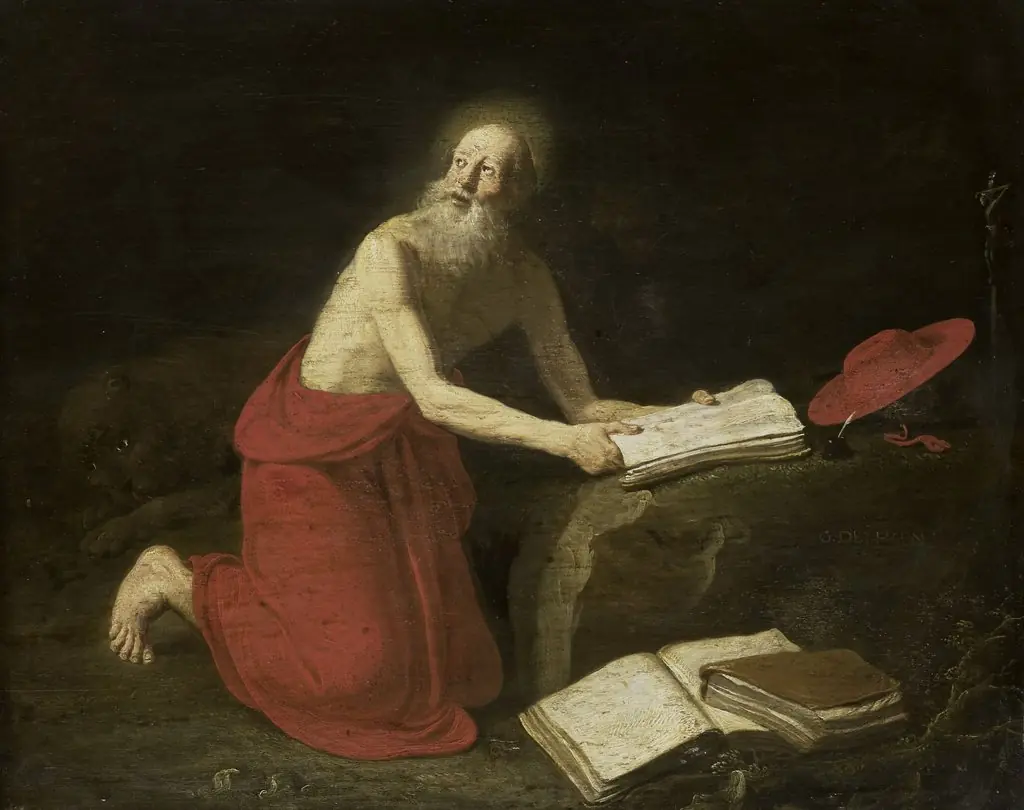
The painting depicts Saint Jerome, one of the four Latin Doctors of the Church and the traditional translator of the Bible into Latin (the Vulgate). In Vouet's composition, Jerome is shown with an angel, a pairing drawn from hagiographic tradition in which the saint receives celestial guidance or consolation. The Barberini inventory entry for the horizontal-format canvas describes the work as "Un S. Girolamo con l'angelo con tromba in mano", a Saint Jerome with an angel holding a trumpet, situating the scene within the iconography of divine revelation accompanying Jerome's scholarly and penitential labors.
The trumpet further suggests an annunciatory or proclamatory role, linking Jerome's role as interpreter of sacred scripture to the angel's heraldic function. The painting is classified as a religious work, and its subject reflects the Counter-Reformation emphasis on the contemplative and exegetical dimensions of the Church Fathers.
Technique & Style
The painting is executed in oil on canvas, measuring approximately 144.8 cm by 179.8 cm and dating to 1620. It portrays Saint Jerome together with an angel holding a trumpet in a horizontal composition that originally fit within a gilded carved frame recorded in the Barberini inventories. The work was owned by Cardinal Carlo Barberini before being sold to the Samuel H. Kress Foundation in 1952 and gifted to the National Gallery of Art in 1961.
History & Provenance
Simon Vouet's Saint Jerome and the Angel was painted in 1620 in oil on canvas. Its earliest documented owner is Cardinal Carlo Barberini, in whose posthumous inventory (compiled between 1692 and 1704) the horizontal-format picture is recorded as a "St. Jerome with an angel holding a trumpet" attributed to "monsù Ouuet," 7 palms high by 9 palms wide. The painting descended through the Barberini family in Rome.
It later passed to the dealer Gabriel Sonnino in New York, who sold it in 1952 to the Samuel H. Kress Foundation. The Kress Foundation gave the work to the National Gallery of Art in Washington, D.C., in 1961, where it remains in the Samuel H. Kress Collection.
Simon Vouet's Saint Jerome and the Angel (1620) is held in the permanent collection of the National Gallery of Art in Washington, D.C., where it is part of the Samuel H. Kress Collection. The painting entered the museum in 1961 as a gift from the Samuel H. Kress Foundation, having been sold to the foundation in 1952. Its provenance traces back to Cardinal Carlo Barberini in Rome, where it was documented in inventories drawn up between 1692 and 1704 as a horizontal work depicting the saint with an angel holding a trumpet.
The work has been exhibited at least once in the modern era, appearing in the exhibition Bodies and Shadows: Caravaggio and his European followers. The piece is an oil on canvas measuring approximately 144.8 by 179.8 centimeters.
Context
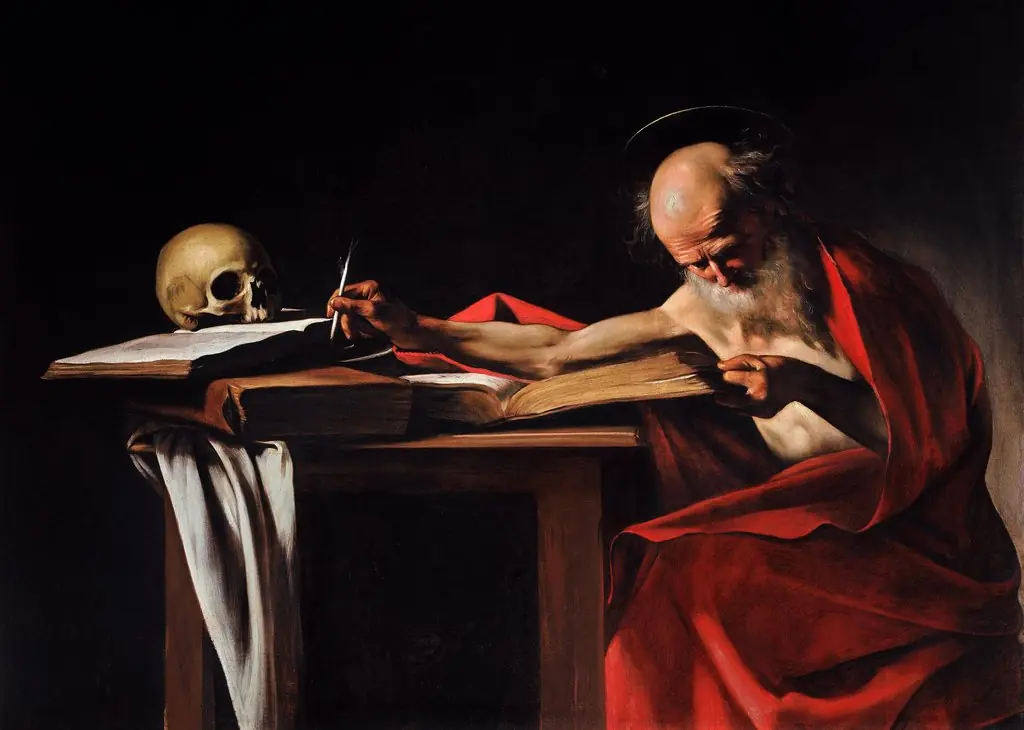
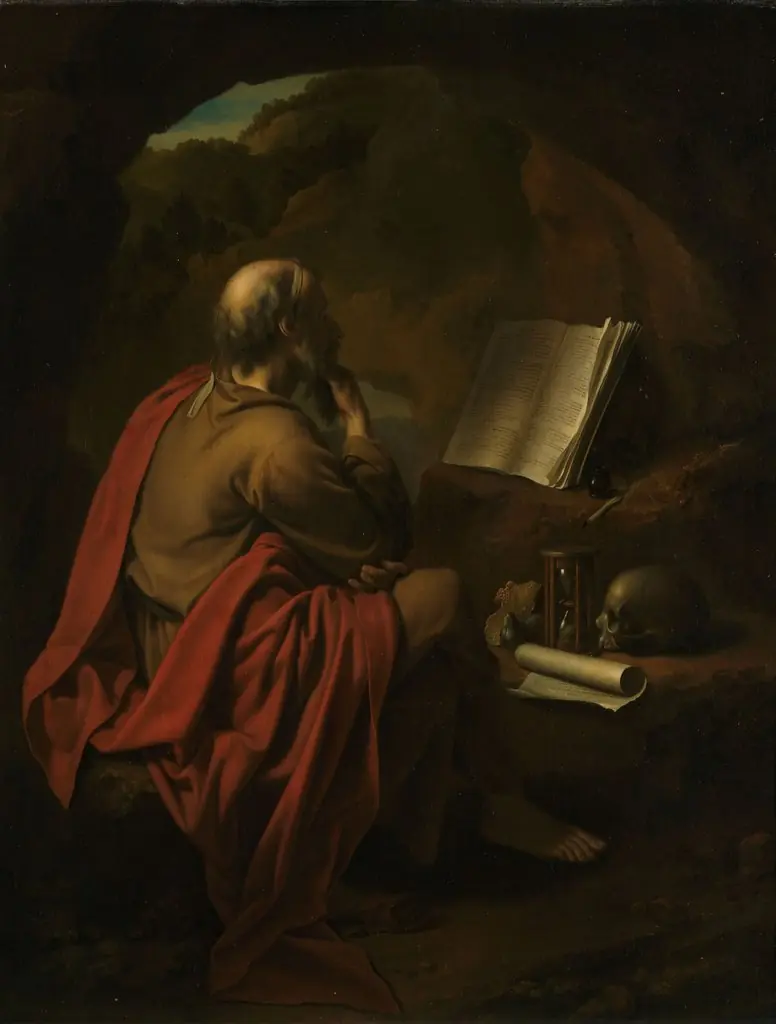
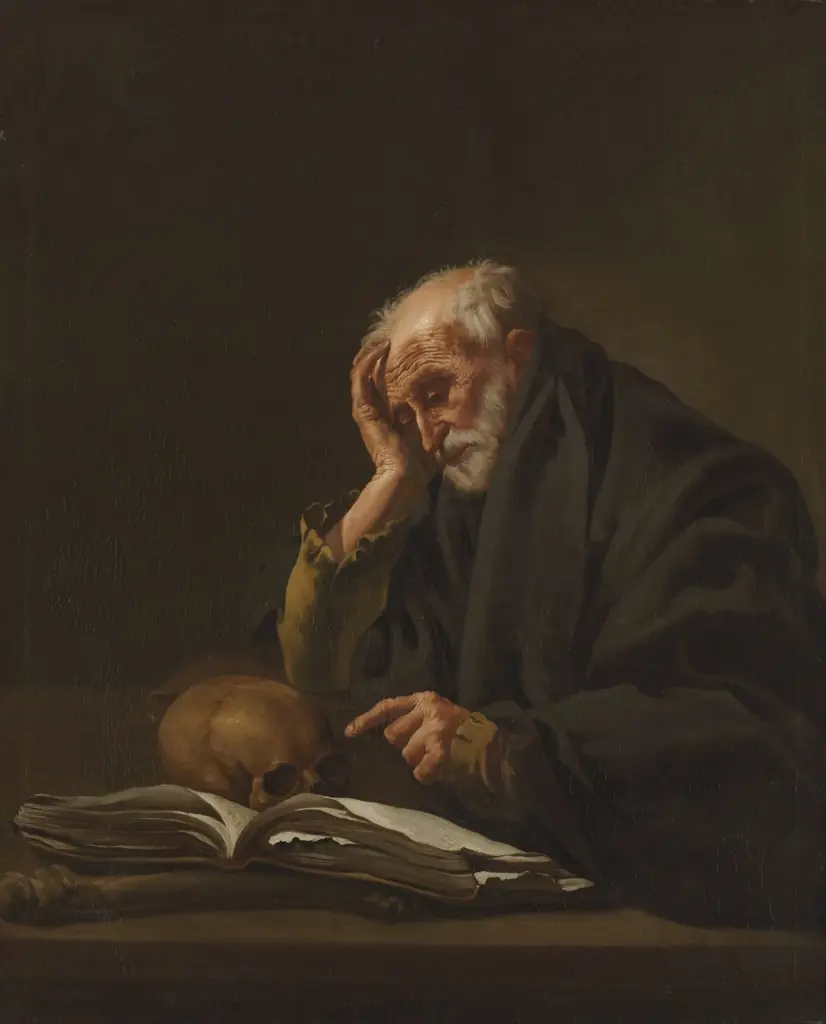
The work, an oil on canvas dated to 1620, portrays Saint Jerome with an angel and was recorded in Cardinal Carlo Barberini’s 1692/1704 inventory, later entering the Samuel H. Kress collection and the National Gallery of Art. Scholarship clarifies that this horizontal format distinguishes it from a square version and an unattributed saint, confirming it as a unique Baroque rendition of the Jerome legend. Its inclusion in the exhibition “Bodies and Shadows: Caravaggio and his European followers” underscores its significance within European religious painting of the early 17th century and reflects Vouet’s influence on the genre.
Overview
Simon Vouet, a French artist, painted Saint Jerome and the Angel around 1624 using oil on canvas. This work exemplifies his early Baroque Italian style, developed during his training abroad. It reflects the religious themes common in his output, which would later influence French art upon his return to Paris as a prominent painter.
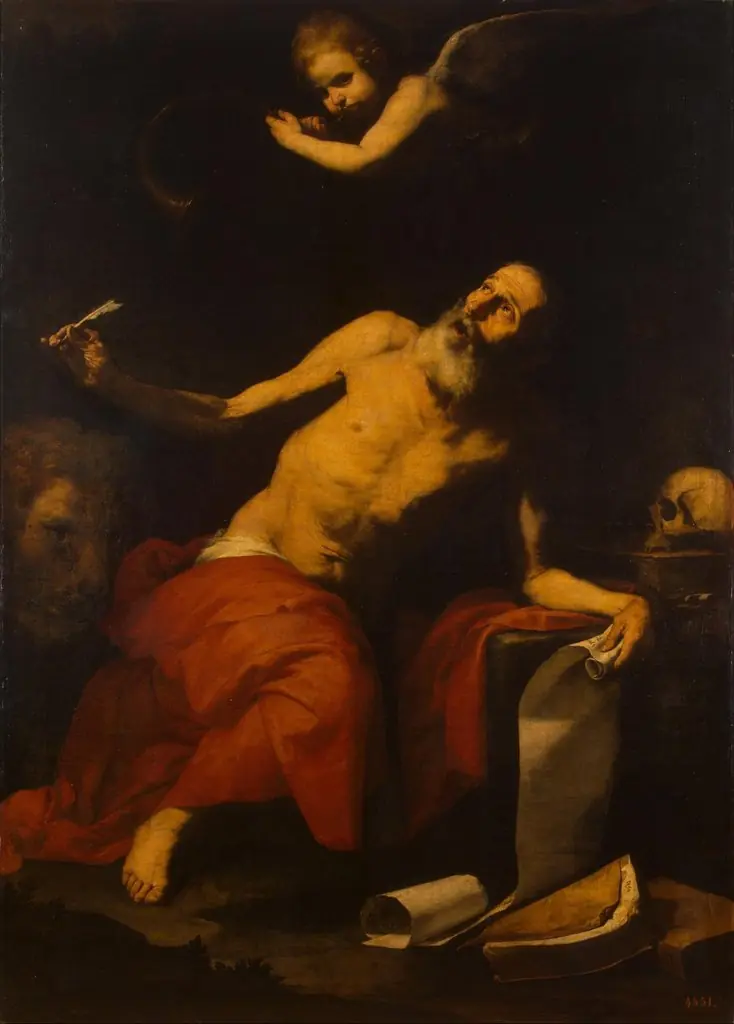
Own this work as a print
Artist & collection
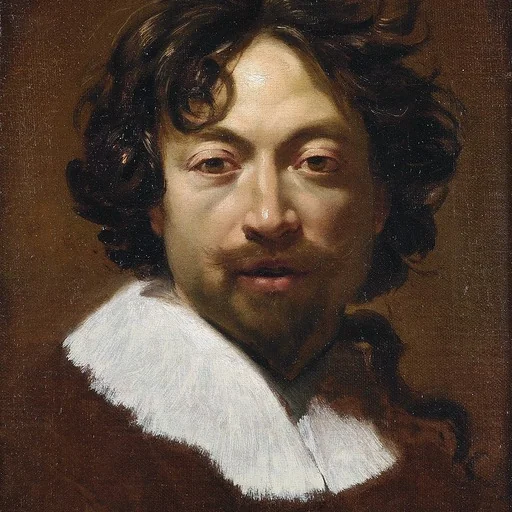
Artist
Simon Vouet (French pronunciation:; 9 January 1590 – 30 June 1649) was a French painter who studied and rose to prominence in Italy before being summoned by Louis XIII to serve as Premier peintre du Roi in France.