Artist
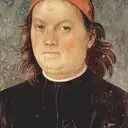
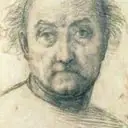
Mariotto Albertinelli

Mariotto Albertinelli is an Early Renaissance artist. 10 works are cataloged here, principally at Uffizi Gallery.
Mariotto di Bindo di Biagio Albertinelli (13 October 1474 – 5 November 1515) was an Italian Renaissance painter active in Florence. He was a close friend and collaborator of Fra Bartolomeo. Some of his works have been described as "archaic" or "conservative"; others are considered exemplary of the grandiose classicism of High Renaissance art.
Overview
Mariotto di Bindo di Biagio Albertinelli (13 October 1474-5 November 1515) was an Italian painter of the High Renaissance active in Florence. A close friend and collaborator of Fra Bartolomeo, Albertinelli produced works that span the spectrum from small-scale devotional panels to large altarpieces. His reputation in art history is complex: some of his works have been described as "archaic" or "conservative," while others are considered exemplary of the grandiose classicism of High Renaissance art. Though often overshadowed by his more talented partner Fra Bartolomeo, Albertinelli's best works demonstrate a synthesis of Florentine classical composition, Flemish landscape sensibility, and the coloristic achievements of his generation.
Biography & dates
Albertinelli was born in Florence on 13 October 1474, the son of Biagio di Bindo Albertinelli, a gold beater. At approximately twelve years of age, he entered the workshop of Cosimo Rosselli, where he met Baccio della Porta, later known as Fra Bartolomeo. The two young painters formed such a strong artistic bond that around 1494 they established a "compagnia," or partnership, operating a joint studio and dividing profits. This first partnership lasted until 1500, when Baccio joined the Dominican order and temporarily renounced painting.
At the beginning of his career, Albertinelli enjoyed the patronage of Alfonsina Orsini, wife of Piero II de' Medici and mother of Lorenzo II de' Medici. He studied antique models in the Medici gardens and developed a minute, delicate technique suited to small-scale works. In 1500, he completed the unfinished Last Judgment fresco that Fra Bartolomeo had begun for Santa Maria Nuova in Florence, demonstrating his ability to match his partner's style so closely that their contributions are nearly indistinguishable.
In 1503, Albertinelli entered a new partnership with Giuliano Bugiardini that lasted until 1509. That same year, he painted his best-known independent work, the Visitation altarpiece for Sant'Elisabetta della congrega dei Preti in San Michele alle Trombe, Florence (now in the Uffizi). He married Antonia Ugolini, daughter of a wine merchant, in 1505; in 1506 his father officially declared him of age and appointed him guardian of Fra Bartolomeo's brother Piero della Porta, whom he was to train as a painter.
In 1509, Albertinelli resumed partnership with Fra Bartolomeo under the patronage of the monastery of San Marco in Florence, with both artists as equal partners. They chose a cross with two interlaced rings as their studio sign and traveled together to Lucca that year to install an altarpiece for the cathedral of San Martino. However, in 1512, due to malicious gossip, Albertinelli briefly abandoned painting and opened a tavern with his father-in-law's help. The partnership with Fra Bartolomeo was officially terminated on 5 January 1313. He soon gave up tavern-keeping, traveled to Rome and Viterbo to resume painting, but fell seriously ill. According to Vasari, he was carried back to Florence in a basket and died there on 5 November 1515, leaving his last work, a Coronation of the Virgin begun in Viterbo, unfinished. It was completed only in 1542 by Fra Paolino da Pistoia.
Style & movement
Albertinelli's style belongs to the High Renaissance, though with notable tensions between progressive and conservative tendencies. His early works display a minute, delicate technique derived from Piero di Cosimo, Lorenzo di Credi, and Perugino, combined with receptivity to contemporary Flemish painting. During his first partnership with Fra Bartolomeo, he so thoroughly adapted to his partner's manner that many works from 1494 to 1500 cannot be definitively attributed to either painter.
Art historians consider Fra Bartolomeo the dominant creative force in both partnerships, responsible for compositions and overall style. Evidence of this dominance appears in certain Albertinelli works where he deliberately attempted to distinguish himself from his partner's manner. These independent works show influences from Filippino Lippi, Piero di Cosimo, Pietro Perugino, and Flemish masters Hugo van der Goes and Hans Memling, as well as archaic forms reminiscent of the Italian Trecento.
Albertinelli's mature style combines several elements: Perugino's graceful compositions, Raphael's sculptural volume and spatial perspective, Fra Bartolomeo's coloration, Flemish landscape technique, and Leonardo da Vinci's sfumato. His best work, the Visitation of 1503, exemplifies High Renaissance classicism through its pyramidal composition, classical background architecture, and pronounced chiaroscuro. Yet his attachment to traditional representational forms sometimes created tension with High Renaissance perfection. Scholars note his significant contributions in depicting monumental architecture and celestial apparitions, even as his conservative tendencies prevented him from establishing himself as a fully independent master under Fra Bartolomeo's overwhelming influence.
Major works
Albertinelli's earliest works include a small triptych of the Madonna and Child with Saints Catherine and Barbara (1500) at the Museo Poldi Pezzoli in Milan, and another triptych of the Madonna and Child with Saints, Angels and Various Religious Scenes at the Musée des Beaux-Arts in Chartres. Multiple panels with Scenes from Genesis, located at the Courtauld Institute in London, the Strossmayer Gallery in Zagreb, the Accademia Carrara in Bergamo, and Harvard Art Museums in Cambridge, Massachusetts, probably also date from this early period.
His best-known independent work is the Visitation altarpiece, signed and dated 1503, painted for the chapel of Sant'Elisabetta della congrega dei Preti in San Michele alle Trombe, Florence, now in the Uffizi. The central panel depicts the Visitation, while the predella shows the Annunciation, Nativity, and Circumcision of Christ. The painting's pyramidal composition, classical architecture, and dramatic light contrasts make it a quintessential High Renaissance work.
The Kress Tondo, now in the Columbia Museum of Art, was formerly attributed to Fra Bartolomeo but is now considered Albertinelli's work based on Fra Bartolomeo's cartoon. The Annunciation at the Musée d'Art et d'Histoire in Geneva is signed and dated 1511 by both Albertinelli and Fra Bartolomeo, documenting their resumed collaboration.
Other significant works include: an Adoration of the Child (1502), a tondo of 86 cm in the Palazzo Pitti, Florence; a Crucifixion fresco (1505) at the Certosa di Galluzzo; The Holy Family with the Adoration of the Child (c. 1505) at the Montreal Museum of Fine Arts; and Maria and Saints (1506) in the Louvre, Paris. The Ferry Carondelet Altarpiece of 1512, depicting the Madonna and Child in Glory with Saints and Donors, at Besançon Cathedral, was executed with Fra Bartolomeo. Works from his final years include an Episode from Genesis (c. 1513) at the National Gallery in Athens and Cain and Abel (c. 1513) at the Accademia Carrara in Bergamo.
Influences & students
Albertinelli's primary teacher was Cosimo Rosselli, in whose workshop he formed the decisive friendship with Baccio della Porta (Fra Bartolomeo). The Flemish tradition influenced him through Hugo van der Goes and Hans Memling, particularly in landscape representation. Italian influences included Piero di Cosimo, Lorenzo di Credi, Perugino, and Filippino Lippi. Raphael's sculptural models and Leonardo da Vinci's sfumato technique also shaped his development. His study of antique models in the Medici gardens provided classical grounding.
Among his students were Jacopo da Pontormo, Franciabigio, Innocenzo da Imola (Innocenzo Francucci), and Giuliano Bugiardini. He was also charged with training Fra Bartolomeo's brother, Piero della Porta, as a painter. The workshop tradition he helped maintain thus connected the High Renaissance to the subsequent generation of Florentine painters, with Pontormo becoming particularly significant for the emergence of Mannerism.
Legacy
Albertinelli's posthumous reputation has been shaped by his proximity to Fra Bartolomeo and by Giorgio Vasari's biography in Lives of the Artists. Vasari depicted him as a libertine fond of good living and women, who operated a tavern to supplement his painting income and died unable to repay debts, including one to Raphael. His wife Antonia repaid some of his loans after his death. This colorful biography has colored perceptions of a painter who struggled financially despite his talents.
Modern art historical scholarship regards Albertinelli as a capable painter who, under Fra Bartolomeo's overpowering influence, could not fully establish himself as an independent master. His historical significance lies partly in his role as a conduit for High Renaissance style to the next generation through his students, particularly Pontormo. The difficulty of distinguishing his hand from Fra Bartolomeo's in collaborative works has complicated attribution studies. His best works, especially the Visitation of 1503, demonstrate that at his peak he could achieve the grandiose classicism associated with the High Renaissance, even as his conservative tendencies and adaptive relationship to Fra Bartolomeo prevented him from attaining the same rank as the period's leading innovators. His last work, the unfinished Coronation of the Virgin, completed only in 1542, symbolizes the incomplete nature of his independent artistic legacy.
Works by Mariotto Albertinelli
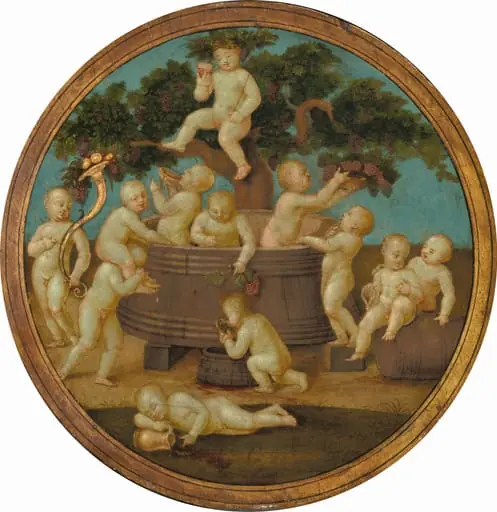 Putti with a Wine Press
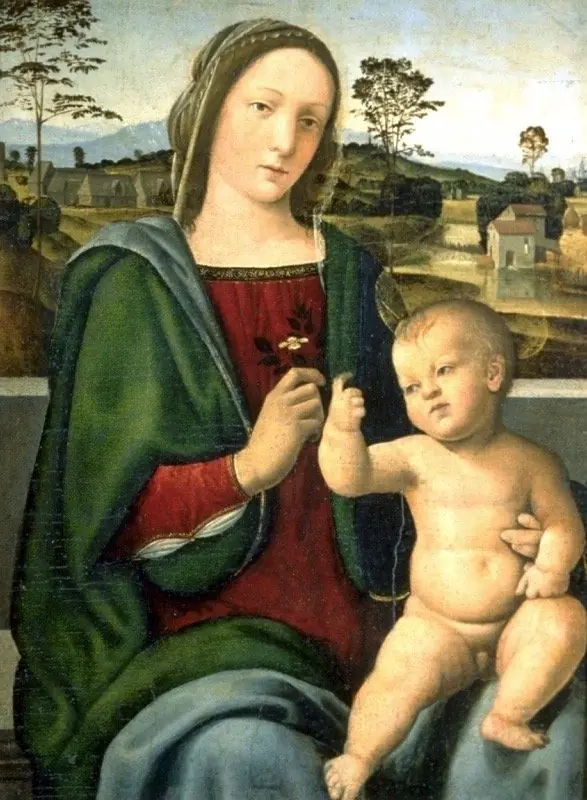 Madonna and Child
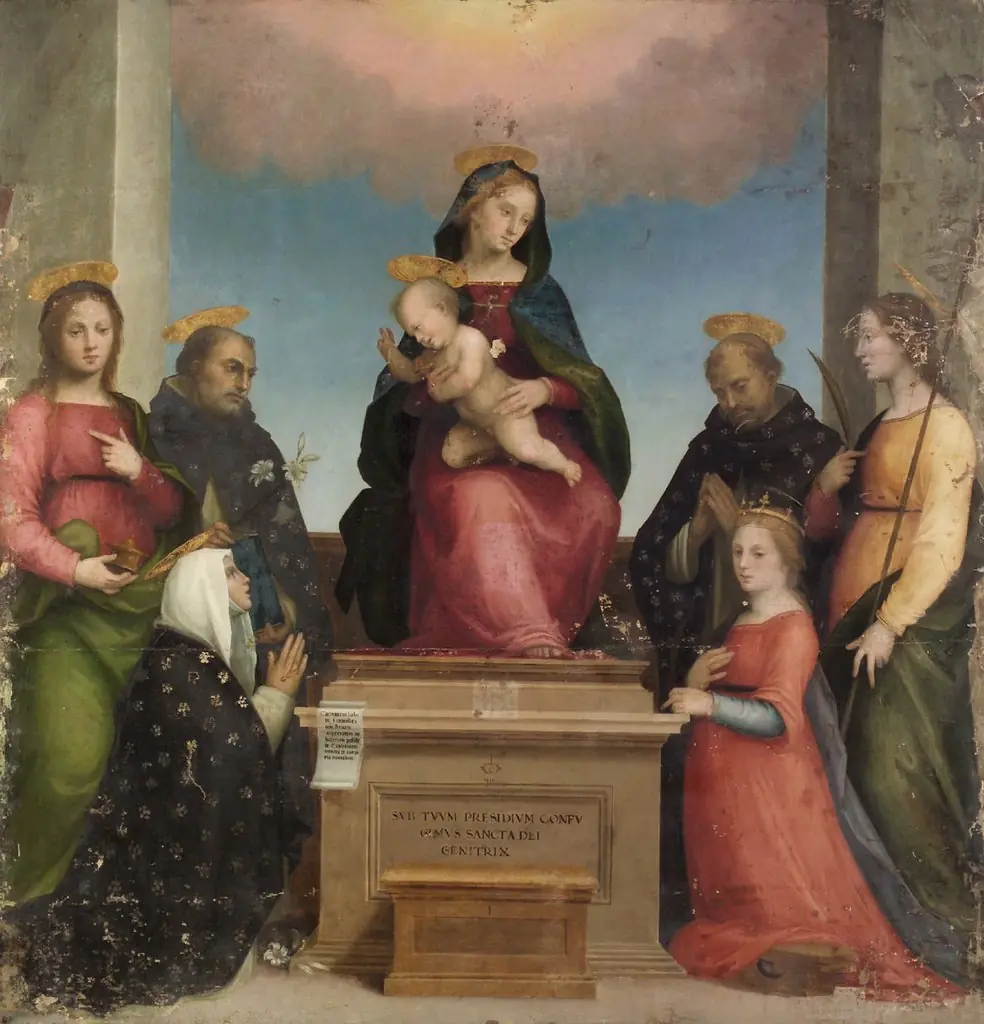 Maria mit Kind und den Hll. Katharina von Siena, Katharina von Alexandrien, Maria Magdalena, Dominikus, Petrus Martyr und einer Märtyrerin
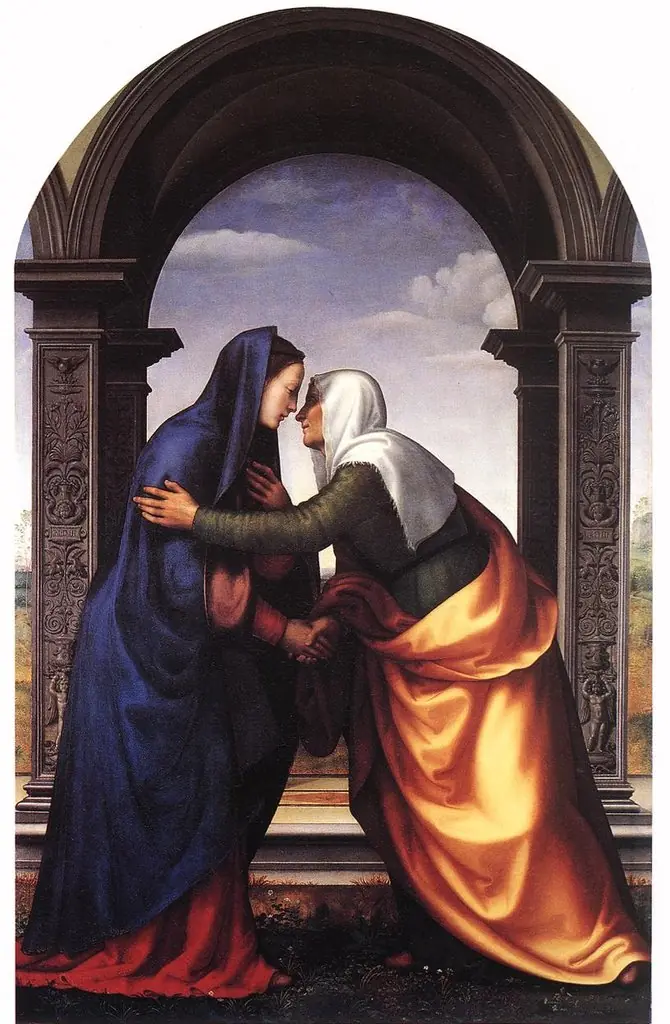 The Visitation
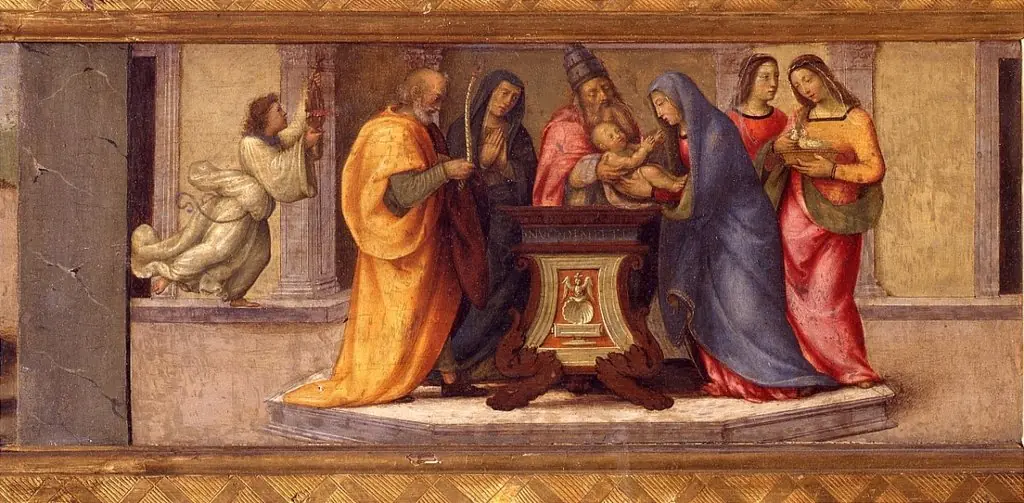 Circumcision
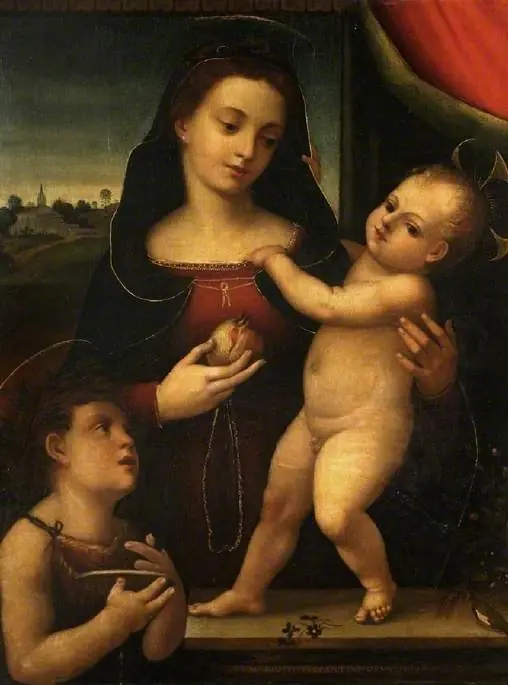 The Virgin and Child with the infant Baptist
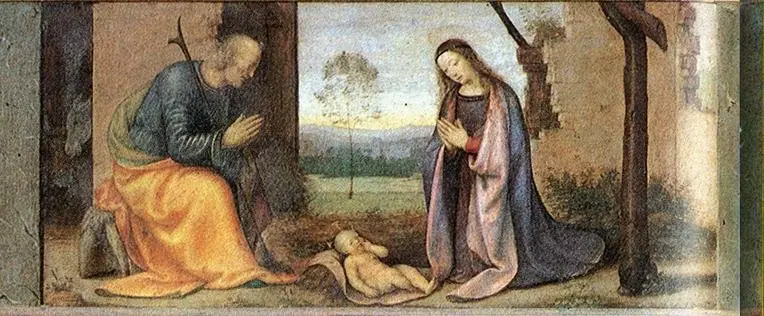 Birth of Christ
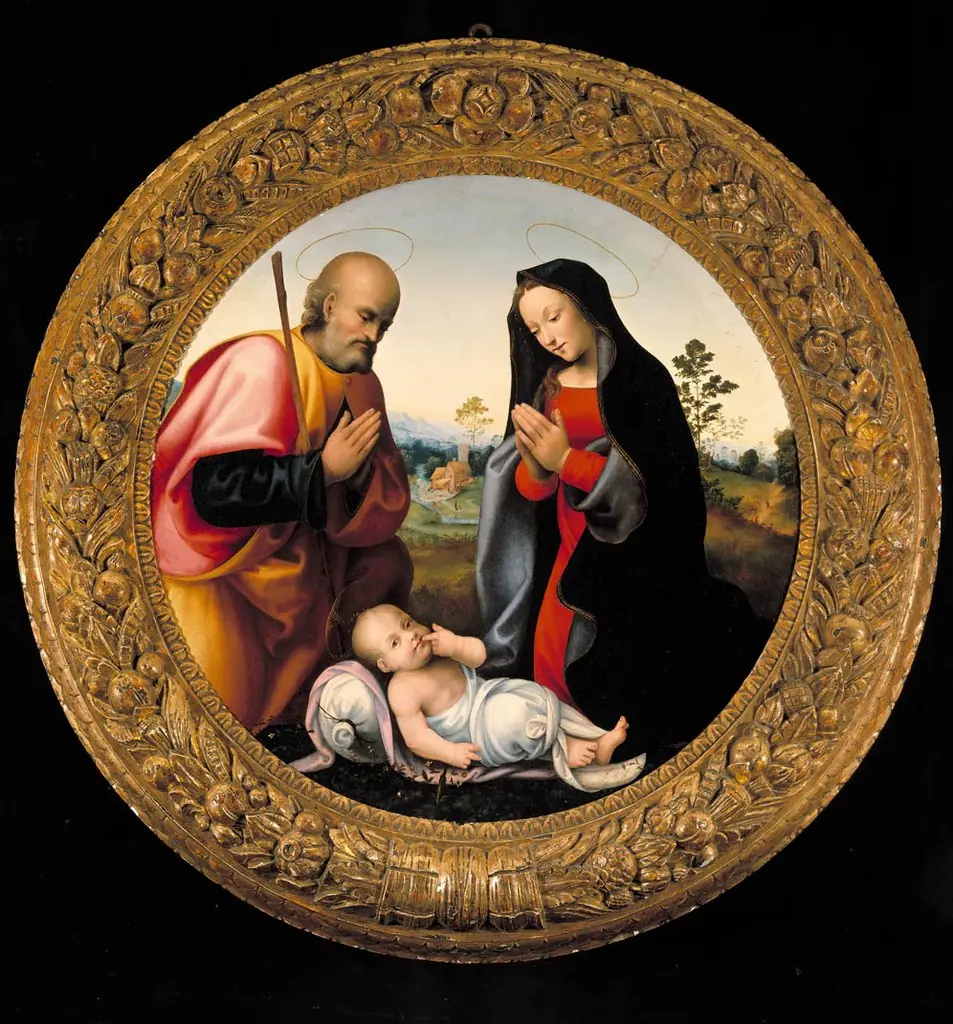 Holy Family
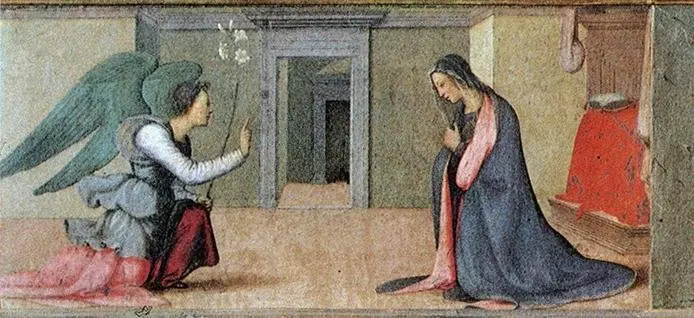 Annunciation
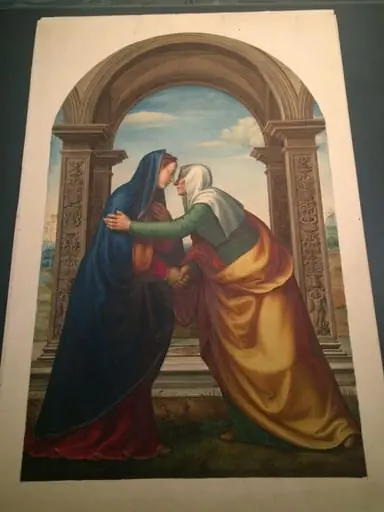 Copy after The Visitation (The meeting of Mary and Elizabeth), Mariotto Albertinelli in the Uffizi (Florence)
Collections represented


Artists in a similar vein