Artwork
Madonna and Child
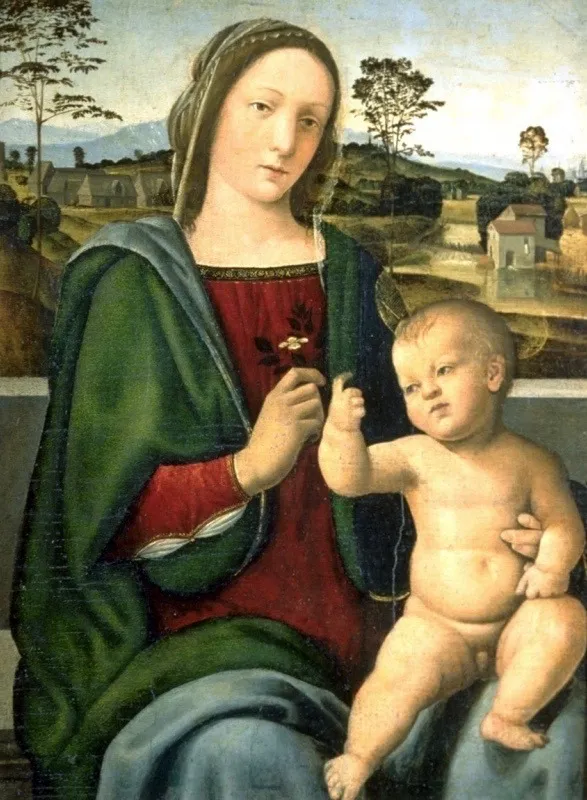
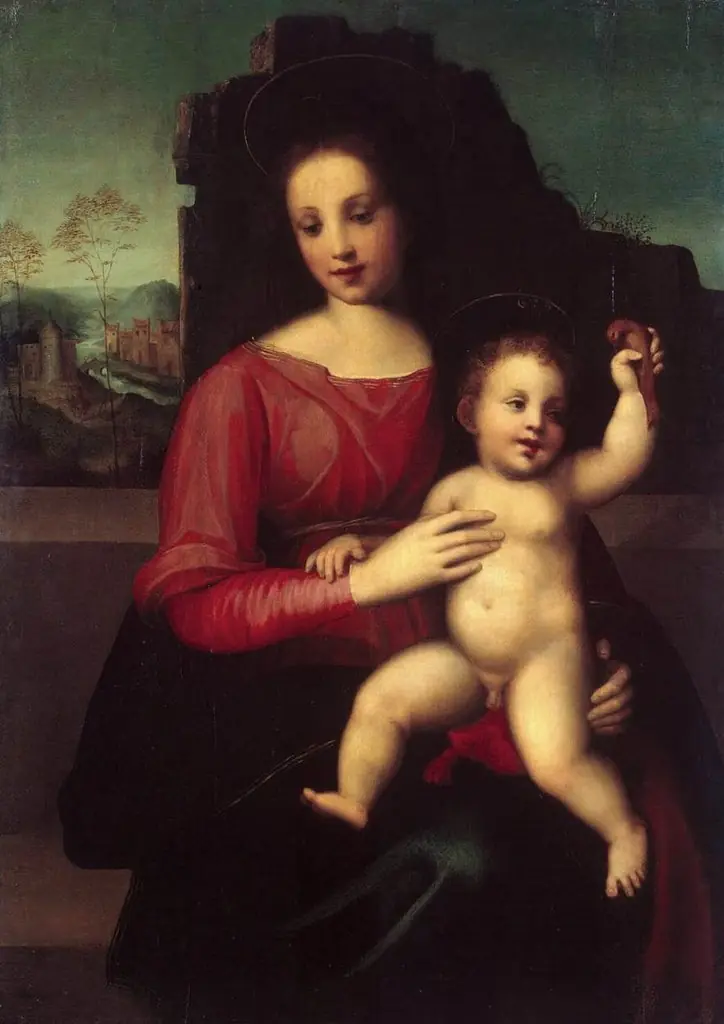
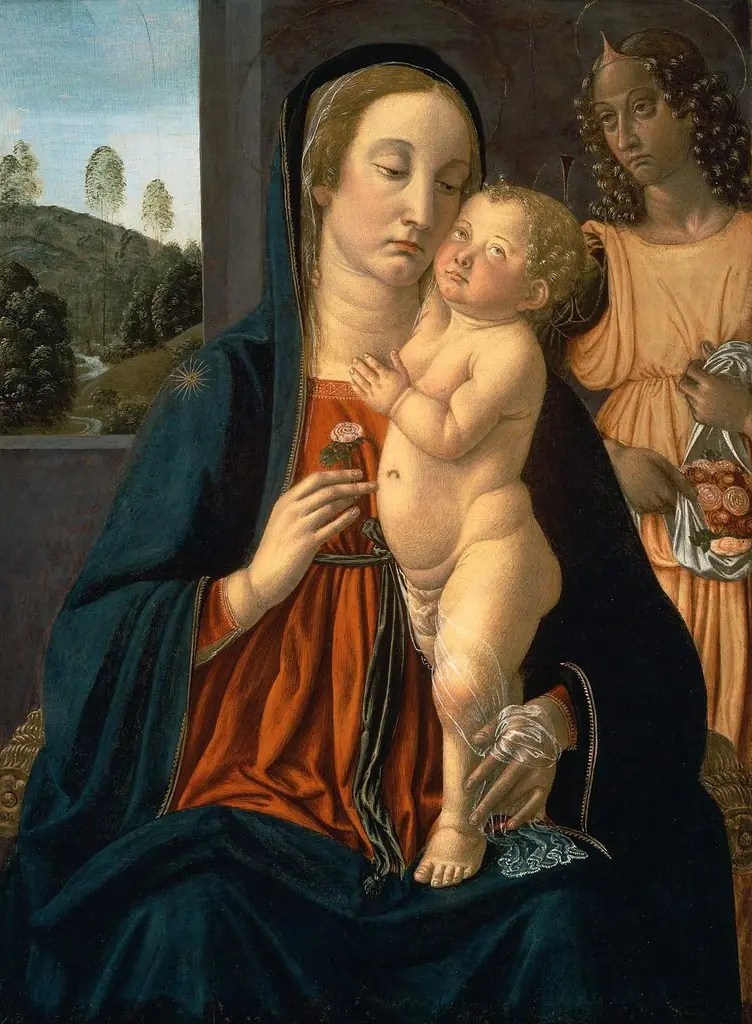
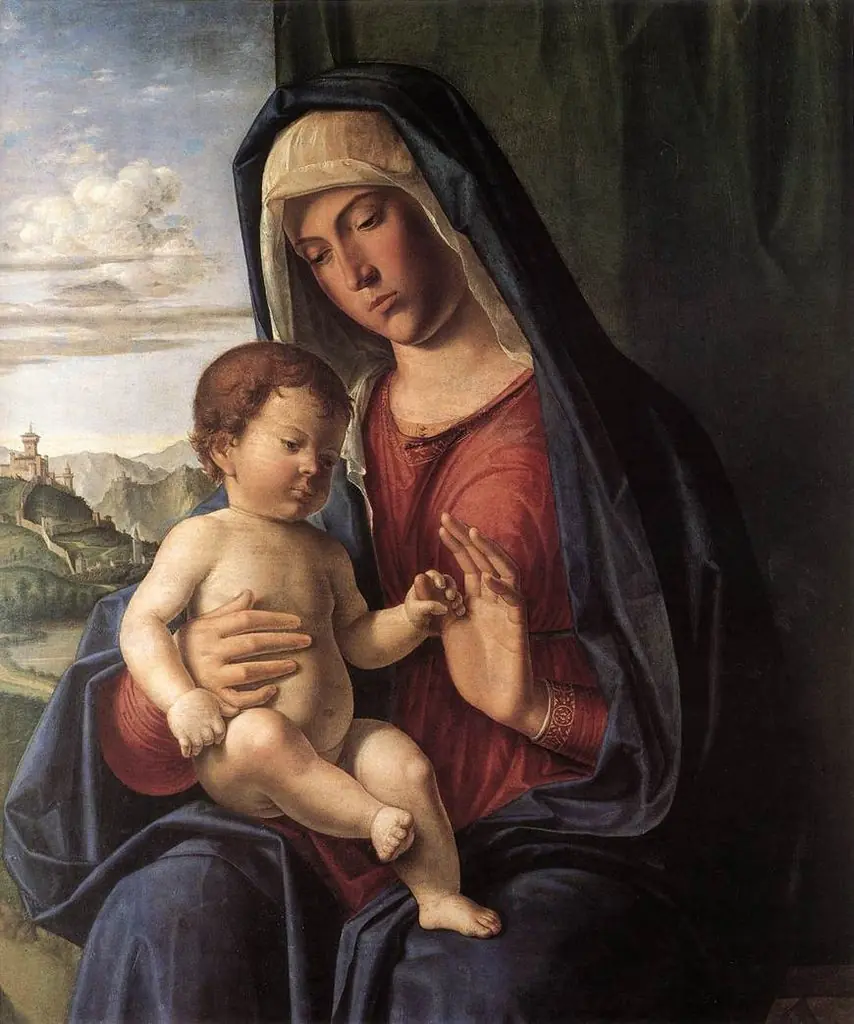
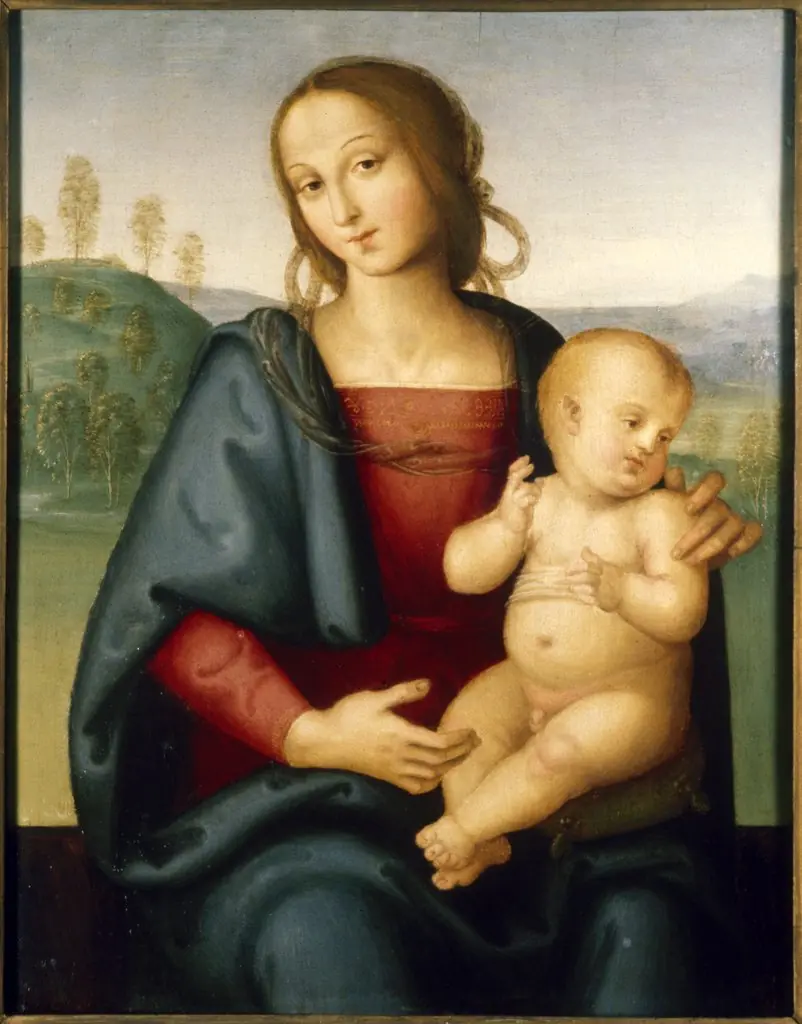
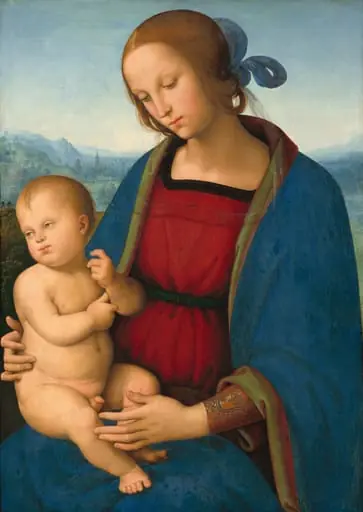
Madonna and Child is a paint painting by the Early Renaissance artist Mariotto Albertinelli. It dates from 1498 and is held in the collection of the Gemäldegalerie Berlin.
About this work
Overview
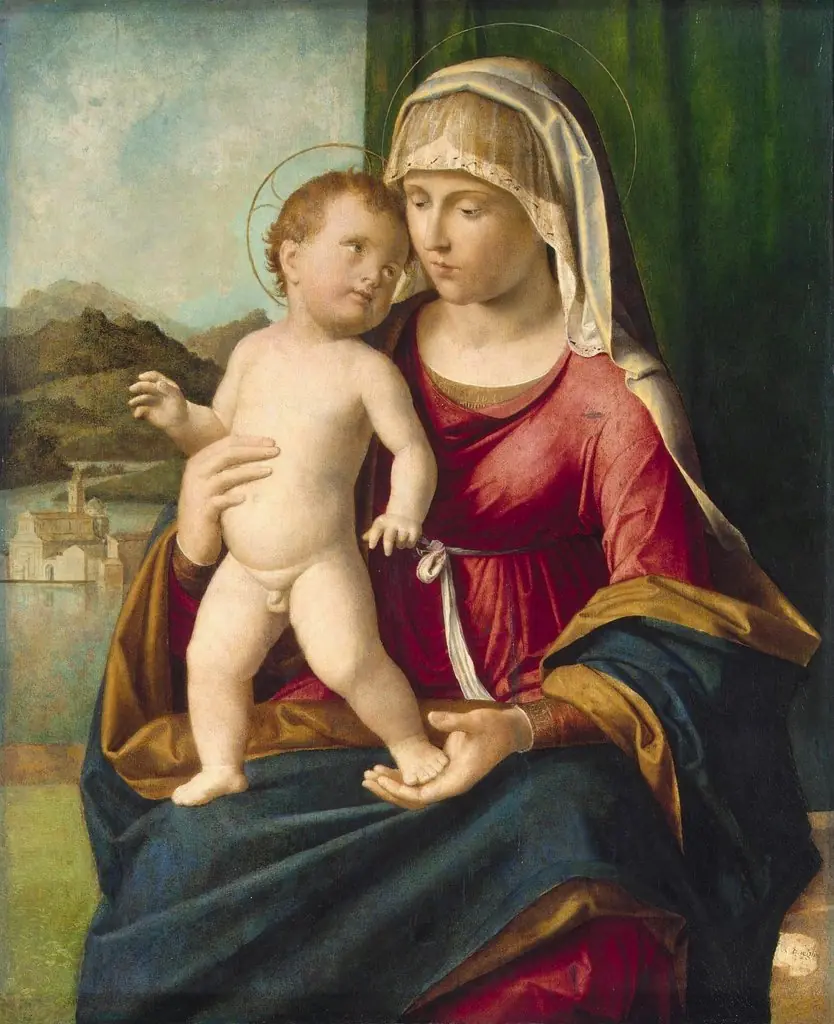
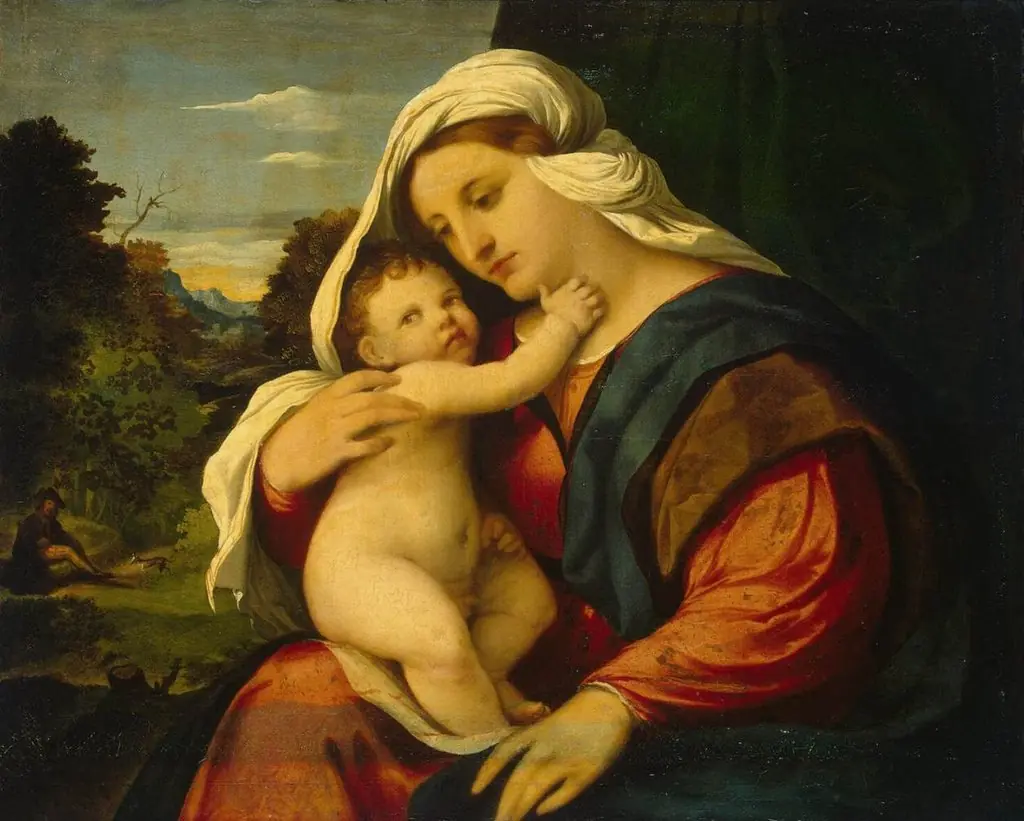
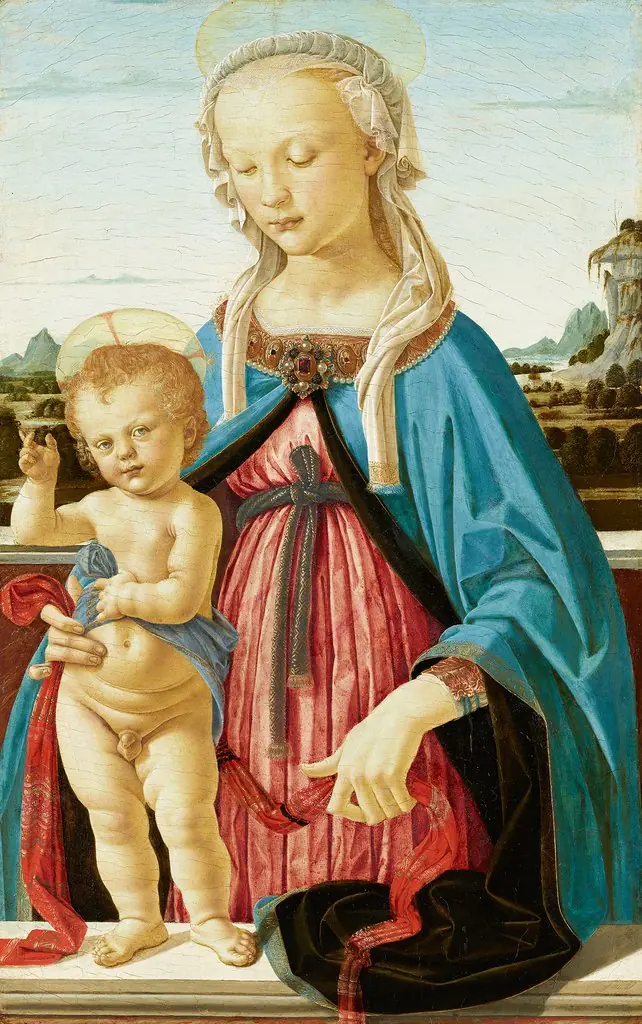
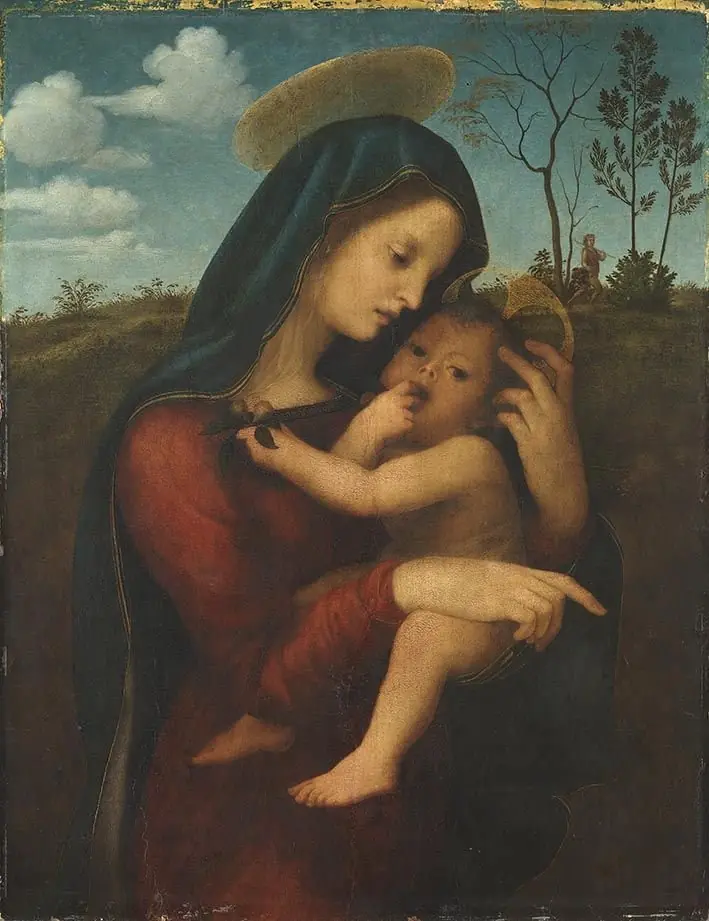
Executed in paint on a poplar panel, the work depicts the Virgin Mary holding the infant Jesus in a landscape setting.
Madonna and Child is a devotional painting by the Florentine Renaissance artist Mariotto Albertinelli, dated to 1495. Executed in paint on a poplar panel, the work depicts the Virgin Mary holding the infant Jesus in a landscape setting. The painting is held in the collection of the Gemäldegalerie in Berlin, where it remains on public display. As an early work by Albertinelli, it offers significant insight into the formation of an artist who would become a central figure in Florentine High Renaissance painting through his long and complex collaboration with Fra Bartolomeo. The panel exemplifies the transition from the detailed, miniature-like technique of Albertinelli's beginnings toward the grander classical style that would define his mature output.
Subject & Meaning
The painting presents a seated Virgin Mary clad in a red dress and green mantle, with a blue cloth draped across her lap and shoulders. She holds a small flower in her right hand while the nude Christ Child, seated on her lap, reaches toward it with one hand, his other hand resting near his thigh. Mary's head is covered by a draped cloth, and her gaze meets the viewer directly, while the infant turns his head slightly to his left, mouth slightly open. This interaction between mother and child carries devotional significance typical of Florentine religious art of the period. The flower held by the Virgin likely carries symbolic resonance, possibly alluding to her purity or to the Passion of Christ. The landscape behind the figures, separated by a low stone ledge, features rolling hills, scattered trees, buildings, and distant mountains under a pale sky, placing the sacred figures within a recognizable natural world that invites contemplation. The frontal, pyramidal composition places the figures in the lower two-thirds of the panel, creating a stable, meditative focus appropriate for private devotion.
Technique & Style
The medium is paint on poplar panel, a support typical of Florentine panel painting. The palette centers on deep green, crimson, and blue set against earthy browns and muted greens, with a thin gold border visible at the left edge. The paint surface shows fine craquelure throughout. Albertinelli employed smooth, blended brushwork in the flesh, contrasting with more linear handling in the drapery folds. Soft light models the rounded forms of faces and flesh, demonstrating the influence of Leonardo da Vinci's sfumato technique that Albertinelli absorbed during his training. This combination of meticulous detail in the figure with atmospheric landscape background reflects the artist's early synthesis of influences from his master Cosimo Rosselli and the emerging High Renaissance style. The condition of the panel, as observed, preserves these technical qualities, allowing study of Albertinelli's handling at this formative stage of his career.
History & Provenance
The painting is dated to 1495, placing it at the very beginning of Albertinelli's independent career. Following his training under Cosimo Rosselli and his formation of a partnership with Fra Bartolomeo in 1494, this work represents an early product of the artistic milieu that would define Florentine painting for decades. The panel's provenance before its acquisition by the Gemäldegalerie Berlin is not documented in the available sources. It is currently located in the Gemäldegalerie Berlin, having entered the collection through standard museum acquisition channels. No specific exhibition history is recorded for this particular panel in the provided sources.
Context
Albertinelli was born in Florence in 1474 to a gold beater, and his early training under Cosimo Rosselli placed him at the center of one of the city's most active workshops, where he met Baccio della Porta, later Fra Bartolomeo. The formation of their compagnia in 1494, just one year before this painting's date, established one of the most significant collaborative relationships in Renaissance tragedy Renaissance art. The 1495 date of Madonna and Child thus falls within this formative period of partnership, though the work predates the more intensely collaborative phase that would follow Albertinelli's brief partnership with Giuliano Bugiardini from 1503 to 1509. Critical assessment of Albertinelli's work has often been complicated by his close association with Fra Bartolomeo; scholars have struggled to distinguish their hands, particularly in small devotional panels. Some works have been described as archaic or conservative, while others exemplify the grandiose classicism of the High Renaissance. This early Madonna and Child demonstrates the minute, delicate technique and stylistic debts to Piero di Cosimo, Lorenzo di Credi, and Perugino that characterized Albertinelli's first period, before his full absorption of High Renaissance monumentality.
Legacy
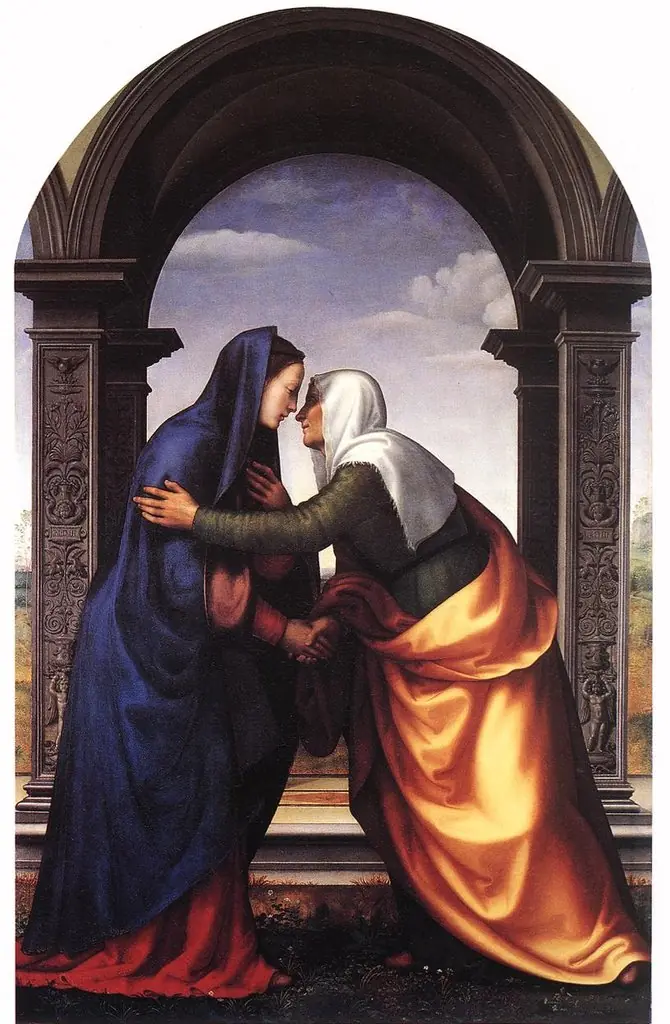
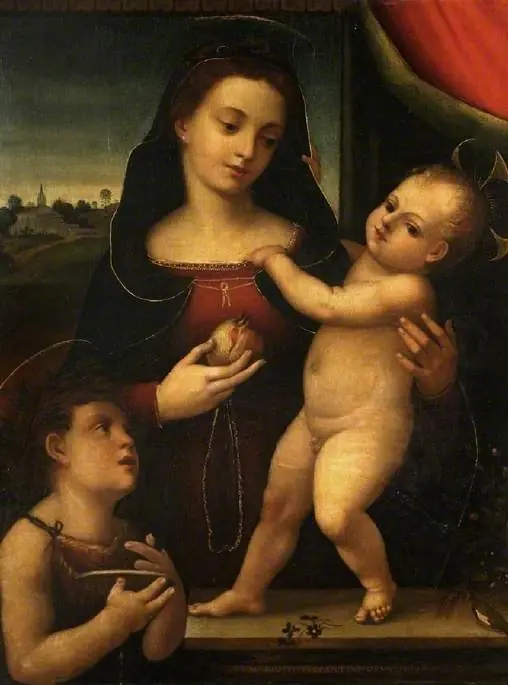
While this specific Madonna and Child has not achieved the same prominence as Albertinelli's later signed and dated masterworks, such as the Visitation of 1503 (now in the Uffizi), it occupies an important place in understanding the artist's development. The panel anticipates the devotional images that would become a staple of Albertinelli's production and those of his workshop. His influence extended through students including Franciabigio, Jacopo da Pontormo, and Innocenzo da Imola, ensuring the transmission of his stylistic synthesis into the next generation of Florentine painting. The broader type of the Madonna and Child remained central to Albertinelli's practice throughout his career, as evidenced by later variations including the Madonna and Child with the Young Saint John the Baptist and related compositions that reused and adapted figural groups across his oeuvre. The Gemäldegalerie's holding of this early example preserves a crucial witness to the formation of High Renaissance devotional painting in Florence, before the fuller classicism of Albertinelli's mature collaborations with Fra Bartolomeo.
Artist & collection

Artist
Mariotto di Bindo di Biagio Albertinelli (13 October 1474 – 5 November 1515) was an Italian Renaissance painter active in Florence.