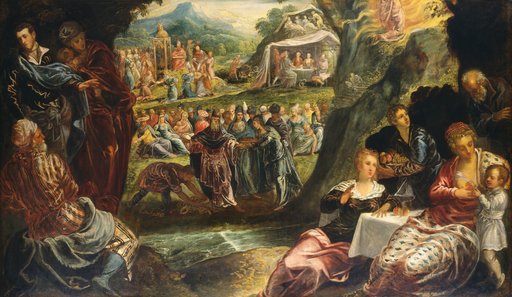
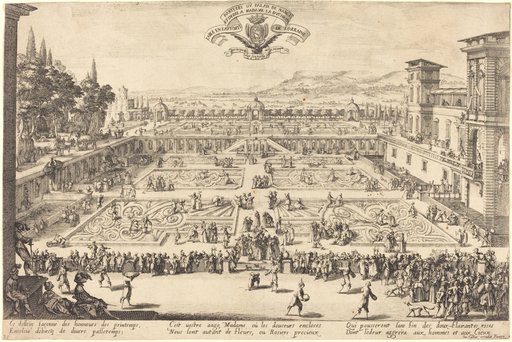
Artist
Jacopo Ligozzi
Republic of Venice
Jacopo Ligozzi is a Republic of Venice Baroque artist. 29 works are cataloged here, principally at National Gallery of Art.
Jacopo Ligozzi (1547–1627) was an Italian painter, illustrator, designer, and miniaturist. His art can be categorized as late-Renaissance and Mannerist styles.
Overview
Jacopo Ligozzi (1547-1627) was an Italian painter, illustrator, designer, and miniaturist of the late Renaissance and Mannerist styles. Born in Verona and active primarily in Florence, he served as a court artist for multiple Medici grand dukes and eventually led the Accademia e Compagnia delle Arti del Disegno. He is best known for his meticulously observed botanical and zoological illustrations, which reflected the nascent scientific pursuits of the Medici court, as well as for his religious altarpieces, frescoes, and designs for pietre dure mosaics. His work bridged natural history and art, bringing the lush color palette of Verona to Florence while establishing a visual language for early modern scientific illustration.
Biography & dates
Born in Verona in 1547, Jacopo Ligozzi was the son of the painter Giovanni Ermano Ligozzi and belonged to a large family of artisans and decorators. He trained in his father's workshop, which entered the service of the Prince-Bishop of Trento, Cristoforo Madruzzo, in 1557. Early in his career, Ligozzi produced independent works, completing an altarpiece for the church of San Antonio Abate in Bivedo by 1556, and co-signing another with his father for San Silvestro in Vigo Lomaso in 1567. He subsequently spent time at the Habsburg court in Vienna, where he displayed drawings of animal and botanical specimens. Following this, he was invited by Francesco I de' Medici to Florence in 1577 or 1578. Upon the death of Giorgio Vasari in 1574, Ligozzi succeeded him as head of the Accademia e Compagnia delle Arti del Disegno. He became the chief artist of the grand-ducal workshop and superintendent of the Galleria dei Lavori, serving four successive Grand Dukes of Tuscany: Francesco I, Ferdinando I, Cosimo II, and Ferdinando II. He also completed paintings for the Tribuna degli Uffizi. Ligozzi died in Florence in 1627 and was buried in the church of San Marco on March 26.
Style & movement
Categorized within the late Renaissance and Mannerism, Ligozzi's style diverged from the prevailing Mannerist trends through his rigorous observation of nature. His religious altarpieces often feature crowds in staged, emotionless positions, exhibiting an academic staleness typical of Florentine painting of the era. In contrast, his pen-and-wash drawings of religious, mythological, heraldic, and macabre subjects demonstrate greater originality. His visual language is dense and precise, often incorporating vegetal motifs, cartouches with masks, and biblical scenes heightened with gold. A preoccupation with death and damnation permeates his work, frequently softened by a pious grace. His most celebrated technical achievement lies in his natural history illustrations, which boast such botanical accuracy that they include exquisitely observed root systems. He is credited with introducing the lusher color palette of Verona to Florence, and he also produced designs for anti-Turkish propaganda commissioned by Christian leaders during the Ottoman Empire's expansion.
Major works
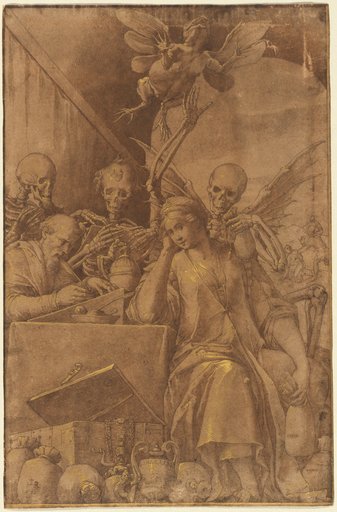
Ligozzi's major commissions in Florence include frescoes depicting episodes from the life of Saint Francis of Assisi for the cloister of the Ognissanti, and a painting on slate in the Salone dei Cinquecento of the Palazzo Vecchio. He also contributed decorations to the Grotto of Thetys in the Colossus of the Apennine. His canvas paintings include Saint Raymond Resuscitating a Child for Santa Maria Novella and the Martyrdom of Saint Dorothea for the church of the Conventuali at Pescia. One of his documented natural history works is A Marmot with a Branch of Plums, dated 1605. He was also commissioned to create depictions for the encyclopedic visual catalogue of Ulisse Aldrovandi's plant collections, which are kept in the Gabinetto Disegni e Stampe of the Uffizi Gallery. Other notable works include the Martyrdom of the Four Crowned Saints, a 1596 oil on canvas measuring 330 by 221 centimeters, now in the communal pinacotheca of Ravenna, and an Allegory of Avarice held by the Metropolitan Museum of Art in New York. The Louvre in Paris holds a significant collection of his drawings, including Femme a la toilette, Memento mori, Vanitas vanitatis, and the Vice Attacking Study.
Influences & students
Ligozzi's foundational training came from his father, Giovanni Ermano Ligozzi. In Florence, he collaborated with Bernardino Poccetti on several projects. His naturalistic illustrations served as an example for the baroque painter Giovanna Garzoni, who also worked for the Medici. His pupils included Donato Mascagni, known as Frate Arsenio, and Mario Balassi. He also taught Marie de Medici, who would become the wife of King Henry IV of France. His nephew, Bartolommeo Ligozzi, also became a painter. The printmakers Agostino Carracci and Andrea Andreani engraved some of his compositions, further disseminating his designs.
Legacy
Ligozzi's legacy is defined by his dual role as a master of late Renaissance court painting and a pioneer of scientific illustration, earning him the description as the Audubon of late Renaissance Florence. His direction of the grand-ducal Galleria dei Lavori established enduring models for the production of pietre dure and embroidered textiles. His influence on subsequent Florentine art is evident in the work of Bartolomeo Bimbi, who continued his focus on nature studies. Modern recognition of his contributions includes the 2002 exhibition The Flowering of Florence: Botanical Art for the Medici at the National Gallery of Art in Washington, D.C., and a dedicated exhibition at the Louvre in Paris in 2005, curated by Dominique Cordellier and Lucilla Conigliell.
Works by Jacopo Ligozzi
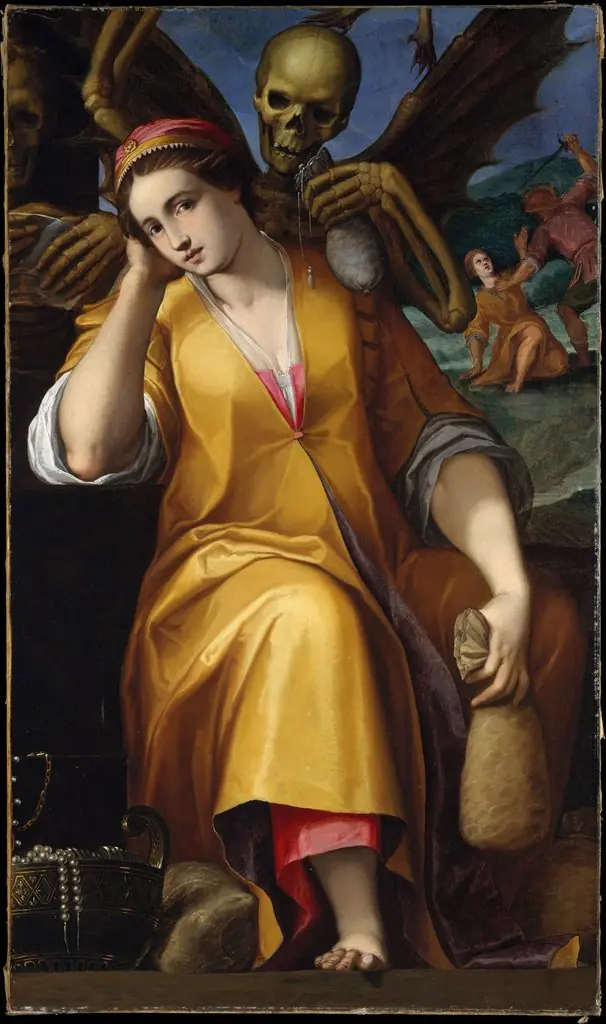 Allegory of Avarice
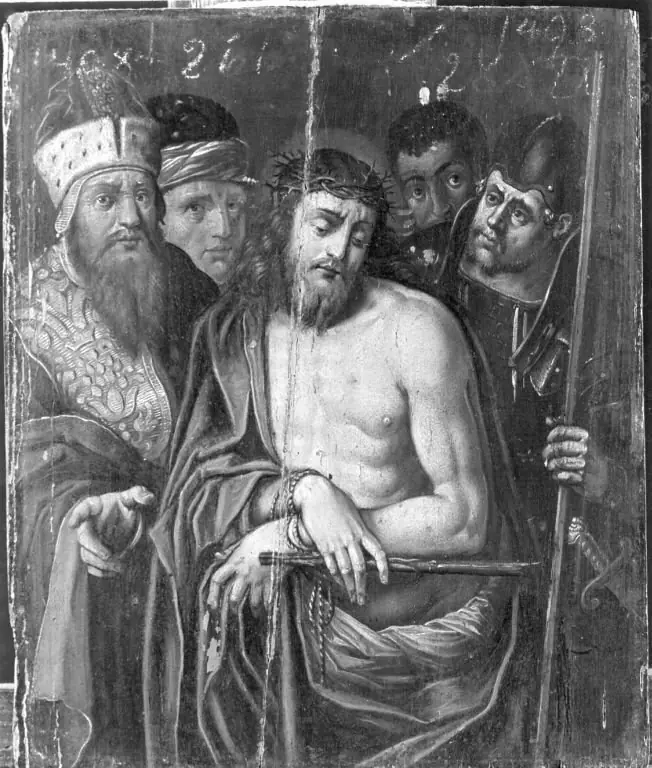 Ecce homo
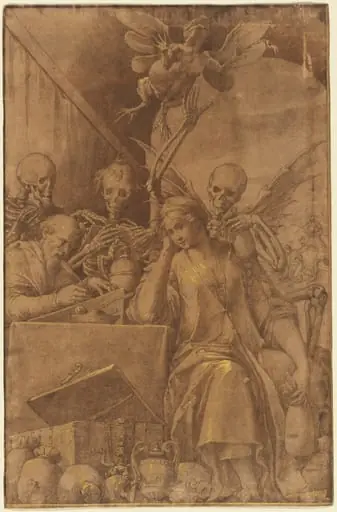 Avarice
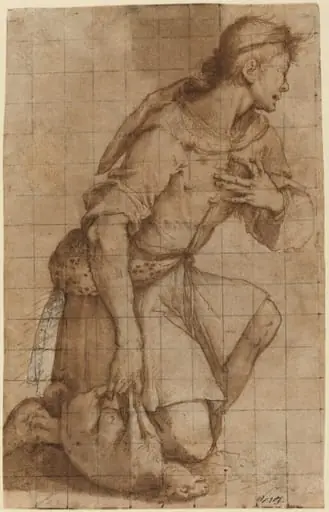 Kneeling Shepherd
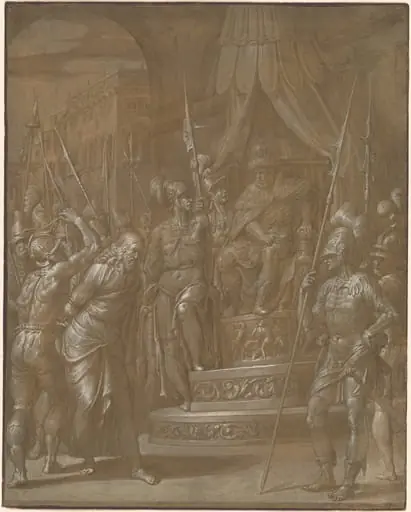 Christ before Herod
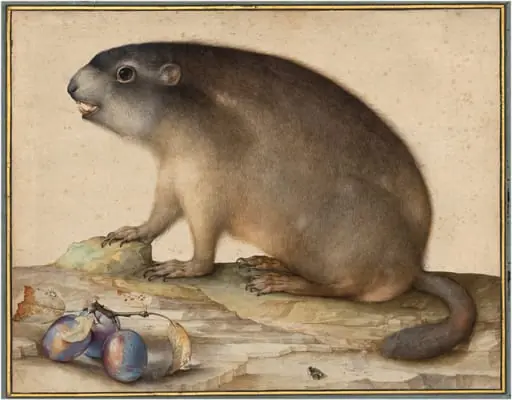 A Groundhog or Marmot with a Branch of Plums
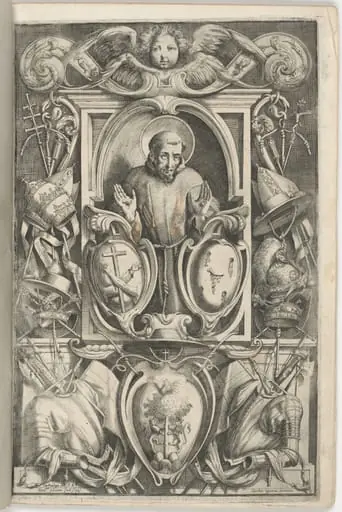 Frontispiece with Portrait of Saint Francis
![View of the Mountain of La Verna from the Road of Casentino (Vue de la montagne della Vernia...) [plate A]](https://artifactworldgallery.com/img/jacopo-ligozzi--view-of-the-mountain-of-la-verna-from-the-road-of-casentino--4d92ff423c874270-w320.webp) View of the Mountain of La Verna from the Road of Casentino (Vue de la montagne della Vernia...) [plate A]
View of the Mountain of La Verna from the Road of Casentino (Vue de la montagne della Vernia...) [plate A]![Spring of Saint Francis (Fonte di San Francesco) [plate B]](https://artifactworldgallery.com/img/jacopo-ligozzi--spring-of-saint-francis-fonte-di-san-francesco-plate-b--f2335e46ea738f45-w320.webp) Spring of Saint Francis (Fonte di San Francesco) [plate B]
Spring of Saint Francis (Fonte di San Francesco) [plate B]![The Salutation of the Birds (Il Saluto degli uccelli) [plate C]](https://artifactworldgallery.com/img/jacopo-ligozzi--the-salutation-of-the-birds-il-saluto-degli-uccelli-plate-c--d6c0a4b5ca3671a2-w320.webp) The Salutation of the Birds (Il Saluto degli uccelli) [plate C]
The Salutation of the Birds (Il Saluto degli uccelli) [plate C]![Façade of the Minor Church (Facciata della chiesa minore) [plate E]](https://artifactworldgallery.com/img/jacopo-ligozzi--facade-of-the-minor-church-facciata-della-chiesa-minore-plat--b709d9c7f3762192-w320.webp) Façade of the Minor Church (Facciata della chiesa minore) [plate E]
Façade of the Minor Church (Facciata della chiesa minore) [plate E]![Interior of the Minor Church (Interno della chiesa minore) [plate F]](https://artifactworldgallery.com/img/jacopo-ligozzi--interior-of-the-minor-church-interno-della-chiesa-minore-pla--c09c0b35db0c2fbf-w320.webp) Interior of the Minor Church (Interno della chiesa minore) [plate F]
Interior of the Minor Church (Interno della chiesa minore) [plate F]![Exterior View of the Chapel of the Cardinal (Veduta esterna della cappella del cardinale) [plate G]](https://artifactworldgallery.com/img/jacopo-ligozzi--exterior-view-of-the-chapel-of-the-cardinal-veduta-esterna-d--b3f5ad482f238a22-w320.webp) Exterior View of the Chapel of the Cardinal (Veduta esterna della cappella del cardinale) [plate G]
Exterior View of the Chapel of the Cardinal (Veduta esterna della cappella del cardinale) [plate G]![Interior of the Chapel of Mary Magdelene (Interno della cappella della Maddalena) [plate H]](https://artifactworldgallery.com/img/jacopo-ligozzi--interior-of-the-chapel-of-mary-magdelene-interno-della-cappe--2c8c7a51e39993f2-w320.webp) Interior of the Chapel of Mary Magdelene (Interno della cappella della Maddalena) [plate H]
Interior of the Chapel of Mary Magdelene (Interno della cappella della Maddalena) [plate H]![The Prominent Rock (Sasso spicco) [plate I]](https://artifactworldgallery.com/img/jacopo-ligozzi--the-prominent-rock-sasso-spicco-plate-i--40aeadb353359cc6-w320.webp) The Prominent Rock (Sasso spicco) [plate I]
The Prominent Rock (Sasso spicco) [plate I]![Plan of the Rooms and Church of the Sacred Monastery (Pianta di parte della loggia e del sacro eremo) [plate K]](https://artifactworldgallery.com/img/jacopo-ligozzi--plan-of-the-rooms-and-church-of-the-sacred-monastery-pianta--dc9411813eea3427-w320.webp) Plan of the Rooms and Church of the Sacred Monastery (Pianta di parte della loggia e del sacro eremo) [plate K]
Plan of the Rooms and Church of the Sacred Monastery (Pianta di parte della loggia e del sacro eremo) [plate K]![Chapel of the Cross (Cappella della Croce) [plate L]](https://artifactworldgallery.com/img/jacopo-ligozzi--chapel-of-the-cross-cappella-della-croce-plate-l--67fb1336bb083c23-w320.webp) Chapel of the Cross (Cappella della Croce) [plate L]
Chapel of the Cross (Cappella della Croce) [plate L]![Church of the Stigmata (Chiesa delle Stimmate) [plate M]](https://artifactworldgallery.com/img/jacopo-ligozzi--church-of-the-stigmata-chiesa-delle-stimmate-plate-m--255dd75981bd30e3-w320.webp) Church of the Stigmata (Chiesa delle Stimmate) [plate M]
Church of the Stigmata (Chiesa delle Stimmate) [plate M]![Chapel of Saint Sebastian (Cappella di San Sebastiano) [plate N]](https://artifactworldgallery.com/img/jacopo-ligozzi--chapel-of-saint-sebastian-cappella-di-san-sebastiano-plate-n--144b97ba4a91d67b-w320.webp) Chapel of Saint Sebastian (Cappella di San Sebastiano) [plate N]
Chapel of Saint Sebastian (Cappella di San Sebastiano) [plate N]![The Temptation of Saint Francis (Tentazione di San Francesco) [plate O]](https://artifactworldgallery.com/img/jacopo-ligozzi--the-temptation-of-saint-francis-tentazione-di-san-francesco--8a51c5ee5acc8aef-w320.webp) The Temptation of Saint Francis (Tentazione di San Francesco) [plate O]
The Temptation of Saint Francis (Tentazione di San Francesco) [plate O]![Apparition of the Virgin in the Beech Tree (Faggio dell'apparizione della Vergine) [plate P]](https://artifactworldgallery.com/img/jacopo-ligozzi--apparition-of-the-virgin-in-the-beech-tree-faggio-dell-appar--86709d24a3e2a88e-w320.webp) Apparition of the Virgin in the Beech Tree (Faggio dell'apparizione della Vergine) [plate P]
Apparition of the Virgin in the Beech Tree (Faggio dell'apparizione della Vergine) [plate P]![Chapel of the Spring in the Beech Tree (Cappella del faggio dell'acqua) [plate Q]](https://artifactworldgallery.com/img/jacopo-ligozzi--chapel-of-the-spring-in-the-beech-tree-cappella-del-faggio-d--ff27648fdbf66a4c-w320.webp) Chapel of the Spring in the Beech Tree (Cappella del faggio dell'acqua) [plate Q]
Chapel of the Spring in the Beech Tree (Cappella del faggio dell'acqua) [plate Q]![The Site of the Bed and Oratory of Saint Francis (Luogo del 'letto' e dell'oratorio di San Francesco) [plate R]](https://artifactworldgallery.com/img/jacopo-ligozzi--the-site-of-the-bed-and-oratory-of-saint-francis-luogo-del-l--d2d91b10bc78c845-w320.webp) The Site of the Bed and Oratory of Saint Francis (Luogo del 'letto' e dell'oratorio di San Francesco) [plate R]
The Site of the Bed and Oratory of Saint Francis (Luogo del 'letto' e dell'oratorio di San Francesco) [plate R]![Chapel of the Blessed John of La Verna (Cappella del beato Giovanni della Verna) [plate S]](https://artifactworldgallery.com/img/jacopo-ligozzi--chapel-of-the-blessed-john-of-la-verna-cappella-del-beato-gi--bfb093909feaa17f-w320.webp) Chapel of the Blessed John of La Verna (Cappella del beato Giovanni della Verna) [plate S]
Chapel of the Blessed John of La Verna (Cappella del beato Giovanni della Verna) [plate S]
29 works in the catalog · 24 shown
Collections represented


- Frontispiece with Portrait of Saint Francis
- View of the Mountain of La Verna from the Road of Casentino (Vue de la montagne della Vernia...) [plate A]
- Spring of Saint Francis (Fonte di San Francesco) [plate B]
- The Salutation of the Birds (Il Saluto degli uccelli) [plate C]
- Façade of the Minor Church (Facciata della chiesa minore) [plate E]
- Interior of the Minor Church (Interno della chiesa minore) [plate F]
- Exterior View of the Chapel of the Cardinal (Veduta esterna della cappella del cardinale) [plate G]
- Interior of the Chapel of Mary Magdelene (Interno della cappella della Maddalena) [plate H]
Artists in a similar vein