Artist
Iwasa Matabē

Japan
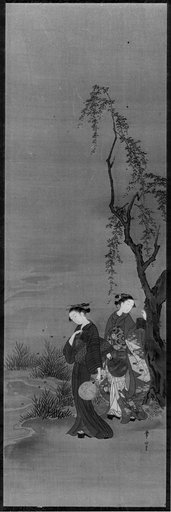
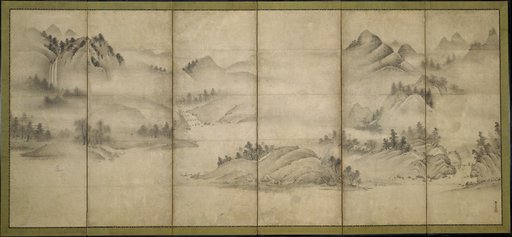
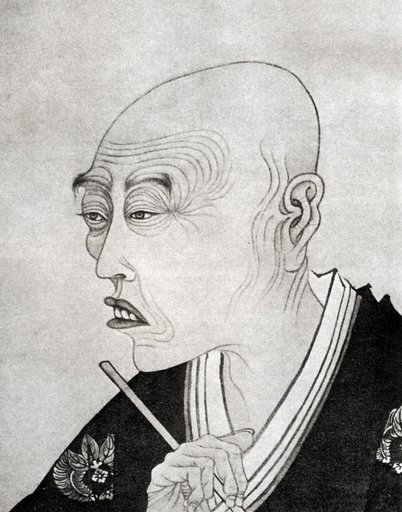
Iwasa Matabē is a Japan Baroque artist. 6 works are cataloged here, principally at Metropolitan Museum of Art.
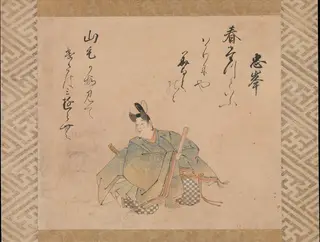
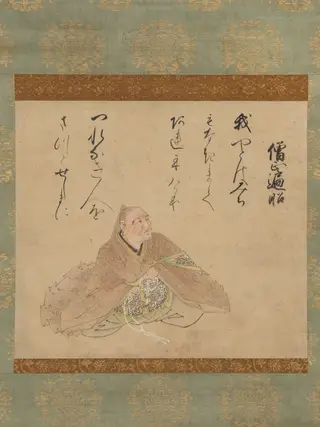
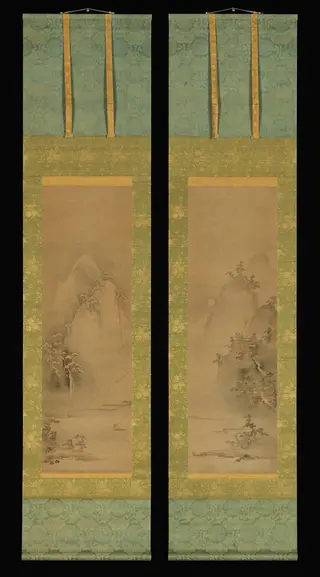
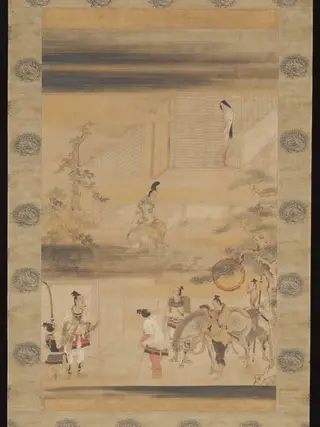
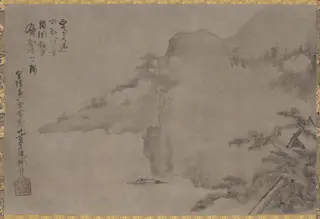
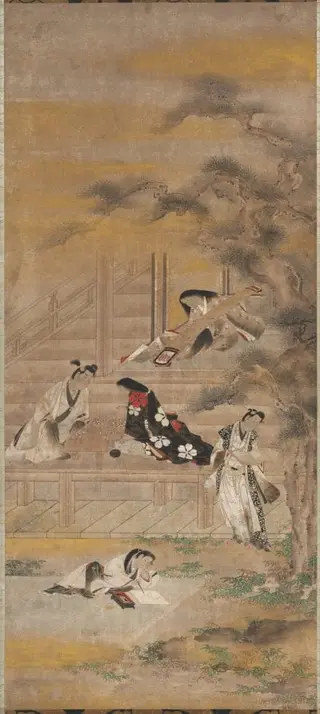
Iwasa Matabei (岩佐 又兵衛); original name Araki Katsumochi 1578 – July 20, 1650) was a Japanese artist of the early Tokugawa period, who specialized in genre scenes of historical events and illustrations of classical Japanese and Chinese literature, as well as portraits. He was the son of Araki Murashige, a prominent daimyō of the Sengoku period who had been made to commit suicide, leaving Matabei to be raised with his mother's family name, Iwasa. Matabei's work was noted for its distinctive figures, with large heads and delicately drawn features, and he was effective both in colour and monochrome ink-wash painting, using an individual brush technique combining Tosa and Kanō elements. Although trained by Kanō Naizen of the Kanō school, he was more influenced by the traditions of the Tosa school, and signed a late series of portraits of the Thirty-six Poetry Immortals (1640) commissioned by the shōgun Tokugawa Iemitsu for a temple as "the artist Matabei of the later current from Tosa Mitsunobu". The works of Matabei have an affinity with the early paintings of ukiyo-e, but there is a disagreement among scholars as to whether they are ukiyo-e themselves or not. In Japan, it is common to regard Matabei as the originator of ukiyo-e. On the other hand, there is a theory that Matabei is not the source of ukiyo-e, but rather an independent painter of the Tosa school, because his patrons were from high social classes. According to this theory, he is misunderstood as the source of ukiyo-e only because he is confused with the ukiyo-e painter of the same name (Ōtsu no Matabei) who appears in Chikamatsu's plays. His son Katsushige (d. 1673) was also a painter, known for dancing figures in a style like that of his father.
Overview
Iwasa Matabei (岩佐 又兵衛, 1578, July 20, 1650) was a Japanese painter of the early Tokugawa period whose work bridged the artistic traditions of the Momoyama and Edo eras. Born Araki Katsumochi, the son of the Sengoku-period daimyō Araki Murashige, he adopted his mother's family name after his father's forced suicide. Matabei specialized in genre scenes of historical events, illustrations of classical Japanese and Chinese literature, and portraits, developing a distinctive style characterized by figures with large heads and delicately drawn features. His brushwork synthesized elements of both the Kanō and Tosa schools, though scholars remain divided on whether his work should be classified as early ukiyo-e or as an independent Tosa-school tradition. His significance lies in his role as a transitional figure who helped shape the direction of Japanese painting during a pivotal period of cultural change.
Biography & dates
Iwasa Matabei was born on January 1, 1578, in the province of Settsu, the son of Araki Murashige, a prominent daimyō who controlled Itami Castle. In the year of his birth, the military leader Oda Nobunaga ordered the destruction of Murashige and his family following an alleged rebellion plot. Matabei escaped and was raised under his mother's family name, Iwasa, with his real name being Katsumochi. He demonstrated artistic talent from an early age and received training from Kanō Naizen (1570-1616), a painter who had maintained close ties to the Araki family. Around 1615, Matabei left Kyoto for Kitan-no-shō, present-day Fukui in Echizen Province, where he enjoyed the patronage of the local lord Matsudaira Tadanao (1595-1650). He remained in Kitan-no-shō even after Tadanao fell from grace and was exiled to Bungo, and it was during this period that he developed his mature personal style. In 1637, he was summoned to Edo to produce works for the Tokugawa shogunate. Rather than traveling directly, he journeyed via Kyoto, documenting the trip in a report titled Kaikokudō no ki. In Edo, he painted various rooms for the shogunate and created a series of the Thirty-six Poetry Immortals for the Tōshōgū Shrine in Kawagoe. He died in Edo on July 20, 1650. His son Katsushige (d. 1673) also became a painter, known for dancing figures in his father's manner.
Style & movement
Matabei's artistic style is distinguished by an unusual sense of form and design with a tendency toward strong expression. His figures typically display either emphatically round or markedly elongated faces, with large heads and delicately drawn features. He was equally effective in color and monochrome ink-wash painting, employing an individual brush technique that combined Kanō and Tosa elements. Although trained by Kanō Naizen of the Kanō school, he was more profoundly influenced by Tosa traditions. This dual allegiance is visible in works such as the portraits of the poets Kakinomoto no Hitomaro and Ki no Tsurayuki, executed with broad, free brushwork in the Kanō manner, while his Portrait of Daruma demonstrates the power of his ink work in a narrow tonal range, synthesizing rather than fully belonging to either school. The majority of his production, however, remained clearly Tosa in manner, though highly personal and delicate. He frequently drew upon classical themes from the Genji monogatari and the Tales of Ise, often mixing them with Chinese legends. His workshop was particularly active during the Kan'ei era (1624-1644), a period that marked a turning point in Japanese art, and his work is now understood as forming a bridge between Momoyama-period painting and the developing Edo-period aesthetic. The question of his relationship to ukiyo-e remains contested: in Japan, he is commonly regarded as the originator of the genre, yet an alternative theory holds that he was an independent Tosa-school painter whose high-status patrons distinguish him from the popular urban culture that produced ukiyo-e, with the confusion arising partly from conflation with another figure, Ōtsu no Matabei, who appears in the plays of Chikamatsu Monzaemon.
Major works
The only work by Iwasa Matabei designated as a National Treasure is the Rakuchū Rakugai Zu Byōbu (Funaki Version) (洛中洛外図屏風 (舟木本)), held by the Tokyo National Museum. This folding screen depicts the scenery and customs of urban and suburban Kyoto around 1615, showing Nijō Castle of the Tokugawa clan on the left and the Hōkō-ji Great Buddha Hall, symbolizing the Toyotomi clan, on the right. It is known as the "Funaki version" from its ownership by the Funaki family. The Hōkoku Sairei Zu Byōbu (豊国祭礼図屏風), an Important Cultural Property housed in the Tokugawa Art Museum, depicts the 1604 festival at Toyokuni Shrine commemorating the seventh anniversary of Toyotomi Hideyoshi's death. The left panel shows citizens dancing in extravagant costumes before the Hōkō-ji Great Buddha Hall右边, while the right depicts noh and dengaku dedications at the shrine. Matabei also established a workshop that produced magnificent long emakimono (picture scrolls) based on jōruri narratives. The MOA Museum of Art holds three such masterpieces: Yamanaka Tokiwa Monogatari Emaki (山中常盤物語絵巻), Jōruri Monogatari Emaki (浄瑠璃物語絵巻), and Horie Monogatari Emaki (堀江物語絵巻). The first two are designated Important Cultural Properties. Yamanaka Tokiwa Monogatari tells of Ushiwaka's revenge for his mother's murder; Jōruri Monogatari depicts a romantic story involving Ushiwaka; and Horie Monogatari relates the quest for vengeance of Horie Saburo's child. Additionally, Kanjo Kangiku Zu (官女観菊図) in the Yamatane Museum, an Important Cultural Property, originated from a pair of six-panel folding screens depicting twelve subjects that were later divided into individual hanging scrolls. The portraits of Kakinomoto no Hitomaro and Ki no Tsurayuki at the MOA Museum of Art, and the screen "Courtiers Viewing Chrysanthemums" (Aufwartende Damen, Chrysanthemen betrachtend) at the Yamatane Museum, are also significant works. The Hōkoku Festival screen in the Tokugawa Art Museum is highly likely to be from his hand.
Influences & students
Matabei's primary teacher was Kanō Naizen (1570-1616), a painter connected to the Araki family, through whom he received foundational training in the Kanō school. However, the stronger and more lasting influence on his work came from the traditions of the Tosa school, particularly the legacy of Tosa Mitsunobu. This Tosa allegiance is explicitly declared in his signature on the 1640 portraits of the Thirty-six Poetry Immortals for the Tōshōgū Shrine in Kawagoe, where he identified himself as "the artist Matabei of the later current from Tosa Mitsunobu." His son Katsushige (d. 1673) carried on the family artistic tradition, becoming known for dancing figures executed in his father's style. Matabei maintained a large workshop with numerous students, enabling the production of a substantial body of work. The organizational capacity of his atelier allowed him to fulfill major commissions for the shogunate and other high-ranking patrons, including the 1637 Edo period when he painted various rooms for the Tokugawa government.
Legacy
During the Edo period, Matabei was widely regarded as the founder of ukiyo-e and was known by the epithet "Ukiyo-e Matabei." This attribution came under challenge in the first half of the twentieth century, when scholars sought to dissociate him from the ukiyo-e tradition. More recently, however, critical opinion has tended toward renewed acceptance of the original association. The scholarly debate centers on whether his works constitute ukiyo-e proper or represent an independent Tosa-school development, with the confusion exacerbated by the existence of Ōtsu no Matabei, a popular painter of the same name who appears in Chikamatsu's plays. The theory that he was not the source of ukiyo-e emphasizes that his patrons came from high social classes, making him an unlikely originator of a genre associated with urban popular culture. Regardless of this classification dispute, his work is recognized for its pivotal role in Japanese art history, bridging the Momoyama and Edo periods during the culturally transformative Kan'ei era. His distinctive synthesis of Kanō and Tosa elements, his mastery of both color and ink-wash techniques, and his prolific output through a large workshop secured his reputation as one of the most significant painters of early Tokugawa Japan.
Works by Iwasa Matabē
Collections represented


Artists in a similar vein