Artist
Wilhelm von Kobell
Kingdom of Bavaria
Wilhelm von Kobell is a Kingdom of Bavaria Biedermeier artist. 14 works are cataloged here, principally at National Gallery of Art.
Wilhelm von Kobell (1766–1855) was an artist.
Overview
Wilhelm von Kobell (6 April 1766-15 July 1853) was a German painter, printmaker, and teacher who became one of the most significant artists of the late 18th and early 19th centuries. Born in Mannheim into an established family of artists, he achieved recognition across multiple genres, including landscape, animal painting, and battle scenes, while also producing exceptionally fine etchings and aquatints. His twelve-painting cycle of Bavarian military victories during the Napoleonic Wars, commissioned by Crown Prince Ludwig, represents a major achievement in German historical painting. Based primarily in Munich from 1793 onward, Kobell served as court painter and later professor, bridging the transition from Romanticizing Classicism to the Biedermeier style.
Biography & dates
Kobell grew up in Mannheim, the son of landscape painter and engraver Ferdinand Kobell (1740-1799) and Maria Anna Lederer (1744-1820), a court councillor's daughter from Düsseldorf. His father, who had completed his training in Paris in 1768-1770 and cited Claude Lorrain as an influence, directed Wilhelm's early artistic education, supplemented by instruction from his uncle Franz Kobell (1749-1822), a landscape draftsman who had worked in Rome from 1776 to 1784. Around 1780-1784, Wilhelm attended the Zeichnungsakademie in Mannheim, where he studied engraving under Franz Anton von Leydendorf and Egid Verhelst. He copied works by Dutch masters, particularly Philips Wouwerman, in the galleries of Mannheim and Düsseldorf. In 1786-1789, he worked in his father's studio while already receiving independent commissions. His first works included landscape watercolors, portraits of family and friends, and aquatint reproductions of Dutch paintings. In 1789, he first visited Munich, and in 1791, Elector Karl Theodor granted him a 400-gulden stipend for intended study trips to Italy and England. The outbreak of the First Coalition War in 1792 prevented these travels. Instead, Karl Theodor appointed him court painter in Munich with an annual salary of 500 gulden, on condition that he supply one painting yearly for the Elector's gallery. Kobell moved to Munich with his younger brother Egid in 1793. In 1797, he married Marianna von Krempelhuber (1775-1839), whose dowry provided financial security. The couple had two sons and three daughters by 1807. Summers were spent at Schloss Emming, his father-in-law's property, where he painted landscapes of the Upper Bavarian plateau. His father Ferdinand and the rest of the family joined him in Munich in 1794; Ferdinand became director of the Palatine-Bavarian painting gallery in 1798 but died the following year. Kobell's career advanced significantly in the early 19th century. In 1806, he completed a cycle of seven smaller paintings of Napoleon's victories over Austria for Marshal Berthier, a gift from Max Joseph. Following their exhibition in 1807, Crown Prince Ludwig commissioned the major twelve-painting cycle of Bavarian military achievements, which occupied Kobell until 1816/17. He was named honorary member of the Vienna Academy in 1808. The following year, he spent summer in Vienna and winter 1809/10 in Paris, where his brother Egid served on a diplomatic mission. In 1808, he became professor at the newly founded Munich Academy, though the professorship in landscape painting went to Johann Georg von Dillis. Kobell and his uncle Franz instead joined a committee for administering Bavarian art collections. He died in Munich on 15 July 1853 and was buried at the Alter Südfriedhof.
Style & movement
Kobell's artistic development traversed several phases, from early Dutch-influenced landscapes through Romanticizing Classicism to Biedermeier naturalism. His foundational style drew heavily on 17th-century Dutch painting, particularly the work of Philips Wouwerman, Nicolaes Berchem, and Jacob van Ruisdael, as well as 18th-century English art. Throughout his life, he traveled to England, France, and Italy, though his style remained fundamentally anchored in Dutch traditions. His early watercolors and etchings demonstrated remarkable technical precision, especially in aquatint, where he reproduced the distinctive manners of various old masters with uncommon success. The 1790s saw him producing line etchings in the manner of Johann Georg Adam Forster, some so perfectly colored with watercolor that they could be mistaken for drawings. The Napoleonic Wars prompted a significant shift toward battle painting. His military works are distinguished by extensive research and remarkable realism, combining accurate topographical and uniform detail with atmospheric landscape settings. The twelve-painting cycle for Crown Prince Ludwig represents the apex of this phase, depicting specific times of day and weather conditions with documentary precision. In the Vormärz period, particularly under the repressive regime of Ludwig I (1825-1848), Kobell's style evolved from Romanticizing Classicism toward Biedermeier. Around 1800, he had developed the theme of social encounter, as seen in works depicting interactions between different social classes. After 1815, he increasingly returned to landscape views characterized by calmer, more intimate Biedermeier sensibilities. His later works feature precise observation of Bavarian alpine and lakeside scenery, often with figures of riders, farmers, and hunters integrated into the landscape.
Major works
Kobell's oeuvre spans landscapes, rural genre scenes, animal pieces, portraits, battle paintings, and prints, with major holdings in Munich, Berlin, and numerous German collections.
His early significant works include landscape watercolors and aquatint reproductions after Dutch masters. The Hay Cart (1788), a watercolor of 30 × 35 cm, represents this period. The Plowman's Rest (1800), a 38 × 48 cm watercolor, is now in the Museum Georg-Schäfer, Schweinfurt.
The military commissions dominate his mature period. The Siege of Cosel (1808), oil on canvas measuring 205 × 304 cm (or 202 × 305 cm in some sources), was the first of the twelve-painting cycle and is now in the Neue Pinakothek, Munich. The Third Day of the Battle of Hanau (1814), oil on canvas, also in the Neue Pinakothek, depicts one of the major engagements. Other battle pieces in the cycle include The Surrender of Brieg, Cavalry Skirmish at Arnhofen, and the Battles of Eckmühl and Wagram, the latter installed in the Banquet Hall of the Königsbau in Munich.
His later landscape and genre works include View over the Kreuth Valley (c. 1810), oil on paper, 22 × 34 cm, in the Staatliche Graphische Sammlung, Munich; Market with Cattle before a Large City on a Lake (1820), pen and watercolor, in the Albertina, Vienna; Horse Hunters in the Upper Bavarian Countryside (1822), oil on canvas, 40 × 52 cm, in Schloss Weimar; Rider and Farmer with Children at Tegernsee (1825), oil on wood, 34 × 25 cm, in the Museum Oskar Reinhart, Winterthur; and At the Gaisalm (1828), oil on canvas, 37 × 30 cm, in the Lenbachhaus, Munich.
Other notable works include Austrian Soldiers, watercolor over graphite, 39 × 49 cm, in the Metropolitan Museum of Art, New York; and Beggars before the City, watercolor on laid paper, 49 × 45 cm, sold at Lampertz in 2016. His prints after Wouwerman, Berchem, Roos, and Ruisdael were widely admired for their technical fidelity.
Galleries in Bamberg, Weimar, Mannheim, Karlsruhe, Berlin, Darmstadt, Frankfurt, and Wiesbaden hold significant specimens of his work.
Influences & students
Kobell's artistic formation was shaped by multiple familial, institutional, and artistic influences. His father Ferdinand Kobell provided his initial training and remained his most immediate influence, with the father's admiration for Claude Lorrain transmitted to the son. His uncle Franz Kobell contributed to his early education during the Mannheim years. At the Zeichnungsakademie, Franz Anton von Leydendorf and Egid Verhelst taught him engraving fundamentals. He also apprenticed to Carl Friedrich Heinzmann.
The 17th-century Dutch landscape tradition was his paramount artistic influence, particularly Philips Wouwerman, whose works he copied in Mannheim and Düsseldorf galleries. Other Dutch masters he studied and reproduced included Nicolaes Berchem, Salomon van Ruysdael, Jan Asselyn, Jan Both, Adam Pynacker, and Jan Brueghel the Younger. The 18th-century Dutch painting tradition and contemporary English art also shaped his early development.
His pupils and followers included Ernst von Bandel, Joseph Carl Ettinger, Carl August Lebschee, and Eugen Napoleon Neureuther. Theodora Adzitiris, described as his follower, executed etchings and aquatints after 17th-century Dutch painters in his manner. His brother Egid Kobell worked closely with him, particularly during the Paris sojourn of 1809/10.
Legacy
Kobell's posthumous reputation rests on his achievements across multiple media and his role in documenting Bavarian military history. His battle paintings, the result of extensive research, retain value as sources for military history and uniformology, distinguished by their documentary realism rather than theatrical grandeur. The twelve-painting cycle commissioned by Crown Prince Ludwig represents one of the most significant German contributions to Napoleonic-era historical painting.
His etchings and aquatints, particularly the reproductive works after Dutch masters, were highly regarded in his lifetime for their technical virtuosity and fidelity to the original styles. These prints circulated widely and contributed to the appreciation of 17th-century Dutch painting in Germany.
The evolution of his style from Dutch-influenced landscapes through military painting to Biedermeier views tracks broader shifts in German art around 1800. His works are held in major German museums, with particularly strong concentrations in Munich (Neue Pinakothek, Staatliche Graphische Sammlung, Lenbachhaus) and Berlin, as well as significant holdings in Weimar, Vienna, and international collections including the Metropolitan Museum of Art and the Albertina.
His daughter Luise von Kobell later published Unter den vier Königen Bayerns (Munich, 1894), contributing to the family archive. Scholarly literature from the 19th century, including entries in Meusel's Teutsches Künstlerlexikon (1808), Nagler's Neues allgemeines Künstler-Lexicon (1839), and the Allgemeine Deutsche Biographie (1882), established the documentary foundation for his reputation.
Works by Wilhelm von Kobell
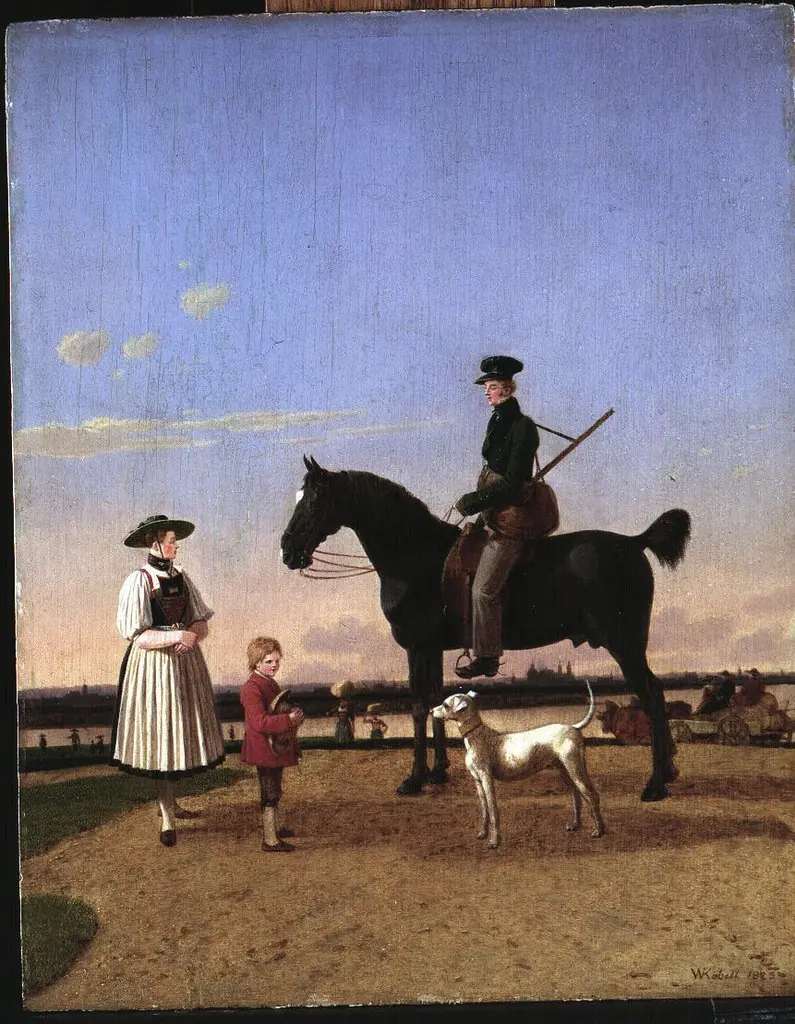 A Huntsman and a Peasant Woman by the Isar River with a View of Munich
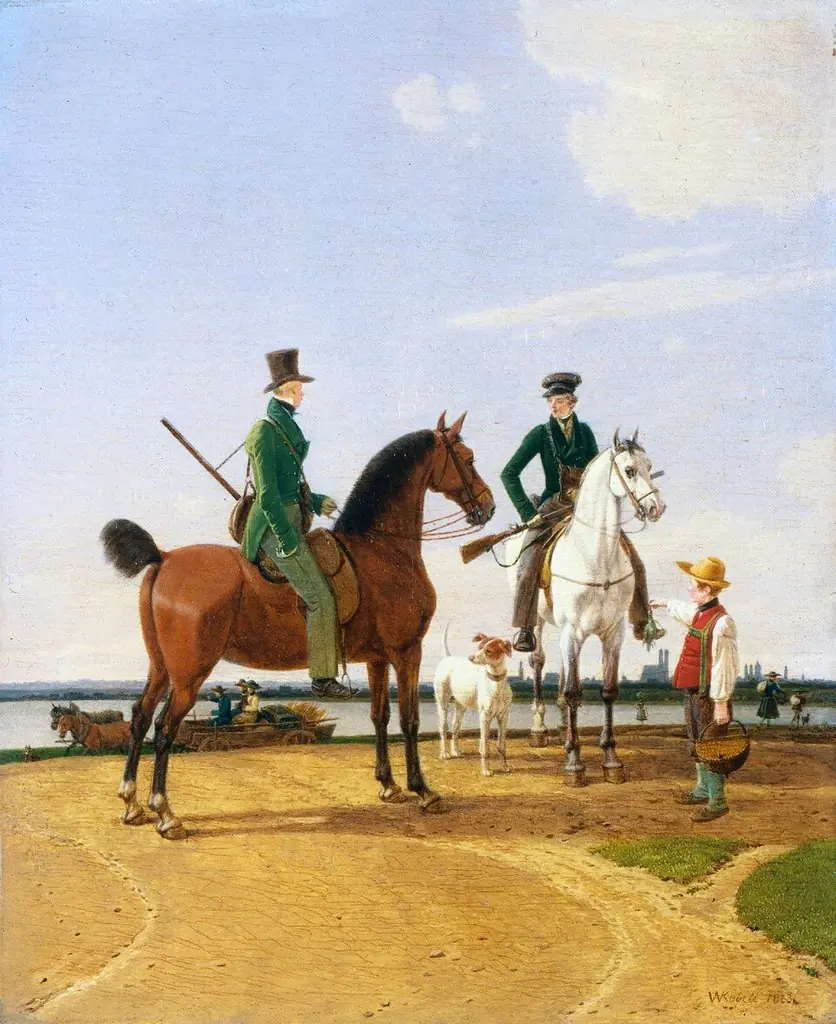 Hunter and Lord at the River Isar with View of Munich
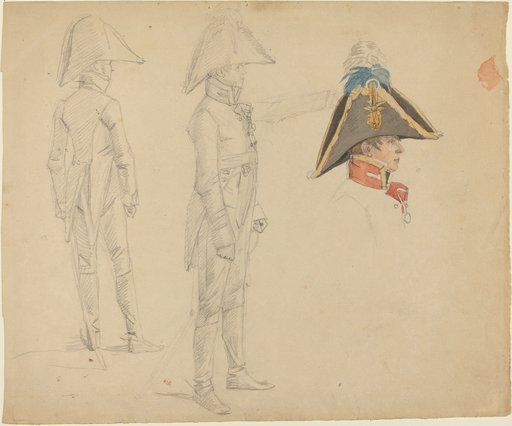
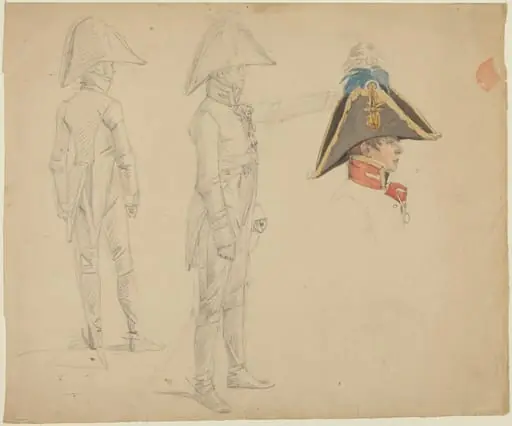 Studies of Major von Washington
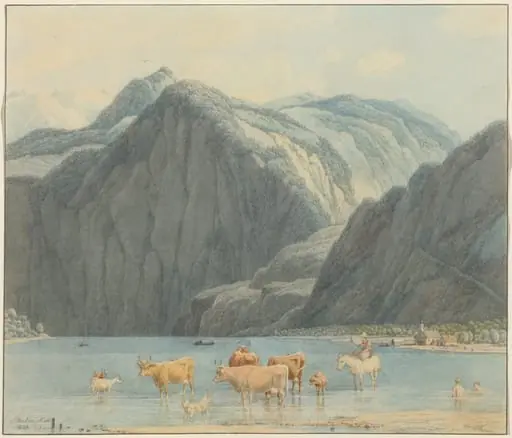 Königsee with the Cliffs of St. Bartholomëe
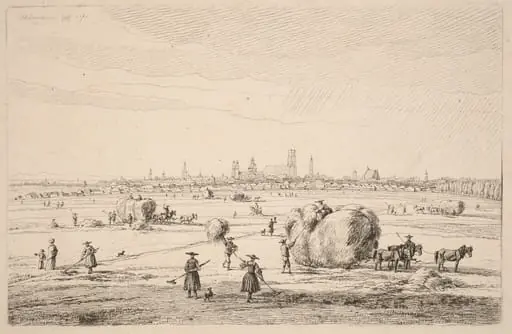 München (Munich)
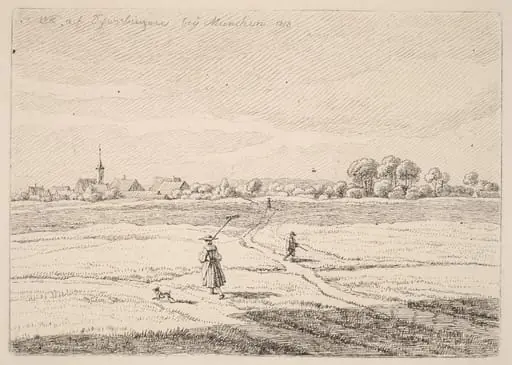 Schwabing
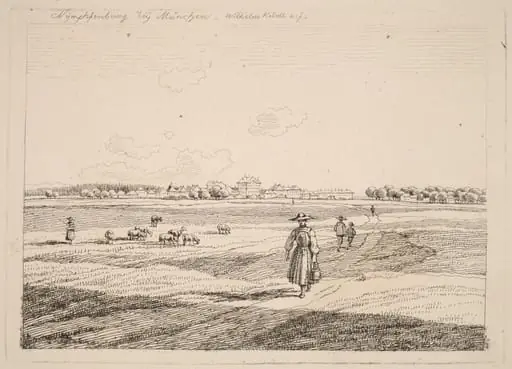 Nymphenburg
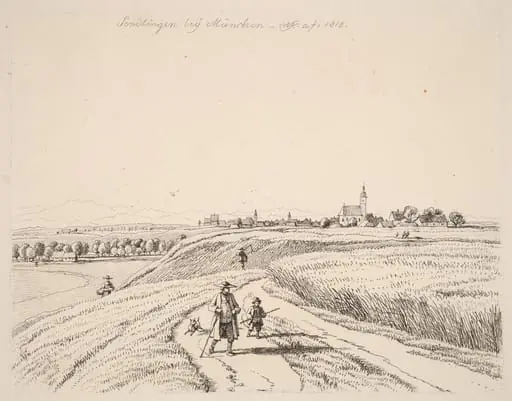 Sendling
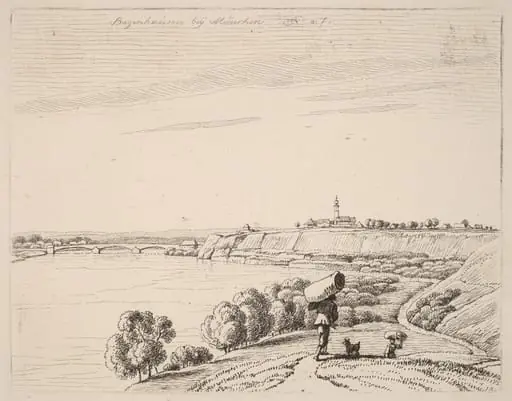 Bogenhausen
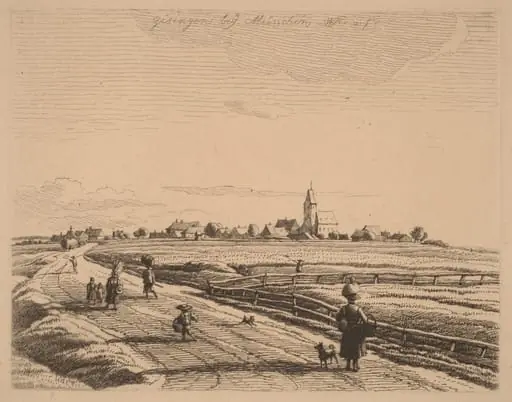 Giesing
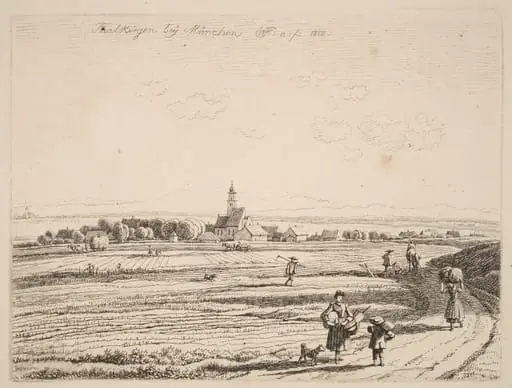 Thalkirchen
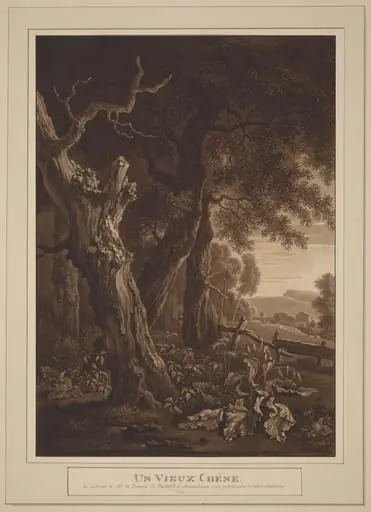 Ancient Oaks in a Landscape
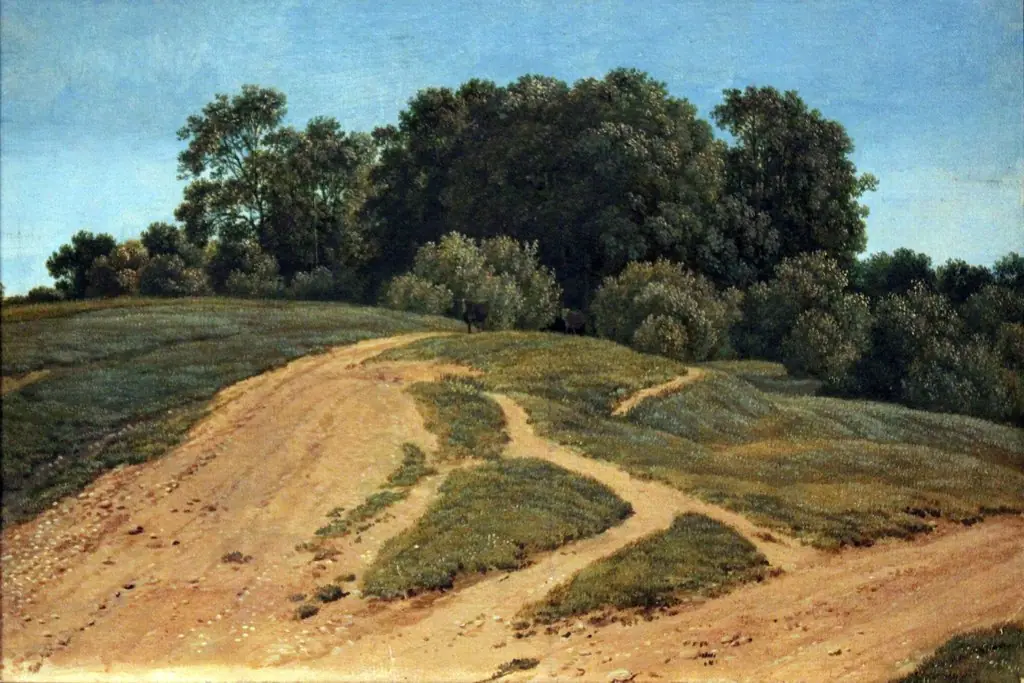 Country Lane
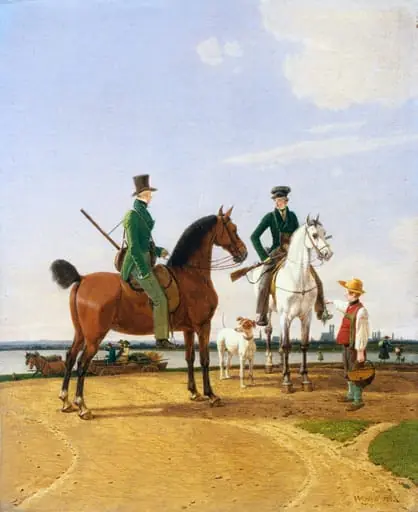 Hunter and Lord at the River Isar with View of Munich
Collections represented


Artists in a similar vein