Artist
Francesco Fontebasso
Republic of Venice
Francesco Fontebasso is a Republic of Venice Baroque artist. 20 works are cataloged here, principally at National Gallery of Art.
Francesco Fontebasso (4 October 1707 – 31 May 1769) was an Italian painter of the late-Baroque or Rococo period of Venice. He first apprenticed with Sebastiano Ricci, but was strongly influenced by his contemporary, Giovanni Battista Tiepolo. In 1761, Fontebasso visited Saint Petersburg and produced ceiling paintings and decorations for the Winter Palace. Fontebasso returned to Venice in 1768. He helped decorate a chapel in San Francesco della Vigna. He died in Venice in 1769. He is represented in collections in e.g. Kadriorg Palace (part of the Art Museum of Estonia) in Tallinn, Estonia. The Prado Museum in Spain owns a painting The Bridegroom and the foolish Virgins along with 9 drawings.
Overview
Francesco Fontebasso (4 October 1707-31 May 1769) was a Venetian Italian painter and frescoist of the Rococo period, recognized as one of the principal exponents of Venetian painting in the mid-eighteenth century. Active primarily in Venice and its territories, he produced altarpieces, ceiling decorations, mythological and historical canvases, genre scenes, and portraits for churches, palaces, and private patrons across northern Italy, with a significant sojourn at the Russian imperial court. His work is held in major collections including the Prado, the Louvre, the Hermitage, and Ca' Rezzonico in Venice.
Biography & dates
Fontebasso was born in Venice on 4 October 1707, the fourth of seven children of Domenico Fontebasso and Cattarina. Though older sources gave 1709 as his birth year, the discovery of his baptismal record confirmed the earlier date. He trained in the workshop of Sebastiano Ricci, whose influence proved strong and lasting. In 1728 he traveled to Rome, where he won third prize at the Accademia di San Luca with drawings of The Feast of Belshazzar and Adam and Eve, his earliest known works. Returning to Venice via Bologna, where he stayed as a guest of Count Castelli and absorbed the local painting culture, he established himself in his native city. By the early 1730s Fontebasso was receiving documented commissions, including The Adoration of the Shepherds for San Martino on Burano (c. 1730) and two grisailles of scenes from the life of Adam and Eve for the chapel of Villa Manin at Passariano (1732). His first major public commission in Venice, ceiling frescoes in the Chiesa dei Gesuiti, came through the Manin family. In 1733 he painted Mucius Scaevola and The Continence of Scipio for Marshal Schulenburg, works now lost. He married Angela Maria Belli on 6 January 1736; she bore him five children before her death in 1743. Fontebasso was a member of the Venetian painters' guild (fraglia) from 1734 to 1768 and ran his own drawing and painting school. His reputation grew throughout the 1740s and 1750s with decorations for Venetian palaces including Palazzo Duodo (c. 1743), Palazzo Boldù (c. 1744-1745), Palazzo Bernardi (c. 1743-1750, alongside Gaspare Diziani), and Palazzo Contarini (c. 1748). At Palazzo Barbarigo he worked contemporaneously with Giovanni Battista Tiepolo and Giambettino Cignaroli. His prestige was such that in the 1750s he painted official portraits of Doges Alvise Pisani and Pietro Grimani for the Sala dello Scrutinio in the Doge's Palace, and in 1755 undertook the delicate task of restoring Tintoretto's Paradise in the Sala del Maggior Consiglio without retouching, a commission that drew criticism. On 13 February 1756 he served on a commission of seven artists that selected professors for the newly founded Venetian Academy of Fine Arts. In 1759 Bishop Felice Alberti d'Enno of Trent commissioned twelve oil paintings of the Life of Moses and seven Old Testament scenes for his residence at Castello del Buonconsiglio. In 1761 Fontebasso accepted an invitation to the Russian court at Saint Petersburg, where until summer 1762 he executed ceiling paintings and decorations for the Winter Palace and its chapel, as well as an Allegory of the Coronation of Catherine II (1762). Much of this work was later destroyed or overpainted; the ceiling painting of the Resurrection in the palace church burned in 1837, and his staircase ceiling was completely repainted. Returning to Venice in 1768, he was elected president of the Academy and continued working until his death. Among his late commissions were a Madonna and Child with Saints Martin and Charles Borromeo for Tolmezzo Cathedral (1762-1764), frescoes in the Oratorio di San Carlino in Brescia, and decorations in the Palazzo Paolucci (1767). He contributed to the decoration of the Contarini chapel in San Francesco della Vigna and, in 1765, the Giustinian dei Vescovi chapel in the same church. He died in Venice on 31 May 1769.
Style & movement
Fontebasso belonged to the Venetian Rococo, a late-Baroque or Rococo current characterized by luminous color, decorative exuberance, and illusionistic ceiling painting. His formation under Sebastiano Ricci provided a foundation in the grand Venetian manner, while his encounter with Giovanni Battista Tiepolo's work profoundly shaped his development. The German Wikipedia notes that upon his return to Venice from Rome he came under Tiepolo's influence, and the Italian Wikipedia confirms this through works such as The Marriage of Saint Catherine and The Adoration of the Shepherds.
His style encompassed altarpieces, small mythological canvases, genre scenes, allegorical and biblical subjects, and portraits. The French Wikipedia emphasizes his excellence across retables, petites toiles mythologiques, scènes de genre, thèmes allégoriques, and épisodes bibliques. His ceiling work in Venetian churches and palaces demonstrates the period's characteristic integration of architecture and painted illusion. At Villa Zenobio near Treviso, he executed refined rocaille stuccowork with allegories of Justice, Peace, and the Virtues, and in the ballroom created spectacular illusionistic scenography for historical episodes, initially misidentified as depicting Aurelian and Zenobia but now understood as legendary episodes concerning the continence of Scipio Africanus. His genre scenes, such as the Girl Eating Porridge in Stockholm (Nationalmuseum), were noted as particularly suited to his talents.
Major works
Fontebasso's major works are distributed across European and American collections. In Venice, the Chiesa dei Gesuiti contains his early ceiling frescoes, while San Salvador holds his altarpiece of San Leonardo with Saints Lorenzo Giustiniani, Andrea, and Nicolo (1737). The churches of San Francesco della Vigna contain his work in the Contarini chapel and the Giustinian dei Vescovi chapel (1765), including Saint Peter of Alcantara in Glory, The Death of Saint Peter of Alcantara, The Ecstasy of Saint Peter, and other scenes. San Zanipolo preserves his Allegory of Faith (c. 1750). At Ca' Rezzonico, Museo del Settecento Veneziano, three works are held: The Apotheosis of Venice (1730), The Triumph of Aurelian (1740-1750), and the Portrait of the Physician-Pharmacist Francesco Zanca. The Prado Museum in Spain owns The Bridegroom and the Foolish Virgins along with nine drawings. His 1759 commission for the Bishop of Trent included The Gathering of Manna and other Old Testament scenes, with four remaining at Castello del Buonconsiglio (Aaron before Pharaoh, The Manna, The Sacrifice of Isaac, and The Golden Calf) and others dispersed to Villa Margone and the Museo diocesano in Trent; The Good Samaritan and The Flight into Egypt are also in the Museo diocesano. His Russian period yielded The Last Supper (1762), now in the Hermitage, Saint Petersburg, and the Portrait of the Oculist F. Tadini (c. 1761), in the Russian Museum. The Louvre holds multiple works including The Visitation, Faun and Children Surrounding a Nymph, Eliezer and Rebecca at the Well, Angel and Child in the Clouds, Allegory of Abundance, The Adoration of the Magi, and The Virgin Appearing to Saint Jerome (1740-1760). Other significant works include The Martyrdom of Saint Catherine at the Smart Museum of Art, Chicago; The Family of Darius before Alexander (1750) at the Dallas Museum of Art; and The Annunciation (c. 1740) and Abraham and the Three Angels (c. 1750) at the Los Angeles County Museum of Art.
Influences & students
Fontebasso's primary teacher was Sebastiano Ricci, under whom he apprenticed and whose influence remained strong throughout his career. His contemporary Giovanni Battista Tiepolo exercised the most significant shaping force on his mature style; the German and Italian Wikipedias both document this influence, and Fontebasso worked alongside Tiepolo at Palazzo Barbarigo. Giambettino Cignaroli was another colleague with whom he collaborated at the same palace.
Fontebasso maintained his own teaching school in Venice and was a member of the painters' guild from 1734 to 1768. His son Domenico Fontebasso collaborated with him on the fresco The Glory of Paradise in Montebelluna Cathedral (1760). No other pupils are named in the provided sources.
Legacy
Fontebasso's posthumous reputation rests on his prolific output as a decorator and painter for the Venetian elite and international patrons, though much of his fresco work has been destroyed, altered, or dispersed. The fire of 1837 in the Winter Palace destroyed significant portions of his Russian ceiling paintings, and his staircase ceiling there was completely overpainted. The cycles painted for Villa Zenobio and for the Bishop of Trent's residence were broken up and scattered across multiple collections.
His market presence today is documented through holdings in major museums: the Prado, the Louvre, the Hermitage, the Russian Museum, Ca' Rezzonico, the Nationalmuseum in Stockholm, and numerous North American institutions. The Art Museum of Estonia at Kadriorg Palace in Tallinn also holds works. His drawings, including the nine at the Prado, constitute an important part of his surviving oeuvre. The scholarly literature notes his particular gift for genre painting, and his election as president of the Venetian Academy in 1768 testifies to the esteem in which he was held at the end of his life.
Works by Francesco Fontebasso
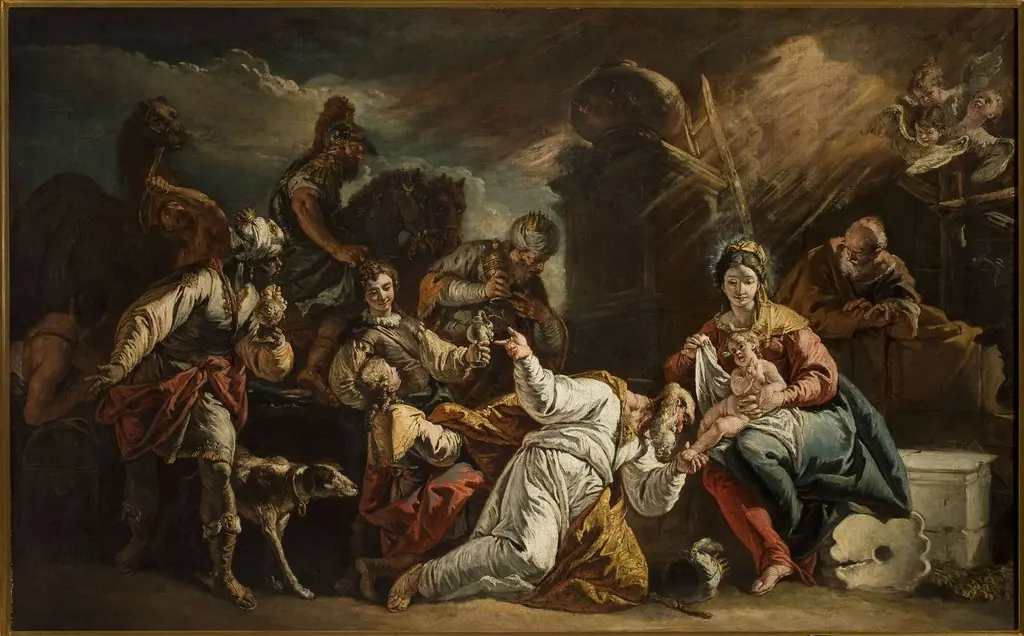 Adoration of the Magi
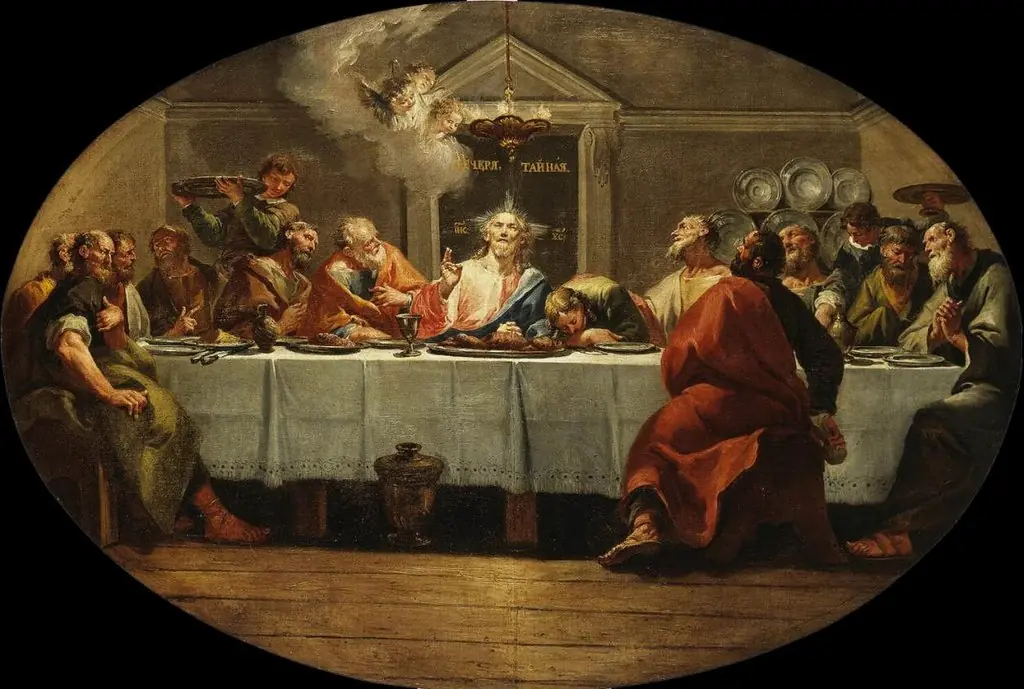 The Last Supper
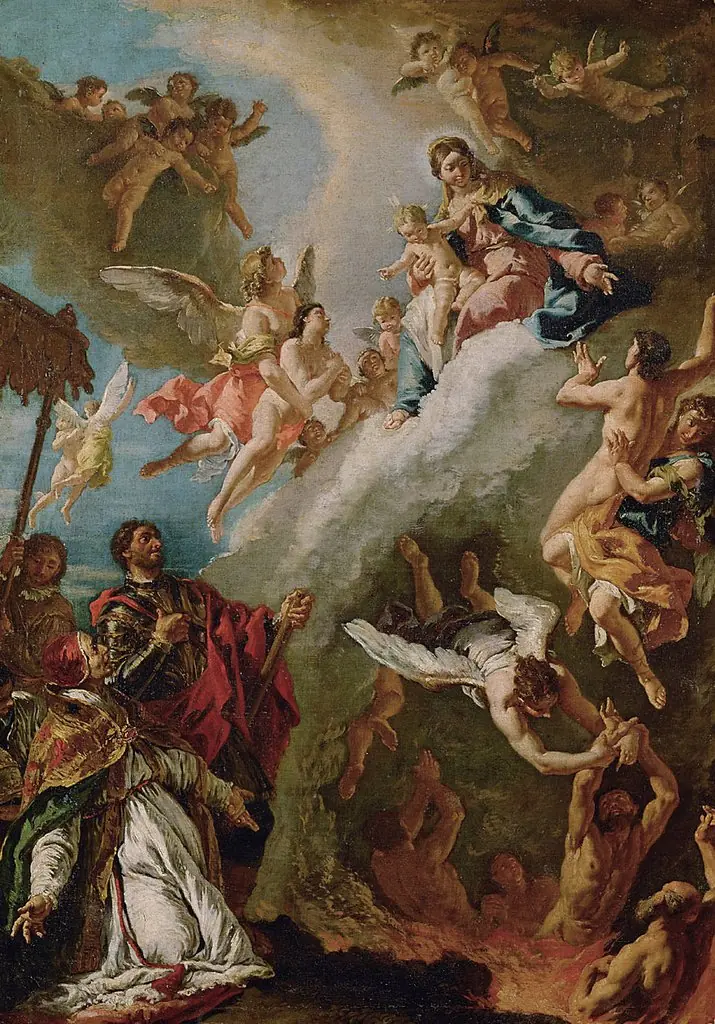 Papst Gregor I. und der Hl. Vitalis bitten die Madonna für die Seelen im Fegefeuer
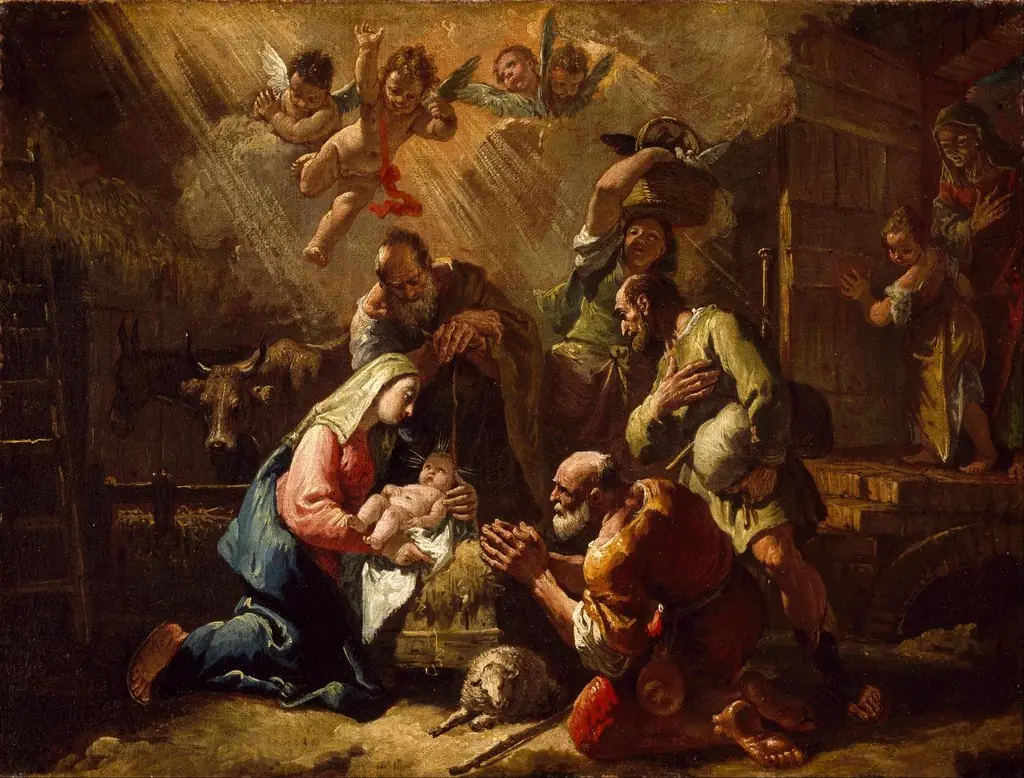 The Adoration of the Shepherds
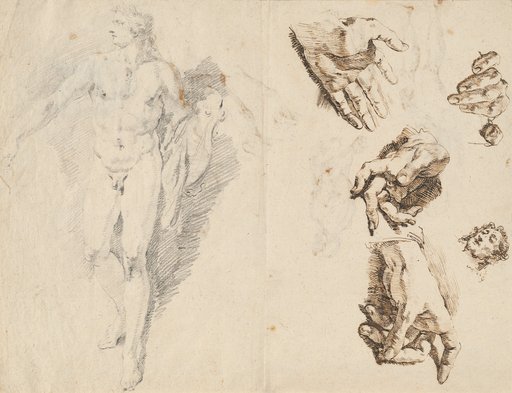
![Apollo and Studies of the Artist's Own Hand [recto]](https://artifactworldgallery.com/img/francesco-fontebasso--apollo-and-studies-of-the-artist-s-own-hand-recto--ee93288e84456aea-w320.webp) Apollo and Studies of the Artist's Own Hand [recto]
Apollo and Studies of the Artist's Own Hand [recto]![Head of a Woman and Studies of a Male Nude [verso]](https://artifactworldgallery.com/img/francesco-fontebasso--head-of-a-woman-and-studies-of-a-male-nude-verso--bba81b0c130c2863-w320.webp) Head of a Woman and Studies of a Male Nude [verso]
Head of a Woman and Studies of a Male Nude [verso]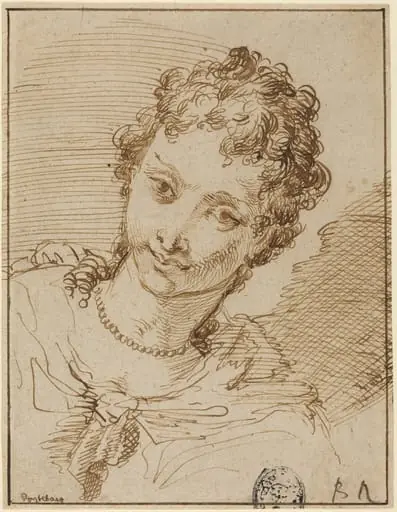 Elegant Young Woman with a Pearl Necklace
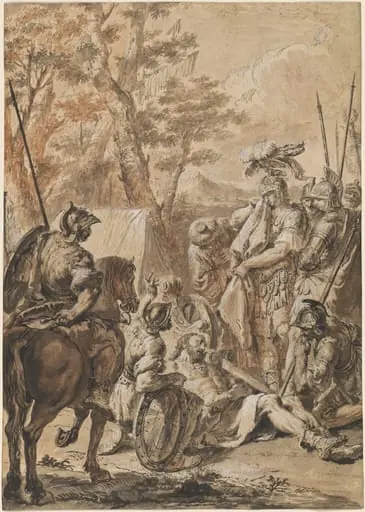 Alexander the Great before the Corpse of Darius
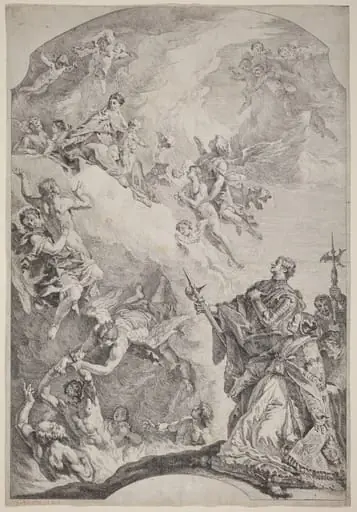 Saint Gregoire I Delivering Souls from Purgatory
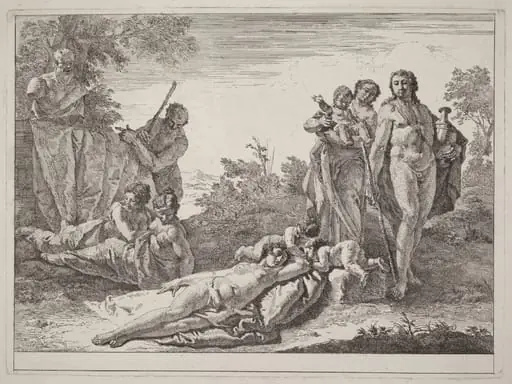 Apollo and Nymphs in a Landscape with a Bust of Pan
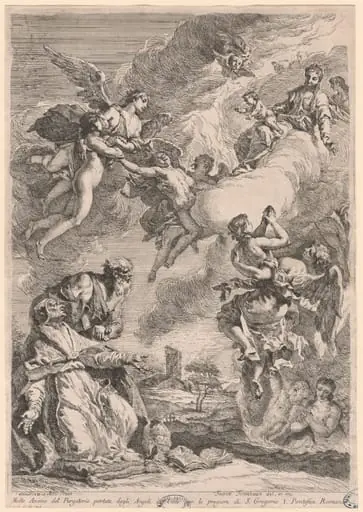 Pope Gregory the Great and Saint Vitale Interceding for the Souls in Purgatory
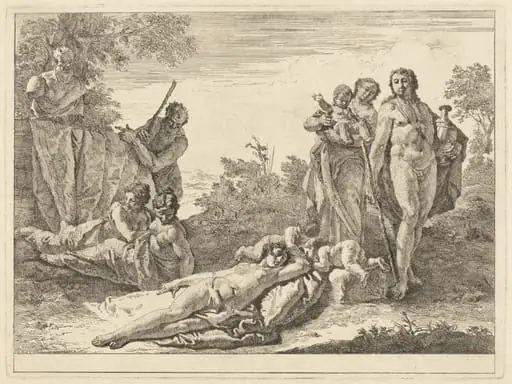 Nine Figures around a Herm of Pan
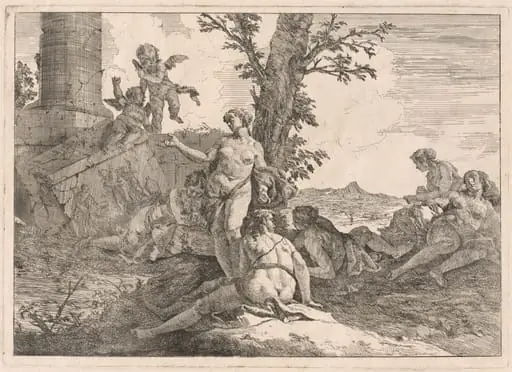 Six Nymphs and Two Cupids in a Landscape
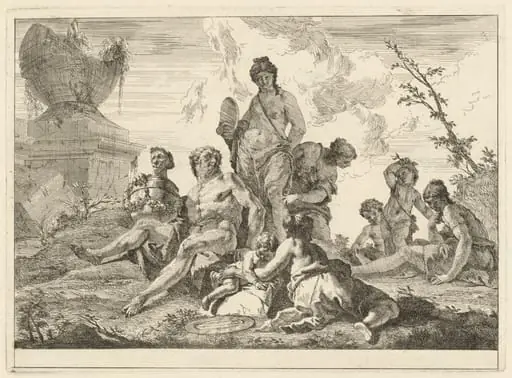 Venus and Vulcan with Three Nymphs and Three Cupids
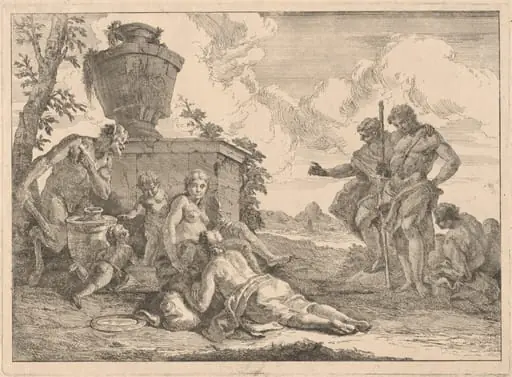 A Satyr with a Staff and Seven Other Figures
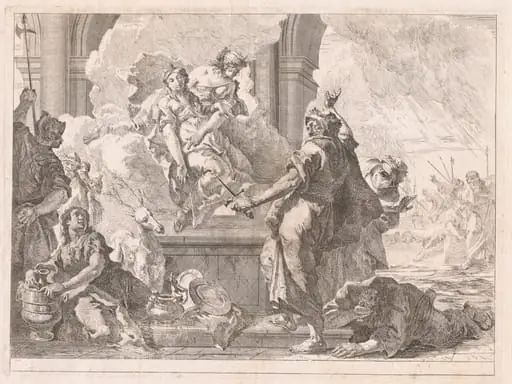 The Sacrifice of Iphigenia
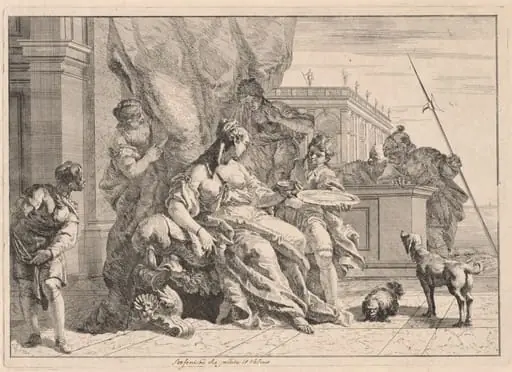 Sofonisba (or Artemisia)
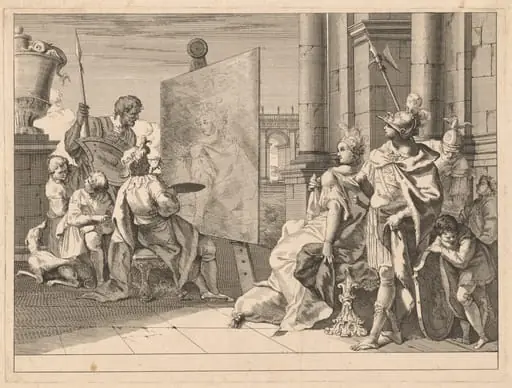 Alexander the Great and Campaspe in the Studio of Apelles
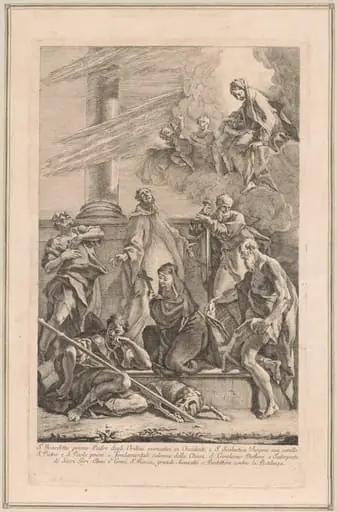 The Madonna and Child with Two Angels and Saints Scholastica, Benedict, Roch, Peter, Paul and Jerome
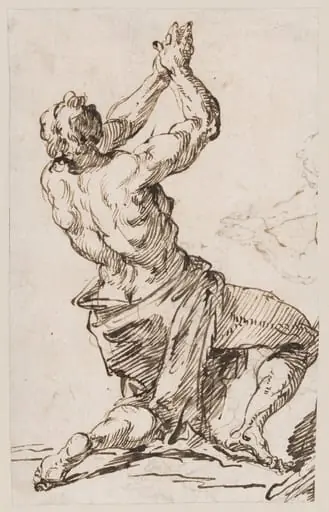 a) Study of a Man Kneeling, Looking Upward (recto); b) Studies of the Same Figure (verso)
Collections represented


- Elegant Young Woman with a Pearl Necklace
- Alexander the Great before the Corpse of Darius
- Saint Gregoire I Delivering Souls from Purgatory
- Apollo and Nymphs in a Landscape with a Bust of Pan
- Pope Gregory the Great and Saint Vitale Interceding for the Souls in Purgatory
- Nine Figures around a Herm of Pan
- Six Nymphs and Two Cupids in a Landscape
- Venus and Vulcan with Three Nymphs and Three Cupids
Artists in a similar vein
Artist