Artist
Pietro Testa
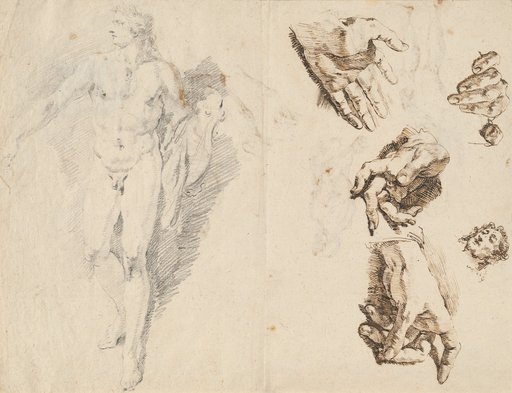
Pietro Testa is a Baroque artist. 33 works are cataloged here, principally at National Gallery of Art.
Pietro Testa (1612 – 1 March 1650) was an Italian High Baroque artist active in Rome. He is best known as a printmaker and draftsman. Most of his relatively brief career was spent in Rome in the circle of artists and scholars interested in Classical ideals, who grouped around Cassiano dal Pozzo. Although his public paintings were largely unsuccessful, he was among the finest and most renowned Italian printmakers and draughtsmen of the 17th century.
Overview
Pietro Testa (1612-1 March 1650), nicknamed Il Lucchesino, was an Italian High Baroque artist active primarily in Rome. Though he produced oil paintings and frescoes, he is best known as a printmaker and draftsman, and is regarded as among the finest and most renowned Italian printmakers and draughtsmen of the 17th century. Most of his relatively brief career was spent in Rome in the circle of artists and scholars interested in Classical ideals who grouped around the patron and antiquarian Cassiano dal Pozzo. His public paintings were largely unsuccessful, yet his etchings and drawings earned him significant recognition during his lifetime and enduring scholarly attention afterward.
Biography & dates
Testa was born in Lucca, Tuscany, the son of a dealer in secondhand goods. He arrived in Rome around 1628, by which time he was already known as Il Lucchesino. The German painter and biographer Joachim von Sandrart, then in Rome supervising engravings of the ancient statues in Vincenzo Giustiniani's collection, claimed to have discovered Testa drawing among the ancient ruins and employed him on preparatory drawings for the Galleria Giustiniani, published circa 1631. By 1630 Testa was working in the studio of Domenichino. When Domenichino moved to Naples in mid-1631, Testa entered the studio of Pietro da Cortona, though the association was short-lived and ended contentiously, with Cortona dismissing him. Testa returned to Lucca before August 1632, where he painted a fresco of Liberty in the Palazzo degli Anziani (Palazzo Pubblico), but the work was poorly received due to his inexperience with the medium. He secured the patronage of Girolamo Buonvisi, a cleric of the Apostolic Camera, to whom he dedicated several prints. By the end of 1632 he had returned to Rome, vowing to master colouring as he had drawing. He spent the rest of his life in Rome apart from a brief return to Lucca in 1637. In late 1637, his friend Pier Francesco Mola drew a dated portrait of him, now in the Musée Fabre, Montpellier. Testa died in the spring of 1650, his body found in the Tiber River near the Via della Lungara in Trastevere. The circumstances remain disputed: some sources suggest suicide, others an accidental drowning, with the 17th-century biographer Filippo Baldinucci recording that he fell while observing reflections of the rainbow in the water.
Style & movement
Testa's artistic development reflects the broader currents of Roman Baroque classicism. Initially working in a style influenced by Caravaggism, with strong chiaroscuro effects, his work grew increasingly classicist through the 1640s, approaching the manner of Nicolas Poussin. His early immersion in classical antiquity, through projects for Giustiniani and dal Pozzo's Museo Cartaceo (Paper Museum), profoundly shaped his approach. The hundreds of drawings of antiquities he produced for dal Pozzo, preserved largely at Windsor Castle, demonstrate meticulous attention to classical sculpture and architecture. His etchings are distinguished by sharp, precise lines that evoke carved stone, with an intellectual clarity and structural rigor that some publishers printed with his original corrections visible. Between 1638 and 1644 he completed his most ambitious print project: a complex, highly detailed series on the seasons, reflecting his interest in Platonic philosophy. His compositions often feature elaborate allegorical programs, and he had a noted tendency to embellish narratives or inventively rework conventional subjects. Contemporary critics praised his rendering of children as unsurpassed. Throughout his career he maintained a thoughtful union of artistic practice and theory, making extensive notes toward a treatise on painting, now known as the Düsseldorf Notebook.
Major works
Testa's painted oeuvre was limited and often unsuccessful, yet several works survive. The altarpiece Vision of St. Dominic of Soriano (circa 1636-37) is in the church of San Romano, Lucca. Venus and Adonis (circa 1631-37), existing in both etched and painted versions, is in the Gemäldegalerie der Akademie der bildenden Künste, Vienna. Two paintings from his early period, Moses Striking the Rock and Laban Searching for the Idols Concealed by Rachel, are in the Sanssouci Picture Gallery, Potsdam. Among his etchings, The Sacrifice of Iphigenie (1640-1642) and The Garden of Venus (1631-1637) are in the Metropolitan Museum of Art, New York. The Sacrifice of Isaac (1640-1642) is in the Philadelphia Museum of Art. Several works are in the Fine Arts Museums of San Francisco: La mort de Cato (1648), The Martyrdom of Saint Erasme, Saint Jerome (1631-1637), and The Sacrifice of Abraham (1640-1642). The drawing The Coronation of the Painter on Parnassus (pen and brown ink, 17 × 24 cm) is at the Beaux-Arts de Paris. The National Gallery of Art holds a pen and brown ink drawing with washes (circa 1648/1649) and an etching from 1637.
Influences & students
Testa's formation was shaped by several major figures and institutions. His earliest training in Lucca may have included Pietro Paolini. In Rome, Domenichino provided crucial grounding in the classical tradition derived from the Carracci academy, emphasizing disegno and idealized composition. Through Sandrart, dal Pozzo, and Domenichino, Testa gained entry to a circle that included Nicolas Poussin, François Duquesnoy, Claude Lorrain, Gaspard Dughet, and the critic Giovanni Pietro Bellori. Poussin's influence was particularly significant and enduring, visible in Testa's works from the 1630s onward. His association with Cassiano dal Pozzo, though it cooled after 1637 when dal Pozzo had him jailed on suspicion of leaving Rome without completing promised paintings, provided essential early patronage and intellectual stimulation. There is no record of Testa having pupils or forming a studio of his own; his difficult personality and relative poverty appear to have precluded such a role. His friend Pier Francesco Mola, who drew his portrait in 1637, remained within his circle.
Legacy
Testa's posthumous reputation rests almost entirely on his achievements as a print1 printmaker and draughtsman rather than as a painter. His etchings were widely copied and admired in his own time, with contemporaries judging his seasonal series as among the most refined and important works in the medium. The independence of his character and his refusal to be a dry imitator of any single master have earned him sustained scholarly attention. Modern collectors value the crispness and architectural quality of his prints, which sentiment into minimalist or classical interiors. His Düsseldorf Notebook, studied by Elizabeth Cropper, reveals an intense theoretical engagement with the ideal of painting that he was never able to fully articulate in a treatise. The circumstances of his death, variously interpreted as suicide, accident, or even murder, have contributed to a somewhat romanticized biographical image that some scholars have cautioned against. His works are held in major collections including the Metropolitan Museum of Art, the Philadelphia Museum of Art, the Fine Arts Museums of San Francisco, the National Gallery of Art, Windsor Castle, and the British Museum.
Works by Pietro Testa
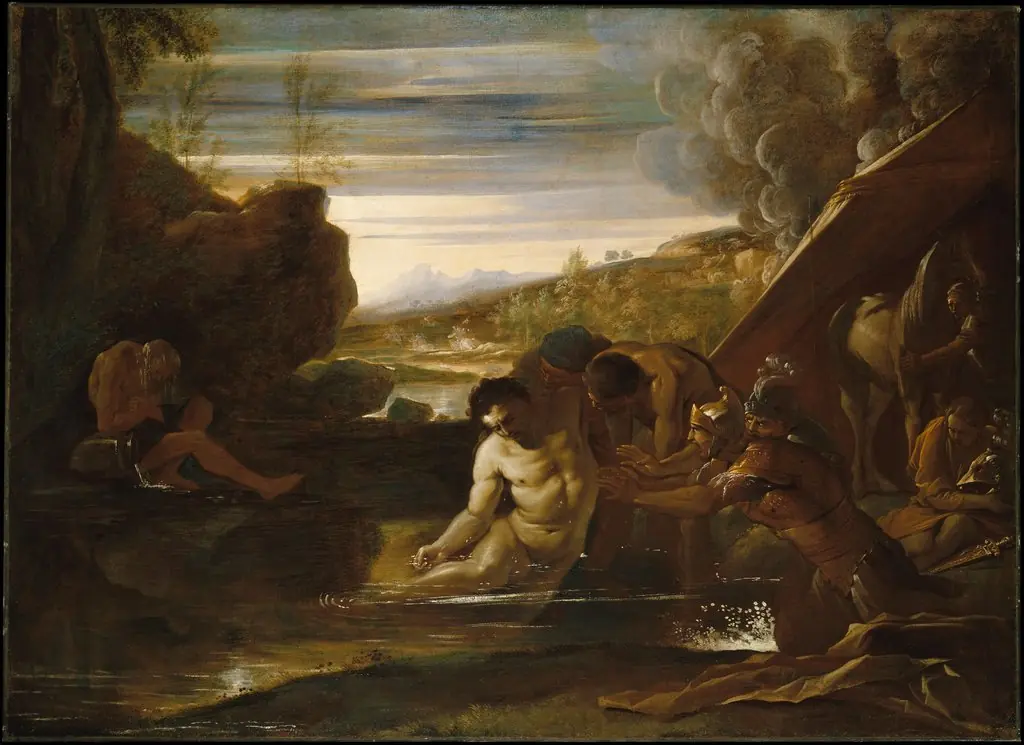 Alexander the Great Rescued from the River Cydnus
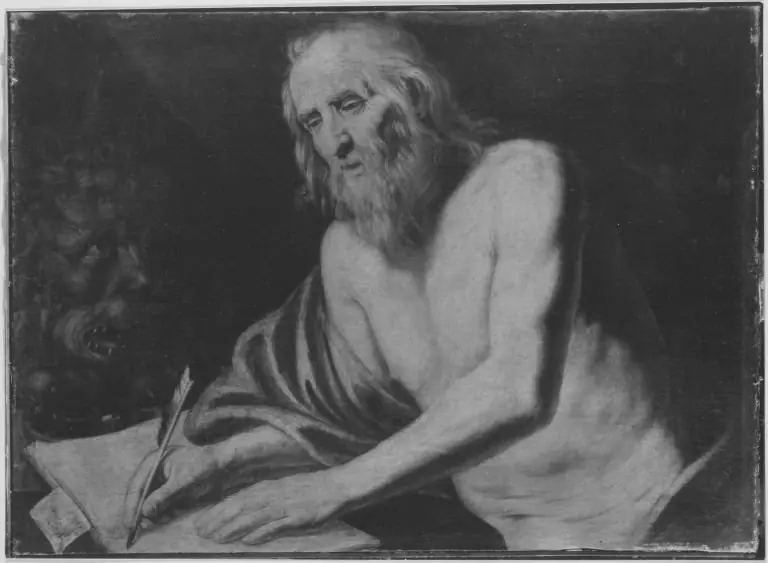 Hl. Hieronymus
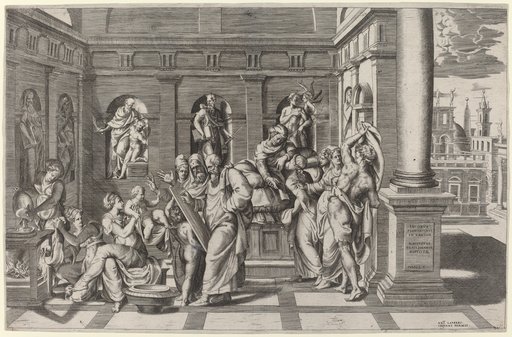
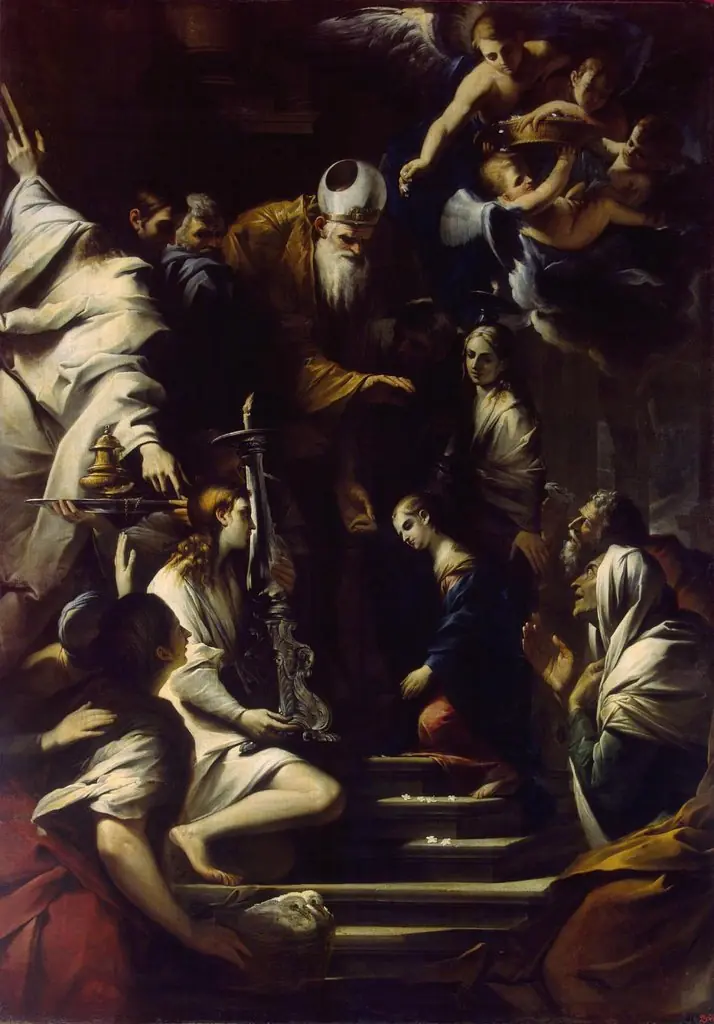 Presentation of the Virgin into the Temple
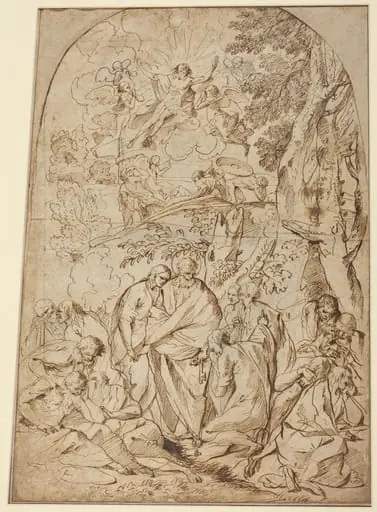 The Resurrection
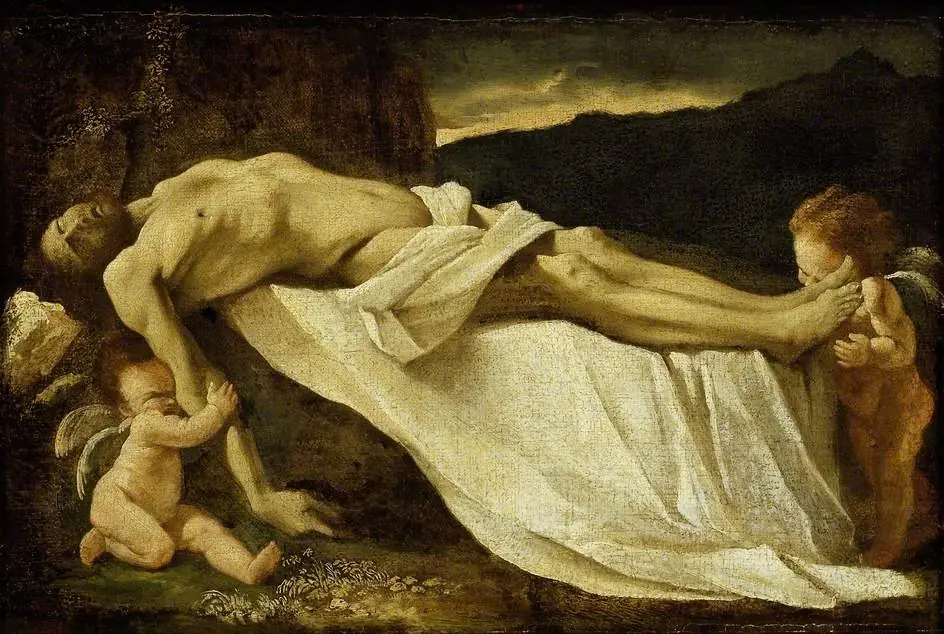 The Dead Christ mourned by Angels
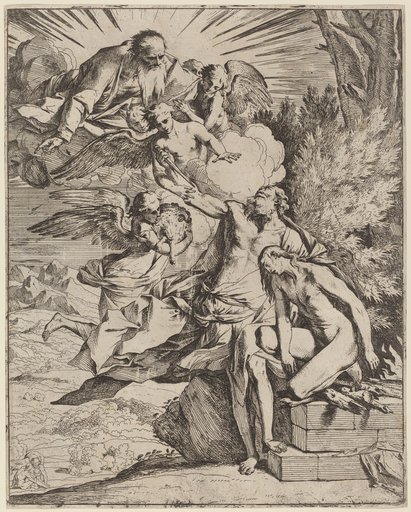
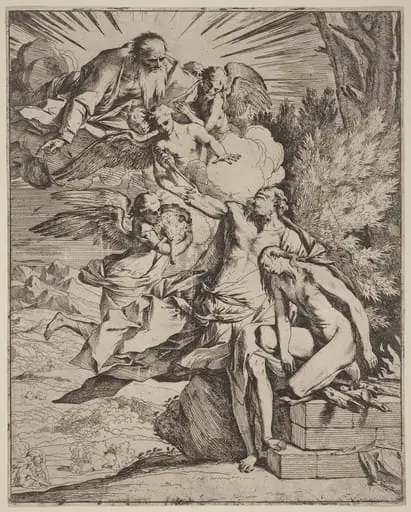 The Sacrifice of Abraham
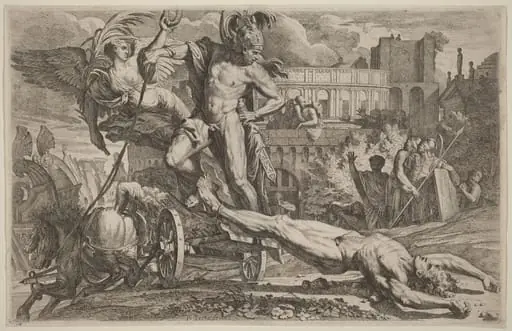 Achilles Dragging the Body of Hector
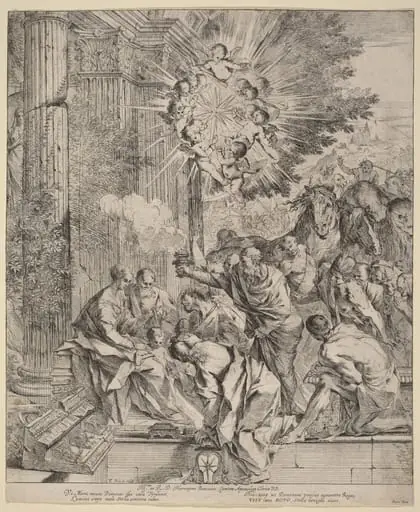 The Adoration of the Magi
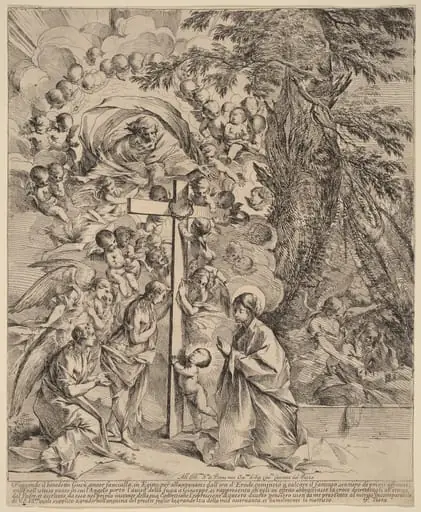 The Infant Christ Embracing the Cross (The Dream of Joseph)
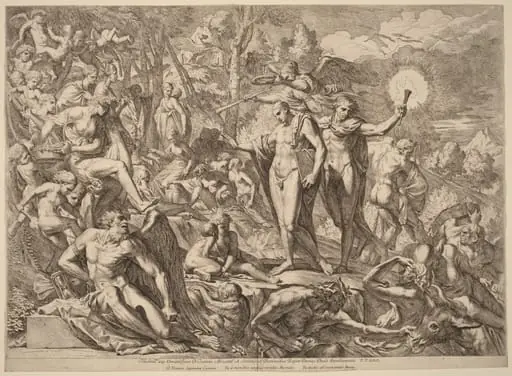 Parnassus
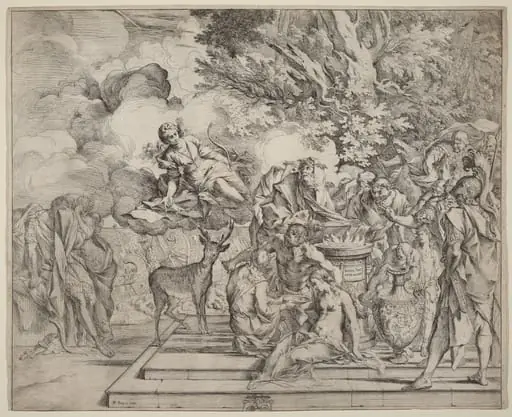 The Sacrifice of Iphigenia
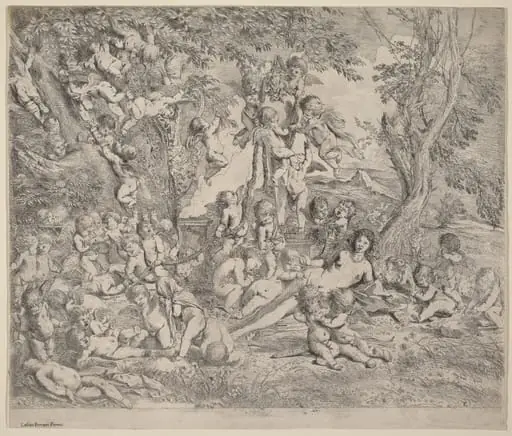 Venus in a Garden with Cupids
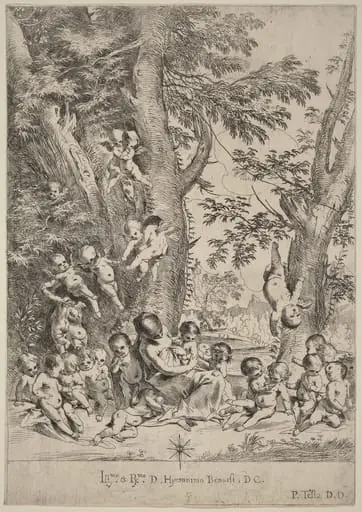 Young Woman, Surrounded by Cupids (The Garden of Charity, vertical version)
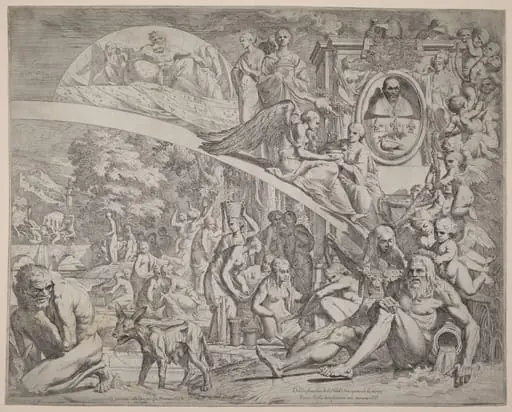 An Allegory in Honor of Innocent X
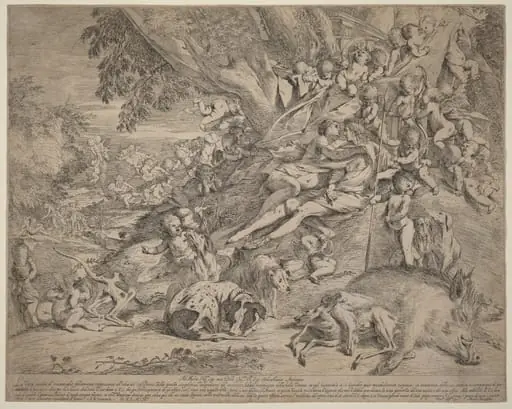 Venus and Adonis
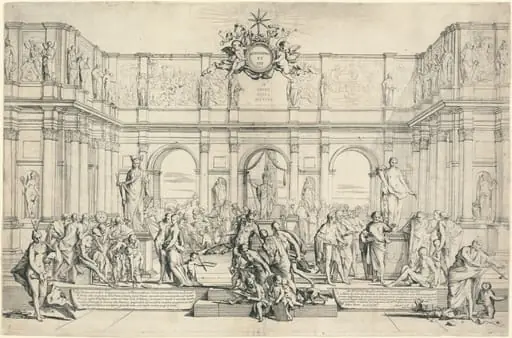 Il Liceo della Pittura
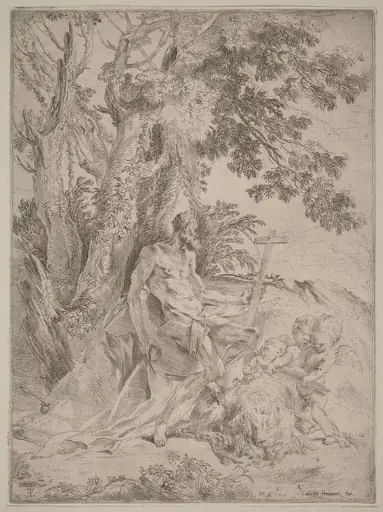 Saint Jerome
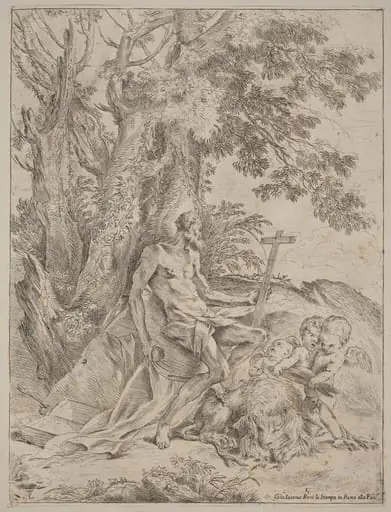 Saint Jerome
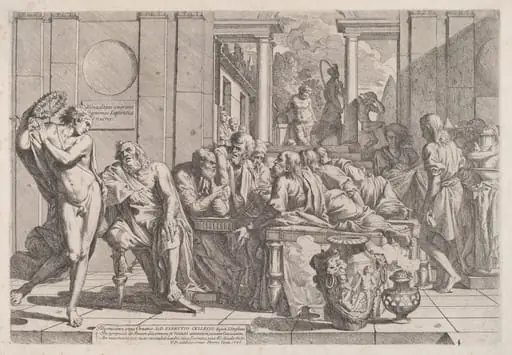 The Symposium
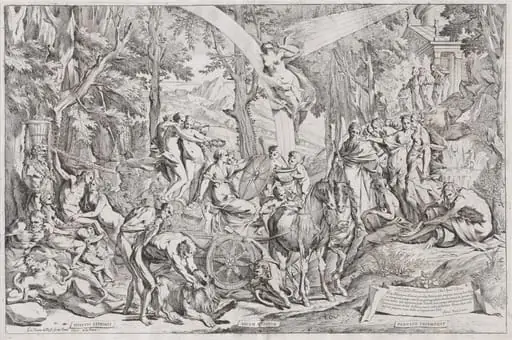 The Triumph of Painting on Parnassus
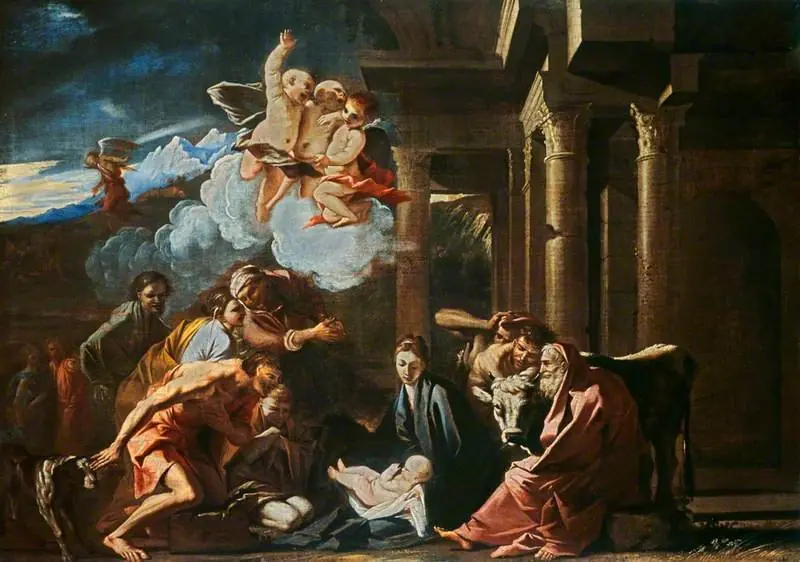 The Adoration of the Shepherds
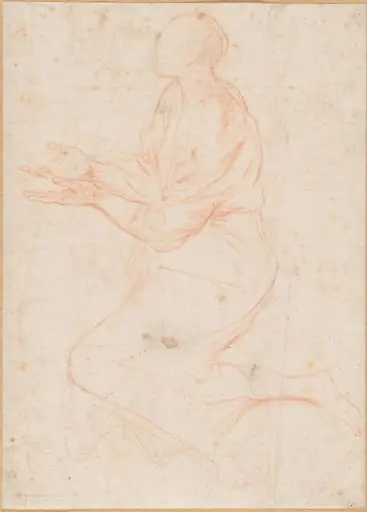 Kneeling Angel
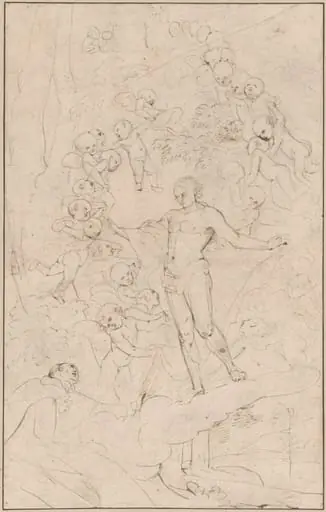 The Vision of Saint Angelus
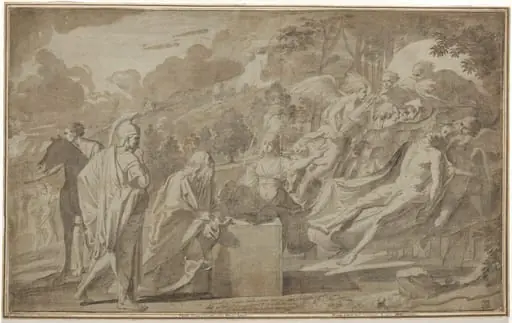 The Prophecy of Basilides
33 works in the catalog · 24 shown
Collections represented


Artists in a similar vein