Artist
Emanuel Gottlieb Leutze
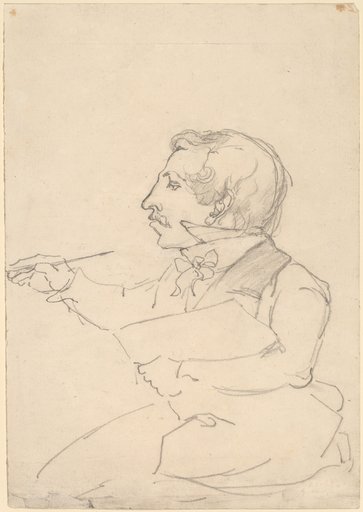
Kingdom of Württemberg
Emanuel Gottlieb Leutze is a Kingdom of Württemberg Hudson River School artist. 31 works are cataloged here, principally at National Gallery of Art.
Emanuel Gottlieb Leutze (May 24, 1816 – July 18, 1868) was a German-born American history painter, best known for his 1851 painting Washington Crossing the Delaware. He is associated with the Düsseldorf school of painting.
Biography & dates
Emanuel Gottlieb Leutze was born on May 24, 1816, in Schwäbisch Gmünd, Kingdom of Württemberg (now Germany). He emigrated to the United States with his family in 1825, settling first in Fredericksburg, Virginia, and later in Philadelphia. After his father's death in 1831, he began painting portraits for $5 each to support himself. In 1834, he received his first formal art instruction from portraitist John Rubens Smith in Philadelphia. In 1840, at age 25, Leutze returned to Europe to study at the Kunstakademie Düsseldorf under Wilhelm von Schadow, though he was more influenced by Karl Friedrich Lessing. He also studied in Munich, Venice, and Rome before settling in Düsseldorf in 1845, where he married Juliane Lottner. Leutze spent 14 years in Düsseldorf, becoming a central figure in the Düsseldorf school. He returned to the United States in 1859, dividing his time between New York City and Washington, D.C., where he died of heat stroke on July 18, 1868, at age 52.
Style & movement
Emanuel Leutze was a history painter associated with the Düsseldorf school and Romanticism. He specialized in large-scale dramatic scenes from American and European history, aiming to inspire patriotic and liberal ideals. His technical approach employed theatrical lighting and artificially brightened skies to heighten emotional impact, as seen in *Washington Crossing the Delaware*, where he used German friends as models and depicted the Rhine rather than the Delaware for compositional effect. His compositions emphasize action and determination, often referencing literary texts to underscore historical narratives. While trained in academic methods under Wilhelm von Schadow, he was influenced by Karl Friedrich Lessing and studied Old Masters like Titian and Michelangelo, blending academic precision with romantic drama.
Major works
Emanuel Leutze is chiefly known for his monumental 1851 history painting *Washington Crossing the Delaware*, a defining icon of American national identity. Created in Germany and modeled on the Rhine rather than the Delaware, the work exemplifies his dramatic, Romantic style and his commitment to portraying American revolutionary themes for European audiences. Other major works include *Columbus Before the Queen* (1843), *Westward the Course of Empire Takes Its Way* (1860, a large mural in the U.S. Capitol), and portraits such as *Chief Justice Roger Brooke Taney* (1859). Leutze was a leading figure of the Düsseldorf school, specializing in history painting that combined patriotic romanticism with meticulous detail.
Influences & students
Emanuel Leutze began his artistic training in Philadelphia under John Rubens Smith (sources 3,4,5). He later studied at the Kunstakademie Düsseldorf in the class of Wilhelm von Schadow, but the most formative influence was the history painter Karl Friedrich Lessing (sources 3,4,5). He also studied works by Cornelius, Kaulbach, Titian, and Michelangelo during travels (source 3). Leutze became a central figure in the Düsseldorf school, serving as president of the Düsseldorf Artists' Association and co-founding the Malkasten artists' association (sources 3,4). He supported many American artists in Europe; his students and assistants included William Morris Hunt, Eastman Johnson, Worthington Whittredge, and Richard Caton Woodville, among others (source 4).
Market & legacy
After his death, Leutze's popularity declined sharply, and by the end of the 19th century his name was seldom mentioned. However, his masterpiece *Washington Crossing the Delaware* has endured as a paramount work of American national iconography, frequently parodied and referenced in popular culture. The first version of the painting was destroyed in a 1942 Allied bombing of the Kunsthalle Bremen, adding to its legendary status. Leutze's legacy is thus defined less by sustained market demand for his works than by the singular, iconic power of this one image, which continues to shape perceptions of American history.
Works by Emanuel Gottlieb Leutze
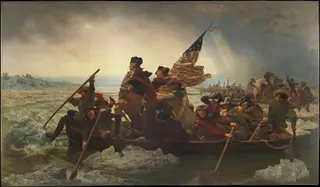 Washington Crossing the Delaware
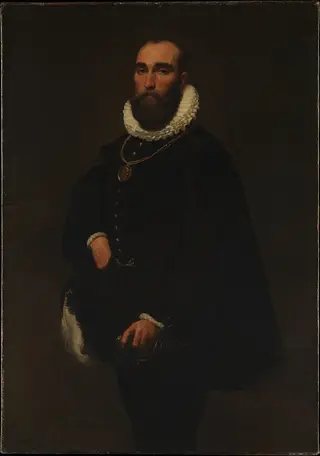 Worthington Whittredge
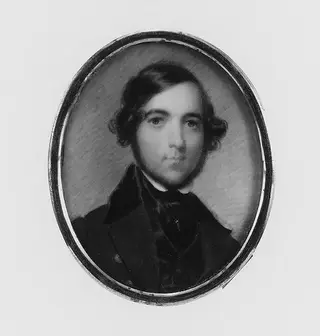 Portrait of a Gentleman
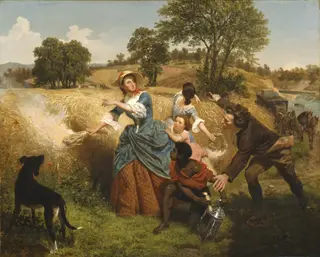 Mrs. Schuyler Burning Her Wheat Fields on the Approach of the British
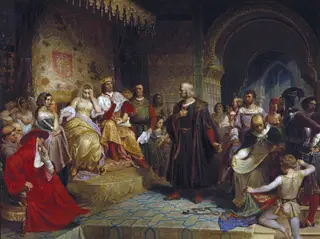 Columbus Before the Queen
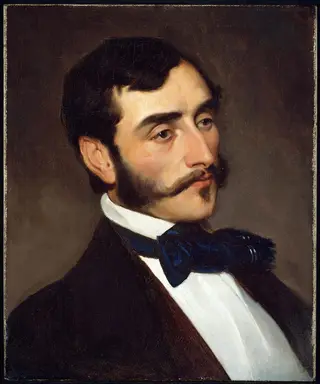 William Morris Hunt
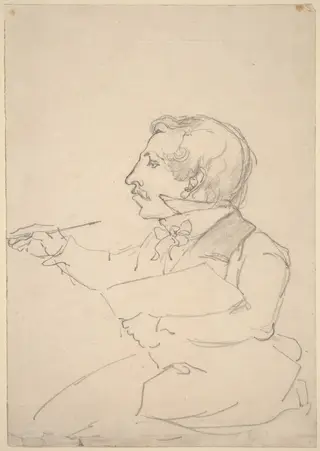 Eastman Johnson Sketching
![Studies for "Washington Crossing the Delaware" [recto]](https://artifactworldgallery.com/img/emanuel-gottlieb-leutze--studies-for-washington-crossing-the-delaware-recto--6a74f19f0abf444e-w320.webp) Studies for "Washington Crossing the Delaware" [recto]
Studies for "Washington Crossing the Delaware" [recto]![Study of Half-Length Figure with Pole [verso]](https://artifactworldgallery.com/img/emanuel-gottlieb-leutze--study-of-half-length-figure-with-pole-verso--13a43a492f70c459-w320.webp) Study of Half-Length Figure with Pole [verso]
Study of Half-Length Figure with Pole [verso]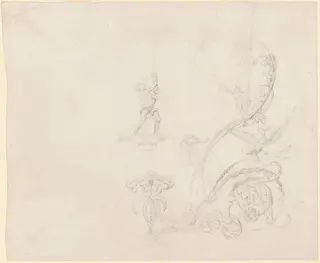 Studies of Fountain Decorations
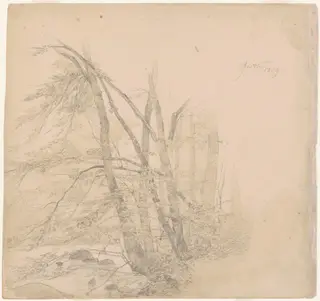 Gestin
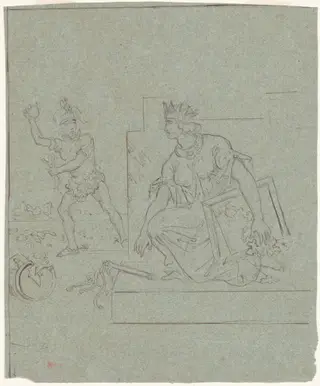 Political Cartoon of the American Civil War
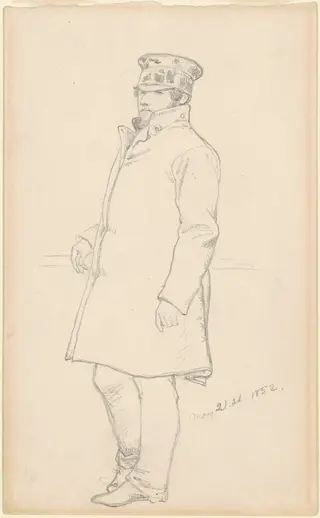 Man in Cap and Coat
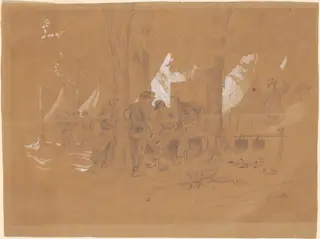 Camp Ellsworth, Near Alexandria—Five Zouaves
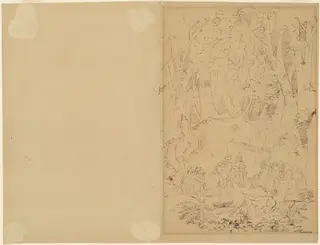 Eighteenth-Century Colonist Preaching to Indians
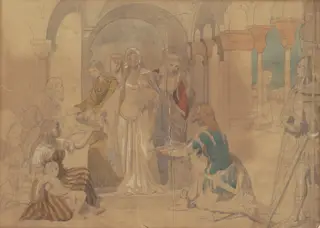 Study of Courtesans
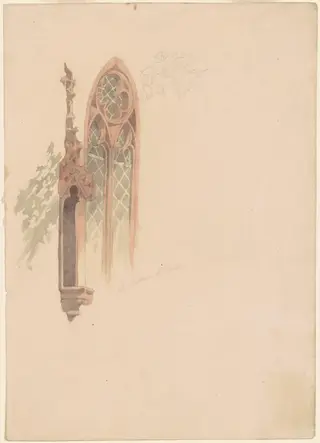 St. Peter's Church
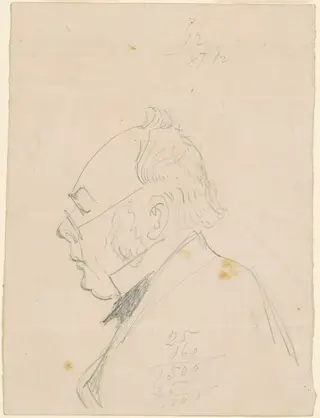 Profile of a Man
![Two Cavaliers [recto]](https://artifactworldgallery.com/img/emanuel-gottlieb-leutze--two-cavaliers-recto--2cc3924dab387409-w320.webp) Two Cavaliers [recto]
Two Cavaliers [recto]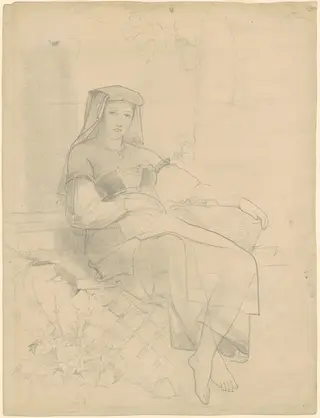 Reclining Woman
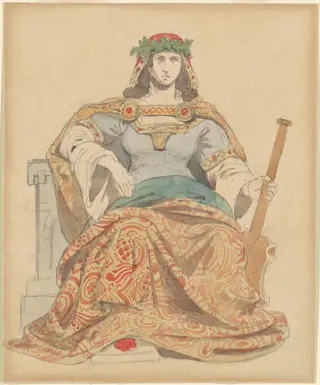 Female Deity
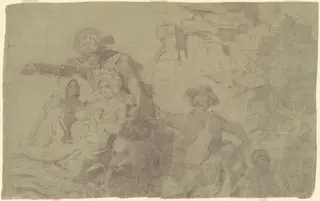 Study for "Westward the Course of Empire Takes Its Way"
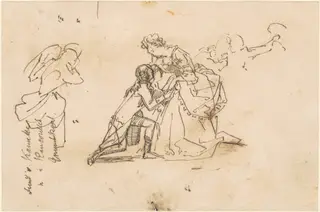 Study for "The Return of King Friedrich II from Küstrin"
![Men in Seventeenth-Century Costumes [recto]](https://artifactworldgallery.com/img/emanuel-gottlieb-leutze--men-in-seventeenth-century-costumes-recto--150ea41ebbb78ced-w320.webp) Men in Seventeenth-Century Costumes [recto]
Men in Seventeenth-Century Costumes [recto]
31 works in the catalog · 24 shown
Collections represented


Artists in a similar vein

Artist