Artist
Hans Burgkmair I
Germany
Hans Burgkmair I is a Germany Early Baroque Italian artist. 89 works are cataloged here, principally at Cleveland Museum of Art.
Hans Burgkmair I (1473–1531) was an artist.
Overview
Hans Burgkmair the Elder (1473-1531) was a German painter, draftsman, and woodcut designer who stands as one of the most important Augsburg artists at the transition from late Gothic to Renaissance. Alongside Hans Holbein the Elder and Hans Holbein the Younger, he formed the triad of Augsburg's leading masters. Burgkmair is celebrated for synthesizing Italian Renaissance forms with established German traditions, for his pioneering role in the development of chiaroscuro woodcut, and for his extensive work on Emperor Maximilian I's monumental print projects. His output encompassed religious paintings, portraits of Augsburg citizens and court figures, and an astonishing graphic oeuvre that art historian Friedrich Wilhelm Hollenstein catalogued at 834 woodcuts.
Biography & dates
Burgkmair was born in Augsburg between 1 January and 10 May 1473, the son of painter Thomas Burgkmair (1444-1523). He learned painting initially in his father's workshop. In 1488 he travelled to Colmar in Alsace to apprentice with Martin Schongauer, training there until 1490; Schongauer's influence proved lasting, though the master died in 1491 before Burgkmair could complete a normal course of study. Upon his return, Burgkmair produced his earliest surviving works in 1490: portraits of the Strasbourg preacher Johann Geiler von Kaysersberg and Augsburg Bishop Friedrich II. von Zollern. From 1491 he worked for the Augsburg printer Erhard Ratdolt as a designer for woodcuts. On 3 July 1498 he married Anna Allerlay, daughter of the furrier Jörg Allerlay, and on 29 March 1498 he was admitted as master into the Augsburg guild of painters, glaziers, sculptors, and goldsmiths. He opened his own workshop that year. Burgkmair's career accelerated through connections forged at the Augsburg Reichstag of 1500, where he met the German King and future Emperor Maximilian I. The emperor soon valued his services, granting him a coat of arms in 1516. Between 1501 and 1504 Burgkmair painted three of six basilica pictures for the chapter house of the Dominican convent St. Katharina in Augsburg. He travelled to the Lower Rhine in 1503, and in 1505 executed a triptych for Elector Frederick the Wise of Saxony, probably for the Wittenberg palace church. A journey to Italy in 1507, with a documented stay in Venice, profoundly shaped his later style. From about 1508 until Maximilian's death in 1519, Burgkmair devoted much of his energy to imperial graphic projects. He purchased a life annuity in 1526 for himself and his wife. Burgkmair died in Augsburg between May and August 1531. His son Hans Burgkmair the Younger (1500-1562) became a painter but never achieved his father's stature, though he collaborated with Heinrich Vogtherr the Younger on etchings for the Augsburger Geschlechterbuch (1545).
Style & movement
Burgkmair is regarded as a pioneer of the Renaissance in Augsburg, equally significant as painter and as draftsman for woodcut. His style represents a deliberate fusion: he processed Italian Renaissance forms, particularly in architecture and decorative elements, and combined them masterfully with late Gothic tradition. The warm color palette of Venetian painting entered his later works, prompting speculation about further Italian travels beyond his certain 1507 visit to Venice.
In graphic technique, Burgkmair proved a major innovator. He was an important pioneer of the chiaroscuro woodcut and appears to have been the first to use a tone block, in a print of 1508. His Lovers Surprised by Death (1510) was the first chiaroscuro print to employ three blocks, and the first designed to be printed only in color, since the line block alone would not produce a satisfactory image. Earlier chiaroscuro experiments by Baldung and Cranach around this date used line blocks that could stand alone. Burgkmair also produced one etching, Venus and Mercury (c. 1520), on a steel plate, though he never attempted engraving despite his training with Schongauer. His compositions display a talent for striking arrangements that blend Italian Renaissance forms with the established German style.
Major works
Burgkmair's painted oeuvre includes religious scenes, portraits, and history paintings. His earliest works from 1490 include the portrait of Johann Geiler von Kaysersberg (lindenwood, 37.3 × 26.5 cm, Augsburg, Staatsgalerie Altdeutsche Meister, Inv.-Nr. 3568) and the portrait of Friedrich II. von Zollern (paper mounted on canvas, Augsburg, Staatsgalerie Altdeutsche Meister, Inv.-Nr. 1055). The Wedding Portrait of Jakob Fugger and Sibylla Artzt (1498) remains in private hands.
Between 1501 and 1504 he painted three basilica pictures for St. Katharina: Basilica di S. Pietro (1501), Basilica di S. Giovanni (1502), and Basilica di S. Croce (1504), all now in the Staatsgalerie Altdeutsche Meister, Augsburg. Other significant paintings include Christ on the Mount of Olives (1505, Hamburg, Kunsthalle, Inv. Nr. HK-394), the Coronation of the Virgin (1507, Augsburg, Staatsgalerie Altdeutsche Meister), and Mary in the Rose Bower (1509, Nuremberg, Germanisches Nationalmuseum).
His altarpiece masterpieces both reside in Munich's Alte Pinakothek: the St. John Altarpiece (1518), depicting the Evangelist John on Patmos, and the Crucifixion Altarpiece (1519). For Duke William IV of Bavaria, he painted late works including Esther before Ahasuerus (1528, needlewood, 103 × 156.3 cm) and The Defeat of the Romans at Cannae (1529, needlewood, 162 × 121.5 cm), both in the Alte Pinakothek, Munich, as part of a history cycle for the duke and his consort Maria Jakobaea of Baden.
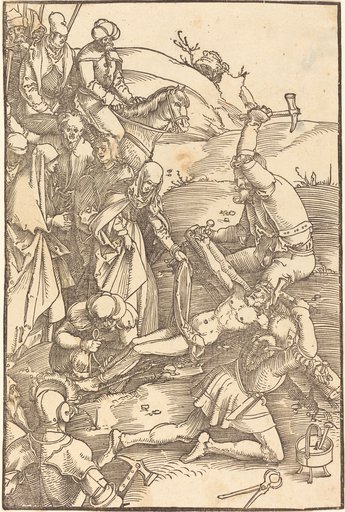
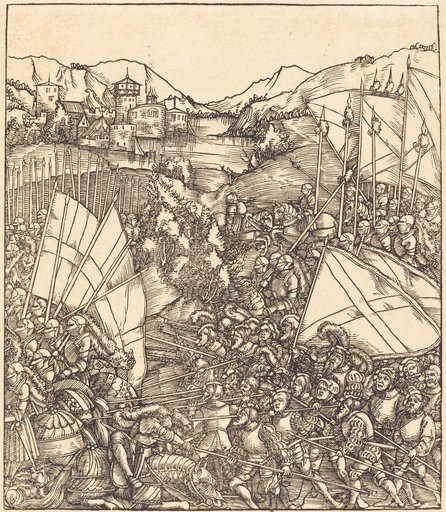
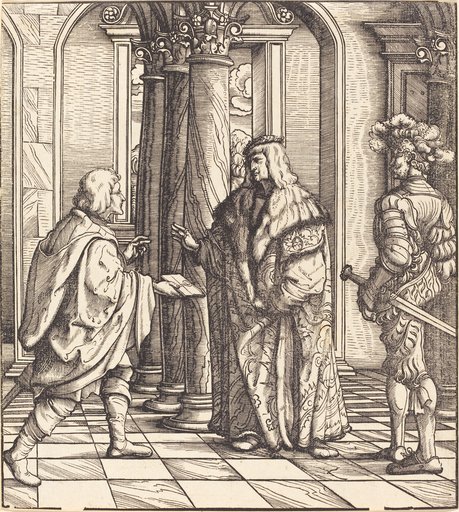
In the graphic realm, Hollstein ascribed 834 woodcuts to Burgkmair, the majority for book illustrations, with slightly more than a hundred single-leaf prints. His imperial commissions included nearly half of the 135 prints in the Triumphs of Maximilian, most illustrations for Weisskunig, and much of Theuerdank. He also designed 67 woodcuts for the Triumphal Procession. Around 1508 he produced the People of Africa and India series, and he created marginal drawings for Maximilian's prayer book (1515, Besançon, Bibliothèque). Of approximately 100 woodcut portraits of famous rulers from Julius Caesar to Maximilian I intended for a planned imperial book, only 23 survive.
Influences & students
Burgkmair's formative training came from two sources: his father Thomas Burgkmair, from whom he learned the fundamentals of painting, and Martin Schongauer in Colmar (1488-1490), whose influence on his art was profound and lasting. The Italian sojourn of 1507, particularly his contact with Venetian art, provided the decisive imprint that transformed his later style. The humanist Konrad Peutinger served as intermediary for many of Burgkmair's imperial commissions, channeling the emperor's ethnographic and propagandistic interests into visual projects. For the woodcut projects, Burgkmair worked closely with the leading blockcutter Jost de Negker, who effectively functioned as his publisher. Regarding pupils and followers, the record is more attenuated. His son Hans Burgkmair the Younger worked in his workshop but did not reach his father's level of achievement. The anonymous Master of the Augsburg Painter Portraits worked under Burgkmair's influence but was hardly his pupil in the strict sense. Heinrich Vogtherr the Younger collaborated with Burgkmair's son on the Augsburger Geschlechterbuch etchings.
Legacy
Burgkmair's posthumous reputation rests on his dual achievement as painter and graphic artist, and on his role in transmitting Italian Renaissance ideas into German art. His work for Maximilian I helped establish the visual language of imperial propaganda, while his chiaroscuro woodcut innovations advanced printmaking technique. The People of Africa and India series (1508) has been credited with helping to establish foundational analytic categories for ethnography, reflecting the humanist scientific interests of his circle.
His later paintings, such as Esther before Ahasuerus (1528) with its pre-mannerist tendencies, show an artist still experimenting even as some critics have found them less forceful than his earlier work. The portrait by Lucas (Laux) Furtenagel showing Burgkmair aged 55 beside his wife Anna, aged 51, with a memento mori mirror, was once attributed to Burgkmair himself; the inscription reads "Joann Burgkmair M[aler] 56 Jar alt et Ann Allerlaiin Ge[mahe]l 52 Jar alt." No other portrait of the artist is known.
Major holdings of his work are concentrated in Munich (Alte Pinakothek), Vienna (Kunsthistorisches Museum), and Augsburg (Staatsgalerie Altdeutsche Meister), with significant works also in Nuremberg (Germanisches Nationalmuseum), Hamburg (Kunsthalle), and other European collections.
Works by Hans Burgkmair I
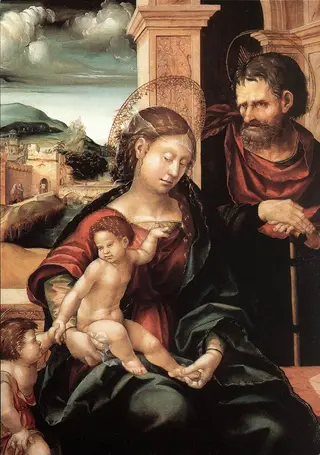 Holy Family with Child St. John
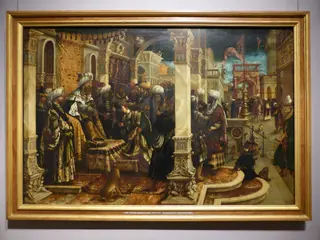 Esther before Ahasuerus
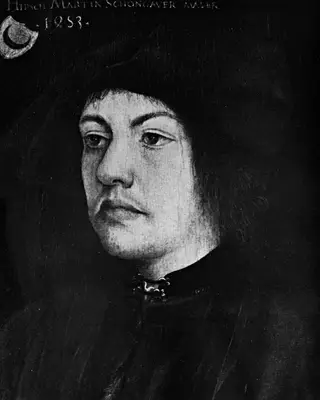 Martin Schongauer (1450-1491)
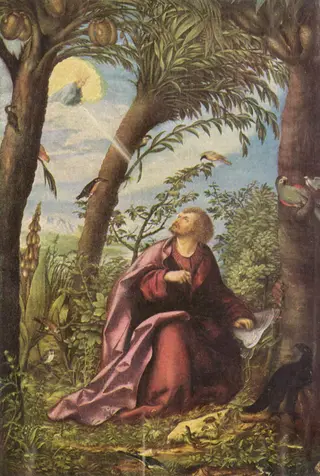 John the Evangelist on Patmos
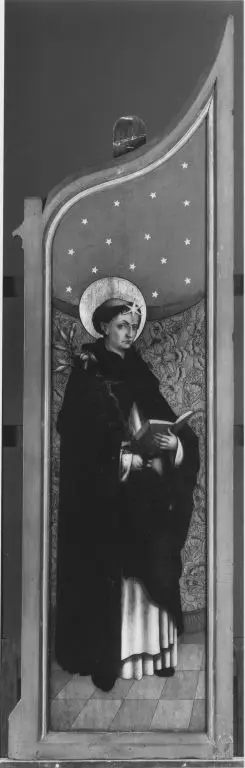 Altarflügel: Hl. Dominikus (?)
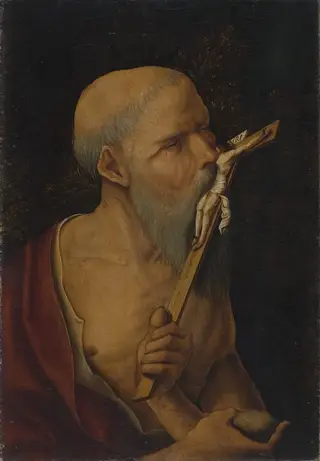 Der hl. Hieronymus
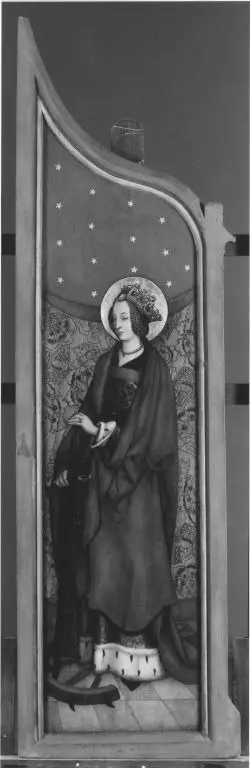 Altarflügel: Hl. Katharina (?)
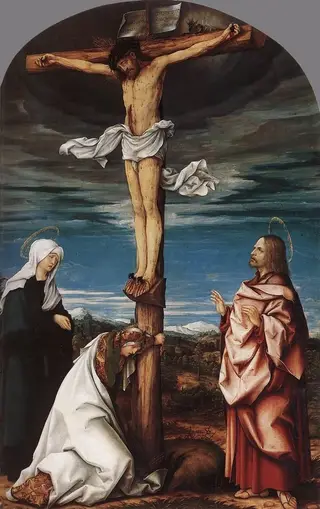 Crucifix with Mary, Mary Magdalen and St John the Evangelist
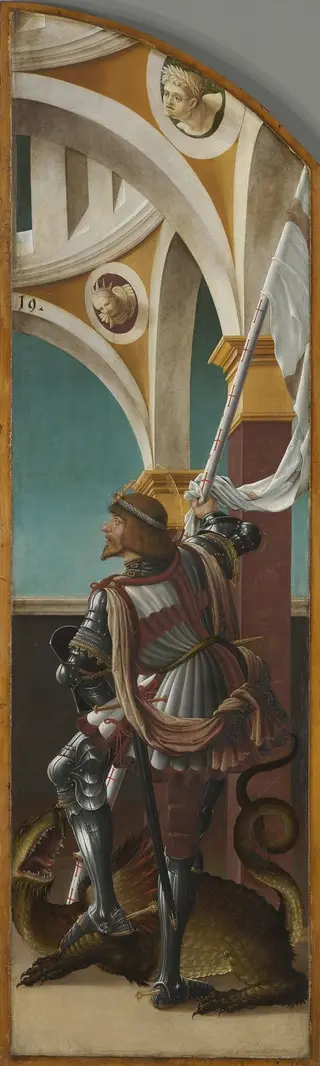 Kreuzigungsaltar, rechte Flügelaußenseite: Hl. Georg
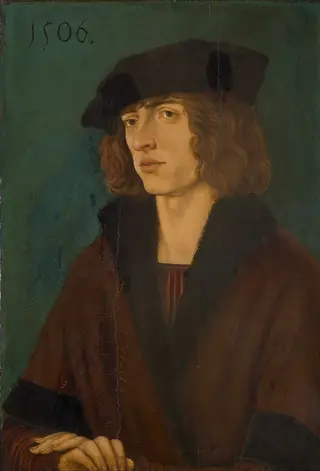 Portrait of a young Man
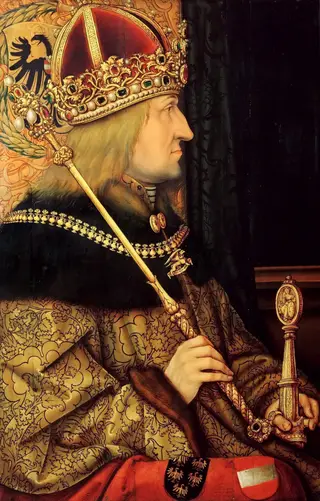 Portrait of Frederick III, Holy Roman Emperor
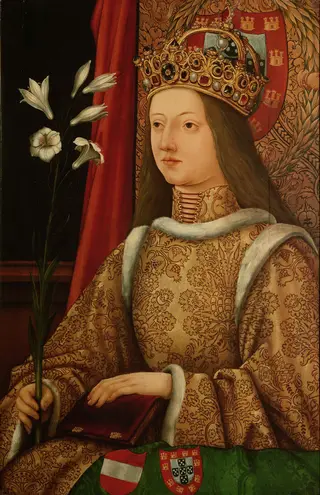 Portrait of Eleonore of Portugal
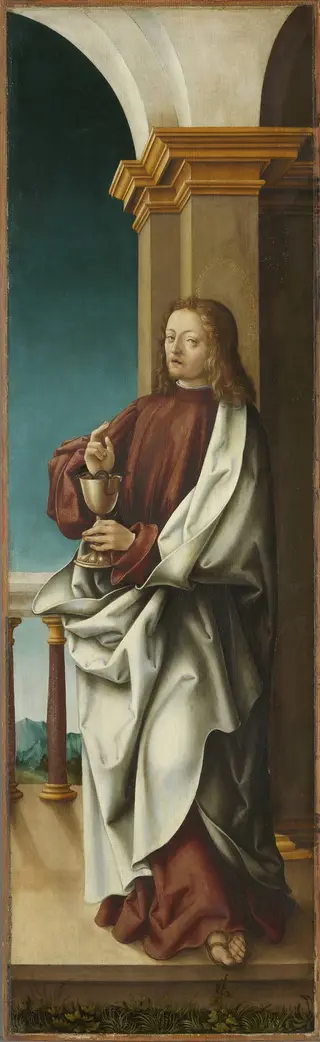 Johannesaltar, Flügelaußenseite: Hl. Johannes der Evangelist
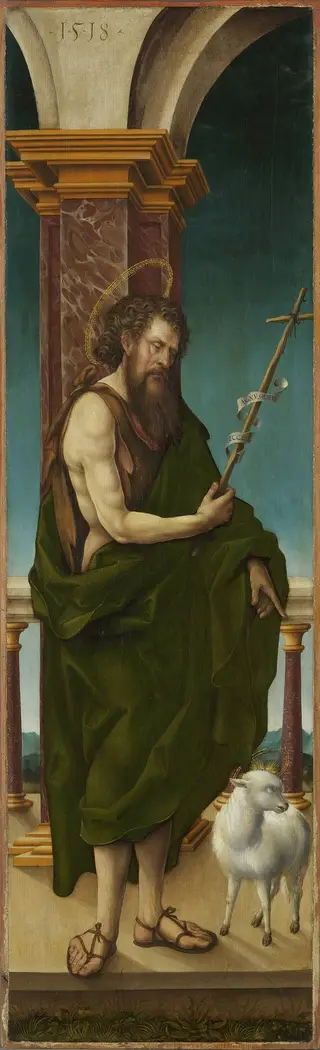 Johannesaltar, Flügelaußenseite: Hl. Johannes der Täufer
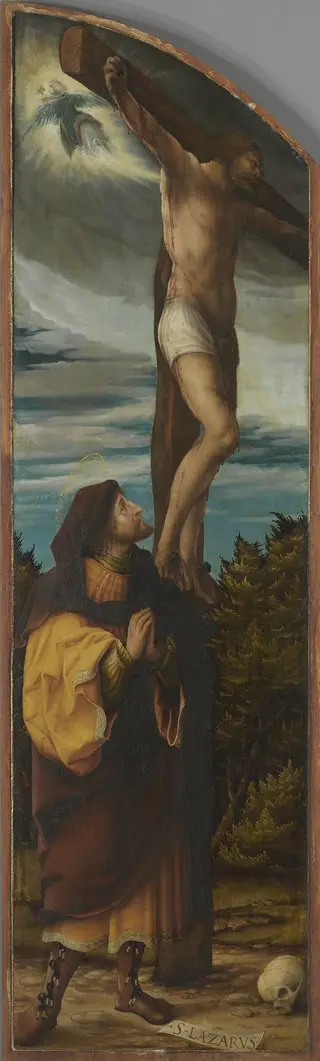 Kreuzigungsaltar, linker Flügel: Der bußfertige Schächer und der hl. Lazarus
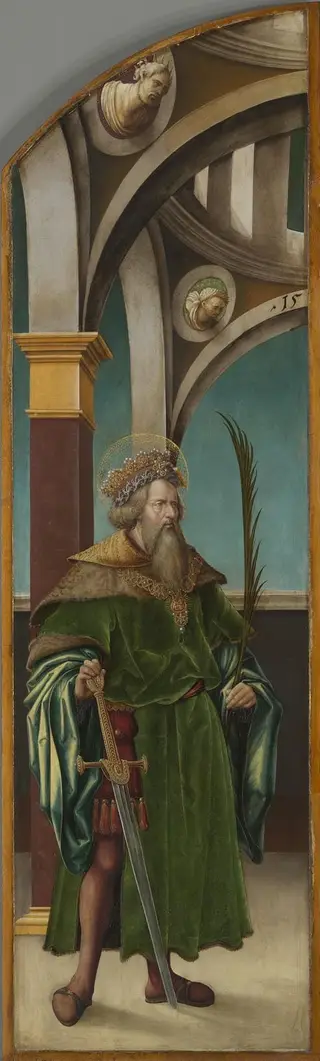 Kreuzigungsaltar, linke Flügelaußenseite: Hl. Sigismund
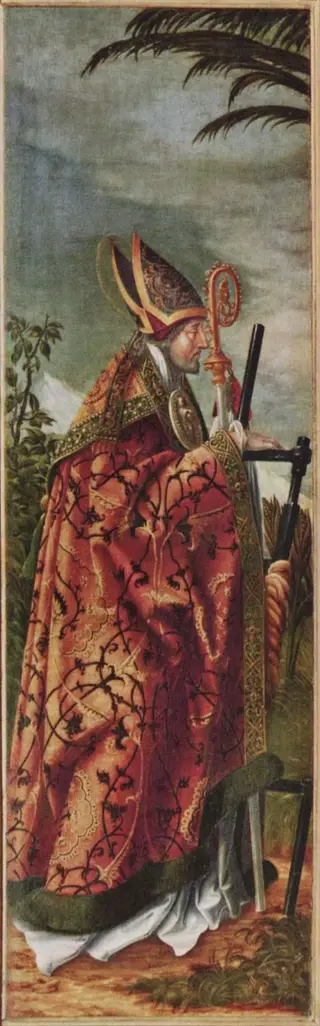 Saint Erasmus
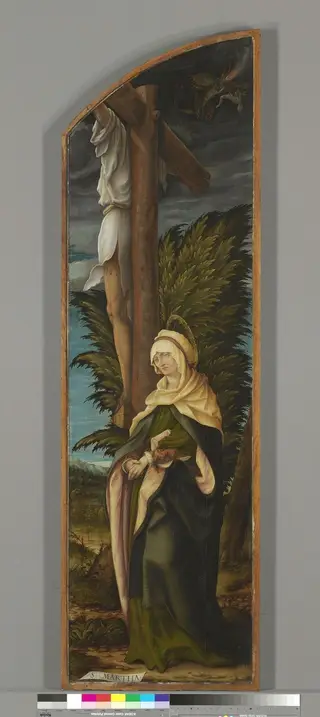 Kreuzigungsaltar, rechter Flügel: Der unbußfertige Schächer und die hl. Martha
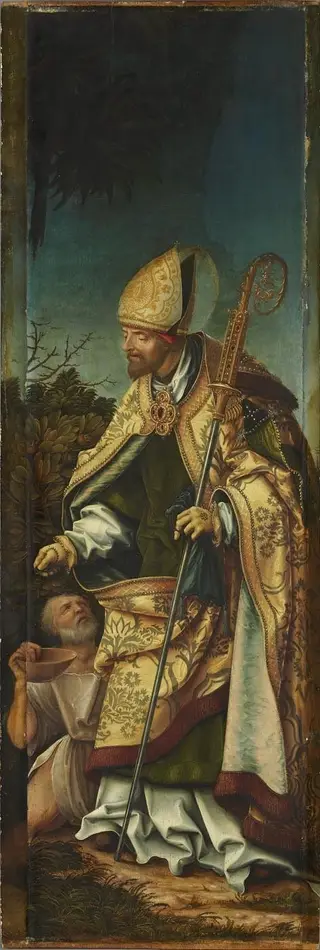 Johannesaltar, rechter Flügel: Hl. Martin
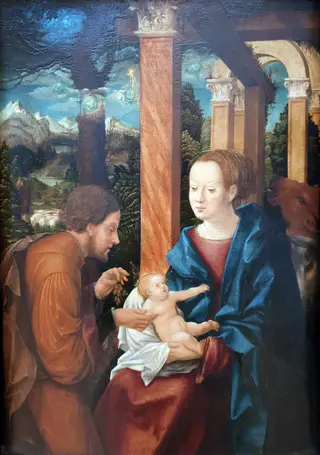 The birth of Christ
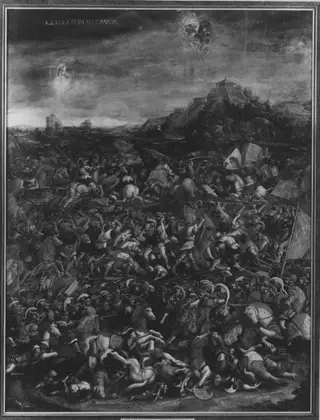 Historienzyklus: Die Niederlage der Römer durch die Karthager in der Schlacht bei Cannae
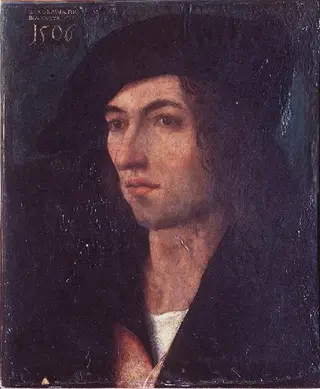 Portrait of a man
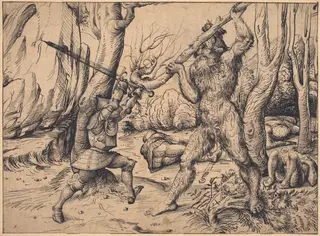 The Fight in the Forest
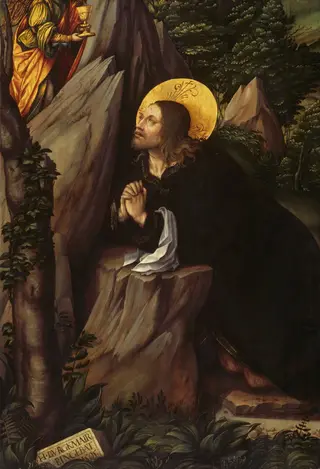 Agony in the Garden
89 works in the catalog · 24 shown
Collections represented


- Altarflügel: Hl. Katharina (?)
- Crucifix with Mary, Mary Magdalen and St John the Evangelist
- Kreuzigungsaltar, rechte Flügelaußenseite: Hl. Georg
- Portrait of a young Man
- Portrait of Frederick III, Holy Roman Emperor
- Portrait of Eleonore of Portugal
- Johannesaltar, Flügelaußenseite: Hl. Johannes der Evangelist
- Johannesaltar, Flügelaußenseite: Hl. Johannes der Täufer
Artists in a similar vein