Artwork
Kreuzigungsaltar, rechte Flügelaußenseite: Hl. Georg
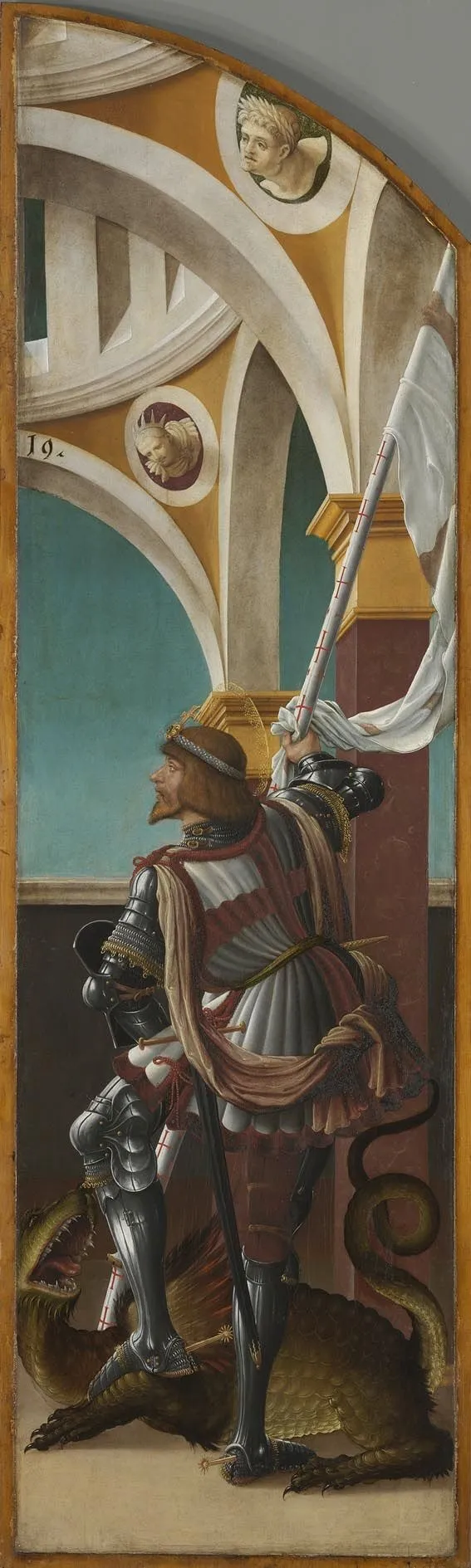
Kreuzigungsaltar, rechte Flügelaußenseite: Hl. Georg is an unspecified painting by the Northern Renaissance artist Hans Burgkmair I. It dates from 1519 and is held in the collection of the Bavarian State Painting Collections. Created in 1519 by Hans Burgkmair the Elder, this religious panel portrays the legendary Saint George.
About this work
Subject & Meaning
Symbolically, George’s triumph over the dragon represents the victory of Christian faith over evil, a common medieval allegory.
The panel depicts Saint George as a mounted knight in armor, slaying a dragon beneath him. The saint’s right hand raises a lance that pierces the dragon’s throat, while his left hand guides the horse forward. A prone princess kneels to the right, her gaze directed toward the combat, indicating her rescue from the dragon’s jaws.
The scene is framed by a rocky landscape and a city in the background, situating the miracle within a recognizable world.
Symbolically, George’s triumph over the dragon represents the victory of Christian faith over evil, a common medieval allegory. The princess’s presence underscores themes of salvation and divine protection, reinforcing the narrative’s moral dimension.
History & Provenance
Hans Burgkmair the Elder created the right exterior wing of the Kreuzigungsaltar in 1519 as a religious painting for the Bavarian State Painting Collections, where it remains on display at the Alte Pinakothek.
The work was commissioned as part of the altar's decorative program and completed in the same year it was dated, reflecting the artistic output of the early Northern Renaissance.
Its creation history is documented through stylistic analysis and archival records linking it to Burgkmair's workshop, establishing its significance within the corpus of religious art from this period.
The Kreuzigungsaltar, rechte Flügelaußenseite: Hl. Georg is housed in the Bavarian State Painting Collections, specifically at the Alte Pinakothek in Munich. Its accession number is not provided in the sources.
The work has been exhibited as part of displays focusing on Hans Burgkmair the Elder and religious art within the collection, though specific exhibition titles or dates are not documented in the given sources.
Context
Scholarship places this work at the forefront of early 16th-century German religious painting, identifying it as a key example of Hans Burgkmair the Elder's mature style and his contribution to the evolution of devotional imagery in southern Germany. The painting's depiction of Saint George slaying the dragon, housed in the Bavarian State Painting Collections at the Alte Pinakothek in Munich, has been widely cited in studies of late medieval iconography and the transition toward more naturalistic narrative art during the Renaissance period.
Critical reception has consistently highlighted the work's technical mastery and emotional intensity, with art historians noting its significance within Burgkmair's oeuvre as both a standalone masterpiece and as part of a larger altarpiece ensemble that influenced subsequent generations of painters in the region.
Legacy
Hans Burgkmair the Elder's 1519 altarpiece panel depicting Saint George, housed in the Bavarian State Painting Collections, contributed to the evolution of German Renaissance religious imagery. The work's composition and narrative treatment influenced later depictions of the saint in regional art, particularly in its integration of narrative detail with devotional focus. Its presence in a major public collection ensured continued scholarly attention to Burgkmair's role in shaping devotional painting practices during the early 16th century.
Overview
Created in 1519 by Hans Burgkmair the Elder, this religious panel portrays the legendary Saint George. The work forms the right outer wing of a crucifixion altar and is presently displayed in Munich’s Alte Pinakothek.
Technique & Style
Burgkmair renders the knight’s plate armor with meticulous detail, employing chiaroscuro to model red and gold embellishments against a muted backdrop. A small sculptural bust and a circular window appear in the rear plane, adding depth and architectural context.
Artist & collection

 Panel from a Triptych: The Archangel Michael
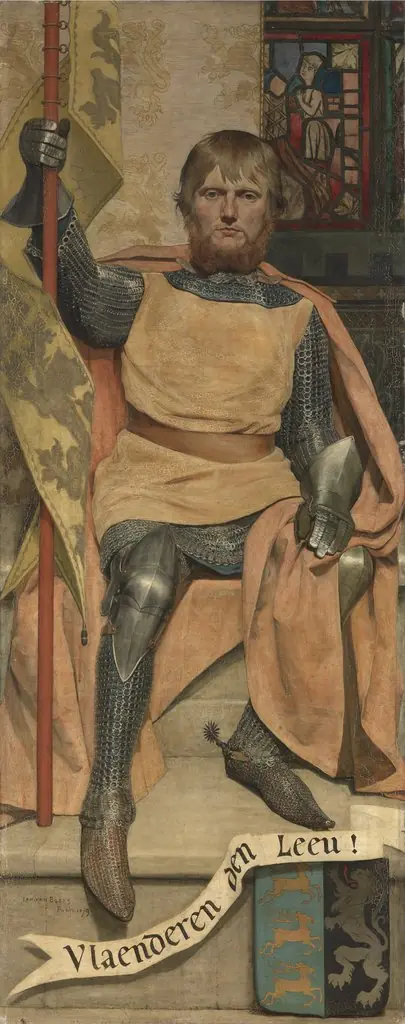 Jan Borluut, Patrician of Ghent
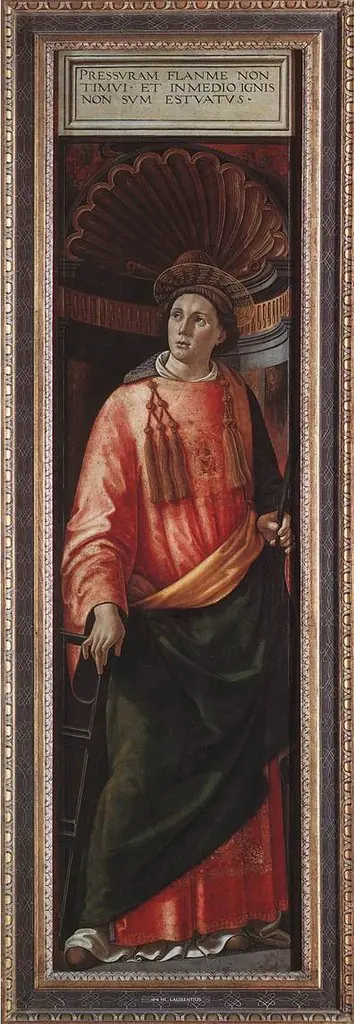 St Lawrence
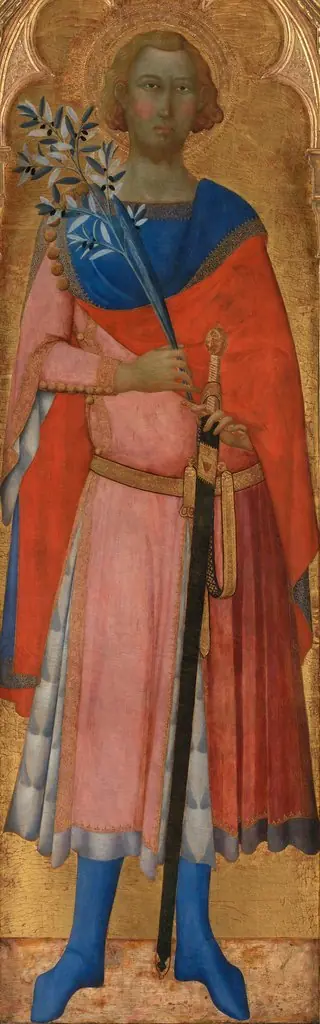 St Victor of Siena
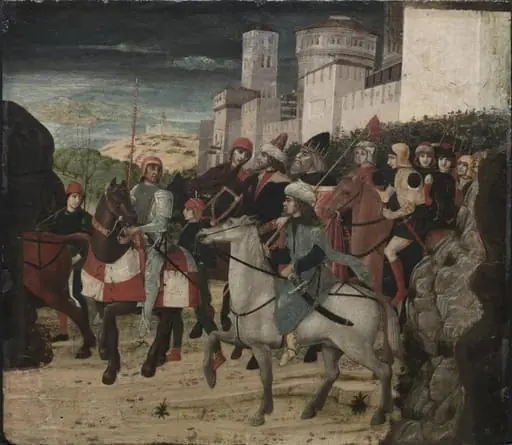 Procession of the Magi
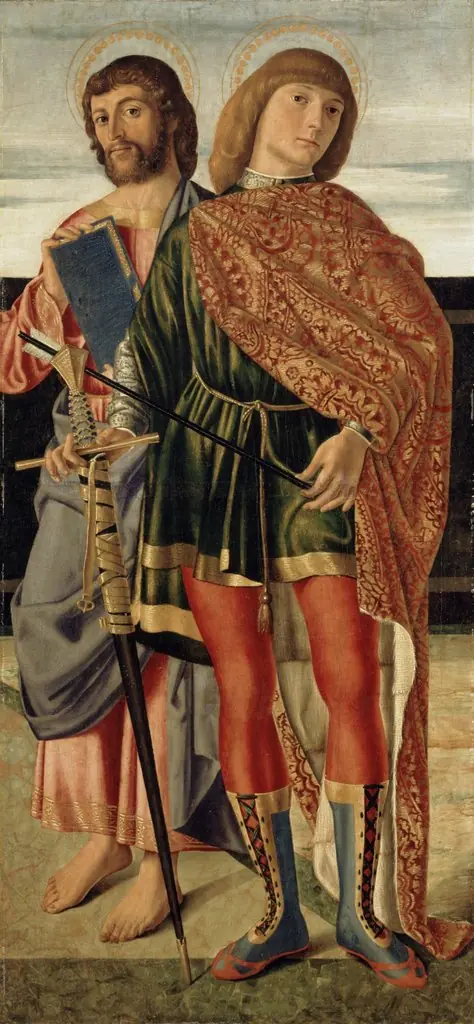 Saint Matthew and Saint Sebastian
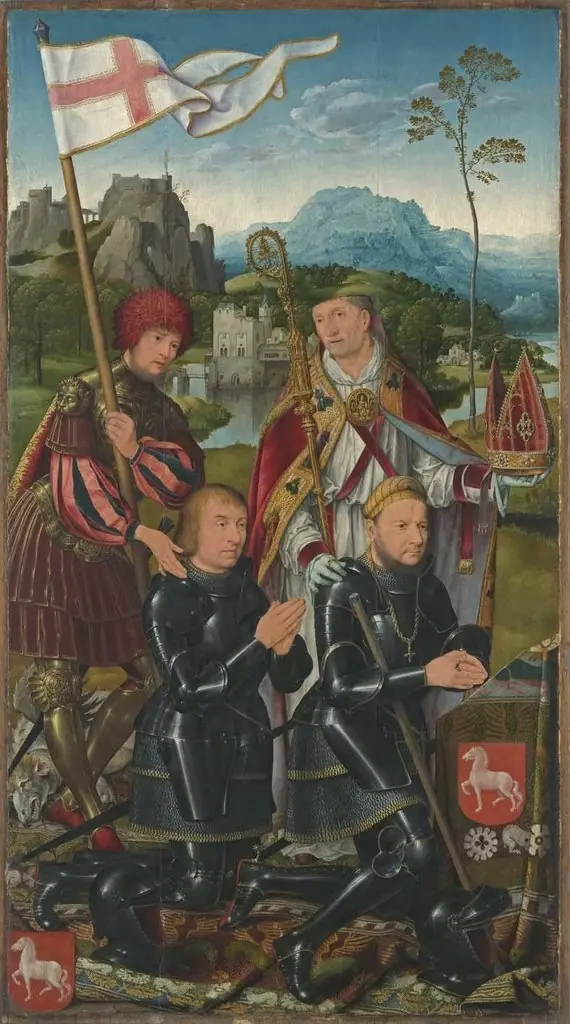 Marientod Altarpiece - left wing
 The Infant Savior
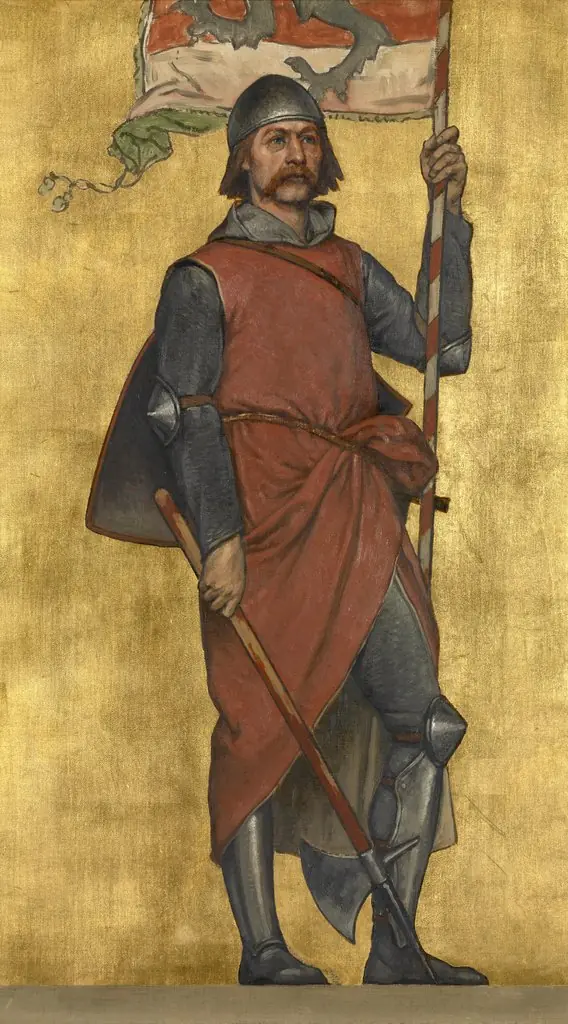 Jan Breydel
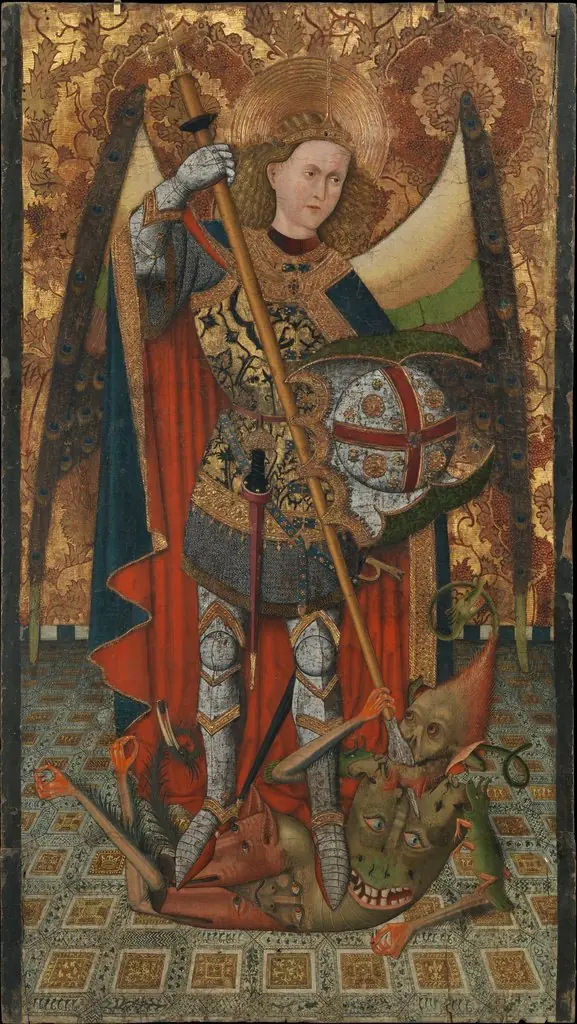 Saint Michael
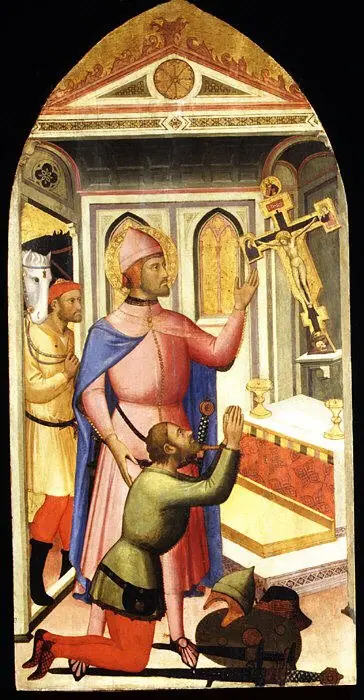 An Episode from the Life of Saint Giovanni Gualberto
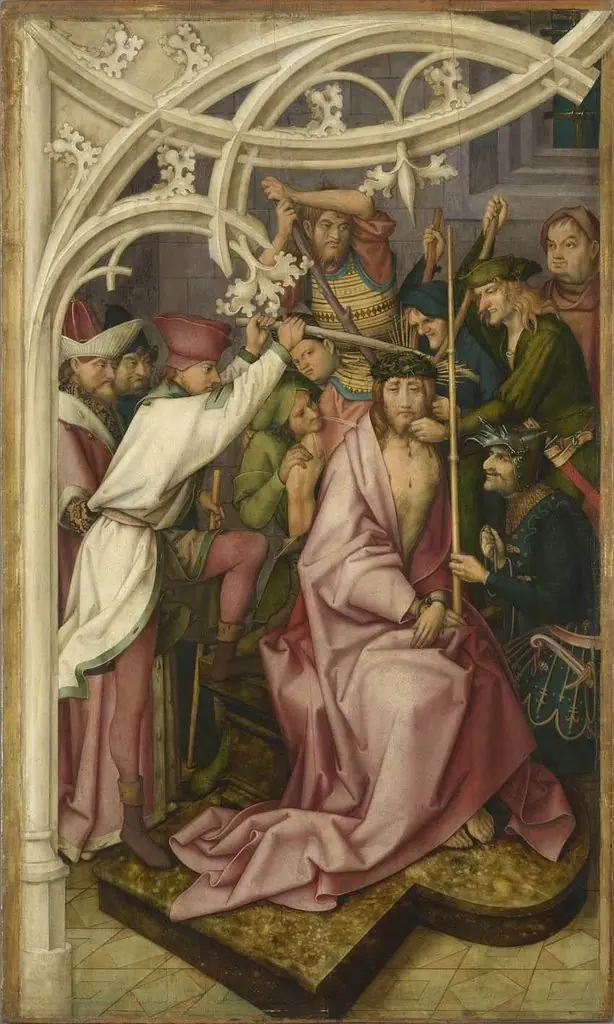
- Kaisheimer Altar: Dornenkrönung Christi