Artist
Charles Haslewood Shannon

United Kingdom
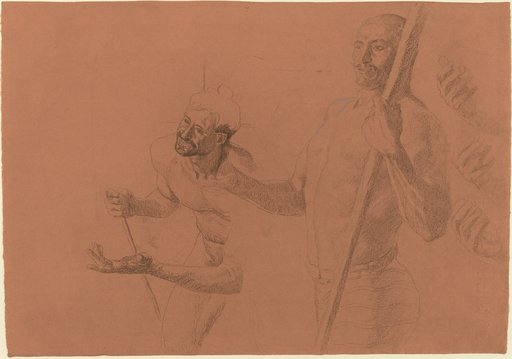
Charles Haslewood Shannon is an United Kingdom Impressionism artist. 6 works are cataloged here, principally at National Gallery of Art.
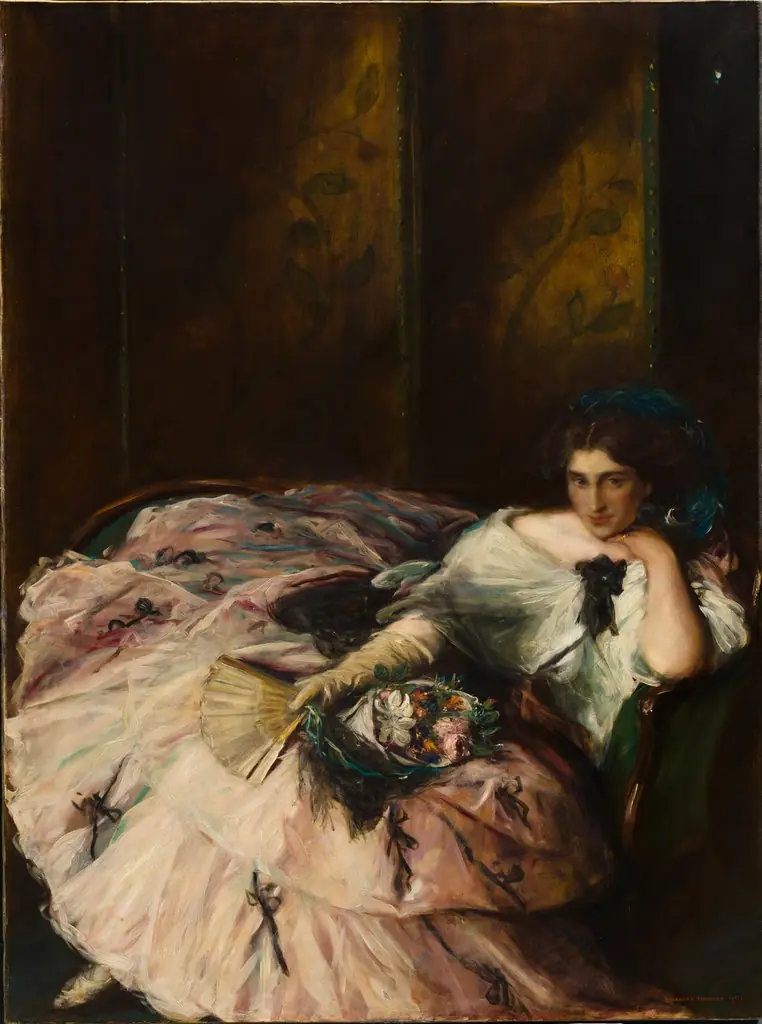
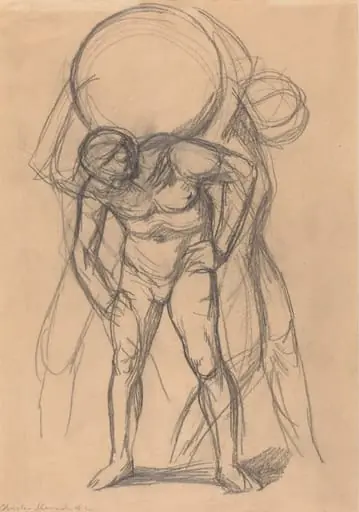
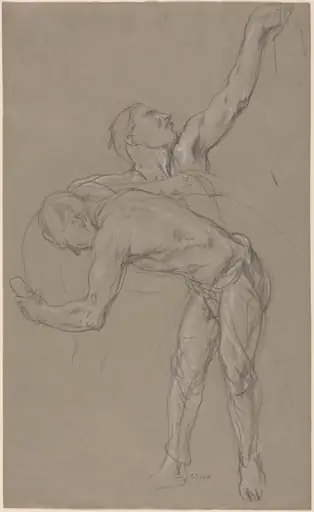
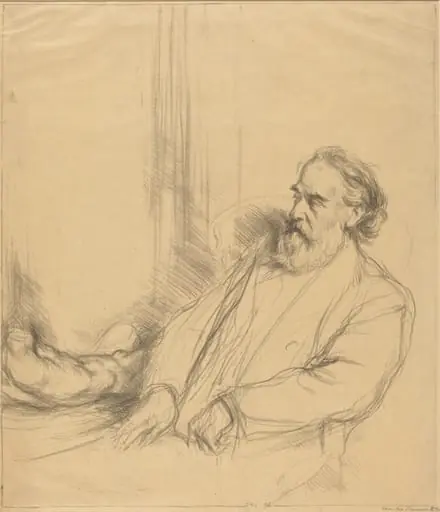
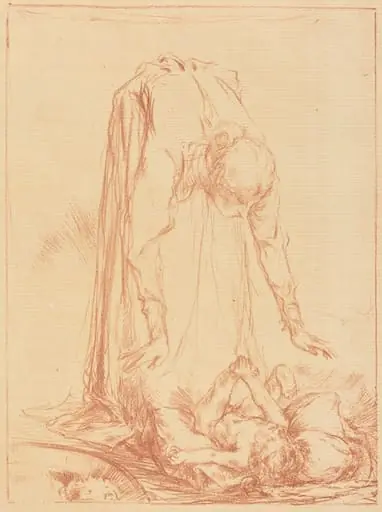
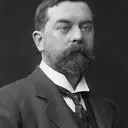
Charles Haslewood Shannon (26 April 1863 – 18 March 1937) was an English artist best known for his portraits. His works featured in several major European collections, including London's National Portrait Gallery. Several authorities spell his middle name Hazelwood. The National Portrait Gallery prefers the spelling used here.
Overview
Charles Haslewood Shannon (26 April 1863-18 March 1937) was an English painter, printmaker, and illustrator best known for his portraits and Giorgionesque figure compositions. Working across painting, etching, and lithography, he achieved significant recognition in his lifetime, culminating in election as a Royal Academician in 1920. His works are held in major European and international collections, including London's National Portrait Gallery, the Tate, the British Museum, and institutions in Munich, Bremen, Melbourne, and Dublin. Shannon's significance extends beyond his individual artistic output to his collaborative role in the late Victorian arts and crafts movement, most notably through the Vale Press, which he co-founded with his lifetime partner Charles Ricketts.
Biography & dates
Shannon was born on 26 April 1863 in Sleaford, Lincolnshire, the son of Reverend Frederick William Shannon, Rector of Quarrington, and Catherine Emma Manthorp, daughter of surgeon Daniel Levett Manthorp. He was educated at St John's School, Leatherhead, where he played cricket in the first XI. He then attended the City and Guilds of London Art School, formerly known as the South London School of Technical Art and previously the Lambeth School of Art. During his training he formed a friendship with fellow student Charles Ricketts that would become a lifelong partnership. The two men met as teenagers and cohabited in Chelsea for over fifty years until Ricketts's death.
Shannon's early career was marked by success in multiple media. He was awarded a first-class gold medal at Munich in 1895 and a first-class silver medal in Paris in 1900. He was elected Associate of the Royal Academy in 1911, and in 1918 became vice-president of the International Society of Sculptors, Painters and Gravers. He was elected a full Royal Academician in 1920.
In 1928, Shannon suffered a disabling accident while hanging a picture. The fall caused neurological damage that resulted in amnesia and ended his artistic career. He died on 18 March 1937 at his home, 21 Kew Gardens Road, Kew. His funeral took place at Golders Green Crematorium, with a memorial service held at St James's, Piccadilly.
Style & movement
Shannon's artistic development shows a clear evolution from early to mature work. His initial output featured a heavy, low tone that he later abandoned in favour of clearer, more transparent colours. He was much influenced by the example of the great Venetian masters, particularly Giorgione, and this Venetian influence is evident in his Giorgionesque figure compositions, which are marked by a classic sense of style. This same quality characterises his etchings and lithographs.
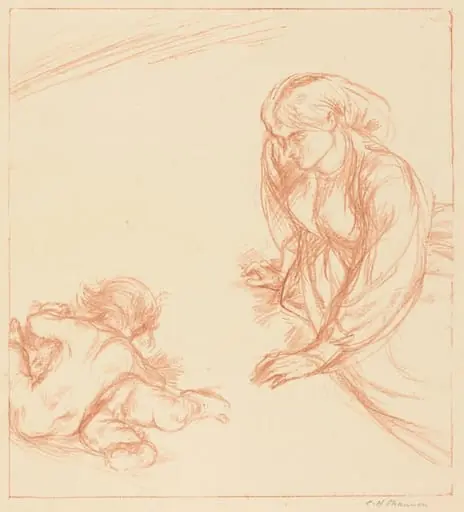
Shannon's work spanned portraiture, figure composition, etching, and lithography. His portraits achieved particular success, and his printmaking was recognised through acquisitions by major institutions. Complete sets of his lithographs and etchings were acquired by the British Museum and the Berlin and Dresden print rooms. His graphic work also appeared in Paris, where André Marty solicited contributions for L'Estampe originale.
Major works
Shannon produced works across several media with notable examples held in international collections. The Dublin Municipal Gallery (Hugh Lane Municipal Gallery) owns several of his paintings, including The Bunch of Grapes and The Lady with the Green Fan, the latter a portrait of Mrs Hacon. His Study in Grey is at the Alte Pinakothek in Munich, a Portrait of Mr Staats Forbes is located in the Kunsthalle Bremen, and Souvenir of Van Dyck is at the National Gallery of Victoria in Melbourne.
One of his most remarkable pictures, The Toilet of Venus, was once part of the Lord Northcliffe collection and is now held at Tate Britain. His later painted works include The Amethyst Necklace (1907), The Morning Toilet (1911), The Embroidered Shawl (1914), and The Incoming Tide (1918). In 1918 he produced various portraits, including those of Princess Patricia of Connaught, Lillah McCarthy, and the actress Hilda Moore. Among his lithographs were Playmates (1908), Ebb Tide (1917), The Tidal River, and A Sharp Corner (1919).
Several of his portrait works are held in the National Portrait Gallery in London.
Influences & students
Shannon's most significant relationship was with Charles Ricketts, whom he met as a fellow student and with whom he shared his life and work for over five decades. Ricketts exercised considerable influence on Shannon's artistic development, and the two collaborated on numerous projects. Together they designed and illustrated books, established the art journal The Dial in 1889, and created the Vale Press in 1893. The magazine championed the Pre-Raphaelites and Symbolism until ceasing publication in 1897.
The Vale Press represented a remarkable collaborative enterprise. Ricketts, inspired by William Morris and using an inheritance to fund the venture, worked with Shannon to publish over 75 books before the press closed in 1904, with some sources indicating more than 80 volumes. They designed three new typefaces, created illustrations and engravings, and oversaw binding. Notable publications included John Gray's Silverpoints (1893) and Oscar Wilde's The Sphinx (1895). Shannon also illustrated the first edition of Wilde's The House of Pomegranates (1891). The press gained recognition in Paris before its workshops were destroyed by fire in 1899, after which Ricketts abandoned the printing operation.
Shannon and Ricketts shared interests as collectors of French and English painting, Egyptian and Greek antiquities, Persian miniatures, and Japanese prints. Their collection, accumulated over nearly forty years, attracted institutional interest in the 1920s, and a significant portion is now held by the Fitzwilliam Museum, Cambridge. They counted Edmund Gabriel Davis and his wife Mary as patrons and friends.
Sources do not record specific pupils or followers of Shannon, though his collaborative practice with Ricketts represents a distinctive model of artistic partnership in the late Victorian period.
Legacy
Shannon's posthumous reputation rests on his dual achievement as a painter and printmaker and as a central figure in the late Victorian private press movement. His works are distributed across major public collections worldwide, with particular concentrations in British institutions. The National Portrait Gallery holds several of his portraits, while the British Museum, Berlin, and Dresden print rooms hold complete sets of his graphic work.
His bequest of Piero di Cosimo's Combat of the Centaurs and the Lapiths to the National Gallery indicates both his resources and his connoisseurship as a collector. The dispersal of his and Ricketts's collection to institutions such as the Fitzwilliam Museum has preserved an important body of material for scholarly study.
The accident in 1928 that caused his amnesia and ended his career at age sixty-five represents a significant interruption, preventing any late artistic development. His death in 1937, following Ricketts's earlier death, closed a remarkable chapter in British art. The longevity of his partnership with Ricketts, spanning over fifty years, and their integrated personal and professional lives have attracted subsequent scholarly interest, particularly regarding their role in aestheticist and symbolist circles and their contributions to book arts and print culture.
Works by Charles Haslewood Shannon
Collections represented


Artists in a similar vein