Artwork
Gottorfer Codex, bd. 3
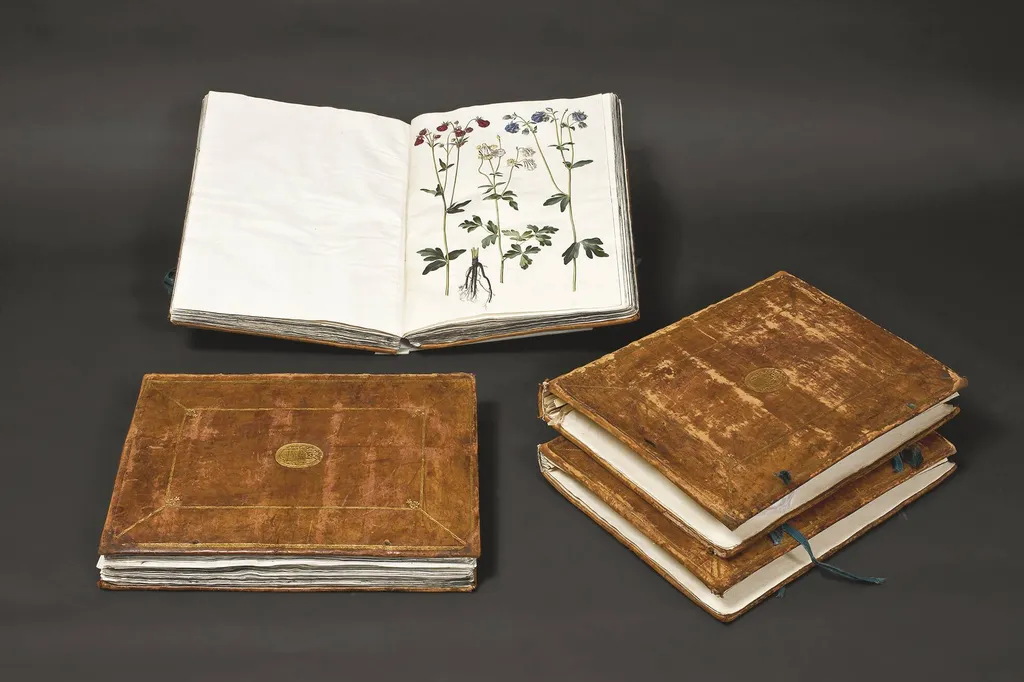
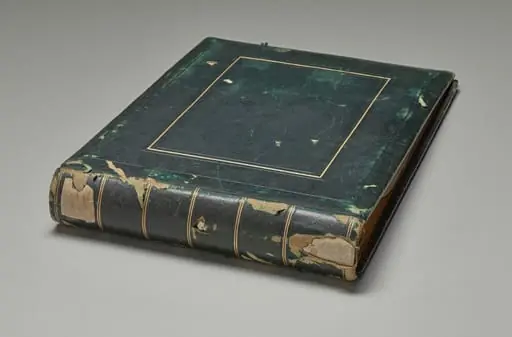
Gottorfer Codex, bd. 3 is an unspecified work on paper by Unknown. It dates from 1654 and is held in the collection of the Statens Museum for Kunst. The Gottorfer Codex, volume three, dates to approximately 1654 and contains a collection of pressed botanical specimens mounted on paper.
About this work
Overview
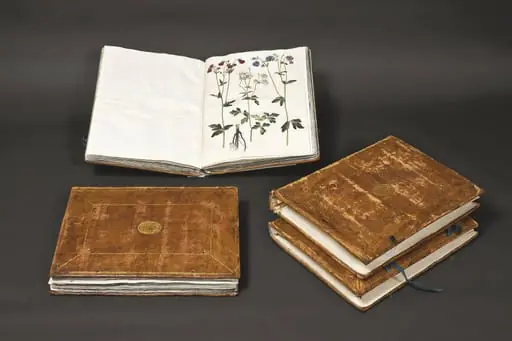
Two other leather-bound volumes rest nearby, their bindings worn and stitched with age, suggesting careful but prolonged use over centuries.
The Gottorfer Codex, volume three, dates to approximately 1654 and contains a collection of pressed botanical specimens mounted on paper. It is part of a three-volume set held at the Museum of Ethnography. The pages are fragile, yellowed, and slightly curled, with some leaves detached.
Two other leather-bound volumes rest nearby, their bindings worn and stitched with age, suggesting careful but prolonged use over centuries.
Subject & Meaning
The codex documents local flora through meticulously arranged pressed flowers, berries, and stems. Each specimen is placed with precision, resembling scientific records rather than decorative art. The selection of red berries, blue blossoms, and green foliage implies an interest in color, seasonality, and regional plant life, possibly for educational or personal study rather than aesthetic display.
Technique & Style
Botanical specimens were carefully dried and adhered to thin paper using adhesive, likely gum arabic or similar. The arrangement is orderly, with stems aligned and flowers spaced to preserve form. The paper shows signs of aging, brittle and discolored, while the mounting technique avoids embellishment, prioritizing accuracy over ornamentation, reflecting early modern naturalist practices.
History & Provenance
Created around 1654, the codex was likely compiled by a scholar or collector with access to the Gottorf estate’s botanical resources. Its survival through centuries suggests it was preserved within a private or institutional collection before entering the Museum of Ethnography. The condition of the binding and pages indicates continuous handling, possibly for reference or teaching purposes.
Context
In mid-17th-century Europe, compiling herbaria was a common practice among naturalists, clergy, and aristocrats interested in botany. This codex aligns with the era’s growing emphasis on empirical observation and classification. Unlike illustrated florilegia, it relies on actual plant material, reflecting a shift toward direct documentation rather than artistic interpretation.
Legacy
The Gottorfer Codex stands as a tangible record of early scientific curiosity in botany. Its preservation offers insight into how knowledge of nature was gathered and transmitted before modern taxonomy. Though not widely known, it contributes to the broader history of material culture in natural history, illustrating the quiet diligence of pre-modern observation.
Artist & collection









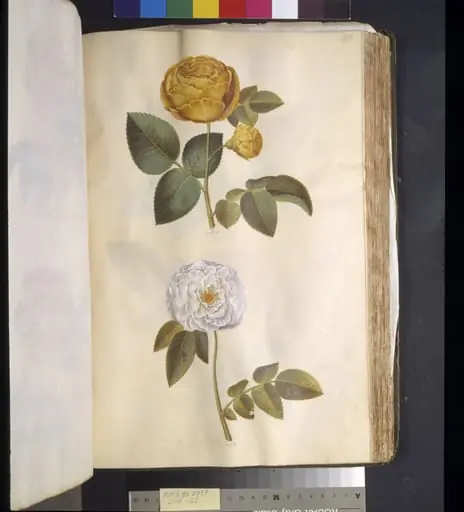 Rosa hemisphaerica (svovlgul rose); Rosa ×alba (hvid rose)
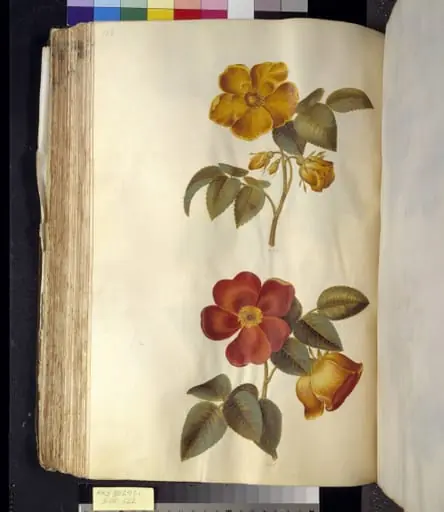 Rosa foetida (gul rose); Rosa foetida (tyrkisk rose)
 Album of 37 photographs
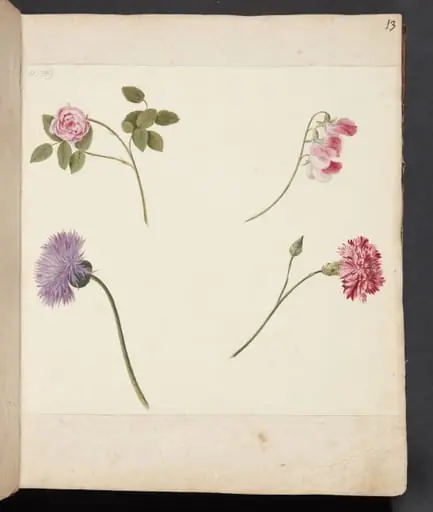 Studie af blomster
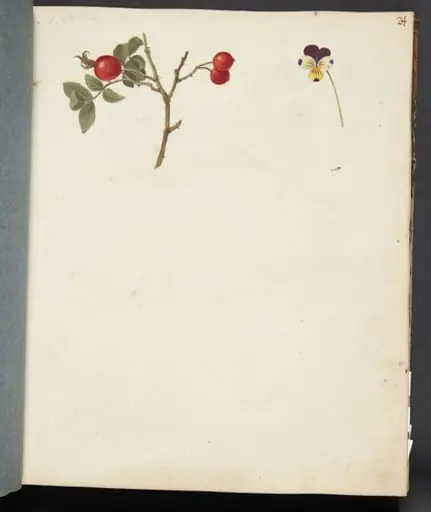 Studie af hyben og stedmoderblomst
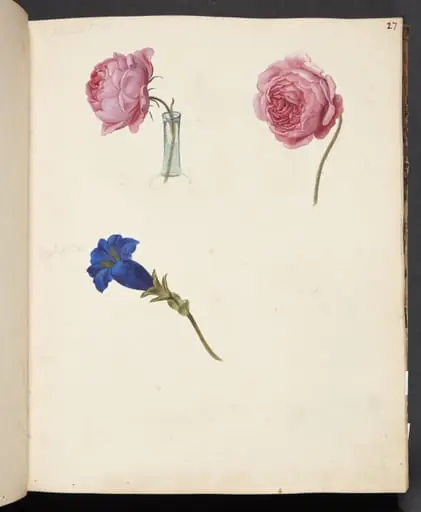 Studie af lyserød rose og blå blomst
 Miniature Album with Figures and Landscape
 Miniature Album with Figures and Landscape
 Portfolio
 Gottorfer Codex, bd. 2