Artwork
Opuntia ficus-indica, Opuntia humifusa eller Opuntia monacantha (art af figenkaktus)
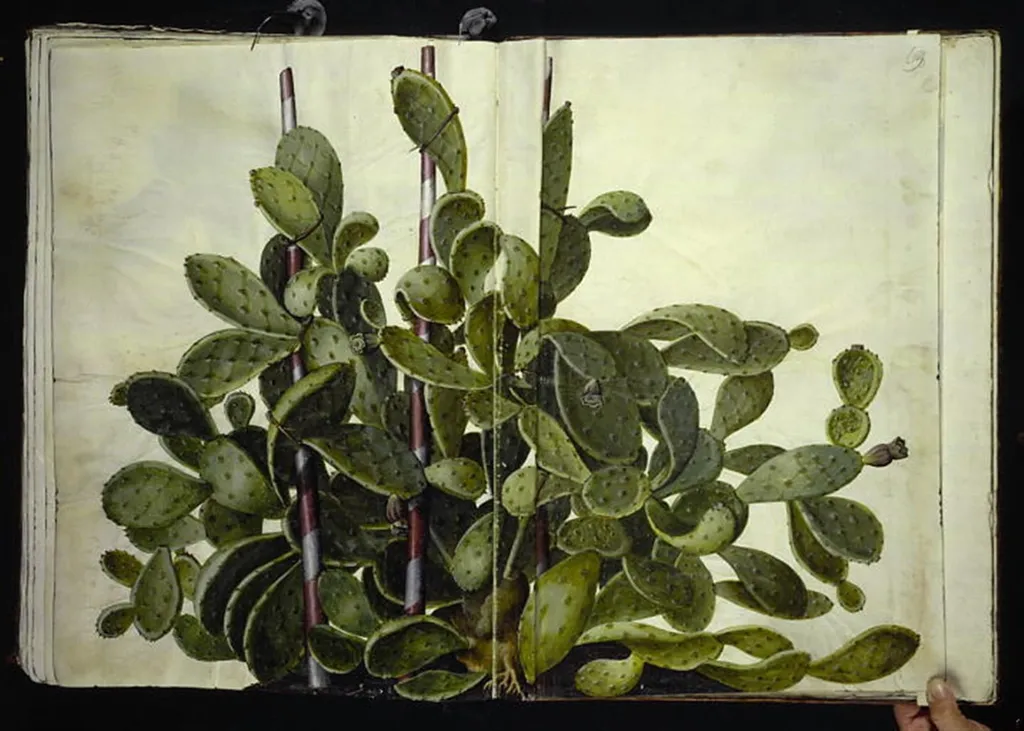
Opuntia ficus-indica, Opuntia humifusa eller Opuntia monacantha (art af figenkaktus) is an unspecified work on paper by Unknown. It dates from 1654 and is held in the collection of the Statens Museum for Kunst.
About this work
Overview
This watercolor painting, dated around 1654, depicts a cactus specimen identified as either Opuntia ficus-indica, Opuntia humifusa, or Opuntia monacantha.
This watercolor painting, dated around 1654, depicts a cactus specimen identified as either Opuntia ficus-indica, Opuntia humifusa, or Opuntia monacantha. Created by an unknown artist, the work is part of the collection at the Museum of Ethnography. Rendered with precision and restraint, the image isolates the plant against a plain background to emphasize botanical accuracy over decorative effect.
Subject & Meaning
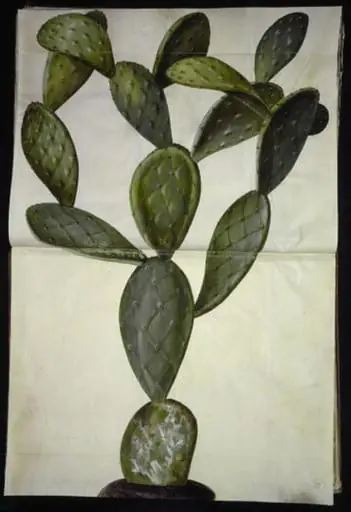
The painting presents a close view of a prickly pear cactus, highlighting its segmented pads, fine spines, and reddish stems. Its purpose appears to be scientific documentation rather than symbolic representation. The choice of species suggests an interest in New World flora, possibly linked to early European efforts to catalog plants introduced from the Americas during the colonial era.
Technique & Style
Executed in watercolor, the work employs delicate washes and fine linework to render the cactus’s textured surface. Subtle variations in green and brown tones suggest natural aging and surface irregularities. The absence of shading or background elements directs focus entirely to the plant’s form, reflecting a methodical, observational approach common in early botanical illustration.
History & Provenance
The painting’s origin is tied to 17th-century European natural history collections, where such images served as visual records for scholars and collectors. It entered the Museum of Ethnography’s holdings through later acquisitions, likely as part of a broader collection of ethnographic and botanical materials gathered during periods of global exploration and exchange.
Context
Created during a time when European institutions were systematically documenting newly encountered flora, this work aligns with the rise of empirical botany. The cactus, native to the Americas, was of particular interest as both a food source and ornamental plant. Such images helped bridge indigenous knowledge and European scientific classification systems.
Legacy
Though unsigned and unattributed, the painting contributes to a larger archive of pre-modern botanical records. Its quiet precision reflects a transitional moment in visual science, where artistic skill served the growing demand for accurate depictions of nature. Today, it remains a quiet testament to early cross-cultural encounters through the lens of plant life.
Artist & collection









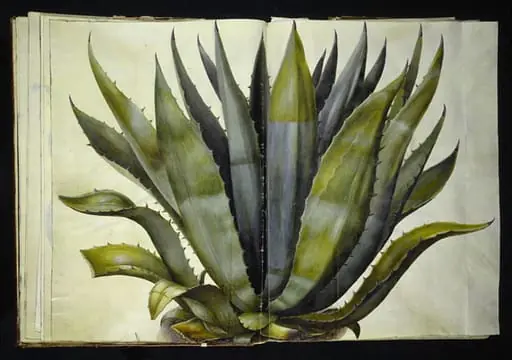 Agave americana (almindelig agave)
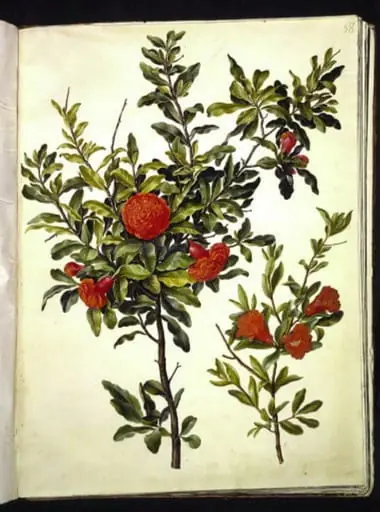 Punica granatum (granatæble)
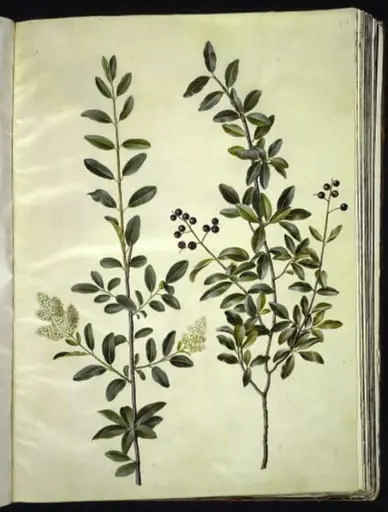 Ligustrum vulgare (almindelig liguster)
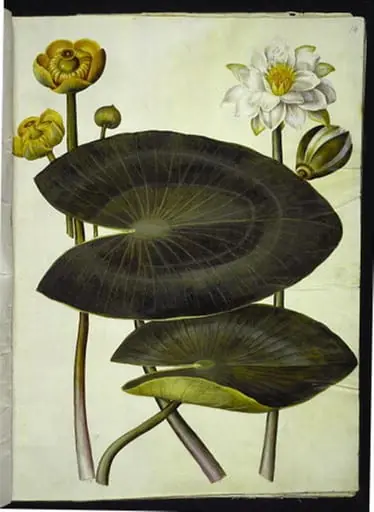 Nuphar lutea (gul åkande); Nymphaea alba (hvid nøkkerose)
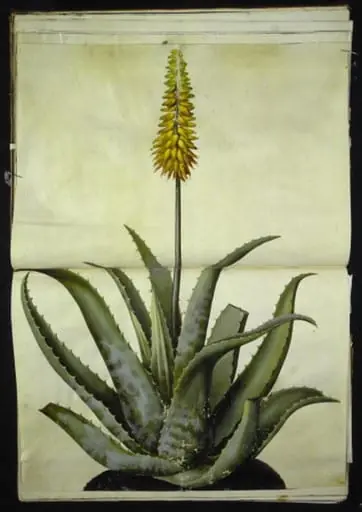 Aloe vera (læge-aloe)
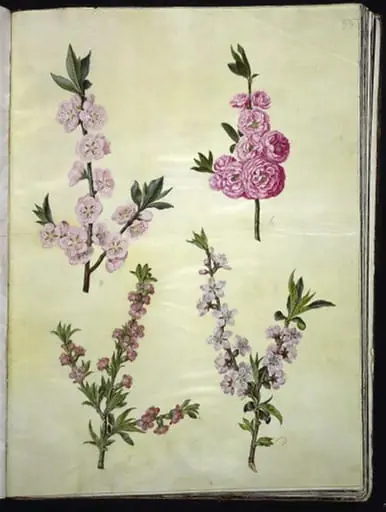 Prunus dulcis (mandel); Prunus persica (fersken)
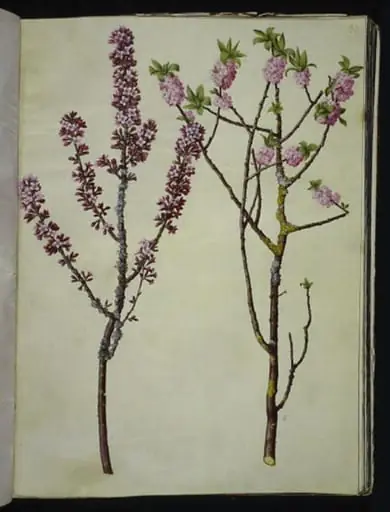 Daphne mezereum (peberbusk)
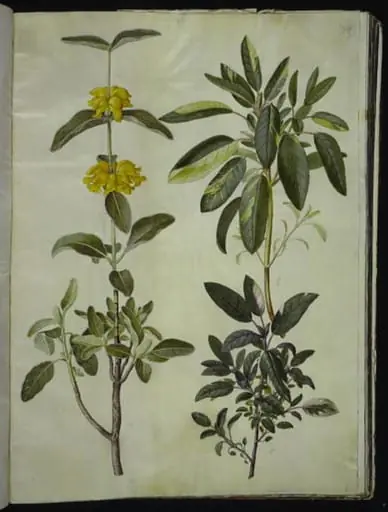 Phlomis fruticosa (almindelig løvehale); Salvia officinalis (læge-salvie)
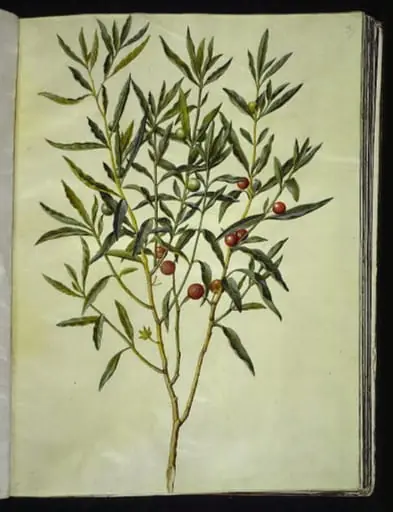 Solanum pseudocapsicum (jerusalem-koralbær)