Artwork
Columns
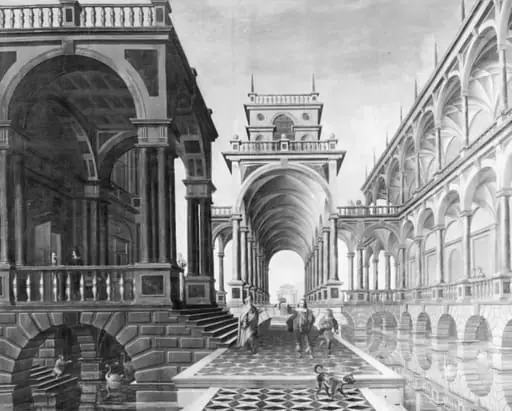
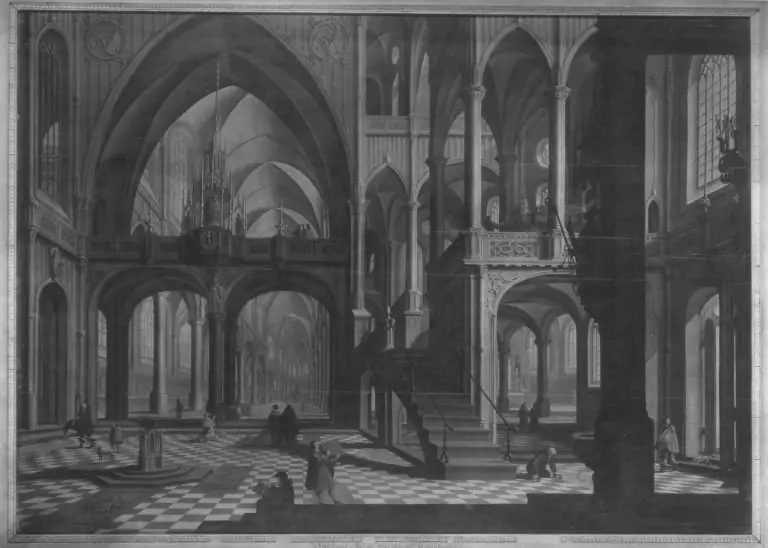
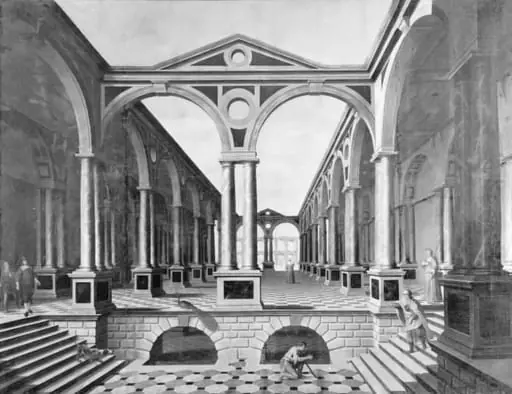
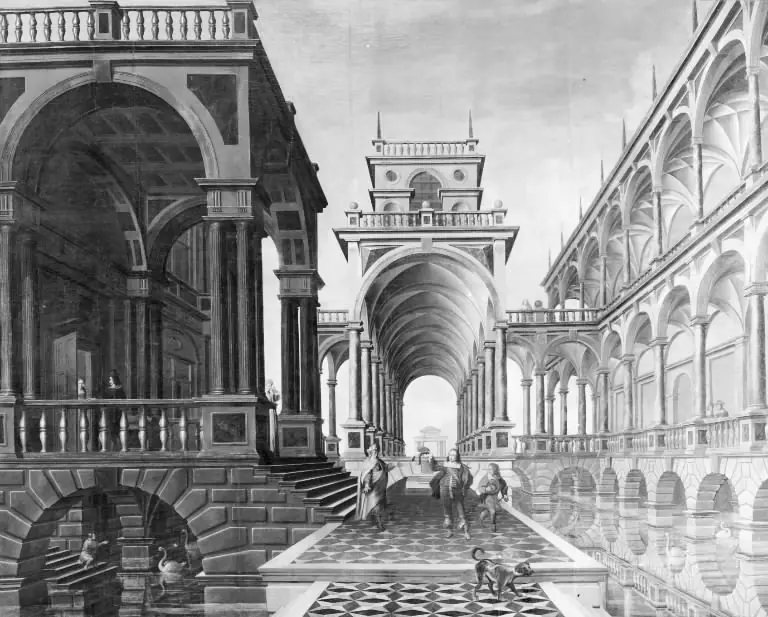
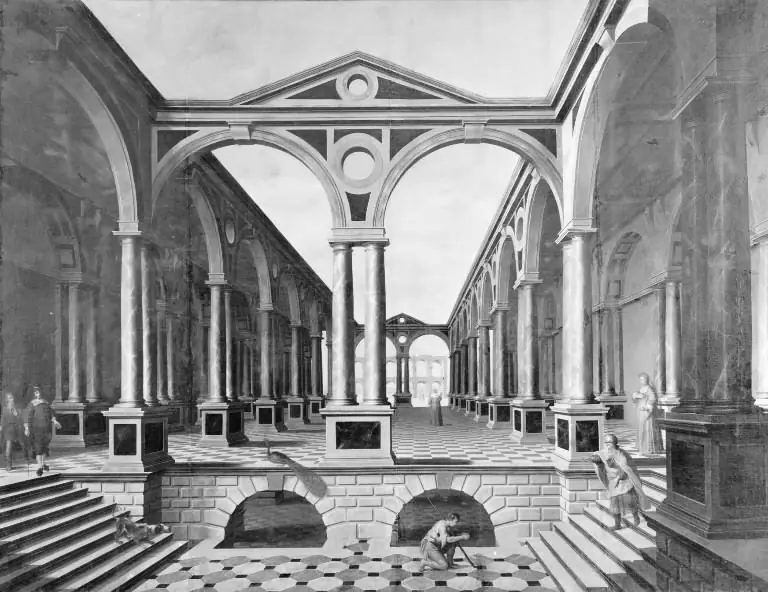
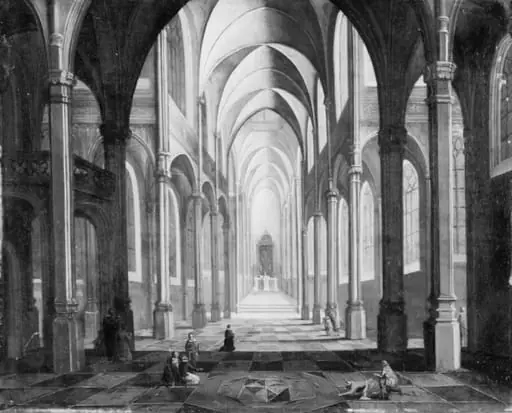
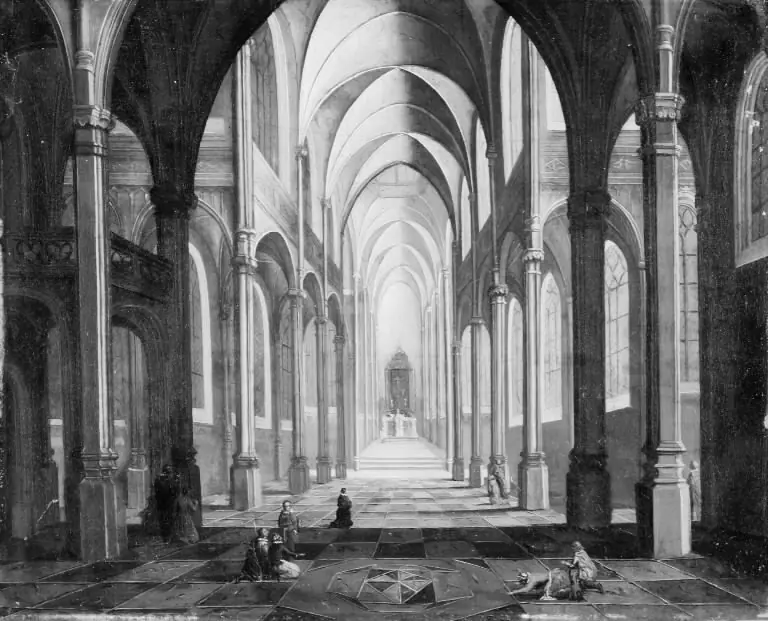
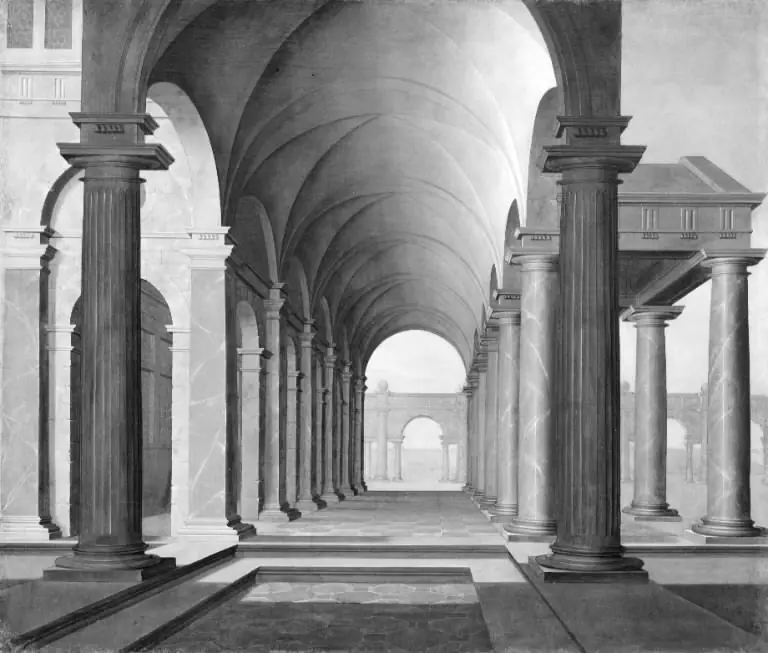
Columns is a photography by Unknown. It dates from 1630 and is held in the collection of the Statens Museum for Kunst.
About this work
Overview
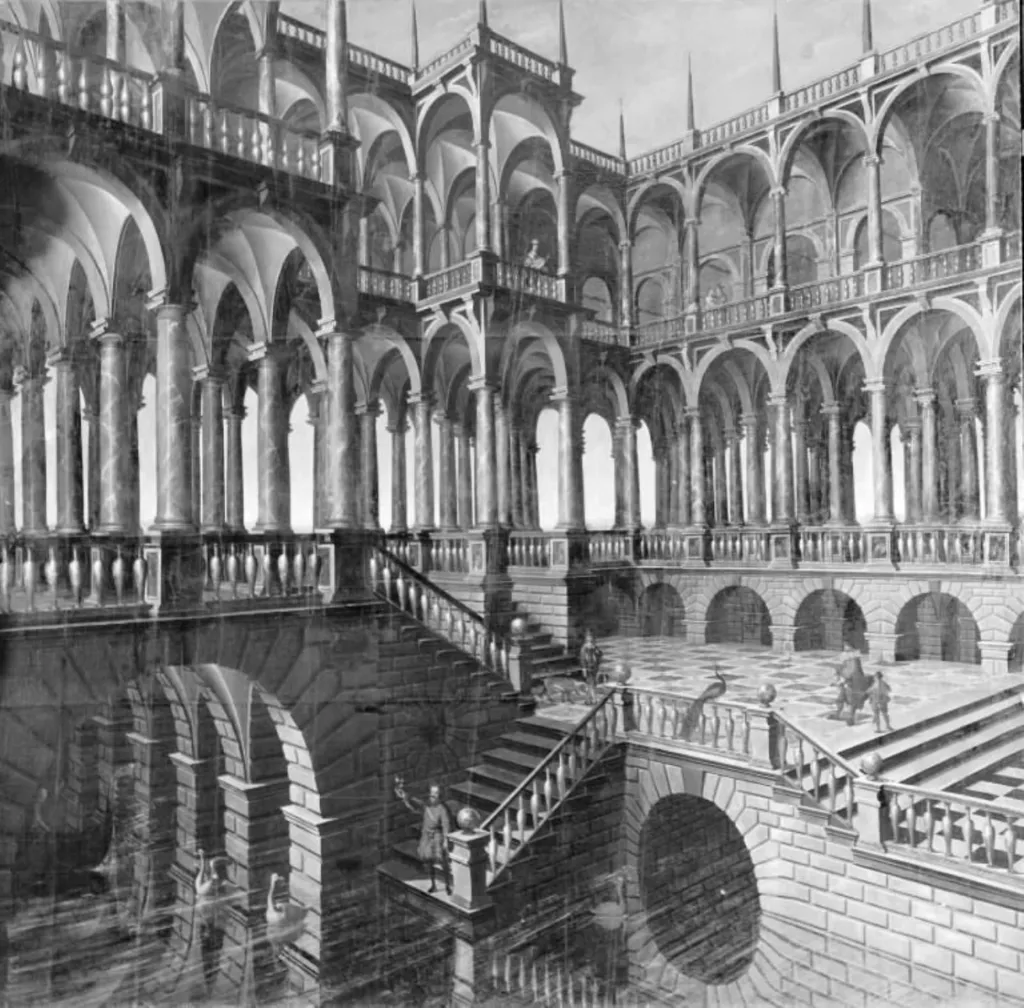
The composition emphasizes depth and structure, with a high vantage point offering a descending view of the corridor and its surrounding courtyard.
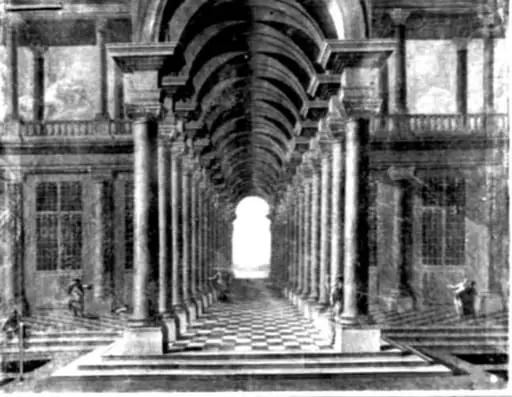
Created around 1630, this photograph captures a long, arched passageway with symmetrical stone columns rising on either side. The image is held in the collection of the Museum of Ethnography. The composition emphasizes depth and structure, with a high vantage point offering a descending view of the corridor and its surrounding courtyard. The lighting enhances the three-dimensionality of the architecture, suggesting a deliberate attention to spatial form.
Subject & Meaning
The subject is an architectural corridor, likely part of a religious or civic complex, defined by its repetitive arches and orderly layout. The presence of small domed buildings and figures in the courtyard implies daily activity within a significant built environment. The image does not aim to depict a specific event but rather to record the scale and rhythm of the space, reflecting an interest in architectural order and human presence within it.
Technique & Style
The photograph employs strong contrasts between light and shadow, a technique associated with chiaroscuro, to accentuate the texture of the stone and the volume of the arches. The high-angle perspective creates a sense of immersion while maintaining structural clarity. The sharp delineation of forms and the absence of color focus attention on geometry and materiality, aligning the image with documentary traditions of the early photographic era.
History & Provenance
The photograph was likely taken in the early 17th century, possibly by a traveler, architect, or colonial administrator documenting regional structures. It entered the Museum of Ethnography’s collection through acquisition or donation, though its exact origin and photographer remain undocumented. Its preservation suggests early recognition of its value as a record of architectural heritage.
Context
This image reflects a period when photography began to be used for ethnographic and architectural documentation, particularly in regions under colonial or academic scrutiny. The emphasis on symmetry and scale aligns with contemporary European interests in classifying and preserving non-Western structures. The absence of overt cultural markers makes the image more about form than specific cultural identity.
Legacy
The photograph endures as a quiet example of early architectural documentation, valued for its clarity and compositional discipline. It contributes to scholarly understanding of how such spaces were perceived and recorded before modern preservation efforts. Its enduring presence in the museum collection underscores its role as a neutral witness to historical built environments.
Artist & collection