Artwork
Page from the Mirror of Holiness (Mir’at al-quds)
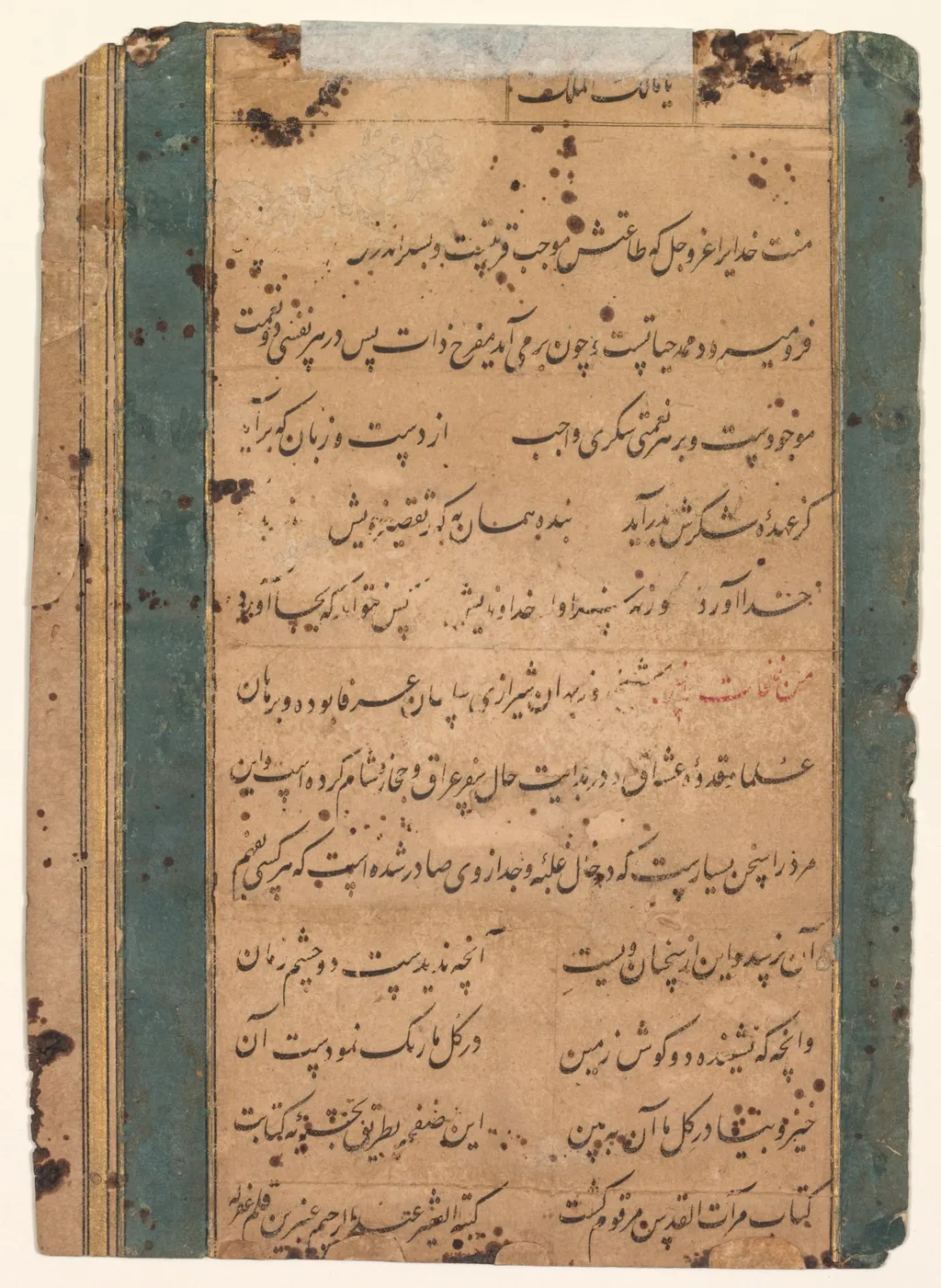
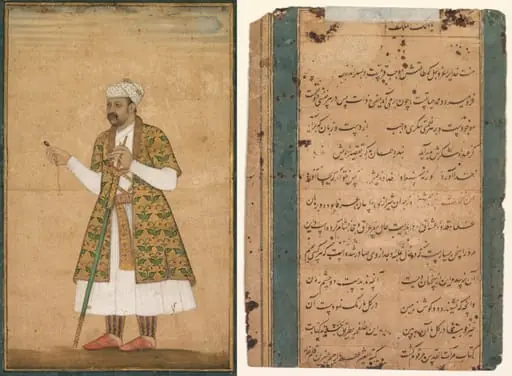
Page from the Mirror of Holiness (Mir’at al-quds) is an unspecified painting by the Baroque artist the Anbarin-Qalam Abd al-Rahim. It dates from 1608 and is held in the collection of the Cleveland Museum of Art. The miniature is a portrait of a Mughal courtier, rendered for inclusion in an imperial album commissioned by the emperor.
- Accession no.
- 2013.323.b
- Credit line
- Gift in honor of Madeline Neves Clapp; Gift of Mrs. Henry White Cannon by exchange; Bequest of Louise T. Cooper; Leonard C. Hanna Jr. Fund; From the Catherine and Ralph Benkaim Collection
About this work
Overview
The miniature is a portrait of a Mughal courtier, rendered for inclusion in an imperial album commissioned by the emperor. The subject is depicted in a dignified pose, his gaze steady, and is surrounded by the rich textures of his attire, highlighting the court’s emphasis on visual documentation of its elite.
Subject & Meaning
The figure wears a luxurious velvet coat edged with fur, a belted white tunic, and striped trousers, garments that reflect the Mughal elite’s Central Asian heritage. In his hand he holds a spinel, a red gemstone valued for its supposed protective powers, indicating both status and the court’s interest in talismanic objects.
Technique & Style
The artist achieves a delicate rendering of facial hair, fur, and fabric through fine brushwork and subtle shading, creating a tactile sense of softness. The portrait follows the Mughal miniature tradition of realistic likeness, employing a muted palette for the clothing while allowing the spinel’s brilliance to draw the viewer’s eye.
History & Provenance
The work belongs to a series of portrait albums begun under Emperor Akbar, who ordered likenesses of his nobles to preserve their memory. His son Jahangir continued this practice, commissioning lifelike portraits for his own collections, which were later compiled into extensive albums that survived in royal archives.
Context
Mughal portraiture served both political and cultural purposes, documenting the hierarchy of the empire and reinforcing the ruler’s authority. The attire shown, velvet with fur trim, mirrors the nomadic horse‑riding origins of the Mughal elite, while the inclusion of a spinel reflects contemporary beliefs in gemstone amulets.
Own this work as a print
Artist & collection
Artist
the Anbarin-Qalam Abd al-Rahim
Abd al-Rahim, the Anbarin-Qalam (1590–1630) was an Indian artist.

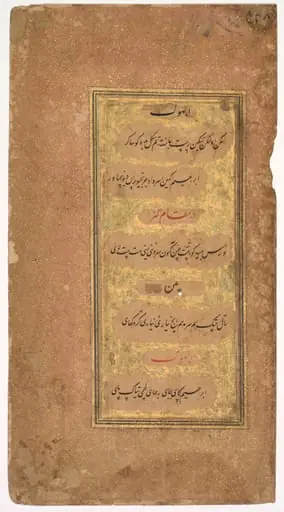 From Dohras (Songs) 40 and 42 from the Kitab-i Nauras (Book of Nine Essences) of Sultan Ibrahim Adil Shah II of Bijapur (r. 1580–1627); verso: From Dohras (Songs) 40 and 36 from the Kitab-i Nauras of Sultan Ibrahim Adil Shah II
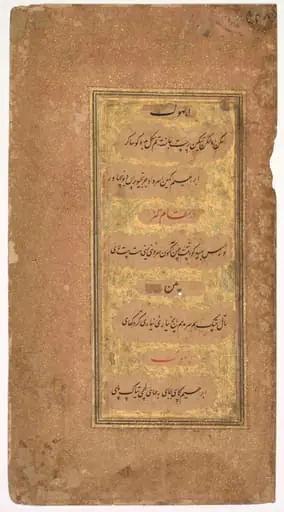 From Dohras (Songs) 40 and 42 from the Kitab-i Nauras (Book of Nine Essences) of Sultan Ibrahim Adil Shah II of Bijapur (r. 1580–1627) (recto)
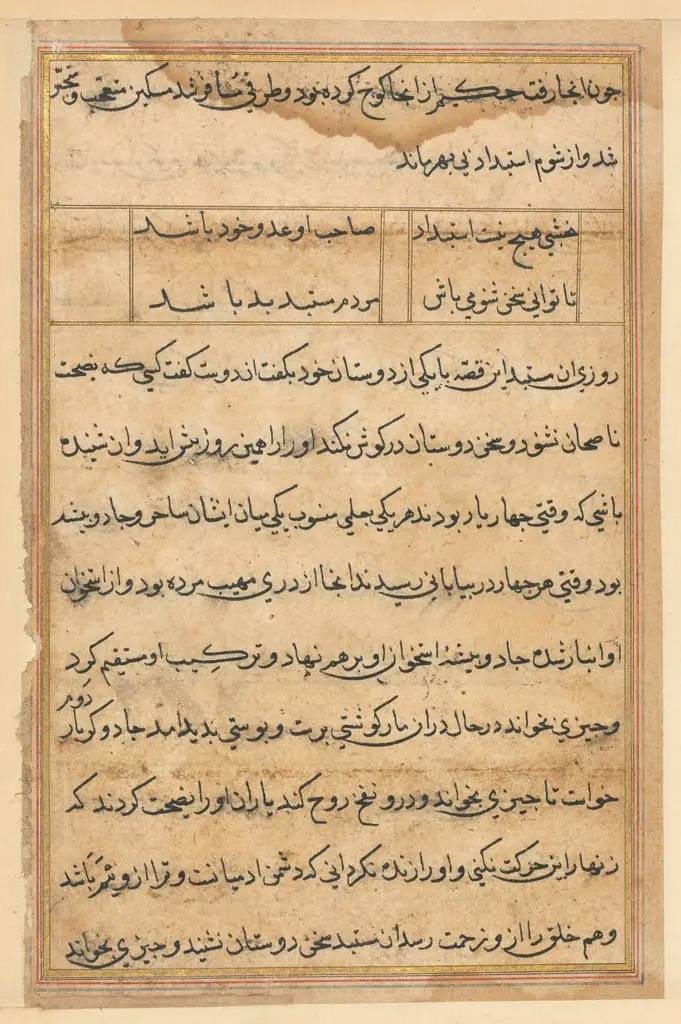 Page from Tales of a Parrot (Tuti-nama): text page
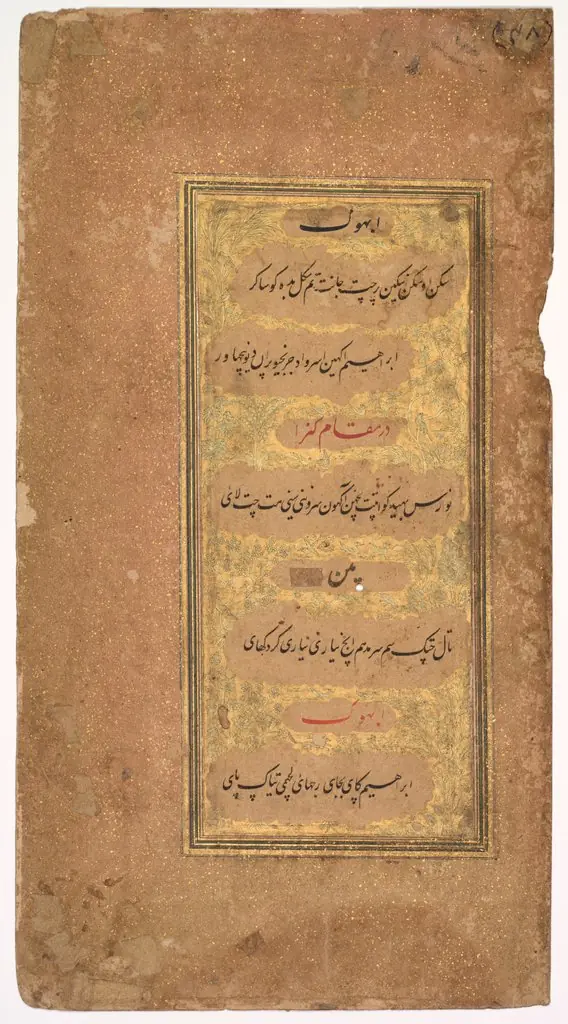 From Dohras (Songs) 40 and 42 from the Kitab-i Nauras (Book of Nine Essences) of Sultan Ibrahim Adil Shah II of Bijapur (r. 1580–1627) (recto)
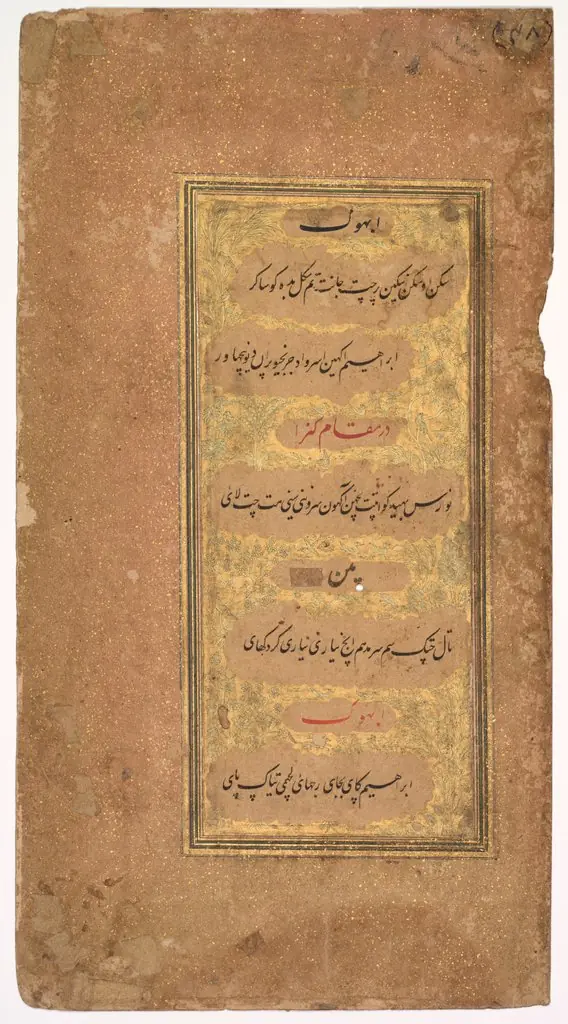 From Dohras (Songs) 40 and 42 from the Kitab-i Nauras (Book of Nine Essences) of Sultan Ibrahim Adil Shah II of Bijapur (r. 1580–1627); verso: From Dohras (Songs) 40 and 36 from the Kitab-i Nauras of Sultan Ibrahim Adil Shah II
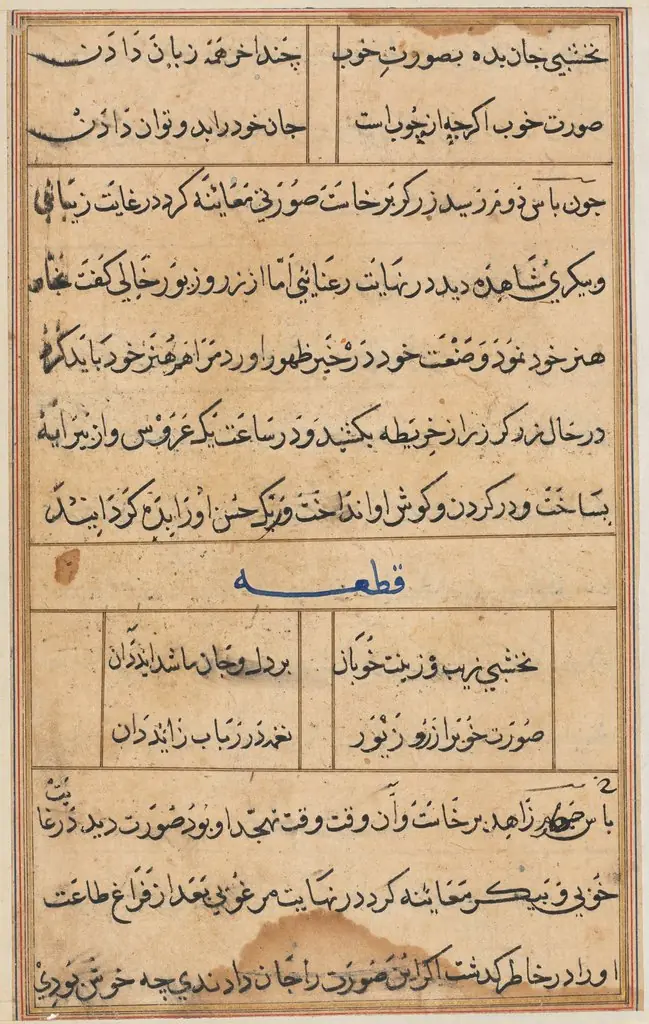 Page from Tales of a Parrot (Tuti-nama): text page
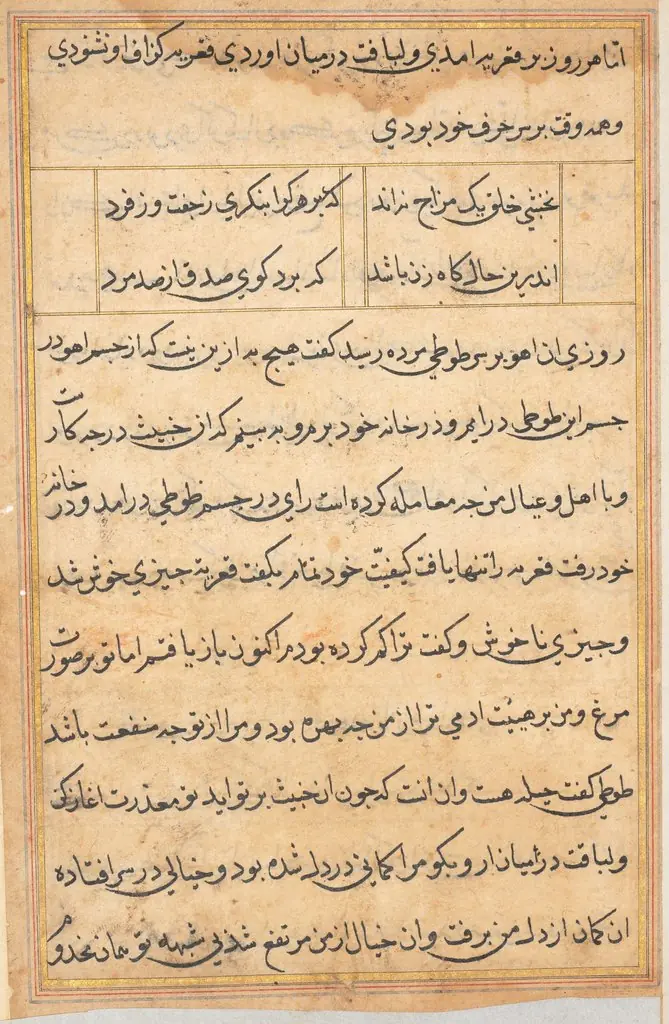 Page from Tales of a Parrot (Tuti-nama): text page
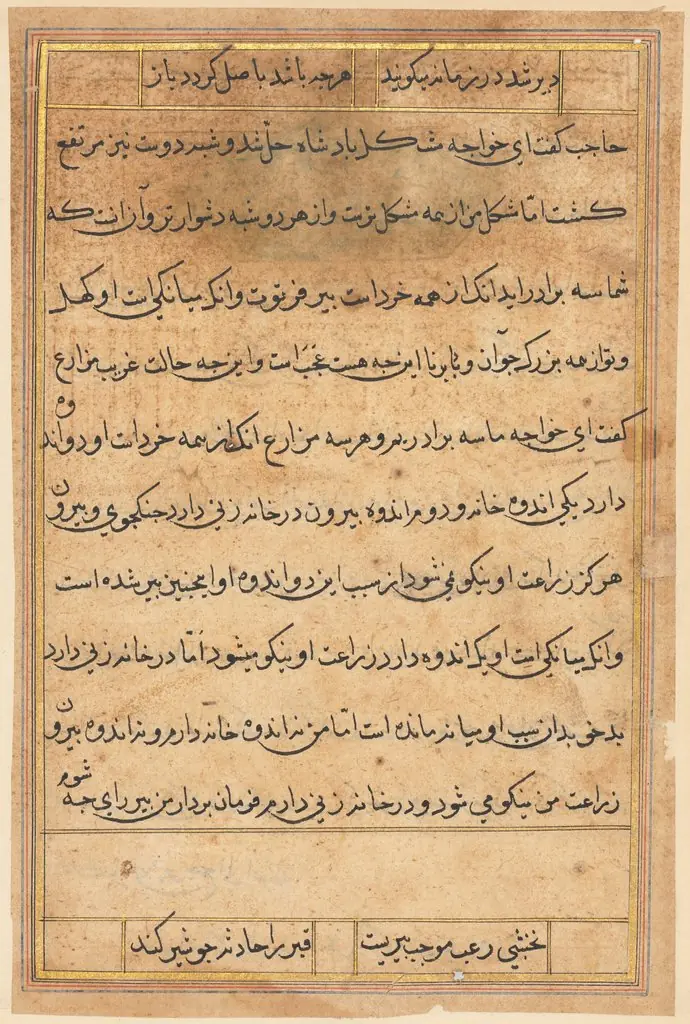 Page from Tales of a Parrot (Tuti-nama): text page
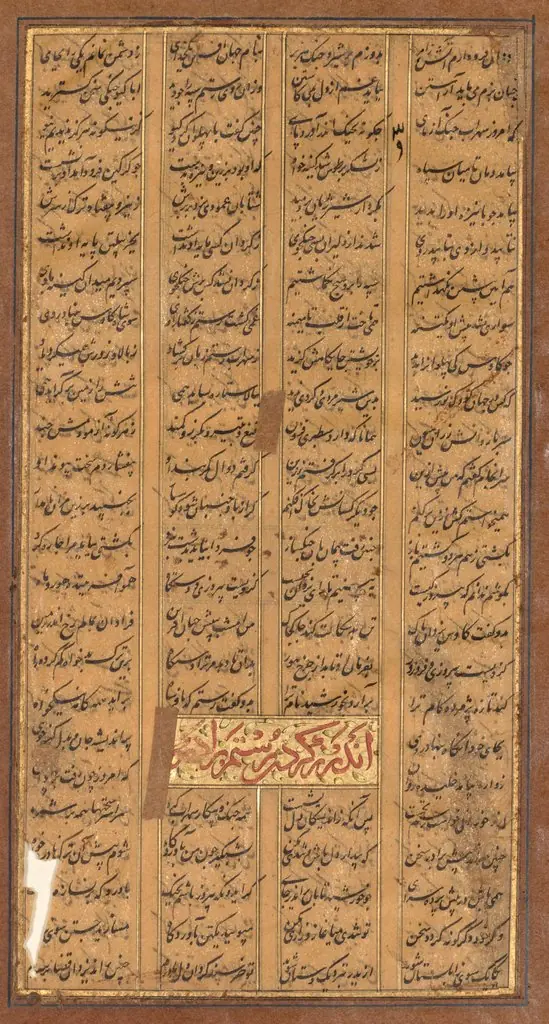 Text of Rustam and Suhrab, from the Shah-nama of Firdausi (Persian, c. 934–1020) (recto)
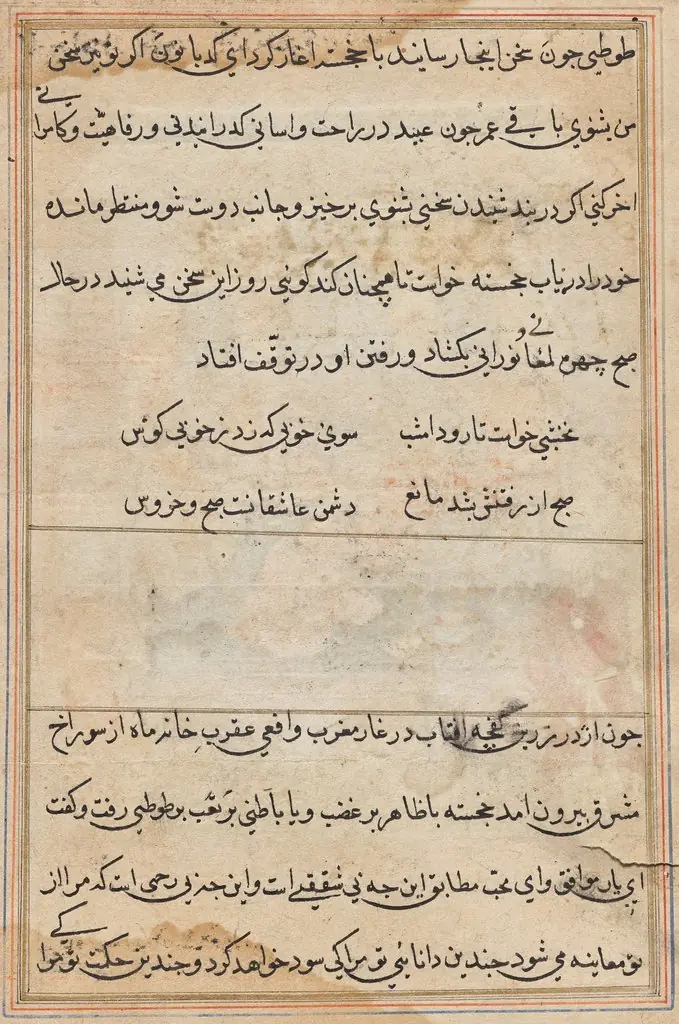 Page from Tales of a Parrot (Tuti-nama): text page
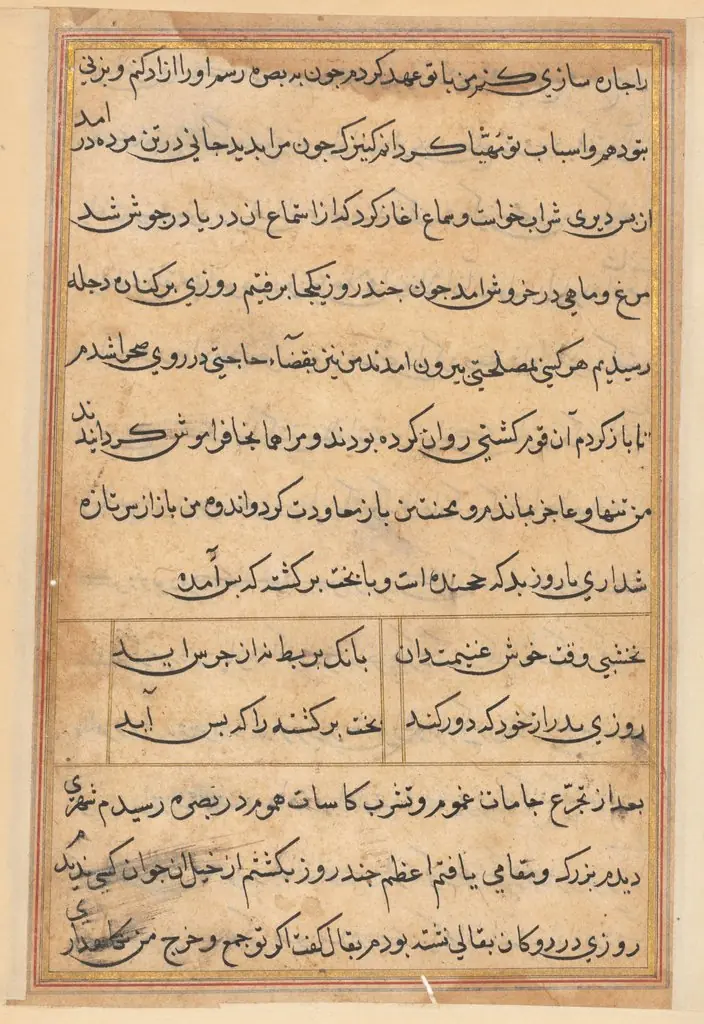 Page from Tales of a Parrot (Tuti-nama): text page
- A Courtier, Possibly Khan Alam, Holding a Spinel and a Deccan Sword