Artwork
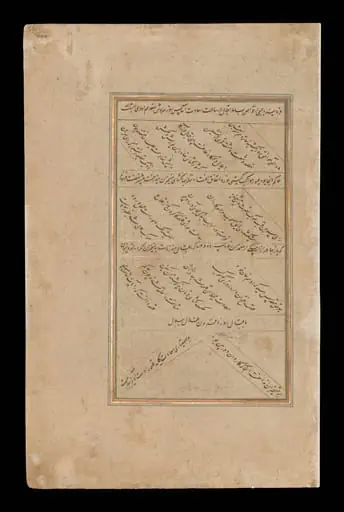
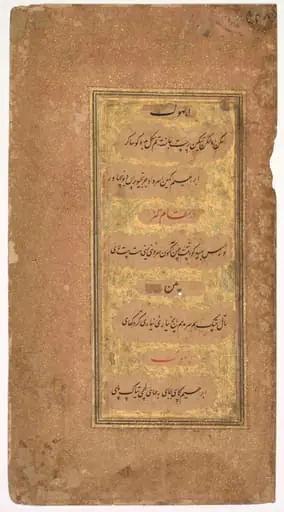
From Dohras (Songs) 40 and 42 from the Kitab-i Nauras (Book of Nine Essences) of Sultan Ibrahim Adil Shah II of Bijapur (r. 1580–1627) (recto)
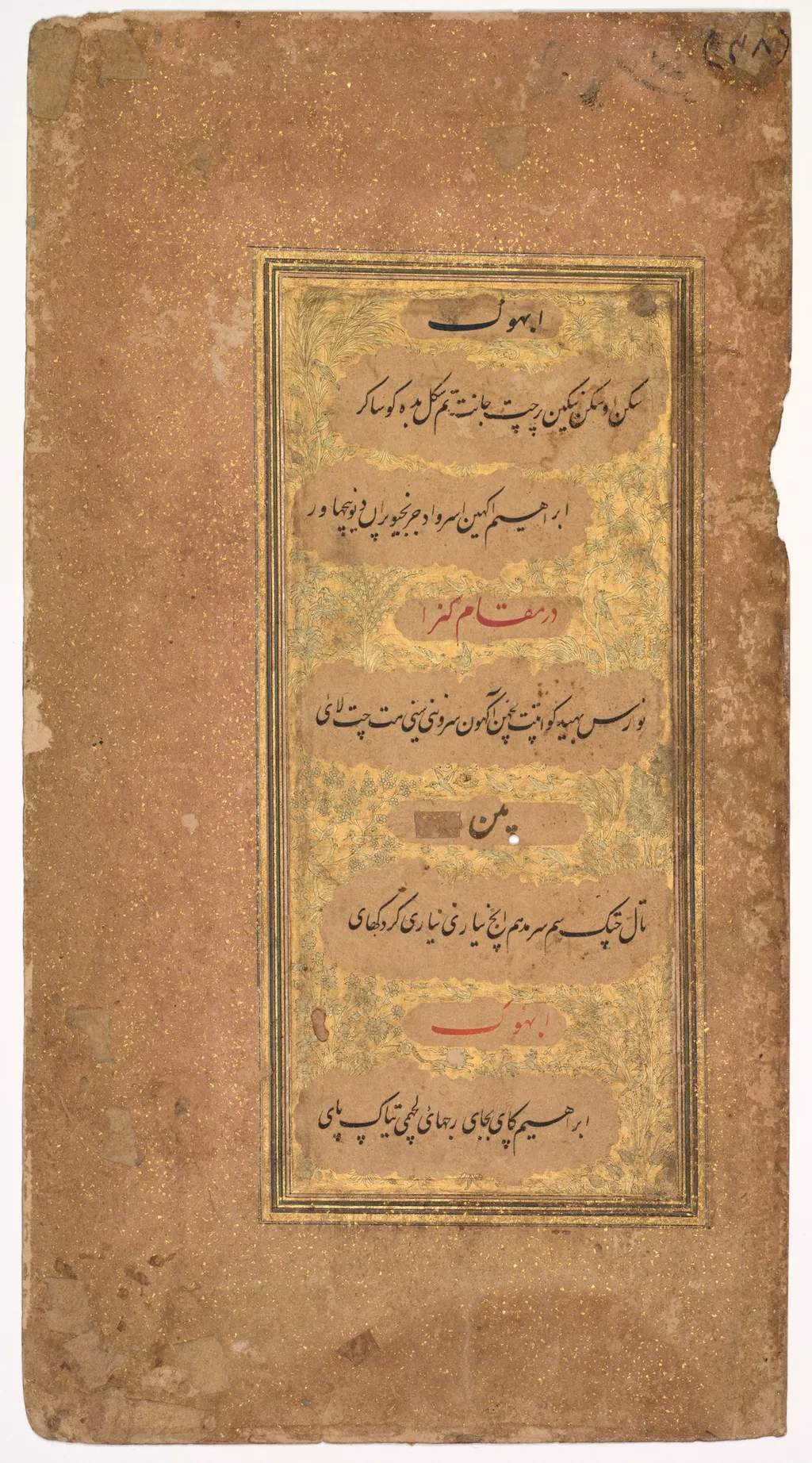
From Dohras (Songs) 40 and 42 from the Kitab-i Nauras (Book of Nine Essences) of Sultan Ibrahim Adil Shah II of Bijapur (r. 1580–1627) (recto) is an unspecified painting by the Patna School of Painting artist Khalilullah Butshikan. It dates from 1618 and is held in the collection of the Cleveland Museum of Art.
About this work
History & Provenance
It has been featured in exhibitions at the museum, including a showcase of Indian miniature paintings that highlighted works from the Kitab-i Nauras.
The painting depicting Dohras 40 and 42 from the Kitab-i Nauras was created in 1618 by the artist Khalilullah Butshikan, a Persian painter active in India between 1596 and circa 1620. The work was produced during the reign of Sultan Ibrahim Adil Shah II of Bijapur, who ruled from 1580 to 1627. This manuscript illumination reflects the cultural synthesis of the Deccan court under Ibrahim's patronage, specifically illustrating songs from his own literary composition.
The piece is currently held in the collection of the Cleveland Museum of Art, where it is cataloged under the accession number 2013.284.a.
The work is housed in the Cleveland Museum of Art, where it is catalogued under accession number 2013.284.a. It has been featured in exhibitions at the museum, including a showcase of Indian miniature paintings that highlighted works from the Kitab-i Nauras.
Overview
The recto page presents verses from Dohras (Songs) 40 and 42, extracted from the Kitab-i Nauras, a devotional anthology compiled under Sultan Ibrahim Adil Shah II of Bijapur (reigned 1580–1627). Executed in 1618 by the court painter Khalilullah Butshikan, the manuscript leaf now belongs to the collection of the Cleveland Museum of Art.
Subject & Meaning
The text consists of lyrical poetry, likely devotional or courtly in nature, arranged in orderly blocks that emphasize rhythmic balance. The verses, part of a larger nine‑essence compilation, reflect the cultural synthesis of Persianate literary forms with the Deccan’s own musical and poetic traditions.
Technique & Style
The page is a rectangular folio edged with gilded borders, its surface washed in muted brown‑cream tones overlaid with a dense field of miniature floral motifs. Black ink forms a flowing, calligraphic script, while occasional red and blue accents punctuate the composition, creating a subtle visual hierarchy.
Context
The work belongs to the artistic flourishing of the Adil Shahi dynasty, which patronized a hybrid aesthetic drawing on Persian, Ottoman, and indigenous Indian influences. Khalilullah Butshikan, a prominent court artist, contributed to this cultural milieu by integrating fine calligraphy with decorative illumination.
Artist & collection

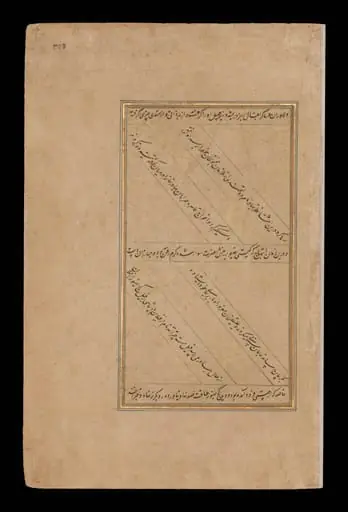
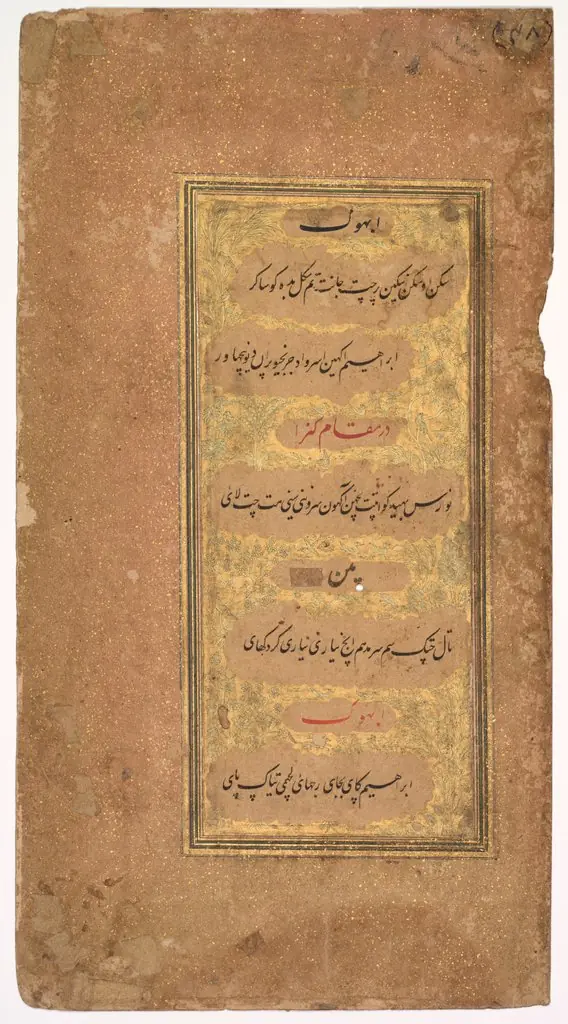
- From Dohras (Songs) 40 and 42 from the Kitab-i Nauras (Book of Nine Essences) of Sultan Ibrahim Adil Shah II of Bijapur (r. 1580–1627); verso: From Dohras (Songs) 40 and 36 from the Kitab-i Nauras of Sultan Ibrahim Adil Shah II
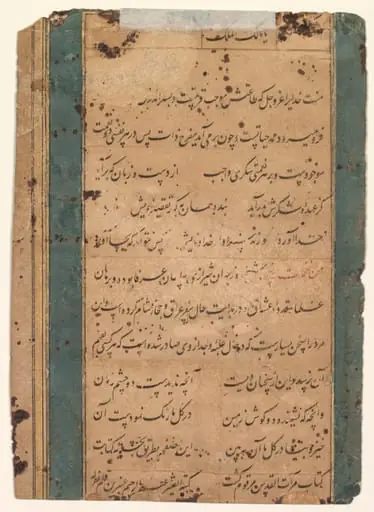
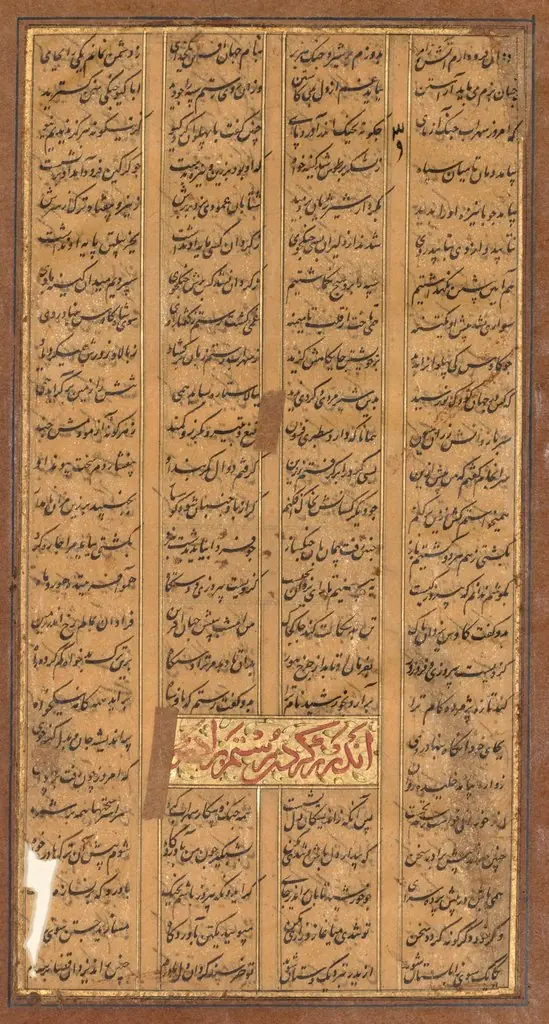 Text of Rustam and Suhrab, from the Shah-nama of Firdausi (Persian, c. 934–1020) (recto)
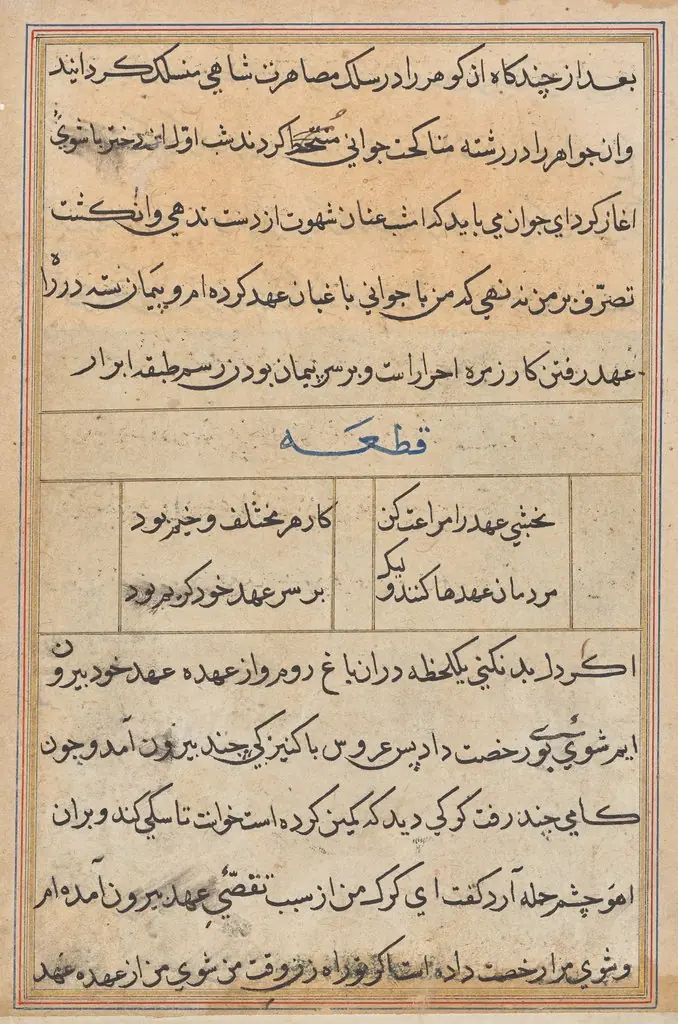
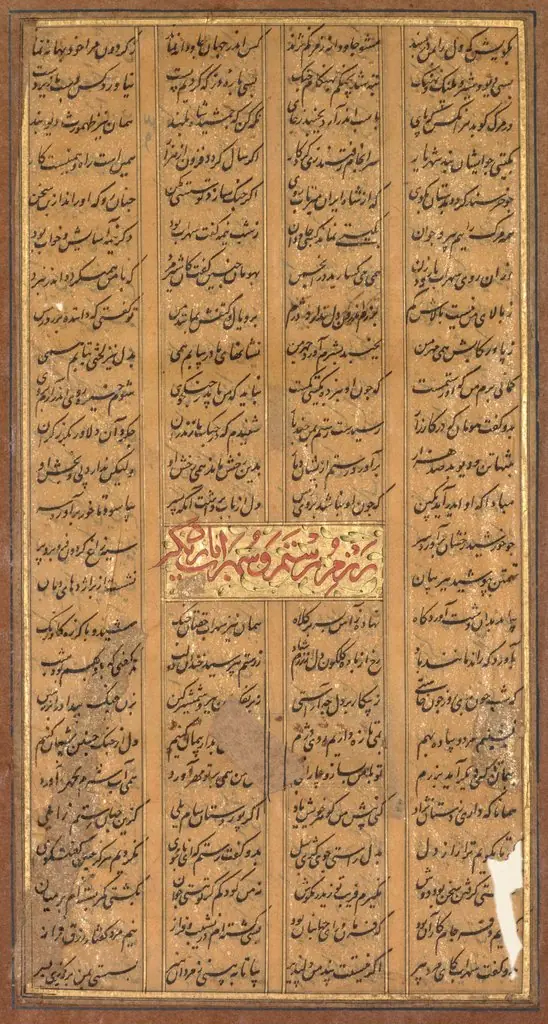 Text of Rustam and Suhrab, from the Shah-nama of Firdausi (Persian, c. 934–1020) (verso)
 From Dohras (Songs) 40 and 42 from the Kitab-i Nauras (Book of Nine Essences) of Sultan Ibrahim Adil Shah II of Bijapur (r. 1580–1627) (recto)
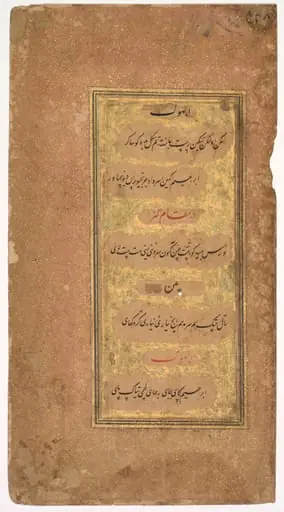 From Dohras (Songs) 40 and 42 from the Kitab-i Nauras (Book of Nine Essences) of Sultan Ibrahim Adil Shah II of Bijapur (r. 1580–1627); verso: From Dohras (Songs) 40 and 36 from the Kitab-i Nauras of Sultan Ibrahim Adil Shah II
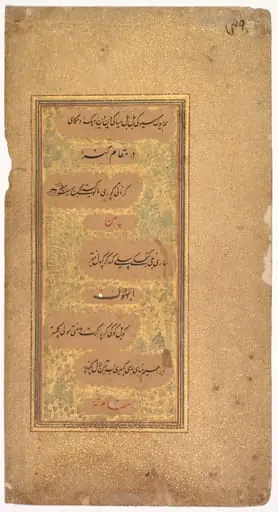 From Dohras (Songs) 40 and 36 from the Kitab-i Nauras of Sultan Ibrahim Adil Shah II (verso)
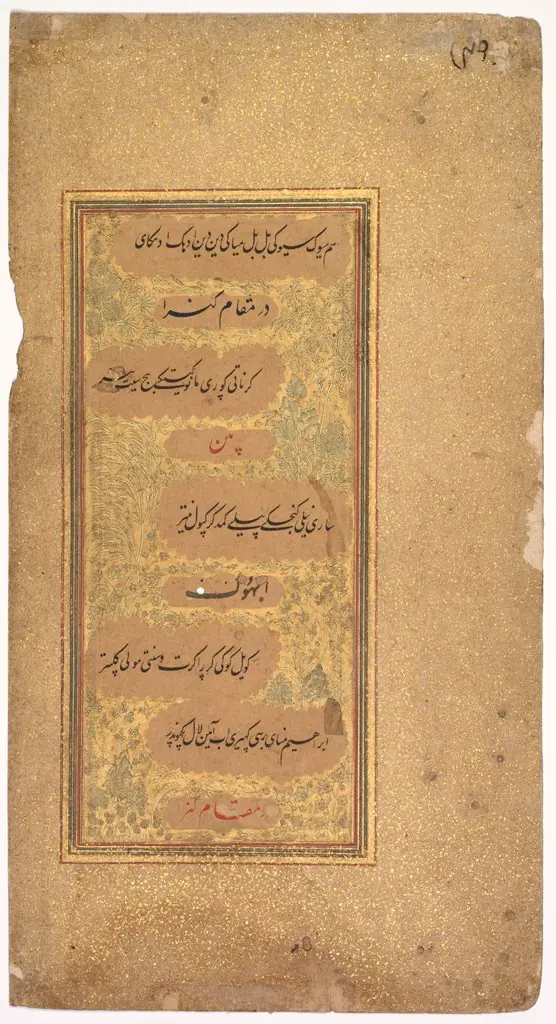 From Dohras (Songs) 40 and 36 from the Kitab-i Nauras of Sultan Ibrahim Adil Shah II (verso)
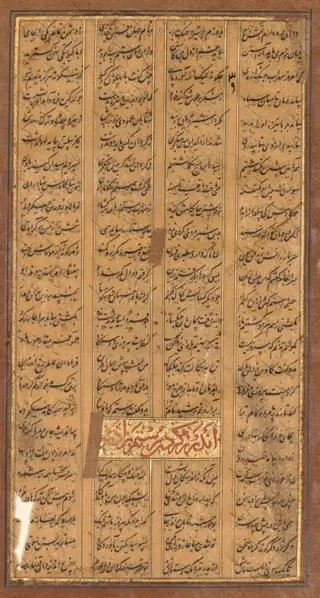 Text of Rustam and Suhrab, from the Shah-nama of Firdausi (Persian, c. 934–1020) (recto)
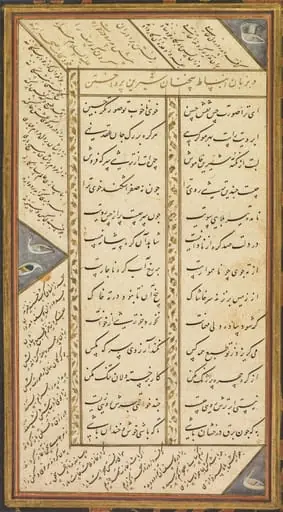 Page from the Panj Ganj (Five Treasures) of Abd al-Rahman Jami (Persian, 1414–1492), with two Persian masnavis (narrative poems): Yusuf va Zulaykha (Joseph and Zulaykha) and Subhat al-abrar (Rosary of the Righteous)
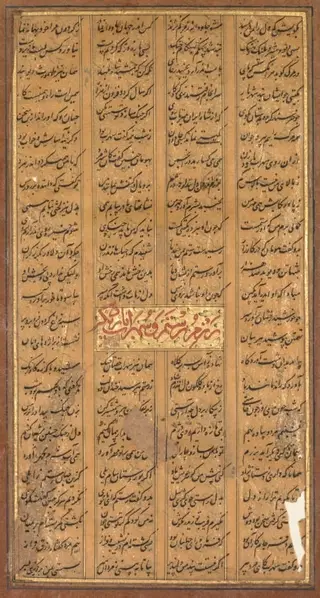 Text of Rustam and Suhrab, from the Shah-nama of Firdausi (Persian, c. 934–1020) (verso)