Artwork
Mount Olympus
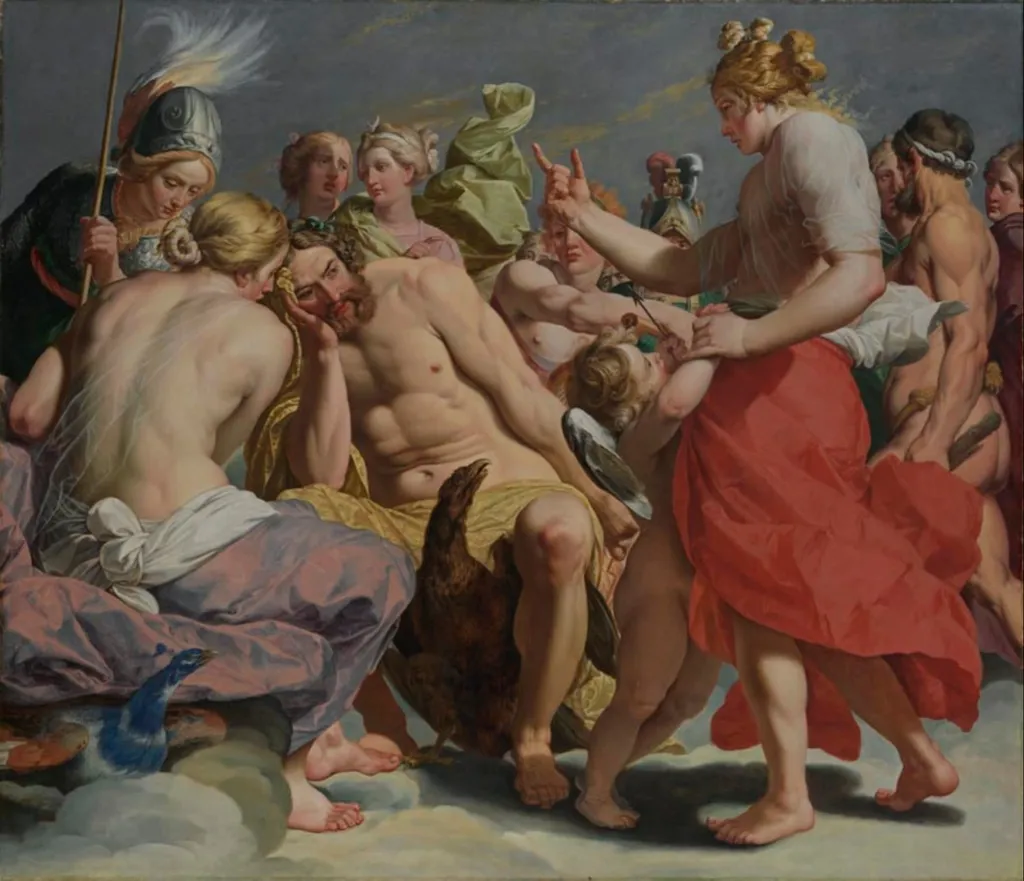
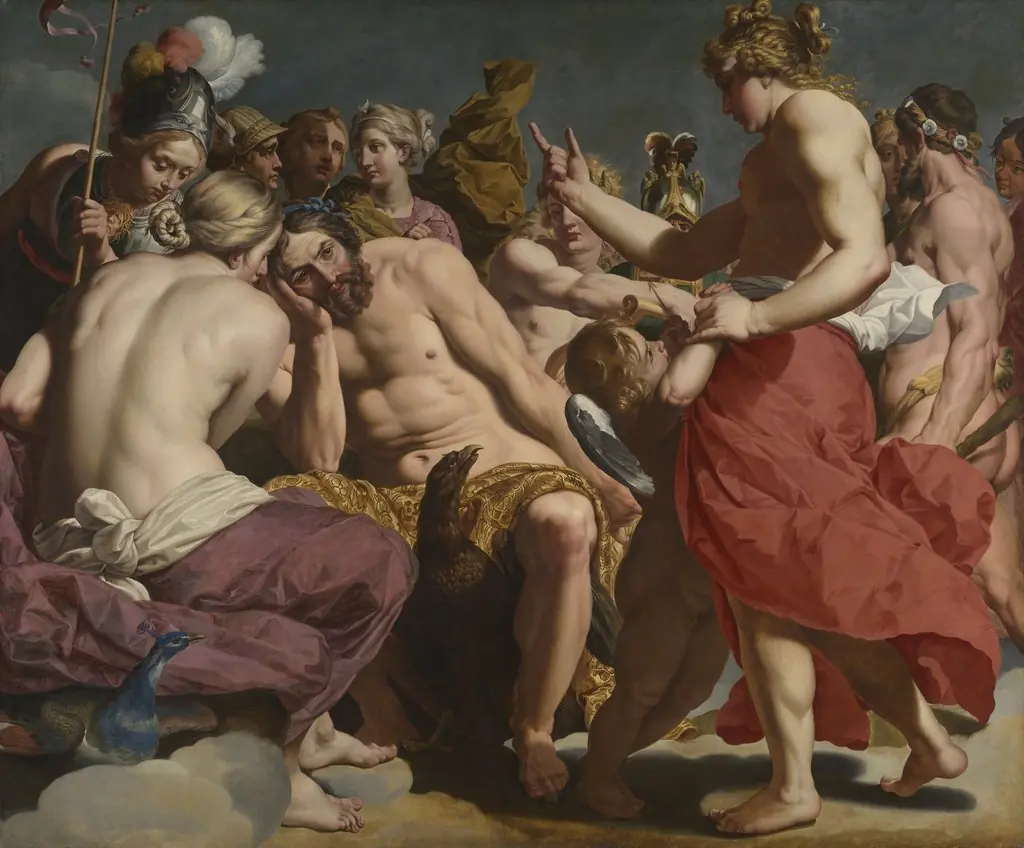
Mount Olympus is an oil painting by the Early Baroque Italian artist Abraham Janssens I. It dates from 1615 and is held in the collection of the Alte Pinakothek.
About this work
Subject & Meaning
The painting portrays the mythological summit of Mount Olympus, the home of the Olympian gods. It shows Zeus seated with his thunderbolt, Juno beside him, while Minerva, Venus and other deities populate the heavenly scene, embodying the classical hierarchy of divine power. The composition draws on Counter‑Baroque conventions to dramatise celestial authority and the harmonious order of the gods.
History & Provenance
Executed in oil on canvas, the work depicts mythological figures including Zeus, Juno, Minerva, and Venus set against the backdrop of Olympus.
The painting Mount Olympus was created by Abraham Janssens I in 1615. Executed in oil on canvas, the work depicts mythological figures including Zeus, Juno, Minerva, and Venus set against the backdrop of Olympus. Since its inception, the artwork has been held in the collection of the Alte Pinakothek.
Mount Olympus by Abraham Janssens I is held in the Alte Pinakothek collection with inventory number N/A. The work has been exhibited in the Alte Pinakothek's permanent display of 17th-century Flemish paintings. It was created in 1615 and is part of the museum's ongoing exhibition of Baroque masterpieces.
Overview
Created in 1615 by the Flemish painter Abraham Janssens I, this oil on canvas presents a mythological gathering on Mount Olympus. The composition centers on three deities, Juno, Minerva and Venus, arranged amid a lively group of semi‑nude figures rendered in vivid hues. The scene combines a tranquil sky with a dynamic foreground, suggesting a narrative moment among the gods.
Technique & Style
Janssens employs a chiaroscuro influenced by Caravaggio, using strong contrasts of light and shadow to model the bodies and heighten drama. The palette is bright, with saturated reds, blues and flesh tones that emphasize the sensuality of the scene. The composition is densely populated, yet organized through a central axis that guides the eye toward the interaction between the red‑clad woman and the fallen man.
Context
At the turn of the 17th century, Flemish artists were absorbing Italian Baroque innovations while retaining Northern compositional vigor. Janssens’s synthesis of Caravaggesque lighting with classical subject matter exemplifies this cross‑cultural exchange. The inclusion of Juno, Minerva and Venus aligns the painting with contemporary interest in allegorical representations of virtue, wisdom and love within a mythic framework.
Own this work as a print
Artist & collection
Artist
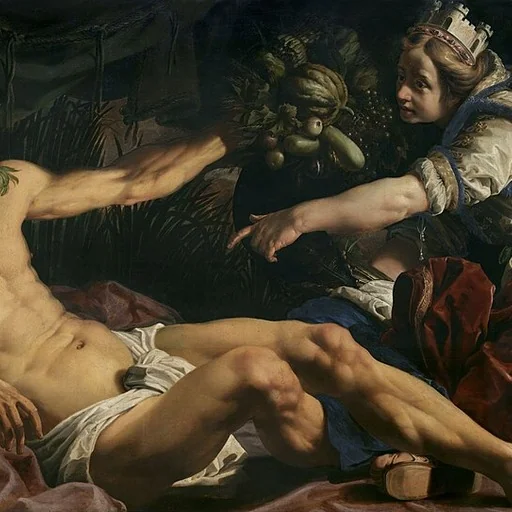
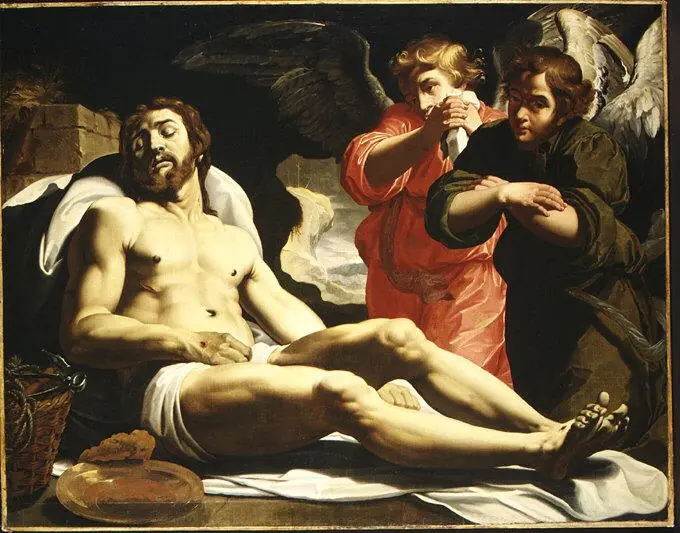
Abraham Janssens I, Abraham Janssen I or Abraham Janssens van Nuyssen (1575–1632) was a Flemish painter, who is known principally for his large religious and mythological works, which show the influence of Caravaggio.

- Venus, Juno and Minerva arguing for Jupiter over the Golden Apple of Eris
 Jupiter Rebuked by Venus
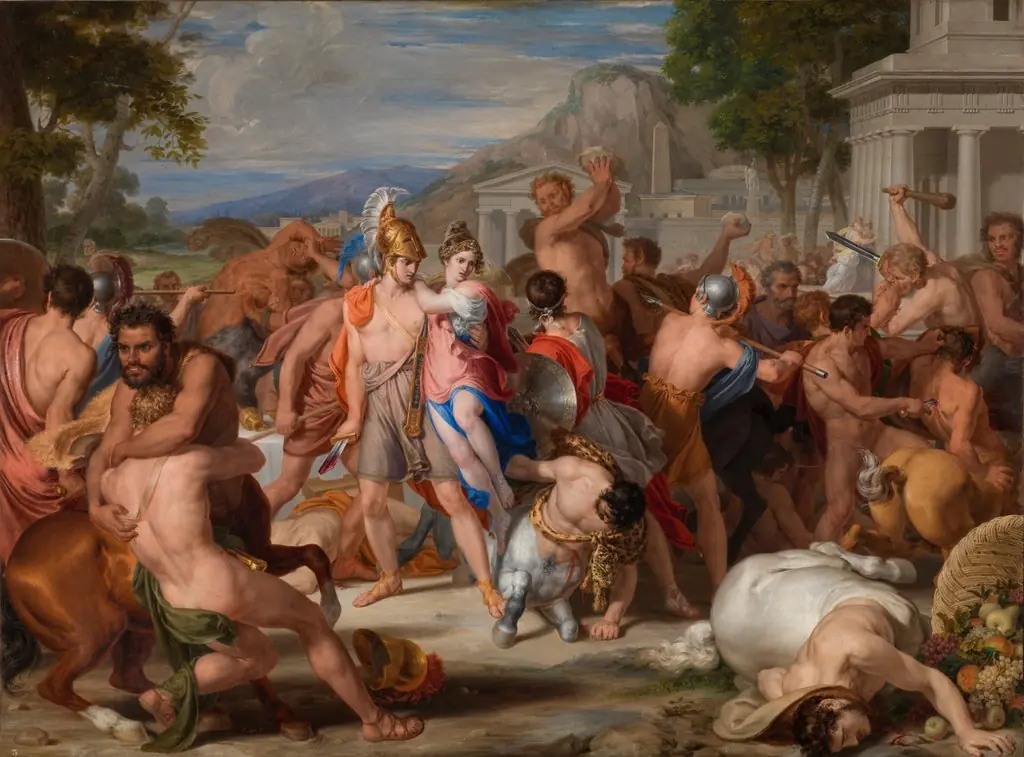 Batalla de lapitas y centauros.
 Allegory of Emperor Rudolf II
 Bacchus și Ariadna
 Gemeine Jeuchts Beeldt. Allegori på ungdommens fristelser
 The wedding of Thetis and Peleus
 The Rape of Proserpine
 Judgment of Paris
 Herkules, Dejanira und der Kentaur Eurytion
 The Four Elements