Artwork
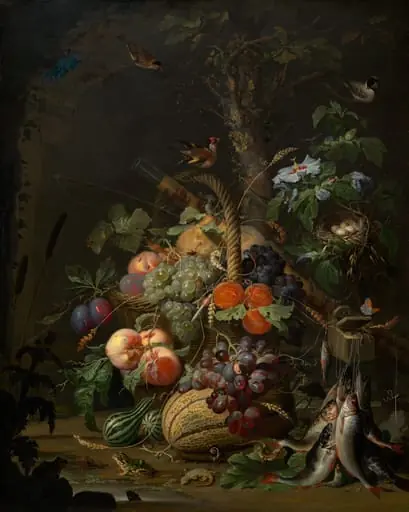
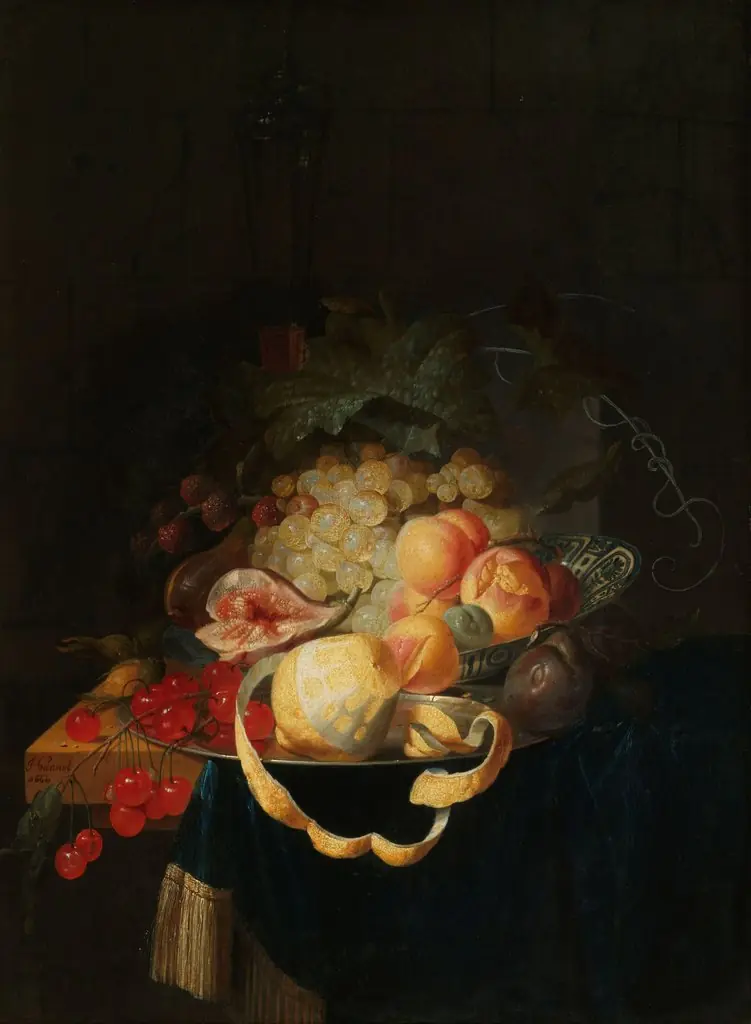
Still life with fruit and a finch drawing water
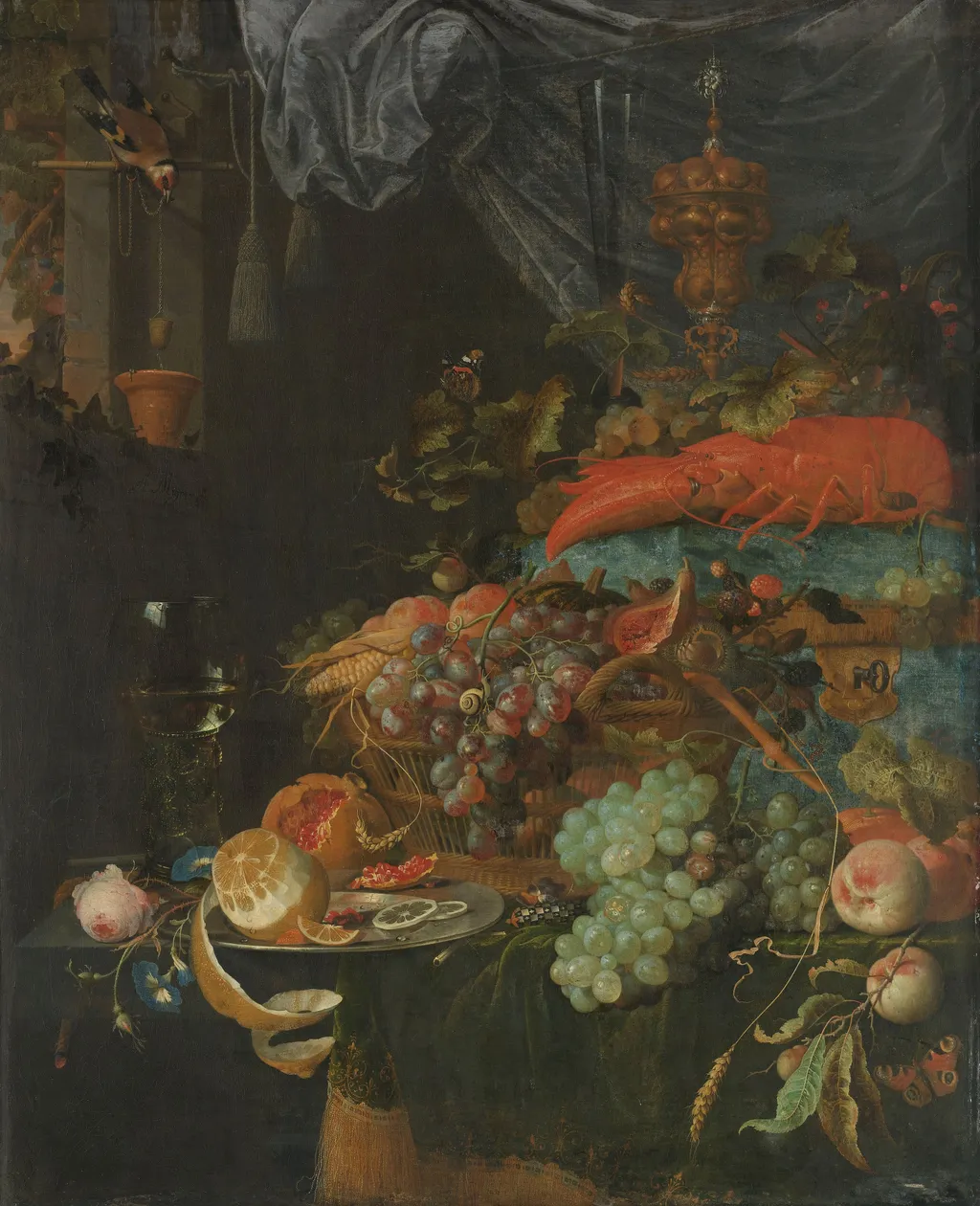
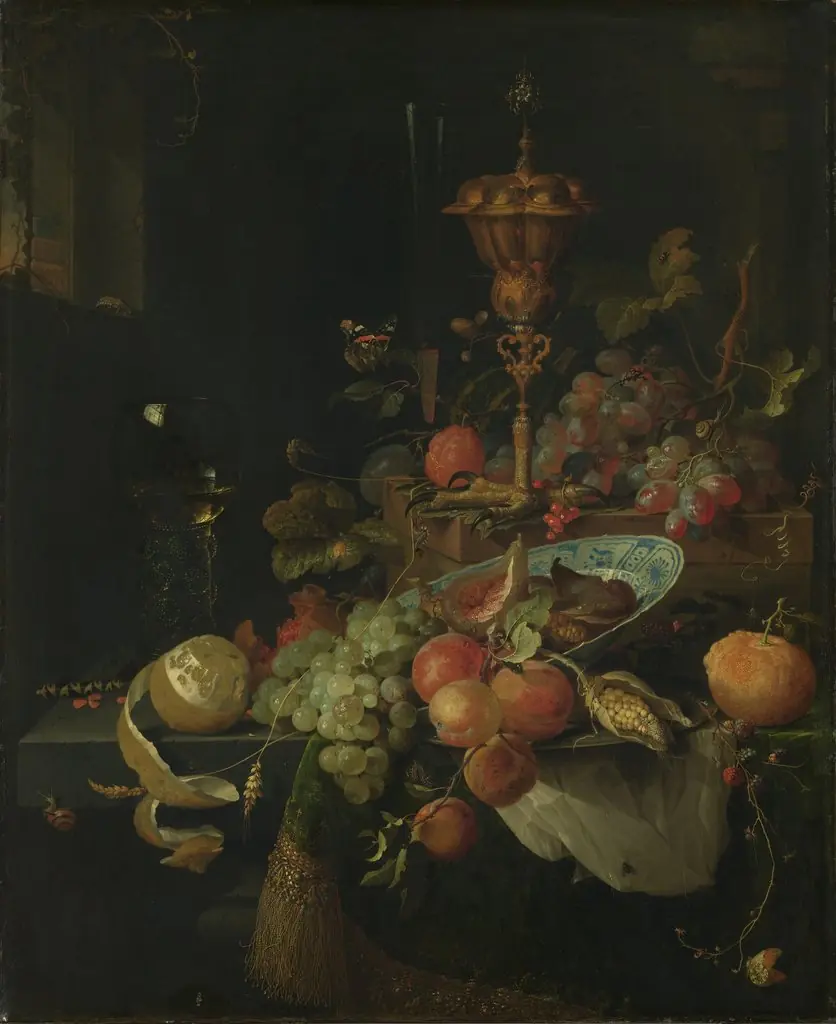
Still life with fruit and a finch drawing water is an oil painting by the Dutch Golden Age artist Abraham Mignon. It dates from 1660 and is held in the collection of the Rijksmuseum.
About this work
Subject & Meaning
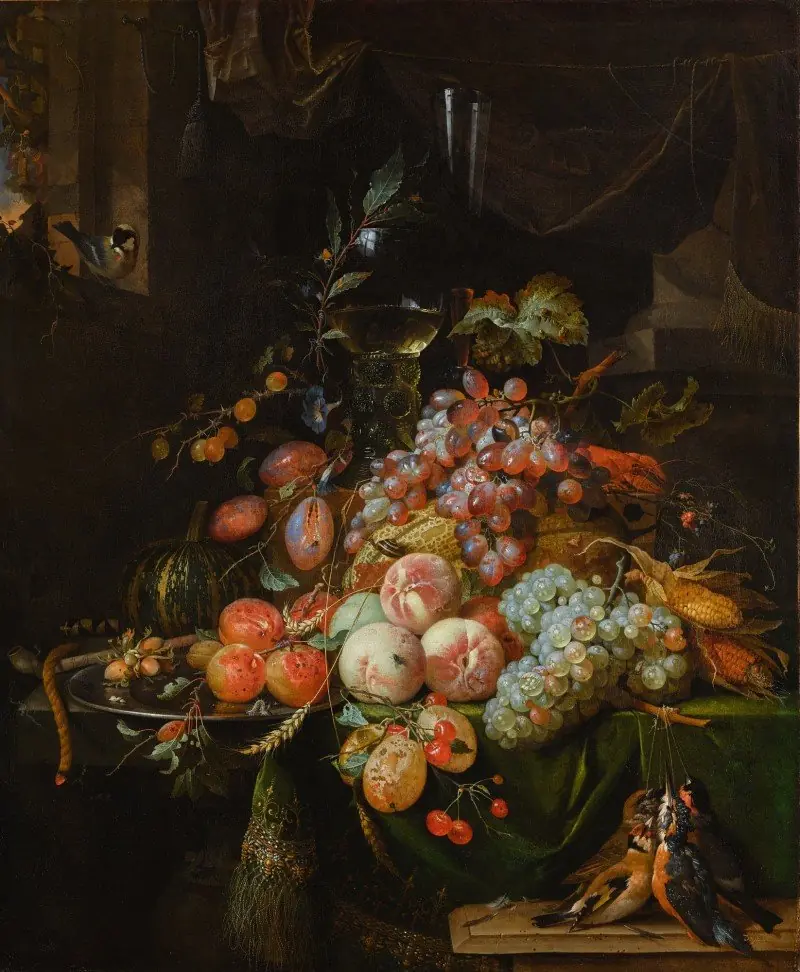
The work depicts a still life arrangement featuring fruit and a finch actively drawing water, consistent with the genre of Dutch still-life painting.
The work depicts a still life arrangement featuring fruit and a finch actively drawing water, consistent with the genre of Dutch still-life painting. While the visual elements include specific natural subjects such as fruit and the bird, the provided sources do not elaborate on specific iconographic interpretations, symbolic meanings, or the philosophical representation intended by Abraham Mignon. The composition is identified simply as a "Nature morte" (still life) without further descriptive analysis of allegorical content in the available documentation.
Technique & Style
Created in 1660, this still life is executed in oil paint on a canvas support. The work measures 78 cm in height and 67 cm in width, adhering to the vertical format typical of the genre. The painting depicts an arrangement of fruit, consistent with Abraham Mignon's specialization in detailed naturalist subjects.
It is currently housed in the Musée de la Chartreuse in Douai, where it remains part of the public collection.
History & Provenance
Abraham Mignon executed this still life in 1660. The work, painted in oil on canvas, measures 78 cm in height and 67 cm in width. Historical records indicate that the painting was once part of the collections owned by Jan Gildemeester and Gerrit van der Pot.
Currently, the artwork is held by the Musée de la Chartreuse in Douai, France, where it is cataloged under the inventory number D.1962.1.2. It was previously recorded under the older inventory reference D.962.2.
The painting is part of the collection at the Musée de la Chartreuse de Douai, where it is recorded under inventory numbers D.1962.1.2 and D.962.2. It was previously owned by Jan Gildemeester and Gerrit van der Pot. The work has been exhibited as part of the museum's holdings, reflecting its significance within the still life genre.
Context
The painting demonstrates Mignon's specialization in detailed fruit still lifes within the Dutch Baroque tradition, reflecting the era's fascination with botanical precision and symbolic abundance. Its provenance through private collectors like Jan Gildemeester and Gerrit van der Pot, followed by acquisition by public institutions including the Musée de la Chartreuse de Douai, underscores its significance within European art historical narratives. The work's presence in both French and Dutch collections highlights transnational artistic exchange during the 17th century, positioning it within broader scholarly discussions of still-life painting's evolution beyond mere decoration into complex visual commentary.
Legacy
The painting's presence in a French museum collection and its inclusion in major institutional inventories have contributed to scholarly recognition of Mignon's role in Dutch still-life development. Its attribution to Mignon and dating to 1660 are established through archival records and museum documentation, supporting its reputation as an example of 17th-century fruit and animal symbolism. The work's provenance from private collectors to public museum holdings reflects broader patterns of art preservation and attribution refinement in European art history.
The painting is held by the Musée de la Chartreuse de Douai and is cataloged in both the Joconde database and the Rijksmuseum's collection records.
Overview
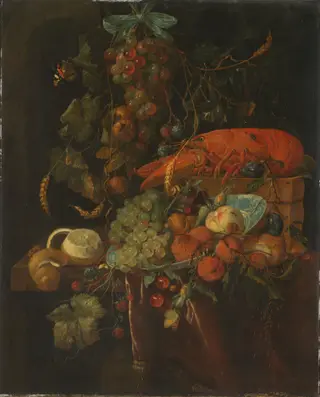
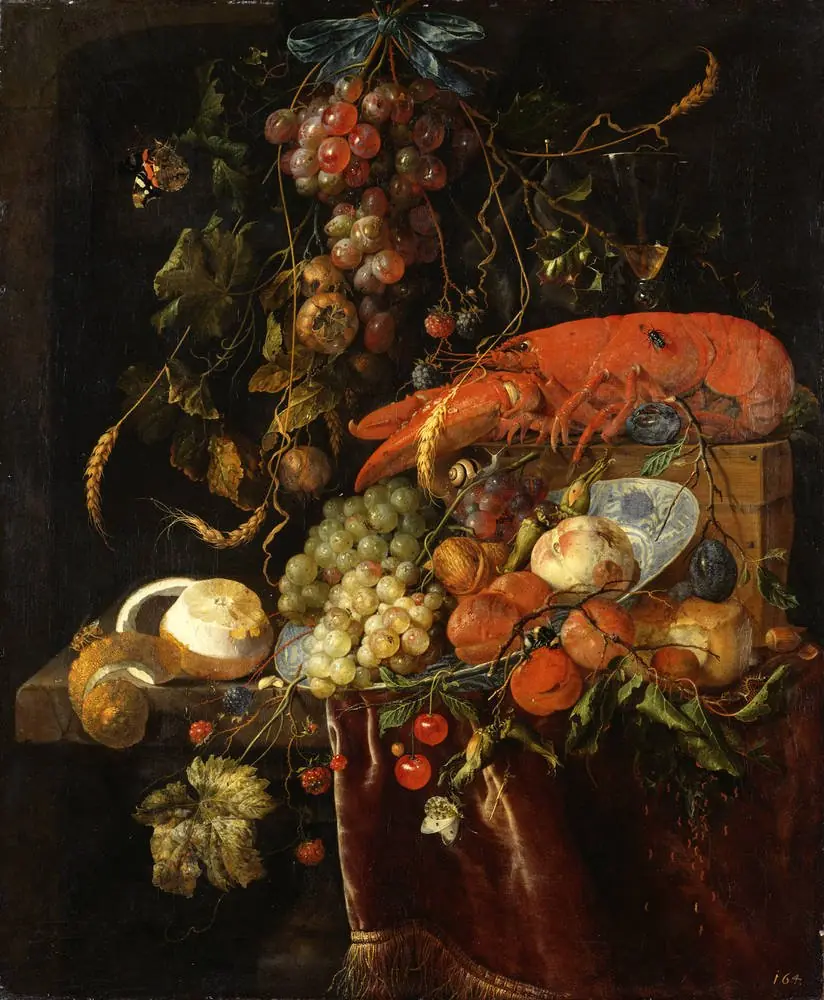
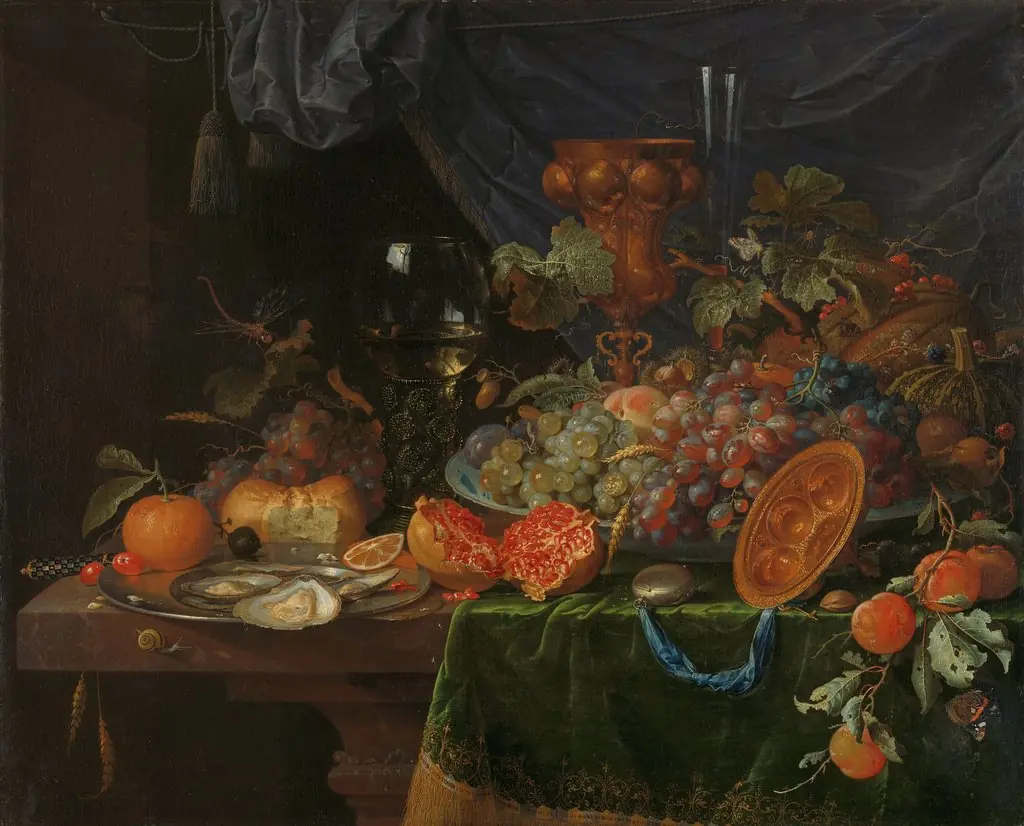
Abraham Mignon, a mid‑17th‑century Dutch painter based in Utrecht, executed this oil on canvas in 1660. The work exemplifies the Dutch Golden Age’s fascination with still‑life subjects, presenting a carefully arranged banquet scene that includes fruit, a lobster, and a small bird. The composition is set against a dark background, allowing the vivid colors of the objects to dominate the visual field.
Own this work as a print
Artist & collection
Artist
Abraham Mignon or Minjon (21 June 1640 – 27 March 1679) was a Dutch still life painter.