Artwork
Still life with flowers and a watch
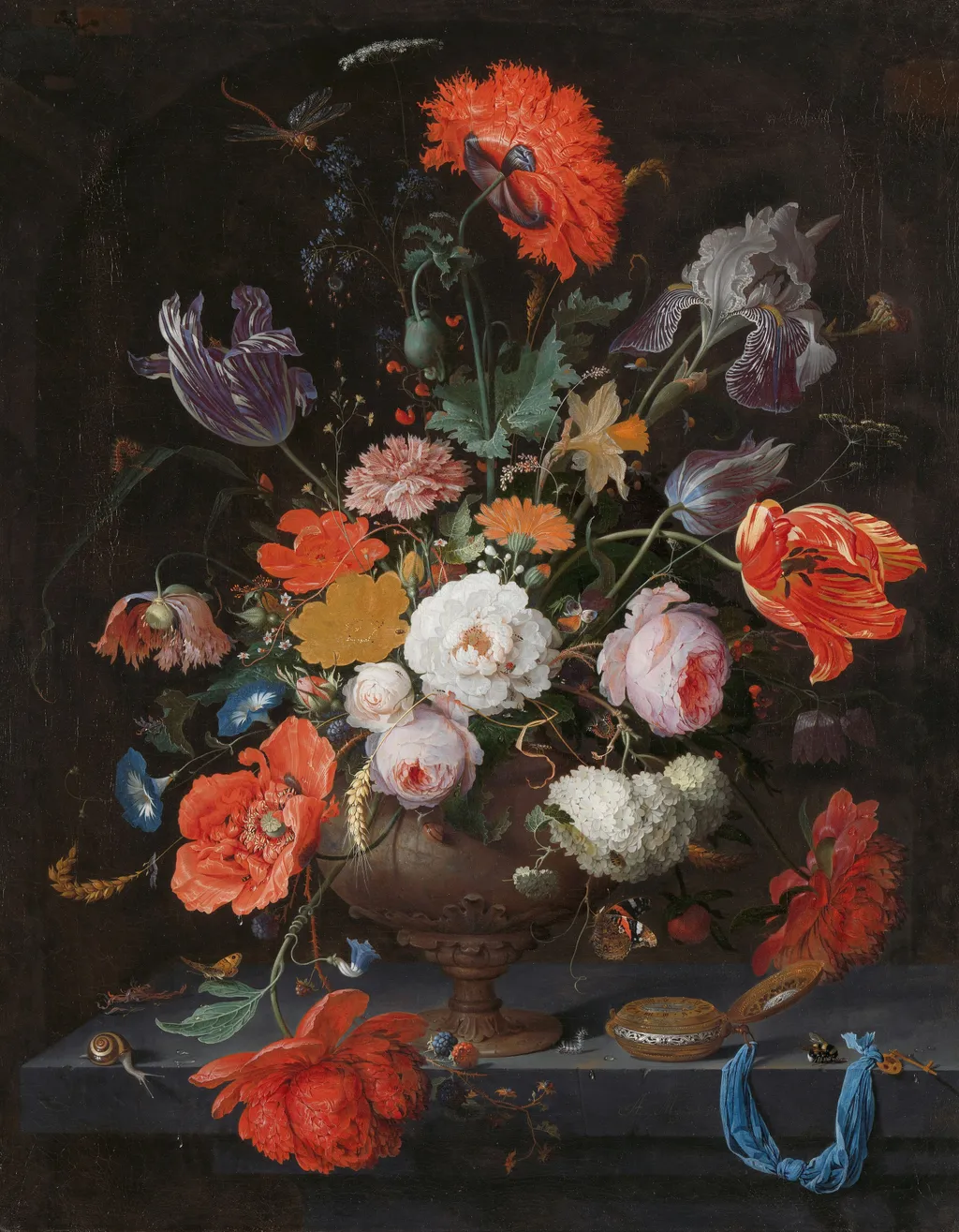
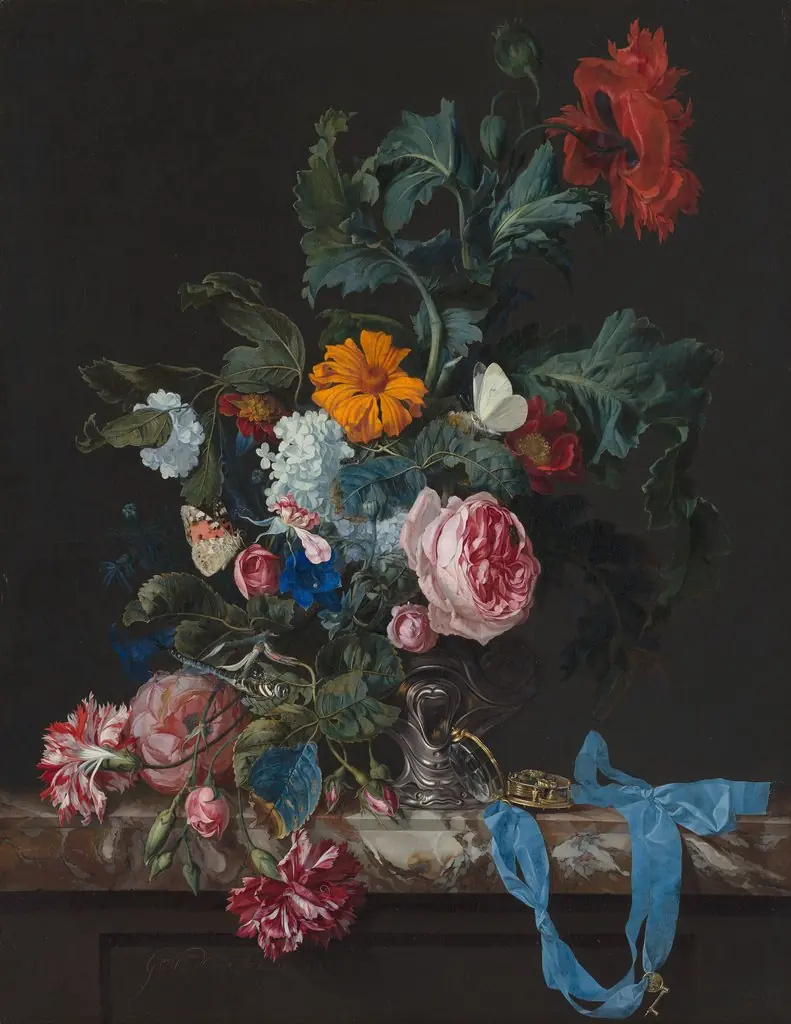
Still life with flowers and a watch is an oil painting by the Dutch Golden Age artist Abraham Mignon. It dates from 1669 and is held in the collection of the Rijksmuseum. Created in 1669, this oil painting presents a richly colored bouquet set upon a darkened ledge.
About this work
Subject & Meaning
The piece is classified specifically as a floral painting, centering its visual narrative on the arrangement of the bouquet.
Abraham Mignon's 1669 oil painting depicts a floral bouquet arranged on a surface alongside a watch. As a work of the still-life genre, the composition presents a specific selection of natural and man-made objects. The inclusion of the watch alongside the flowers suggests a thematic juxtaposition often explored in such works, contrasting the transient beauty of nature with the measurement of time.
The piece is classified specifically as a floral painting, centering its visual narrative on the arrangement of the bouquet.
Technique & Style
Abraham Mignon painted Still life with flowers and a watch in 1669 using oil paint on canvas. The work measures 75 centimeters by 60 centimeters and exemplifies the floral still‑life genre with precise botanical detail and a muted palette. Its handling reflects typical 17th‑century Dutch techniques, and the condition remains stable, preserving the delicate rendering of blossoms and the reflective quality of the watch.
History & Provenance
Abraham Mignon painted Still life with flowers and a watch in 1669 as an oil on canvas work measuring 75 cm by 60 cm. The painting entered the collection of Leendert Dupper before being acquired by the Rijksmuseum, where it remains on display.
The work is catalogued in the Rijksmuseum's holdings and documented on Wikidata as part of their floral painting collection.
The creation history is limited to its execution in 1669 with no further records of commission or subsequent transfers beyond Dupper's ownership.
Still life with flowers and a watch is held in the collection of the Rijksmuseum. Its provenance is linked to Leendert Dupper, who is recorded as a former owner. The work, dated 1669, is catalogued within the museum's holdings as a floral still life painted in oil on canvas.
No exhibition history is documented in the available sources.
Overview
Created in 1669, this oil painting presents a richly colored bouquet set upon a darkened ledge. The arrangement includes vivid tulips, pink roses, white daisies and purple irises, some spilling beyond the confines of a large vase. Beneath the flowers rest a small timepiece, a snail and a blue ribbon tied in a bow, all rendered against a deep background that heightens the visual contrast.
Context
Mignon’s painting aligns with the influence of earlier still‑life masters such as Jan Davidszoon de Heem and Jacob Marrel, whose compositions blended botanical precision with symbolic objects. The piece exemplifies the mid‑17th‑century Dutch fascination with natural detail, scientific observation, and moral allegory within decorative art.
Own this work as a print
Artist & collection
Artist
Abraham Mignon or Minjon (21 June 1640 – 27 March 1679) was a Dutch still life painter.

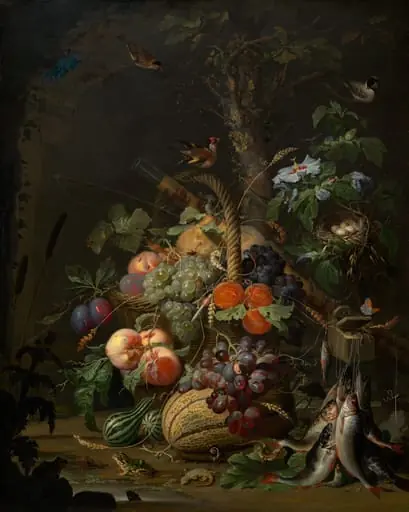 Still Life with Fruit, Fish, and a Nest
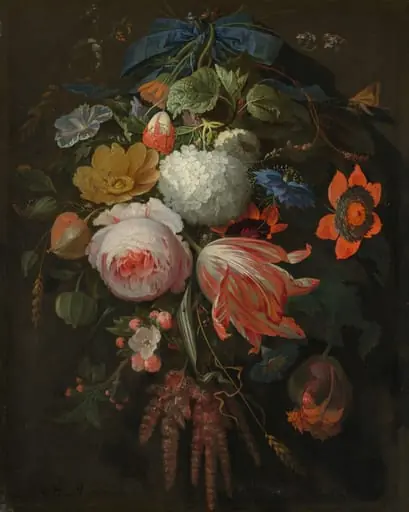 A Hanging Bouquet of Flowers
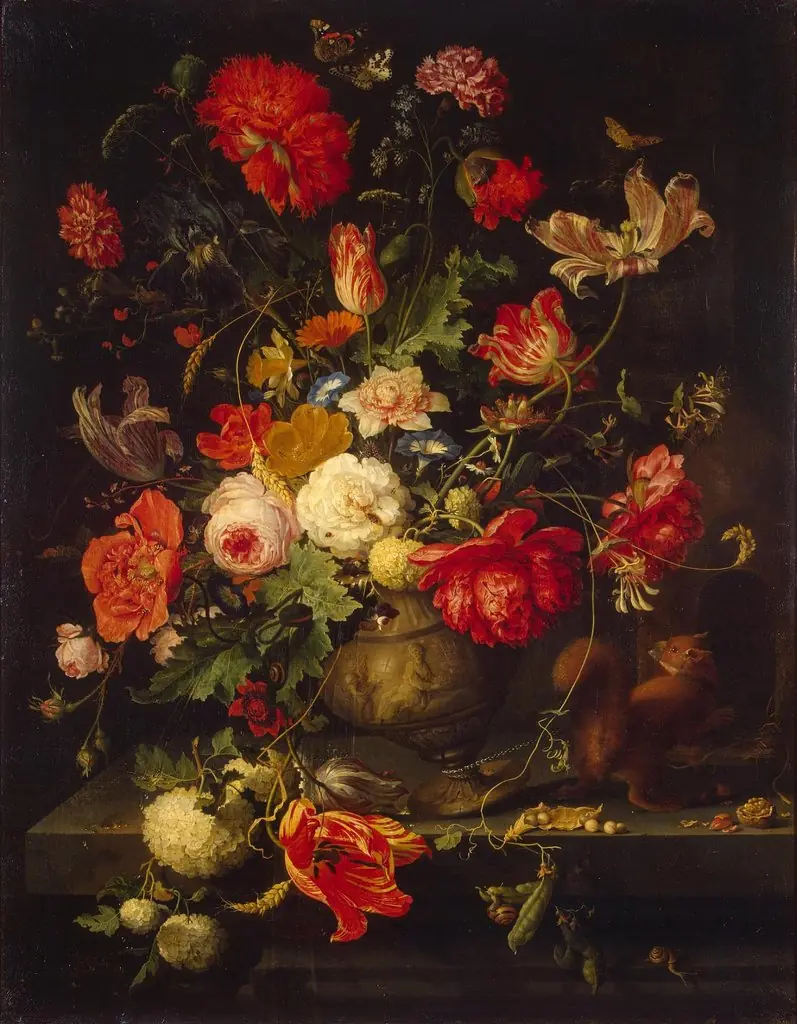 Vase of Flowers
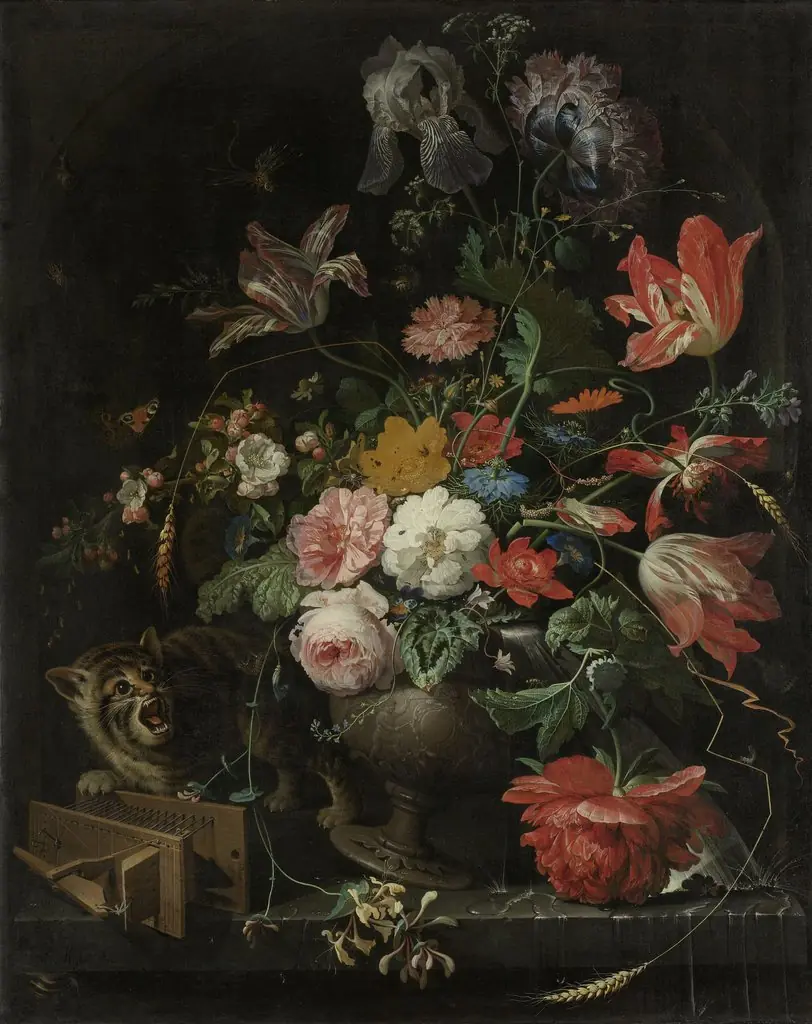 The Overturned Bouquet
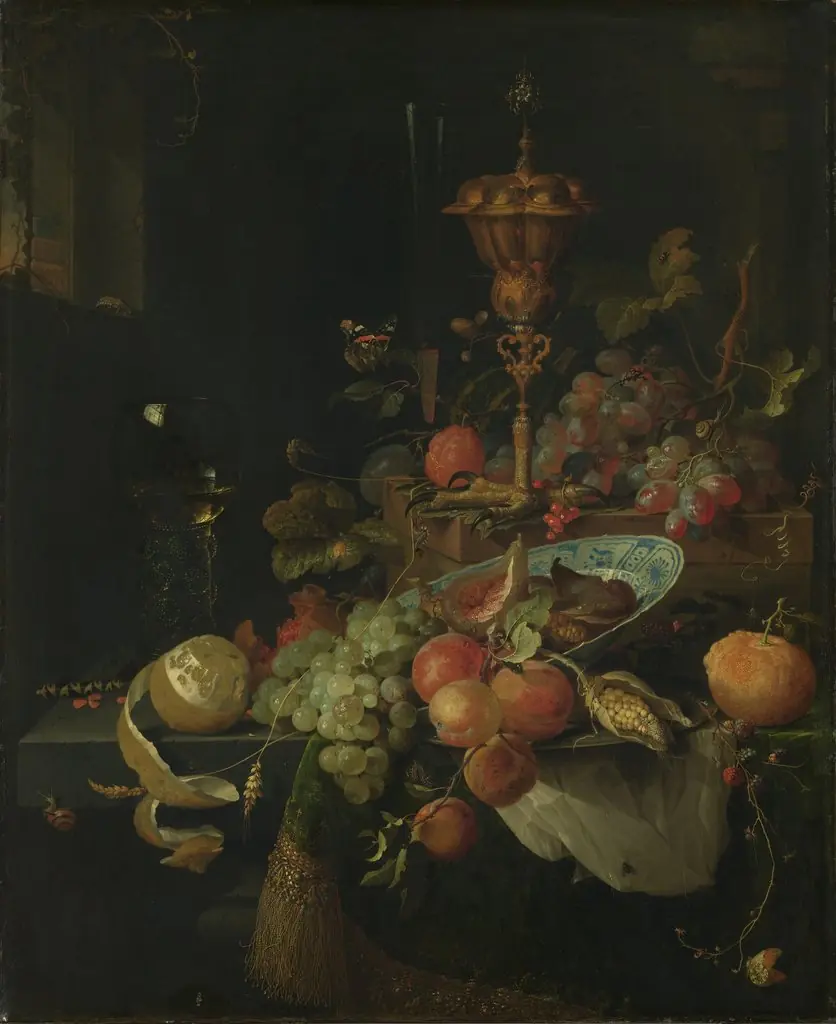 Still life with fruit and a beaker on a cock's foot
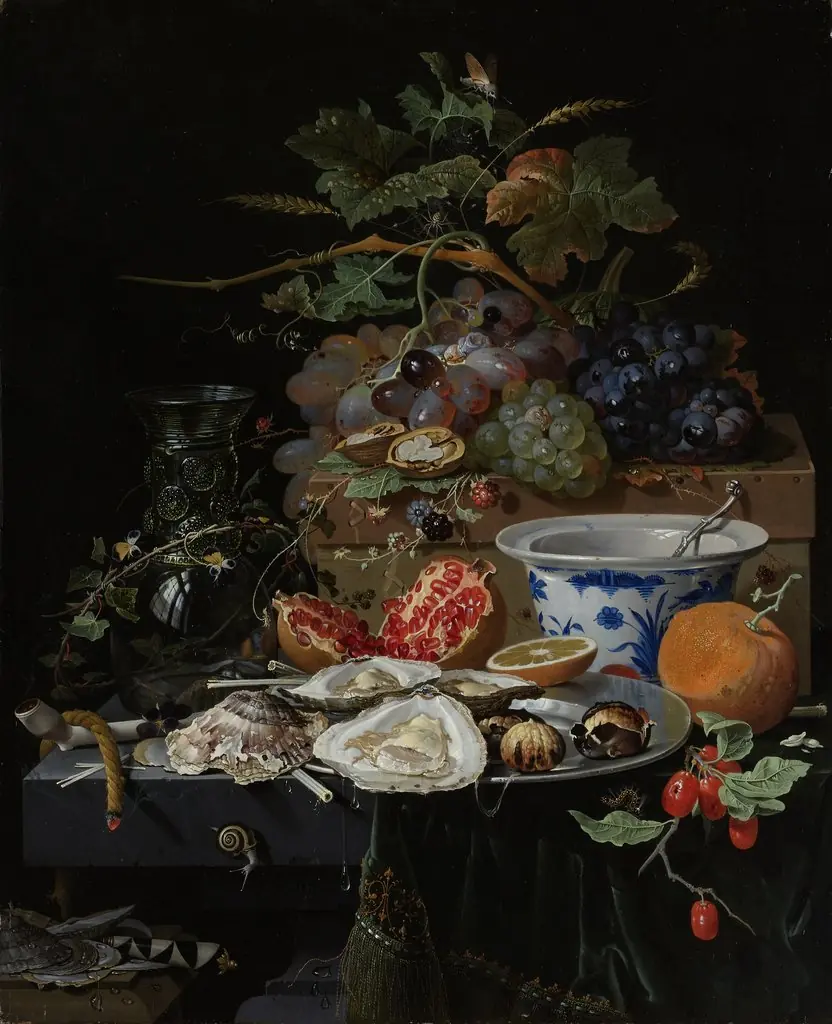 Still Life with Fruit, Oysters and a Porcelain Bowl
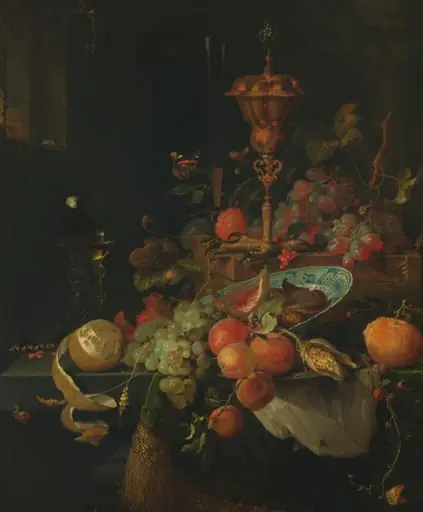 Still Life with Fruit and a Beaker on a Cock's Foot
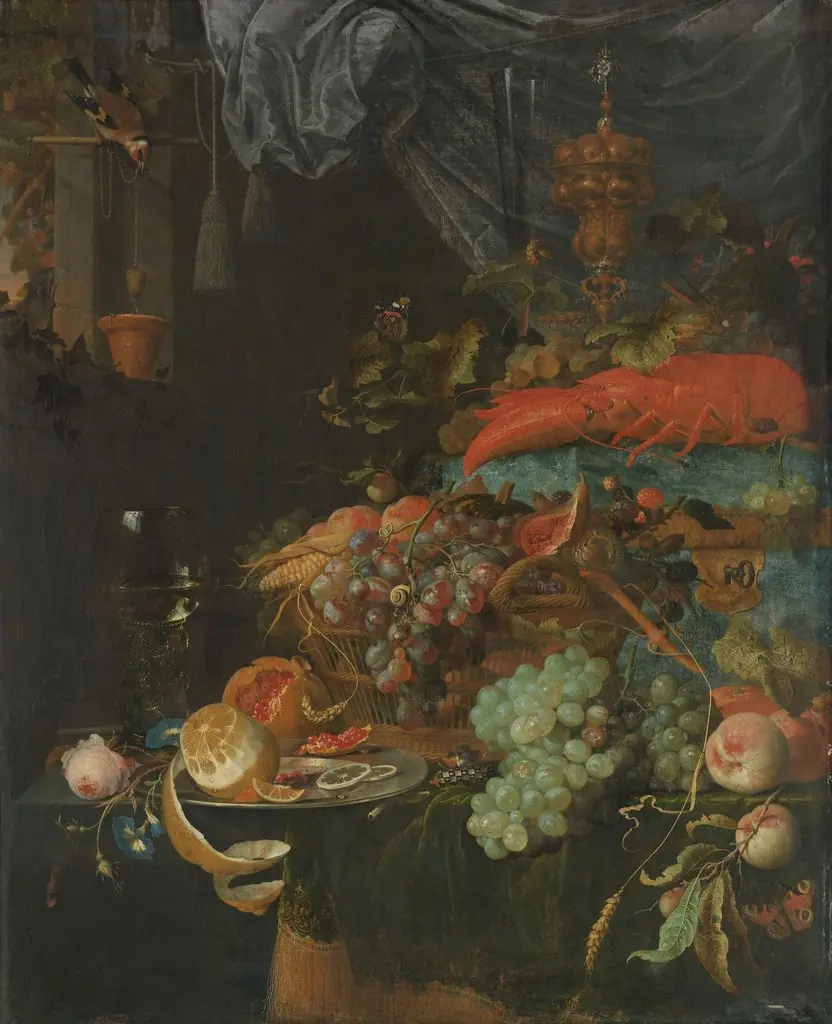 Still life with fruit and a finch drawing water