Artwork
Vase of Flowers
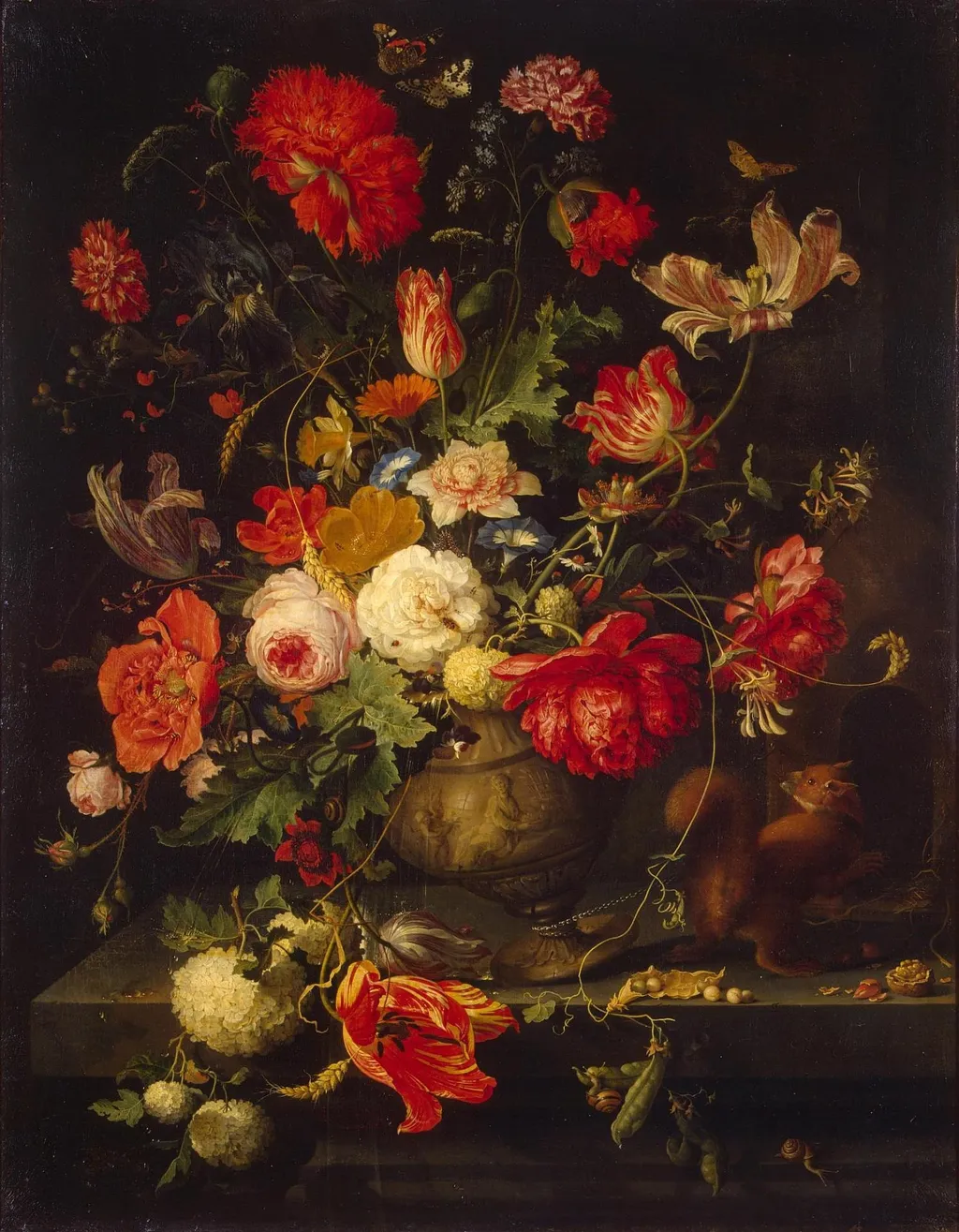
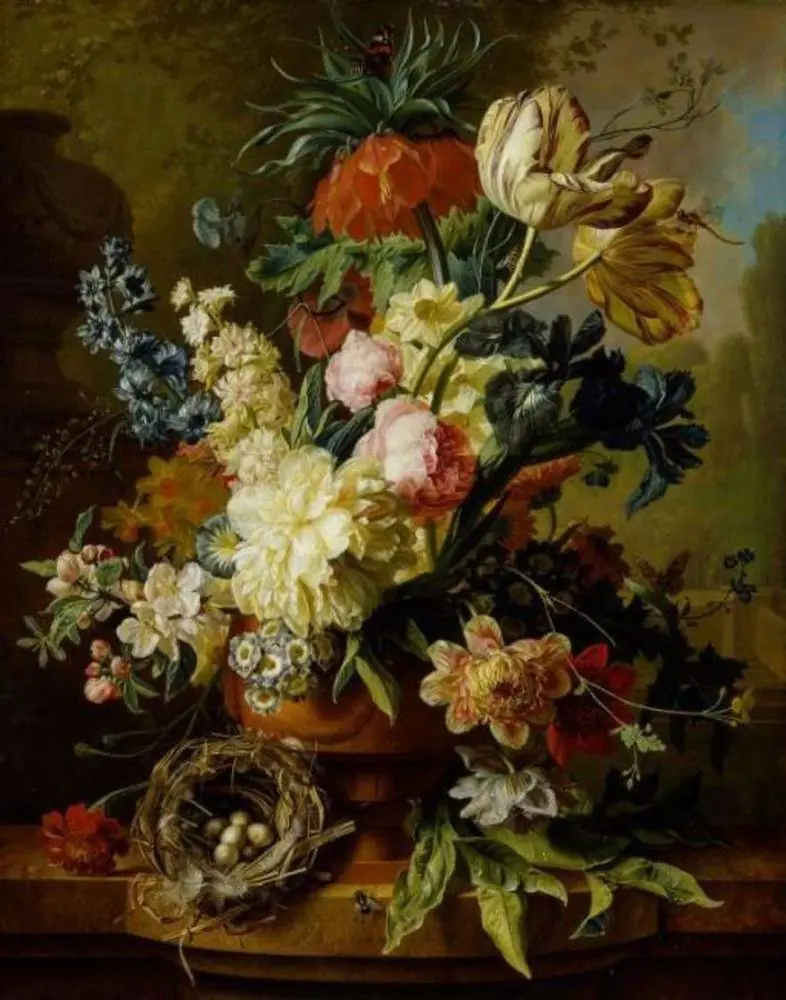
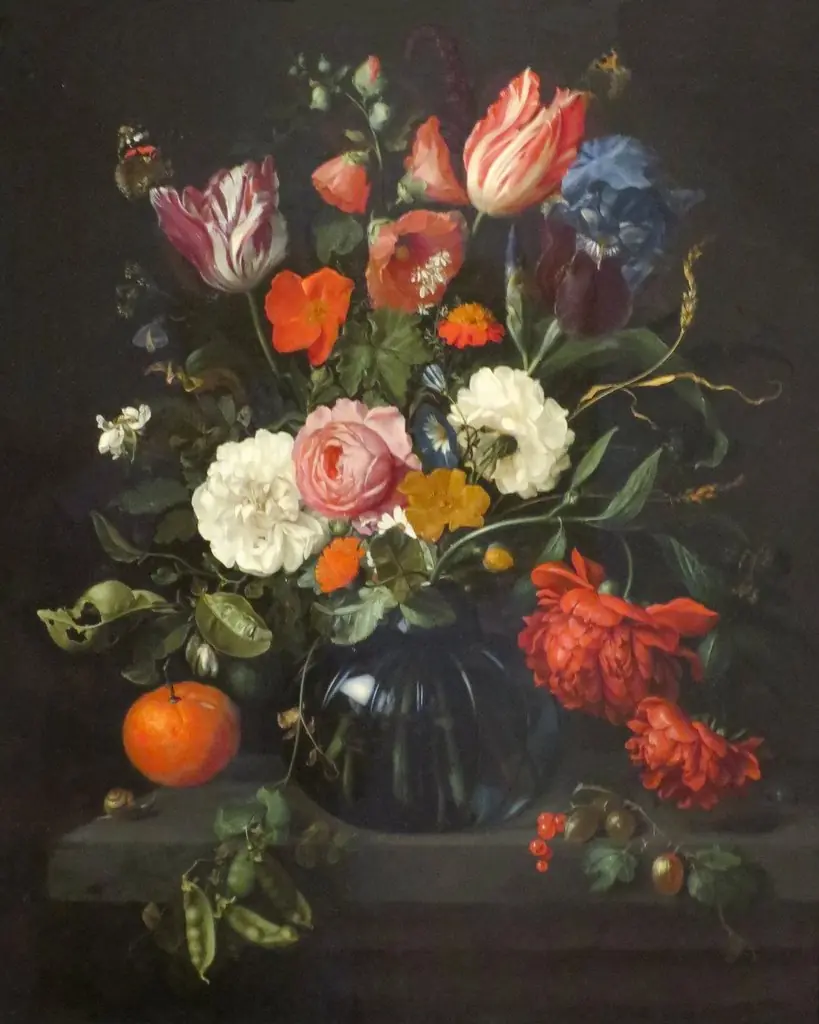
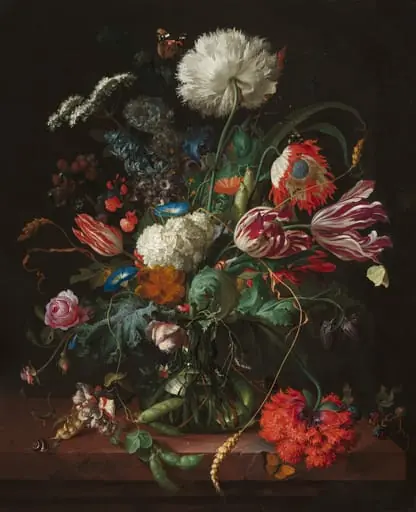
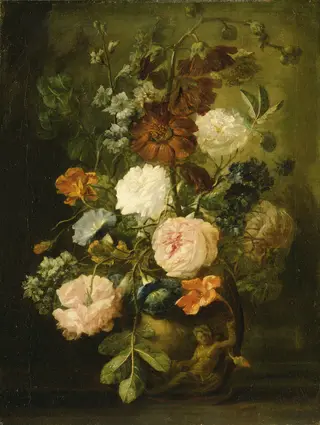
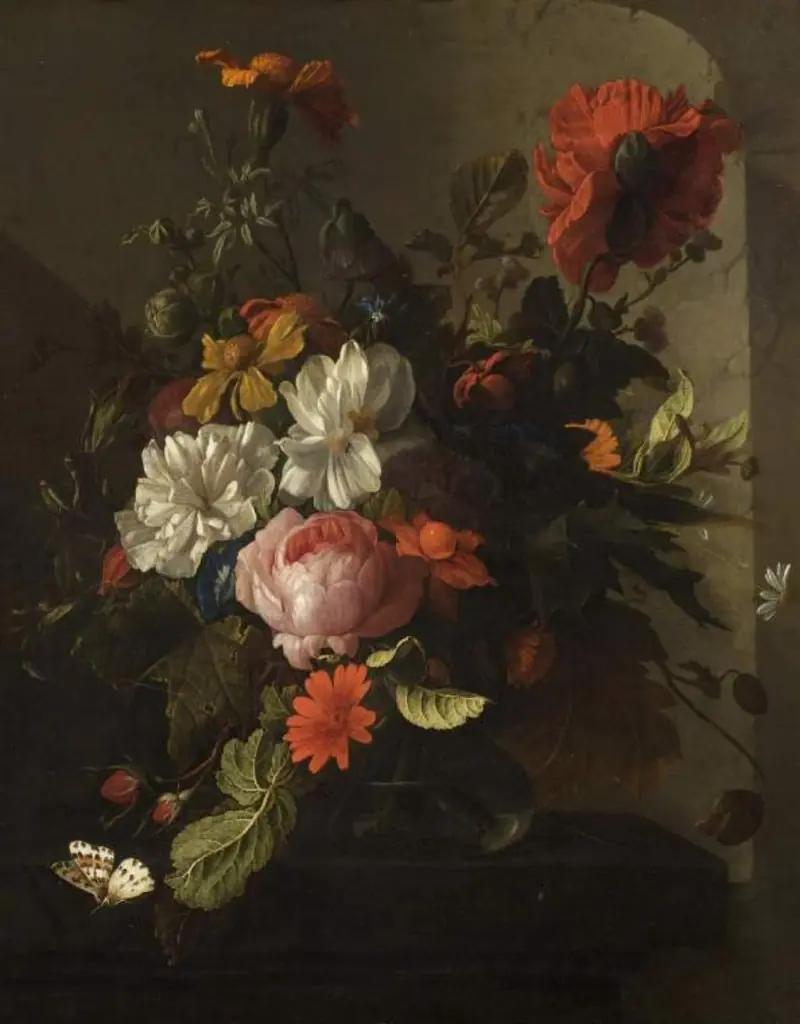
Vase of Flowers is an oil painting by the Dutch Golden Age artist Abraham Mignon. It dates from 1660 and is held in the collection of the Hermitage Museum.
About this work
Subject & Meaning
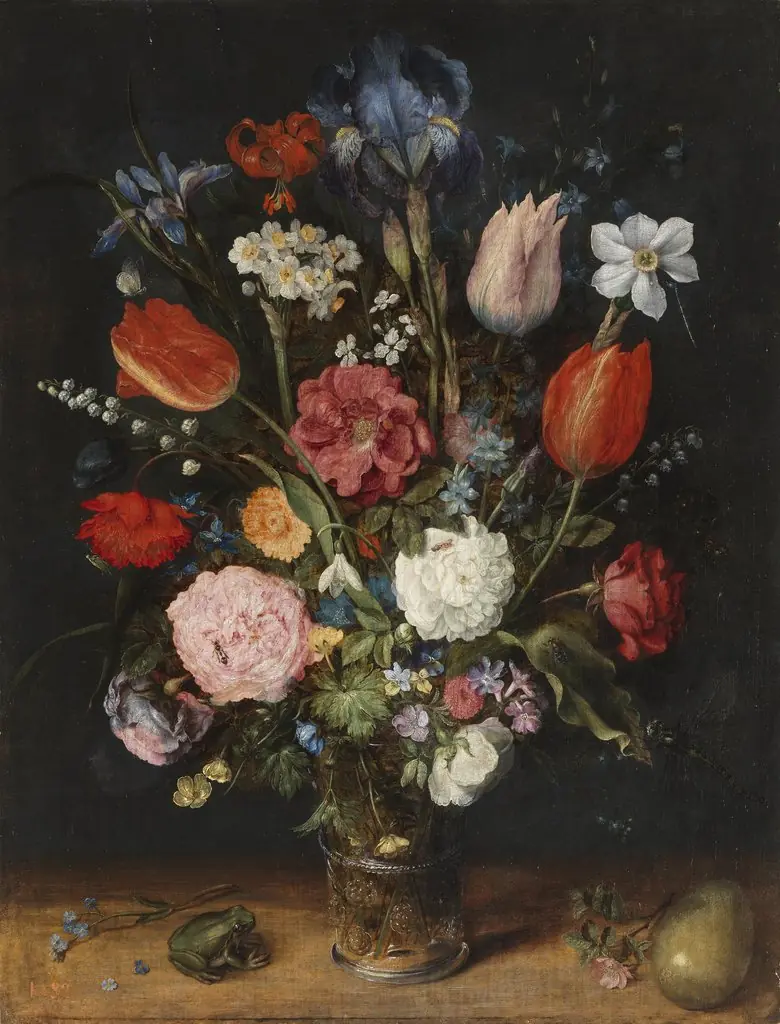
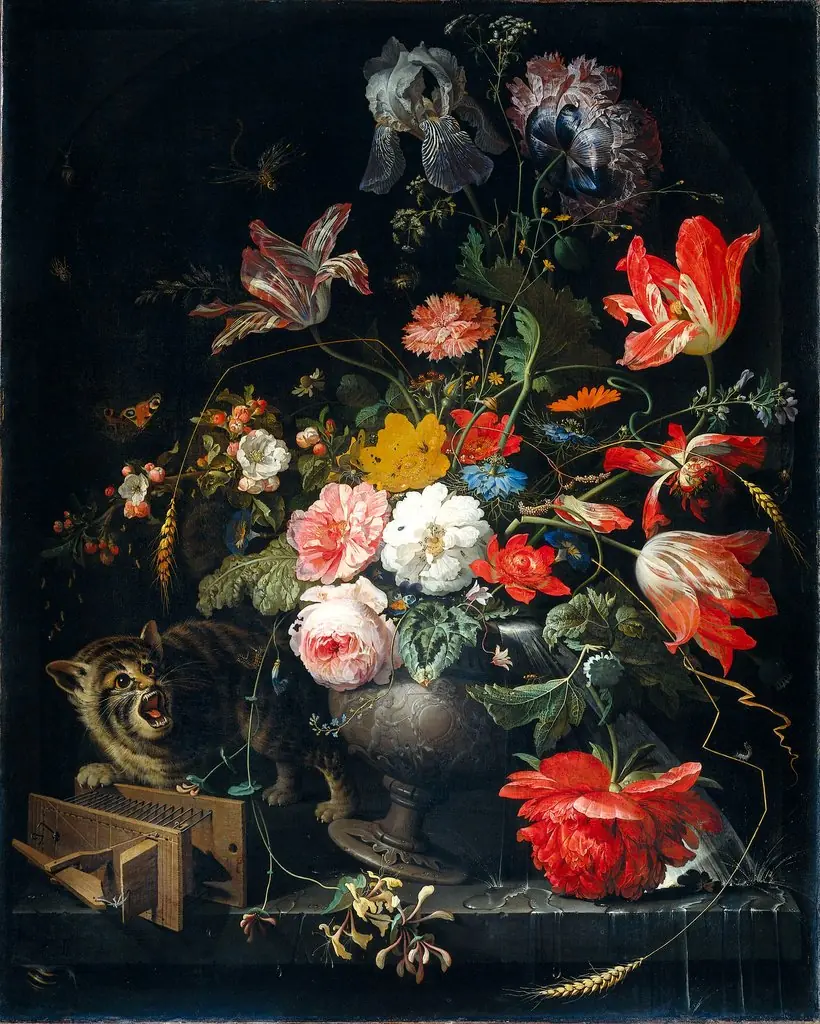
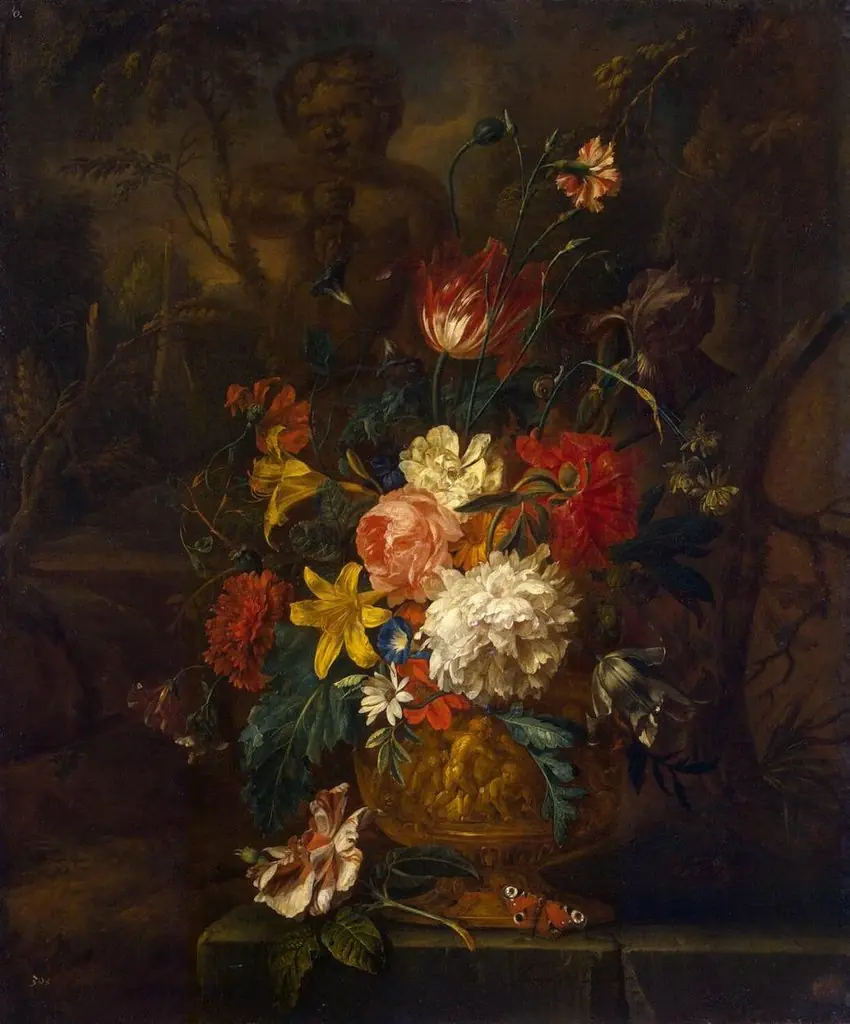
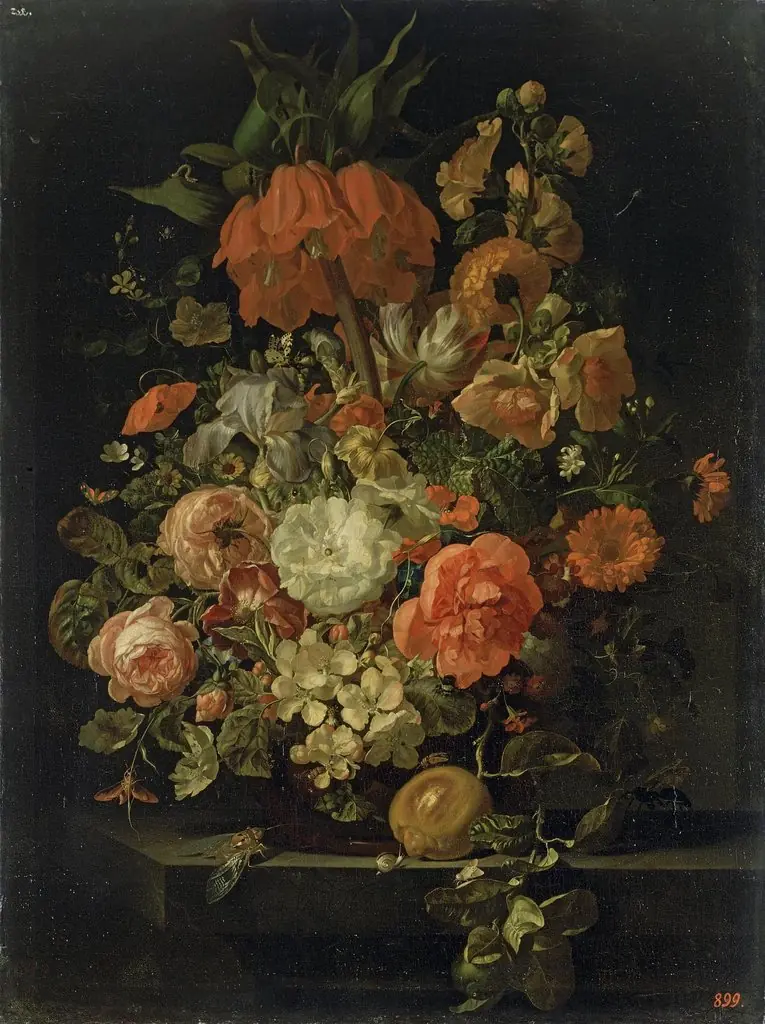
Tulips, peonies, and carnations appear prominently, while a butterfly hovers near the blooms and a squirrel is seen reaching for a nut beside the vase.
The still life centers on a glass vase holding a bouquet of flowers arranged on a table. Tulips, peonies, and carnations appear prominently, while a butterfly hovers near the blooms and a squirrel is seen reaching for a nut beside the vase. The inclusion of the squirrel and butterfly alongside cultivated flowers and fruit suggests an allegorical reading tied to the transience of earthly beauty and the passage of time, a common theme in Dutch and German still-life painting of the period.
The precise rendering of the flowers and the careful placement of the animate elements invite close inspection, reinforcing the contemplative mood typical of vanitas imagery.
Technique & Style
Abraham Mignon's Vase of Flowers, created in 1660, is an oil painting executed on canvas. The work measures 87 cm in height and 68 cm in width. As a still life, the composition features a detailed arrangement of botanical and animal subjects, including tulips, peonies, dianthus, a butterfly, a squirrel, and a nut alongside a vase.
The piece demonstrates Mignon's handling of oil paint to render the textures of petals, fur, and hard shells within a German context.
History & Provenance
Abraham Mignon painted Vase of Flowers in 1660 while working in Germany, employing oil on canvas. The work measures 87 cm in height and 68 cm in width and portrays a bouquet of flowers alongside a butterfly, squirrel, nuts and various blossoms.
The painting is part of the Hermitage Museum’s collection and has remained in that institution since its acquisition. No earlier owners are documented in the available records.
The painting known as Vase of Flowers is an oil on canvas still‑life executed in 1660 by Abraham Mignon. It is recorded in the Hermitage Museum’s collection under inventory number ГЭ‑1050 and is housed in the museum’s main building in Saint Petersburg. The work has not been listed in publicly documented exhibition catalogues within the available sources, and no further provenance details are provided beyond its acquisition by the Hermitage.
Its dimensions are 87 cm in height and 68 cm in width, and it was produced in Germany.
Overview
Abraham Mignon's Vase of Flowers, an oil painting from 1660, exemplifies the detailed still life tradition of the Dutch Golden Age. This work showcases an elaborate floral arrangement within a vase, rendered with precision and vibrant color. It is a representative piece by an artist known for his exquisite depictions of natural elements and is presently housed in the collection of the State Hermitage Museum.
Context
Abraham Mignon was a prominent Dutch still life painter active in Utrecht during the mid-17th century, a period often referred to as the Dutch Golden Age. His artistic development began with training in Germany before he moved to the Netherlands, where he further refined his craft by studying with established masters of the genre. His work, including this flower piece, contributes to the rich tradition of detailed still life painting from this era.
Own this work as a print
Artist & collection
Artist
Abraham Mignon or Minjon (21 June 1640 – 27 March 1679) was a Dutch still life painter.

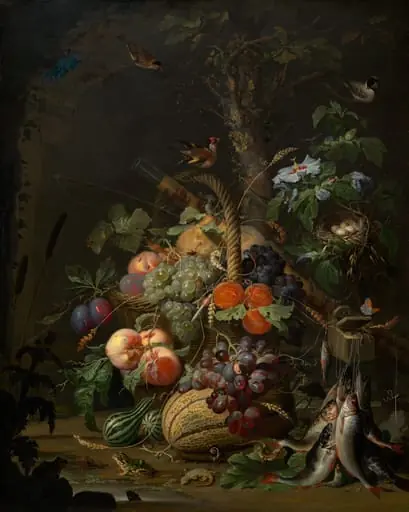 Still Life with Fruit, Fish, and a Nest
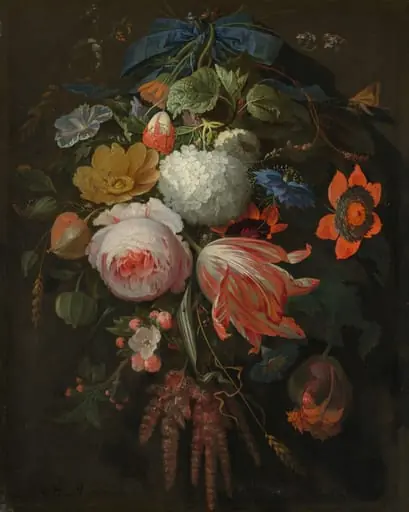 A Hanging Bouquet of Flowers
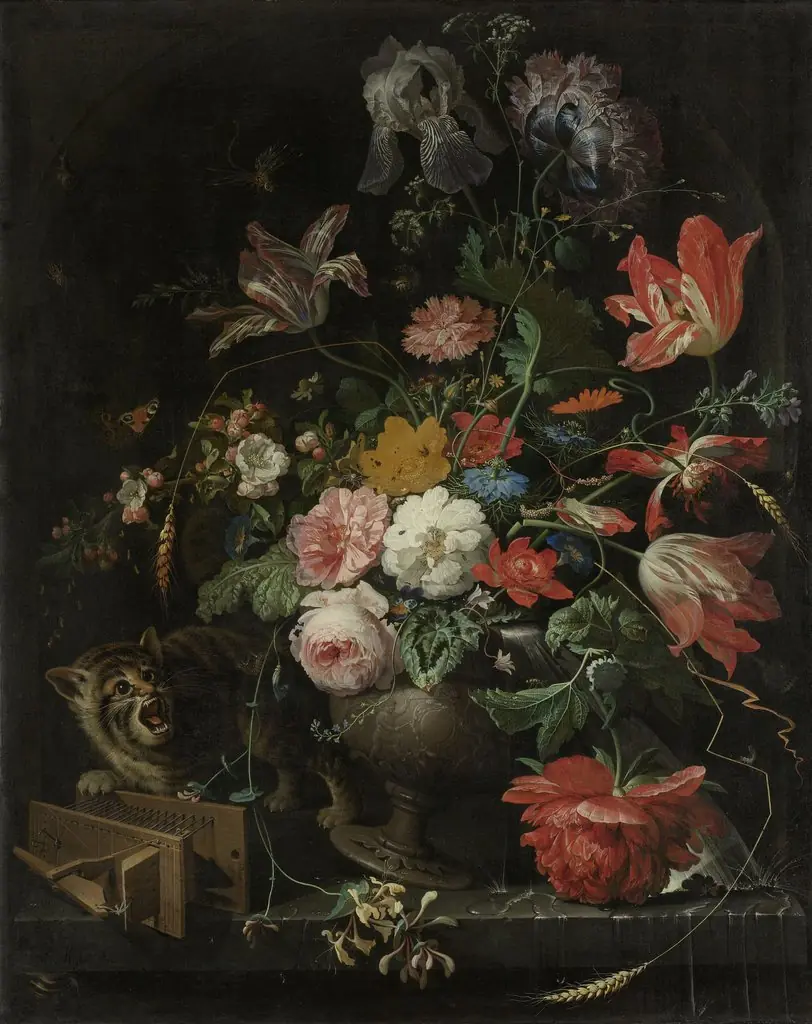 The Overturned Bouquet
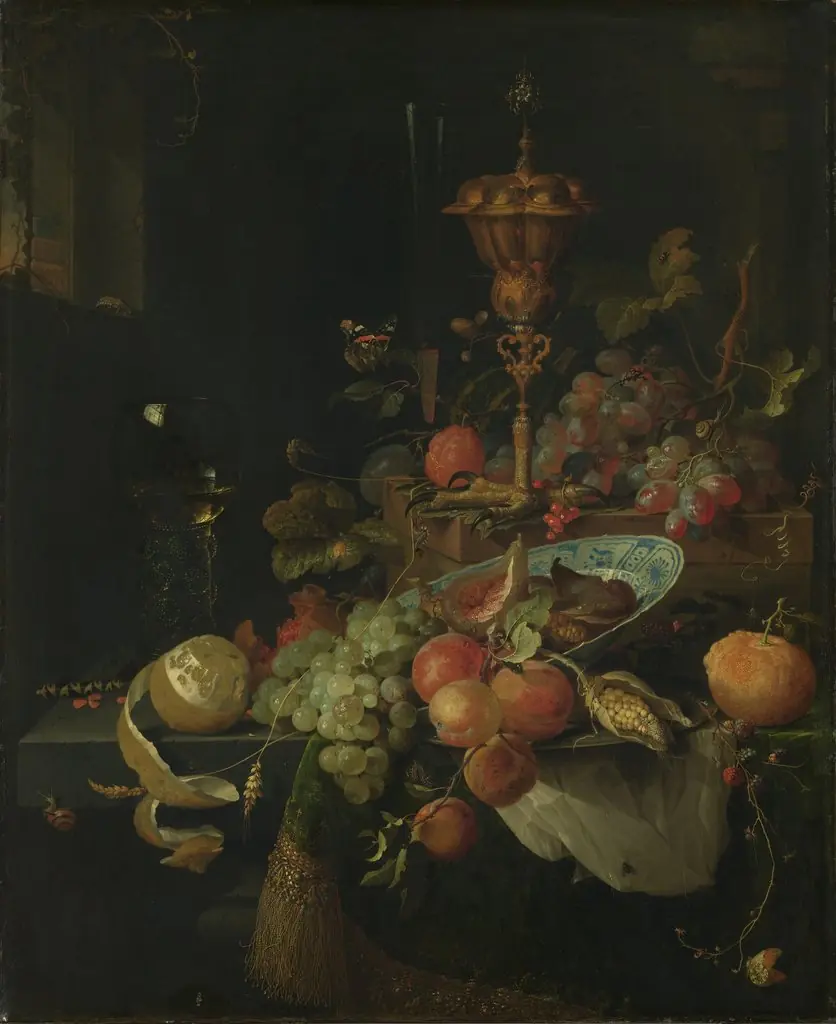 Still life with fruit and a beaker on a cock's foot
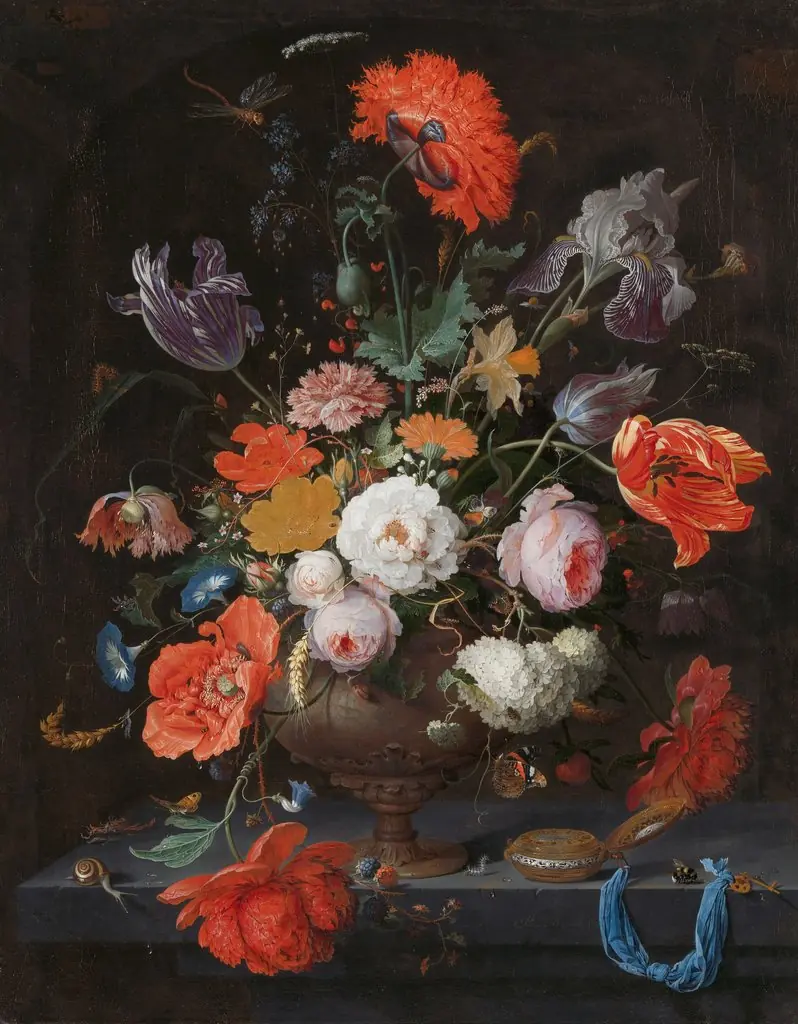 Still life with flowers and a watch
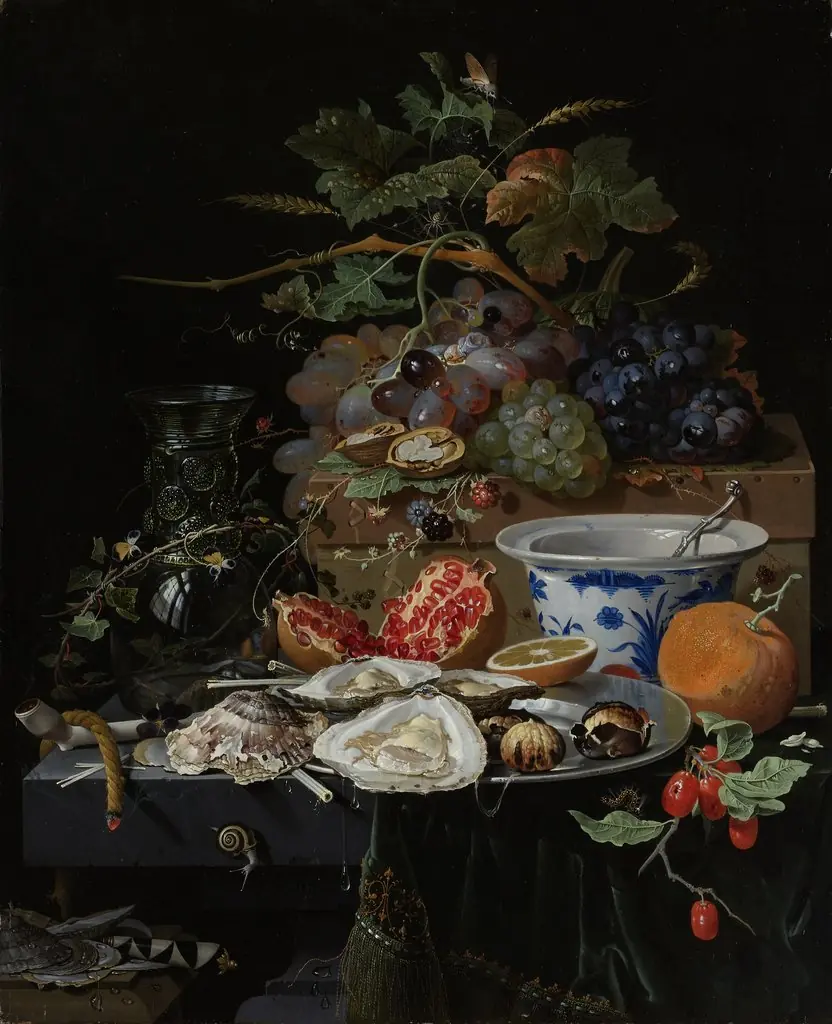 Still Life with Fruit, Oysters and a Porcelain Bowl
 Still Life with Fruit and a Beaker on a Cock's Foot
 Still life with fruit and a finch drawing water