Artwork
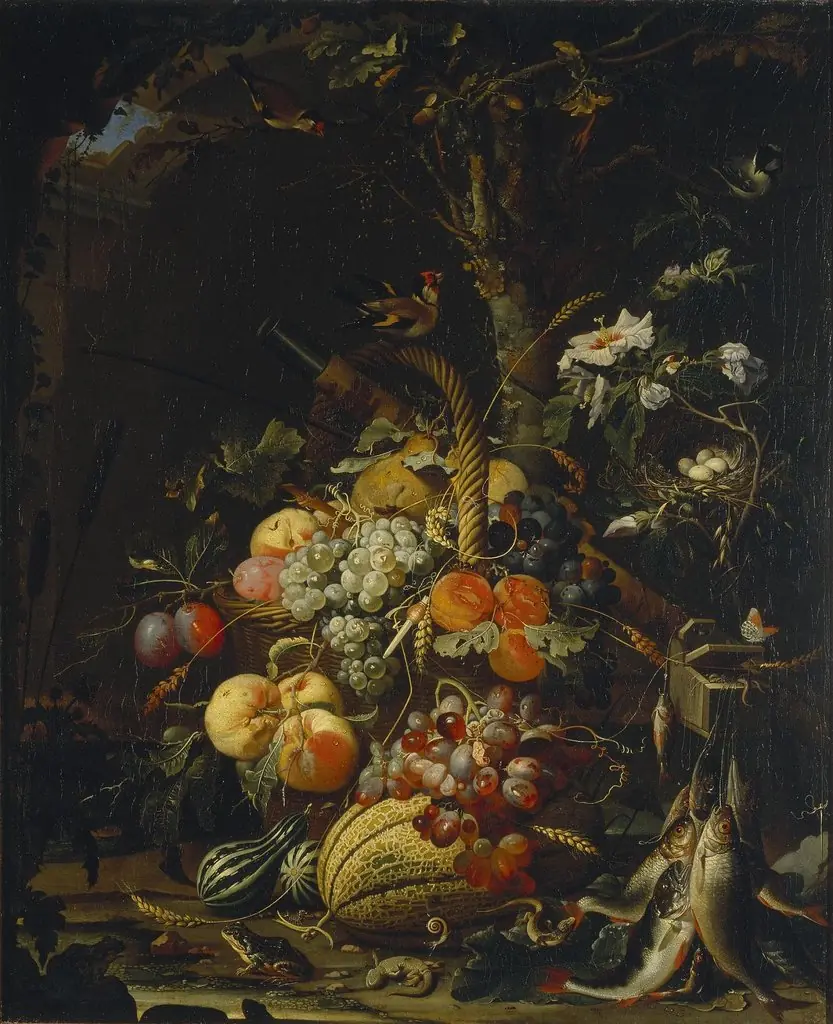
Still Life with Fruit, Fish, and a Nest
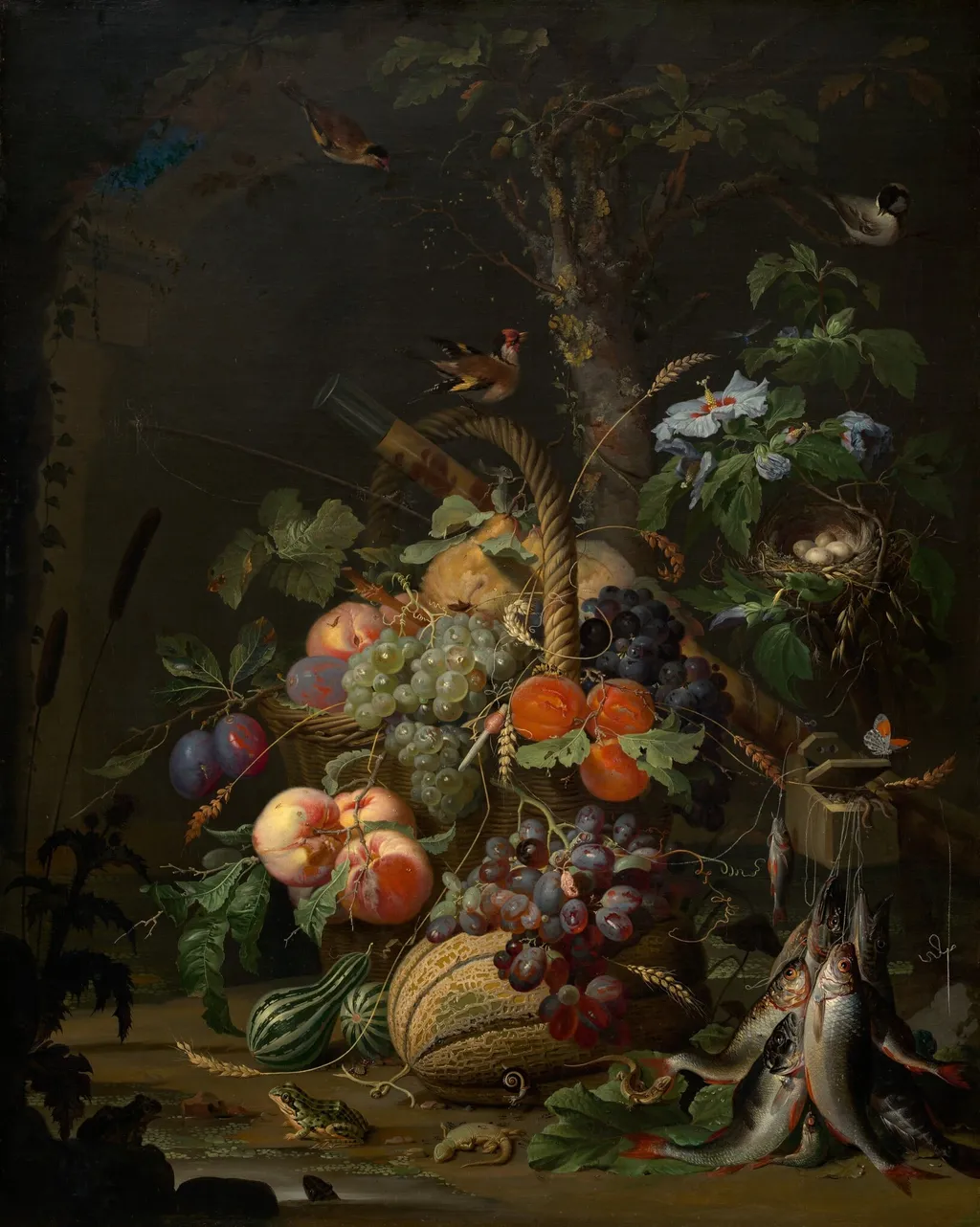
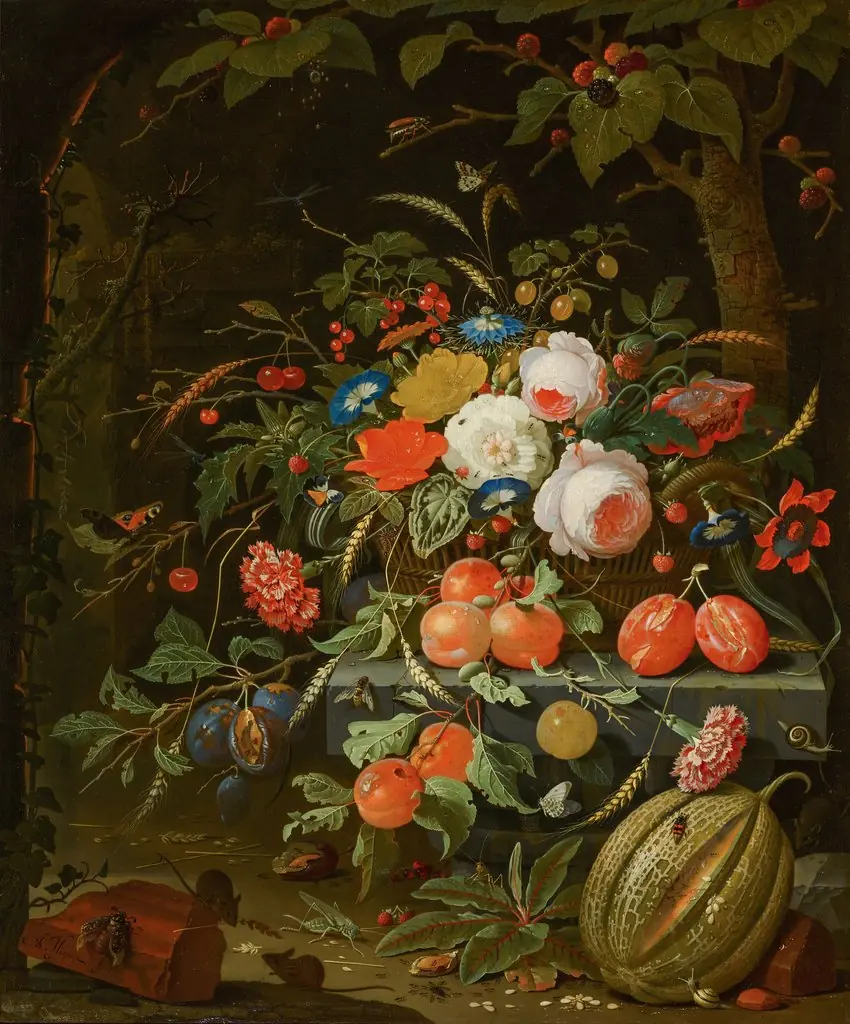
Still Life with Fruit, Fish, and a Nest is an oil painting by the Baroque artist Abraham Mignon. It dates from 1675 and is held in the collection of the National Gallery of Art.
About this work
Technique & Style
The handling of the oil medium allows for the detailed depiction of these varied textures, consistent with the artist's approach to this genre.
Executed in 1675, this still life is an oil painting on canvas support. The work measures 94 cm in height and 73.5 cm in width. Stylistically, the composition is identified as a forest floor still life, a specific sub-genre characterized by the arrangement of natural elements such as fruit, fish, and a bird's nest directly upon the ground rather than on a tabletop.
The handling of the oil medium allows for the detailed depiction of these varied textures, consistent with the artist's approach to this genre. The piece is currently held in the collection of the National Gallery of Art in Washington, D.C.
History & Provenance
Still Life with Fruit, Fish, and a Nest is an oil on canvas painting executed in 1675 by Abraham Mignon. Its early ownership is recorded in a private English collection and later in Switzerland before passing through Peter Tillou Works of Art in Litchfield, Connecticut. The work entered the collection of H. John Heinz III in May 1986 and was subsequently given as a partial and promised gift in 1989 to the National Gallery of Art, Washington, D.C., with the transfer completed in 1992.
Provenance documentation comes from Diane Martz's correspondence with Arthur Wheelock, referencing Ingvar Bergström's cataloguing of the Heinz collection. The available sources record no public exhibition history.
Context
A 1675 oil on canvas by Abraham Mignon, Still Life with Fruit, Fish, and a Nest exemplifies the Dutch Golden Age fascination with opulent, naturalistic tableaus. Art historians note that the work belongs to Mignon's "forest floor" type, a subset of still-life paintings that combine fruit, fish and bird nests to suggest both abundance and transience. Its provenance traces from an English private collection through the Peter Tillou gallery to the Heinz family, eventually entering the National Gallery of Art in Washington, D.C. The work illustrates the development of still-life motifs in 17th-century Europe.
Overview
Abraham Mignon, a Dutch painter active in Utrecht, created Still Life with Fruit, Fish, and a Nest around 1675. This oil on canvas exemplifies the detailed still life tradition prevalent in the Dutch Republic during the 17th century. The composition features a meticulously arranged assortment of natural elements, characteristic of the artist's focus on depicting everyday objects with precision.
Subject & Meaning
The painting presents a carefully composed arrangement of fruit, fish, and a bird's nest on a surface. This selection of items reflects the era's appreciation for both the bounty of nature and the domestic sphere. Such still lifes often carried symbolic undertones, encouraging contemplation on themes like abundance, the passage of time, or the fragility of life, though specific meanings could vary.
Own this work as a print
Artist & collection
Artist
Abraham Mignon or Minjon (21 June 1640 – 27 March 1679) was a Dutch still life painter.

 A Hanging Bouquet of Flowers
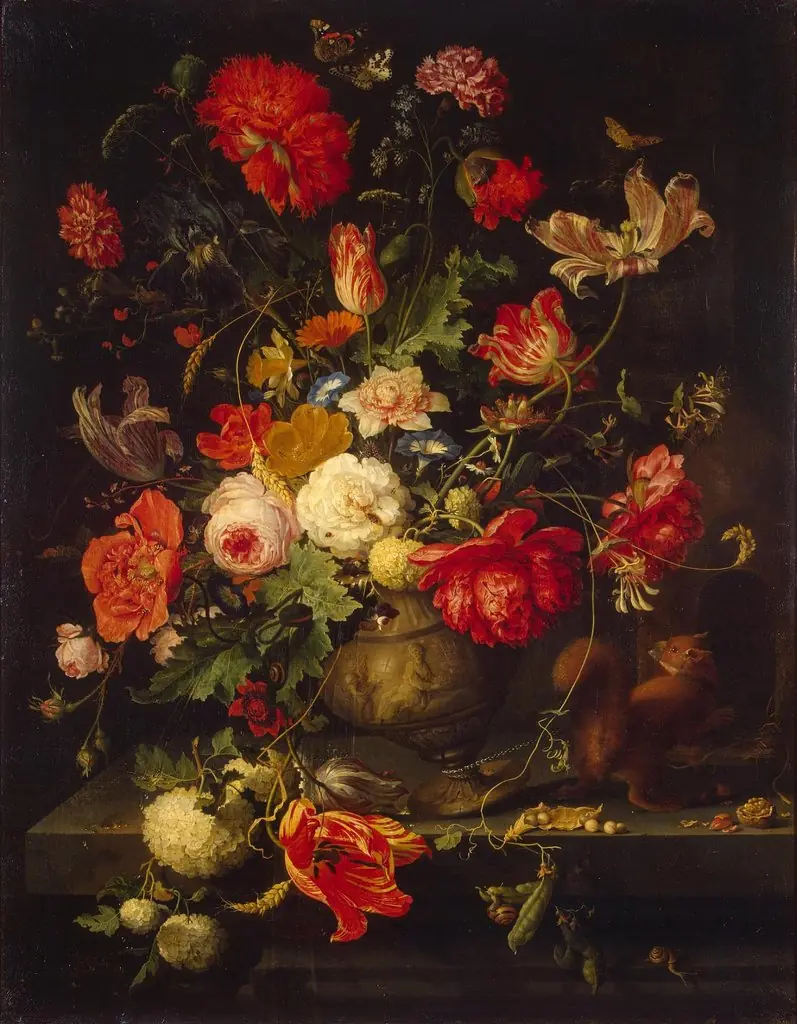 Vase of Flowers
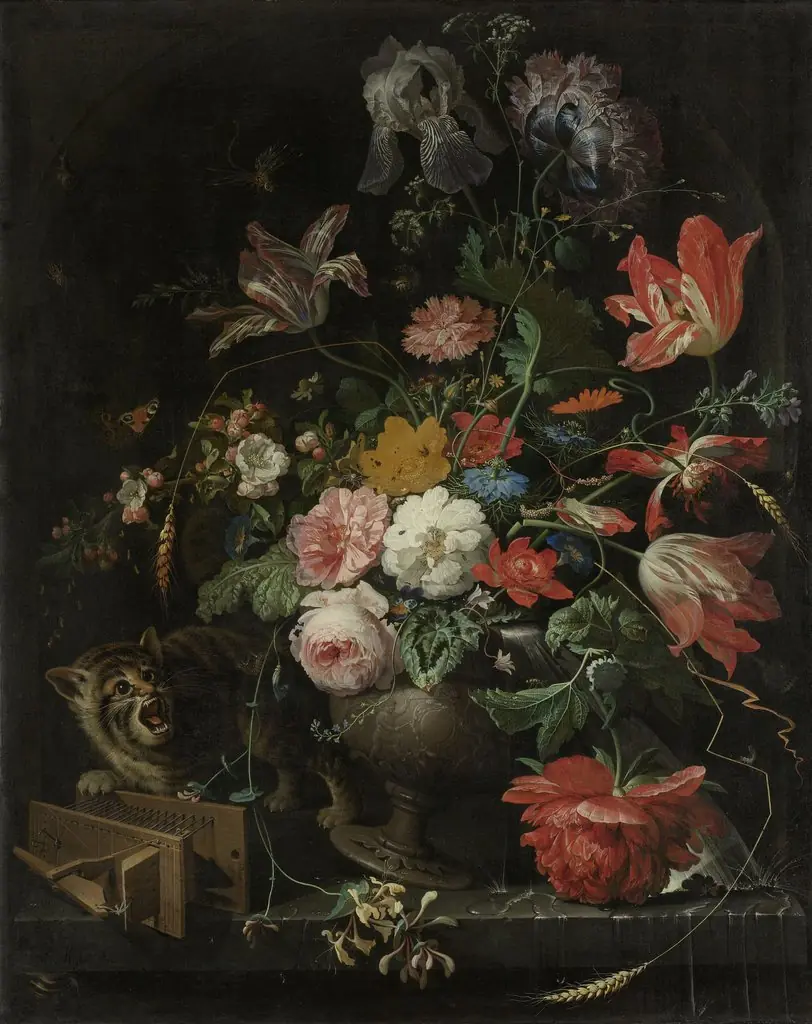 The Overturned Bouquet
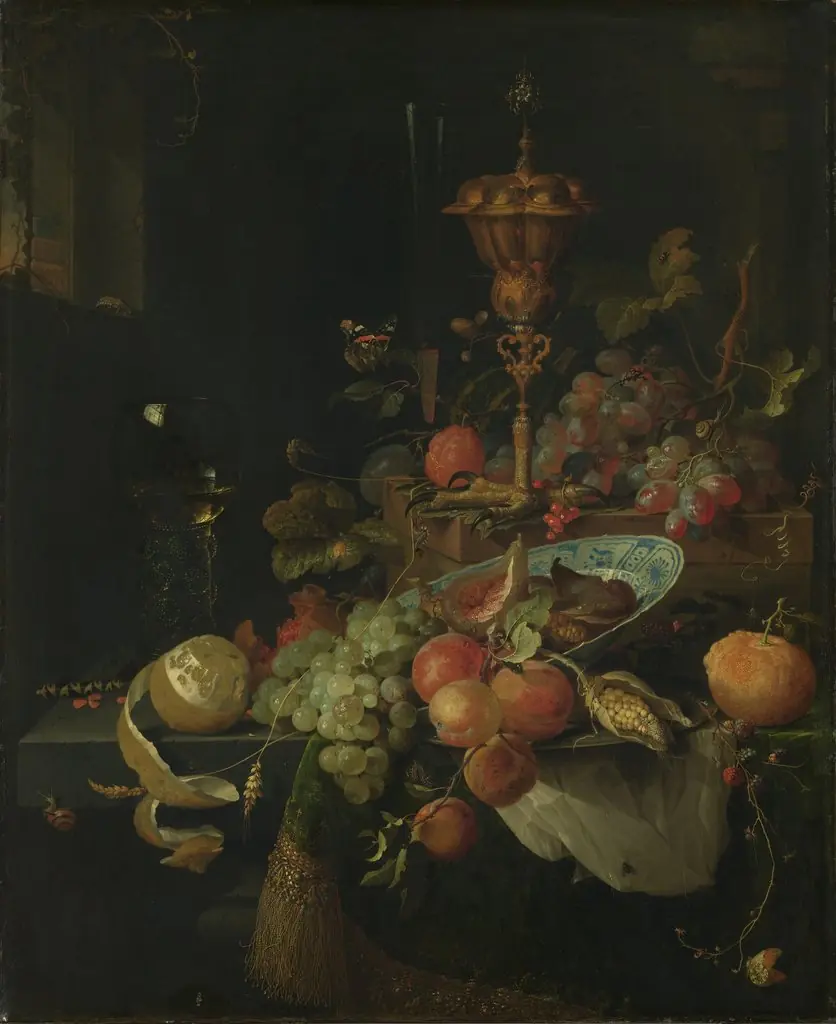 Still life with fruit and a beaker on a cock's foot
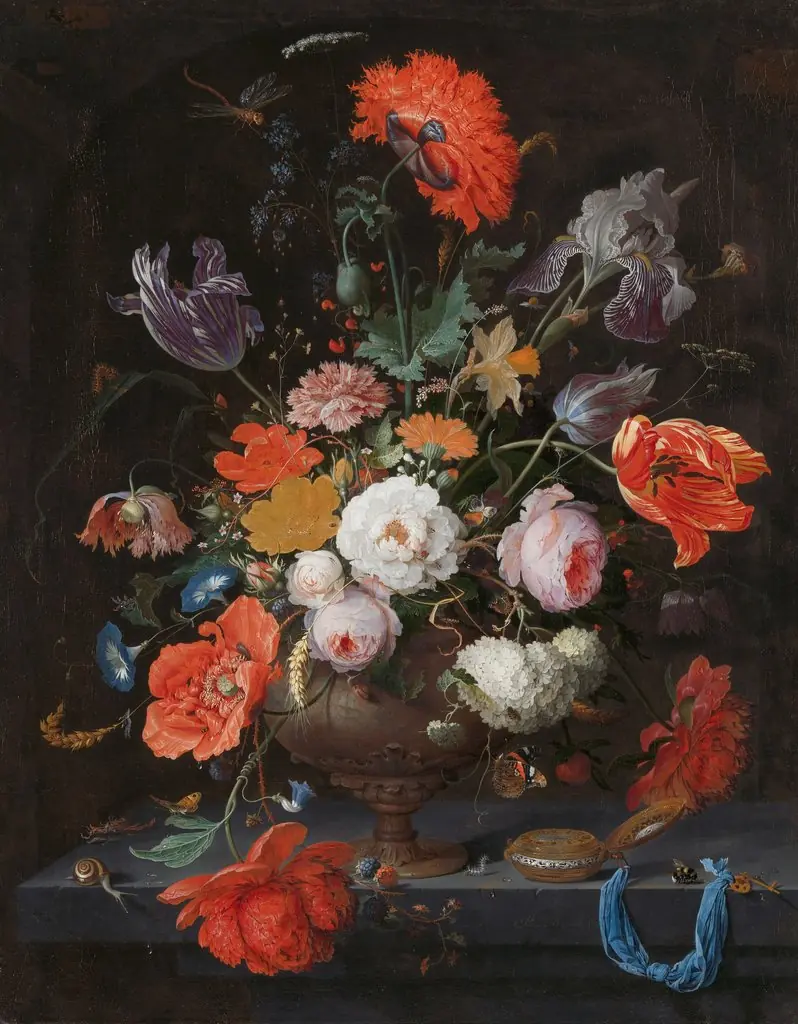 Still life with flowers and a watch
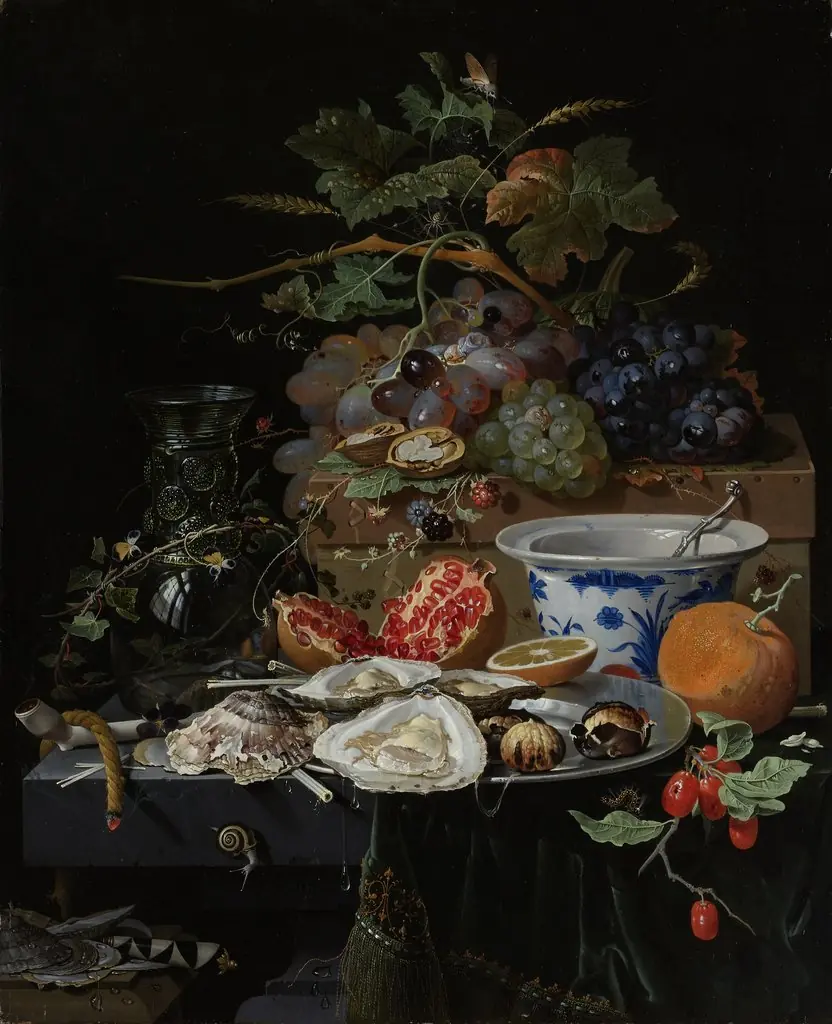 Still Life with Fruit, Oysters and a Porcelain Bowl
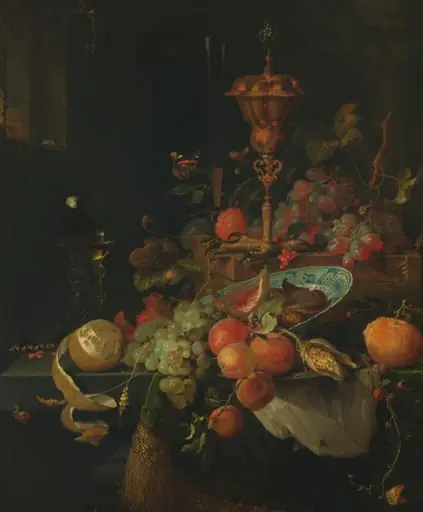 Still Life with Fruit and a Beaker on a Cock's Foot
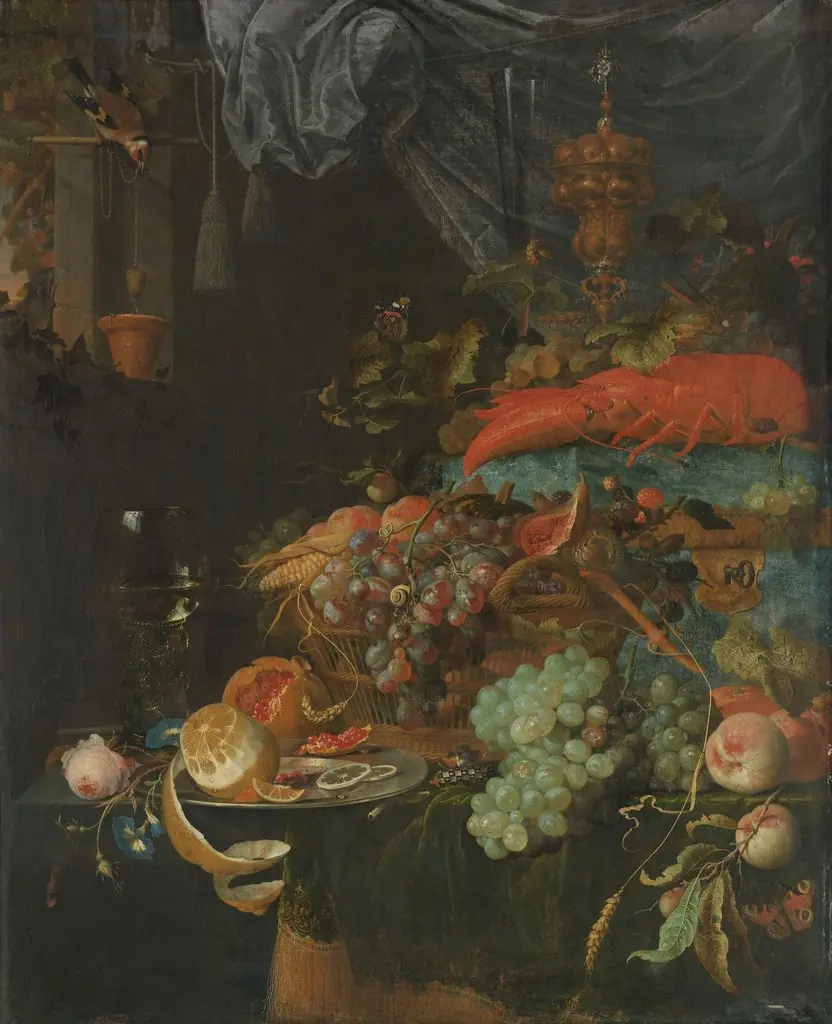 Still life with fruit and a finch drawing water