Artwork
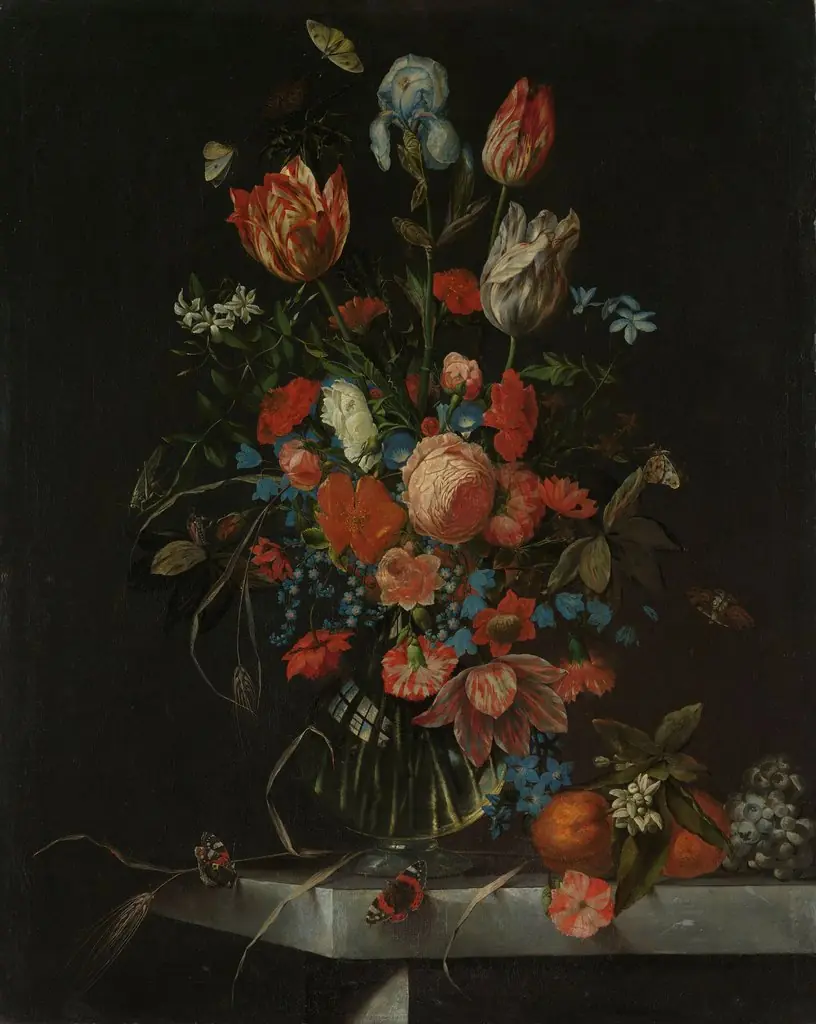
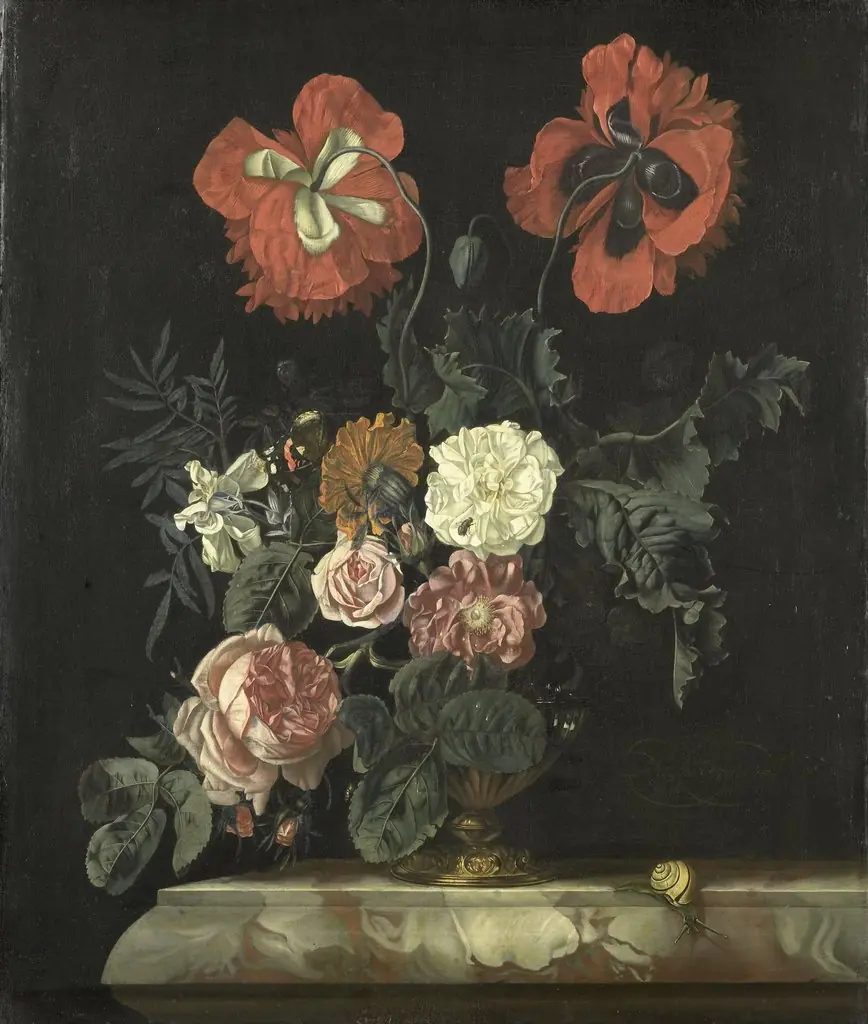
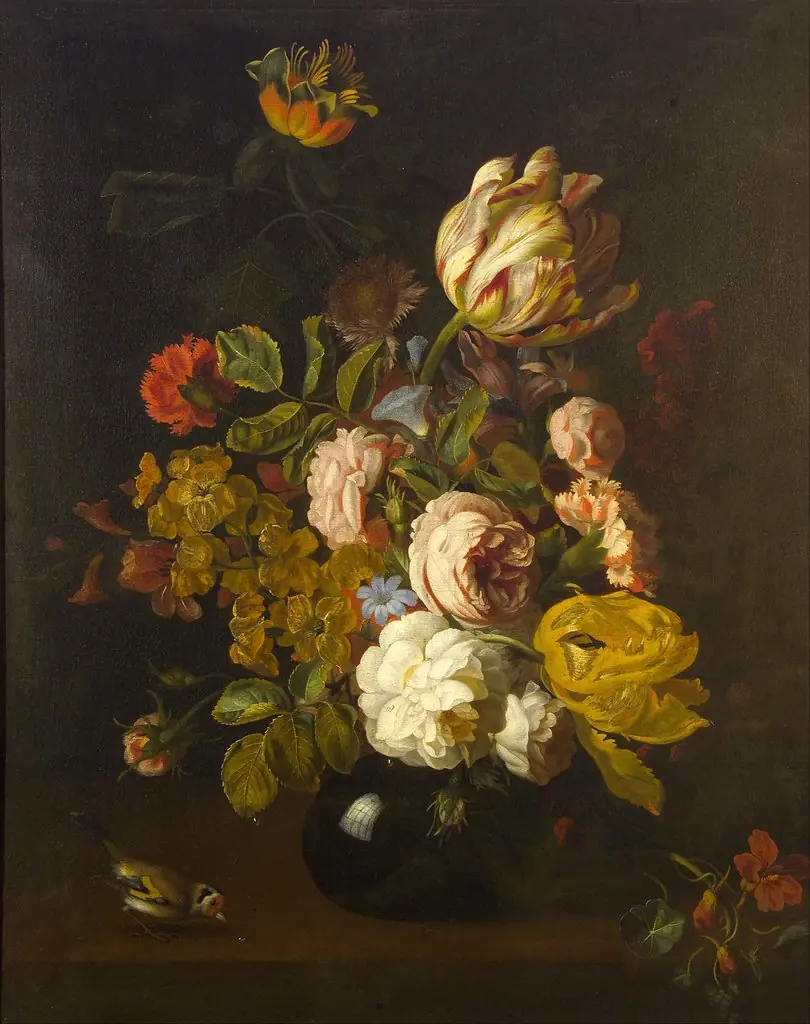
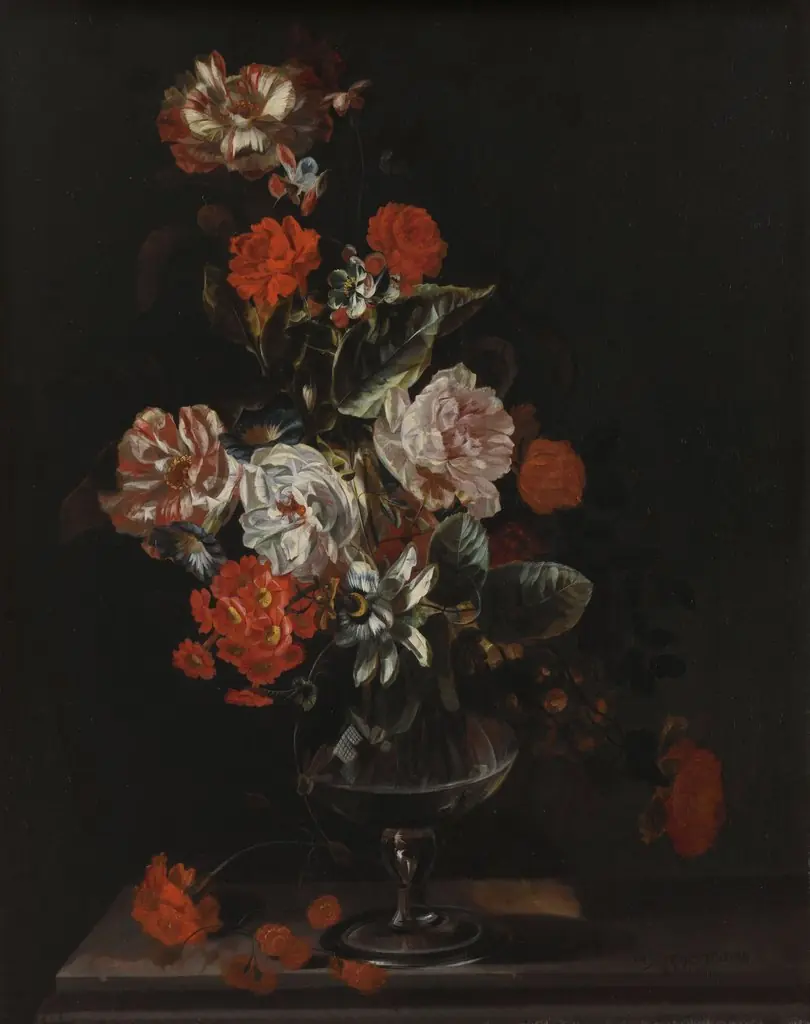
Still life with flowers
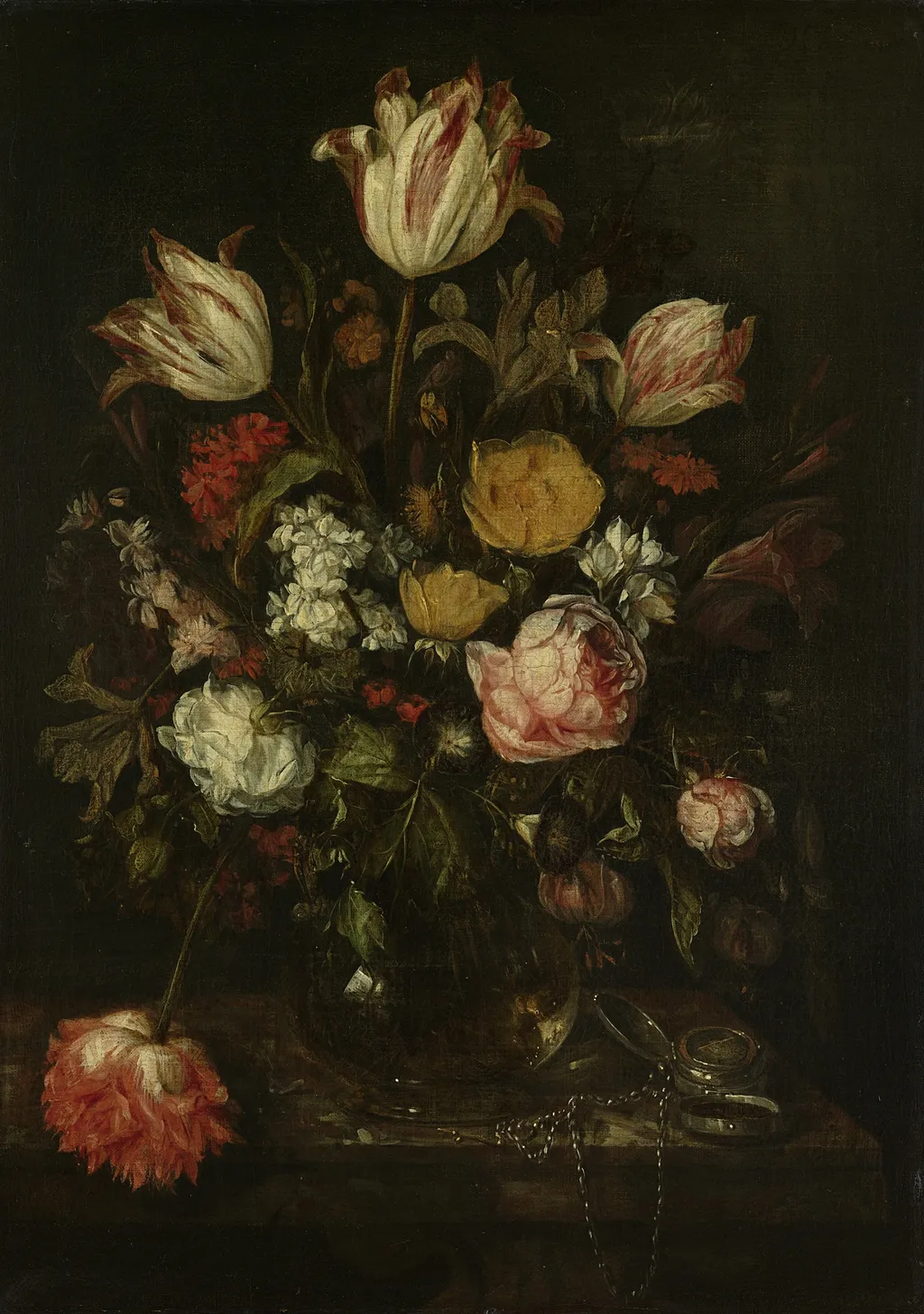
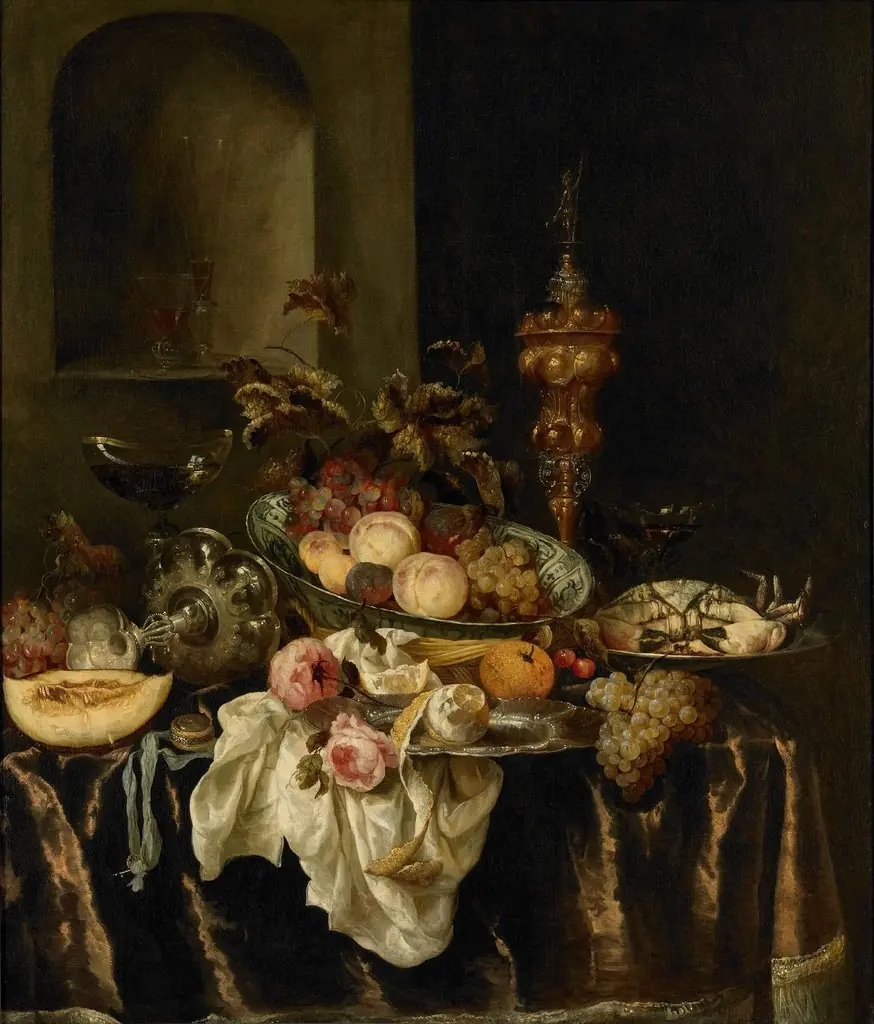
Still life with flowers is an oil painting by the Dutch Golden Age artist Abraham van Beijeren. It dates from 1650 and is held in the collection of the Rijksmuseum.
About this work
Subject & Meaning
The bouquet is rendered in oil paint on canvas, and the work is held in the Rijksmuseum collection.
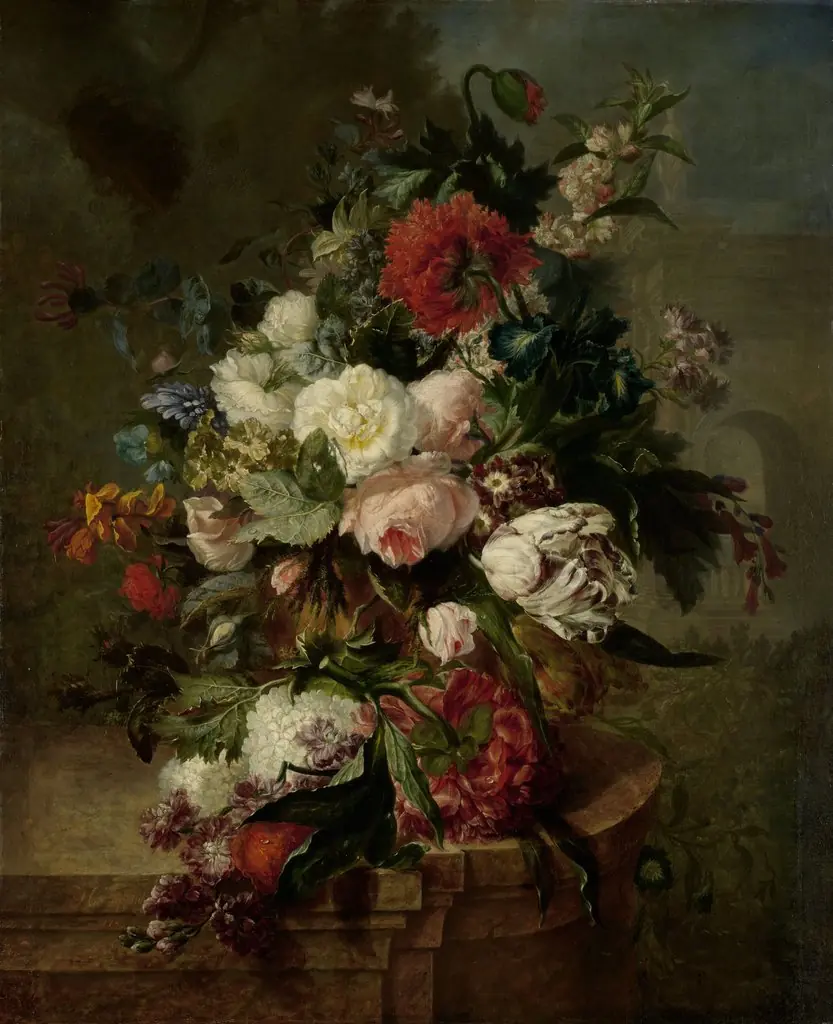
The painting is a floral still life depicting a bouquet of flowers. As a work in the floral still life genre, it belongs to a tradition in which cut blooms arranged in a vase served as the central subject, allowing artists to display skill in rendering varied petals, foliage, and textures. Floral compositions of this kind conventionally carried symbolic meaning drawn from the Dutch tradition of associating specific flowers with ideas such as the transience of life, beauty, and divine creation, since cut blossoms inevitably wither even as the painted image preserves them.
The bouquet is rendered in oil paint on canvas, and the work is held in the Rijksmuseum collection.
Technique & Style
Abraham van Beijeren’s Still Life with Flowers (1650) is executed in oil paint on canvas, a common support for Dutch Golden Age still lifes. The medium’s slow drying time allowed van Beijeren to build up layers of translucent glazes, achieving the luminous petal textures and delicate tonal gradations characteristic of floral painting of the period.
The handling is meticulous yet fluid, with fine brushwork capturing individual blooms, roses, tulips, and peonies, while looser strokes suggest foliage and background shadows. The composition balances asymmetry with harmony, using overlapping forms and subtle chiaroscuro to create depth. The bouquet’s diagonal arrangement draws the eye across the picture plane, reinforcing the genre’s emphasis on natural abundance and impermanence.
History & Provenance
The work was created in 1650 by Abraham van Beijeren as an oil painting on canvas measuring 64 cm by 46 cm. It entered the collection of Maurits Cornelis van Hall before being acquired by the Rijksmuseum, where it remains on display.
Context
The painting is recognized as a quintessential example of Dutch Golden Age floral still lifes, reflecting the period's fascination with botanical detail and opulent decoration. Scholars highlight van Beijeren's role within the Haarlem school of flower painters, situating his work alongside contemporaries like Willem Kalf in exploring themes of transience and abundance. The artwork's provenance through the Maurits Cornelis van Hall collection and current housing at the Rijksmuseum underscore its significance within major institutional collections of Dutch art.
Overview
Created circa 1650 by the Dutch Baroque painter Abraham van Beijeren, this oil painting presents a carefully arranged floral bouquet. The work belongs to the Dutch Golden Age and is part of the Rijksmuseum’s collection, illustrating the artist’s shift from maritime subjects to elaborate still-life compositions.
Own this work as a print
Artist & collection
Artist
Abraham Hendriksz van Beijeren or Abraham van Beyeren (c. 1620, The Hague – March 1690, Overschie (Rotterdam)) was a Dutch Baroque painter of still lifes. Little recognized in his day and initially active as a marine…

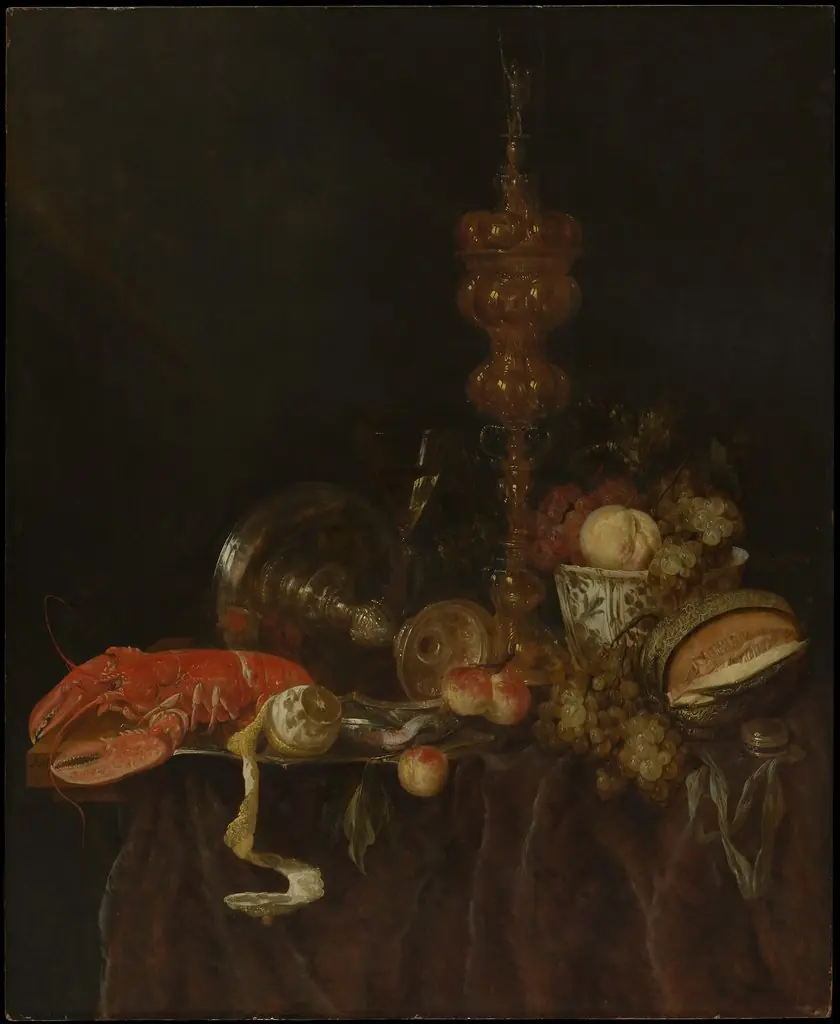 Still Life with Lobster and Fruit
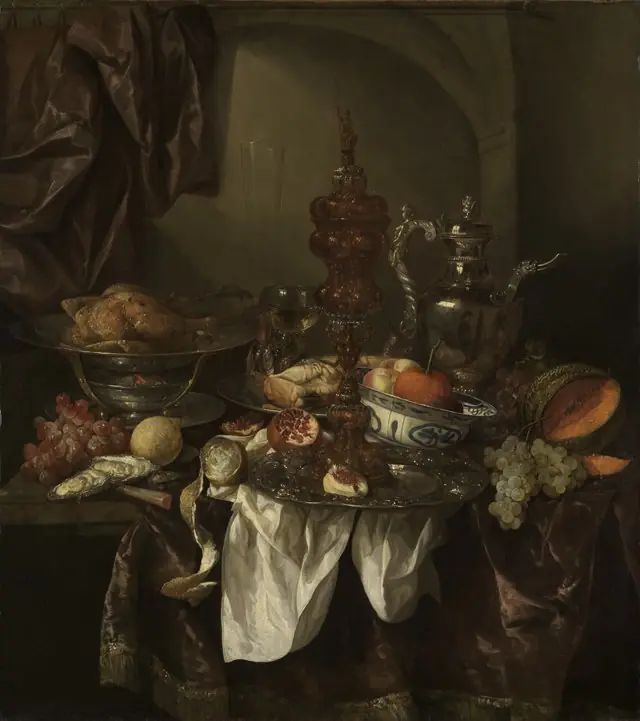 Still life with fruit, roast, silver- and glassware, porcelain and columbine cup on a dark tablecloth with white serviette
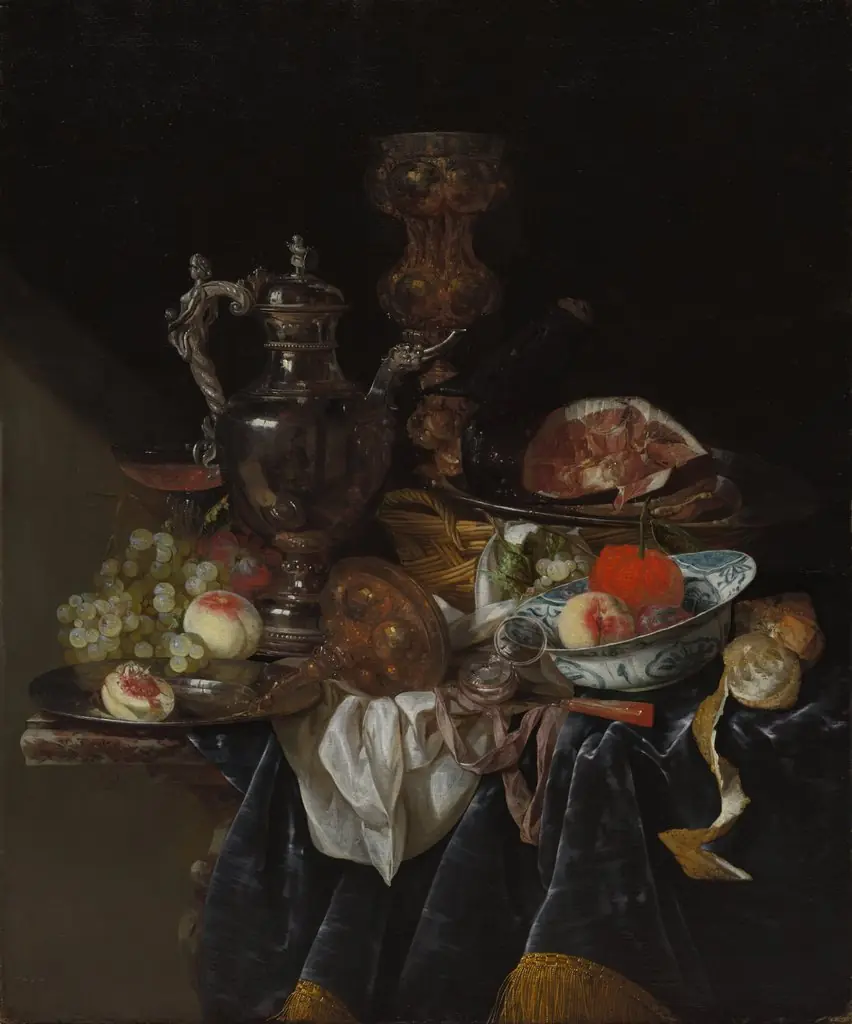 Silver Wine Jug, Ham, and Fruit
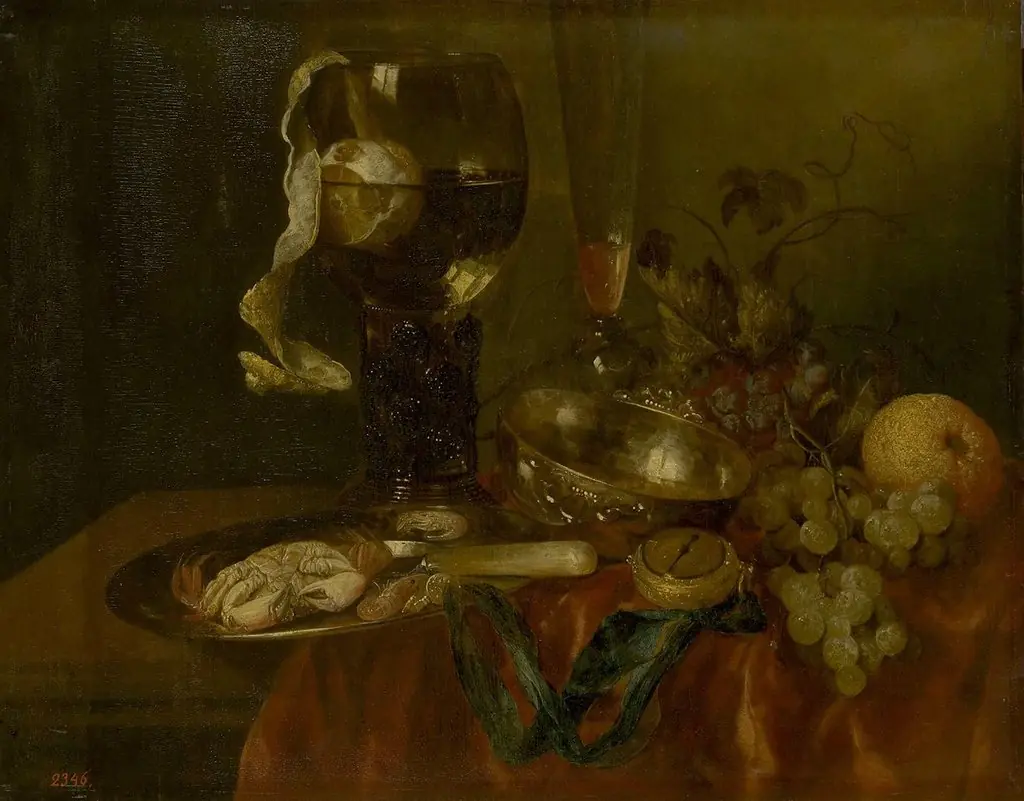 Snack (Still Life with Crab, Fruit and Clock)
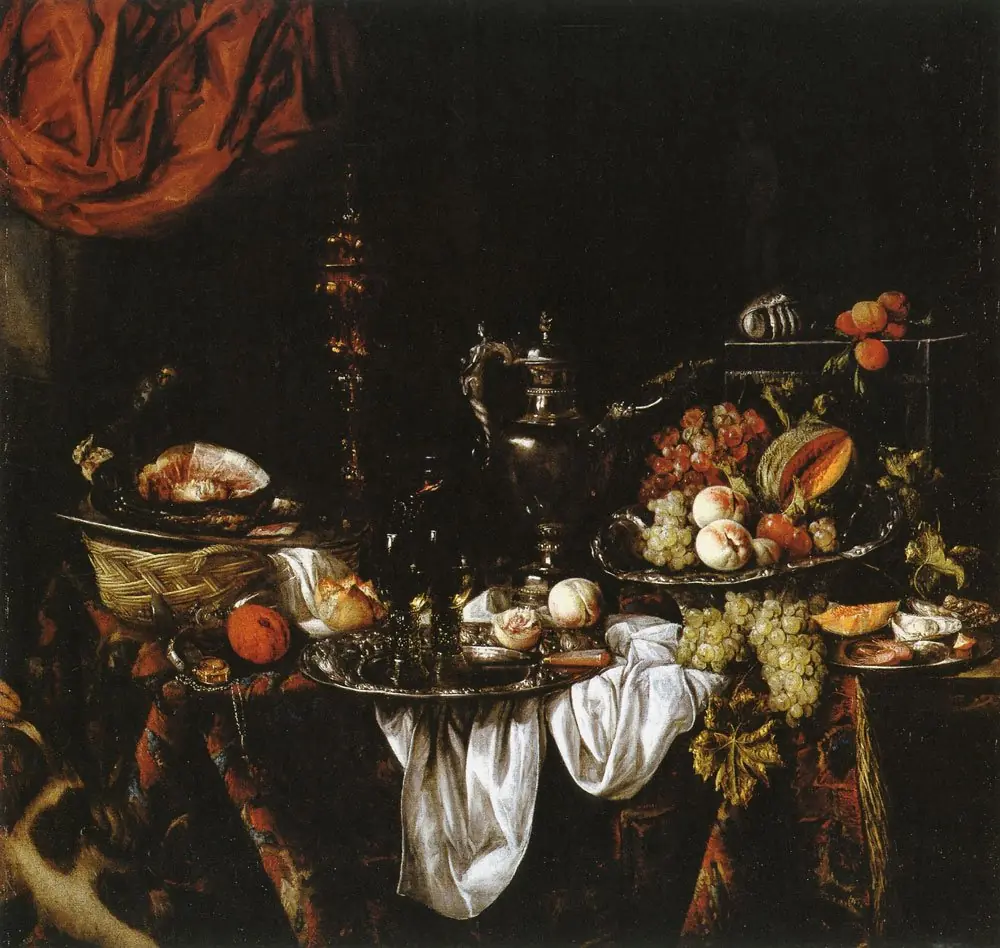 Still life on a draped table with a sculpture of Venus in a niche behind a curtain
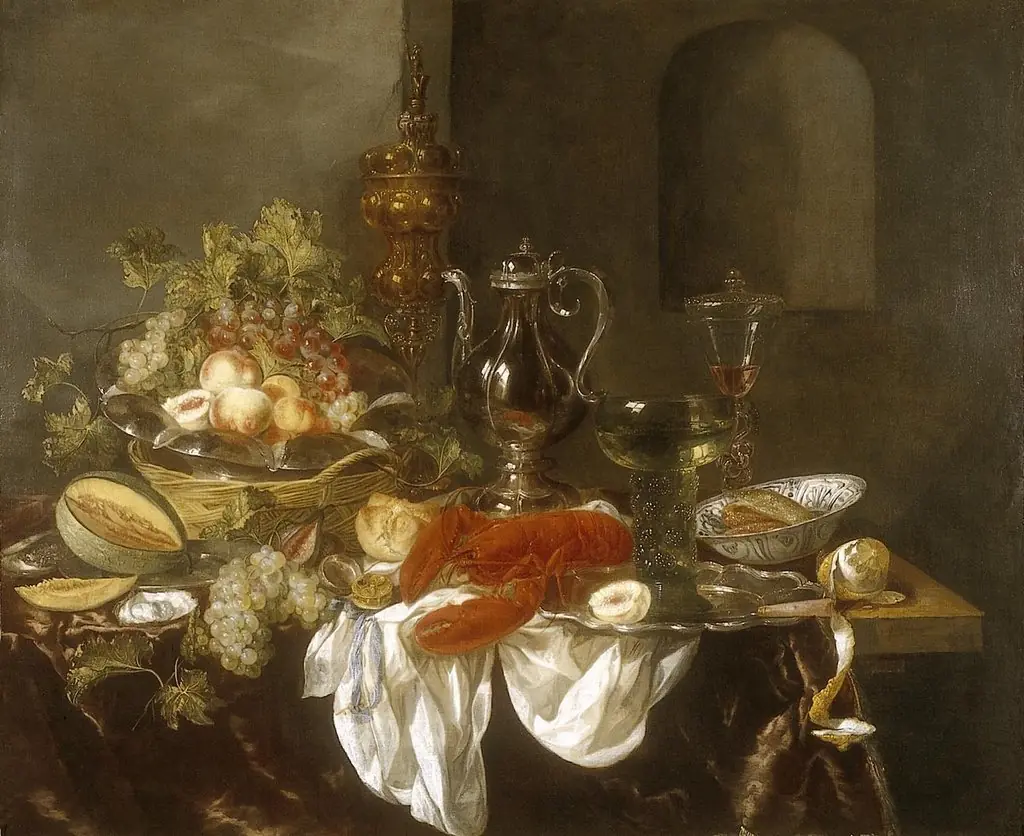 still-life
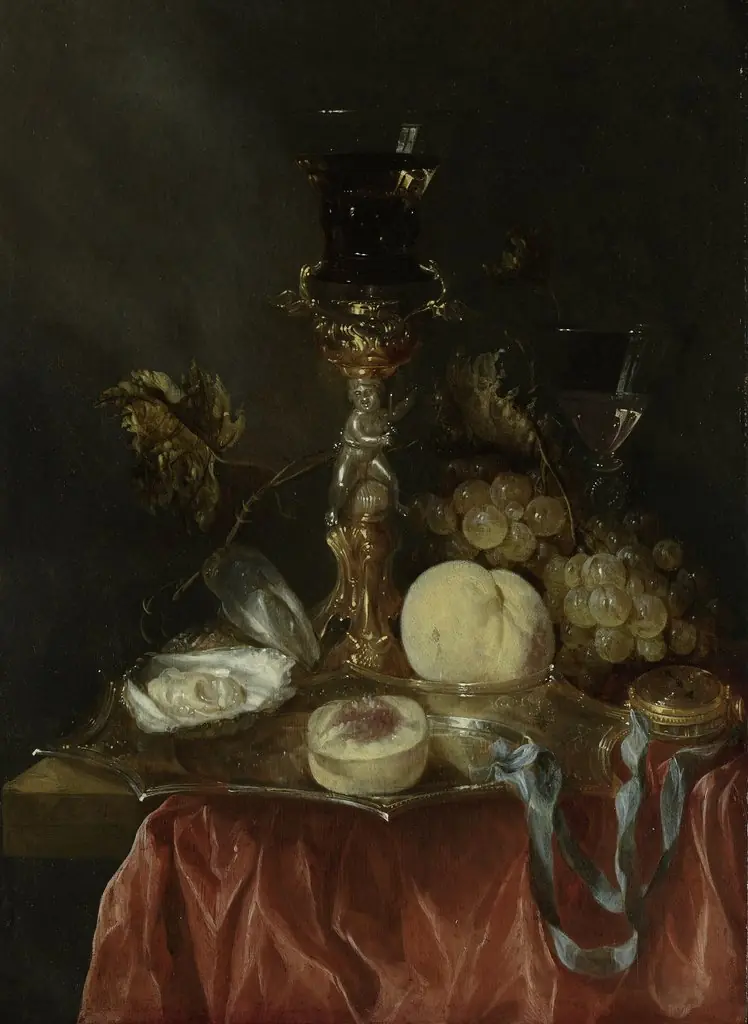 Still Life with Silver-gilt Bekerschroef with Roemer
 Stille life