Artwork
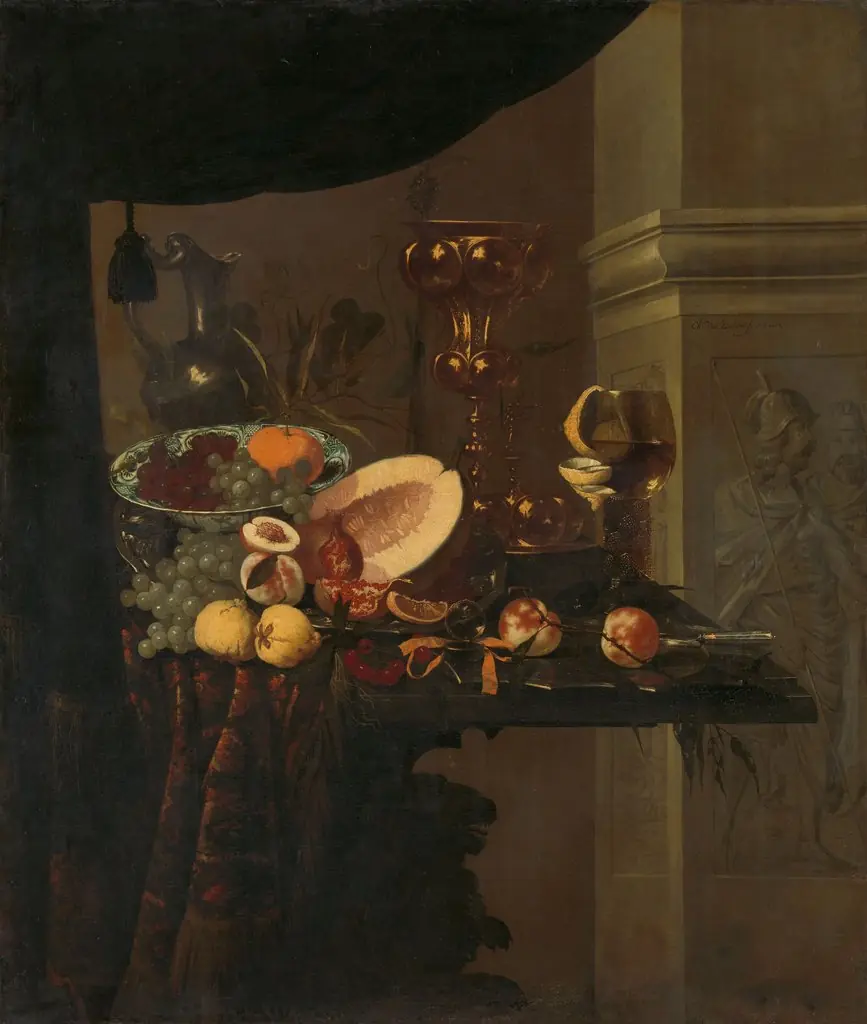
Still life on a draped table with a sculpture of Venus in a niche behind a curtain
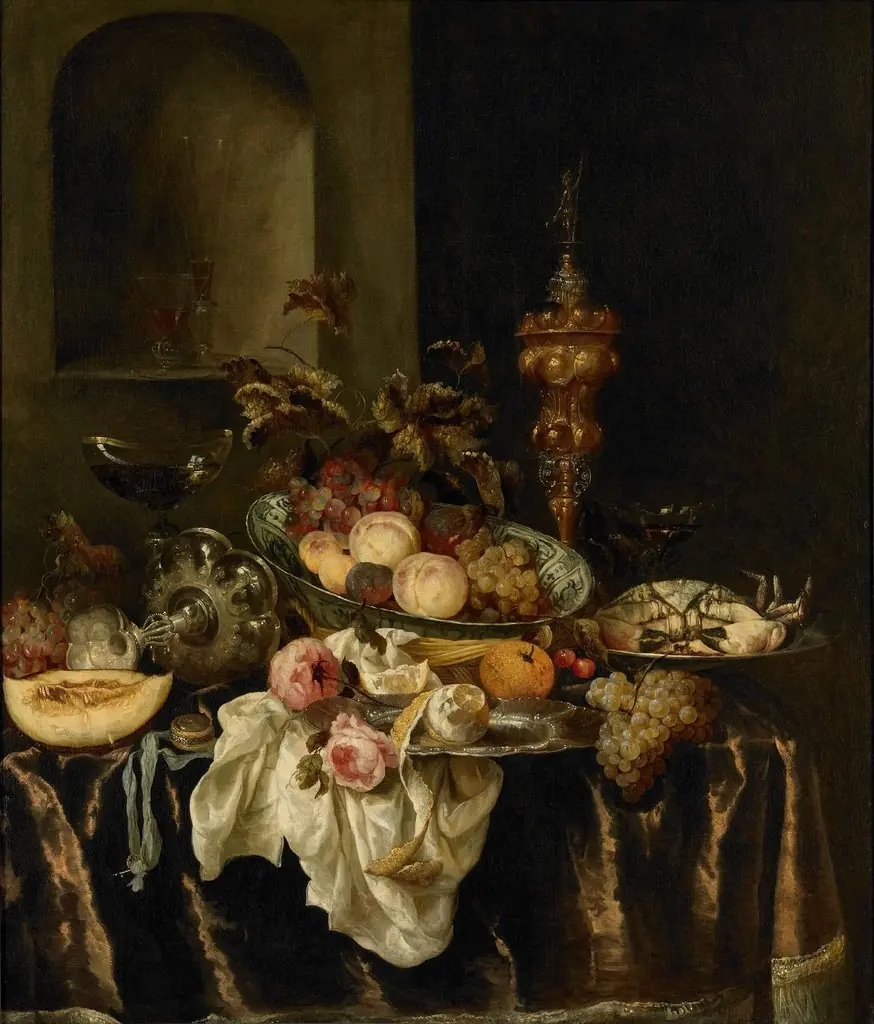
Still life on a draped table with a sculpture of Venus in a niche behind a curtain is an oil painting by the Dutch Golden Age artist Abraham van Beijeren. It dates from 1659 and is held in the collection of the Gemäldegalerie Berlin.
About this work
Subject & Meaning
Behind this display, a curtain is drawn back to reveal a niche containing a sculpture of Venus, the classical goddess of love and beauty.
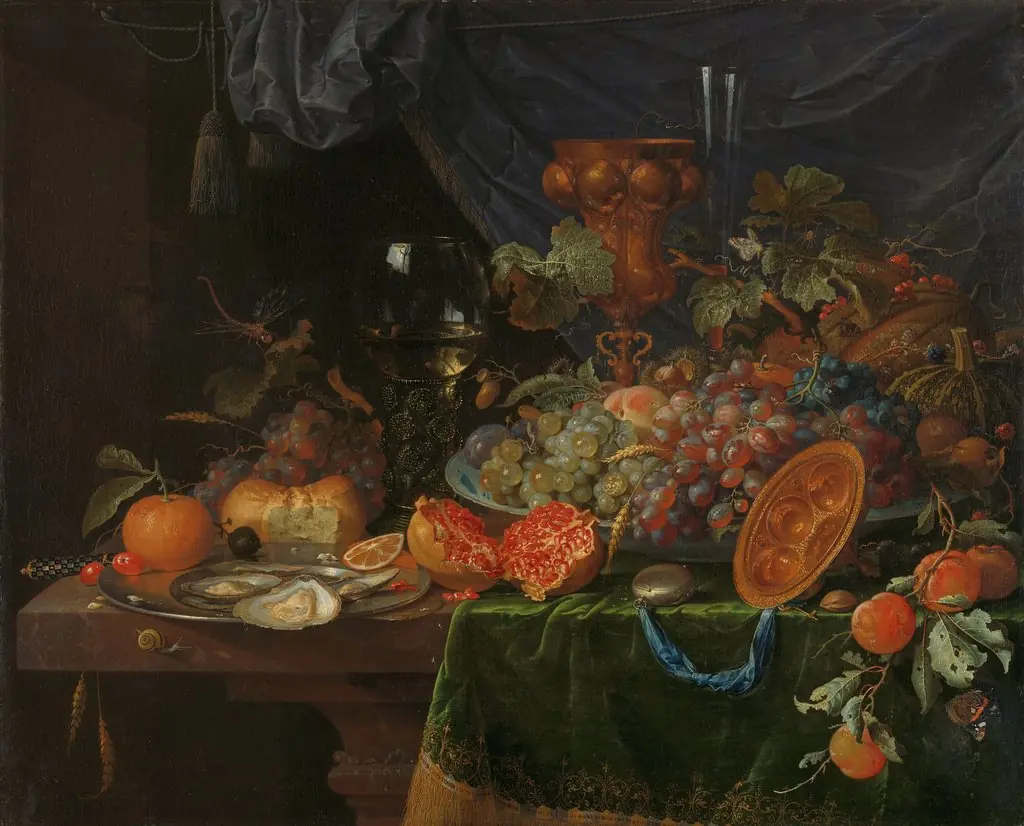
Abraham van Beijeren's composition presents a lavish still life arrangement set upon a table covered with an ornate draped cloth. The foreground features an assortment of fruit, emphasizing textures and natural forms typical of the genre. Behind this display, a curtain is drawn back to reveal a niche containing a sculpture of Venus, the classical goddess of love and beauty.
This inclusion of a classical statue within a domestic setting creates a layered iconography, juxtaposing the perishable nature of the fruit with the enduring ideal of the sculpted figure. The work synthesizes elements of opulent tableware and drapery with allegorical references to antiquity.
Technique & Style
Painted in oil on canvas, the work measures 129 cm by 132.5 cm and depicts fruit on a draped table beneath a curtain that reveals a sculptural Venus in a niche. Executed in 1659 by Abraham van Beijeren, the composition combines richly detailed still‑life elements with a theatrical setting that merges painted genre with sculptural reference, reflecting the Dutch Golden Age interest in illusionistic space and layered narrative. The surface retains its original handling characteristics, showing fine brushwork and subtle glazing that model forms with a luminous finish.
History & Provenance
The painting is held in the collection of the Gemäldegalerie Berlin. It is cataloged as an oil on canvas work depicting a still life with a sculpture of Venus. Historical records indicate the work was once owned by Marcell Nemes.
The piece is attributed to Abraham van Beijeren and dates to the mid-seventeenth century, with inception years recorded as 1659 and 1667.
Legacy
The painting's composition influenced later still-life artists who incorporated sculptural elements and dramatic drapery into their arrangements. Its depiction of a Venus sculpture partially revealed behind a curtain contributed to renewed interest in Baroque reinterpretations of classical themes during the 18th century. The work's provenance through collector Marcell Nemes highlighted the painting's significance in private European collections before its acquisition by the Gemäldegalerie Berlin, where it remains on display.
Overview
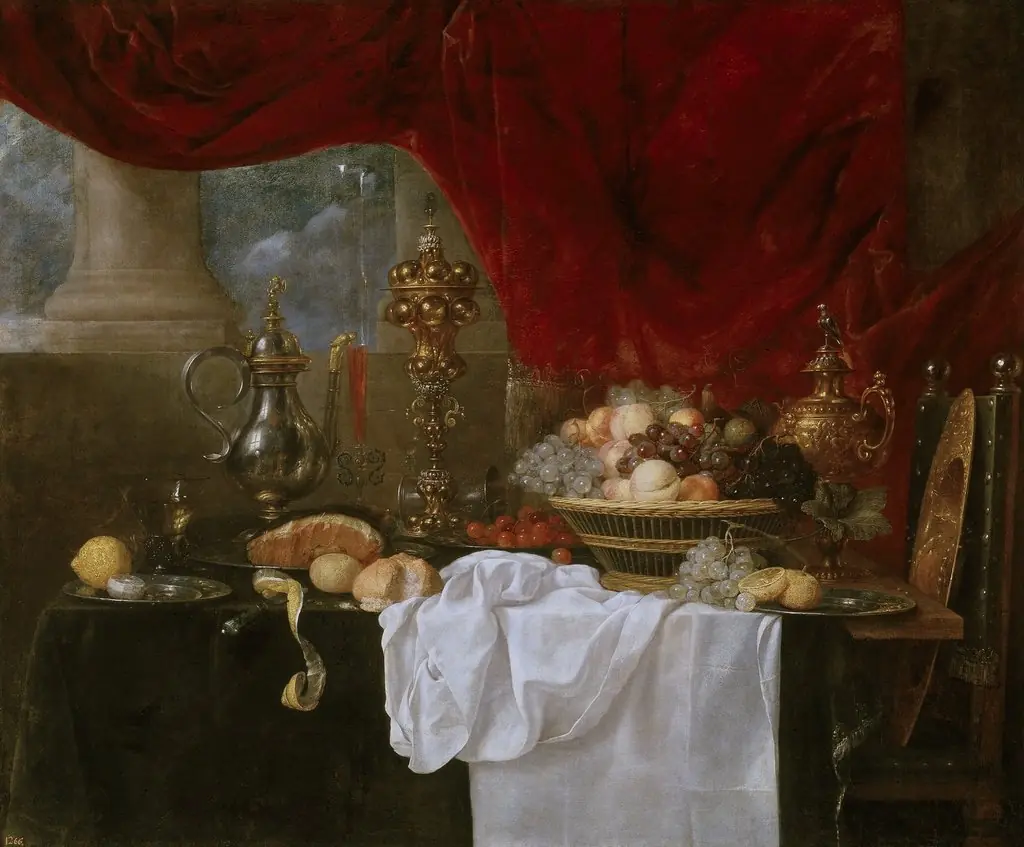
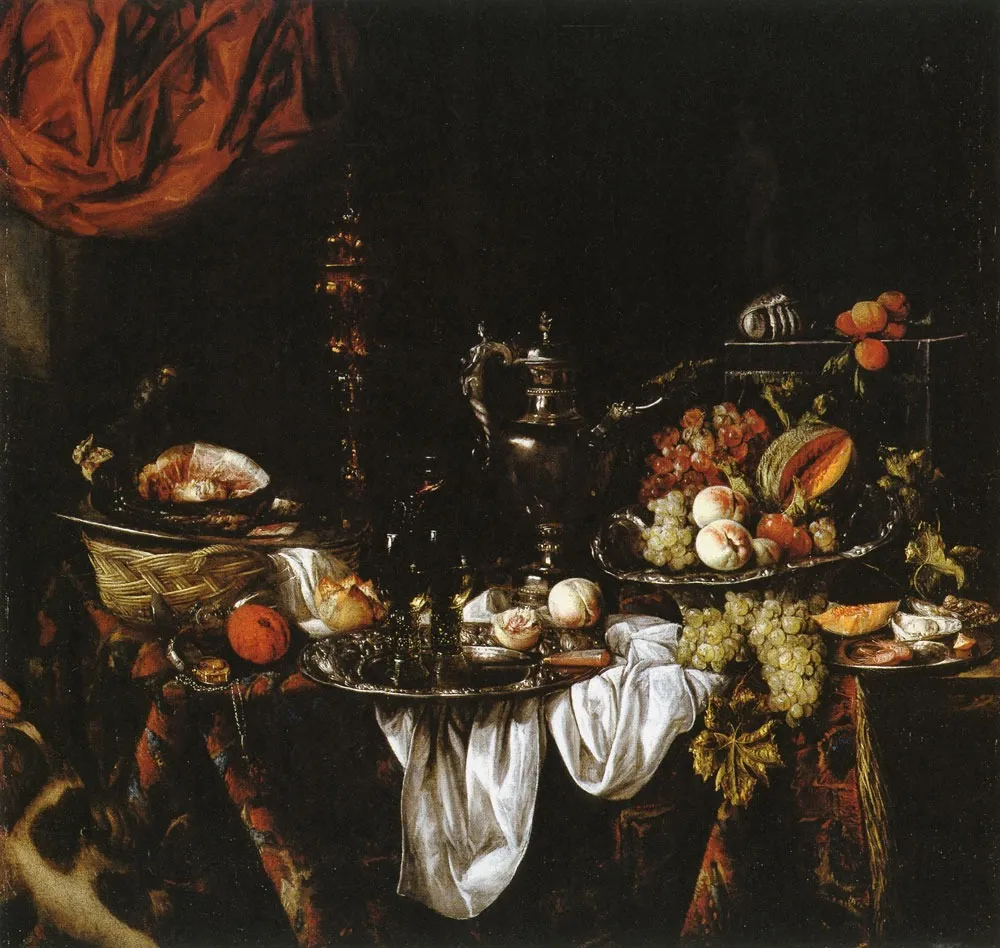
Abraham van Beijeren’s 1659 oil painting presents a richly arranged still life on a darkened table, its surface covered by a white drapery that folds over the edge. The composition includes a silver pitcher, a basket of bread, and a plate laden with grapes, peaches and a melon, all rendered with careful attention to texture and form. In the recessed space behind a curtain, a small classical sculpture of a female figure is partially concealed, adding depth to the scene.
Context
Created during the height of the Dutch Golden Age, the painting reflects contemporary tastes for opulent still‑life compositions that celebrated prosperity and the skill of the artist. The inclusion of a classical sculpture aligns with the period’s renewed interest in antiquity, while the sumptuous food items echo the era’s thriving trade networks.
Artist & collection
Artist
Abraham Hendriksz van Beijeren or Abraham van Beyeren (c. 1620, The Hague – March 1690, Overschie (Rotterdam)) was a Dutch Baroque painter of still lifes. Little recognized in his day and initially active as a marine…

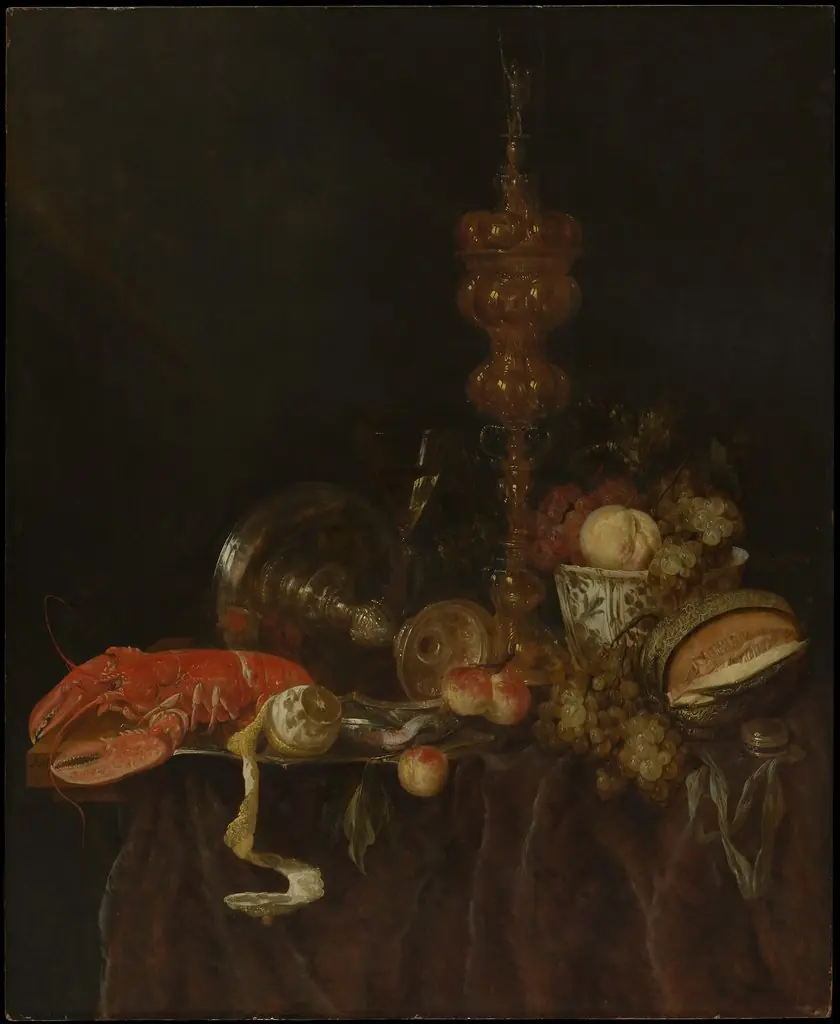 Still Life with Lobster and Fruit
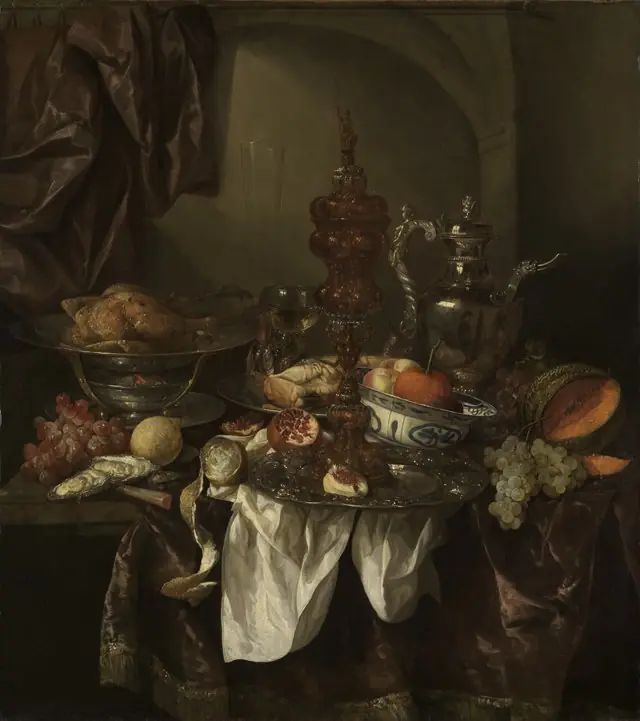 Still life with fruit, roast, silver- and glassware, porcelain and columbine cup on a dark tablecloth with white serviette
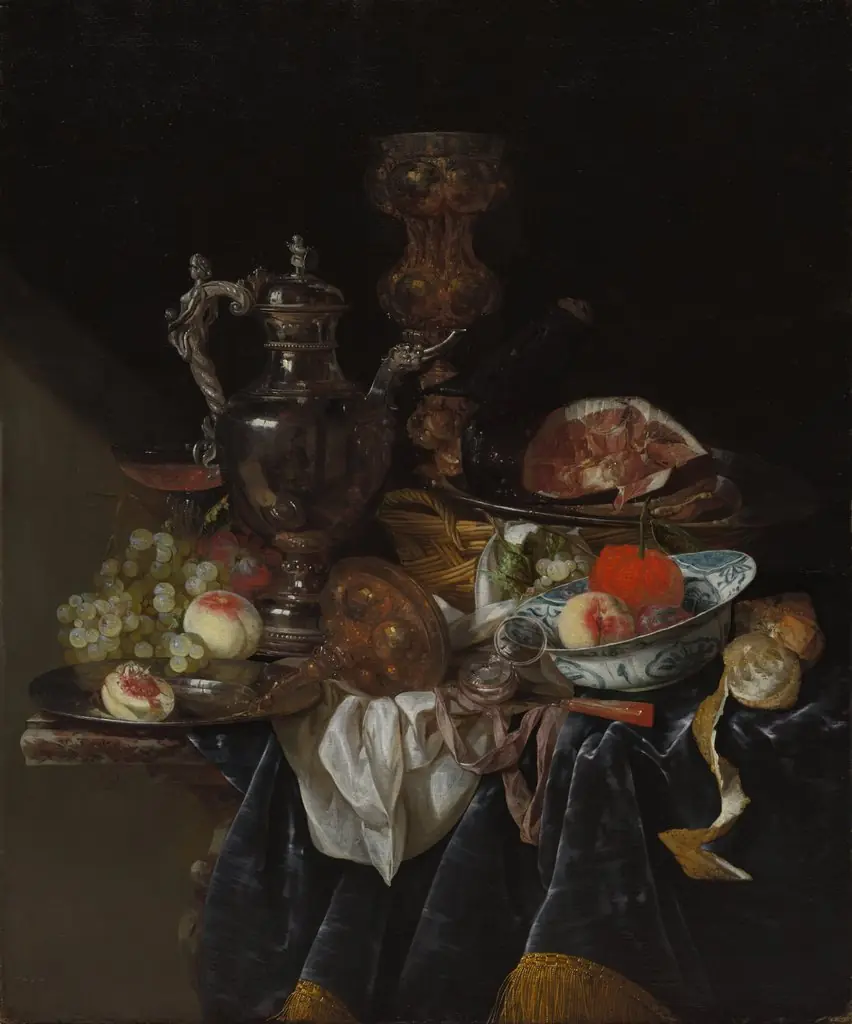 Silver Wine Jug, Ham, and Fruit
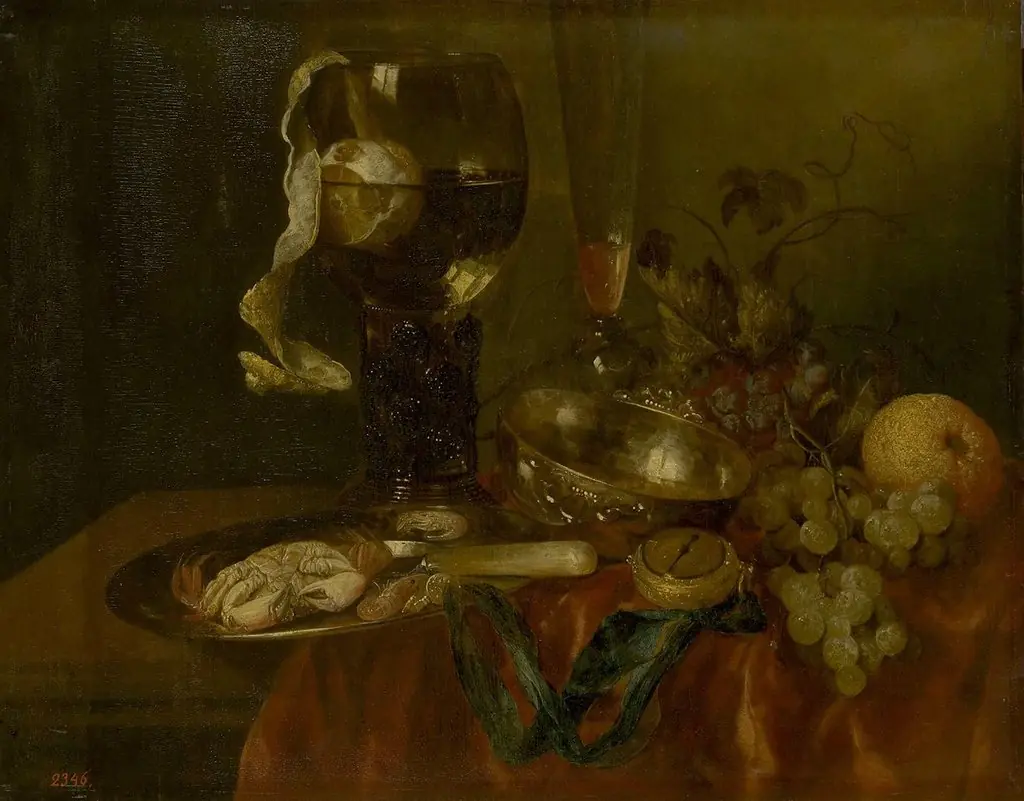 Snack (Still Life with Crab, Fruit and Clock)
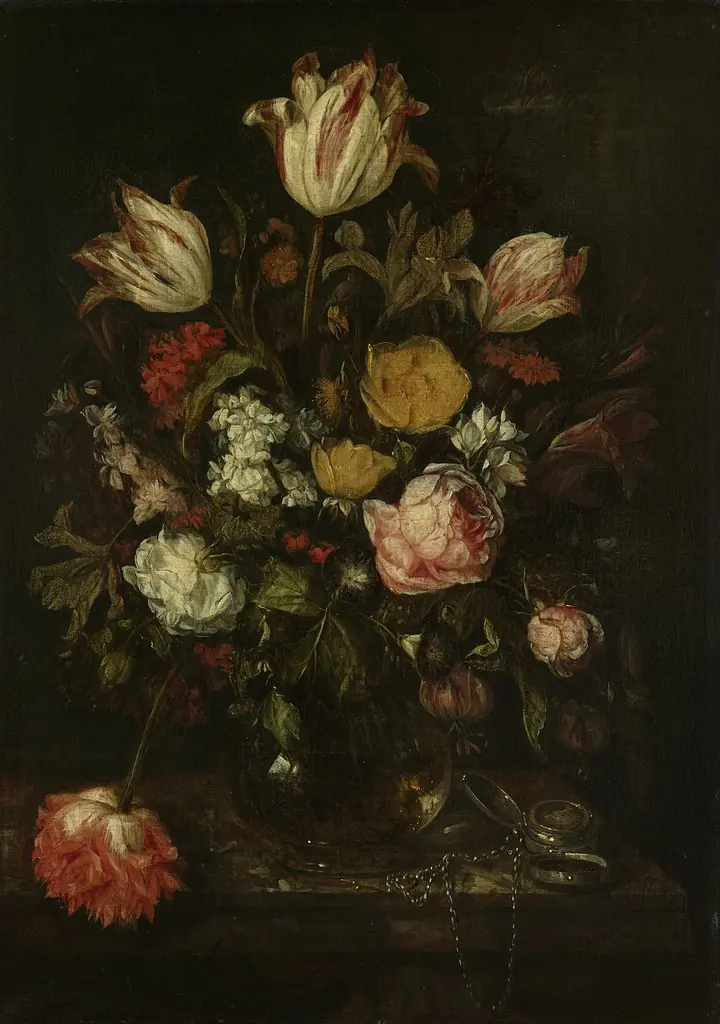 Still life with flowers
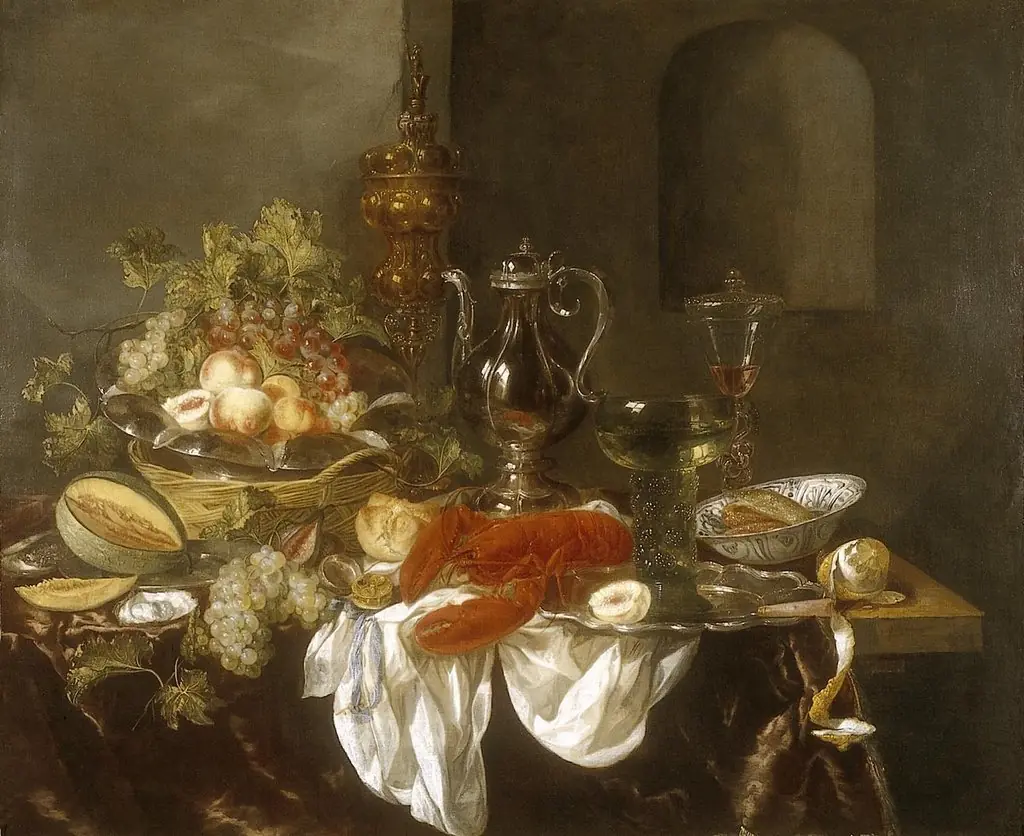 still-life
 Still Life with Silver-gilt Bekerschroef with Roemer
 Stille life