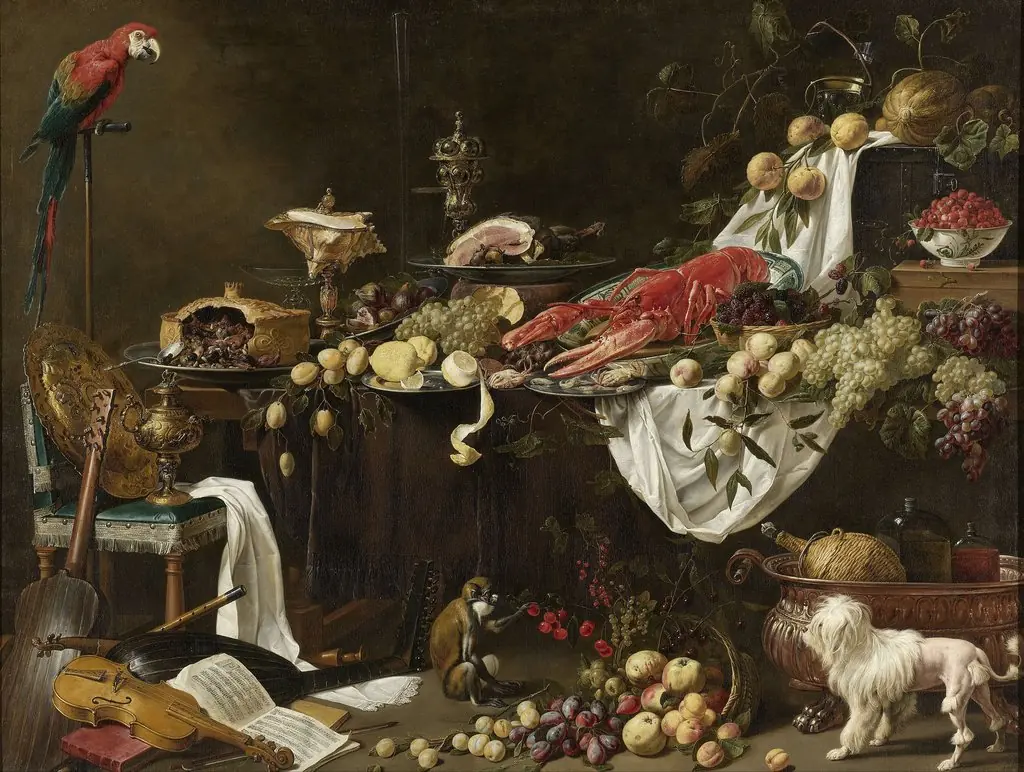
Artwork
still-life
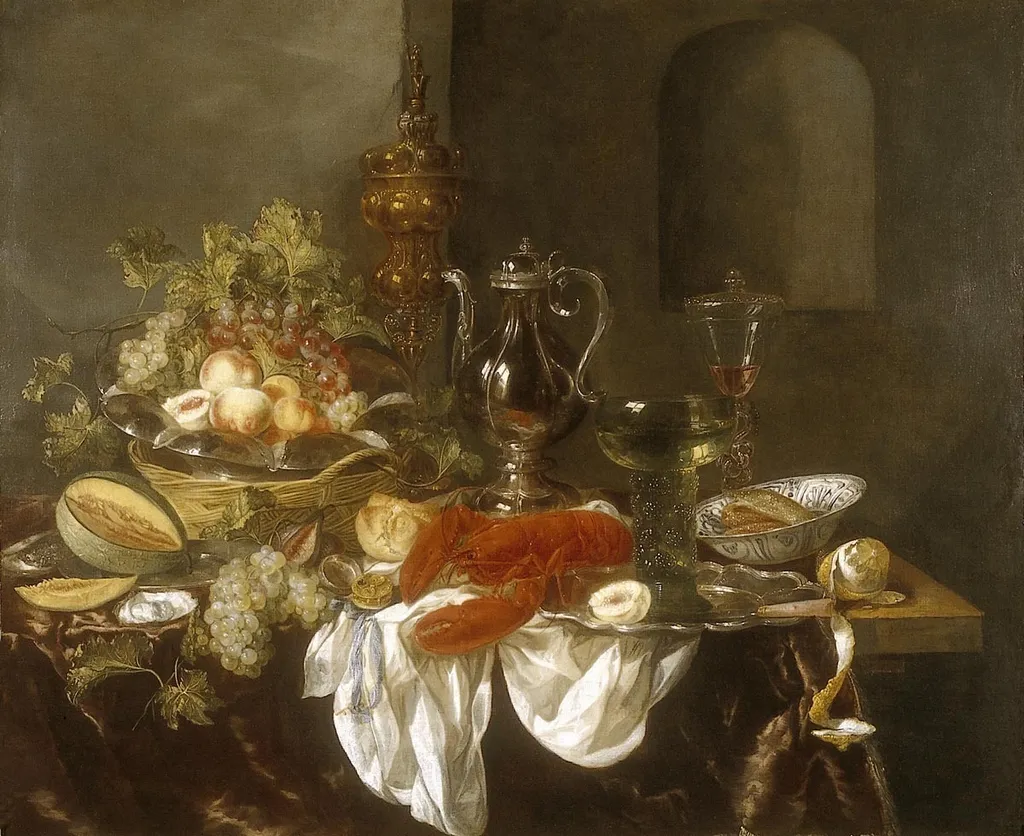
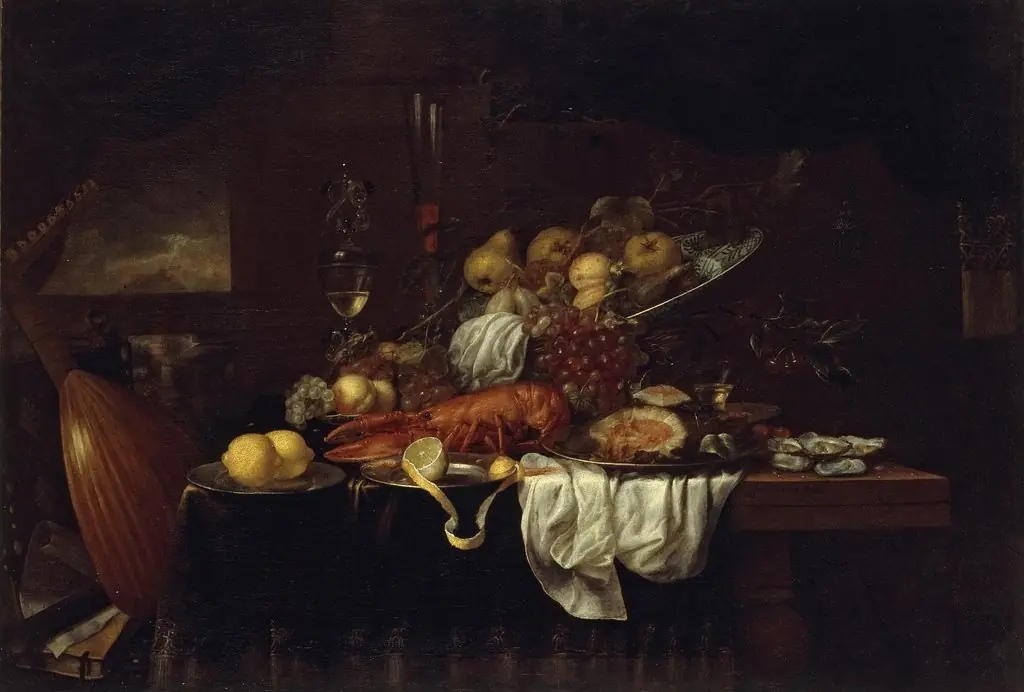
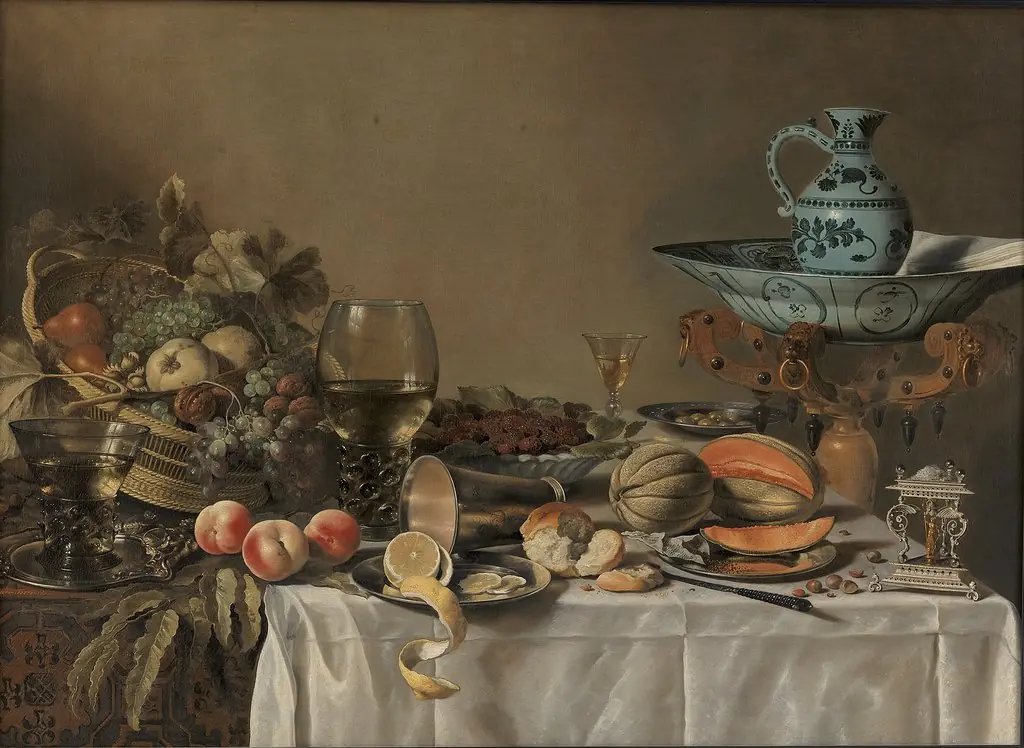
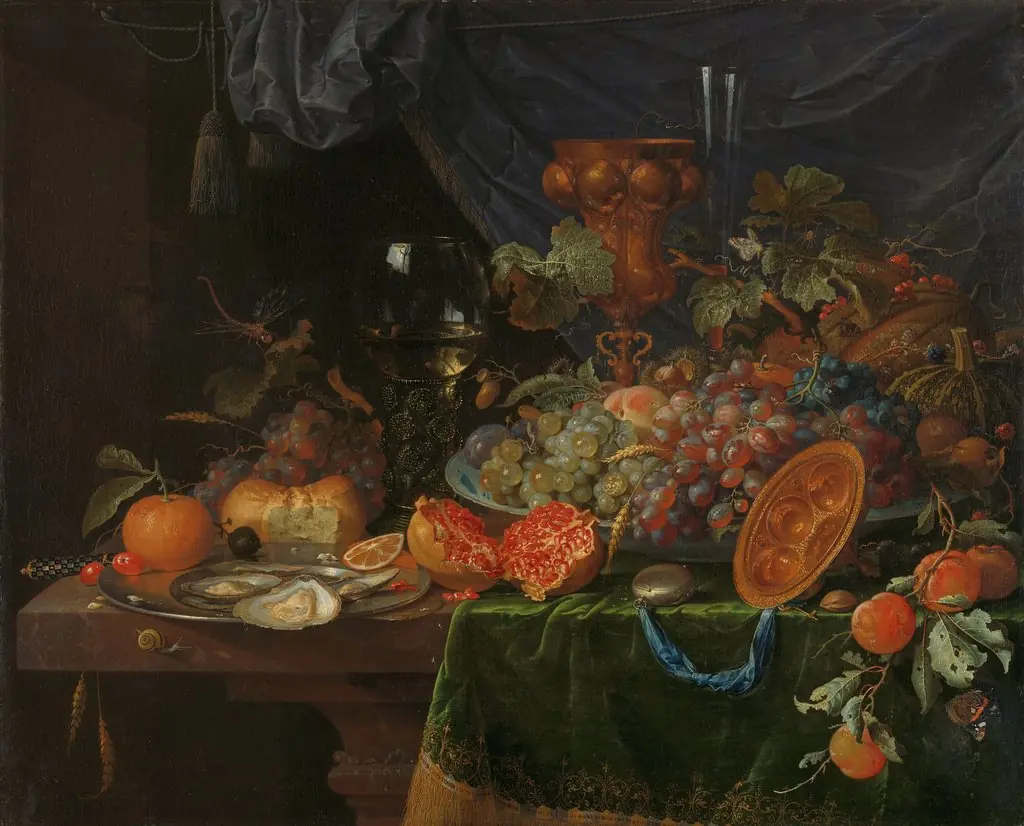
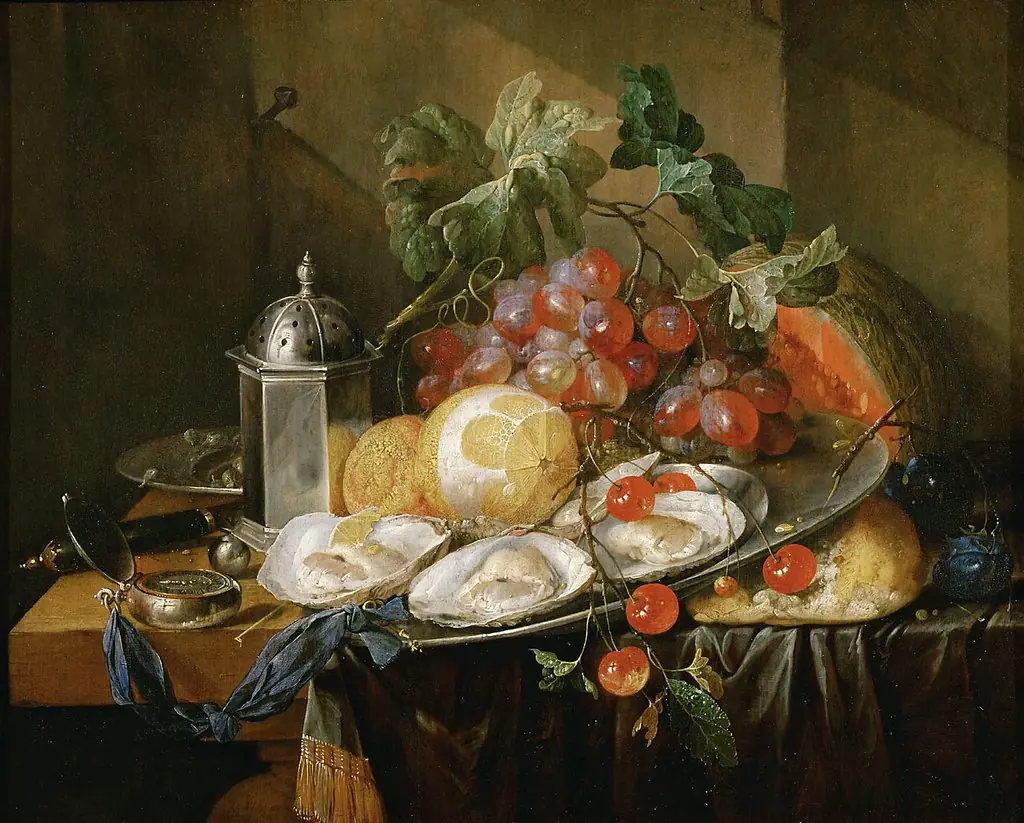
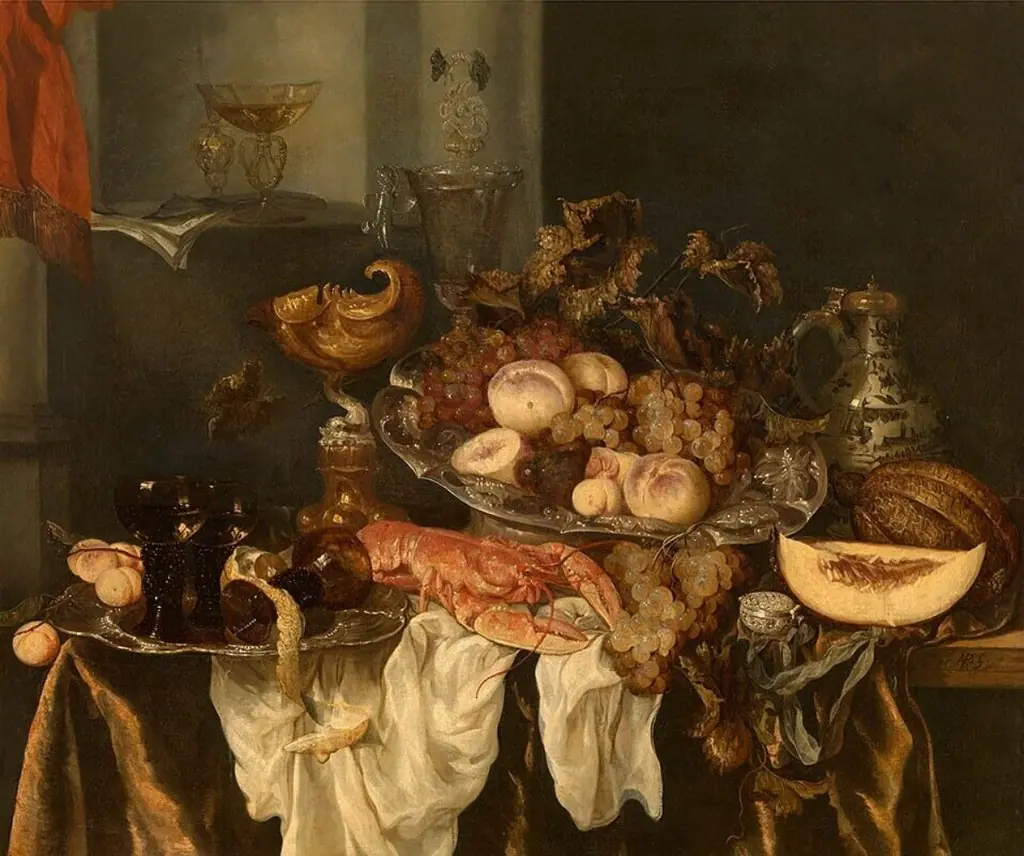
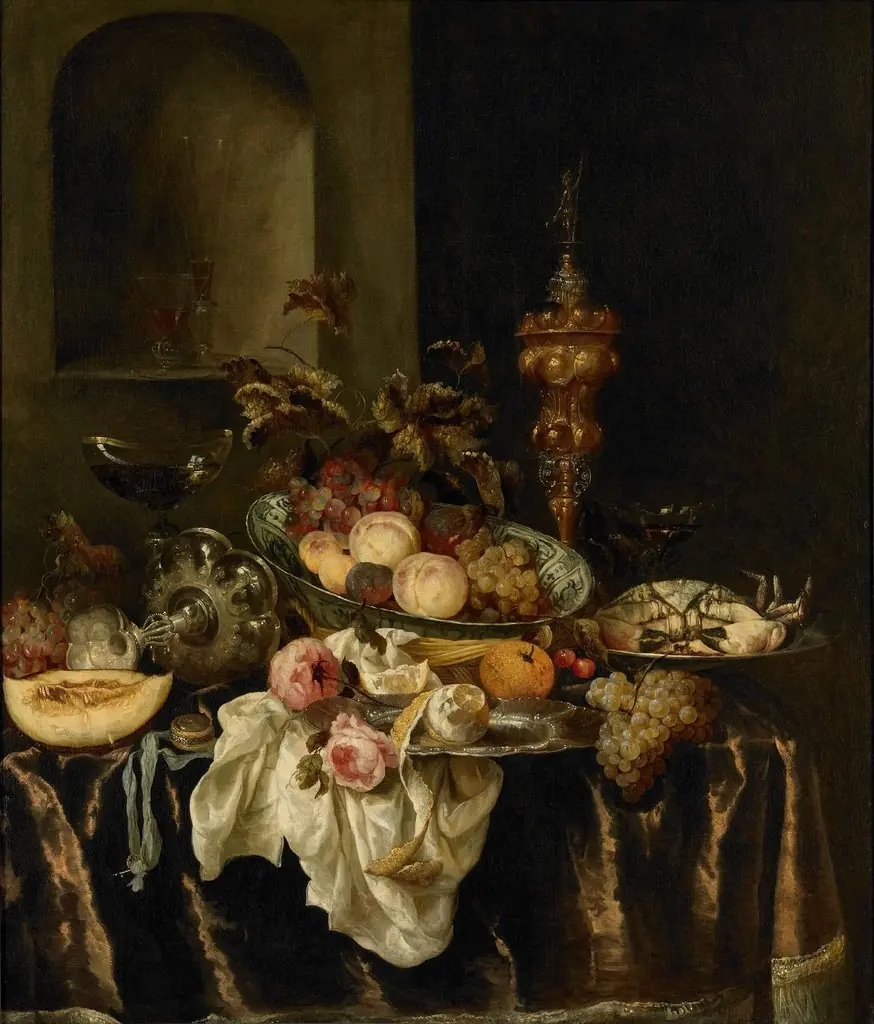
still-life is an oil painting by the Dutch Golden Age artist Abraham van Beijeren. It dates from 1650 and is held in the collection of the Führermuseum.
About this work
Subject & Meaning
The painting presents a direct representation of botanical elements, utilizing the medium of oil on canvas to capture the visual details of the blooms.
Abraham van Beijeren's 1650 oil painting is classified within the still-life genre and specifically depicts flowers. As a work centered on floral subjects, it adheres to the traditional iconography of the Dutch Golden Age, where such arrangements often served as meditations on the transience of life and the beauty of nature. The painting presents a direct representation of botanical elements, utilizing the medium of oil on canvas to capture the visual details of the blooms.
Technique & Style
The painting is executed in oil paint on a canvas support, a medium typical of mid‑17th‑century Dutch still‑life practice. Abraham van Beijeren applied the oil in layers to render the depicted flowers with attention to texture and light, consistent with his known handling of the medium. The work dates to 1650, and its dimensions are approximately 102.5 cm in height and 121.0 cm in width.
History & Provenance
Abraham van Beijeren created this oil-on-canvas still life in 1650. The work depicts flowers and measures 102.5 cm in height by 121.0 cm in width. Its provenance includes holdings by the Führermuseum in Vienna and the Munich Central Collecting Point during the mid-20th century.
The painting subsequently entered the collection of the Cultural Heritage Agency of the Netherlands, passing through entities such as Stichting Nederlands Kunstbezit and the Rijksdienst Beeldende Kunst. It is currently associated with the Prinsenhof in Delft and has also been linked to the Groninger Museum.
The painting is held in the collection of Museum Het Prinsenhof in Delft. According to provenance records, it is associated with multiple institutional holdings over time, including the Rijksmuseum, the Groninger Museum, the Cultural Heritage Agency of the Netherlands Art Collection, Stichting Nederlands Kunstbezit, the Dienst Verspreide Rijkscollecties, the Rijksdienst Beeldende Kunst, and the Instituut Collectie Nederland. Its documented location history also includes the Führermuseum and the Munich Central Collecting Point, indicating that the work was displaced during the Second World War before being returned to Dutch custody. No specific accession number or exhibition history is recorded in the available sources.
Context
Abraham van Beijeren was a Dutch Golden Age painter active in the mid-to-late 17th century, known for his contributions to the still-life genre, particularly banquet and fruit still lifes. His work emerged during a period when such paintings adorned the homes of wealthy merchants and reflected the era's fascination with abundance and sensory richness. The still-life attributed to him, dated 1650, exemplifies this tradition with its detailed depiction of flowers, rendered in oil on canvas.
His paintings are held in significant institutional collections, including Museum Het Prinsenhof and various branches of the Dutch state-sponsored art repositories, underscoring his enduring presence in both physical and scholarly art historical discourse.
Scholarly attention to van Beijeren's work has focused on his technical mastery and compositional innovations within the still-life genre, situating him among the prominent Dutch painters of the era who elevated everyday subjects to high artistic status.
Overview
Created circa 1650 by the Dutch painter Abraham van Beijeren, this oil on canvas belongs to the Baroque period of the Dutch Golden Age. Though the artist first earned a reputation for maritime scenes, he later turned to still-life compositions that showcase sumptuous objects. The work is presently owned by the Rijksmuseum and presents a solitary flower amid a richly detailed arrangement of food and tableware.
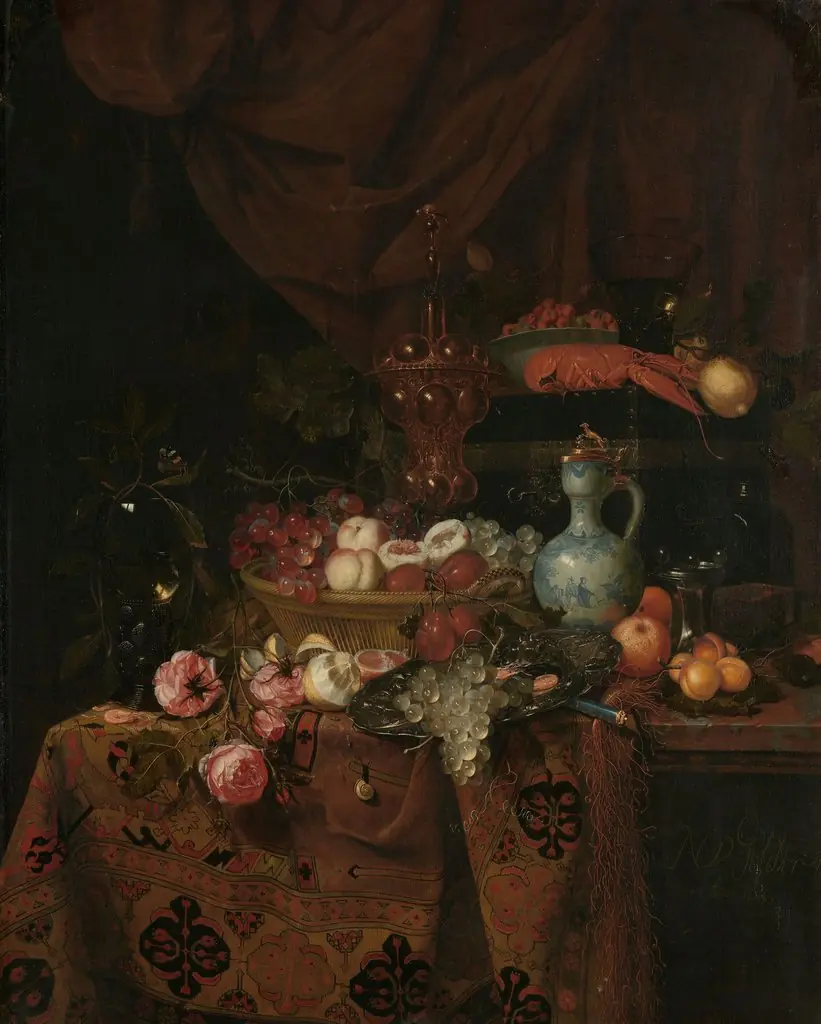
Artist & collection
Artist
Abraham Hendriksz van Beijeren or Abraham van Beyeren (c. 1620, The Hague – March 1690, Overschie (Rotterdam)) was a Dutch Baroque painter of still lifes. Little recognized in his day and initially active as a marine…
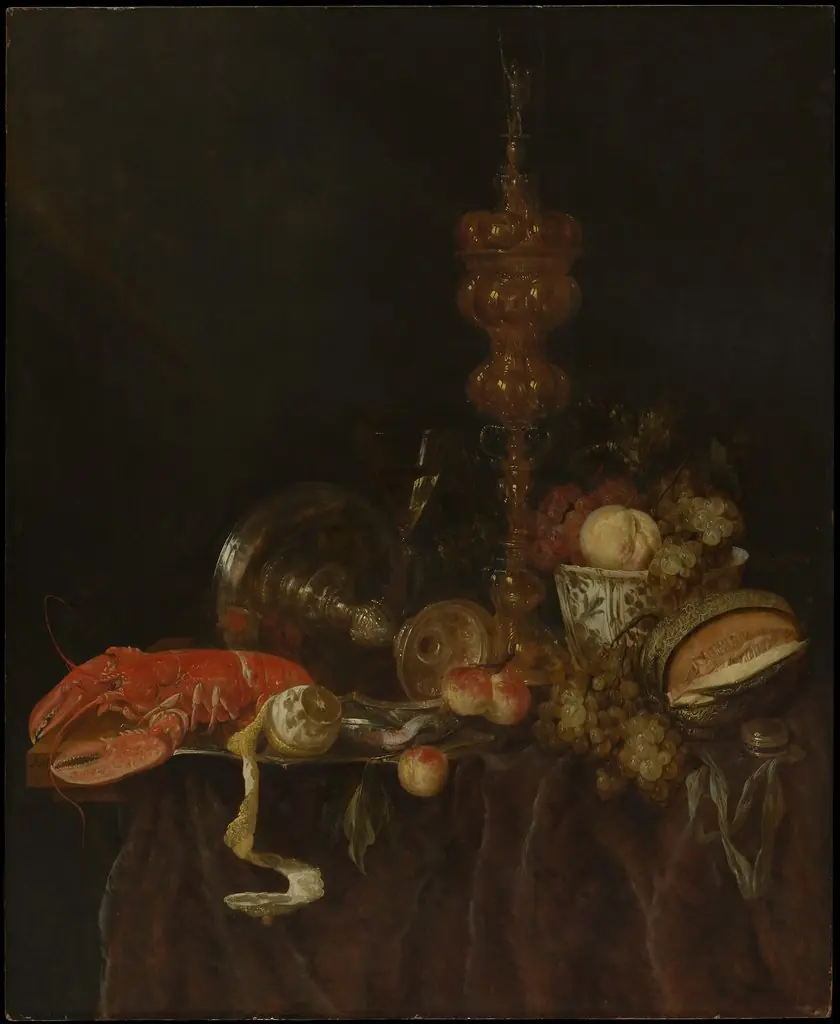 Still Life with Lobster and Fruit
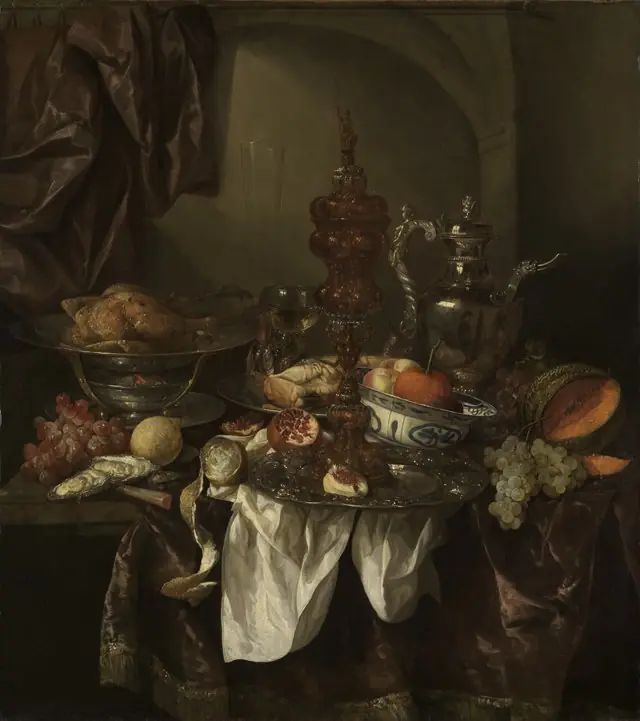 Still life with fruit, roast, silver- and glassware, porcelain and columbine cup on a dark tablecloth with white serviette
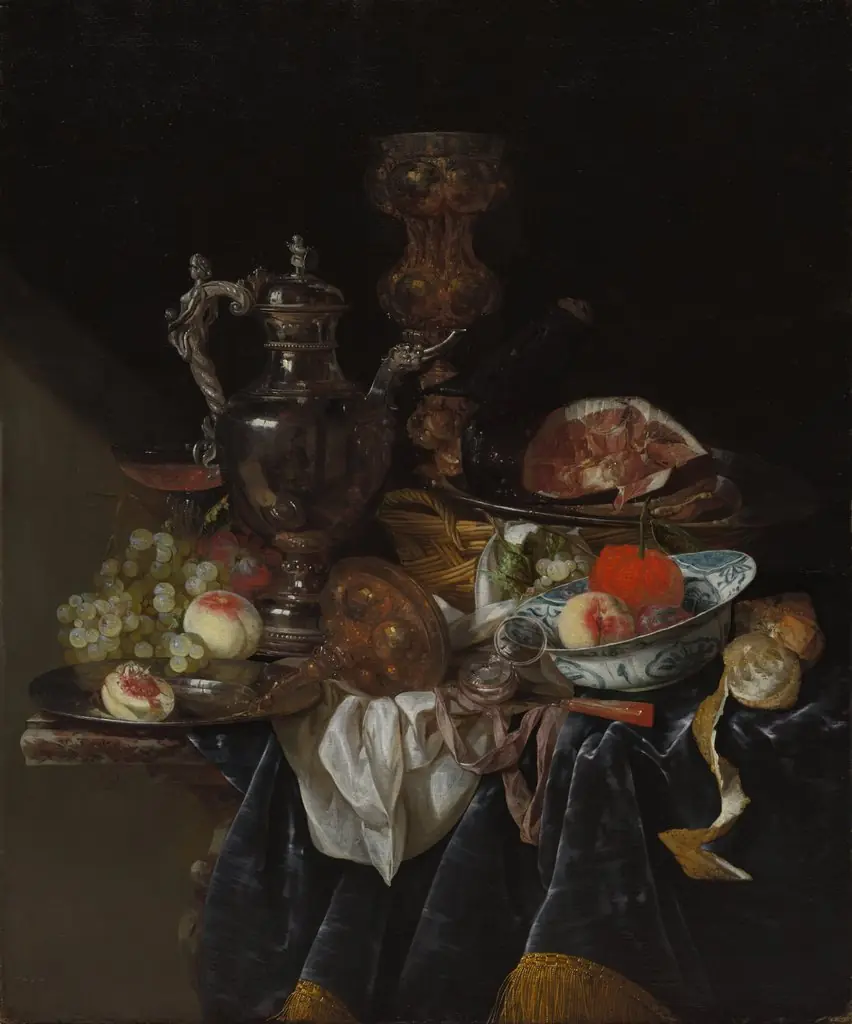 Silver Wine Jug, Ham, and Fruit
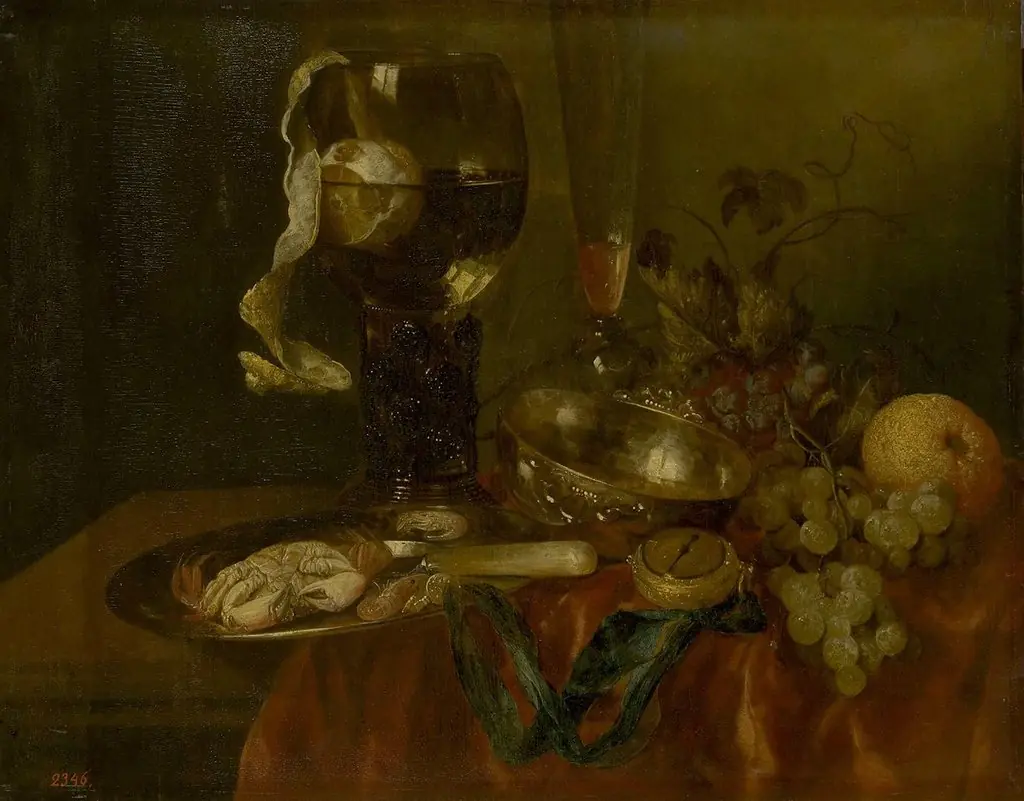 Snack (Still Life with Crab, Fruit and Clock)
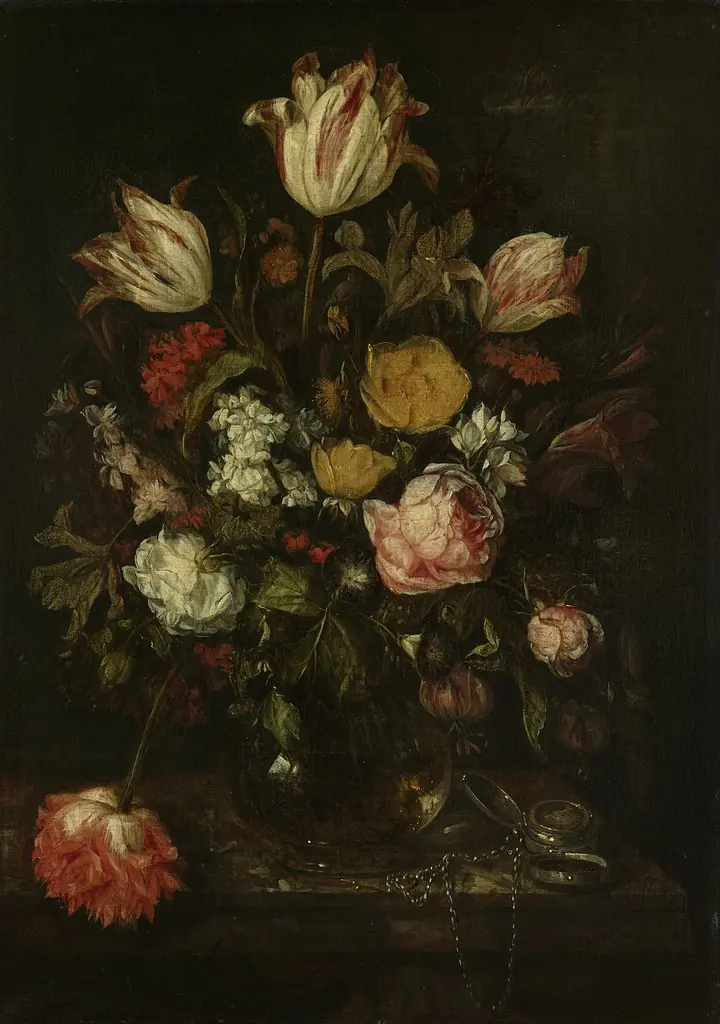 Still life with flowers
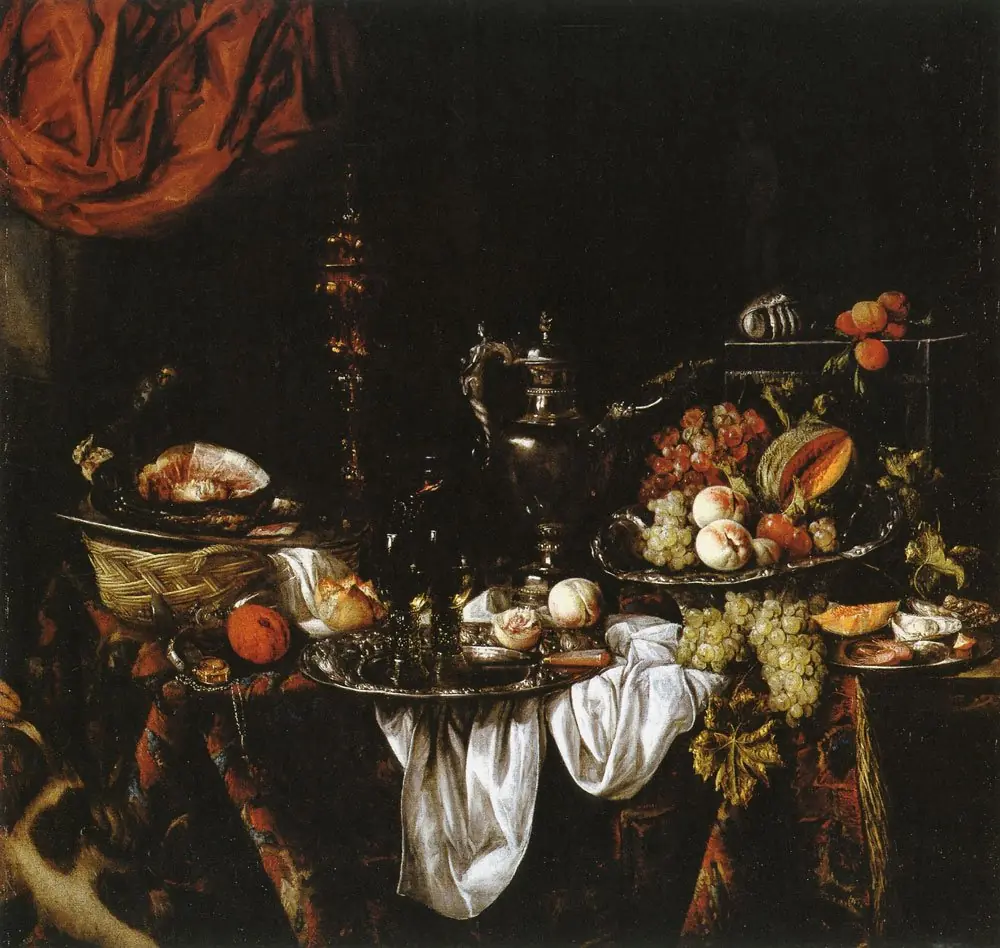 Still life on a draped table with a sculpture of Venus in a niche behind a curtain
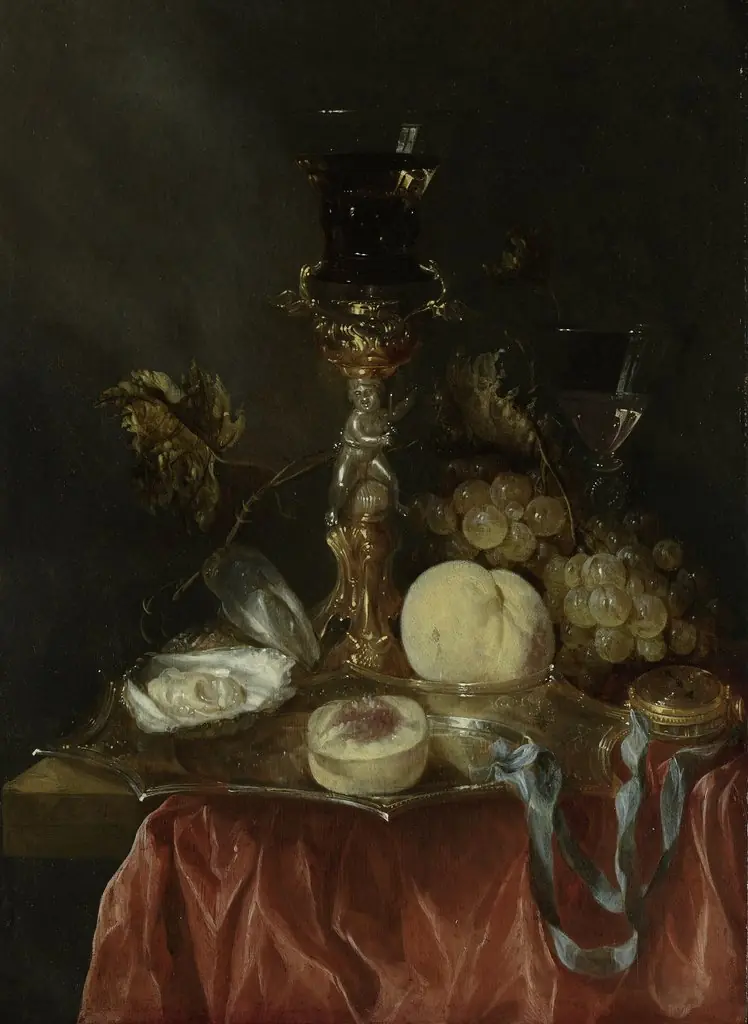 Still Life with Silver-gilt Bekerschroef with Roemer
 Stille life