Artwork
Snack (Still Life with Crab, Fruit and Clock)
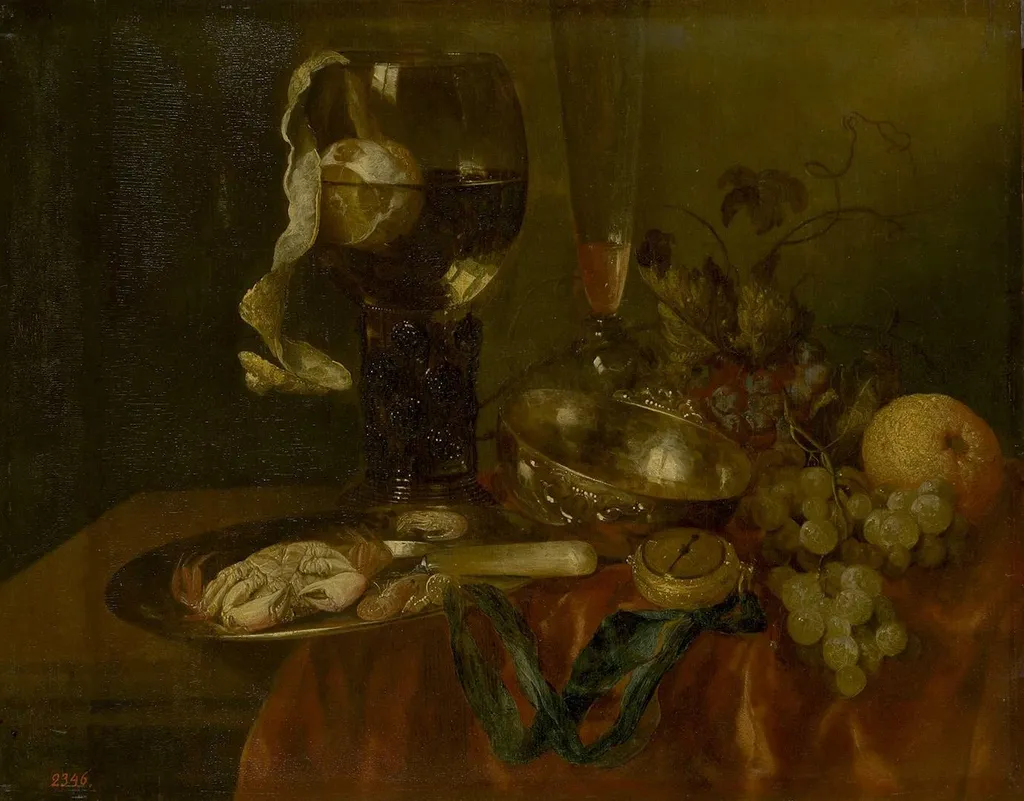
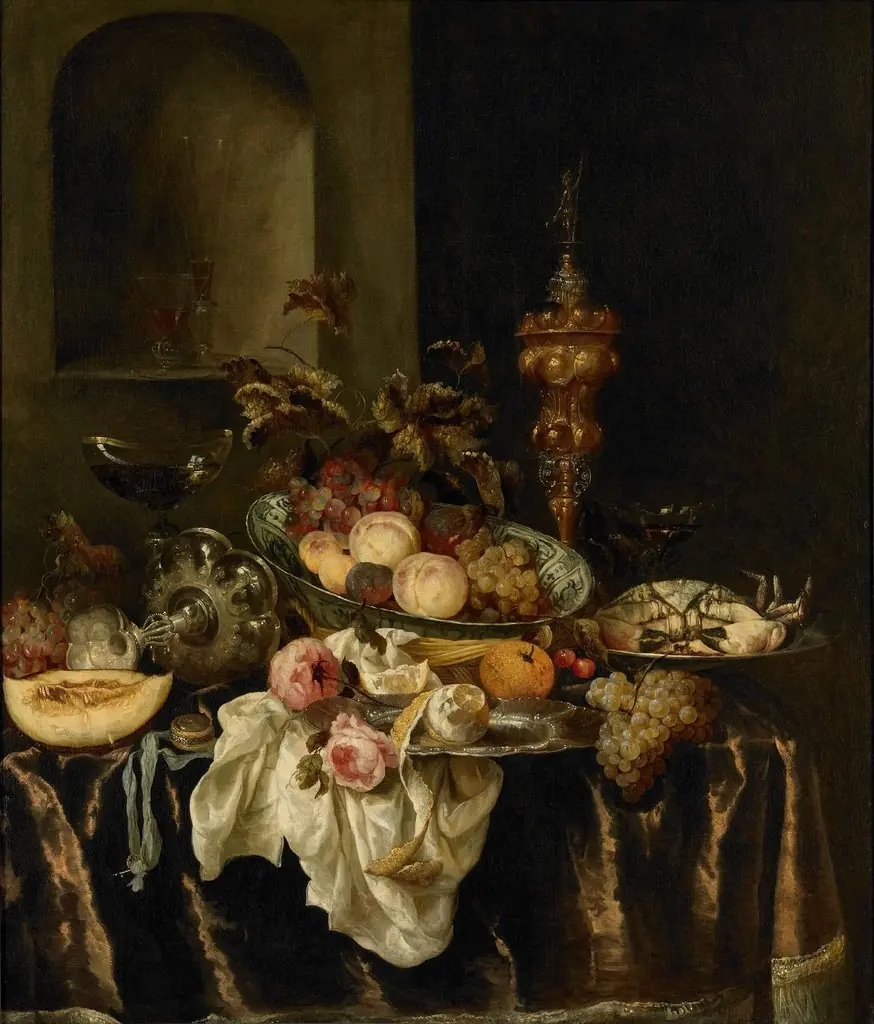
Snack (Still Life with Crab, Fruit and Clock) is an oil painting by the Dutch Golden Age artist Abraham van Beijeren. It dates from 1659 and is held in the collection of the Hermitage Museum.
About this work
Subject & Meaning
The juxtaposition of perishable items like fruit and seafood with a timekeeping device serves as a visual metaphor for the transience of life.
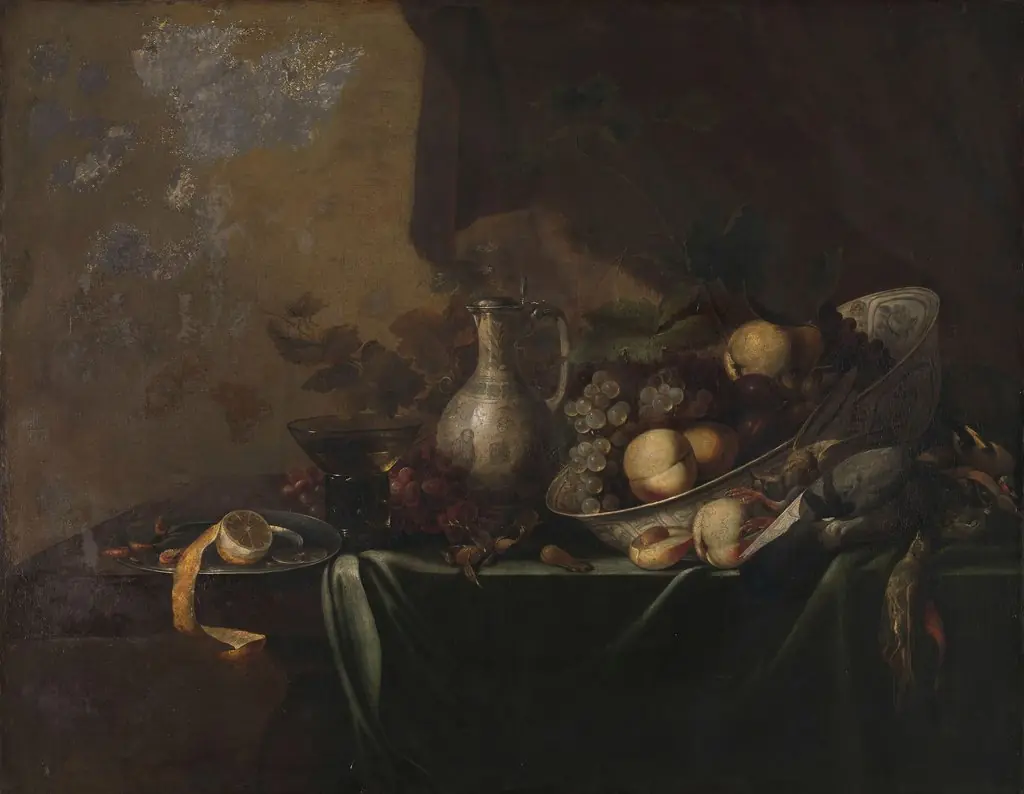
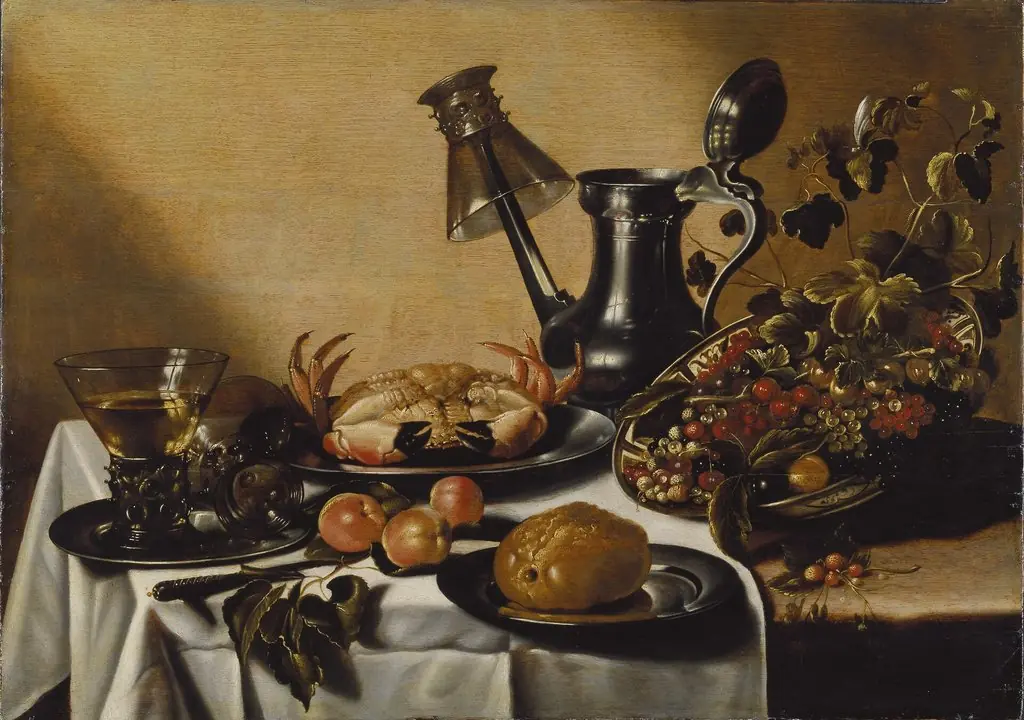
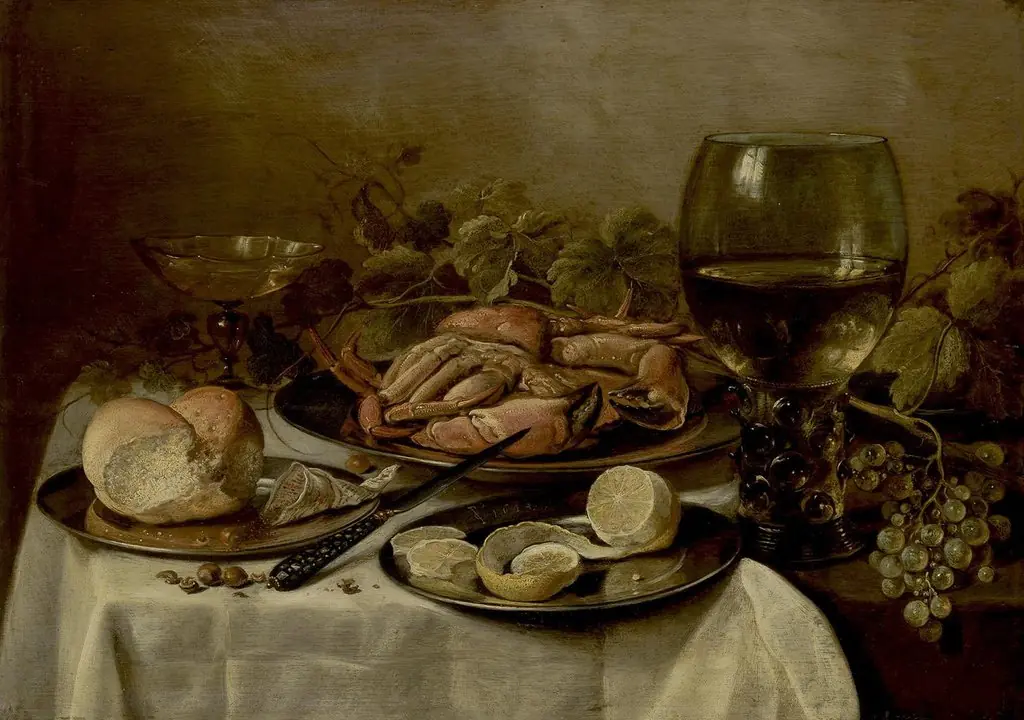
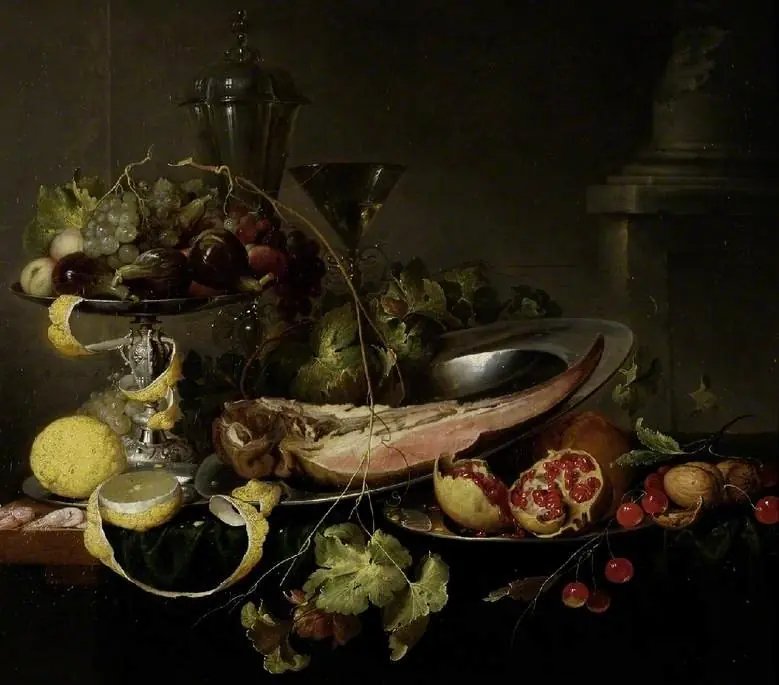
Abraham van Beijeren's 1659 still life presents a lavish assembly of food and luxury objects, specifically featuring a crab, various fruits including lemons and grapes, and drinking vessels such as a rummer and a wine glass. Central to the composition is a watch or clock, which introduces a temporal element to the otherwise sensual display of earthly abundance.
The juxtaposition of perishable items like fruit and seafood with a timekeeping device serves as a visual metaphor for the transience of life. This iconography aligns with the vanitas tradition, where the depiction of fleeting pleasures and the inevitable passage of time reminds the viewer of mortality and the futility of material excess.
History & Provenance
Painted in 1659 and dated by the artist on the panel, the still life entered the collection of the Hermitage Museum in Saint Petersburg, Russia, where it has remained in public ownership since at least the mid-nineteenth century. Executed in oil on panel, it depicts a still-life arrangement featuring a crab, fruit, and a watch. The available sources do not list a specific inventory number or detail any past exhibitions for the work.
Overview
Abraham van Beijeren's Snack (Still Life with Crab, Fruit and Clock), painted in 1659, exemplifies the Dutch Golden Age still life genre. Rendered in oil, this painting presents an array of objects meticulously arranged on a table. It showcases the artist's skill in depicting diverse textures and forms, inviting viewers to observe the detailed representation of everyday items and luxurious elements. The work is a notable example of 17th-century Dutch art.
Technique & Style
Van Beijeren employed a realistic style, rendering each object with meticulous attention to detail and precise shading, which imparts a lifelike quality to the composition. The artist utilized a palette dominated by muted earth tones, contributing to the painting's subdued atmosphere. This careful execution of light and shadow, combined with the arrangement of forms, effectively conveys a sense of depth and varied textures across the canvas.
Context
Created during the Dutch Golden Age, Snack (Still Life with Crab, Fruit and Clock) reflects the period's appreciation for the still life genre. Such paintings were highly valued for their detailed realism and often served to display the prosperity and refined tastes of the era. Van Beijeren's work fits within this tradition, showcasing a composition typical of 17th-century Dutch art, where everyday objects were elevated through meticulous artistic rendering and thoughtful arrangement.
Artist & collection
Artist
Abraham Hendriksz van Beijeren or Abraham van Beyeren (c. 1620, The Hague – March 1690, Overschie (Rotterdam)) was a Dutch Baroque painter of still lifes. Little recognized in his day and initially active as a marine…

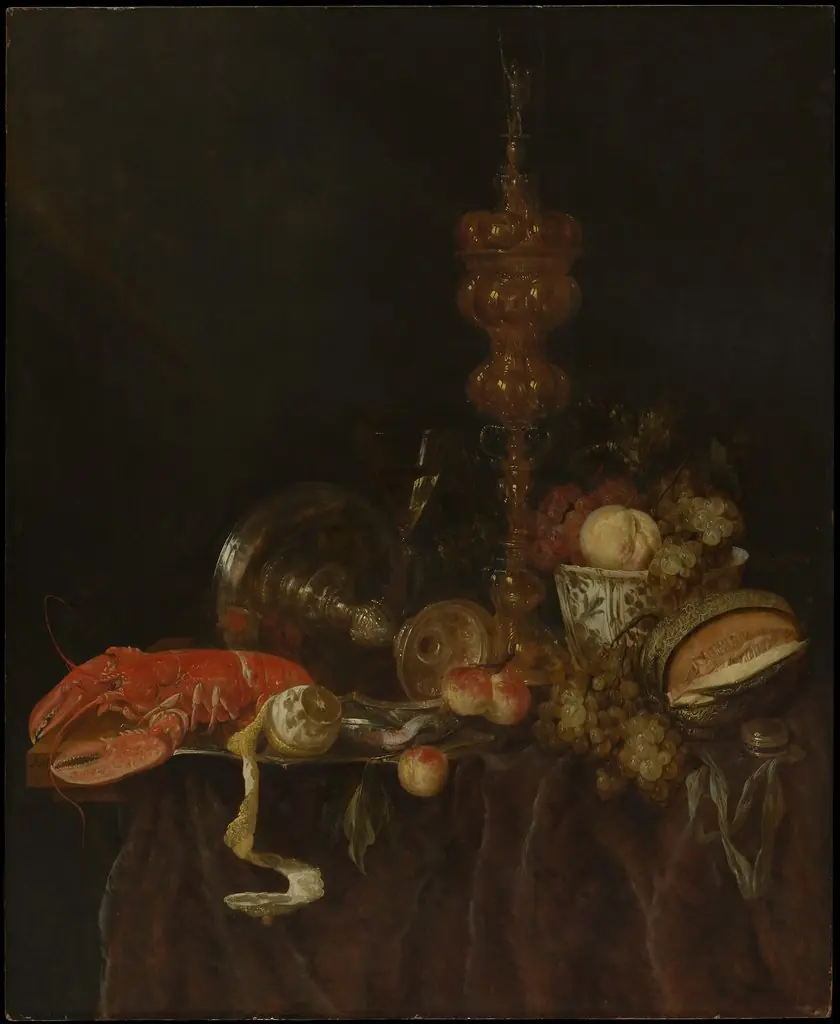 Still Life with Lobster and Fruit
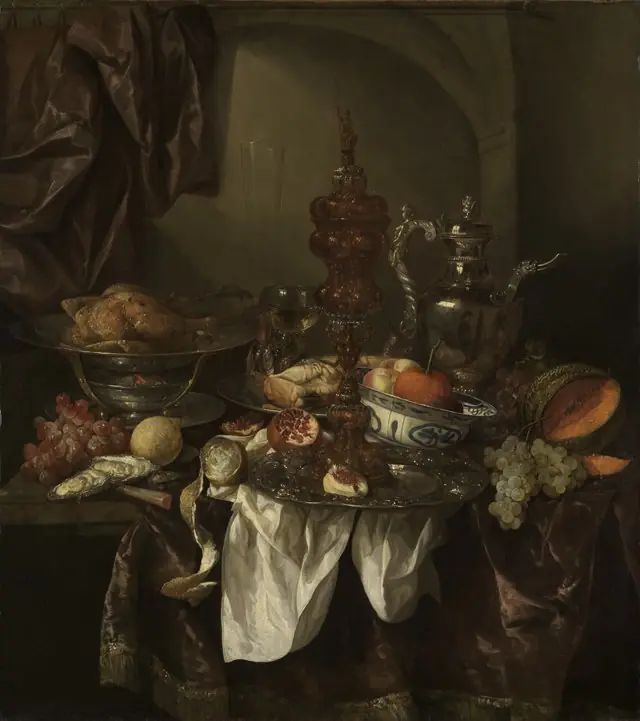 Still life with fruit, roast, silver- and glassware, porcelain and columbine cup on a dark tablecloth with white serviette
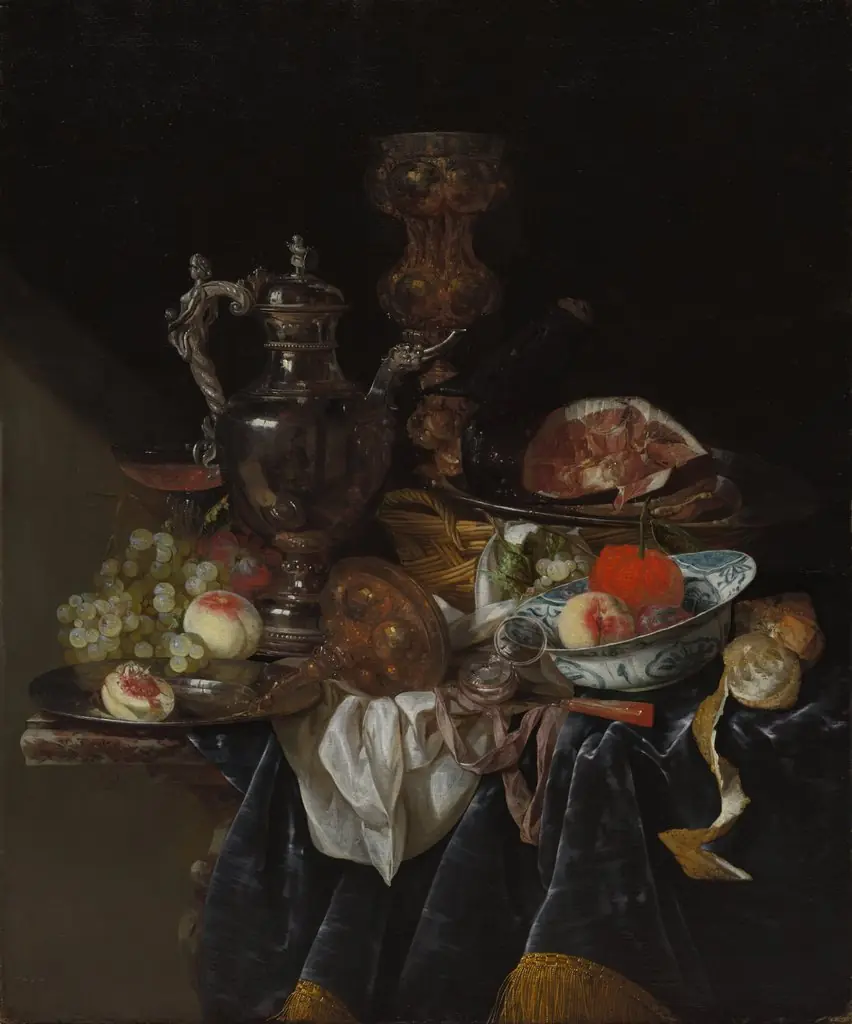 Silver Wine Jug, Ham, and Fruit
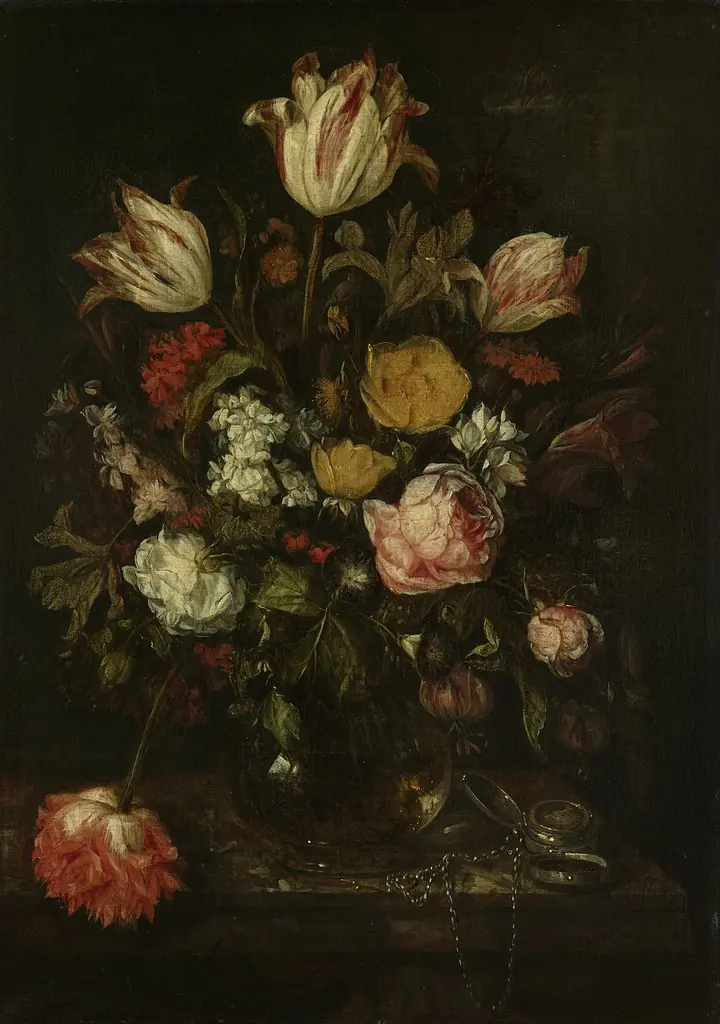 Still life with flowers
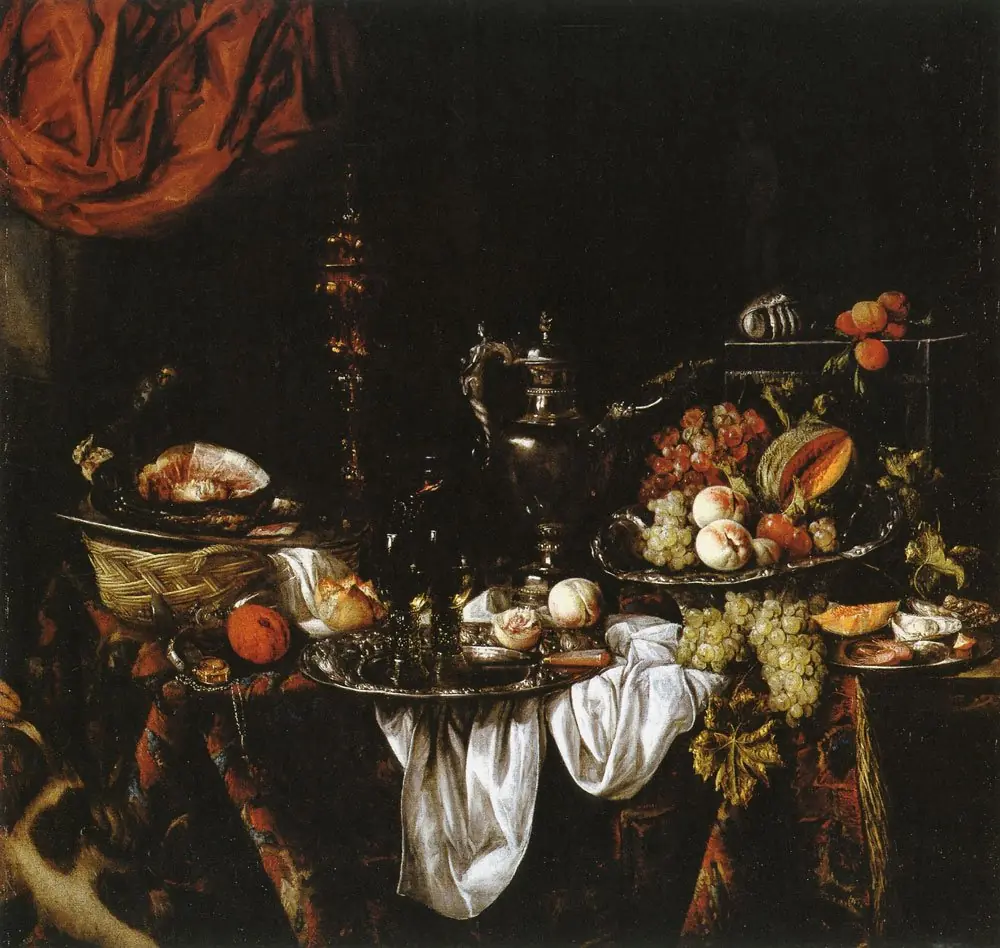 Still life on a draped table with a sculpture of Venus in a niche behind a curtain
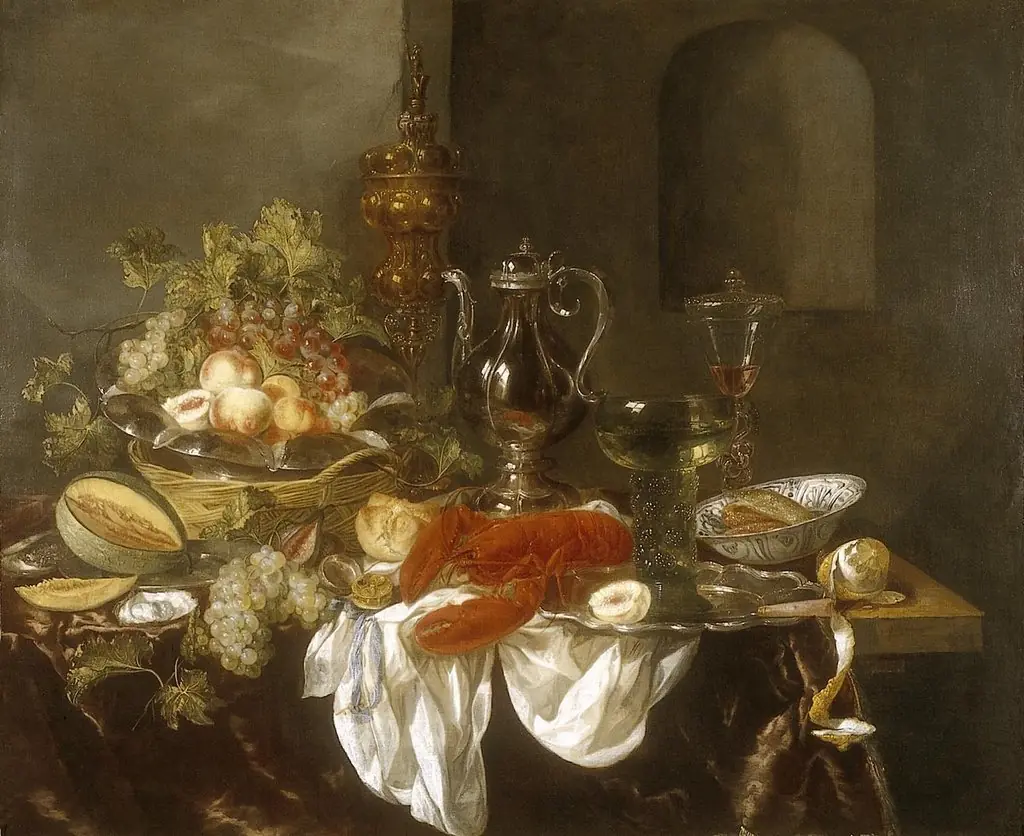 still-life
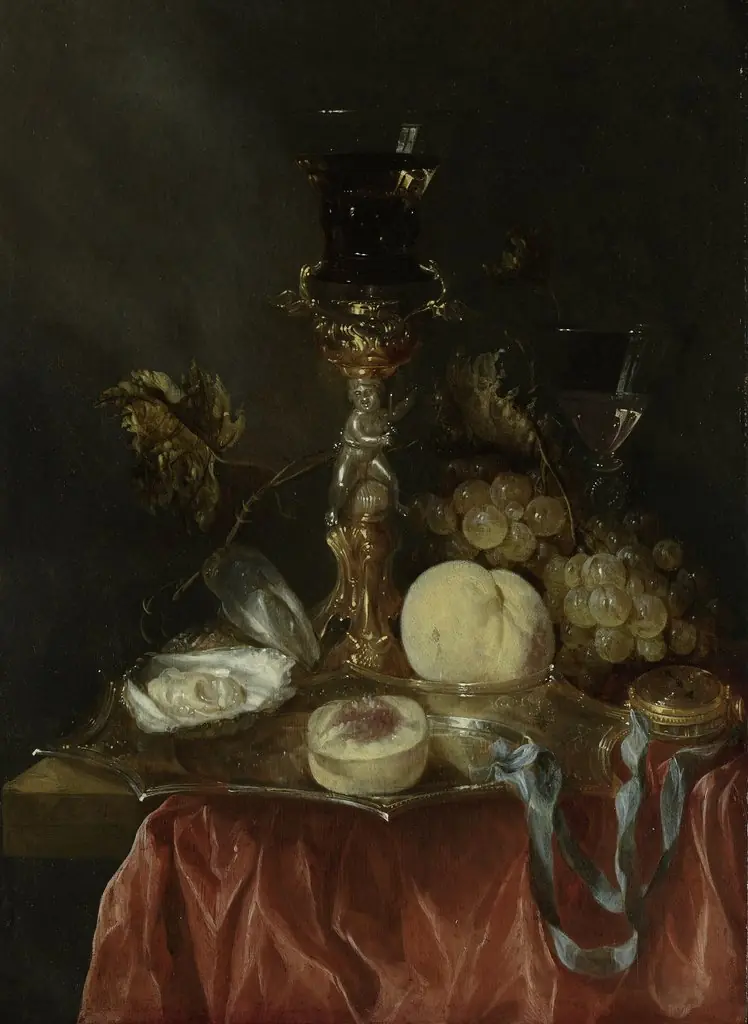 Still Life with Silver-gilt Bekerschroef with Roemer
 Stille life