Artwork
Abraham bewirtet die drei Engel
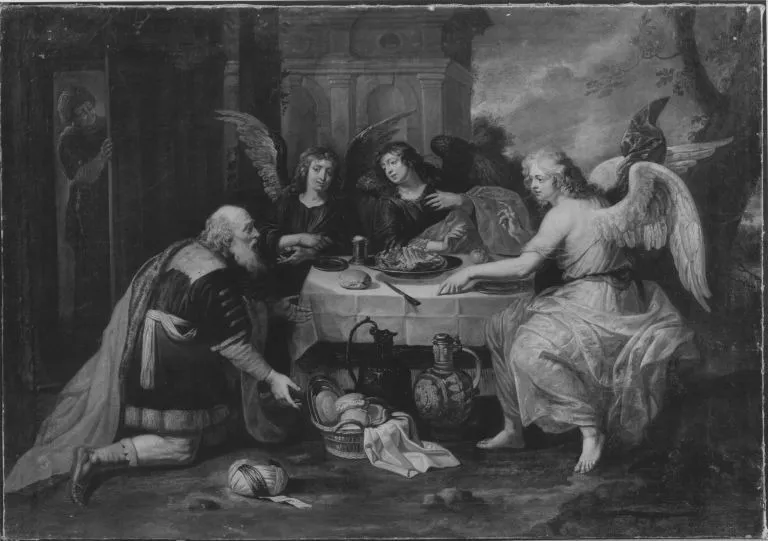
Abraham bewirtet die drei Engel is an unspecified painting by the Flemish Baroque painting artist Abraham van Diepenbeeck. It dates from 1635 and is held in the collection of the Bavarian State Painting Collections.
About this work
Overview
Abraham bewirtet die drei Engel is a 1635 painting by Abraham van Diepenbeeck, a Dutch artist active in Antwerp during the Flemish Baroque period. The work is a religious genre painting held in the Alte Pinakothek.
Subject & Meaning
The painting depicts Abraham hosting three angels, a biblical scene rendered with an atmosphere of reverence and devotion. The figures are arranged around a table, with Abraham kneeling on the floor, emphasizing the narrative's emotional and spiritual significance.
Technique & Style
The painting showcases van Diepenbeeck's use of chiaroscuro, creating depth and volume through the manipulation of light and shadow. This technique draws attention to the central figures and adds to the overall dramatic effect, characteristic of the Flemish Baroque style.
Artist & collection
Artist
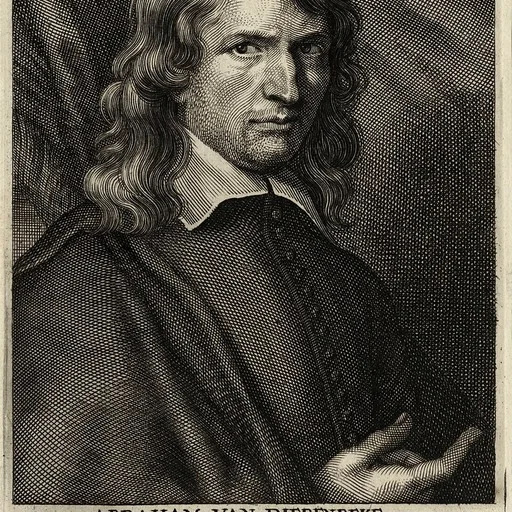
Abraham van Diepenbeeck (9 May 1596 (baptised) – between May and September 1675) was a Dutch painter, draftsman, glass painter, print maker and tapestry designer who worked most of his active career in Antwerp.

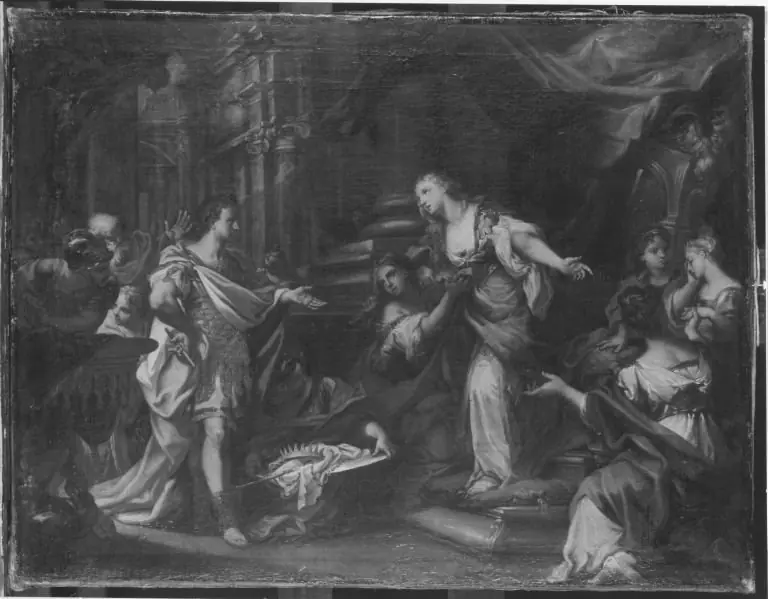
- Cleopatra übergibt Augustus Krone uund Szepter
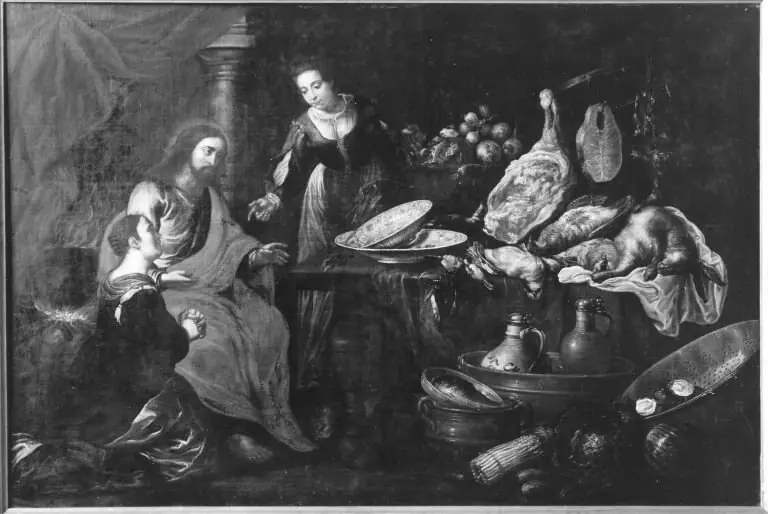 Christus bei Maria und Martha (?)
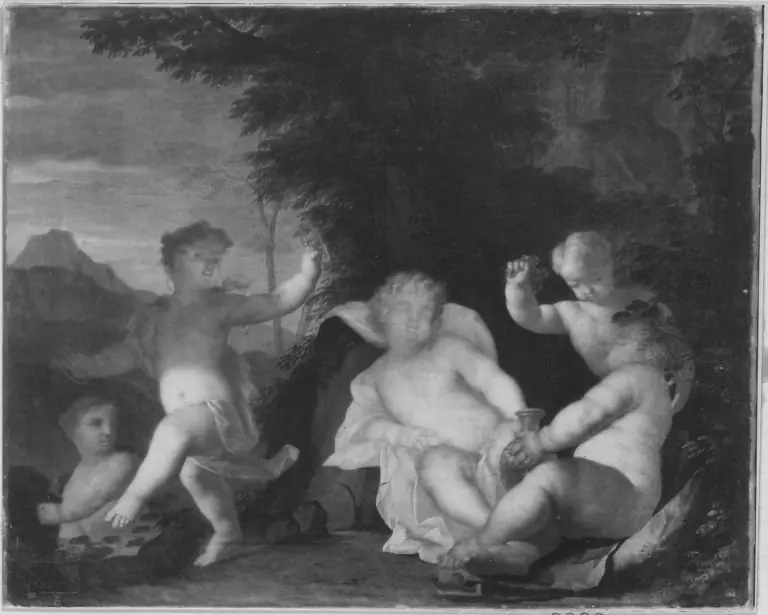 Der Herbst
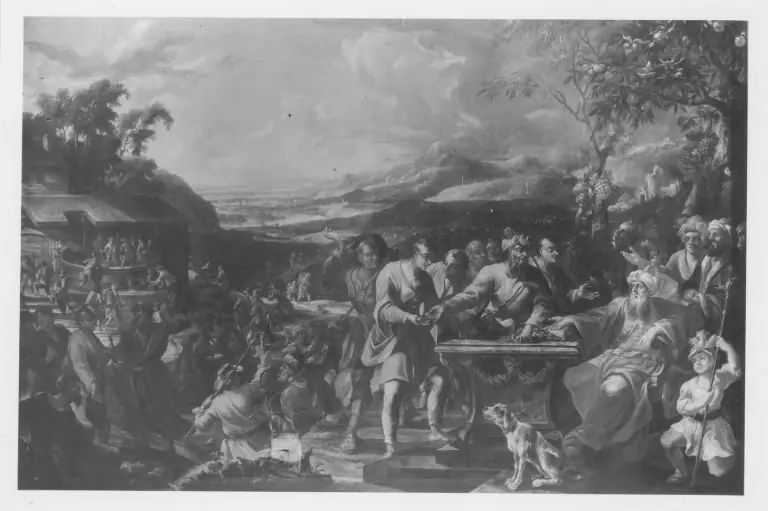 Gleichnis von den Arbeitern im Weinberg
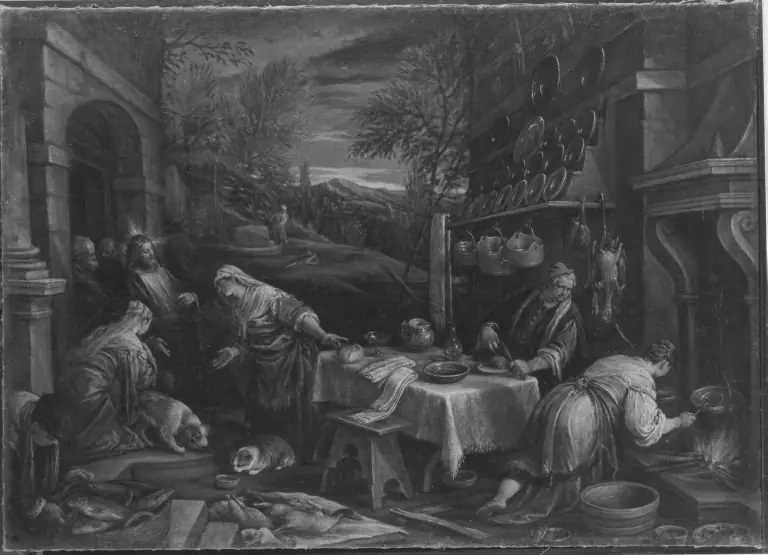 Christus bei Maria und Martha (Werkstatt)
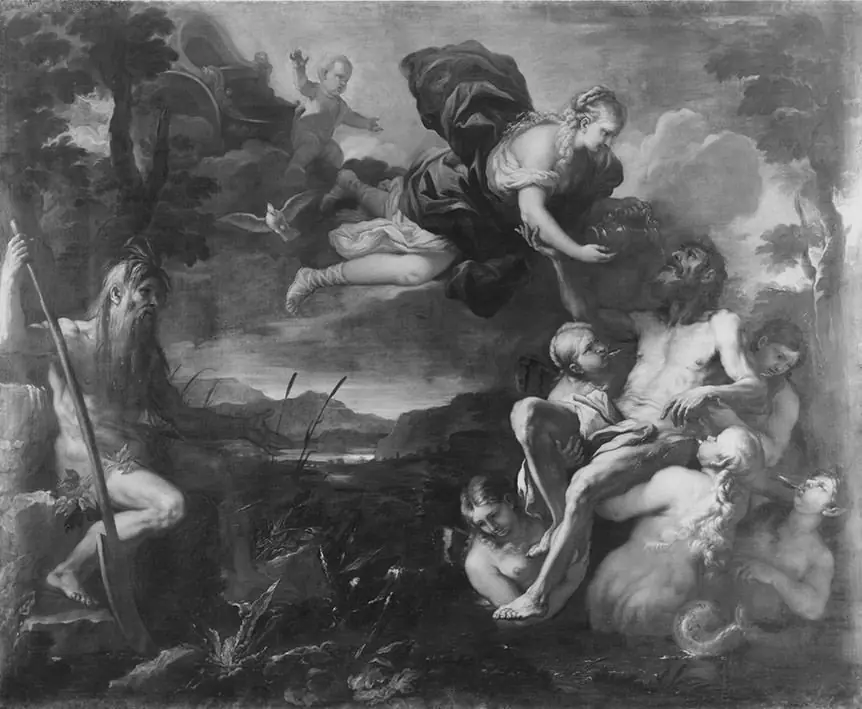 Aeneas am Numicius
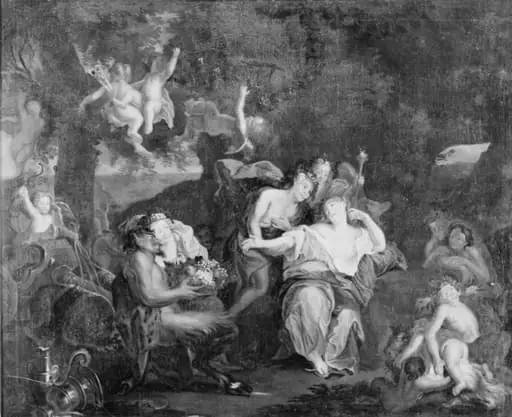 Bacchus og Ariadne sidder sammen i et landskab omgivne af amoriner, bacchantinder og satyrer
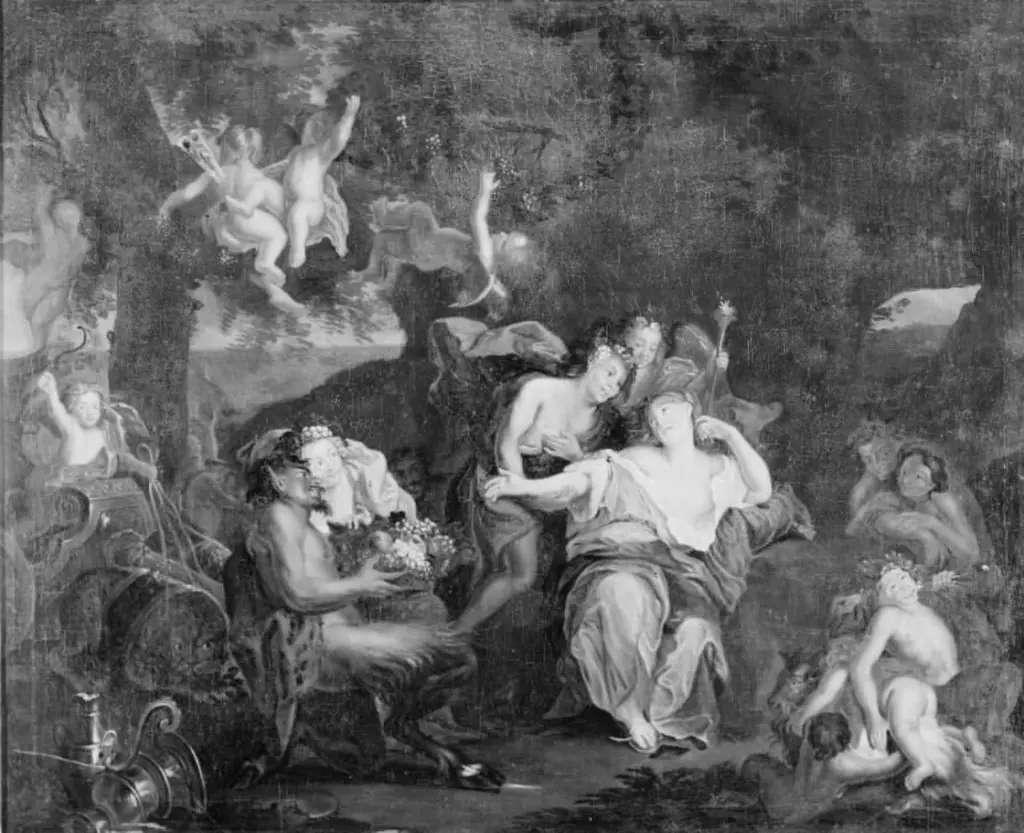 Bacchus og Ariadne sidder sammen i et landskab omgivne af amoriner, bacchantinder og satyrer
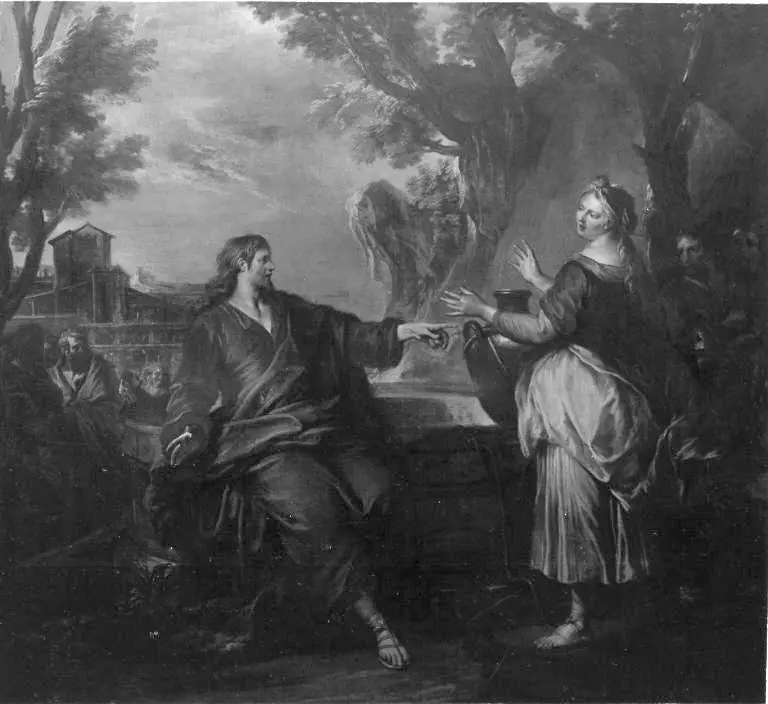 Christus und die Samariterin
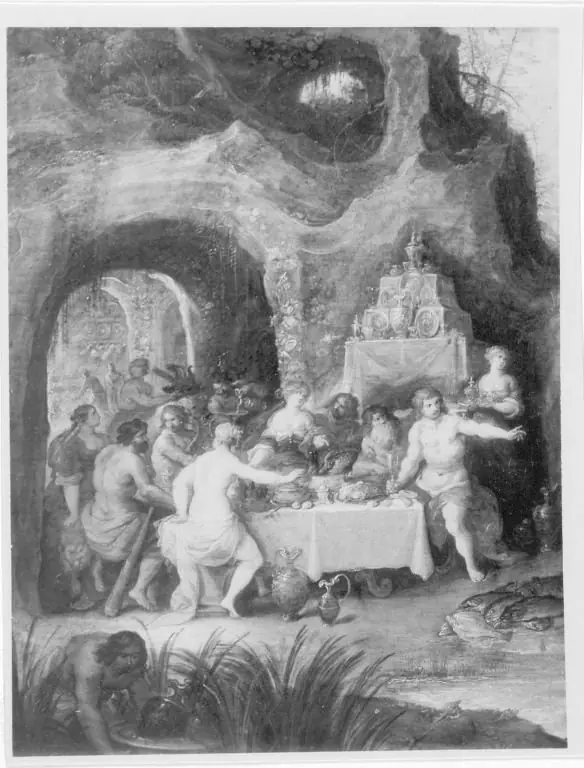 Göttermahl (zugeschrieben)
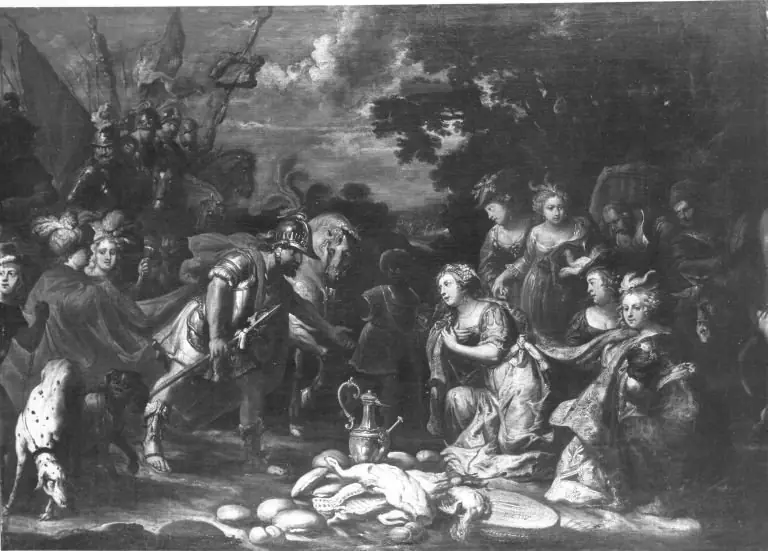 Abigail bringt David Lebensmittel (Schule)
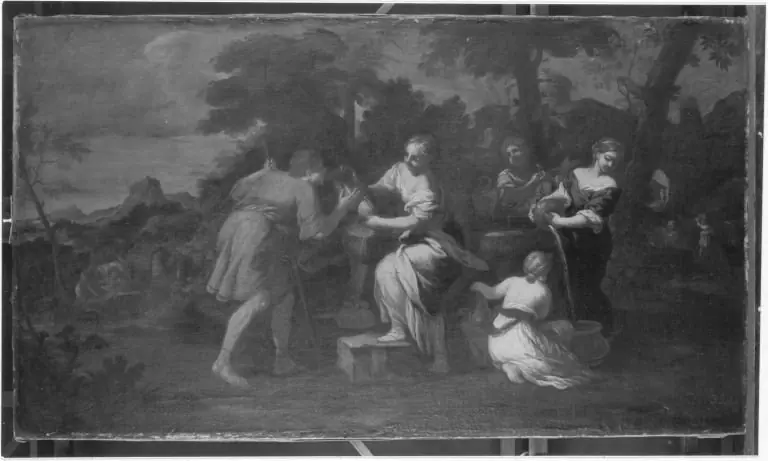 Rebekka und Laban am Brunnen