Artwork
Bust of a Woman, Seen from Behind
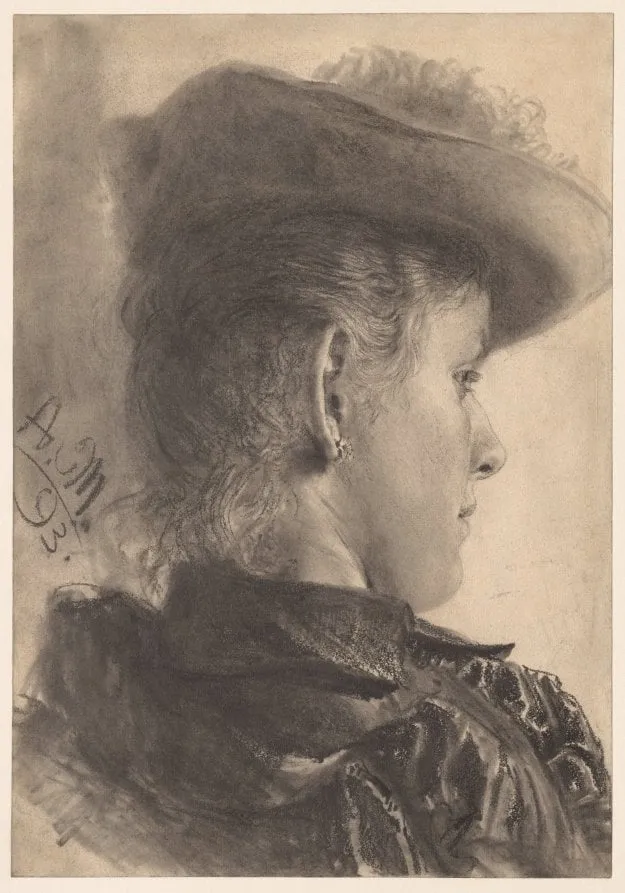
Bust of a Woman, Seen from Behind is a drawing by the Impressionist artist Adolph Menzel. It dates from 1893 and is held in the collection of the Cleveland Museum of Art.
- Accession no.
- 1994.103
- Credit line
- Purchase from the J. H. Wade Fund
About this work
Overview
This drawing, Bust of a Woman, Seen from Behind, is a late work by Adolph Menzel, created using a carpenter's pencil and stumping technique. It depicts a woman's head and shoulders from behind, capturing a fleeting moment.
Technique & Style
Menzel employed a carpenter's pencil, utilizing both its broad and sharp points to achieve varying effects. Stumping softened the lines, creating a sense of warmth and depth, particularly in the rendering of light on the subject's face and hat.
Subject & Meaning
The drawing focuses on the back of a woman's head, her loosely pinned hair, and the curve of her ear caught in light. The immediacy of the image, with the subject's mouth slightly open, suggests a captured moment, reflecting Menzel's interest in conveying a sense of naturalness.
Artist & collection
Artist
Adolph Friedrich Erdmann von Menzel (8 December 1815 – 9 February 1905) was a German Realist artist noted for drawings, etchings, and paintings.


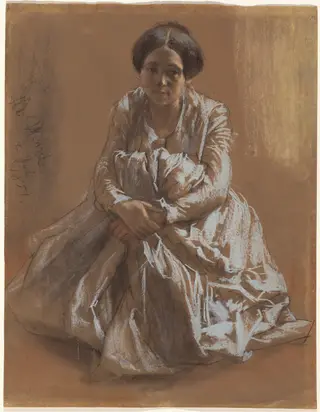
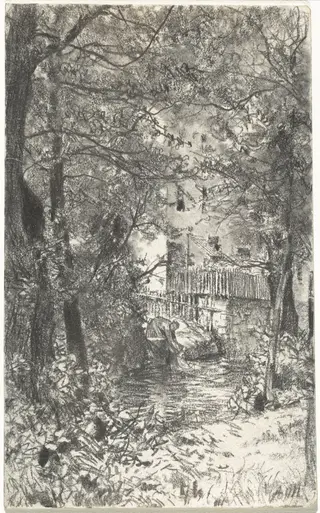
- Mademoiselle Louise Riesener in a Hat
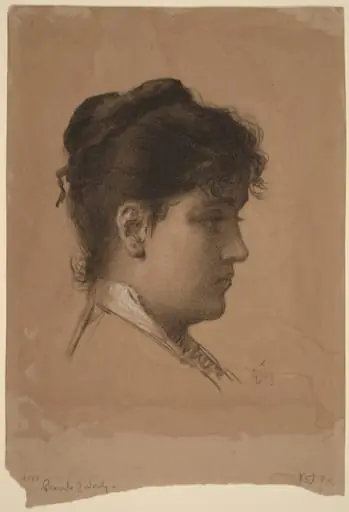 Head of a Young Woman
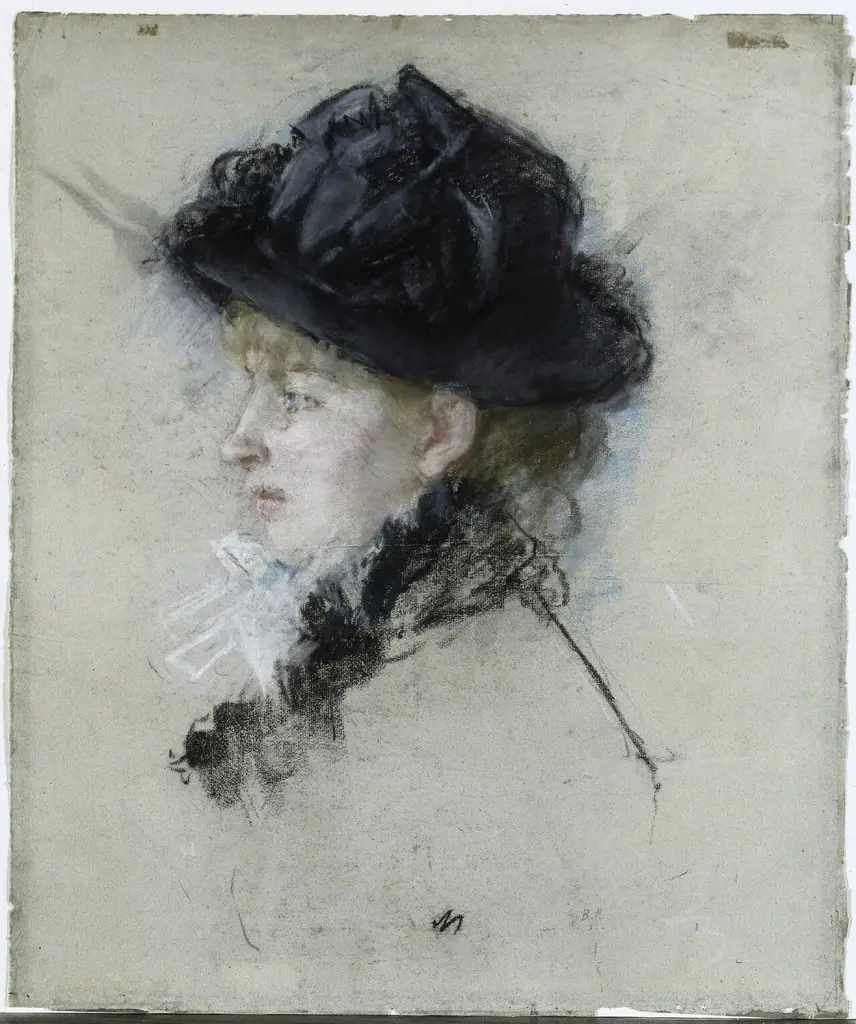 Mlle Louise Riesener au chapeau
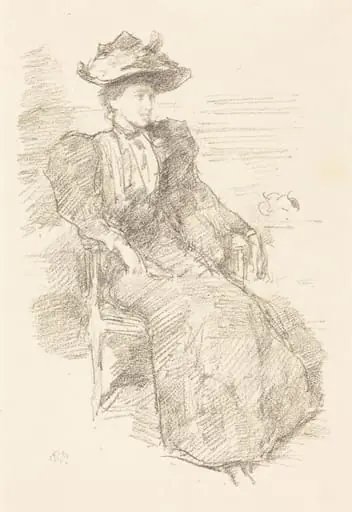 A Portrait: Mildred Howells
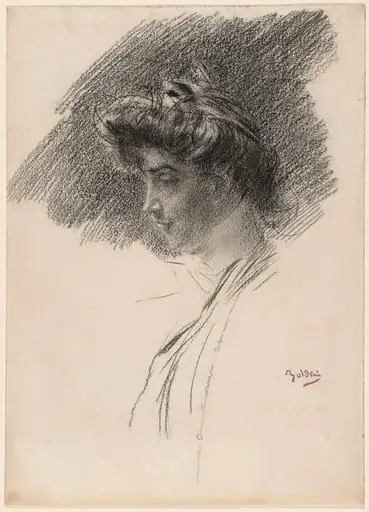 Bust of a Young Woman in Profile
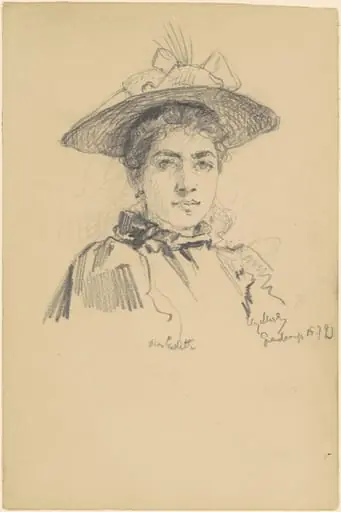 Dear Edith
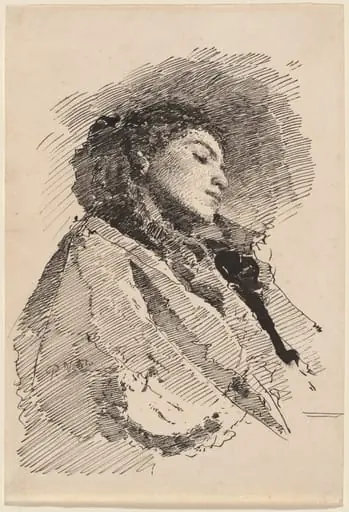 Young Woman Asleep
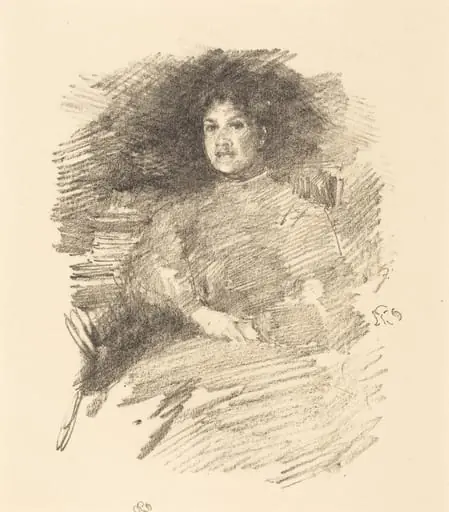 Firelight
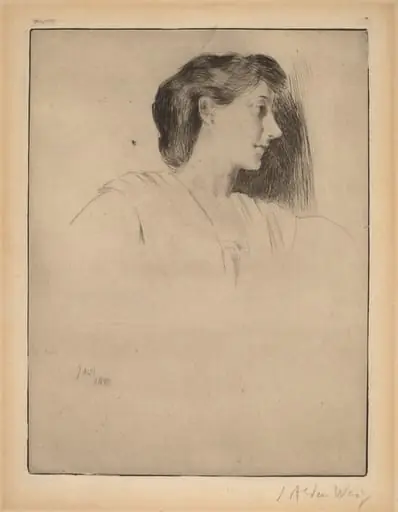 Profile Head of a Woman
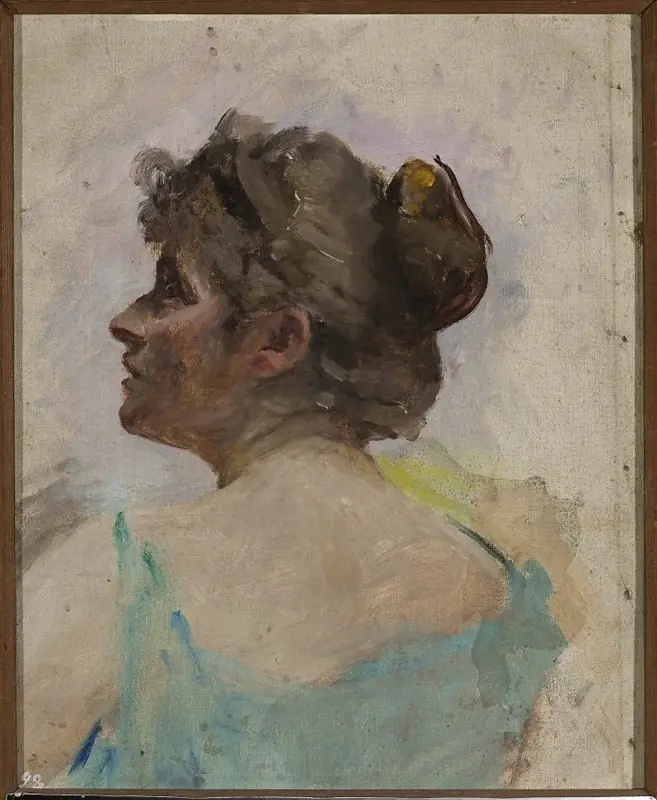 Study of the head for the painting “Symbolic dance”
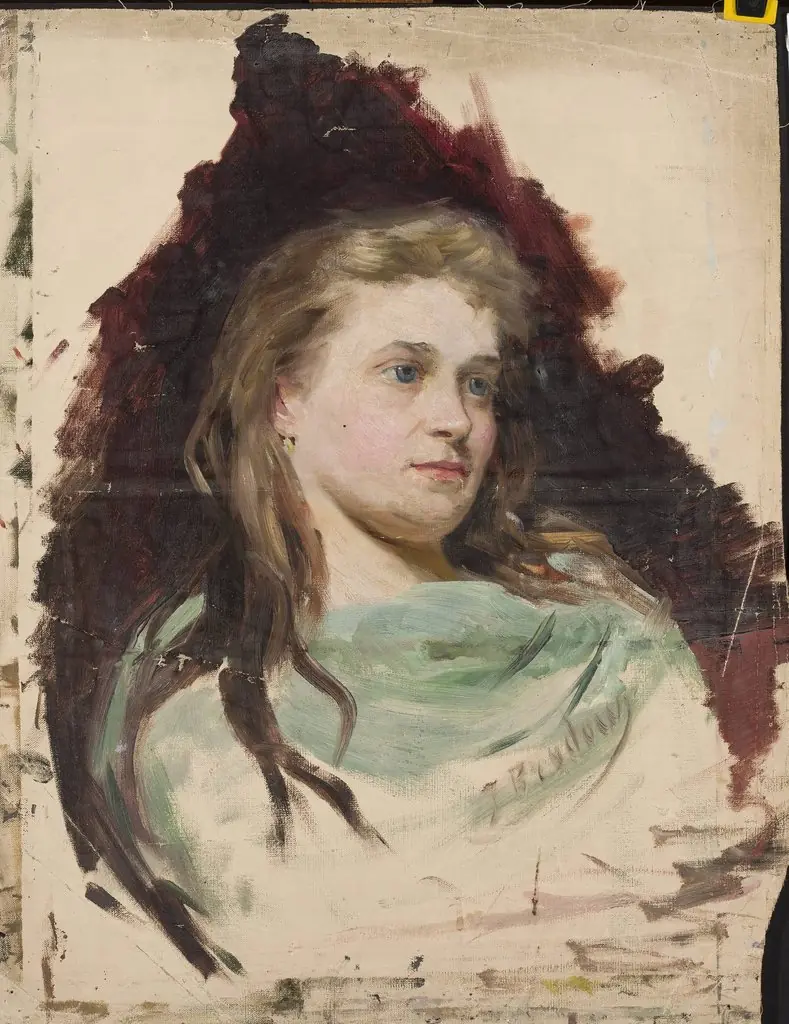 Portrait of a young woman, sketch
 Study: Bust of a Man