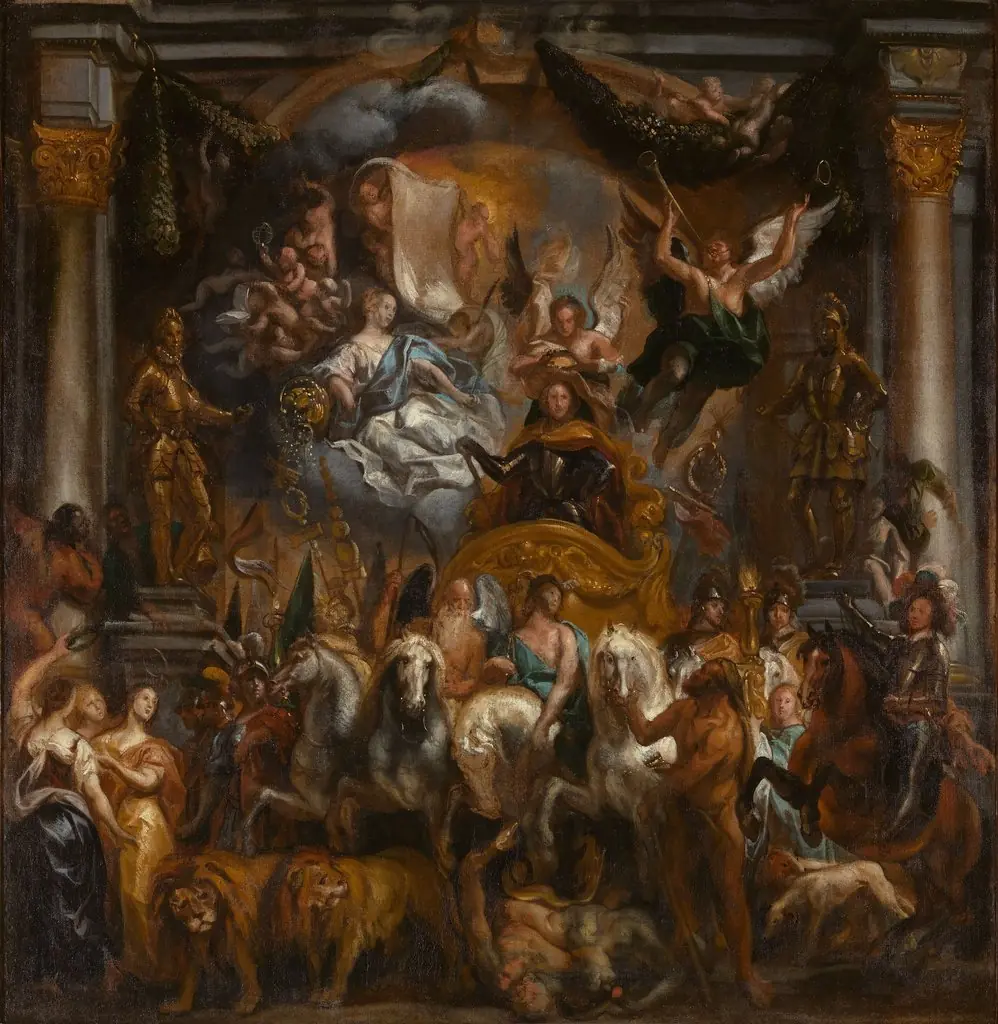
Artwork
Allegory of the stadholdership of Prince Frederik Hendrik of Orange
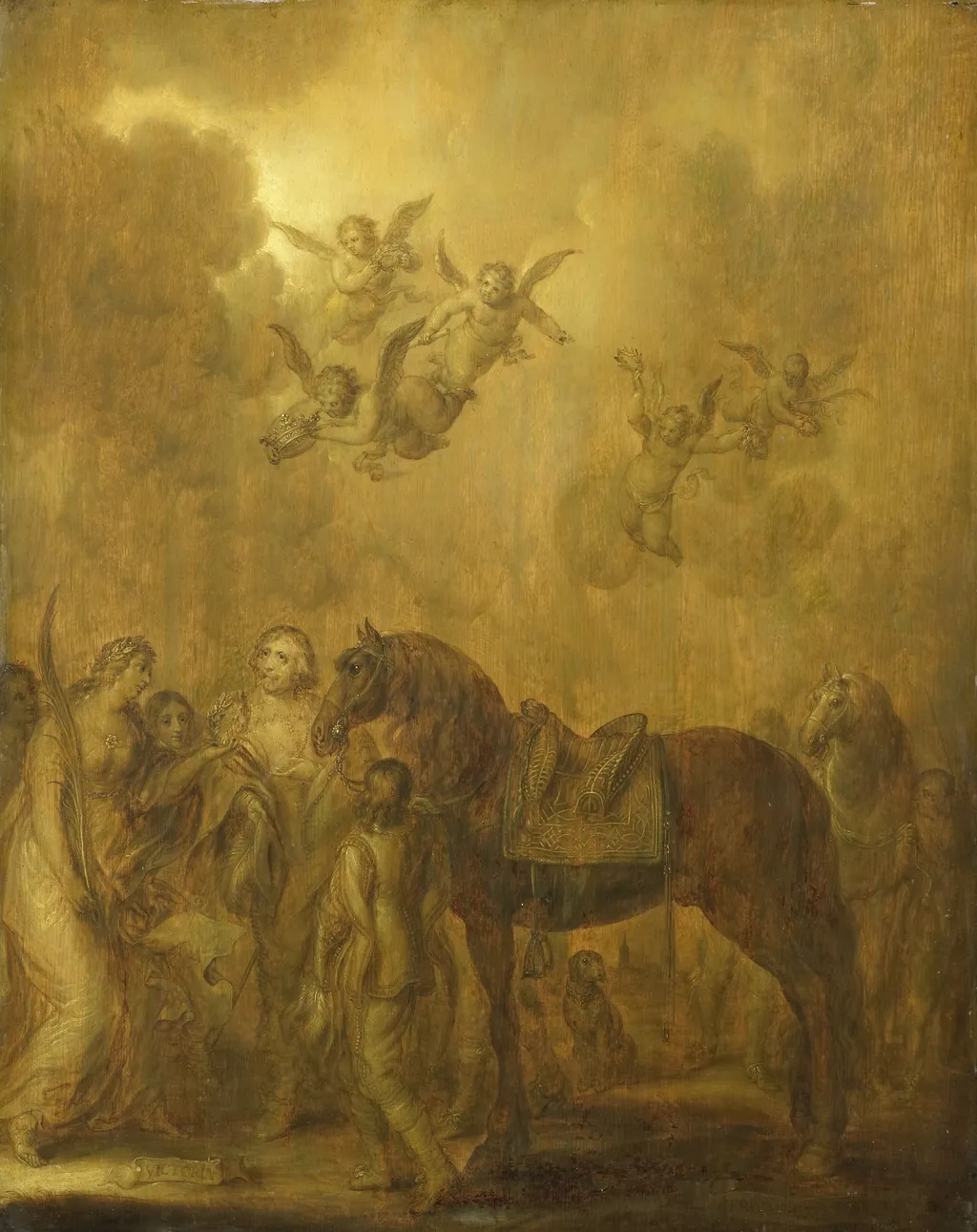
Allegory of the stadholdership of Prince Frederik Hendrik of Orange is an oil painting by the Dutch Golden Age artist Adriaen van de Venne. It dates from 1642 and is held in the collection of the Rijksmuseum.
About this work
Technique & Style
These formal qualities reinforce the political messaging of Prince Frederik Hendrik's stadholdership through visual symbolism and refined brushwork.
The work is an oil painting executed on panel, measuring approximately 75 by 59 centimeters. Van de Venne applied thin, smooth layers to render the allegorical figures and symbolic attributes with a restrained palette and precise draftsmanship characteristic of Dutch Golden Age allegories. The surface retains its original handling, showing no significant damage or restoration, and the composition emphasizes balanced spatial arrangement and subtle chiaroscuro.
These formal qualities reinforce the political messaging of Prince Frederik Hendrik's stadholdership through visual symbolism and refined brushwork.
History & Provenance
The painting was created by Adriaen van de Venne in 1642, executed in oil paint as an allegorical work. Its early ownership history is not documented in the available sources.
The work later passed through several institutional collections. It was held by the Hermann Göring Collection and the Führermuseum before entering the holdings of the Rijksdienst Beeldende Kunst, the Instituut Collectie Nederland, the Dienst Verspreide Rijkscollecties, Stichting Nederlands Kunstbezit, and the Cultural Heritage Agency of the Netherlands Art Collection. It is currently located at the Rijksmuseum.
The painting is held by the Rijksmuseum in Amsterdam. According to the collection record, it is part of the Cultural Heritage Agency of the Netherlands Art Collection and has been associated with several custodial bodies, including Stichting Nederlands Kunstbezit, Dienst Verspreide Rijkscollecties, Rijksdienst Beeldende Kunst, and Instituut Collectie Nederland, as well as the historical Hermann Göring Collection and the planned Führermuseum.
No specific exhibition history is documented in the available sources.
Context
The painting was created by Adriaen van de Venne in 1642 as an allegorical representation of the stadholdership of Prince Frederik Hendrik of Orange. It was produced during the Dutch Golden Age within the broader context of political allegory in Dutch art, reflecting themes of leadership and national identity. The work is part of the Rijksmuseum collection and has been cited in scholarly discussions of van de Venne's role in early Dutch allegorical painting, situating it within the artistic and cultural milieu of the period.
Art historical analysis places this piece among van de Venne's significant contributions to the genre, highlighting his use of symbolic imagery to convey political narratives. The painting's composition and stylistic elements exemplify the trends in 17th-century Dutch art, where allegory served both decorative and didactic purposes. Its inclusion in major collections underscores its recognized importance in the study of Dutch Baroque art and the visual culture of the Dutch Republic.
Overview
Allegory of the stadholdership of Prince Frederik Hendrik of Orange is a 1642 oil painting by Adriaen van de Venne, a Dutch Golden Age artist. The work is characterized by symbolic imagery conveying political themes, typical of van de Venne's allegorical style.
Subject & Meaning
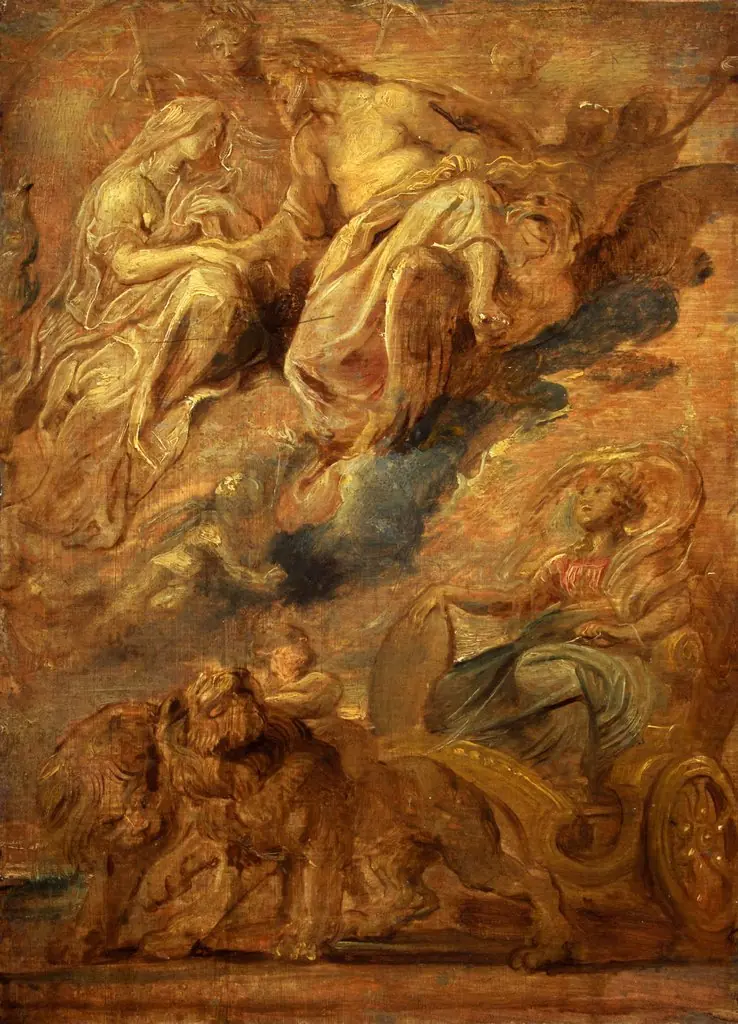
The painting symbolizes the stadholdership of Prince Frederik Hendrik of Orange. A regally attired woman, likely an allegorical figure for the Prince's authority or the Orange dynasty, rides a golden, crowned carriage drawn by two brown horses. Surrounding elements, aerial putti with musical instruments and flowers, and grounded figures with branches, convey a blend of celebration, power, and possibly the harmony or prosperity under his rule.
Own this work as a print
Artist & collection
Artist
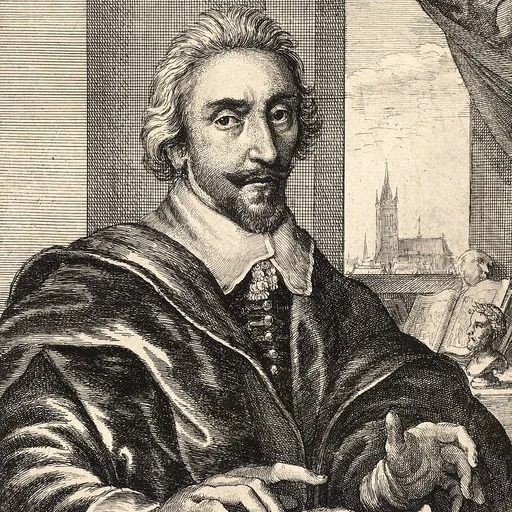
Adriaen Pietersz van de Venne (1589 – 12 November 1662), was a versatile Dutch Golden Age painter of allegories, genre subjects, and portraits, as well as a miniaturist, book illustrator, designer of political satires, and versifier.

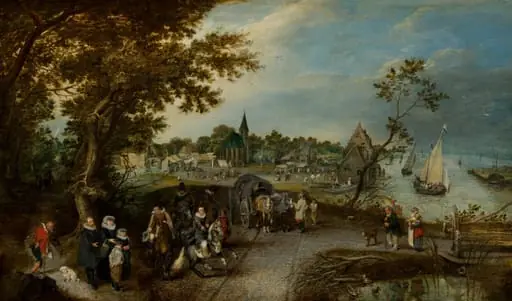 Untitled
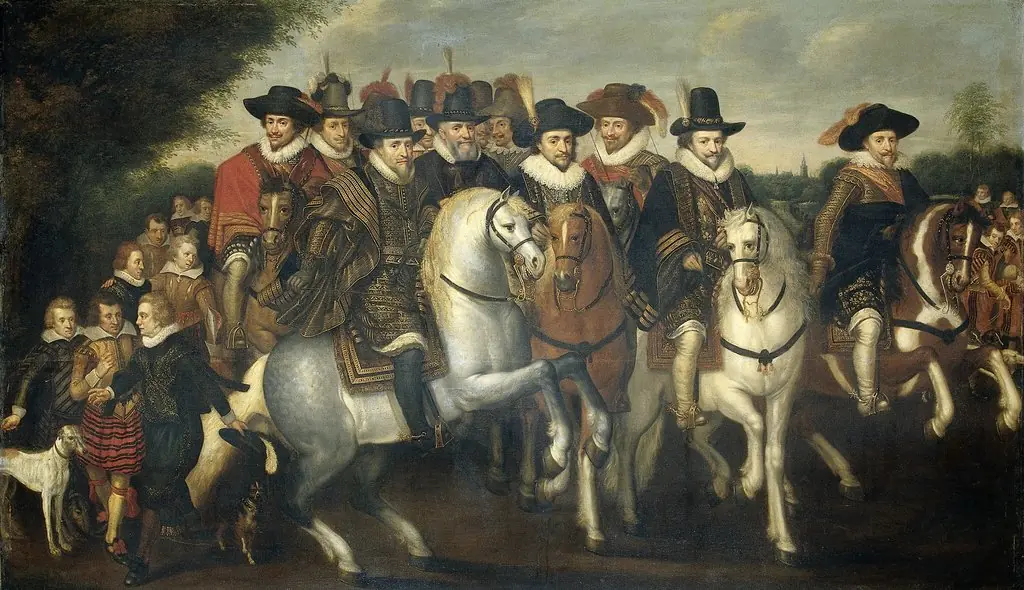 Prince Maurits accompanied by his two brothers, Frederick V, Elector of the Palatinate, and some counts of Nassau on horseback
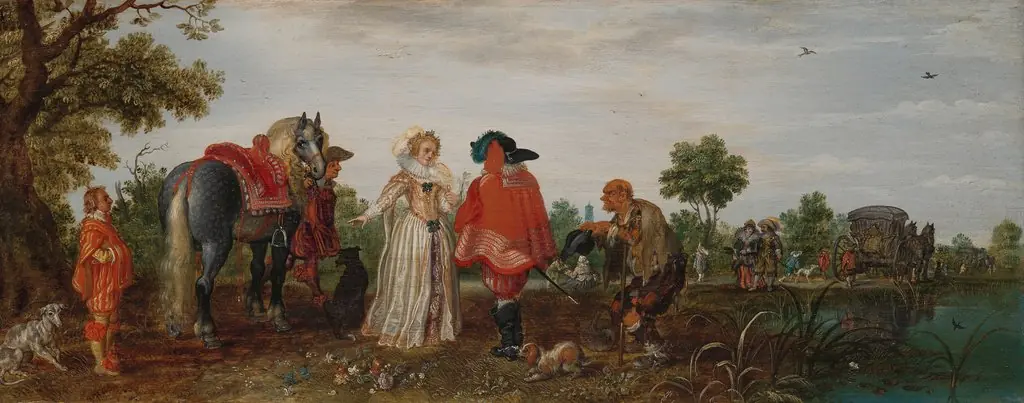 Spring
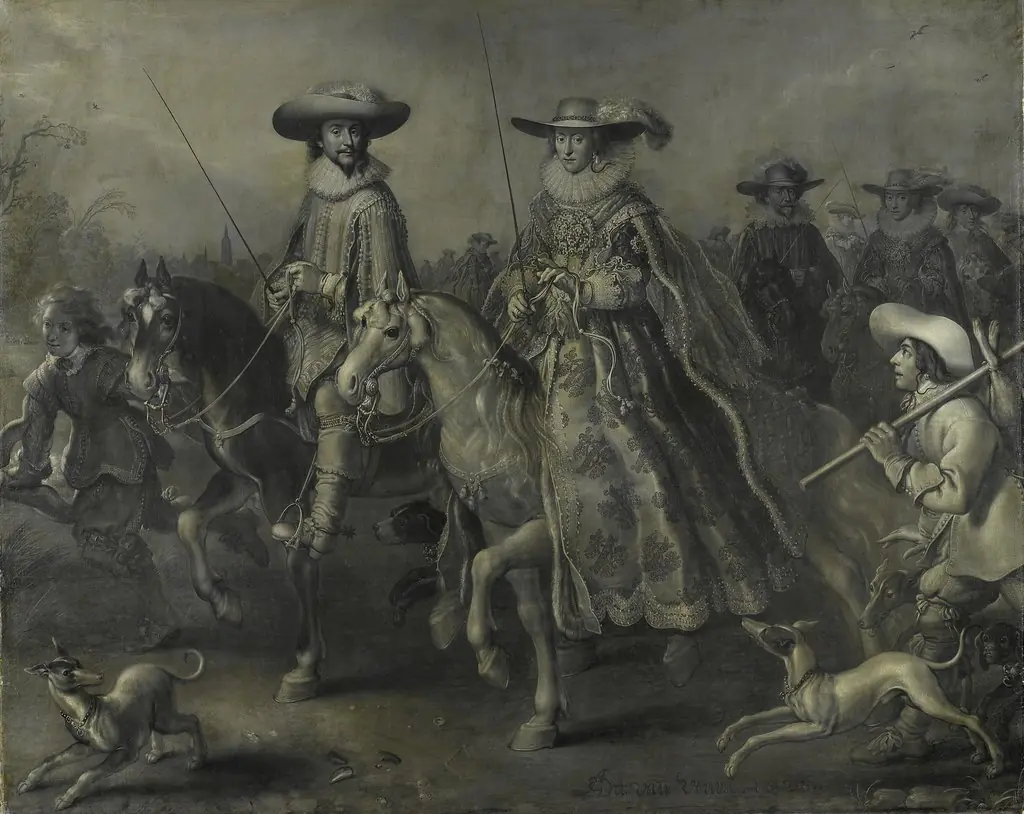 Frederick V (1596-1632), Elector of the Palatinate, King of Bohemia, and his wife Elizabeth Stuart (1596-1662) on horseback
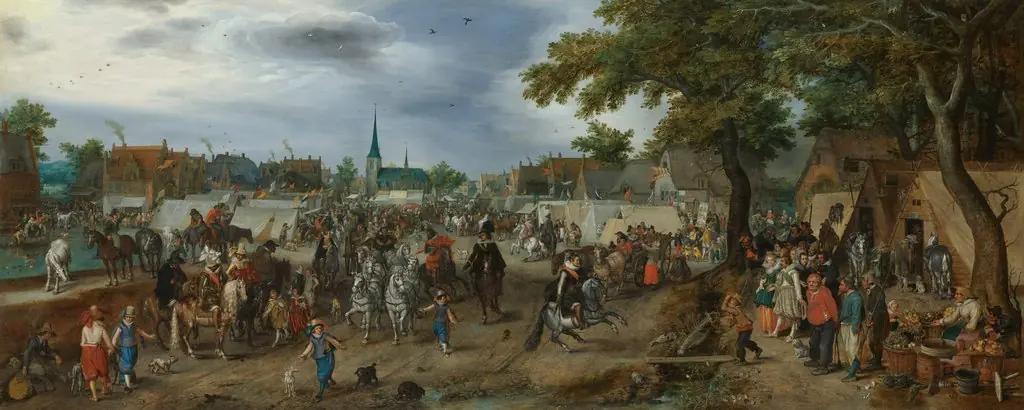 Prince Maurice and Frederick Henry at the Valkenburg Horse Fair
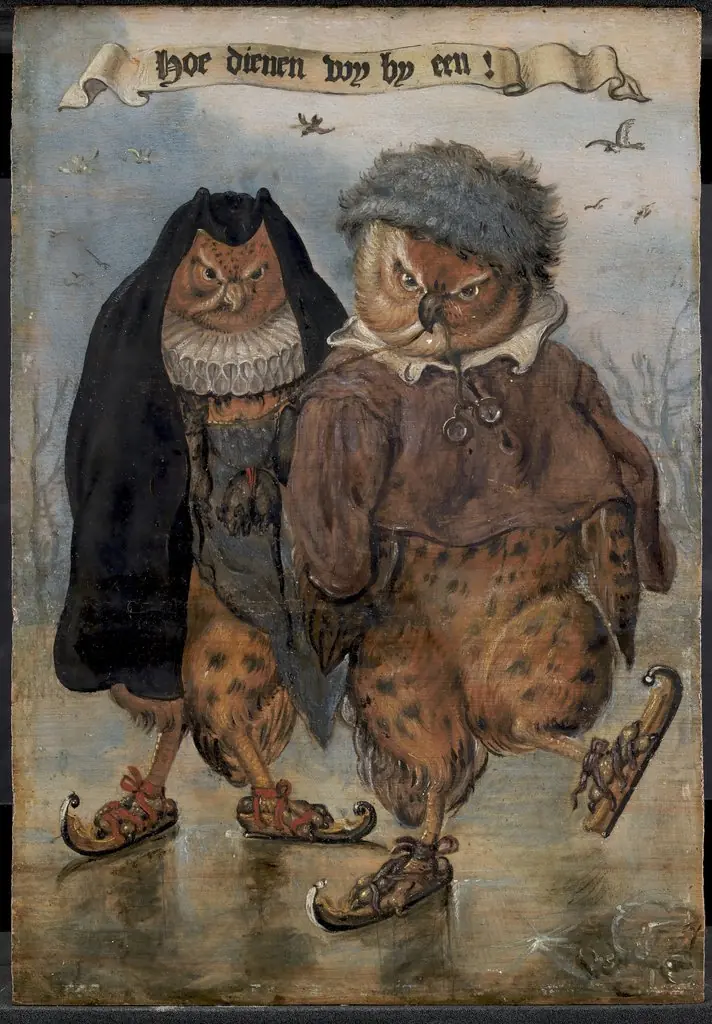 How Well We Go Together
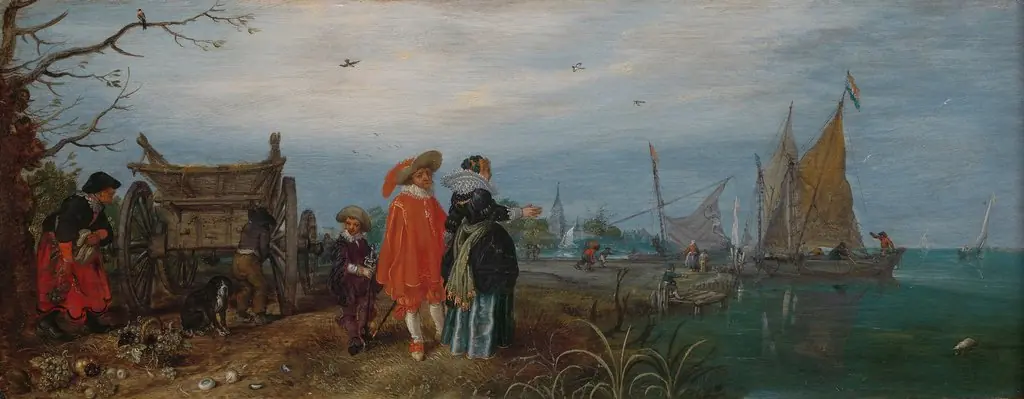 Autumn
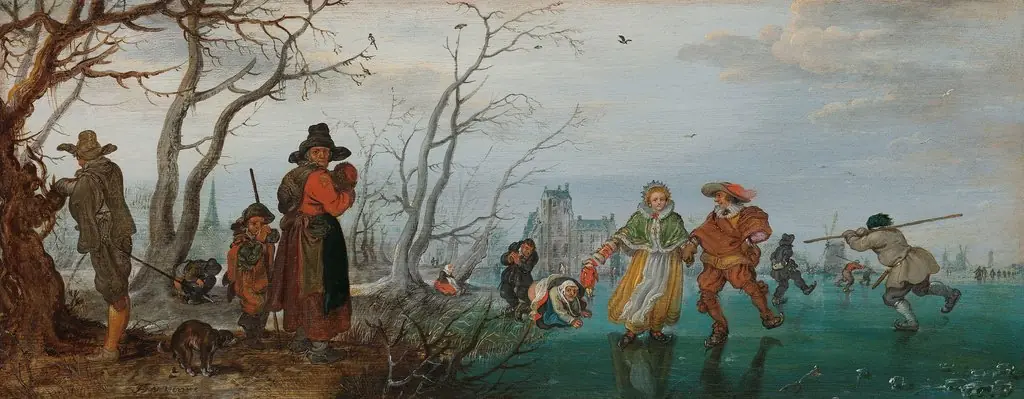 Winter