Artwork
Portrait of a Young Man
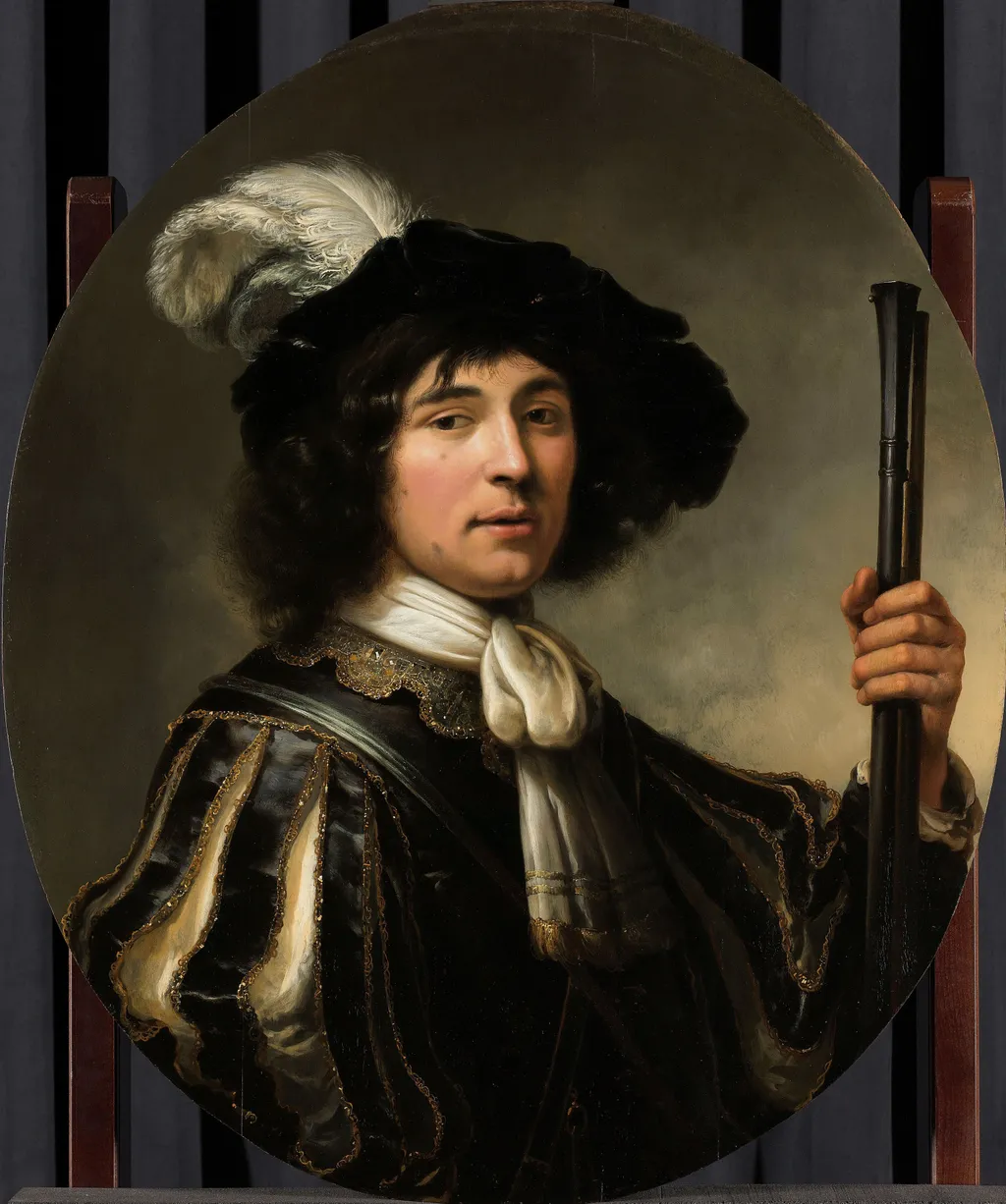
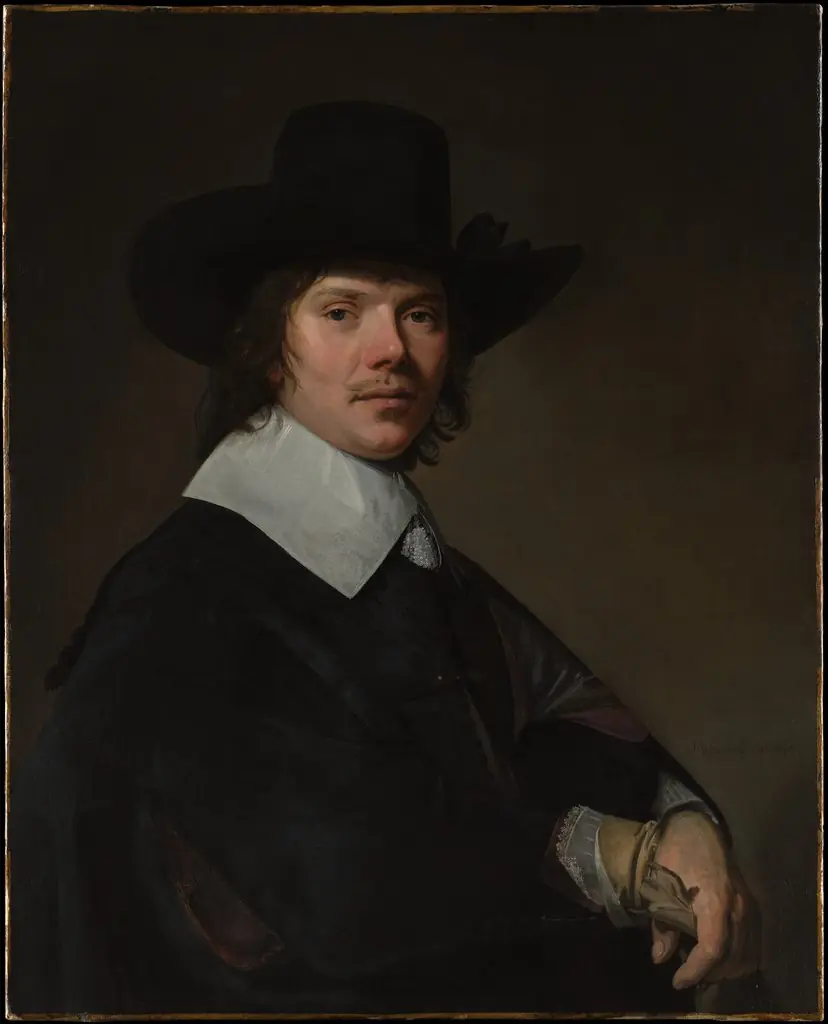
Portrait of a Young Man is an oil painting by the Dutch Golden Age artist Aelbert Cuyp. It dates from 1651 and is held in the collection of the Rijksmuseum.
About this work
Subject & Meaning
Completed in 1651, this oil painting on panel by Aelbert Cuyp depicts a solitary young man as its primary subject.
Completed in 1651, this oil painting on panel by Aelbert Cuyp depicts a solitary young man as its primary subject. The figure is characterized by the inclusion of a rifle, an attribute that anchors the work within the tradition of hunter or militia portraits common in the Dutch Golden Age. While the specific identity of the sitter remains unnamed in available records, the presence of the firearm serves as a key iconographic element, likely symbolizing the subject's social status, readiness for defense, or engagement in hunting as a leisure pursuit.
The composition focuses entirely on this male figure and his weapon, utilizing these elements to represent themes of masculinity and civic duty typical of the genre.
History & Provenance
The oil-on-panel portrait of a young man holding a rifle was created by Aelbert Cuyp in 1651. The work is part of the Adriaan van der Hoop collection, which was subsequently acquired by the Rijksmuseum in Amsterdam. While the specific commission details and the original patron are not recorded in the available sources, the painting's creation date is firmly established as 1651.
The piece measures 82 cm in height and 70 cm in width. It currently resides in the Rijksmuseum, having entered the institution's holdings through the van der Hoop bequest.
Portrait of a Young Man is held in the Rijksmuseum, where it is catalogued under inventory number SK-A-2365. The work entered the collection via the Adriaan van der Hoop bequest and has been displayed in several Rijksmuseum exhibitions, including the 2015 exhibition on Dutch Golden Age portraiture and the 2021 presentation of Dutch masters. It was also featured in the 2019 exhibition "Aelbert Cuyp in Context" at the Amsterdam Museum.
Context
Portrait of a Young Man (1651) by Aelbert Cuyp is a late Dutch Golden Age portrait that exemplifies the artist's skill in rendering individual character and everyday dignity. The work entered the collection of Adriaan van der Hoop before being acquired by the Rijksmuseum, where it remains on display. Its genre as a portrait and its material execution in oil on panel align with Cuyp's broader oeuvre of civic and private figures, situating it within the evolution of 17th-century Dutch portraiture that moved beyond formal likeness to psychological depth.
Overview
Aelbert Cuyp’s Portrait of a Young Man (1651) is an oil on canvas that presents a solitary figure in a restrained setting. The sitter, a youth with dark curls, wears a black and white striped jacket trimmed in gold, a black hat adorned with a white feather, and a white scarf. He holds a long dark object, likely a rifle, and gazes calmly to the right.
Technique & Style
Cuyp employs chiaroscuro to model the figure, using subtle contrasts of light and shadow that give the flesh and fabrics a three‑dimensional presence. The muted, earthy background recedes, focusing attention on the sitter’s face and clothing. The handling of oil paint reflects Cuyp’s broader mastery of light, though here it serves a portrait rather than his typical luminous landscapes.
Own this work as a print
Artist & collection

Artist
Aelbert Jacobszoon Cuyp or Cuijp (Dutch pronunciation: ; 20 October 1620 – 15 November 1691) was one of the leading Dutch Golden Age painters, producing mainly landscapes.

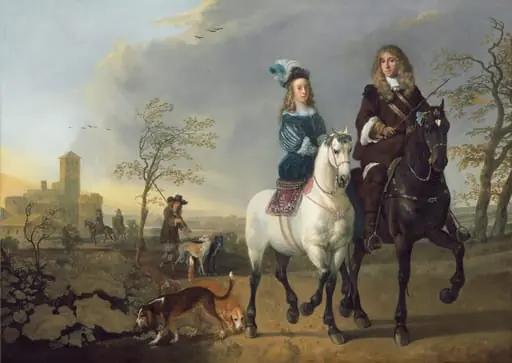 Lady and Gentleman on Horseback
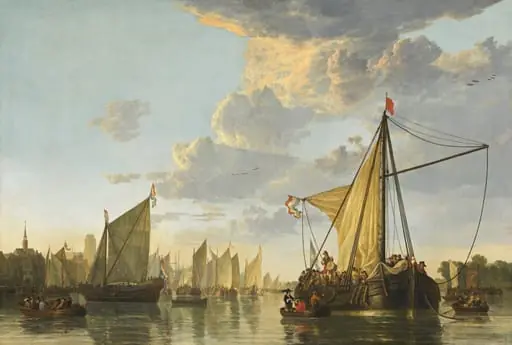 The Maas at Dordrecht
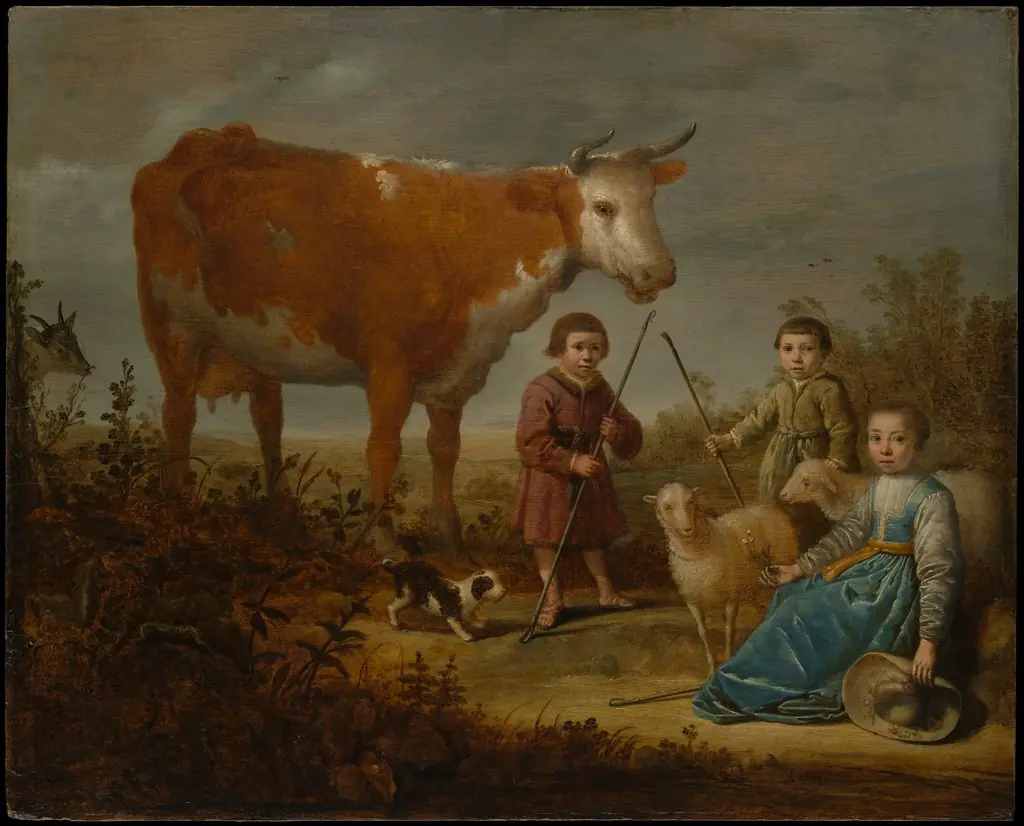 Children and a Cow
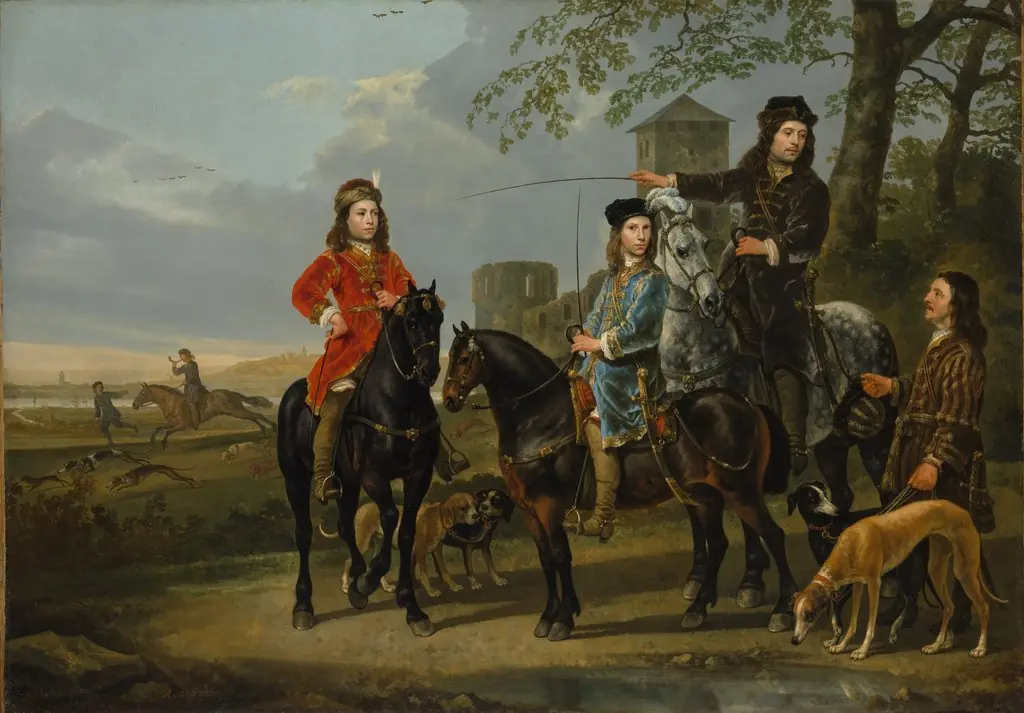 Equestrian Portrait of Cornelis (1639–1680) and Michiel Pompe van Meerdervoort (1638–1653) with Their Tutor and Coachman ("Starting for the Hunt")
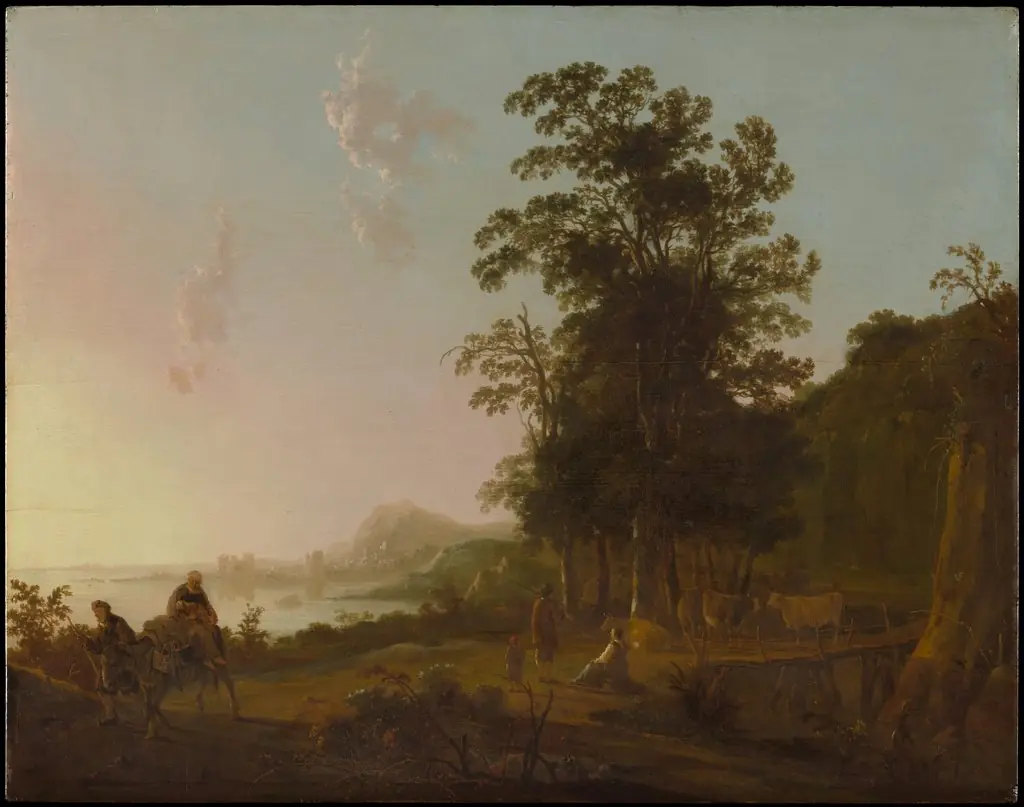 Landscape with the Flight into Egypt
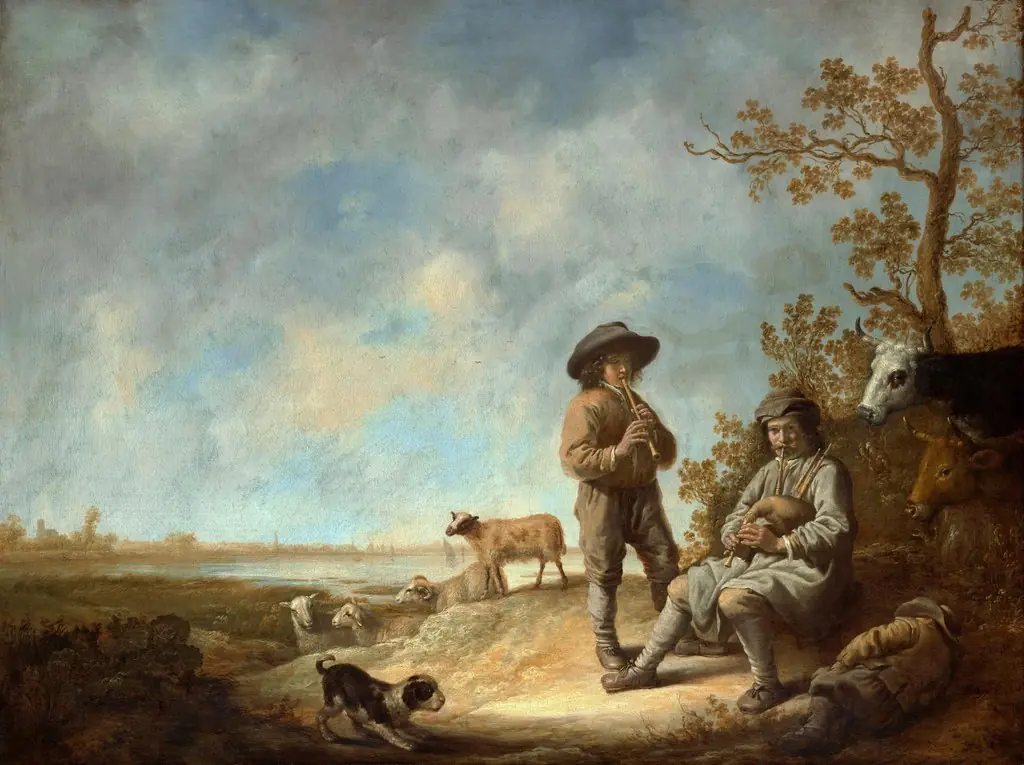 Piping Shepherds
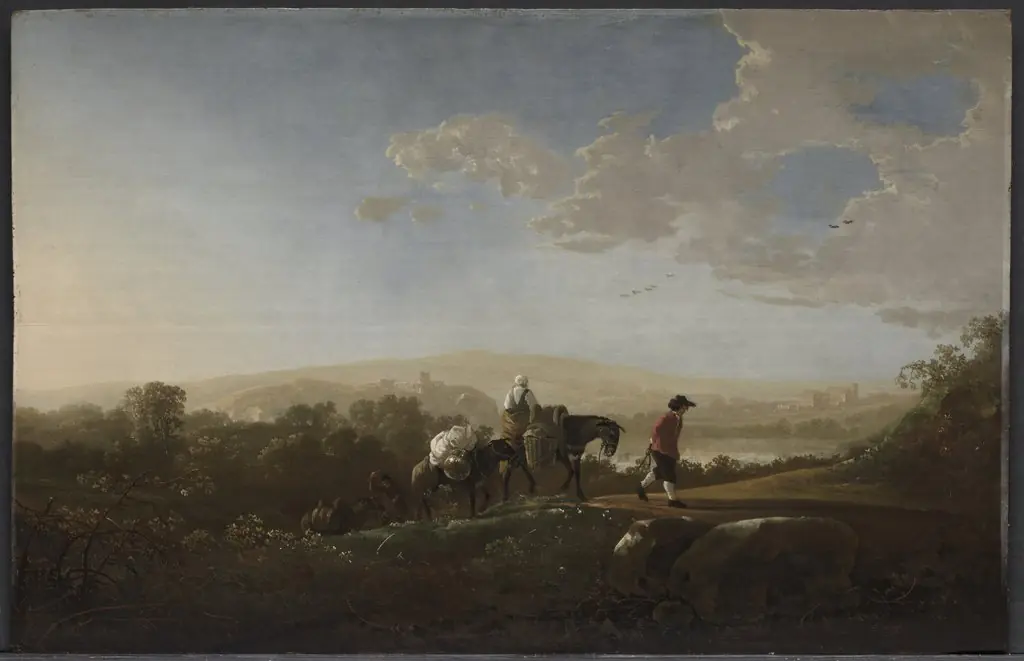 Travellers in Hilly Countryside
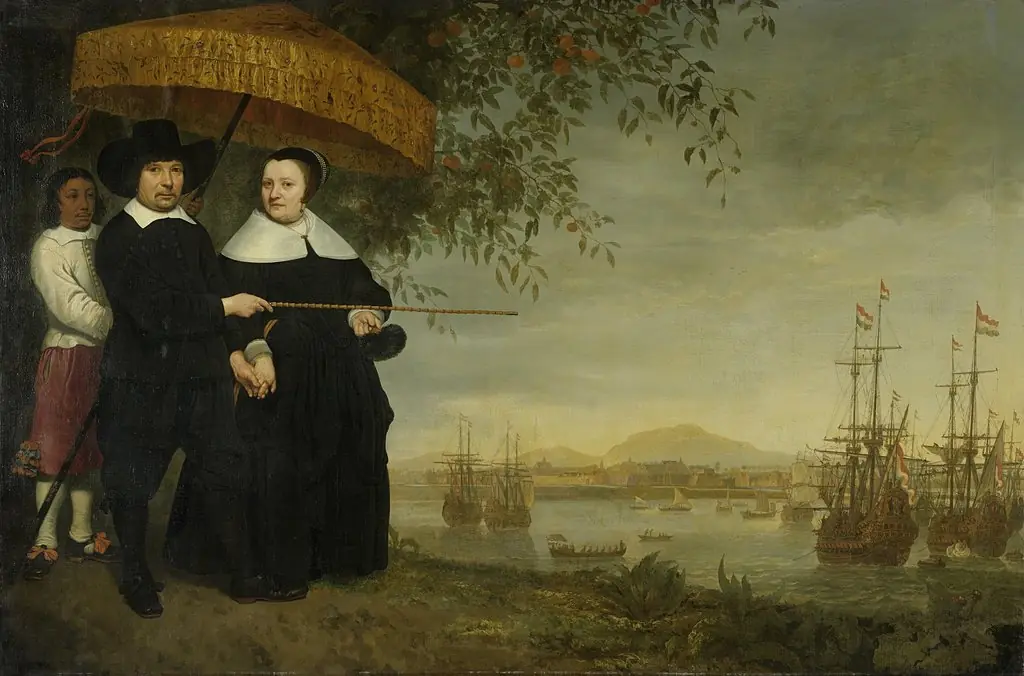 A Chief Merchant of the VOC with his Wife and an Enslaved Servant
- Portret van Ferdinand Bol
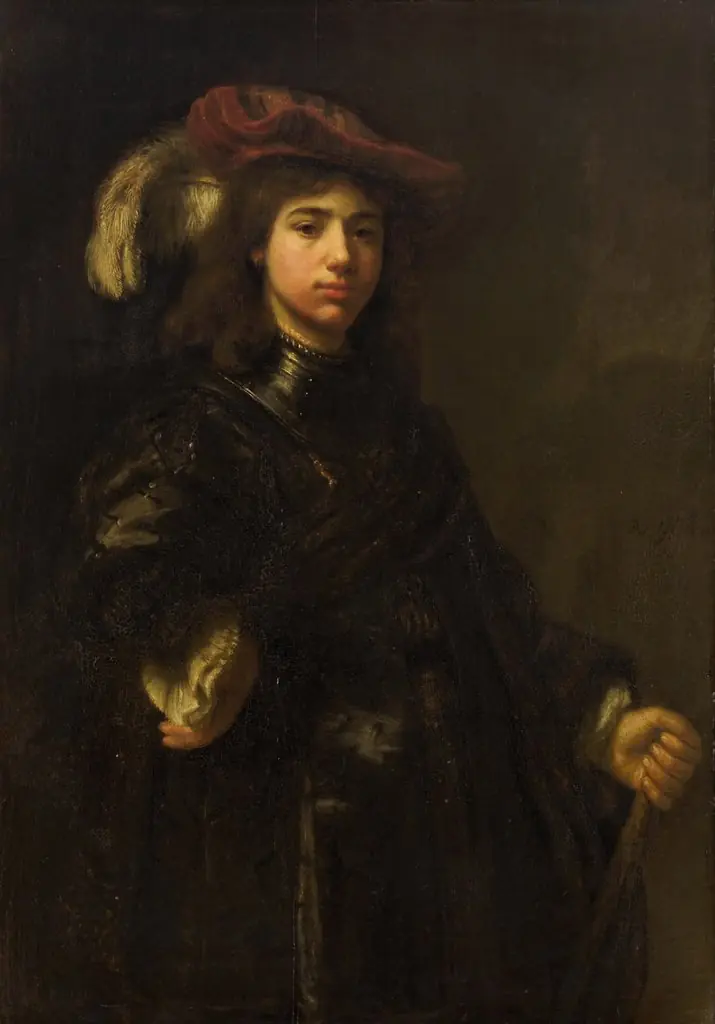 Young man with a plumed cap and a gorget
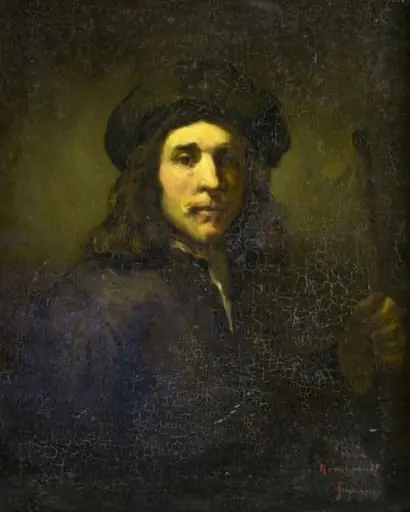 Bărbatul cu baston - copie după Rembrandt
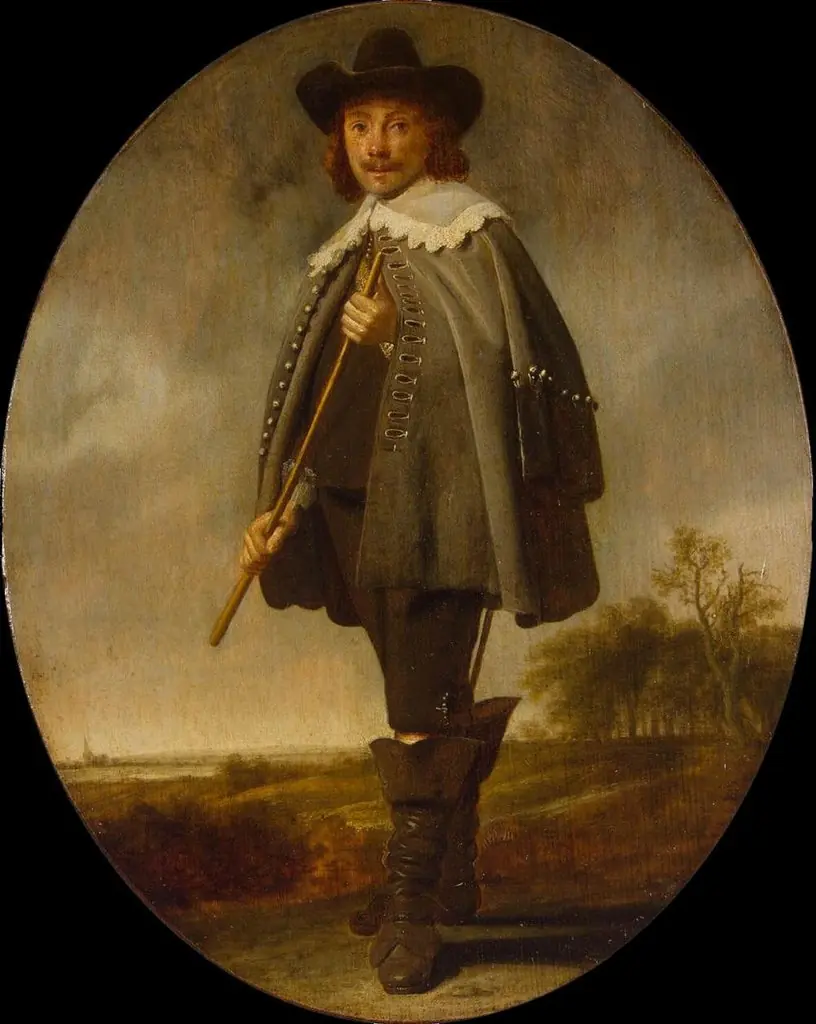 Officer in the Landscape (Portrait of a Man)
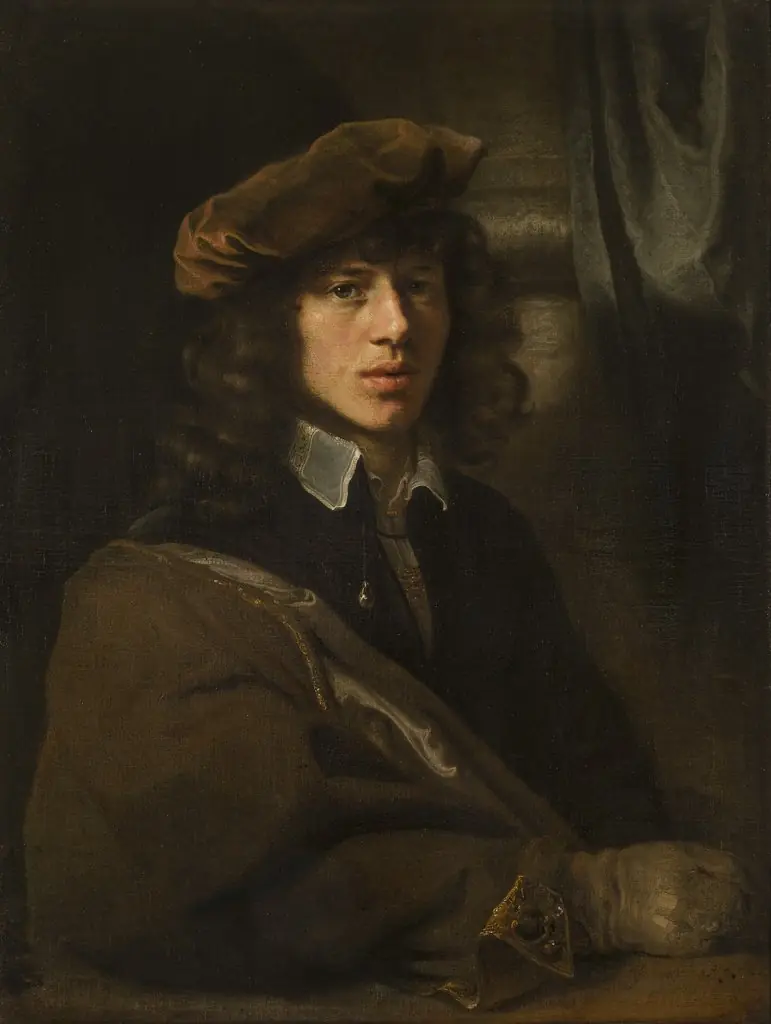 Portrait of Carel Fabritius
 Portrait of Maerten Soolmans (1613–1641)
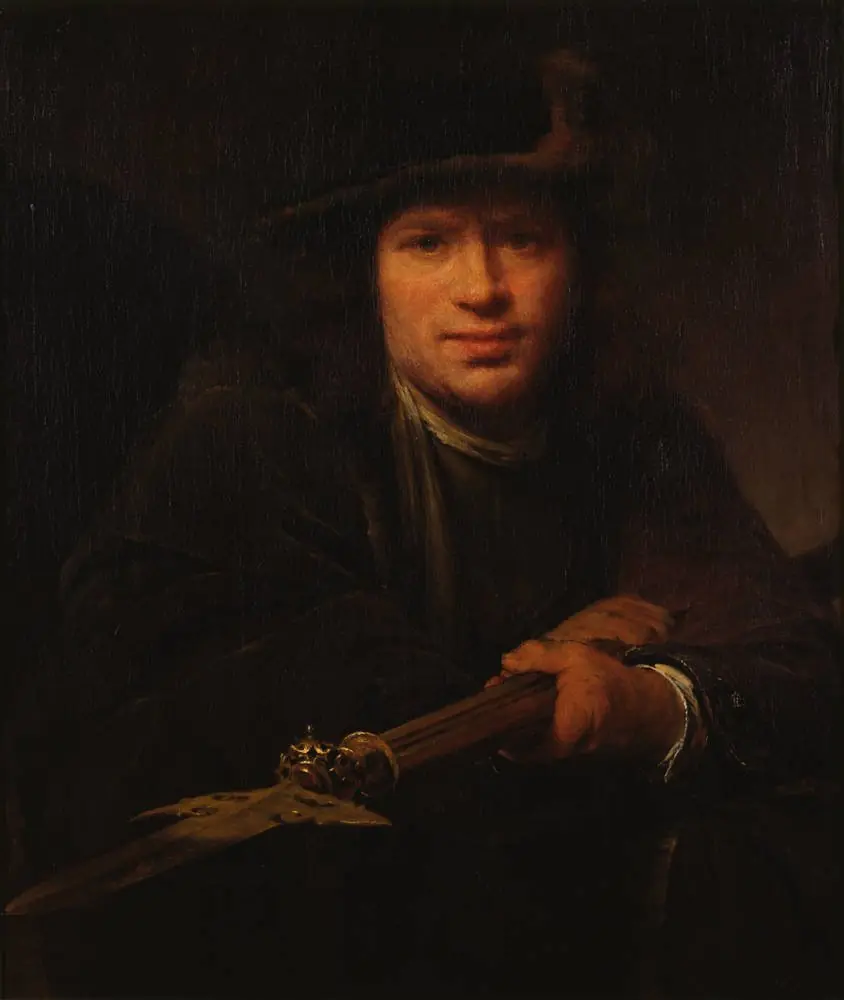 Man with a halberd
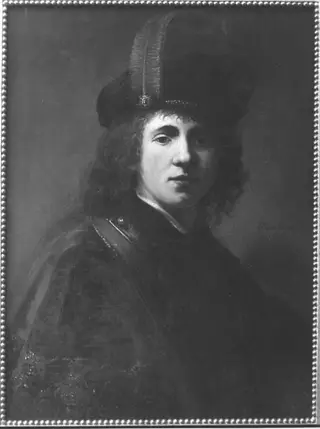 Ein junger Mann (Werkstatt)
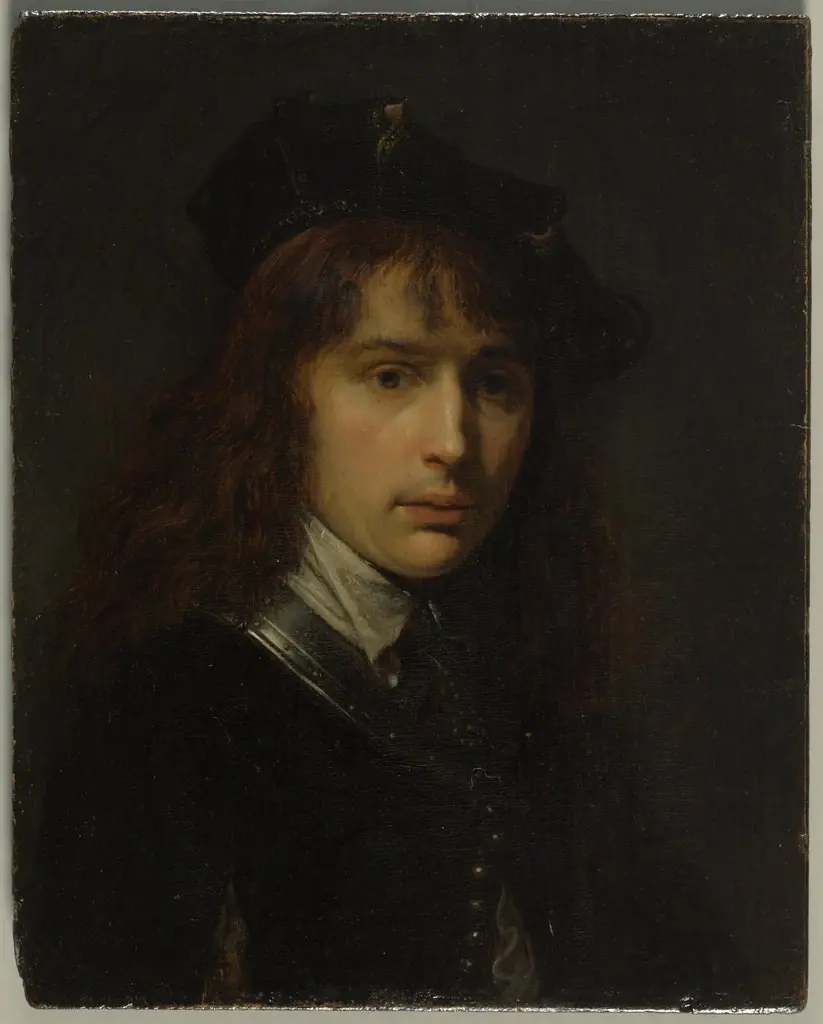 Self-Portrait
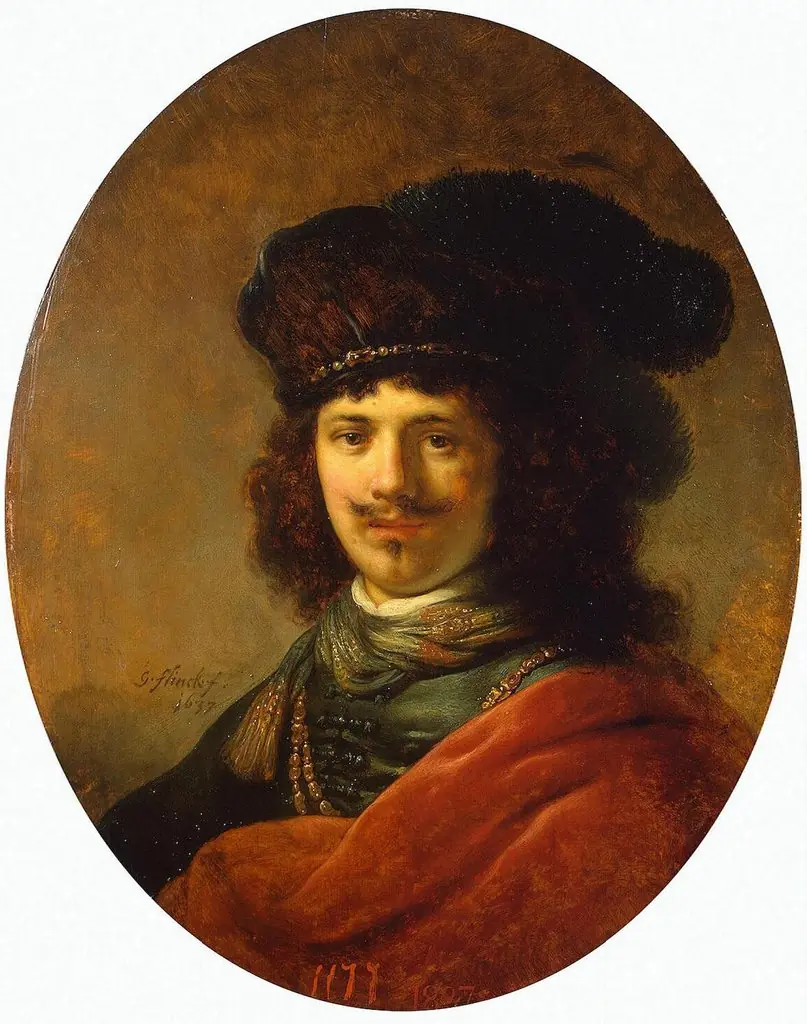 Portrait of a Young Man
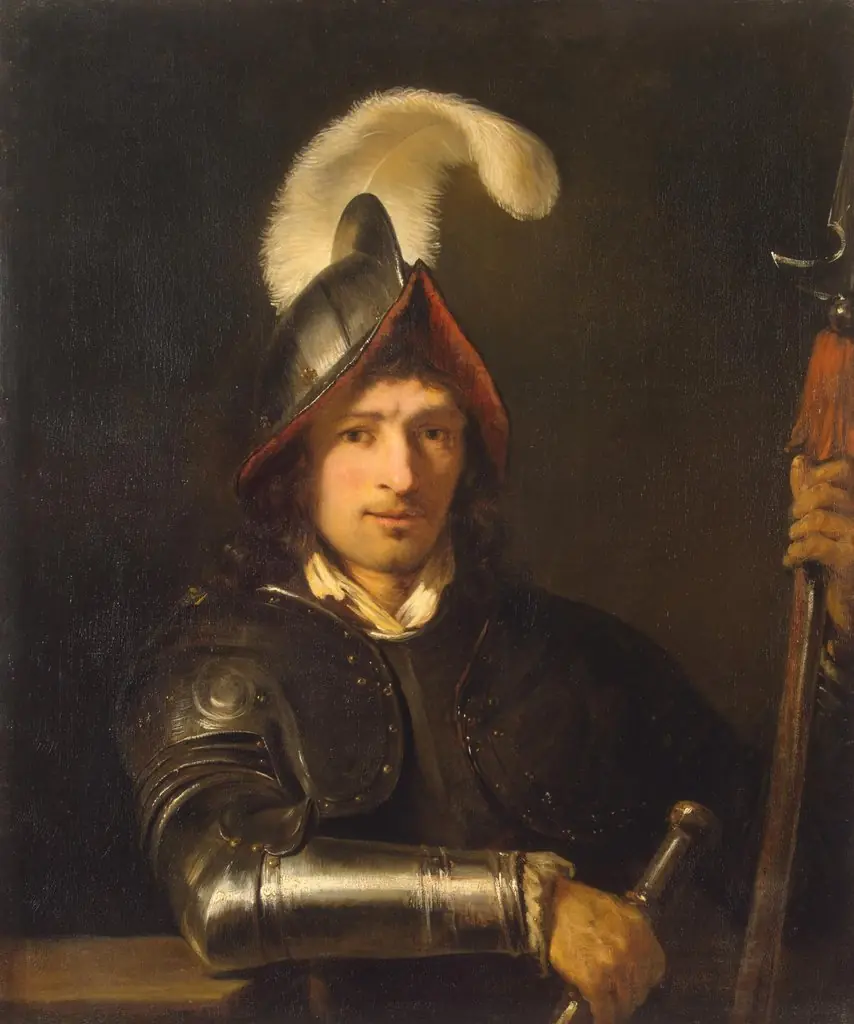 Portrait of an Officer
 Portrait of a Man