Artwork
River landscape with cows
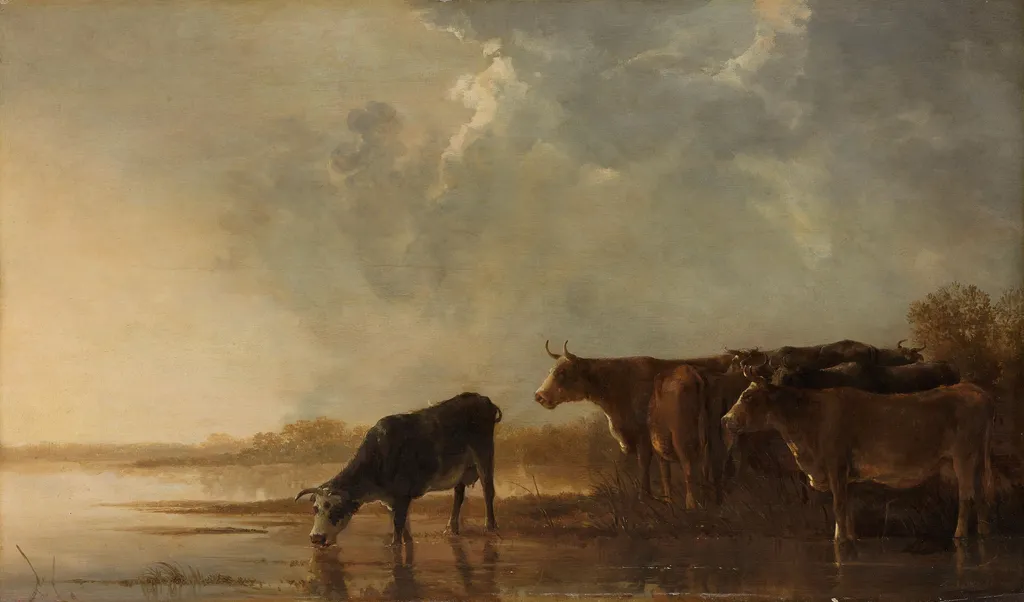
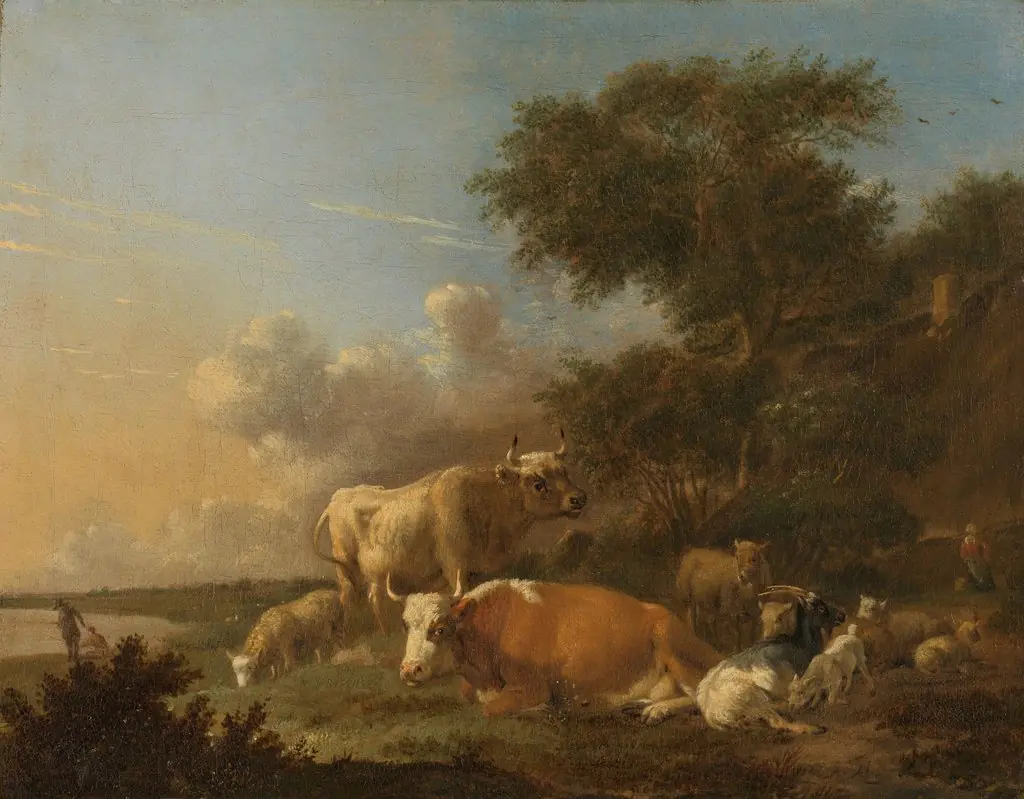
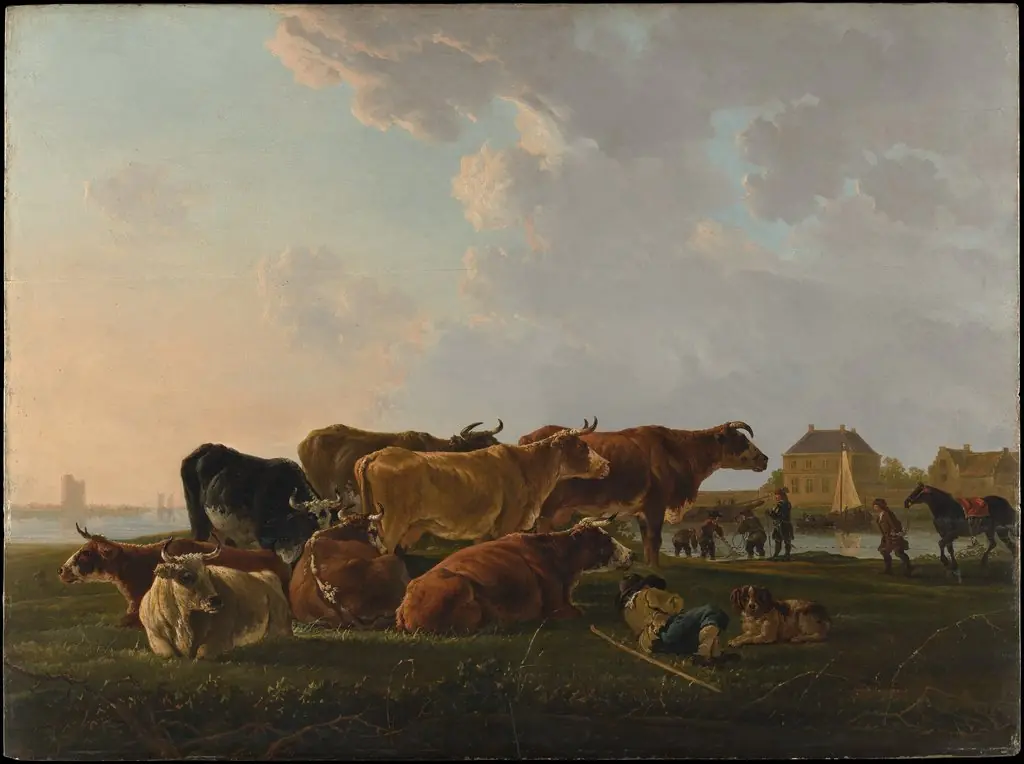
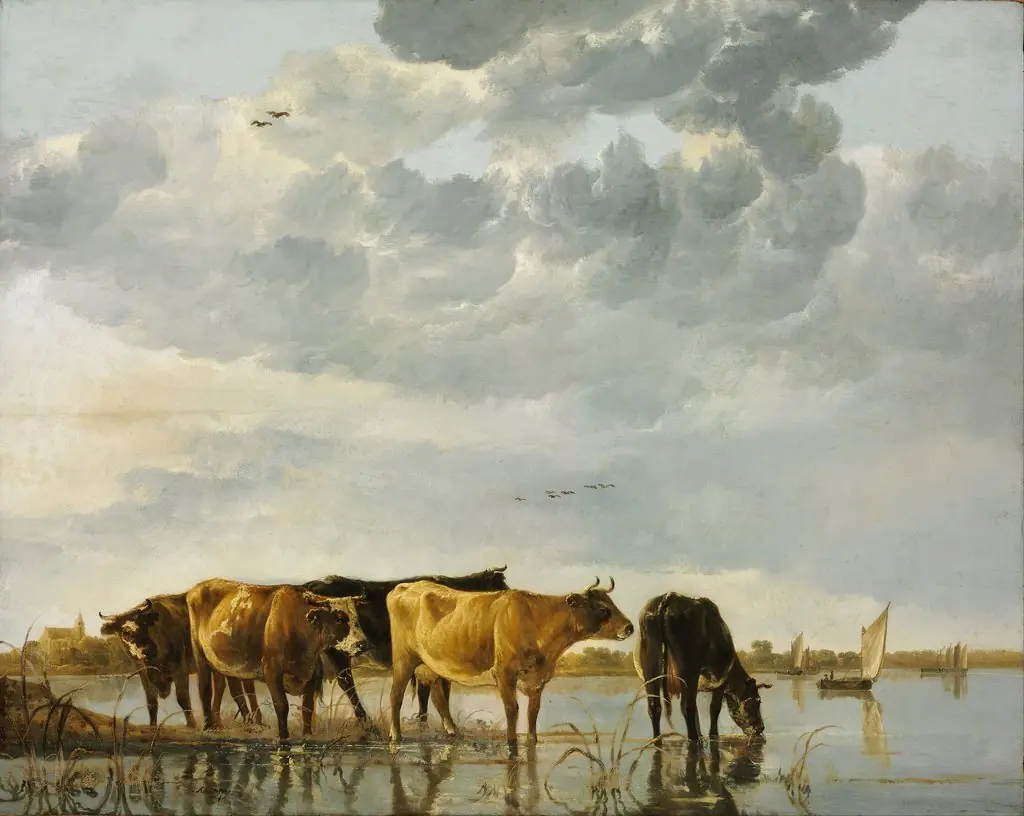
River landscape with cows is an oil painting by the Dutch Golden Age artist Aelbert Cuyp. It dates from 1650 and is held in the collection of the Rijksmuseum. Created circa 1650, this oil painting portrays a tranquil riverbank populated by a small herd of cattle.
About this work
Subject & Meaning
Aelbert Cuyp’s River landscape with cows (1650) presents a tranquil Dutch pastoral scene centered on a herd of cattle grazing near a river.
Aelbert Cuyp’s River landscape with cows (1650) presents a tranquil Dutch pastoral scene centered on a herd of cattle grazing near a river. The animals, rendered with careful naturalism, dominate the foreground, while the river and distant landforms establish a serene, expansive setting typical of Cuyp’s mature landscapes.
The iconography reflects seventeenth-century Dutch ideals of rural prosperity and harmony with nature. Cows, symbols of agricultural wealth, underscore the economic importance of livestock in the Dutch Golden Age. The river, a recurring motif in Cuyp’s work, evokes both practical irrigation and the picturesque beauty of the Dutch countryside.
Light, often golden in Cuyp’s paintings, bathes the scene, imbuing it with a sense of divine order and calm, suggesting an idyllic, divinely sanctioned landscape.
Technique & Style
The painting is executed in oil on a prepared panel support, typical of Dutch Golden Age practice, and measures 42.5 cm in height by 72 cm in width.
Handling is characterized by Cuyp’s luminous, atmospheric effects, achieved through layered glazes that modulate light across the pastoral scene. The river’s reflective surface and the soft modeling of cattle and foliage reveal a careful study of atmospheric perspective and tonal harmony.
Formal qualities include a broad, horizontal composition structured by the winding river and low horizon, which emphasizes the expansive sky and diffuse light typical of Cuyp’s mature landscapes.
Legacy
The painting's reputation grew steadily within Dutch art history, influencing 19th-century landscape painters who admired its luminous handling of light and pastoral subject matter. Its presence in the Rijksmuseum collection has ensured continued public visibility, cementing its status as a representative example of Dutch Golden Age landscape painting. The work's compositional treatment of cattle by riversides informed later animal painters, particularly in how movement and texture were rendered within natural settings.
Overview
Created circa 1650, this oil painting portrays a tranquil riverbank populated by a small herd of cattle. The composition is dominated by warm, earthy hues that convey the gentle light of early morning or late afternoon. A calm waterway stretches across the lower foreground, while a modestly clouded sky arches overhead, framing the pastoral scene.
History & Provenance
Attributed to Aelbert Cuyp, a prominent figure of the Dutch Golden Age, the painting entered the Rijksmuseum’s collection, where it remains on display. Its provenance traces back to the artist’s workshop and subsequent private owners before being acquired by the national museum, confirming its status within the Dutch artistic heritage.
Context
Cuyp’s oeuvre frequently features river scenes populated by cattle, a subject that appealed to 17th‑century Dutch patrons for its evocation of pastoral prosperity. This piece aligns with the period’s landscape tradition, which combined realistic observation with idealized light, reflecting both the economic success of the Dutch Republic and a cultural fascination with bucolic tranquility.
Own this work as a print
Artist & collection

Artist
Aelbert Jacobszoon Cuyp or Cuijp (Dutch pronunciation: ; 20 October 1620 – 15 November 1691) was one of the leading Dutch Golden Age painters, producing mainly landscapes.

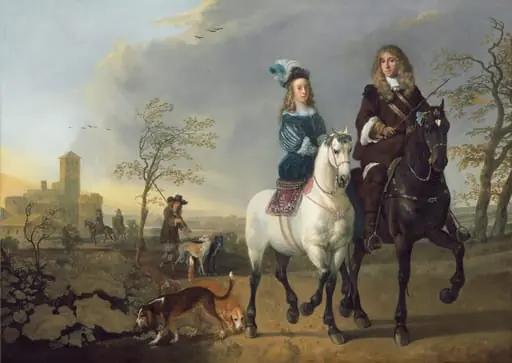 Lady and Gentleman on Horseback
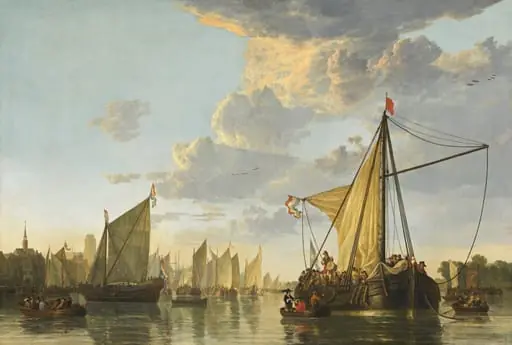 The Maas at Dordrecht
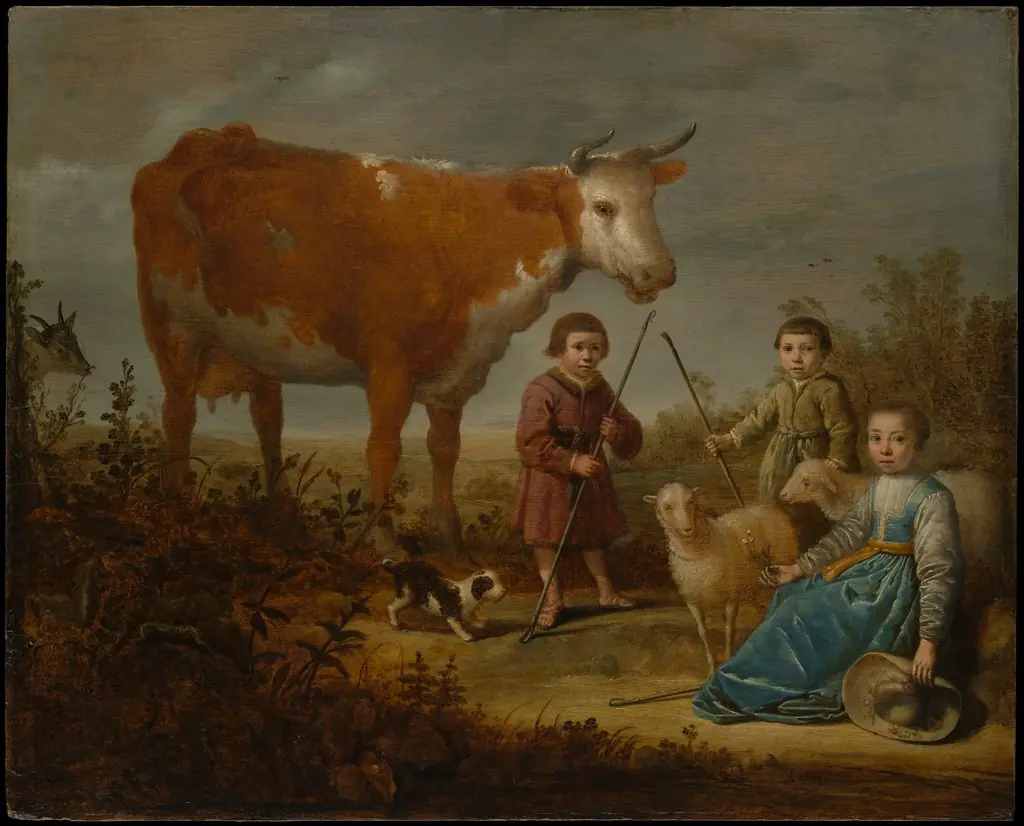 Children and a Cow
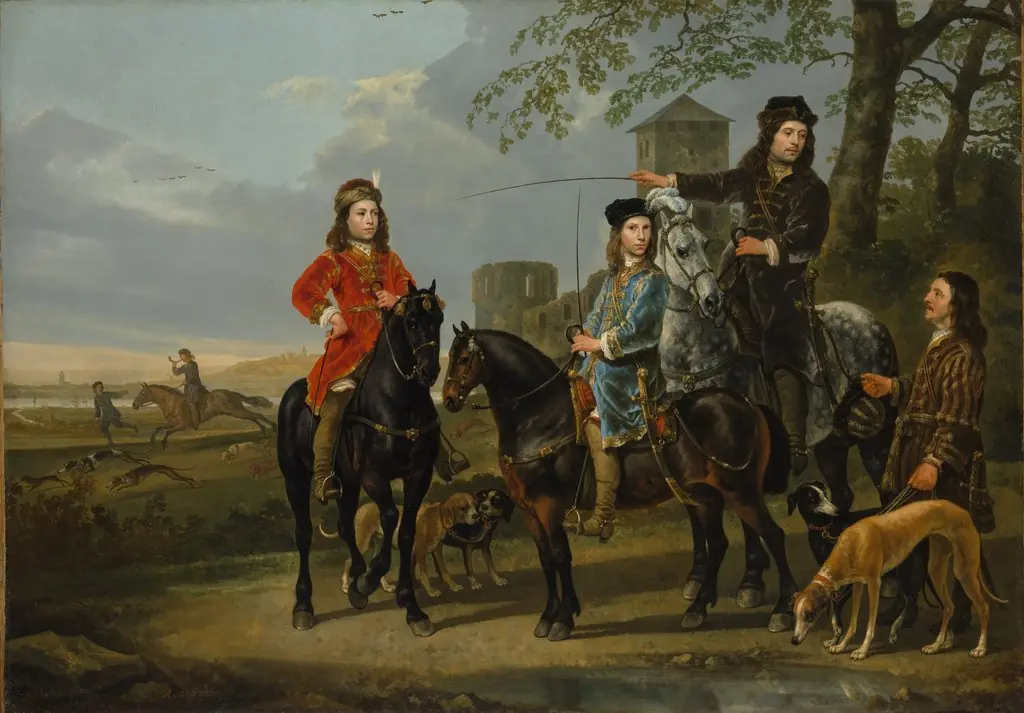 Equestrian Portrait of Cornelis (1639–1680) and Michiel Pompe van Meerdervoort (1638–1653) with Their Tutor and Coachman ("Starting for the Hunt")
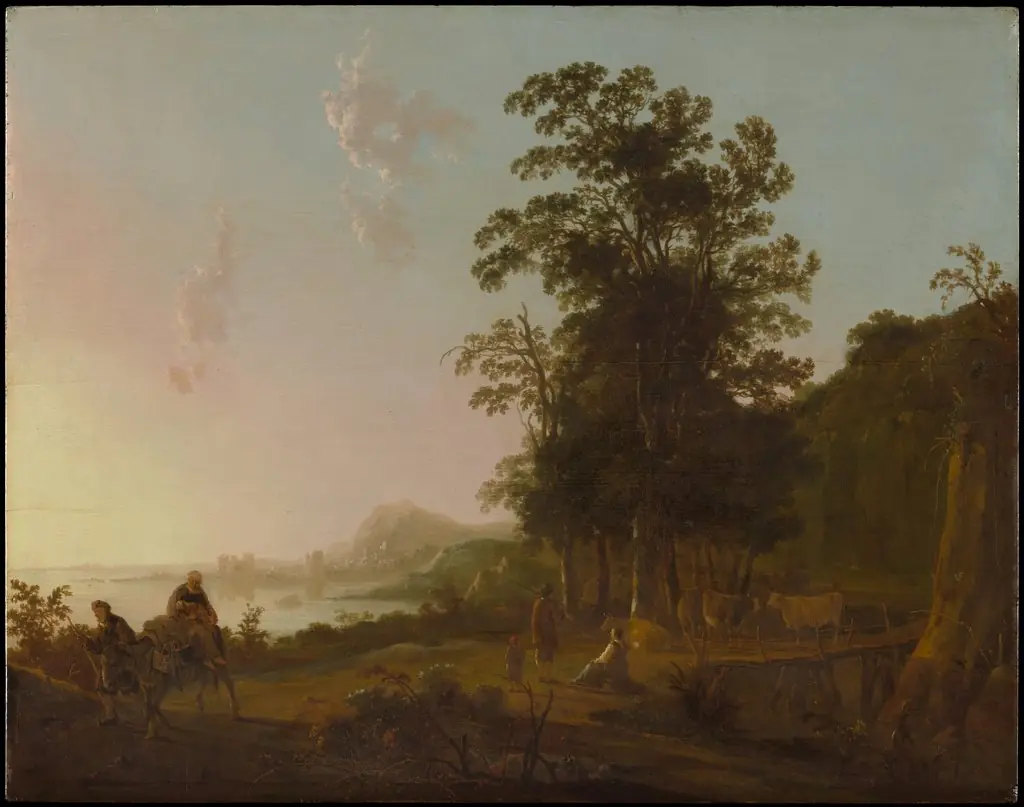 Landscape with the Flight into Egypt
 Piping Shepherds
 Travellers in Hilly Countryside
 A Chief Merchant of the VOC with his Wife and an Enslaved Servant