Artwork
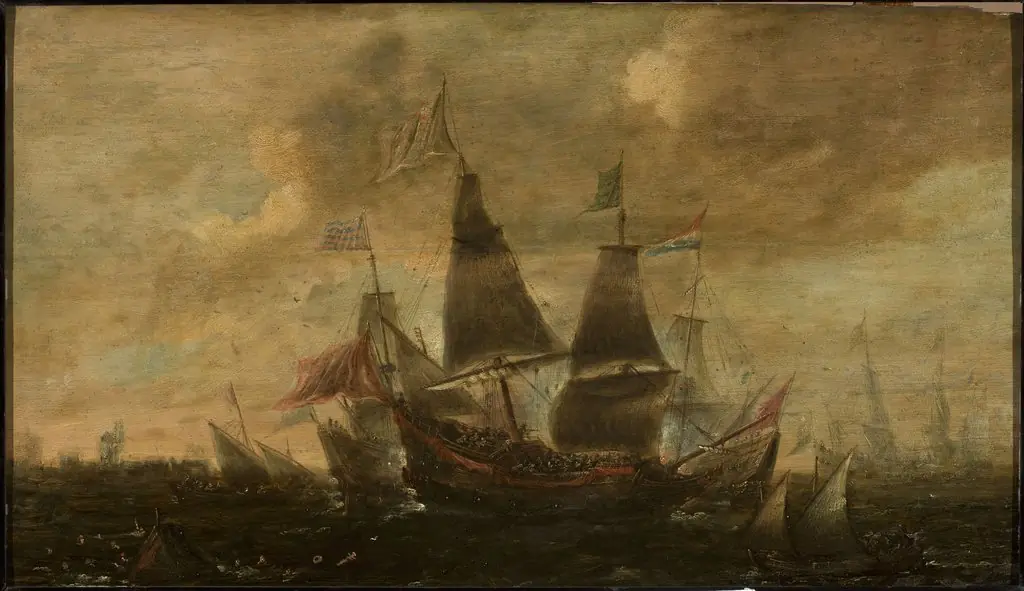
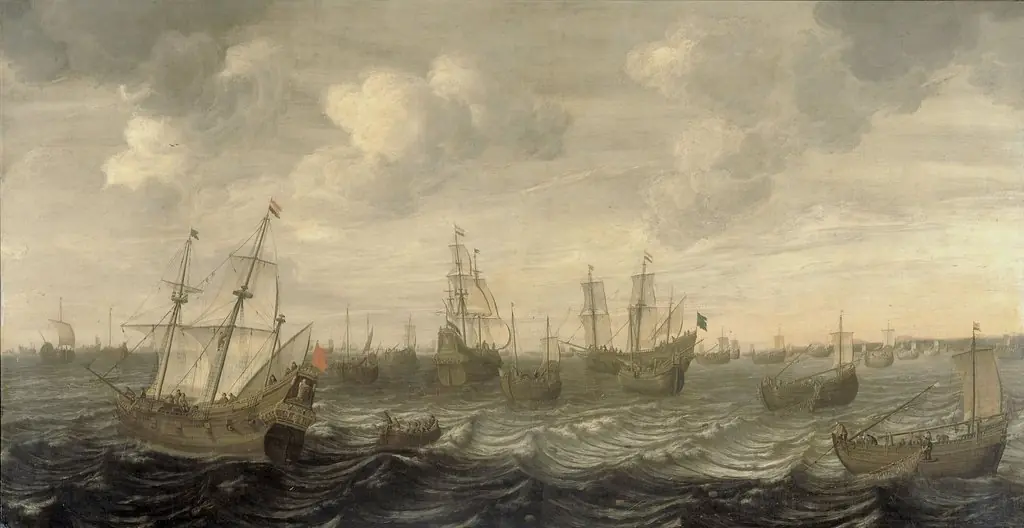
The battle of Cadix
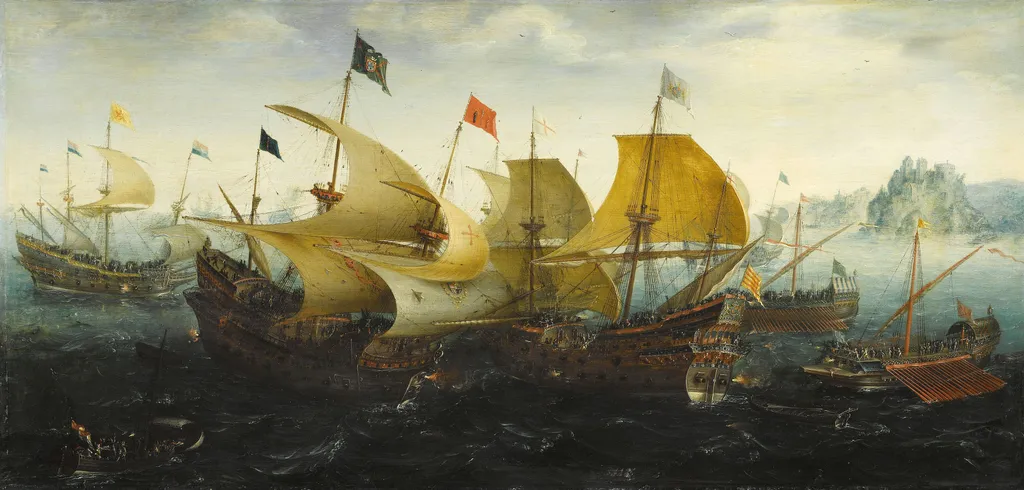
The battle of Cadix is an oil painting by the Dutch Golden Age artist Aert Anthoniszoon. It dates from 1608 and is held in the collection of the Rijksmuseum.
About this work
Technique & Style
The handling combines dense, layered brushwork in foreground figures and vessels with broader, atmospheric glazes to render the expanse of water and sky.
Executed in oil paint on a wooden panel, the work measures 40.3 cm in height and 83.8 cm in width. The handling combines dense, layered brushwork in foreground figures and vessels with broader, atmospheric glazes to render the expanse of water and sky. Flesh and armor receive careful modeling, while the sea is built up through successive translucent scumbles that suggest movement and depth.
The composition divides horizontally: the lower register concentrates on the tumult of ships and combatants, while the upper half dissolves into a hazy horizon and cloud masses that frame the action. The palette is restrained, relying on earthy browns, muted greens, and lead-tin yellow accents in flags and sails to guide the viewer’s eye.
History & Provenance
The Battle of Cadix is an oil-on-panel painting created by Aert Anthoniszoon in 1608. The work depicts a maritime battle scene involving boats and is classified within the genres of history painting and marine art. It measures 40.3 cm in height and 83.8 cm in width. The painting is currently held in the collection of the Rijksmuseum.
Context
The Battle of Cadix emerged within the Dutch Golden Age's prolific output of history and marine painting, reflecting the era's fascination with naval warfare and national identity. Aert Anthoniszoon's 1608 oil painting on panel, housed in the Rijksmuseum, exemplifies early Dutch maritime narrative art preceding the more celebrated works of the 17th century. Its depiction of a boat-centric battle scene aligns with genre classifications of marine art and battle painting, situating it at the transitional moment between Renaissance influences and the Dutch school's rising focus on realistic seascapes.
The work's presence in a major institutional collection underscores its historical significance as a documented example of period artistic engagement with contemporary military events.
Legacy
The painting was noted for its dramatic portrayal of naval conflict, influencing later marine and battle painters who sought to capture the intensity of sea warfare. Its composition informed subsequent works in the Dutch Golden Age that emphasized dynamic ship arrangements and chiaroscuro effects. The piece remained in the Rijksmuseum collection, preserving its reputation as an early example of maritime historical painting.
Overview
Aert Anthoniszoon’s 1608 oil painting, titled The Battle of Cadix, captures a turbulent naval engagement on a storm‑laden sea. The composition is dominated by towering vessels locked in combat, their sails billowing against a dark, churning horizon, while smoke and spray fill the air, conveying the immediacy of conflict.
Subject & Meaning
The work portrays a maritime clash, likely between opposing fleets distinguished by vivid flags of red, blue, and black. Though the identities of the combatants remain ambiguous, the emphasis on the chaos of battle and the perilous sea underscores themes of human struggle against nature’s fury and the uncertainties of war.
Artist & collection
Artist
Aert Anthoniszoon (abbreviated Anthonisz.) or Anthonissen, also known as Aart or Aert van Antum (born c. 1579–1580; buried 7 September 1620) was a Dutch marine painter.

- Untitled
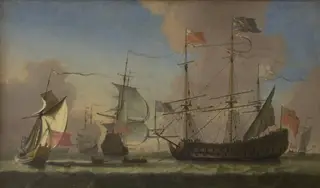 English Warships at Sea in a Fresh Breeze
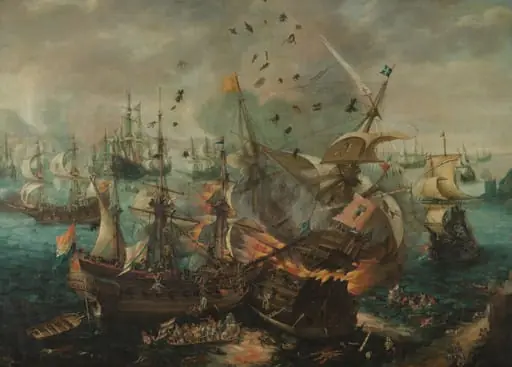 Battle of Gibraltar in 1607
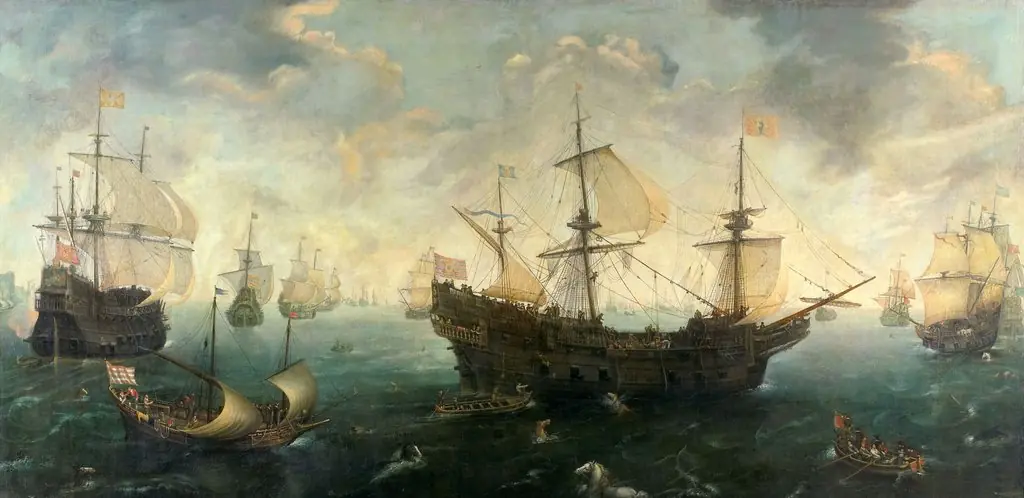 The Spanish Armada off the English coast
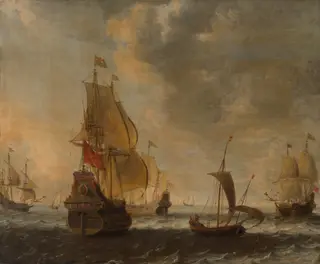 Dutch Ships in a Lively Breeze
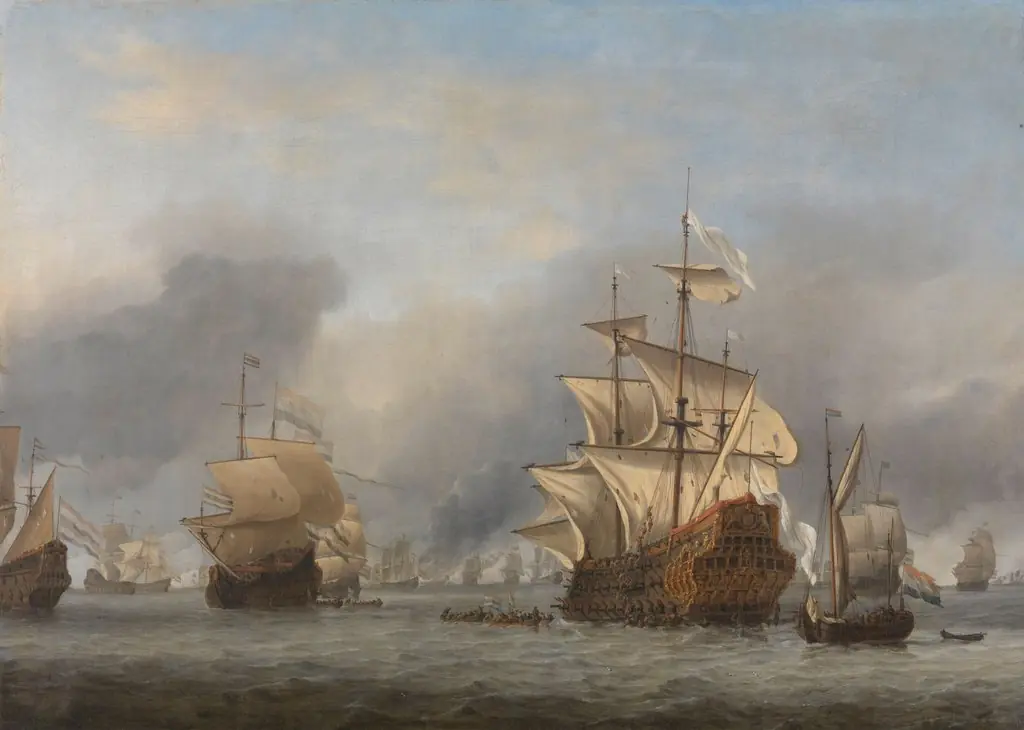 The Capture of the Royal Prince
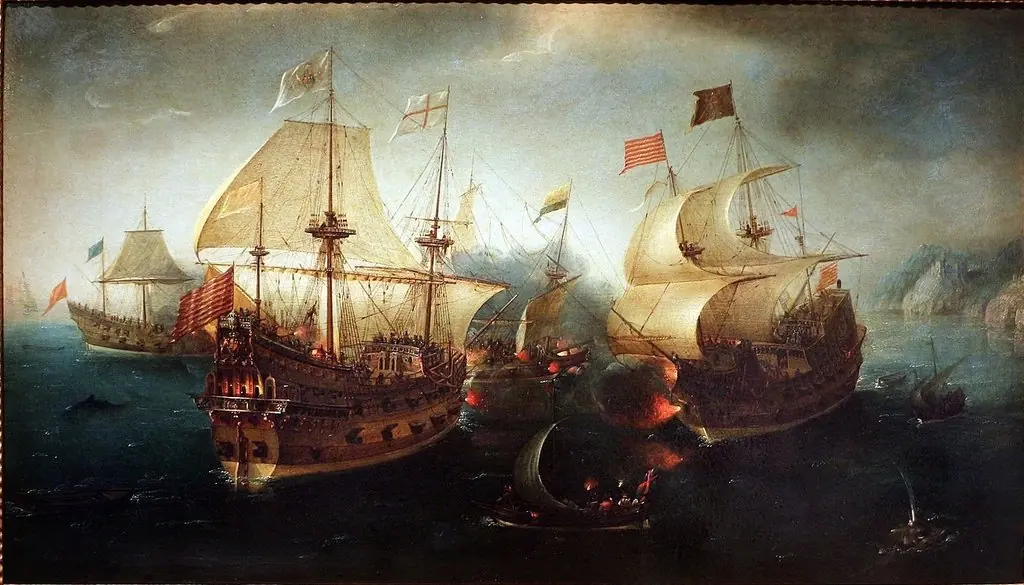 Batalha Naval
 Captured English Ships after the Four Days’ Battle
 Sea battle
 Untitled
 A French squadron near a rocky coast
 The Dutch herring fleet under sail
 Lake Lucerne
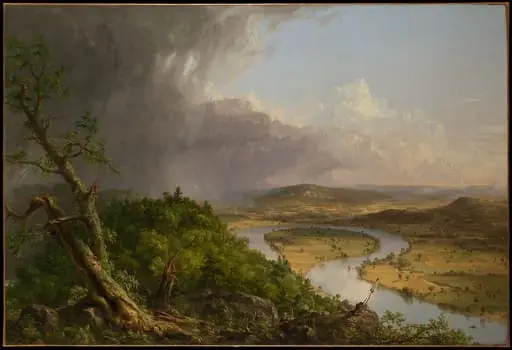 View from Mount Holyoke, Northampton, Massachusetts, after a Thunderstorm—The Oxbow
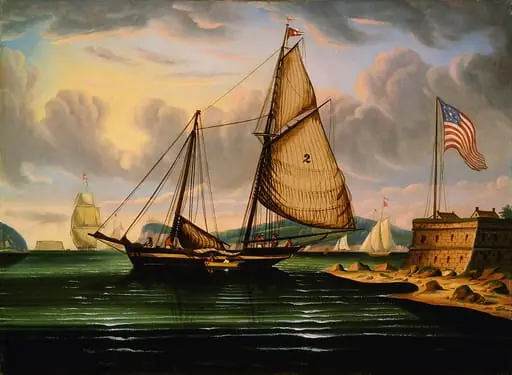 New York Harbor with Pilot Boat "George Washington"
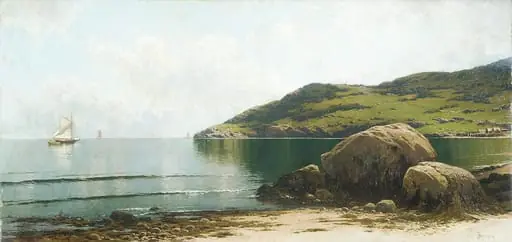 Marine Landscape
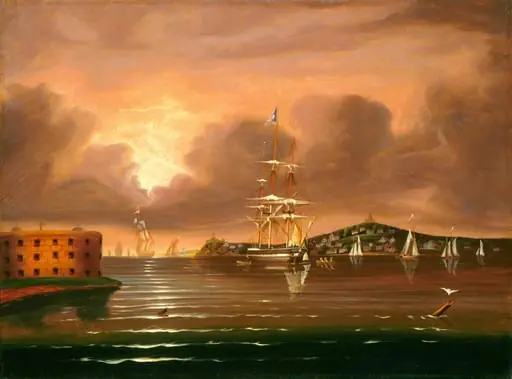 Threatening Sky, Bay of New York
 Lake George and the Village of Caldwell
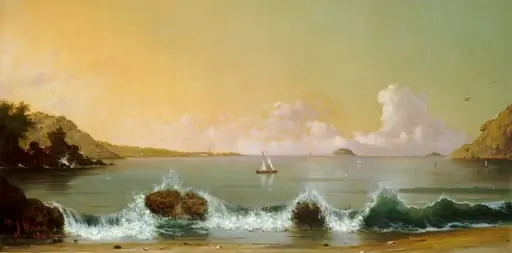 Rio de Janeiro Bay
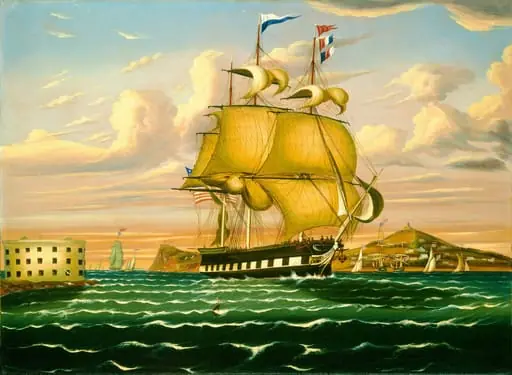 Packet Ship Passing Castle Williams, New York Harbor