Artwork
Reading Aloud
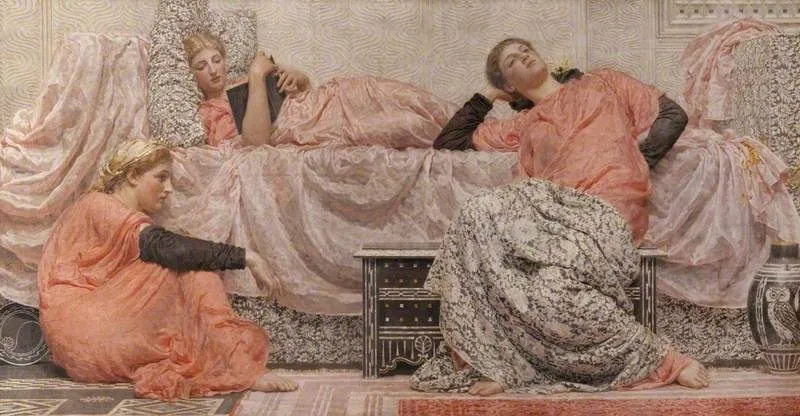
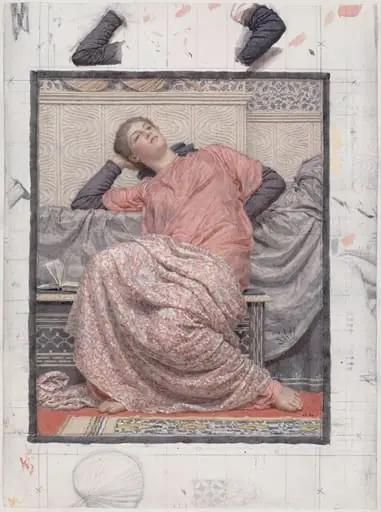
Reading Aloud is an unspecified painting by the Aestheticist artist Albert Joseph Moore. It dates from 1892 and is held in the collection of the Kelvingrove Art Gallery and Museum.
About this work
Overview
Albert Joseph Moore completed Reading Aloud in 1892, a quiet interior scene that reflects his commitment to aesthetic principles.
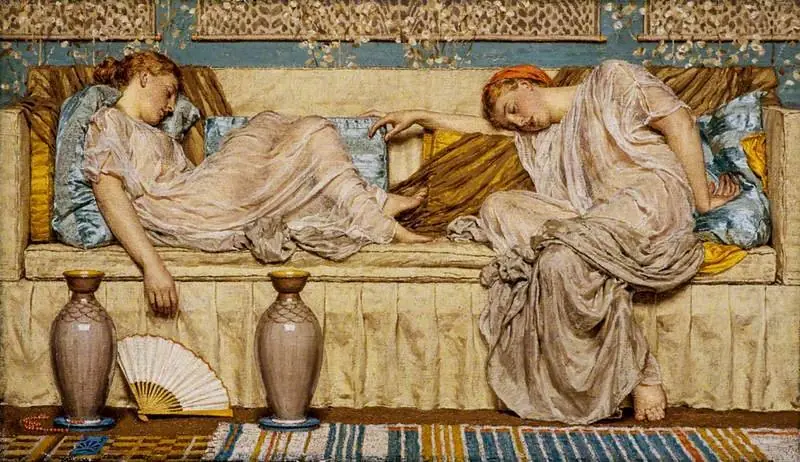
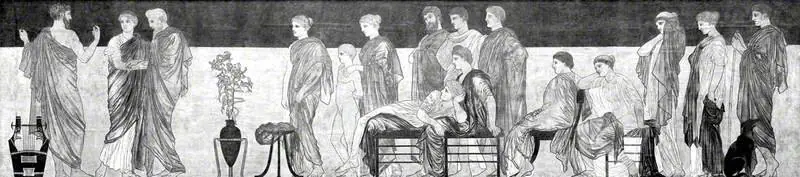
Albert Joseph Moore completed Reading Aloud in 1892, a quiet interior scene that reflects his commitment to aesthetic principles. The painting presents four women in a calm, domestic space, engaged in a moment of shared stillness. Moore’s focus on harmony, texture, and subtle color relationships replaces narrative drama, aligning with the broader aesthetic movement’s emphasis on beauty over moral or story-driven content.
Subject & Meaning
The scene captures a moment of quiet intellectual intimacy, with one woman reading aloud from a scroll while three others listen or rest nearby. No clear narrative or emotional climax is presented; instead, the painting invites contemplation of leisure, solitude within company, and the dignity of everyday ritual. The absence of overt action underscores a preference for atmosphere over storytelling, characteristic of Moore’s aesthetic approach.
Technique & Style
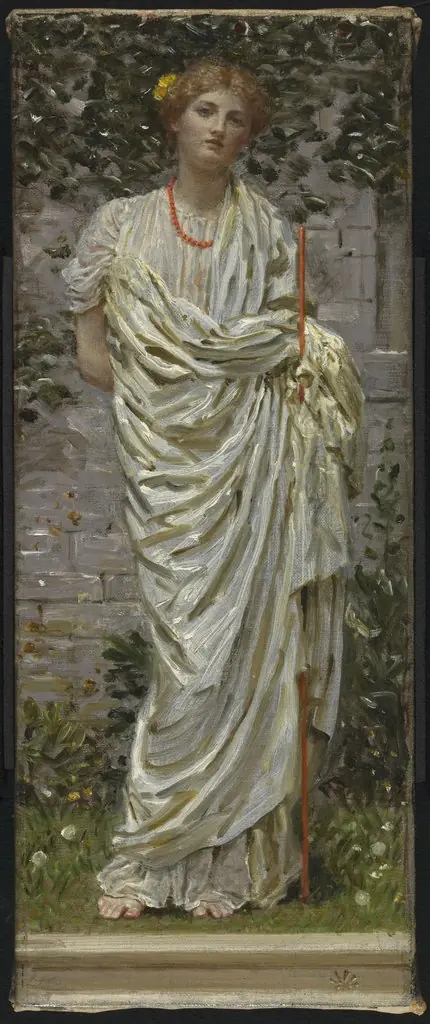
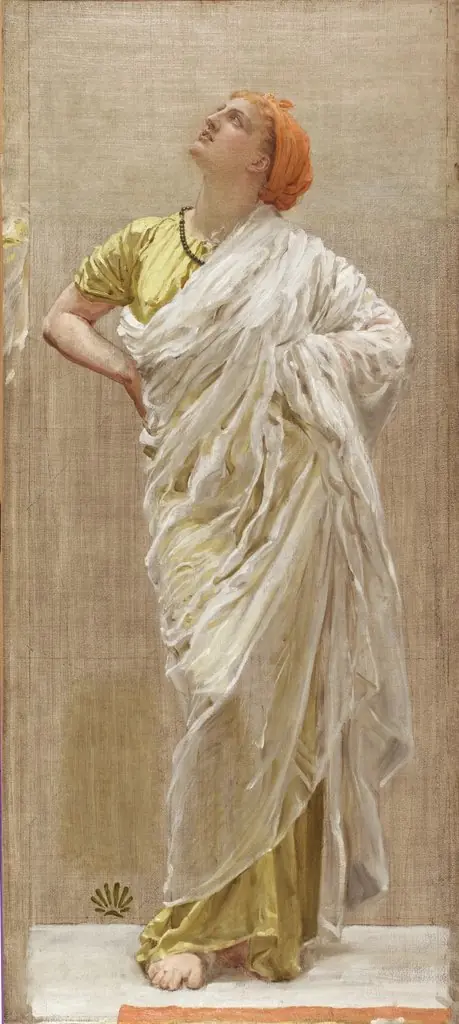
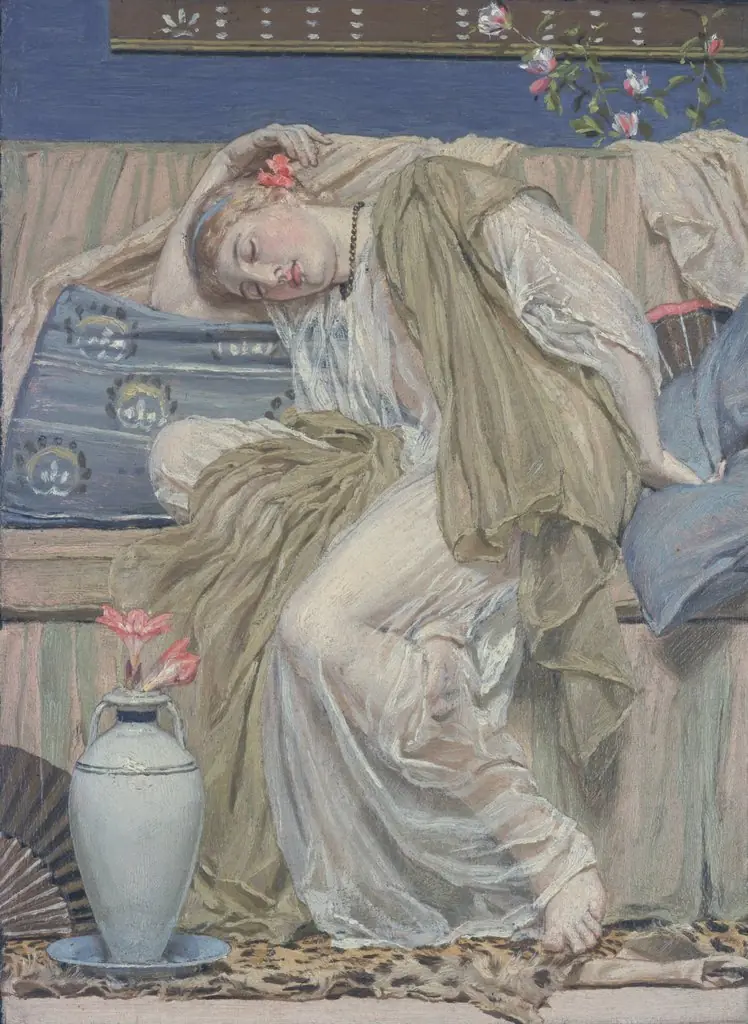
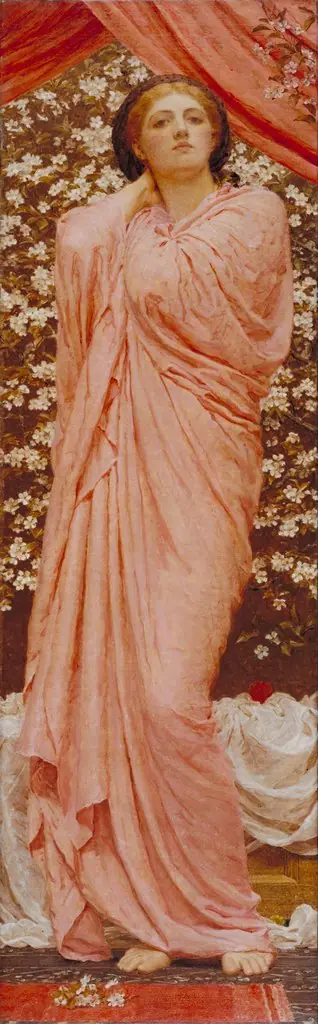
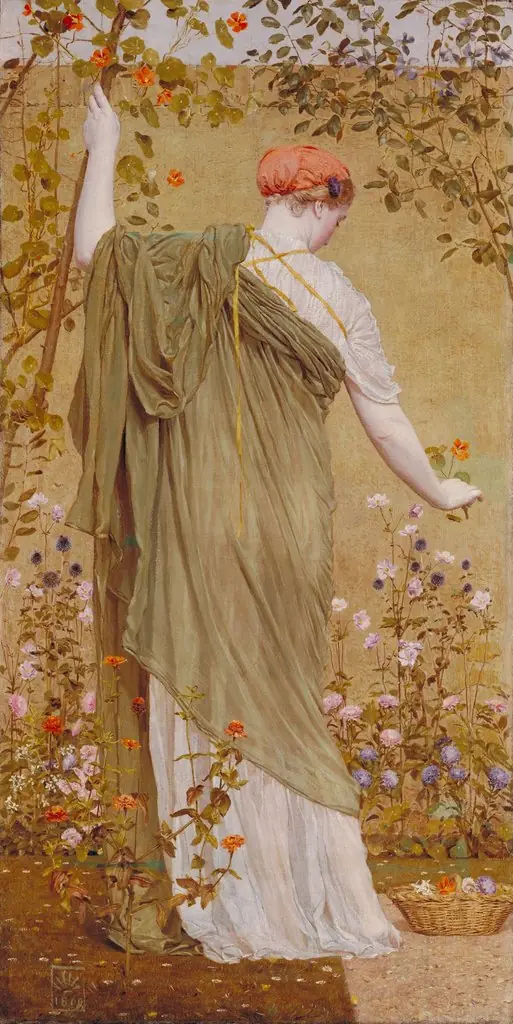
Moore rendered the figures in soft, muted hues, emphasizing the fluidity of draped fabrics through delicate tonal gradations. The folds of their robes are meticulously observed, suggesting weight and texture without heavy modeling. Chiaroscuro is used sparingly to define form and space, while the patterned rug and classical vase anchor the composition in a refined, timeless setting. The brushwork remains restrained, prioritizing smooth surfaces and harmonious balance.
History & Provenance
Painted near the end of Moore’s career, Reading Aloud reflects his mature style, developed through years of studying classical sculpture and Renaissance color theory. It was likely exhibited in London during the 1890s, a period when aestheticism was gaining institutional recognition. The painting remained in private collections after his death in 1893, preserving its quiet reputation among connoisseurs of late Victorian decorative art.
Context
Moore worked within a circle of artists and writers who rejected industrial realism in favor of beauty derived from antiquity and refined sensation. Reading Aloud echoes the ideals of the Aesthetic Movement, which valued sensory pleasure and artistic autonomy. The painting’s classical motifs and subdued palette align with contemporaries like Whistler and Burne-Jones, though Moore’s focus on domestic tranquility distinguishes his vision from mythological or allegorical themes.
Legacy
Though less widely known than some of his peers, Moore’s work, including Reading Aloud, contributed to the legitimization of decorative painting as a serious pursuit. His emphasis on composition, texture, and mood influenced later generations interested in the interplay of form and atmosphere. The painting endures as a quiet testament to an art that sought serenity over spectacle, and stillness over statement.
Artist & collection
Artist
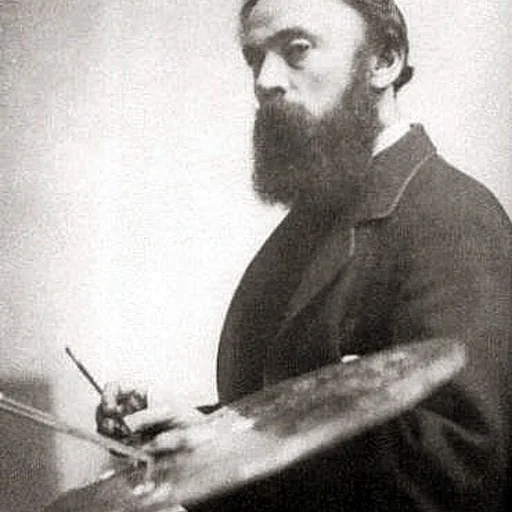
Albert Joseph Moore (4 September 1841 – 25 September 1893) was an English painter, known for his depictions of languorous female figures set against the luxury and decadence of the classical world.