Artwork
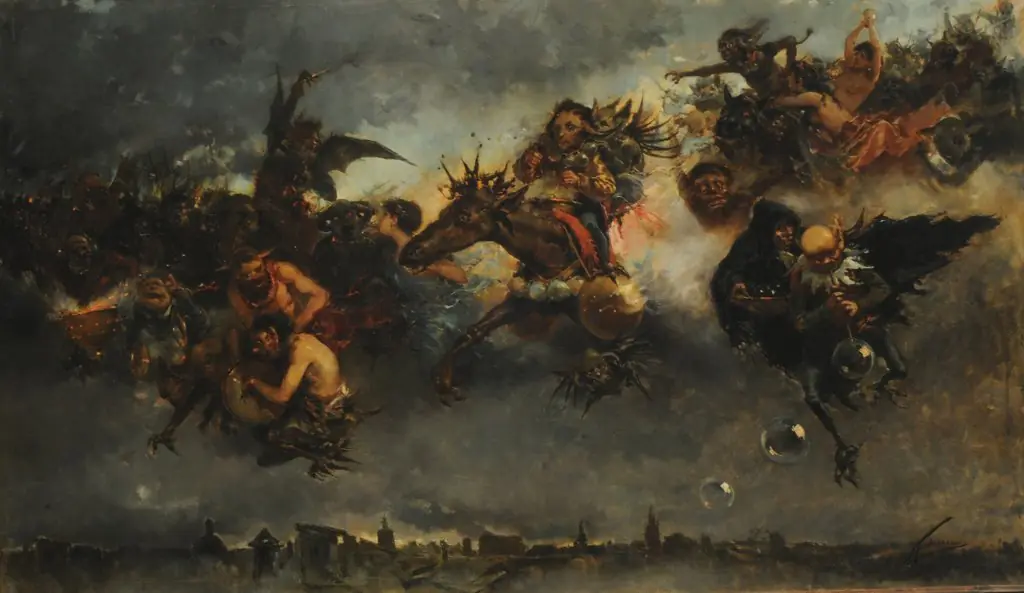
Walpurgisnacht
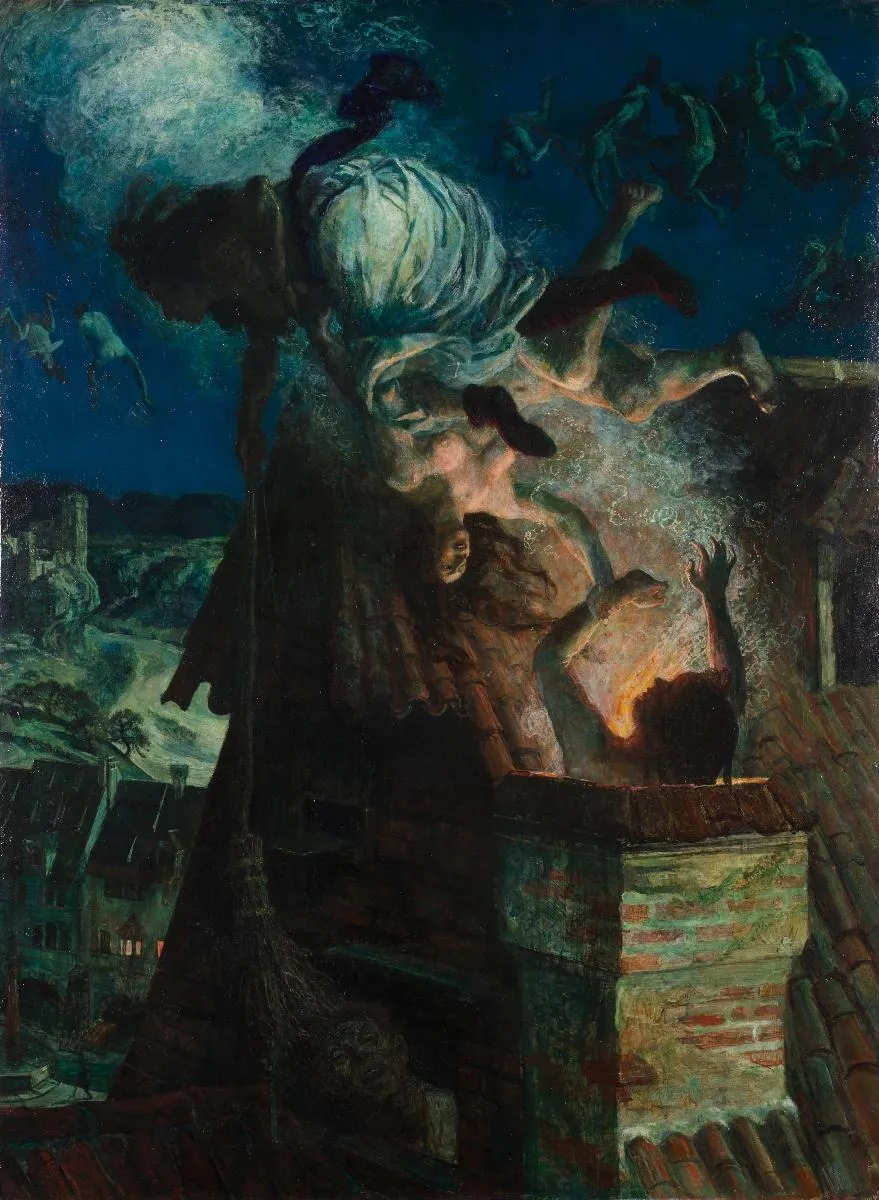
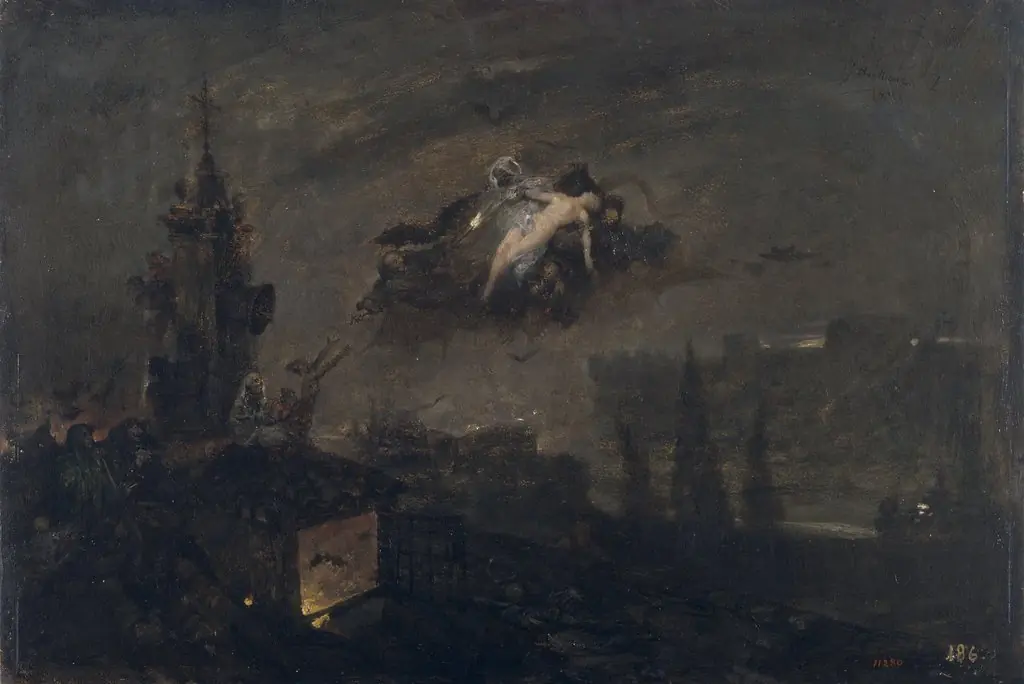
Walpurgisnacht is a tempera painting by the Symbolist artist Albert Welti. It dates from 1898 and is held in the collection of the Kunsthaus Zürich.
About this work
Overview
Albert Welti painted Walpurgisnacht in 1898 using tempera on panel, a medium that allowed for precise, layered detail.
Albert Welti painted Walpurgisnacht in 1898 using tempera on panel, a medium that allowed for precise, layered detail. The work is part of the Symbolist tradition, emphasizing psychological tension over literal narrative. It resides in the Kunsthaus Zürich collection, where it exemplifies Welti’s preoccupation with nocturnal, dream-inflected scenes that evoke inner turmoil rather than external reality.
Subject & Meaning
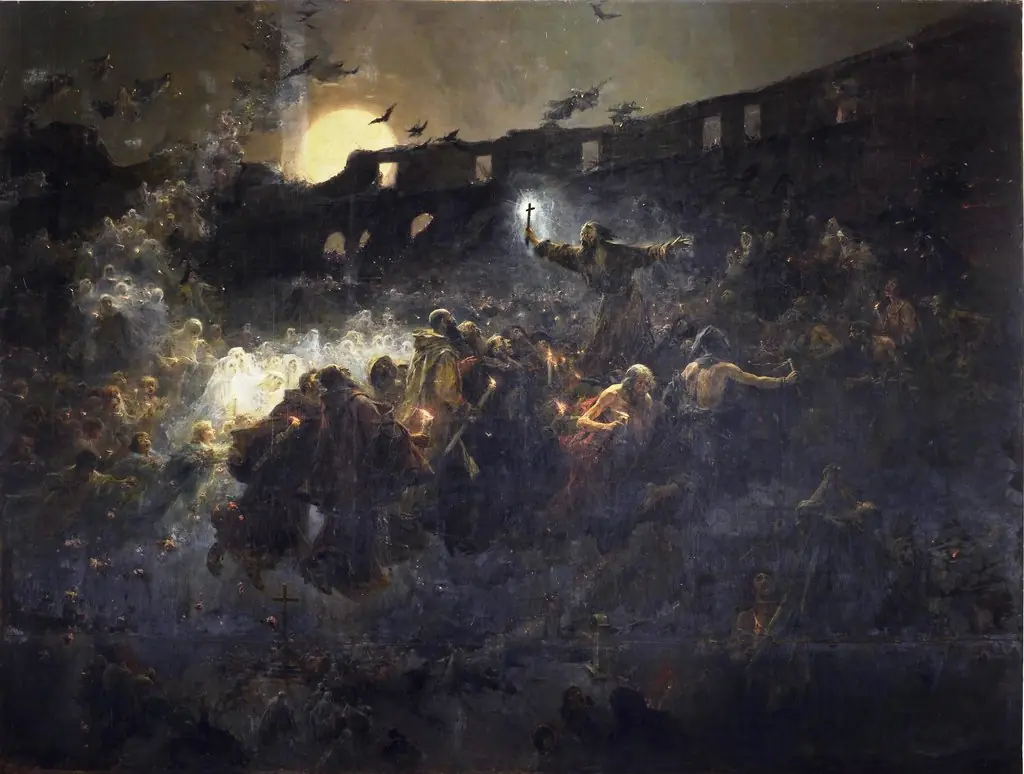
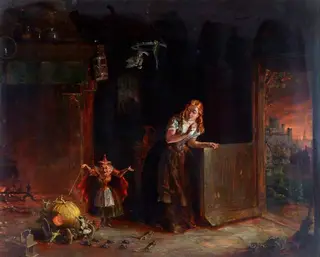
The painting portrays a lone woman in white standing atop a rooftop at night, surrounded by figures in motion, some falling, others recoiling. Her stillness contrasts with the chaos around her, suggesting isolation amid collective collapse. The scene alludes to Walpurgis Night, a folkloric eve of witchcraft and supernatural upheaval, but Welti transforms it into a metaphor for psychological disintegration, not literal sorcery.
Technique & Style
Welti employed tempera to achieve a matte, finely textured surface that enhances the painting’s eerie stillness. The medium’s slow drying time permitted meticulous rendering of fabrics, shadows, and architectural forms. His style blends precise draftsmanship with dreamlike distortion, using sharp silhouettes and flattened space to amplify unease, aligning with Symbolist aims to externalize inner states.
History & Provenance
Created in 1898, Walpurgisnacht entered the Kunsthaus Zürich collection shortly after its completion. Welti, a Swiss artist with ties to European Symbolist circles, produced few large-scale tempera works; this piece stands as one of his most ambitious. Its early acquisition by a major Swiss institution signals contemporary recognition of its emotional gravity and technical refinement.
Context
In late 19th-century Europe, Symbolism emerged as a reaction against realism, favoring myth, dream, and psychological depth. Welti’s work reflects this shift, drawing from folklore and literary sources to explore anxiety and alienation. Walpurgisnacht resonates with contemporaneous themes in art and literature, such as the fragility of reason and the lure of the irrational, common in fin-de-siècle culture.
Legacy
Though not widely exhibited beyond Switzerland, Walpurgisnacht remains a key example of Symbolist painting in German-speaking regions. Its restrained palette and psychological intensity influenced later Swiss artists interested in inner turmoil. The work endures as a quiet, unsettling meditation on isolation and collective collapse, valued for its emotional precision rather than dramatic spectacle.
Artist & collection
Artist
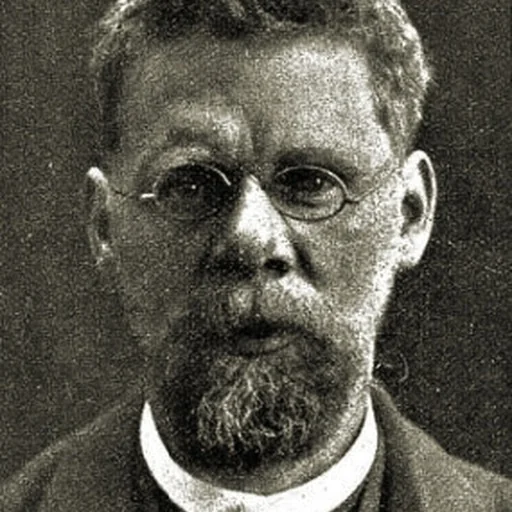
Albert Welti (18 February 1862 – 7 June 1912) was a Swiss painter and etcher. Many of his works depicted dreams or nightmares.

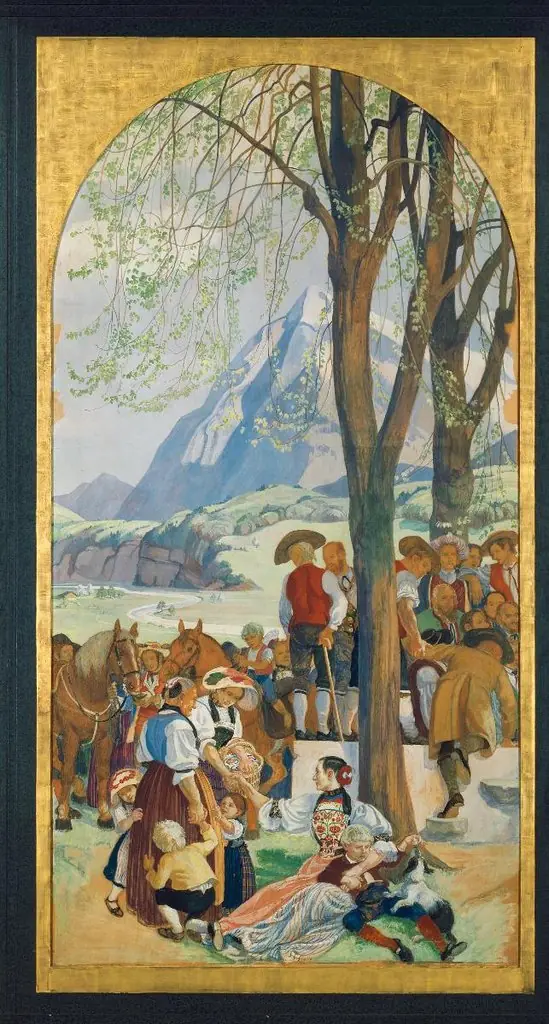
![Obwaldner Landsgemeinde [erstes Bild, links], by Albert Welti](https://artifactworldgallery.com/img/albert-welti--obwaldner-landsgemeinde-erstes-bild-links--6c1b18382095e99f-w320.webp)