Artwork
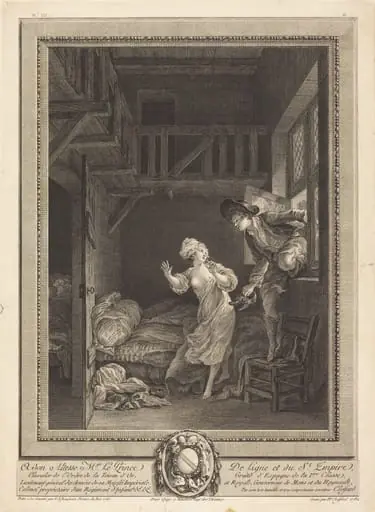
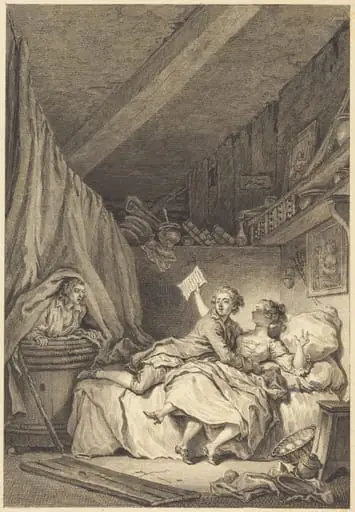
The Lover's Visit
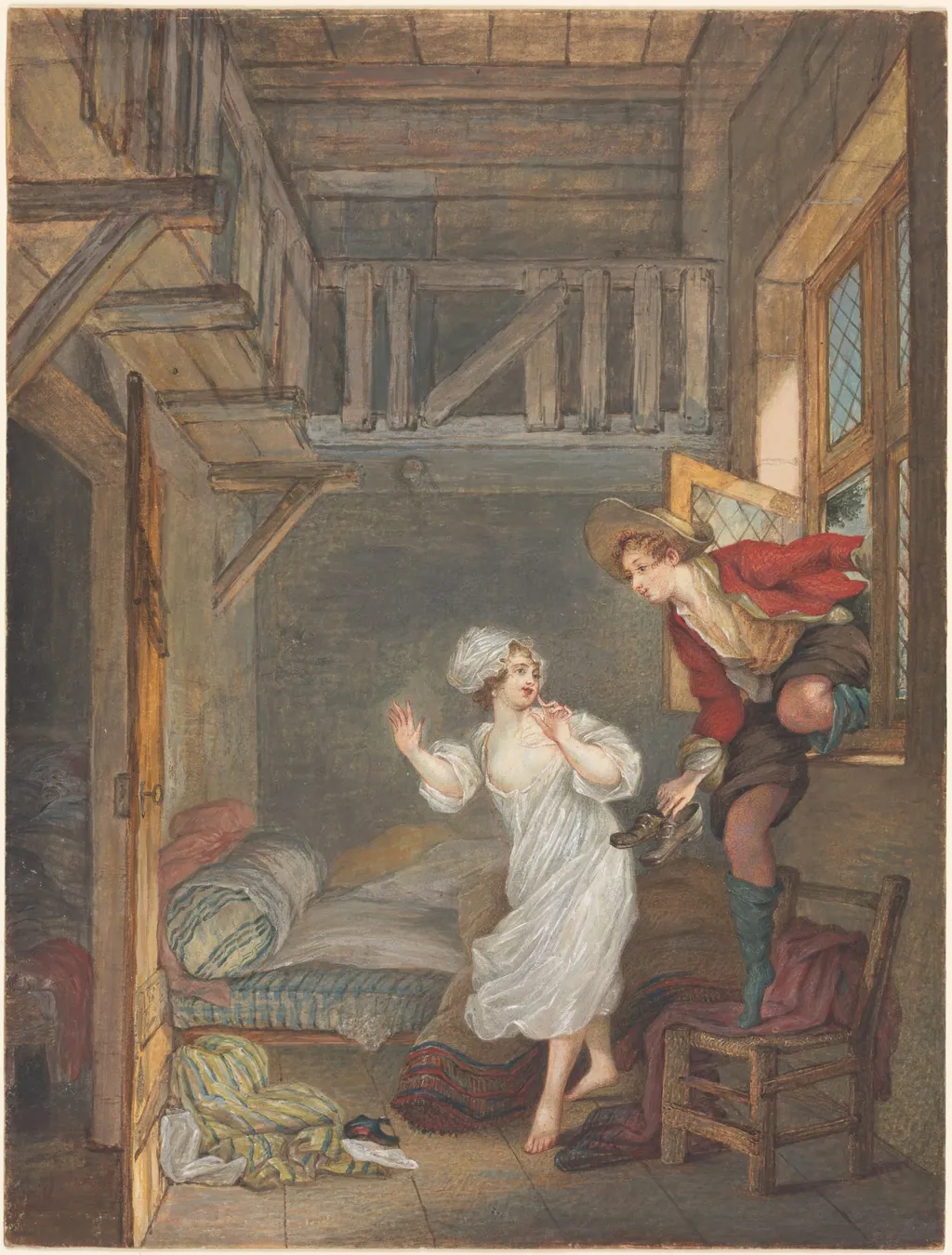
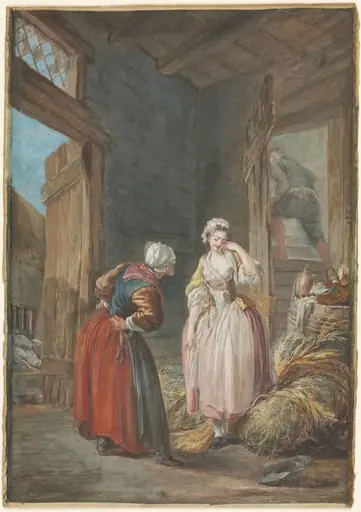
The Lover's Visit is a drawing by the Romanticist artist Pierre-Antoine Baudouin. It dates from 1765 and is held in the collection of the Cleveland Museum of Art.
- Accession no.
- 1978.1027
- Credit line
- Gift of Mr. and Mrs. Noah L. Butkin
About this work
Overview
Pierre-Antoine Baudouin, a French artist active in the mid-18th century, created this drawing around 1765. Influenced by the Rococo aesthetic of his father-in-law, François Boucher, he worked primarily in intimate, domestic subjects. This piece captures a private moment with subtle narrative tension, rendered in ink and wash rather than oil, distinguishing it from his larger paintings.
Subject & Meaning
The interaction resists grand romance, instead suggesting the complexities of personal relationships in private life.
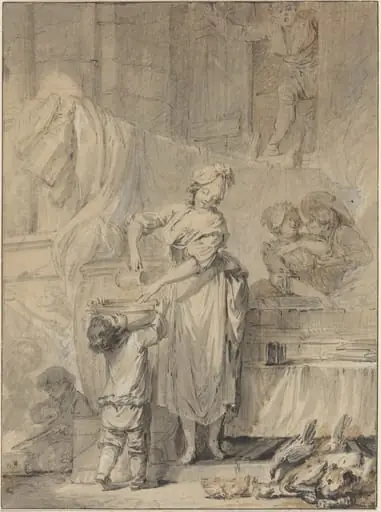
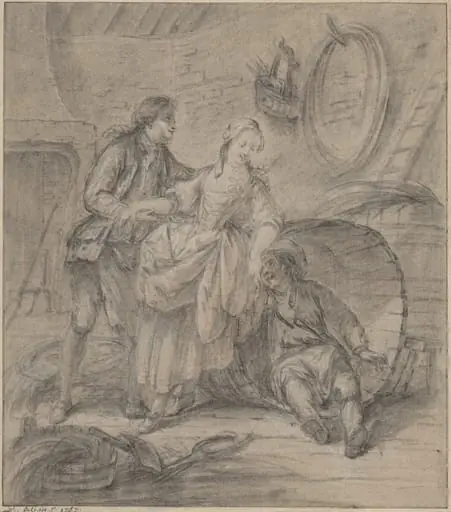
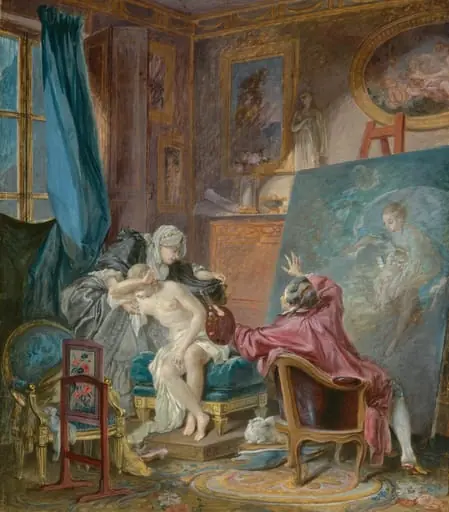
The scene portrays a quiet, unguarded moment in a bedroom: a woman stands near the bed, her gesture suggesting speech or protest, while a man leans from the window, holding a small object, perhaps a token or letter. The setting, cluttered with scattered garments and a rumpled mattress, implies immediacy and familiarity. The interaction resists grand romance, instead suggesting the complexities of personal relationships in private life.
Technique & Style
Baudouin employs ink and wash to model form with precision, using chiaroscuro to isolate the woman’s face in soft light while the surrounding space recedes into shadow. The contrast heightens emotional focus without melodrama. Loose, fluid lines define the disarray of the room, balancing spontaneity with controlled composition. The technique reflects Rococo’s attention to texture and atmosphere, adapted here for the intimacy of drawing.
History & Provenance
Created during Baudouin’s mature period, the drawing likely originated as a study or independent work for private collectors rather than a preparatory sketch. It remained within French collections through the 19th century before entering a public museum. Its survival as a standalone piece, rather than part of a larger series, suggests it was valued for its psychological nuance over decorative appeal.
Context
In mid-18th-century France, Rococo art often idealized aristocratic leisure, but Baudouin’s drawing diverges by depicting a modest interior and ordinary figures. The scene aligns with a growing interest in domestic realism among artists and patrons, reflecting shifting tastes toward authenticity over fantasy. While still decorative, it hints at the emerging sensibilities that would later inform 19th-century genre painting.
Legacy
Though Baudouin is less known than his contemporaries, this drawing exemplifies a quiet shift in Rococo art toward psychological subtlety. Its focus on private moments and nuanced lighting influenced later genre artists who sought to capture everyday life with emotional depth. The work remains a testament to how minor figures in art history contributed to broader transitions in visual storytelling.
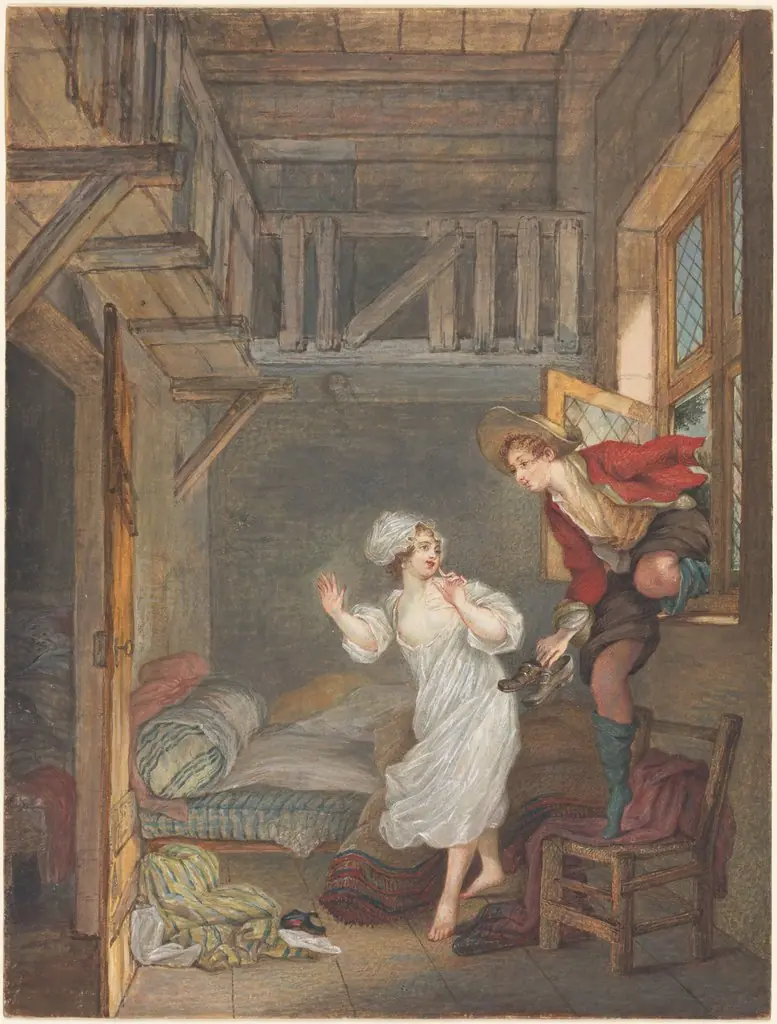
Own this work as a print
Artist & collection
Artist
Pierre-Antoine Baudouin (French pronunciation:; 17 October 1723 – 15 December 1769) was a French painter. He worked in the same Rococo style of his father-in-law, François Boucher.