Artwork
Two Ladies at their Sewing
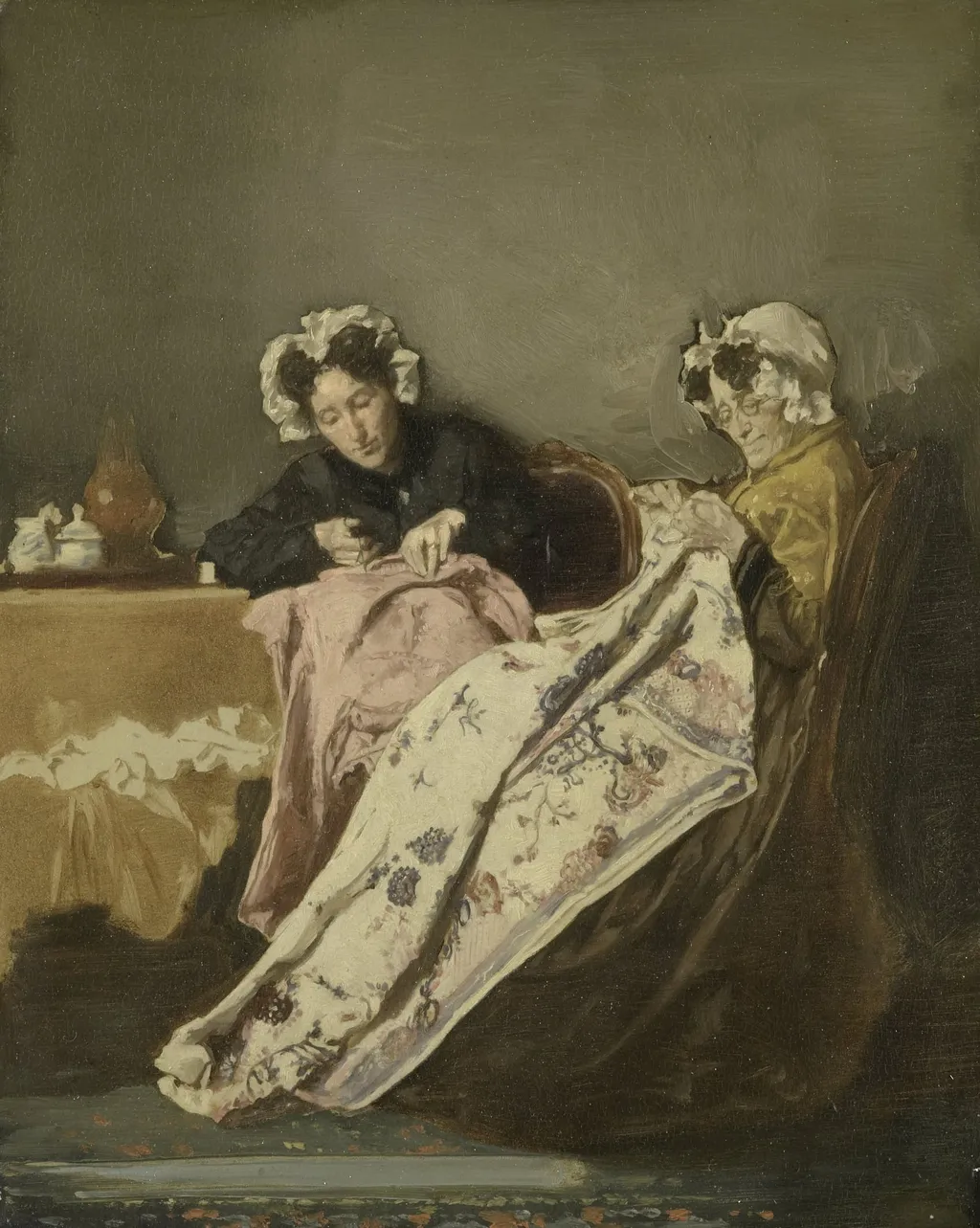
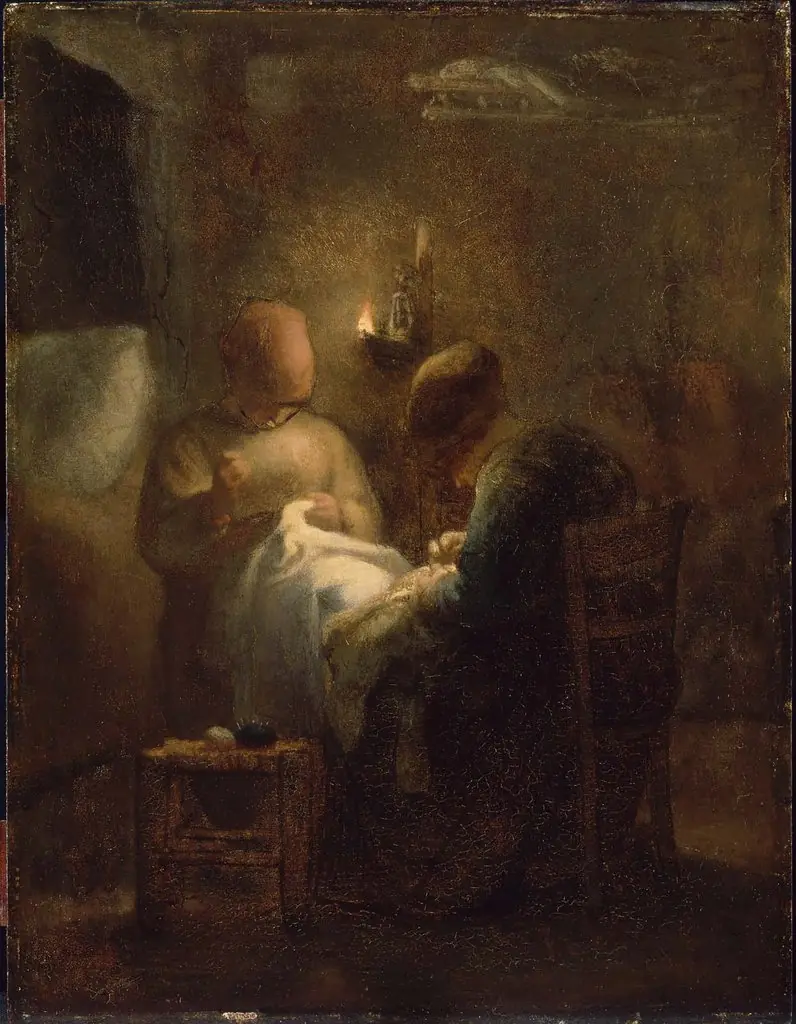
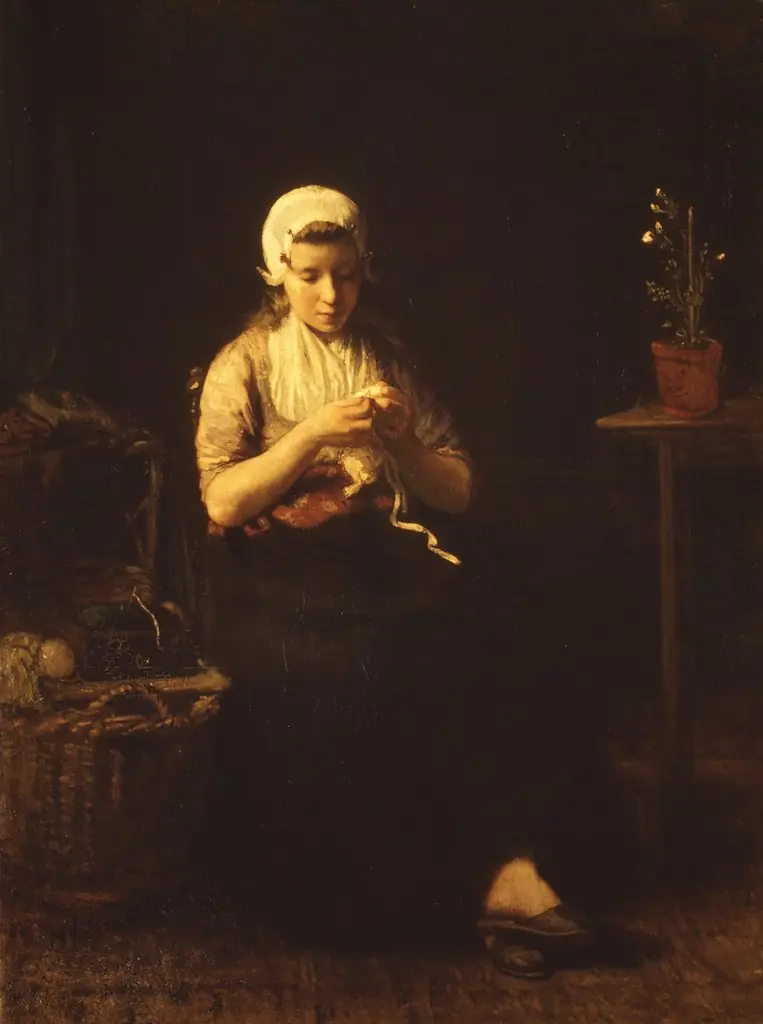
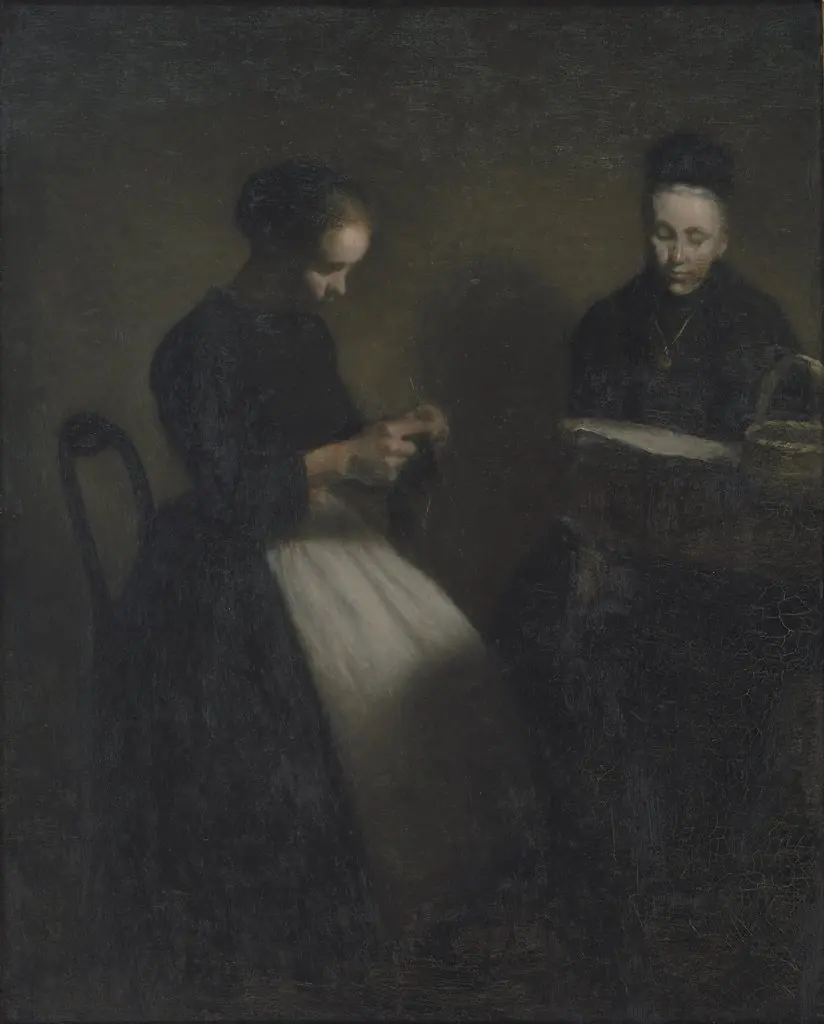
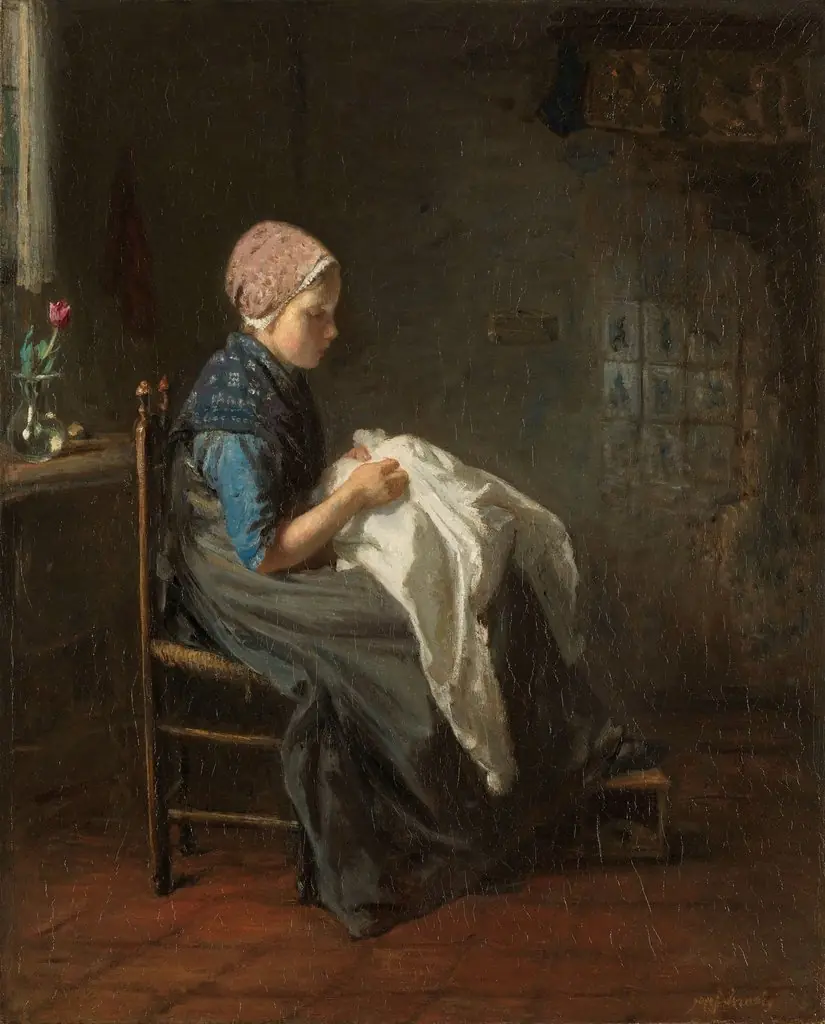
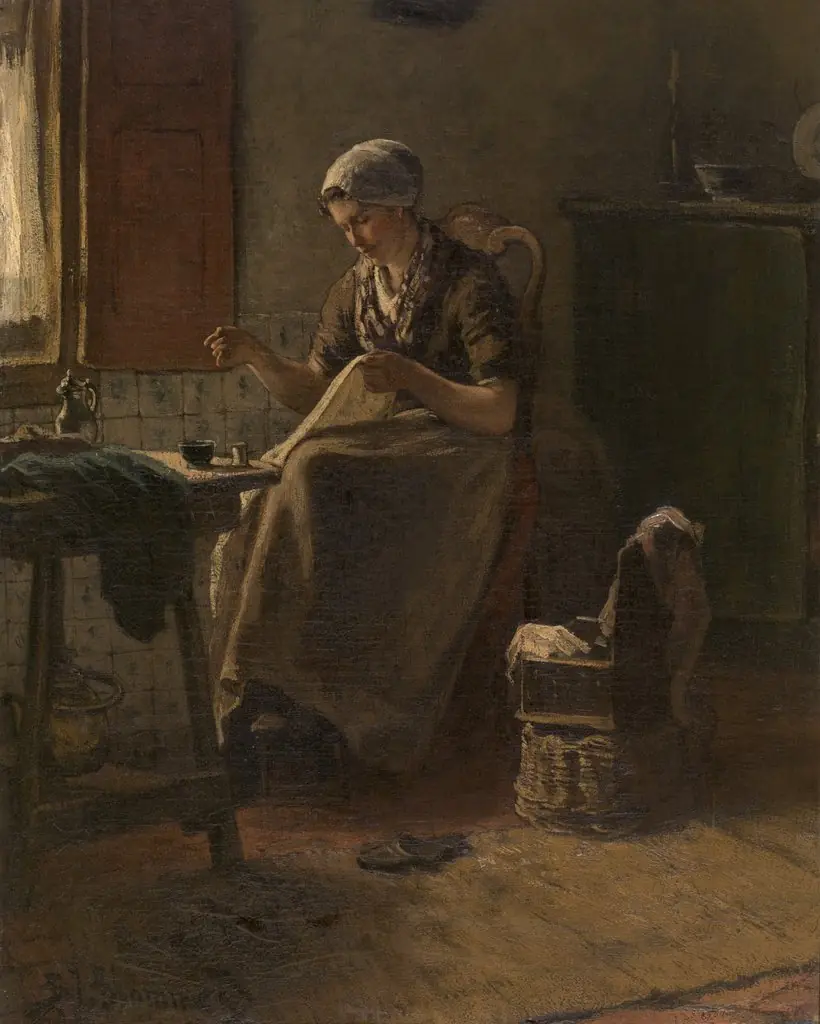
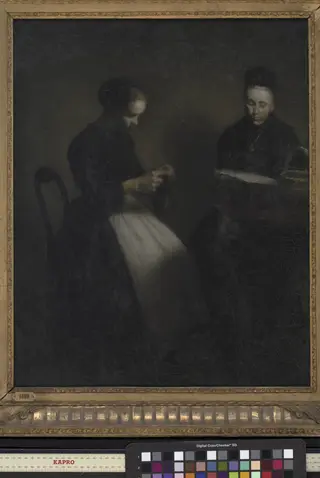
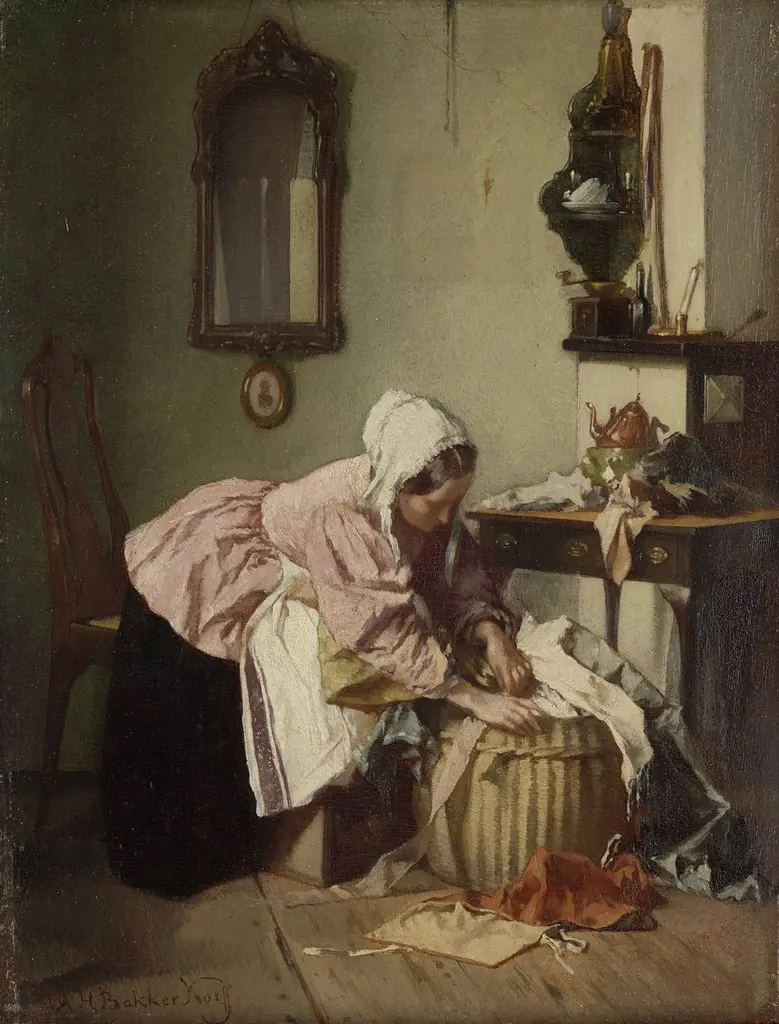
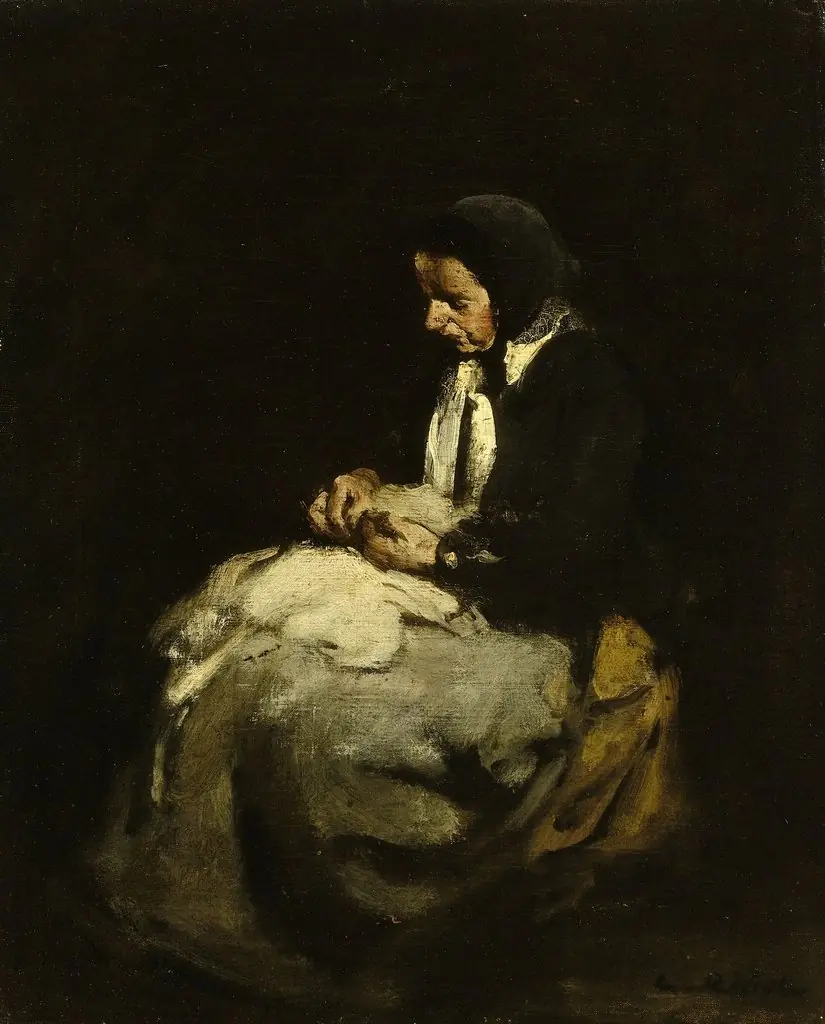
Two Ladies at their Sewing is an unspecified painting by the Biedermeier artist Alexander Hugo Bakker Korff. It dates from 1860 and is held in the collection of the Rijksmuseum. The painting portrays an intimate interior where two women are seated at a modest table, engaged in hand‑sewing a piece of white fabric.
About this work
Subject & Meaning
The painting reflects the artist's fascination with dated eighteenth-century dress and household bibelots, which he collected and rendered with meticulous care.
Two Ladies at their Sewing belongs to the category of intimate domestic scenes that Alexander Hugo Bakker Korff made his specialty after 1856, when he settled in Leiden and turned away from the academic history painting of his training. The work depicts two women absorbed in needlework, a subject central to the so-called "Bakker Korffjes", small-scale bourgeois genre pieces and interior scenes featuring elderly ladies, for which the artist typically used his mother and two unmarried older sisters as models.
The painting reflects the artist's fascination with dated eighteenth-century dress and household bibelots, which he collected and rendered with meticulous care. Sewing here functions less as narrative action than as a marker of quiet, contemplative domesticity, evoking the atmosphere of Hildebrand's Camera Obscura. Such works often carry a humorous or gently ironic undertone, sharpened by carefully chosen titles, and they idealize a vanished, genteel Dutch bourgeois world through the ritualized image of women occupied with refined handiwork.
Technique & Style
The painting Two Ladies at their Sewing is executed in oil on canvas, a typical medium for 19th-century Dutch portraiture. The work depicts two elderly women engaged in needlework within an interior setting, rendered with careful attention to costume detail and domestic atmosphere. Bakker Korff's brushwork emphasizes texture in fabric and furnishings, contributing to a composed, narrative quality characteristic of his genre scenes.
The composition reflects the influence of academic training in Antwerp and The Hague, where he studied under instructors such as Nicaise de Keyser and Gustaaf Wappers. His use of symbolic quotation, as seen on the reverse of related works, further informs the formal sophistication of this piece.
History & Provenance
Alexander Hugo Bakker Korff painted Two Ladies at their Sewing around 1860 to 1882. The work is classified as a portrait. It was created during his period in Leiden when he focused on domestic genre scenes featuring elderly women, often using family members as models.
The painting reflects his mature style of depicting bourgeois women in historically accurate dress within interior settings. Bakker Korff was a member of the Pulchri Studio and received the Belgian Leopoldsorden in 1870 following an exhibition in Brussels. The work is part of a series of small-scale interior genre paintings that established his reputation.
Museum collections including the Rijksmuseum Amsterdam, Teylers Museum Haarlem, Dordrechts Museum, Museum De Lakenhal Leiden, and Frans Hals Museum Haarlem hold works by Bakker Korff.
Context
Alexander Hugo Bakker Korff trained under Cornelis Kruseman and Huib van Hove, attending the Koninklijke Academie van Beeldende Kunsten in The Hague and the Koninklijke Academie voor Schone Kunsten in Antwerp, where he studied with Nicolaes de Keyser and later Nicaise de Keyser. He began painting domestic genre scenes in 1856, typically small-scale interiors featuring elderly women in period dress, often using family members as models. These works earned him the nickname 'Bakker Korffjes' and were noted for their careful costume detail and occasional humor.
He was a member of the Pulchri Studio in The Hague and later joined the board of the artist collective Ars Aemula Naturae. Ridder in de Leopoldsorde was awarded in 1870 following a Brussels exhibition. His pupils included Dirk Leonardus Kooreman, Jan Hendrik van Rossum du Chattel, Elias Stark, Jan Jacob Zuidema Broos, and Mathilde Tonnet.
Works by Bakker Korff are held in the Rijksmuseum Amsterdam, Teylers Museum in Haarlem, Dordrechts Museum, Museum De Lakenhal in Leiden, and the Frans Hals Museum in Haarlem.
Overview
The painting portrays an intimate interior where two women are seated at a modest table, engaged in hand‑sewing a piece of white fabric. A single lamp casts a soft illumination that highlights their faces and hands, while the surrounding space remains in shadow, creating a quiet, focused atmosphere reminiscent of a domestic scene from the early 1900s.
Own this work as a print
Artist & collection
Artist
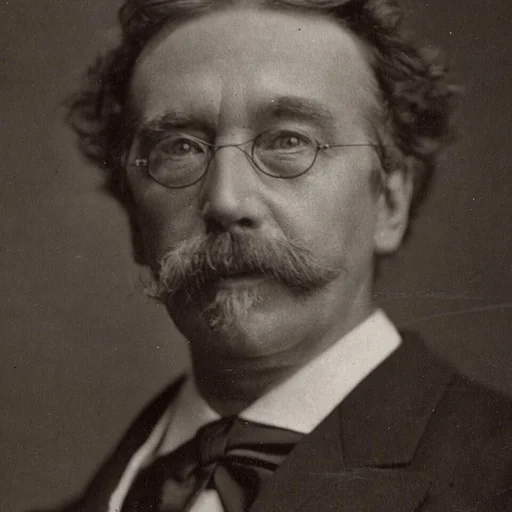
Alexander Hugo Bakker Korff (1824–1882) was an artist, born in The Hague.