Artwork
Penitent Magdalene
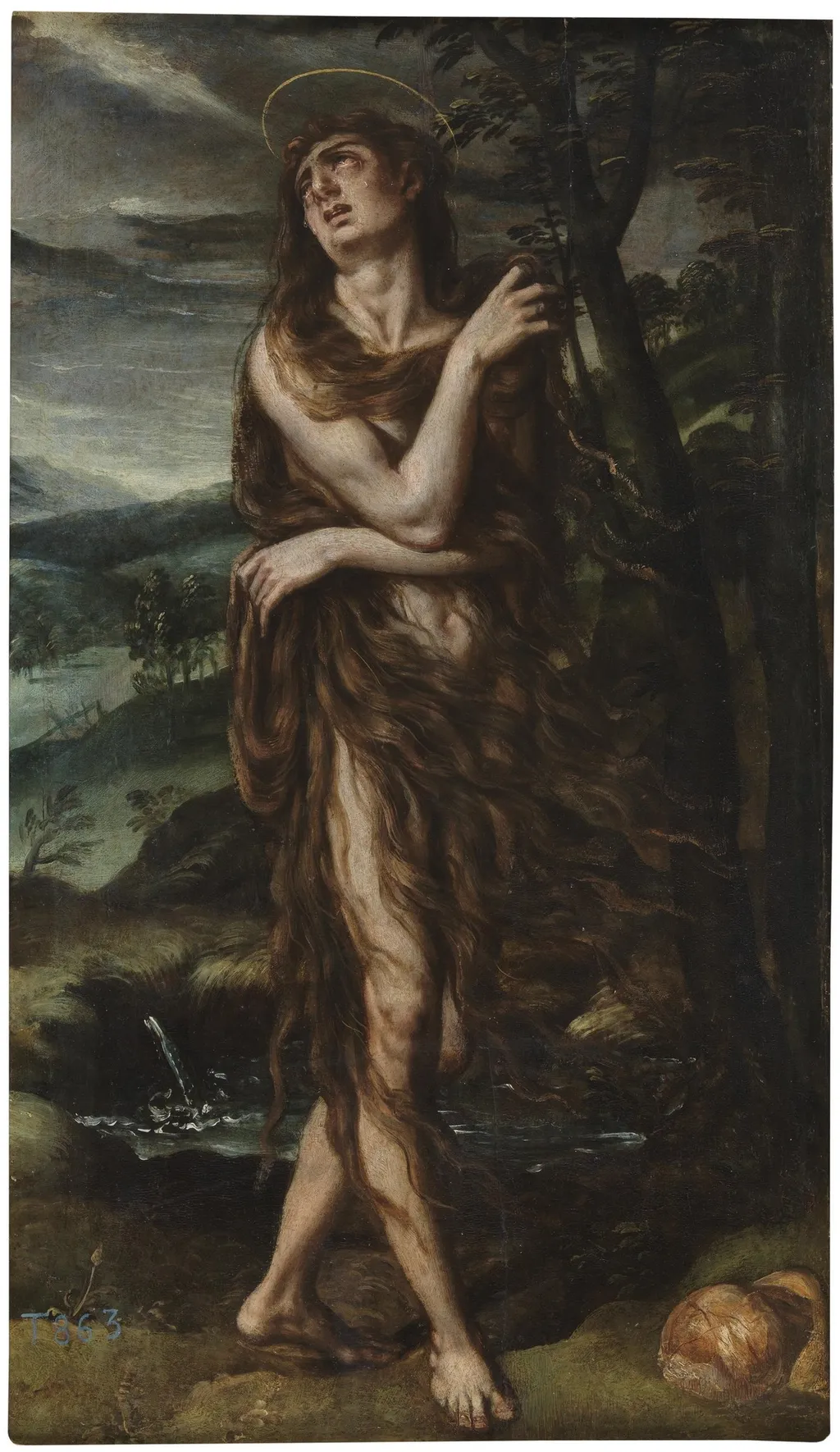
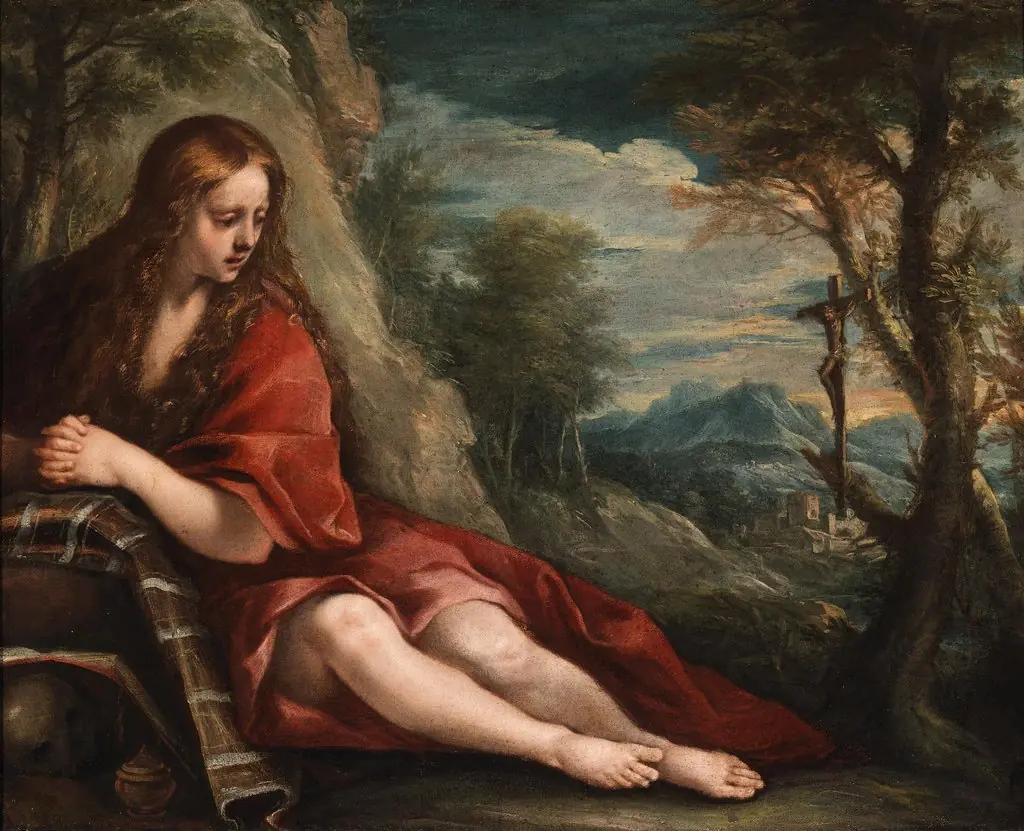
Penitent Magdalene is an oil painting by the Early Baroque Italian artist Alexandro Loarte. It dates from 1601 and is held in the collection of the Museo del Prado.
About this work
Subject & Meaning
Created by Alexandro Loarte in 1601, the painting focuses on this specific biblical figure to convey themes of repentance and spiritual devotion.
The work depicts Mary Magdalene in her role as the Penitent Magdalene, serving as a subject of religious art. Created by Alexandro Loarte in 1601, the painting focuses on this specific biblical figure to convey themes of repentance and spiritual devotion. As a religious genre piece, the imagery centers entirely on the saint's state of penitence, aligning with the devotional function typical of early 17th-century religious paintings.
Technique & Style
The Penitent Magdalene is executed in oil paint on a wooden panel, a common support for small-scale devotional works in early seventeenth‑century Spain. The panel measures 49 cm in height and 28 cm in width, indicating a modest format suited for private contemplation. While the sources record the medium and dimensions, they do not provide details about the artist’s handling, brushwork, surface condition, or specific stylistic traits beyond its religious genre and depiction of Mary Magdalene.
History & Provenance
The Penitent Magdalene was painted by Alexandro Loarte in 1601, executed in oil on panel. According to its provenance, the work entered the Museo del Prado from the earlier collection of the Museo de la Trinidad, where it was held before being transferred to the Prado’s permanent holdings. No specific commission is recorded in the available sources.
Penitent Magdalene by Alexandro Loarte is held in the Museo del Prado in Madrid. The work is documented as belonging to the museum's collection, with a prior association to the Museo de la Trinidad also recorded in its provenance history. The painting, executed in oil on panel and dated 1601, measures 49 cm in height by 28 cm in width.
No specific exhibition history beyond its institutional holdings is documented in the available sources.
Overview
Alejandro de Loarte’s Penitent Magdalene (1601) is an oil painting that presents a solitary female figure in a contemplative pose. The work measures roughly a modest size and is held in the Museo del Prado. Though Loarte is chiefly known for his still‑life compositions, this canvas belongs to his limited output of religious subjects, reflecting the transitional aesthetic between the late Renaissance and the early Baroque.
Context
The canvas reflects the broader diffusion of early Baroque sensibilities from Italy into Spain, a movement characterized by heightened emotional expression and dynamic lighting. Loarte’s choice of Mary Magdalene, a figure associated with repentance, aligns with Counter‑Reformation ideals that emphasized personal conversion and piety.
Artist & collection
Artist
Alejandro de Loarte (c.1590/1600 – 12 December 1626) was a Spanish painter active during the late Renaissance and early Baroque periods. He specialized in still-lifes.