Artwork
Untitled (Nude)
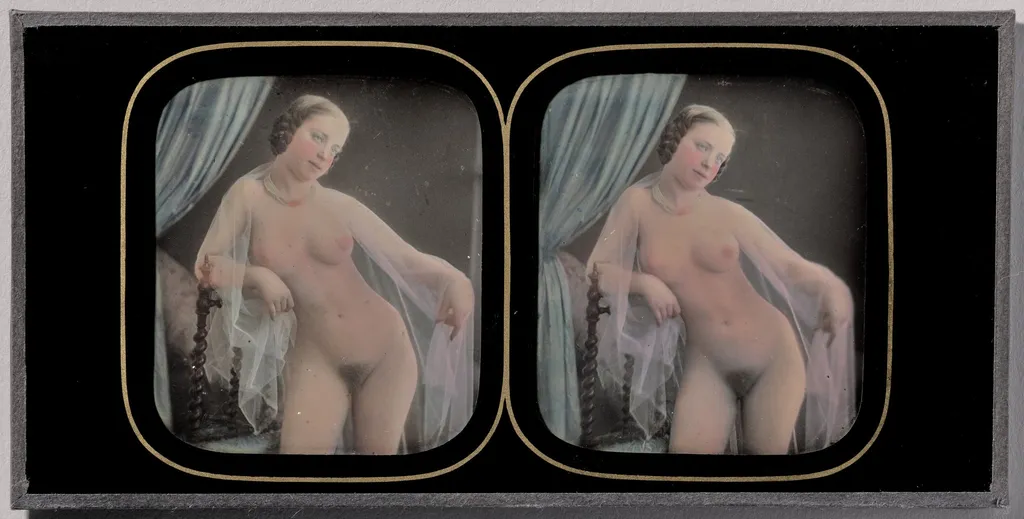
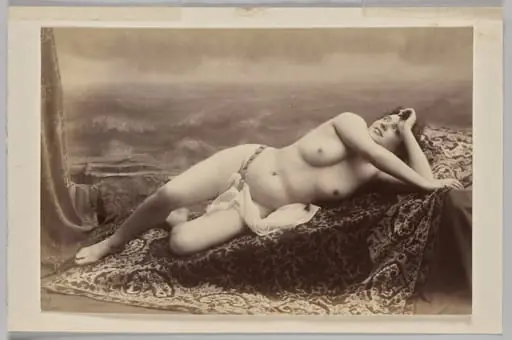
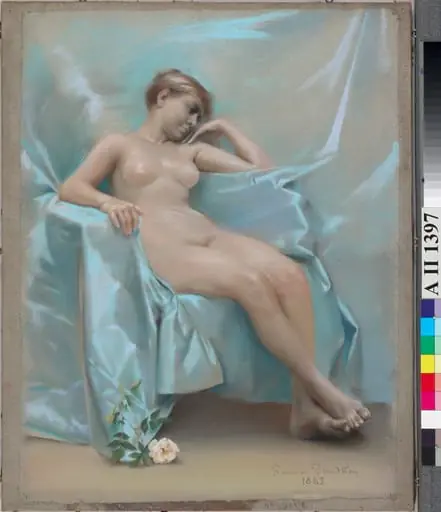
Untitled (Nude) is a photography by the Impressionist artist Alexis-Louis-Charles-Arthur Gouin. It dates from 1852 and is held in the collection of the Cleveland Museum of Art.
- Accession no.
- 1999.8
- Credit line
- Dudley P. Allen Fund
About this work
Overview
This photograph, created in the early 1850s by French artist Gouin, is a hand-painted stereoscopic daguerreotype depicting a nude female figure.
This photograph, created in the early 1850s by French artist Gouin, is a hand-painted stereoscopic daguerreotype depicting a nude female figure. Unlike conventional single-image portraits, it consists of two nearly identical exposures designed to be viewed together through a stereoscope, producing a convincing sense of depth. The work belongs to a small series of nude studies Gouin produced during this period, distinguishing his practice within the emerging field of photographic portraiture.
Subject & Meaning
The subject is Delphine Herbé, a florist and frequent model for Gouin, posed in a quiet, unadorned studio space. Her calm, direct gaze and still posture convey a sense of dignity rather than theatricality. The absence of overt symbolism or narrative context shifts focus to the physical presence of the body, treated with restraint and attention to natural form. The image avoids sensationalism, reflecting a quiet, observational approach to the nude in early photographic practice.
Technique & Style
Gouin employed the stereoscopic method, capturing two slightly offset images on a single daguerreotype plate. The surfaces were meticulously hand-colored with translucent pigments, a technique inherited from his background in miniature painting. Delicate brushwork enhances the modeling of light across skin and drapery, while the subtle tonal gradations mimic the effects of oil paint.
The use of fabric to frame the figure amplifies the illusion of volume, reinforcing the three-dimensional effect intended for stereoscopic viewing.
History & Provenance
Created in Gouin’s third-floor Paris studio around 1852–1854, this work emerged during a brief window when hand-colored stereoscopic photography was pursued as both art and scientific curiosity. Few such nude studies survive, and this example is among the few attributed to Gouin with documented provenance. It was later acquired by The Cleveland Museum of Art, where it remains part of a curated collection of early photographic experiments from the French avant-garde.
Context
In the early 1850s, photography was still experimental, and the nude was rarely depicted in the medium due to social and technical constraints. Gouin’s work intersects with broader European interests in optical science and visual perception, influenced by Wheatstone’s and Brewster’s stereoscopic innovations. While commercial portrait studios dominated the field, Gouin’s focus on the human form in controlled lighting positioned him as an outlier, blending artistic training with emerging photographic technology.
Legacy
Gouin’s nude studies represent an early, quiet challenge to the boundaries of photographic subject matter. Though his work remained largely unknown outside specialized circles, these images demonstrate a sophisticated fusion of painting and photography, anticipating later explorations of the body in art. His hand-coloring techniques and use of stereo vision influenced a small but significant group of French photographers who sought to elevate the medium beyond mere documentation.
Artist & collection
Artist
Alexis-Louis-Charles-Arthur Gouin
Alexis-Louis-Charles-Arthur Gouin (b. 1855) was a French artist.

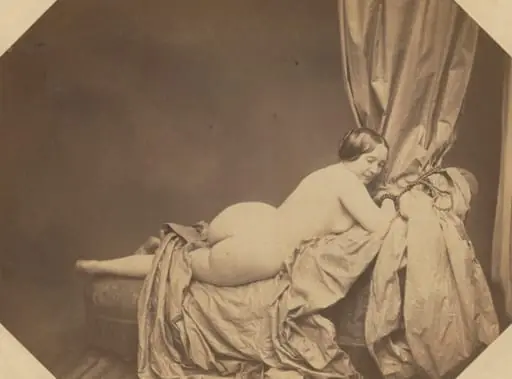
- Academic Nude, Reclining on a Sofa
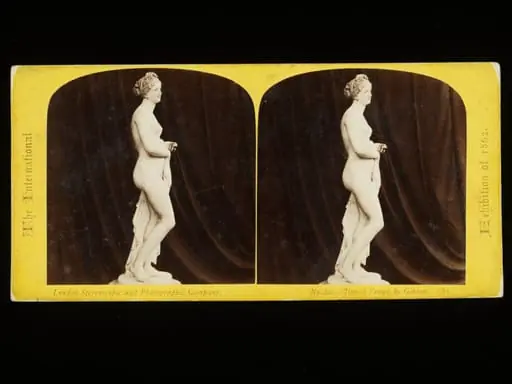 Tinted Venus sculpture by John Gibson
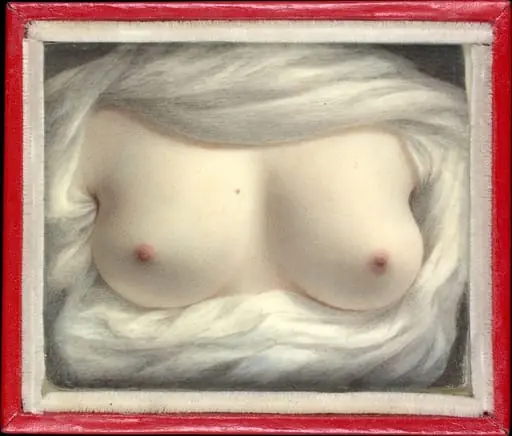 Beauty Revealed
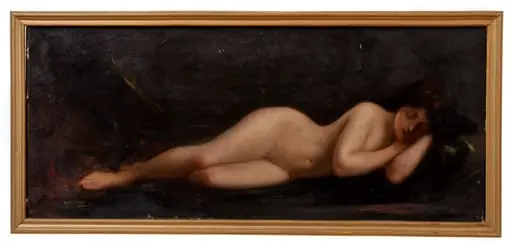 Studiu de nud
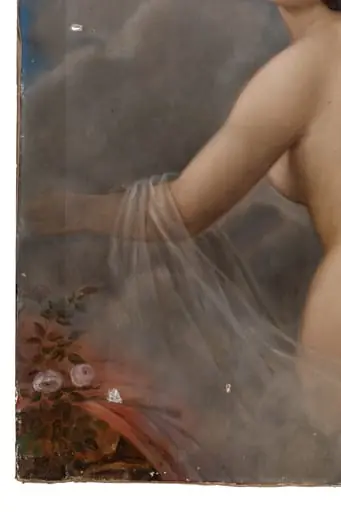 Jo îmbrățișând pe Jupiter
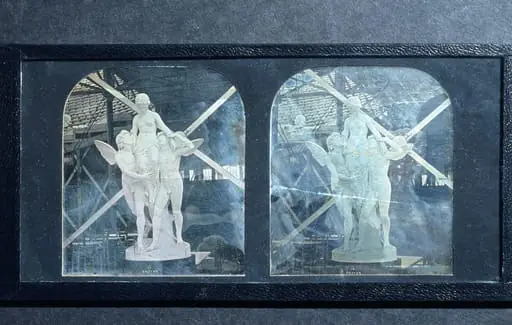 Stereoscopic daguerreotype depicting a sculptural group entitled 'Psyche' at Crystal Palace
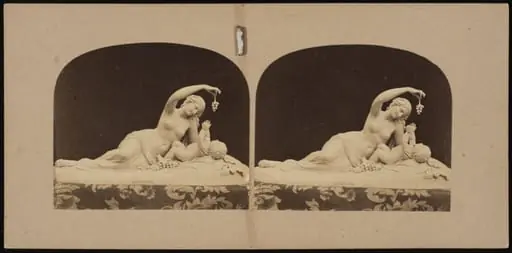 Ino and Bacchus
 Untitled (reclining nude on carpet against painted backdrop of waves)
 Odalisque
 Drei Damen beim Bade überrascht
 View of Tomb Sculptures at Crystal Palace
 Alaston naismalli