Artwork
La Machine de Marly
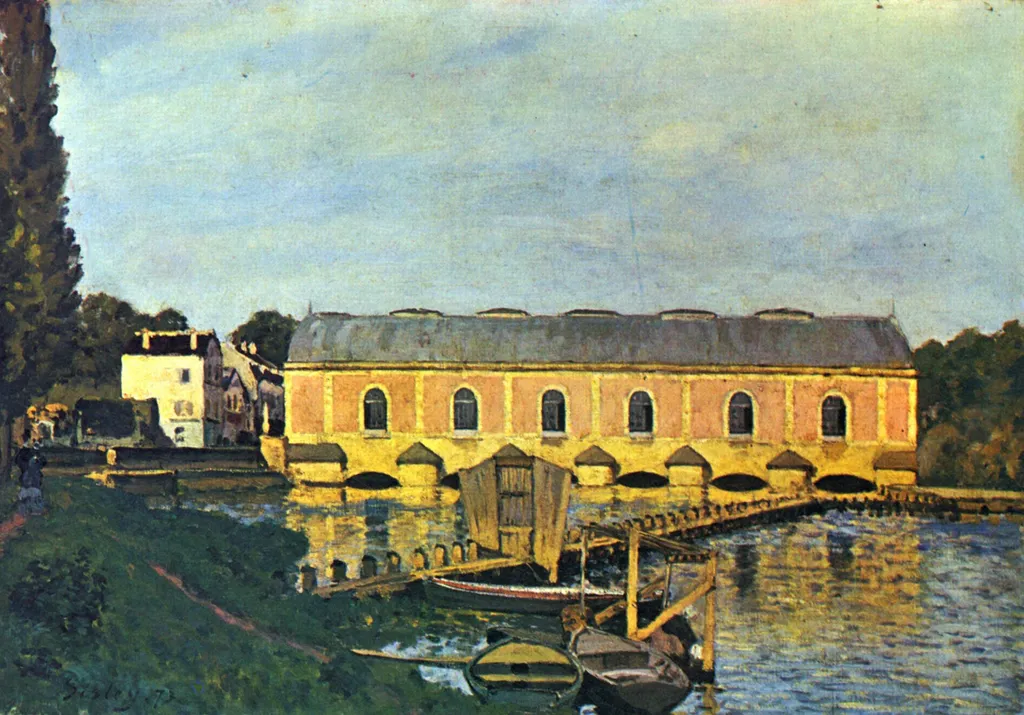
La Machine de Marly is an oil painting by the Impressionist artist Alfred Sisley. It dates from 1873 and is held in the collection of the Statens Museum for Kunst.
About this work
Subject & Meaning
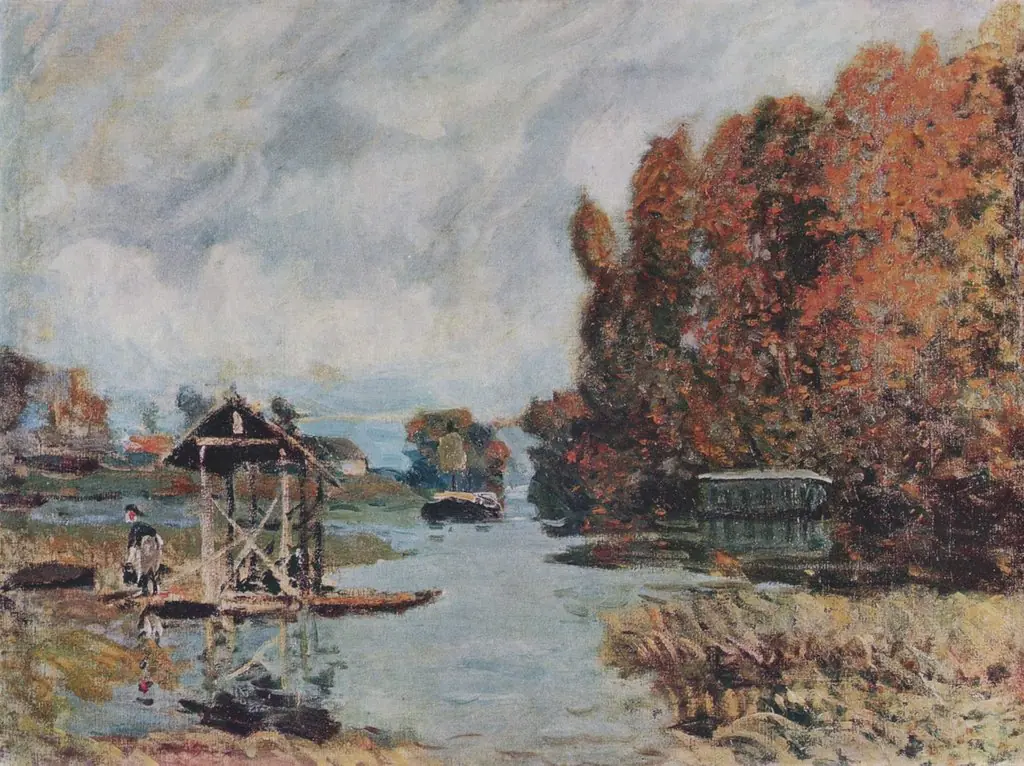
Painted in 1873 at Bougival, this landscape depicts the pumping station of the Machine de Marly, viewed from downstream on the left bank of the Seine.
Painted in 1873 at Bougival, this landscape depicts the pumping station of the Machine de Marly, viewed from downstream on the left bank of the Seine. The composition focuses on the brick hangar covering the machinery, with its reflection shimmering in the river's ripples, emphasizing the interplay between the industrial structure and the natural elements of sky, water, and trees. The work has been read as a realization of Impressionist aims, the capture of physical atmosphere and plein-air sensation, and the site, including the nearby Île de la Loge, served as a recurring subject for Sisley and his peers as they documented the changing industrial character of the riverbanks.
Technique & Style
Executed in oil on canvas in 1873 at Bougival, La Machine de Marly is a plein-air landscape whose handling emphasizes the optical capture of atmosphere and water. Sisley favors rapid, broken brushwork to render the shimmering reflection of the brick pumping-house in the Seine, dissolving solid forms into light and color, while a low horizon and high-key palette heighten the sensation of humid, sunlit air. Its small scale, 46 × 65 cm, and rapid facture reflect the artist's practice of working en plein air. The work passed through Galerie Bernheim-Jeune and the collector Levesque before entering its present Danish collection.
History & Provenance
Alfred Sisley executed this oil painting at Bougival in 1873, depicting the pumping station of the Machine de Marly from the downstream left bank of the Seine. The art historian François Daulte proposed that the work was among the canvases Sisley showed at the inaugural Impressionist exhibition of 1874, though definitive proof is lacking, and the contemporary critic Ernest Chesneau praised the picture for its atmospheric realism. Its ownership passed from Galerie Bernheim-Jeune in Paris to the collector Levesque, and in 1914 it entered the collection of the Statens Museum for Kunst in Copenhagen (inv. SMK 3272).
It is displayed on long-term loan at the adjacent Ny Carlsberg Glyptotek, where it remains. The painting measures 46 × 65 cm.
Context
Alfred Sisley's La Machine de Marly (1873) is an Impressionist landscape capturing the industrial hydraulic structure on the Seine at Bougival. The art historian François Daulte suggested the work was among the canvases Sisley exhibited at the first Impressionist exhibition in 1874, where the critic Ernest Chesneau hailed it as a realization of the school's ambitions in landscape, noting its ability to convey the physical sensation of atmosphere and plein air. The picture belongs to a broader series by Sisley and contemporaries such as Camille Pissarro documenting the Île de la Loge and the surrounding riverbanks, and it remains a key record of a site whose original pumping station no longer survives.
Legacy
Shown at the inaugural Impressionist exhibition in 1874, where the critic Ernest Chesneau praised it as a realization of the school's landscape ambitions, the painting has since entered the Danish national collections and contributes to their holdings of Impressionist art. Its standing is reinforced by later scholarly references and by reproductions placed along the Impressionist trail at Bougival, which keep the work visible in the historical context of the movement and underscore its reputation as a key example of Sisley's atmospheric landscapes.
Overview
Alfred Sisley, a British painter active in France, created La Machine de Marly in 1873 using oil paint. This landscape depicts the notable hydraulic pumping station on the Seine, a subject that allowed Sisley to explore the interplay of industrial architecture within a natural setting. As an Impressionist, he focused on capturing the transient effects of light and atmosphere, a hallmark of his approach to both natural and man-made environments.
Own this work as a print
Artist & collection
Artist
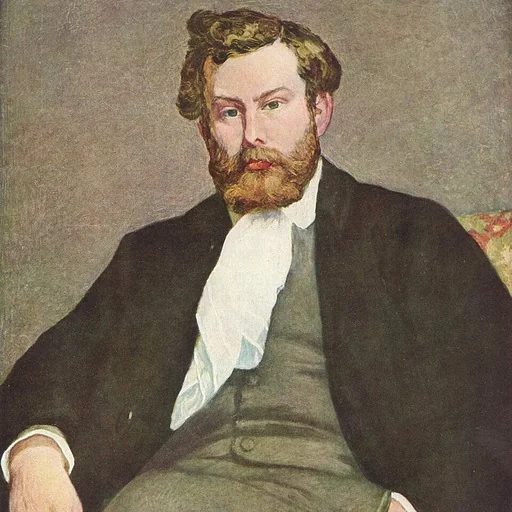
Alfred Sisley (; French:; 30 October 1839–29 January 1899) was a French-Born British Impressionist landscape painter who was born to British parents, but spent most of his life in France.