Artwork
Altarpiece of St Proculus
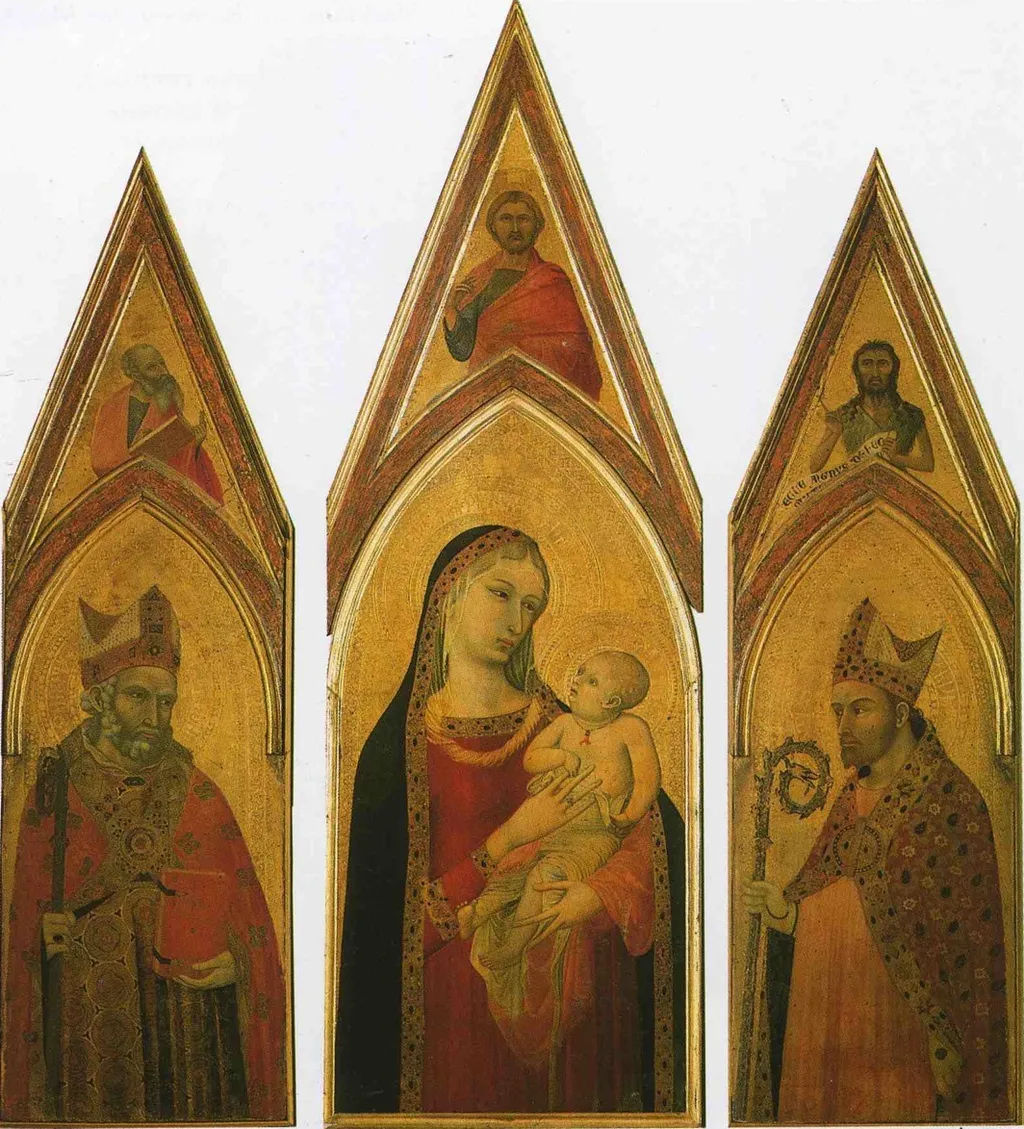
Altarpiece of St Proculus is an oil painting by the Sienese School artist Ambrogio Lorenzetti. It dates from 1332 and is held in the collection of the Uffizi Gallery.
About this work
Subject & Meaning
This serves as an ancient apotropaic talisman for newborns, representing blood passing from mother to child via the umbilical cord.
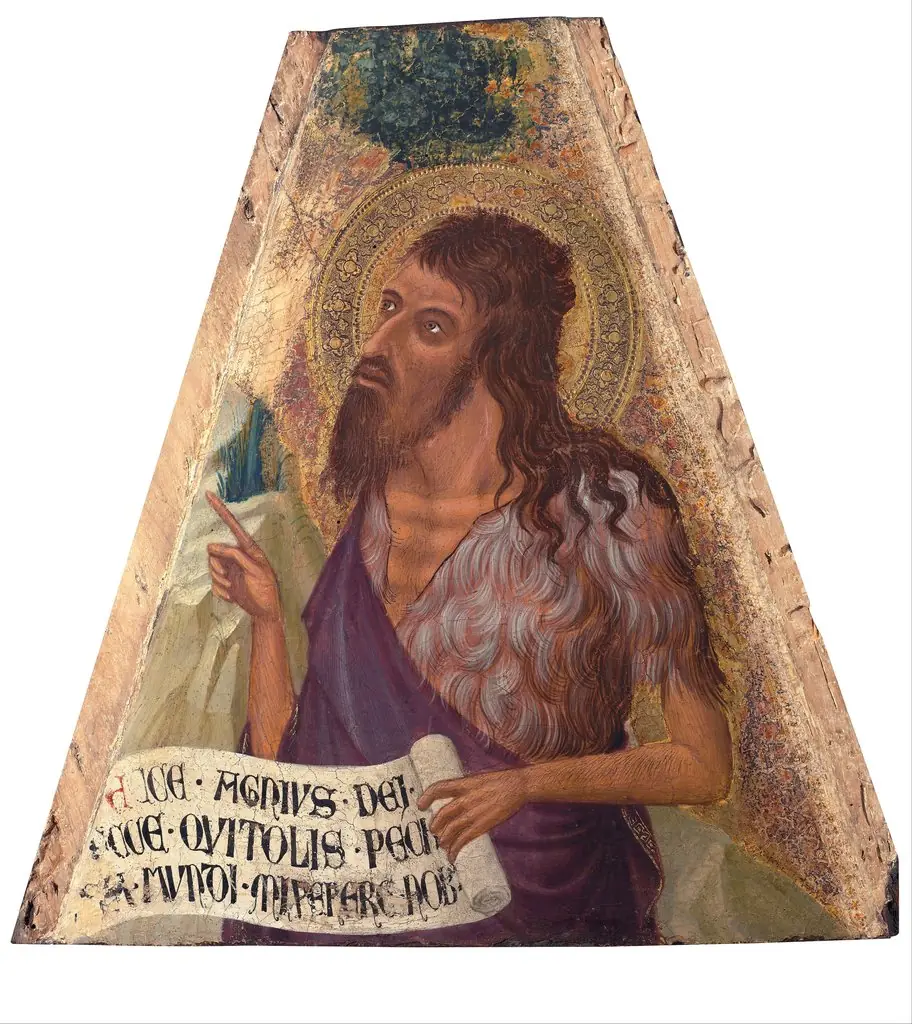
The Altarpiece of St Proculus is a religious triptych depicting the Madonna and Child at its center, flanked by Saint Nicholas on the left and Saint Proculus on the right. Inscriptions identify the figures, with the Virgin labeled "AVE GRATIA PLENA DOMINUS TECUM". The upper cusps feature Christ the Redeemer between John the Evangelist and John the Baptist.
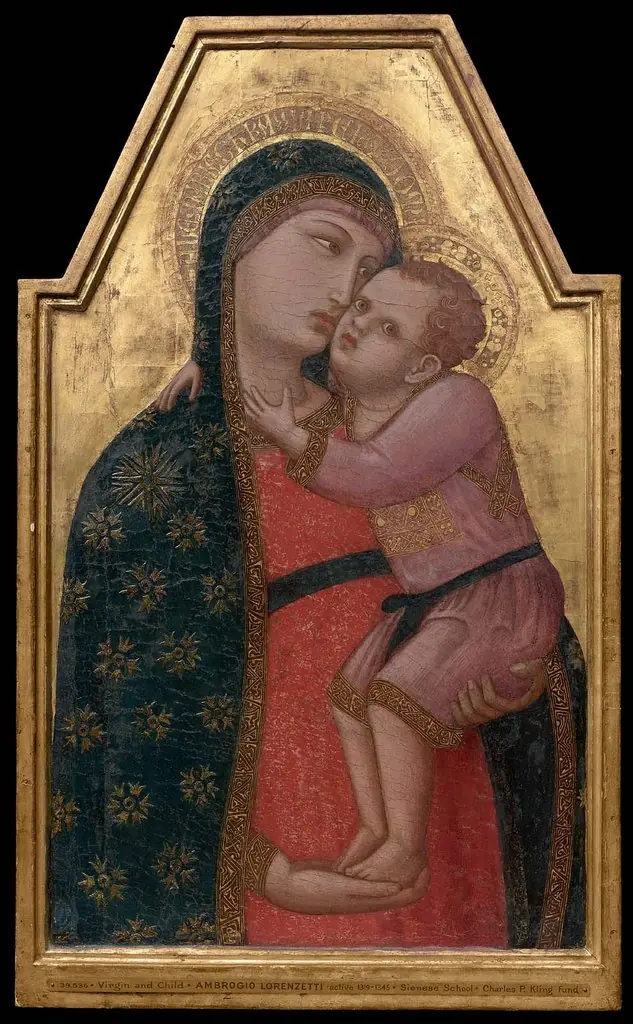
The central panel emphasizes the human relationship between mother and child; the Christ Child gazes at Mary with wide eyes and a half-open mouth, typical of an infant, while Mary, resembling an elegant noblewoman, returns his serene gaze and offers her fingers for play.
A notable iconographic detail is the red coral necklace worn by the Christ Child. This serves as an ancient apotropaic talisman for newborns, representing blood passing from mother to child via the umbilical cord. In the specific context of Christian iconography, the coral's red color also prefigures the blood of the Passion.
Technique & Style
The Altarpiece of St Proculus is executed in tempera and gold on panel, with the central panel measuring 171 × 57 cm and the lateral panels 141 × 43 cm. The work is structurally a triptych, comprising a central half-length Madonna and Child flanked by Saints Nicholas and Proculus, with three additional figures, St John the Evangelist, Christ the Redeemer, and St John the Baptist, occupying the cusps above.
Stylistically, the work represents a marked advance over Ambrogio Lorenzetti's earlier Madonna of Vico l'Abate of 1319, showing greater volumetric modeling of the figures, softened features, pronounced chiaroscuro modulation, and sharper contour lines, bringing his idiom closer to the Giottesque school. The figures nevertheless retain a certain rigidity, distinguishing them from the more naturalistic bodies of Giotto's early 1330s works or from contemporary Sienese painters such as Simone Martini, Lippo Memmi, and Memmi's Kansas City panel.
Particular attention is given to surface detail, especially in the richly decorated vestments of the two bishop-saints. The human warmth of the exchange between Mary and the Christ Child, wide-eyed and open-mouthed, reaching for his mother's fingers, is a defining expressive feature, while a red coral amulet at the infant's neck functions as an apotropaic talisman.
History & Provenance
The Altarpiece of St Procolo was commissioned for the church of San Procolo in Florence and created in 1332 by Ambrogio Lorenzetti. It was originally installed in the church before being documented by Lorenzo Ghiberti, the Anonimo Magliabrecchiano, Giorgio Vasari, and Giovanni Cinelli. Following the suppression of the parish in 1742, the work underwent several transfers: the side panels were moved to the Uffizi in 1810, later entered the Galleria dell'Accademia around 1855, passed to the Museo Bandini in Fiesole, and were returned to the Uffizi in 1948.
The central panel entered the antiquarian market but was reunited with the side panels in March 1959 when donated by Bernard Berenson from his private collection at Villa I Tatti. The painting is executed in tempera and gold on panel, with the central panel measuring 171x57 cm and the side panels 141x43 cm each. It depicts the Madonna and Child flanked by Saints Nicholas and Procolo, with additional figures in the upper corners.
The Altarpiece of St Procolo (Italian: Trittico di San Procolo) is held in the Uffizi Gallery in Florence, where it has been part of the collection since 1890 under inventory number 8371. The central panel, originally from the church of San Procolo in Florence, was documented by Lorenzo Ghiberti and later recorded by Vasari and other observers. After the parish was suppressed in 1742, the work was moved to the Badia fiorentina, then dismantled, with the side panels arriving at the Uffizi in 1810.
They were displayed around 1855 at the Galleria dell'Accademia before being transferred to the Museo Bandini in Fiesole and returned to the Uffizi in 1948. The central panel, after circulating through the antiquarian market, was reunited with the side panels in March 1959 and donated by Bernard Berenson from his collection at Villa I Tatti. The work is executed in tempera and gold on panel, measuring 57 cm in height and 171 cm in width for the central panel, with the side panels measuring 141 cm by 43 cm each.
It depicts the Madonna and Child surrounded by saints including Procolo and Nicholas, and features symbolic elements such as a coral amulet around the Child's neck. The painting has been exhibited in various institutional settings, including the Galleria dell'Accademia and the Museo Bandini, before its return to the Uffizi.
Context
The Altarpiece of St Proculus occupies a significant position in scholarship on Ambrogio Lorenzetti's development. Art historians have traced in this 1332 triptych a decisive advance from his earlier Madonna di Vico l'Abate (1319), noting the artist's progress in volumetric rendering of figures, chiaroscuro modulation, and decorative richness, stylistic features that bring him closer to the school of Giotto. Scholars have particularly examined the work's blend of formal rigidity in posture with striking humanistic intimacy, especially in the interaction between Madonna and Child.
The Christ Child's infant-like expression and Mary's aristocratic serenity exemplify what critics identify as a distinctive "Lorenzettian" naturalism. The altarpiece's documented history, including its mention by Lorenzo Ghiberti, Giorgio Vasari, and the Anonimo Magliabechiano, has made it an important case study in provenance research. Its dismemberment, dispersal through the art market, and eventual reassembly, culminating in Bernard Berenson's 1959 donation of the central panel, further illustrate the complex afterlives of Trecento panel paintings.
Overview
Created in 1332 by Ambrogio Lorenzetti, a leading figure of the Sienese school, the Altarpiece of St Proculus is an oil painting composed of three narrow, vertically oriented panels. The central image presents a serene mother in red cradling an infant, while the flanking panels depict two dignified male saints, each distinguished by a crown and symbolic attribute.
Artist & collection
Artist
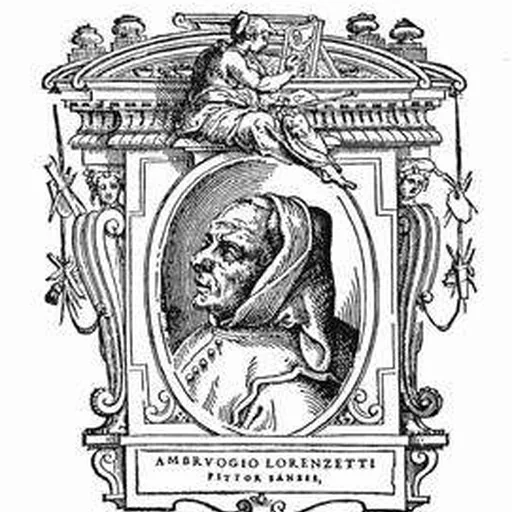
Ambrogio Lorenzetti (Italian pronunciation:; c. 1290 – after 9 August 1348) was an Italian painter of the Sienese school. He was active from approximately 1317 to 1348. He painted The Allegory of Good and Bad Government…

- Decemviri Altarpiece
![Madonna and Child with the Blessing Christ, and Saints Peter, James Major, Anthony Abbott, and a Deacon Saint [entire triptych], by Martino di Bartolomeo](https://artifactworldgallery.com/img/martino-di-bartolomeo--madonna-and-child-with-the-blessing-christ-and-saints-peter--2c53e26d577a363b-w320.webp) Madonna and Child with the Blessing Christ, and Saints Peter, James Major, Anthony Abbott, and a Deacon Saint [entire triptych]
Madonna and Child with the Blessing Christ, and Saints Peter, James Major, Anthony Abbott, and a Deacon Saint [entire triptych]![Madonna and Child with the Blessing Christ, and Saints Mary Magdalene and Catherine of Alexandria with Angels [entire triptych], by Pietro Lorenzetti](https://artifactworldgallery.com/img/pietro-lorenzetti--madonna-and-child-with-the-blessing-christ-and-saints-mary-m--f78e415f61769b64-w320.webp) Madonna and Child with the Blessing Christ, and Saints Mary Magdalene and Catherine of Alexandria with Angels [entire triptych]
Madonna and Child with the Blessing Christ, and Saints Mary Magdalene and Catherine of Alexandria with Angels [entire triptych]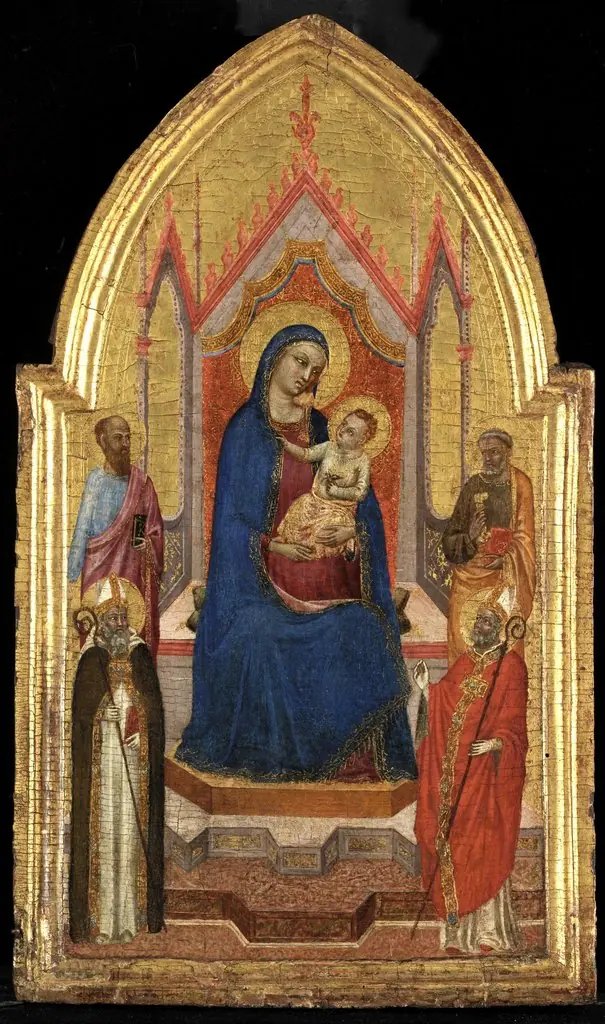 Madonna and Child Enthroned with Four Saints
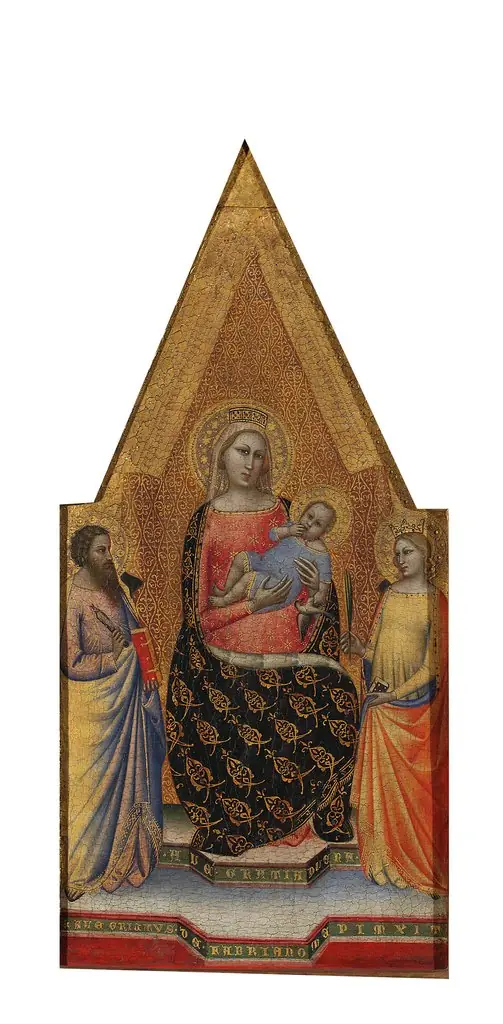 Madonna and Child enthroned with two Saints, Crucifixion
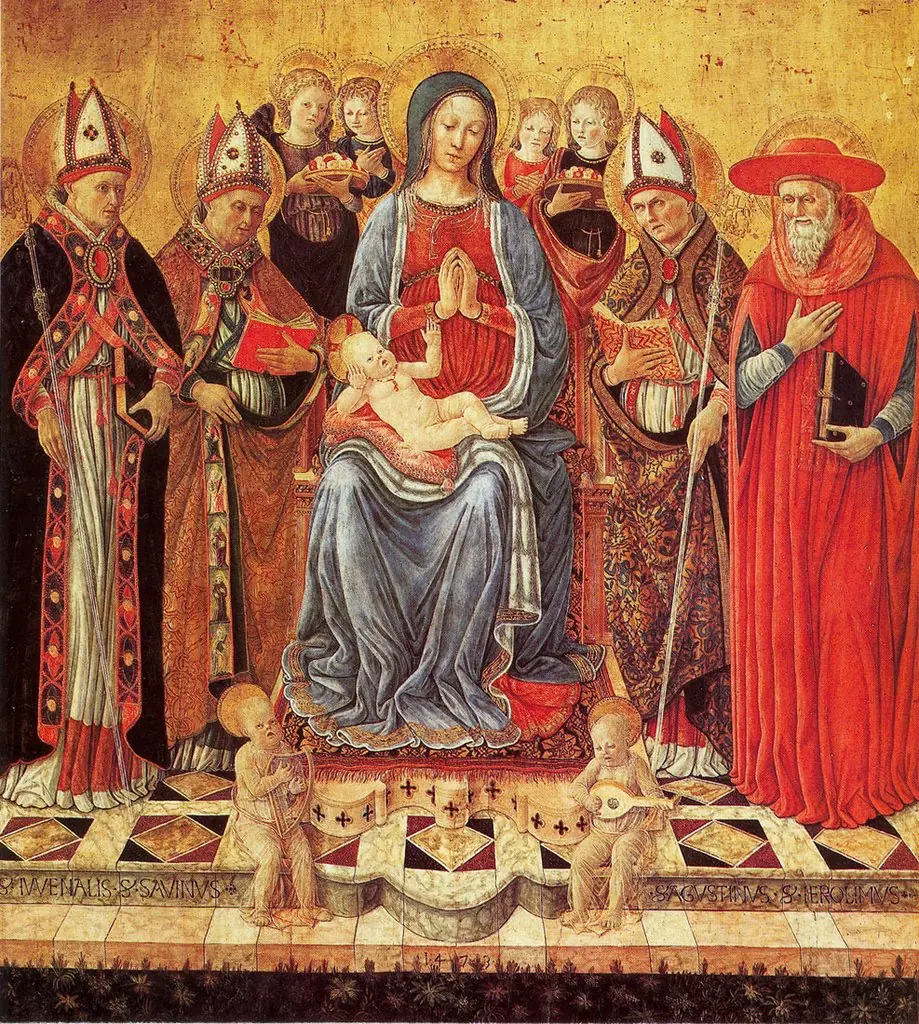 Madonna and Child Enthroned with Saints and Angels
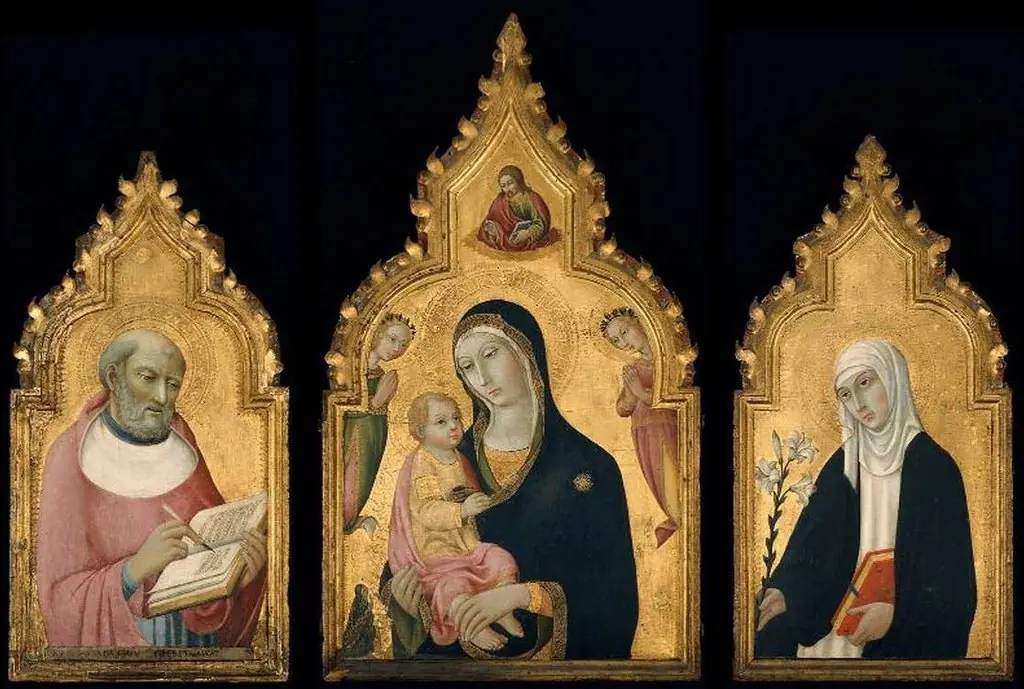 Triptych: The Virgin and Child with the Blessing Christ, Two Angels and a Donor
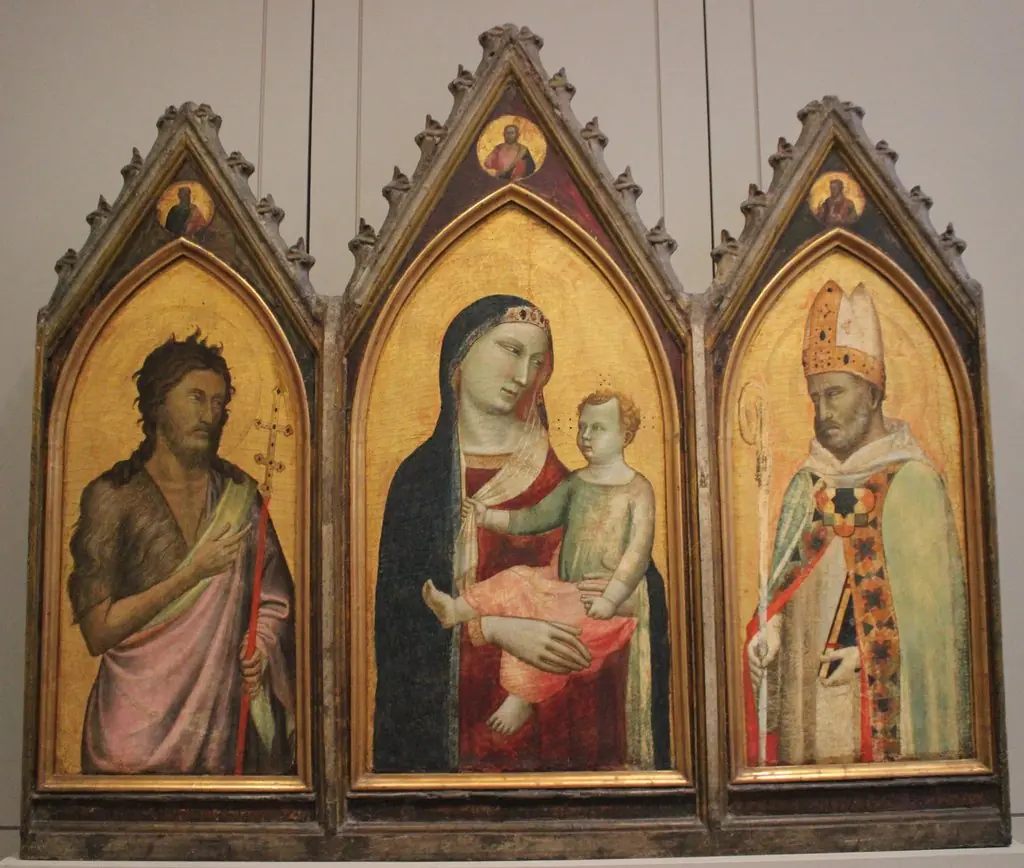 Virgin and Child with Saints John the Baptist and Giles, Two Prophets, and Christ the Redeemer
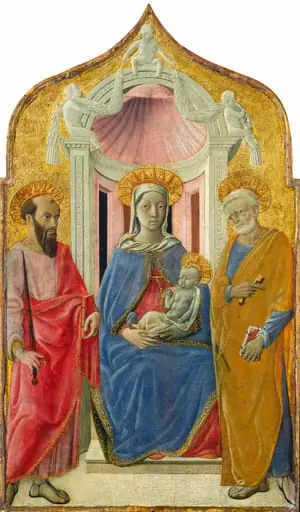 Madonna and Child Enthroned with Saint Peter and Saint Paul
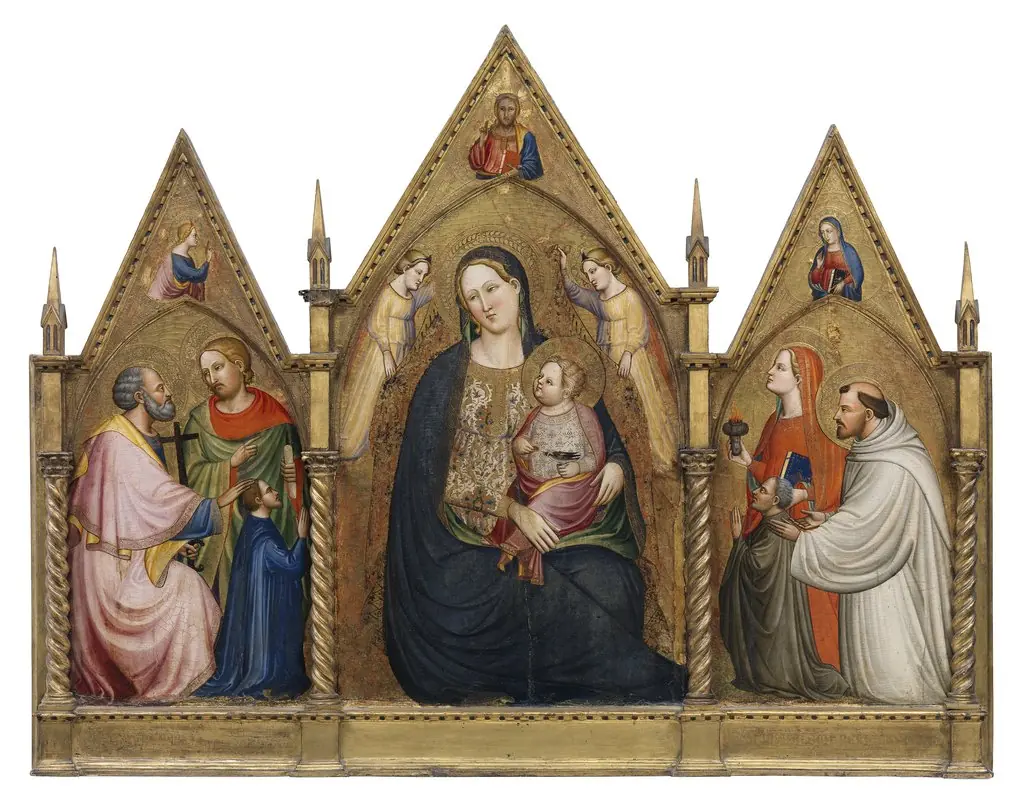 The Virgin and Child with Saints and Donors