Artwork
St. John the Baptist
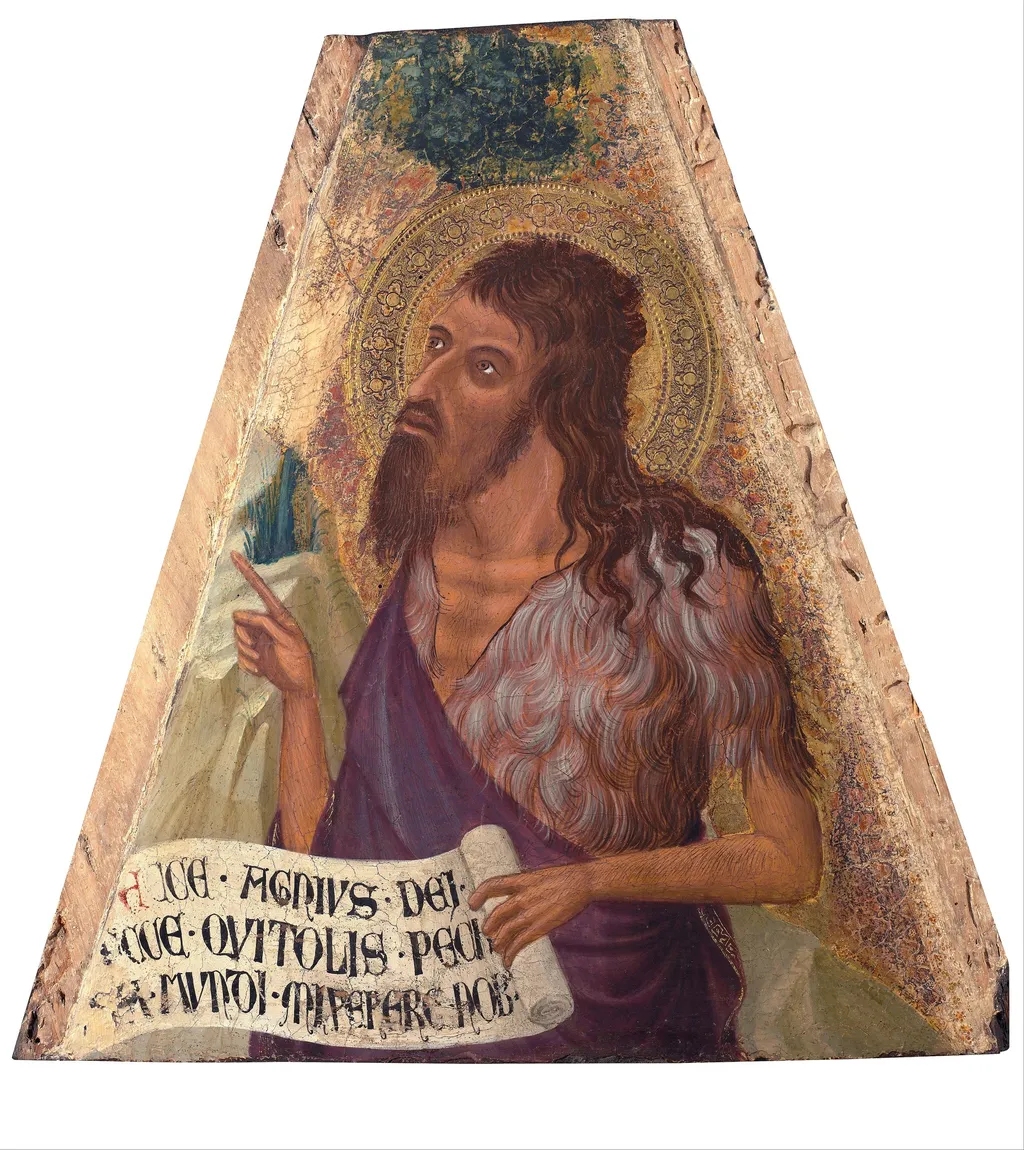
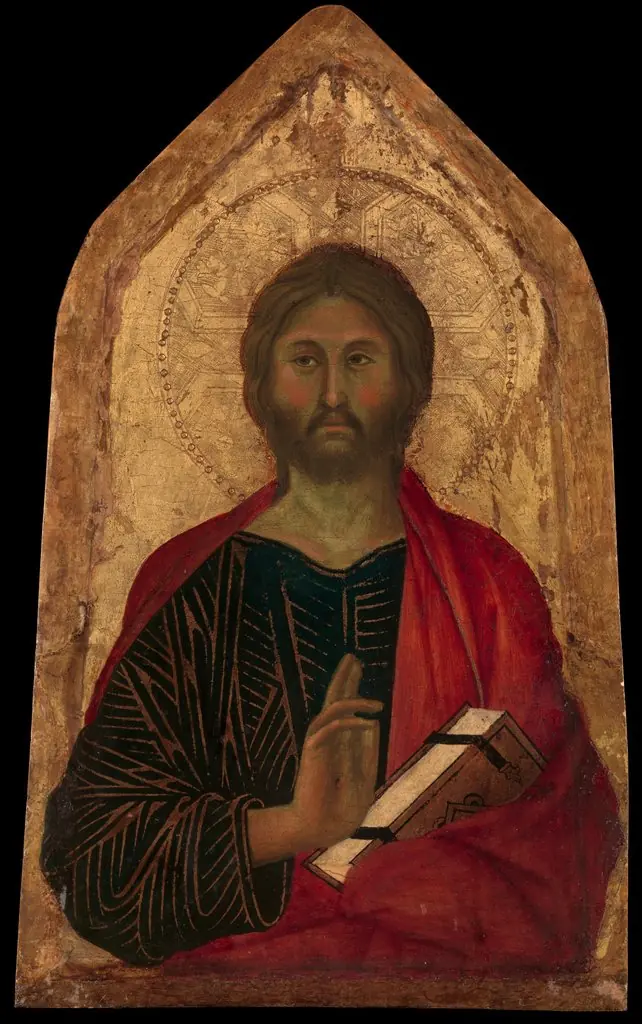
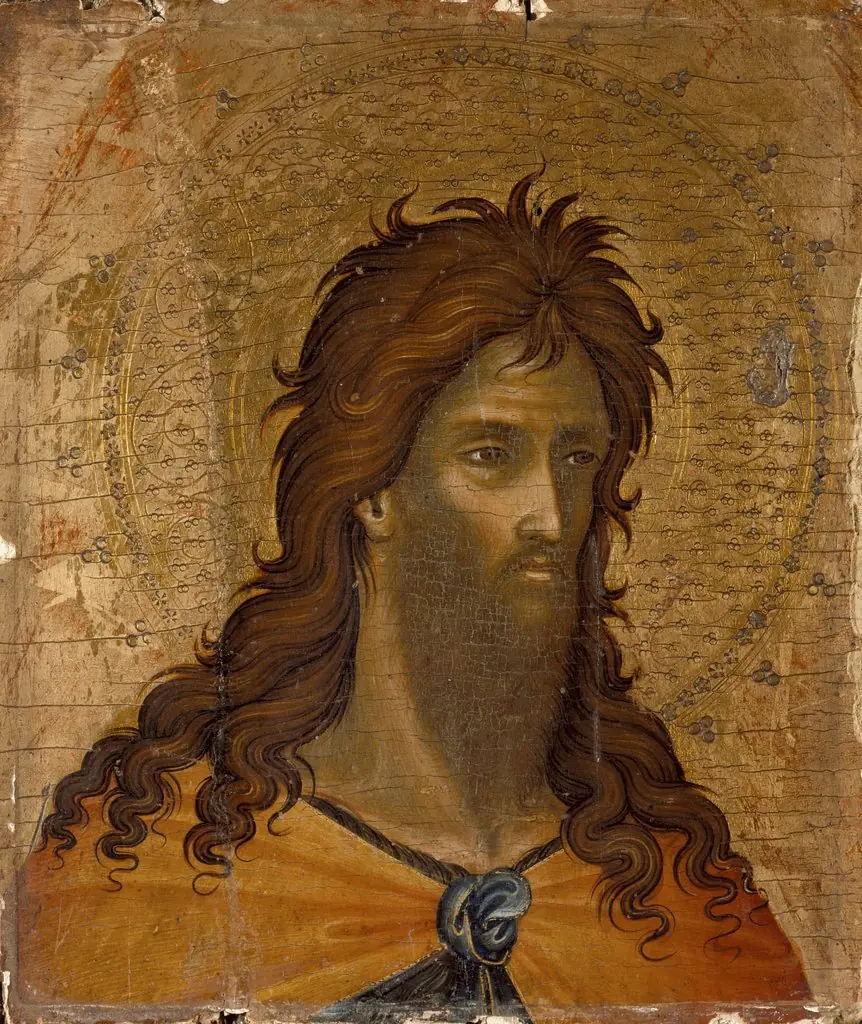
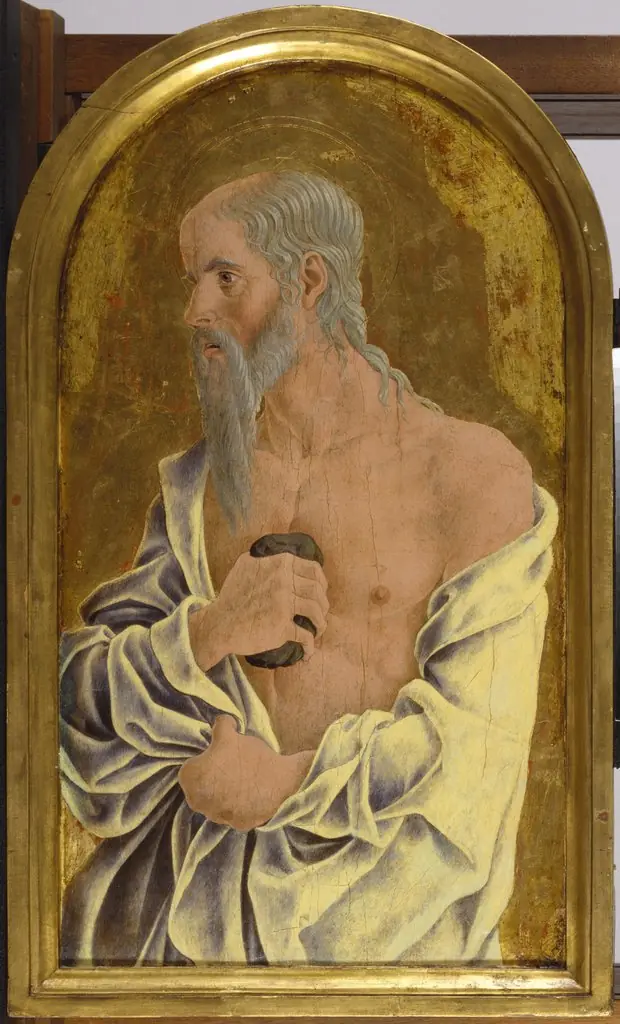
St. John the Baptist is a tempera painting by the Sienese School artist Ambrogio Lorenzetti. It dates from 1337 and is held in the collection of the Statens Museum for Kunst.
About this work
Subject & Meaning
The work depicts John the Baptist as its primary subject, firmly situated within the genre of religious art.
The work depicts John the Baptist as its primary subject, firmly situated within the genre of religious art. Created by Ambrogio Lorenzetti, the painting utilizes tempera on a panel support to render the figure. While the specific iconographic attributes or symbolic gestures are not detailed in the available records, the identification of the saint as the main subject confirms the piece's function as a devotional image.
The representation focuses solely on the Baptist, adhering to traditional conventions for portraying this key biblical figure in fourteenth-century Italian painting.
Technique & Style
The work is executed in tempera on wood panel, a technique typical of 14th-century Italian religious painting. Its surface bears the fine brushwork and muted tonal modeling characteristic of Ambrogio Lorenzetti's mature style, with delicate rendering of drapery and a restrained compositional geometry that emphasizes the saint's contemplative presence. The panel retains its original gesso ground and shows only minor craquelure, indicating stable handling over centuries.
These formal qualities align with the devotional emphasis of early trecento art, where spiritual intensity is conveyed through precise line and subtle color modulation.
History & Provenance
The painting St. John the Baptist is attributed to Ambrogio Lorenzetti and dated to circa 1337, with some sources indicating a possible range between 1337 and 1342. Executed in tempera on panel, the work is presently housed in the Statens Museum for Kunst in Copenhagen. The provided sources do not detail earlier ownership, a specific commission, or further steps in its creation history beyond the artist, medium, and date.
The work is held by the Statens Museum for Kunst in Copenhagen, where it is inventoried as KMS3232.
It was shown at the exhibition Ambrogio Lorenzetti held at the Museo dell’Opera del Duomo, Siena, from 18 February to 18 May 2002.
Legacy
The painting St. John the Baptist by Ambrogio Lorenzetti, created in 1337 using tempera on panel, has been recognized for its pivotal role in early Italian religious art. Its composition and devotional focus on the saint influenced subsequent depictions of prophetic figures in the Siena school, shaping narrative approaches within 14th-century panel paintings. The work remains part of the collection at the Statens Museum for Kunst, where it is studied as a key example of pre-Renaissance spirituality in art.
Scholars cite its stylistic innovations in spatial depth and figure modeling as formative for later interpretations of saintly subjects, reinforcing its enduring reputation in art historical discourse.
Overview
Created in 1337 by Ambrogio Lorenzetti, a leading figure of the Sienian school, this tempera panel portrays Saint John the Baptist. The work is part of the museum’s collection at the Statens Museum for Kunst and exemplifies the devotional imagery typical of early fourteenth‑century Italy.
Context
The painting reflects the Sienese tradition of religious panels that served both liturgical and didactic purposes. During the early 1300s, Siena’s artistic output emphasized graceful lines, decorative detail, and a spiritualized use of gold, distinguishing it from the more naturalistic Florentine trend.
Own this work as a print
Artist & collection
Artist
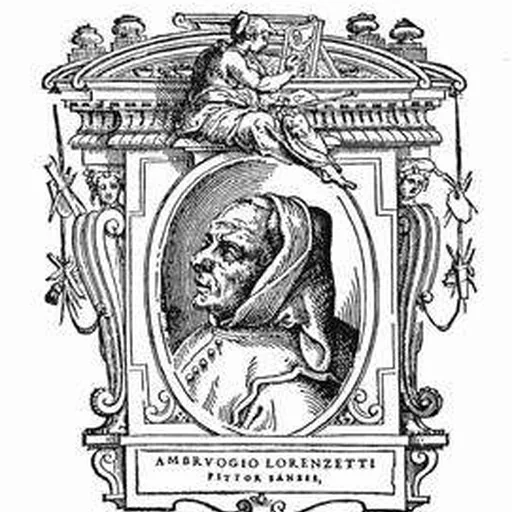
Ambrogio Lorenzetti (Italian pronunciation:; c. 1290 – after 9 August 1348) was an Italian painter of the Sienese school. He was active from approximately 1317 to 1348. He painted The Allegory of Good and Bad Government…


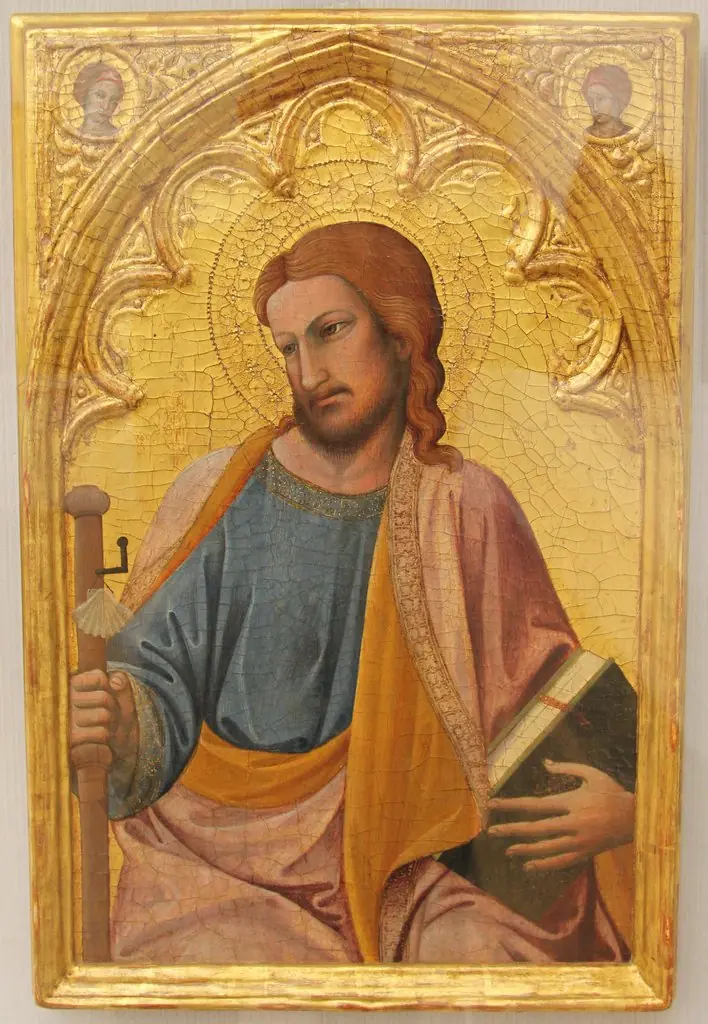
![Saint James Major [right panel], by Grifo di Tancredi](https://artifactworldgallery.com/img/grifo-di-tancredi--saint-james-major-right-panel--dc190378c0cddc8f-w320.webp)